In short
- Wedding photography “styles” answer two separate questions: how the photographer works on the day (documentary, editorial, classic) and how the finished pictures look (fine art, film look, light & airy, dark & moody).
- A documentary photographer directs almost nothing and records the day as it happens; editorial and classic photographers direct — editorial for magazine-like portraits, classic for a planned list of posed couple and family photos.
- A “film look” can come from real film or from digital photos edited to resemble it; ask which, because real film changes the price, the number of photos and the delivery time.
- Light & airy and dark & moody are mostly exposure and editing choices: one lifts the shadows towards white, the other exposes for faces and keeps the shadows deep.
- The reliable way to recognise a style is a complete wedding gallery, from getting ready to the party — not a portfolio of best shots.
In this guide
- Two questions behind every style label
- The styles side by side
- Documentary: the day as it happened
- Editorial: portraits like a magazine
- Fine art: composed, soft and bright
- Classic: the traditional album
- Film and the film look
- Light & airy or dark & moody?
- How to recognise a style in a whole wedding
- Mixing styles is normal
- Which style for which wedding?
- Questions couples ask
- Sources
Style labels are written by photographers about themselves, and most use two or three at once. That is not a problem; it is simply why the words on their own tell you little. What helps is knowing what each label usually means in practice — where the photographer stands, how much they ask of you, what their pictures do with light — and then letting a whole wedding gallery show you the rest.
Two questions behind every style label
Some labels describe an approach: how the photographer behaves on the day. Documentary photographers watch and react; editorial and classic photographers arrange and direct. Other labels describe a finish: how the pictures look once edited — bright and pale, deep and shadowed, grainy and soft. A photographer can be documentary in approach and dark & moody in finish, or direct the portraits for half an hour and photograph everything else unseen.
So ask two questions, not one: “How do you work during the day?” and “How do you edit?” The first decides how your day feels; the second decides how your photos look.
The styles side by side
| Style | What it looks like | How they work on the day | In a whole gallery, look for | Suits |
|---|---|---|---|---|
| Documentary (photojournalistic, reportage) | Real moments, people mid-gesture, the room and the guests as they were; few posed frames | Observes and anticipates, rarely asks for anything; short, natural portraits | Many frames of guests, speeches and the party; the moments between the big ones; how the family photos were handled | Couples who dislike posing and care most about the people |
| Editorial | Magazine-like portraits: confident poses, bold light, strong lines, chosen backgrounds | Directs where you stand and how you move; plans portrait time and places | The unposed photos from the same weddings, and how much of the day went to portraits | Couples at ease in front of a camera, for whom outfits and setting are part of the statement |
| Fine art | Composed, soft and bright; flowers, fabric and details as part of the picture | Gentle direction, careful framing, time set aside for portraits and details | Photos in midday sun and indoors, not only at golden hour; colour that holds all day | Couples who love soft light and details and will give the portraits real time |
| Classic (traditional) | Posed, evenly lit portraits and full family groups, everyone looking at the camera | Works from a shot list, organises the groups, leads the key moments | Whether there is an unposed side at all; how relaxed the groups look | Families who want every relative photographed and a formal album |
| Film and film look | Fine grain, gentle colour, glowing skin, softer contrast | Real film: slower, fewer frames, often digital for dark parts. Film look: digital, edited to resemble film | Which photos were really on film; the evening and dark rooms; how many photos were delivered | Couples who love the colour of old albums and can wait a little longer |
| Light & airy (a finish) | Bright exposure, lifted shadows, pale tones, a lot of white | Looks for open shade and soft light; avoids dark corners | Skin and white dresses in strong sun; whether dark venues still look natural | Gardens, beaches, bright quintas, daytime weddings |
| Dark & moody (a finish) | Deep but detailed shadows, rich colour, light from one direction | Exposes for faces and lets the rest fall into shadow; uses windows and candles | A full daylight wedding, to see whether the look survives the sun | Evening, candlelit and stone venues, wild coasts |
Documentary: the day as it happened
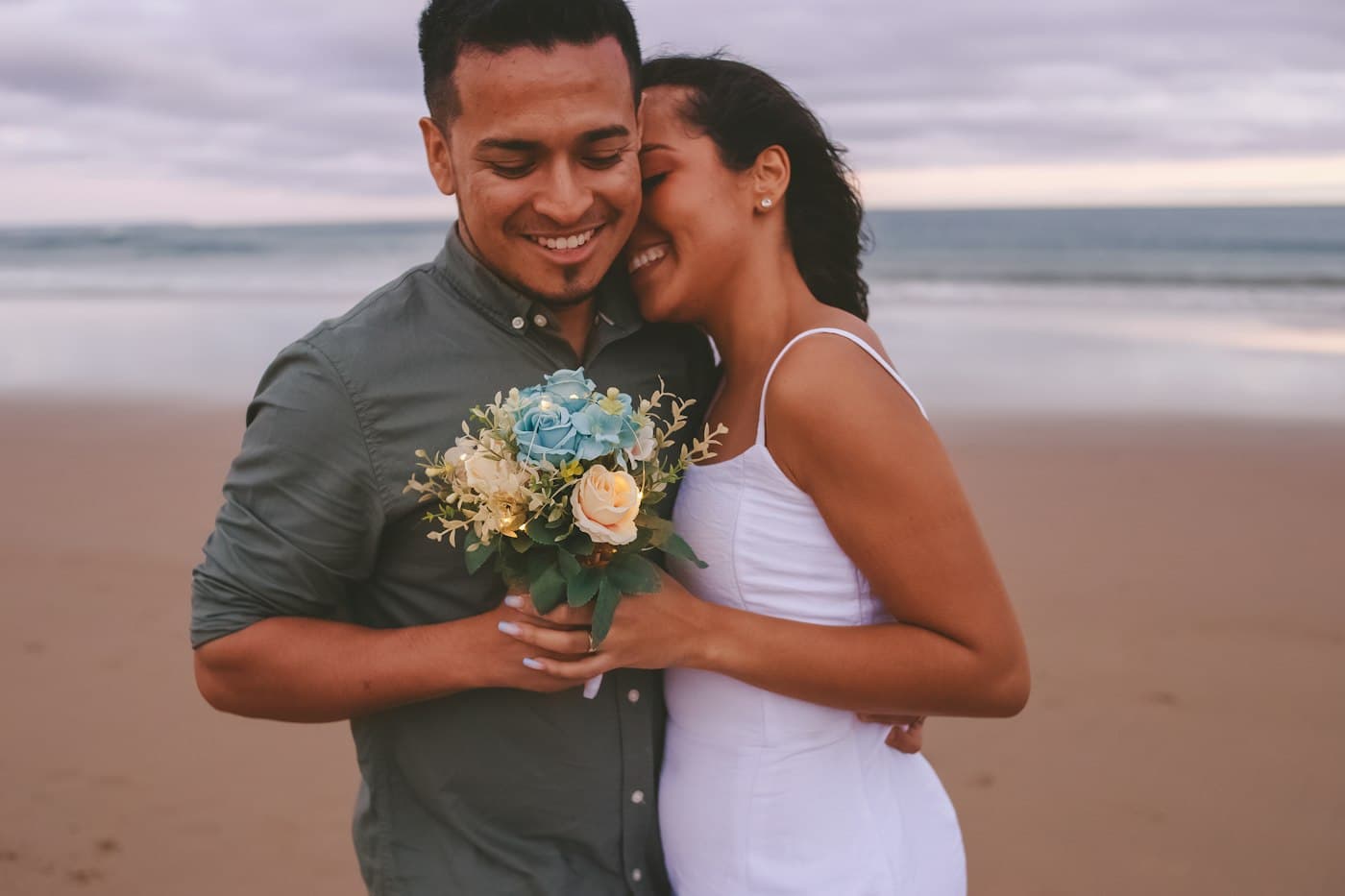
Also called photojournalistic or reportage. The photographer’s job is to notice — the glance between you during the vows, a grandmother’s hand on a shoulder, the friend laughing at a speech — and to be in the right place before it happens. They rarely ask you to do anything; portraits are usually short and loose. You get a story you can read years later, including the moments you missed while you were busy getting married.
In a whole gallery, documentary work shows in the middle of the day: dozens of frames from the speeches, the dinner and the dance floor, not only the ceremony and the portraits. Look, too, at the family photos. A documentary photographer still has to take them, and good ones keep the list quick so they can get back to watching.
It suits you if you dislike posing, the people matter more to you than the details, and you can trust that some of the best photos will be of things you never saw happen. See documentary photographers.
Editorial: portraits like a magazine
Editorial photography borrows from fashion and magazine work: confident poses, strong light and lines, carefully chosen backgrounds. Expect direction — where to stand, which way to turn, when to walk — and time set aside for portraits, sometimes in more than one place. The best editorial photographers still photograph the rest of the day as it comes: the portraits are designed, the moments are not.
In a whole gallery, check the balance: how much of the day went to portraits, and what the unposed photos look like. Look for weddings with grandparents and children — people who are not models — to see whether the direction feels warm or stiff.
It suits you if you like fashion photography, you are comfortable being directed, and your outfits and setting — a Lisbon palace, a Comporta dune — are part of what you want to say. See editorial photographers.
Fine art: composed, soft and bright
Fine art is less a method than an intent: every frame treated as a considered picture. At weddings it usually means soft, bright light, gentle colour, careful framing, and flowers, fabric and table details given real attention. Many fine art photographers shoot partly on film, and many direct gently to find the best light.
In a whole gallery, look past the golden-hour portraits to photos taken in hard midday sun and indoors. A summer ceremony in Portugal often happens in full daylight; a fine art look that only works in the last light before sunset will cover a small part of your day. Check that the colour stays consistent from the morning to the night.
It suits you if you love soft light and calm colour, the details of the day matter to you, and you are happy to give portraits time. See fine art photographers.
Classic: the traditional album
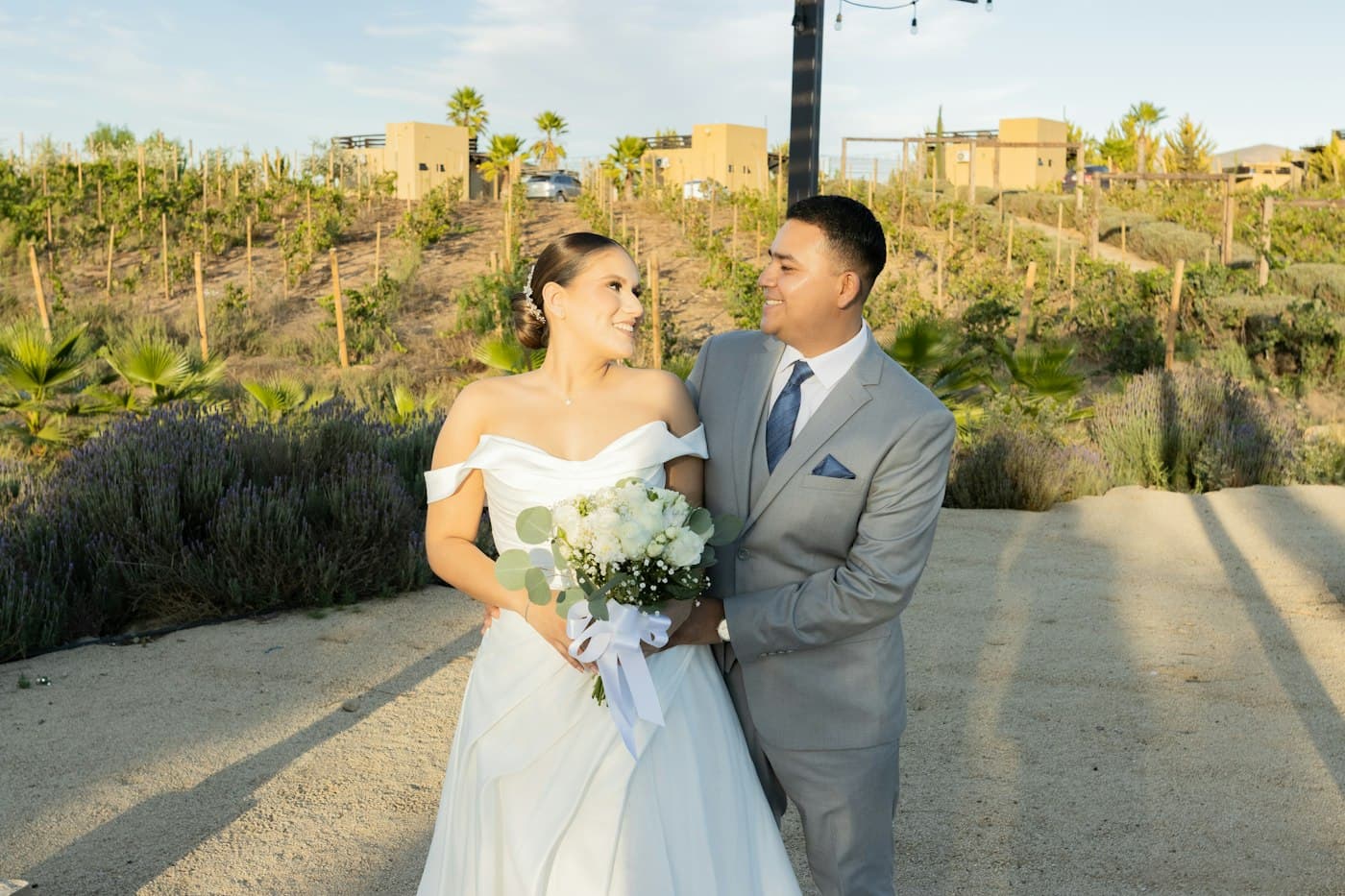
Classic, or traditional, wedding photography is planned and posed: the key moments led by the photographer, the couple and every family group photographed looking at the camera, often from a list agreed in advance. It is the style of most family albums from earlier generations, and many families still expect it — especially at a large wedding with grandparents, godparents and cousins who all want their photo with you.
In a whole gallery, look for whether anything is unposed at all, and how relaxed the groups look. A good classic photographer gets a large family through many groups quickly without anyone feeling herded.
It suits you if a complete set of family photos matters as much as everything else. Many photographers who call themselves documentary will also work through a planned family list; ask how long it usually takes and who gathers the groups.
Film and the film look
Some photographers shoot real film — 35 mm or medium format — for part or all of the day; others shoot digital and edit it to look like film. Both aim for the same family of colour: fine grain, soft contrast, gentle greens, warm skin. They are not the same service. Real film is slower, costs money for every frame, gives fewer photos and adds lab time to delivery, and most film photographers also carry a digital camera for dark rooms and the evening.
In a whole gallery, ask which photos were on film, and look at the evening: if the party was digital, the change should not jump out at you. The full comparison — cost per roll, frames, risk and delivery — is in film vs digital wedding photography. See film photographers.
Light & airy or dark & moody?
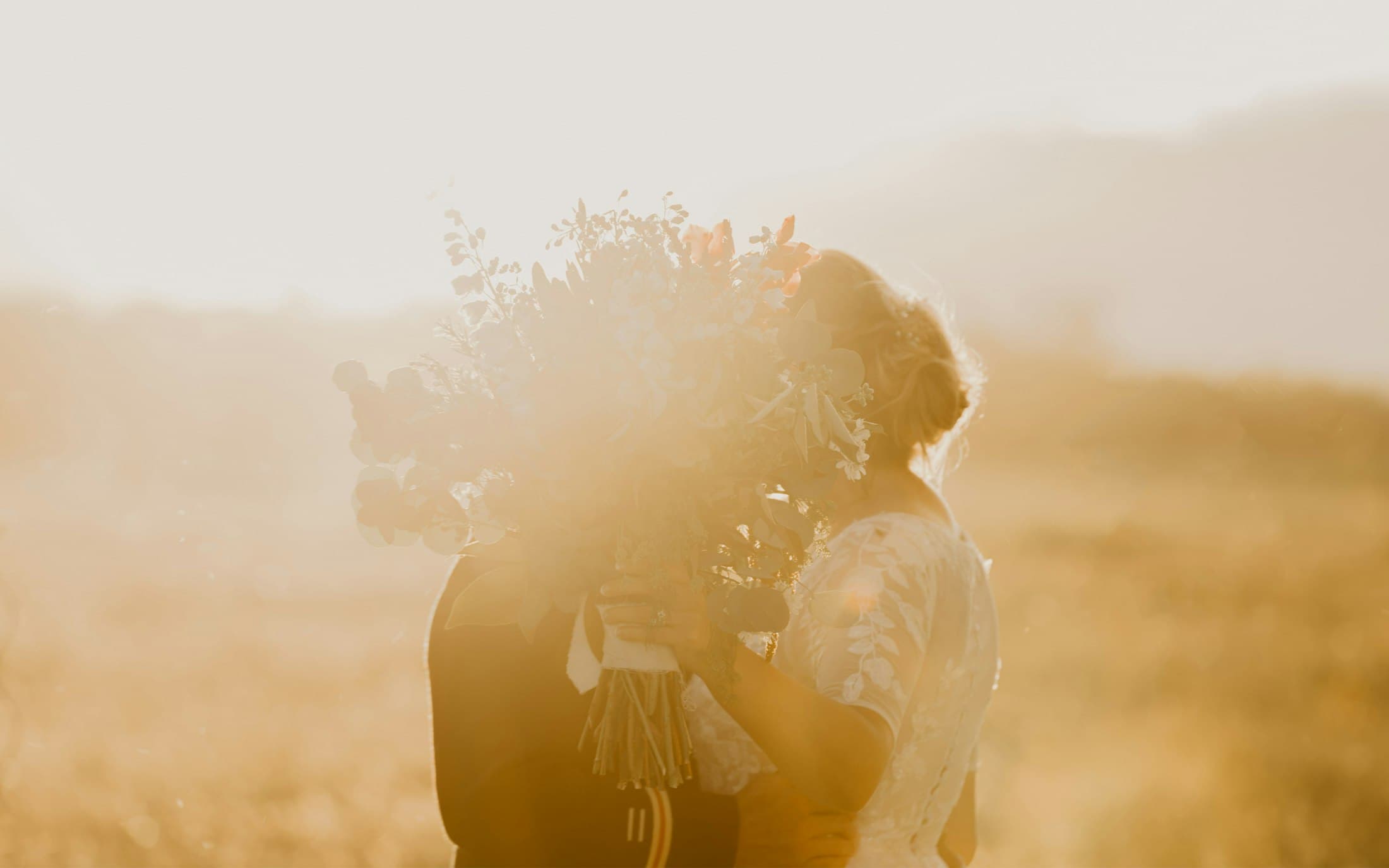
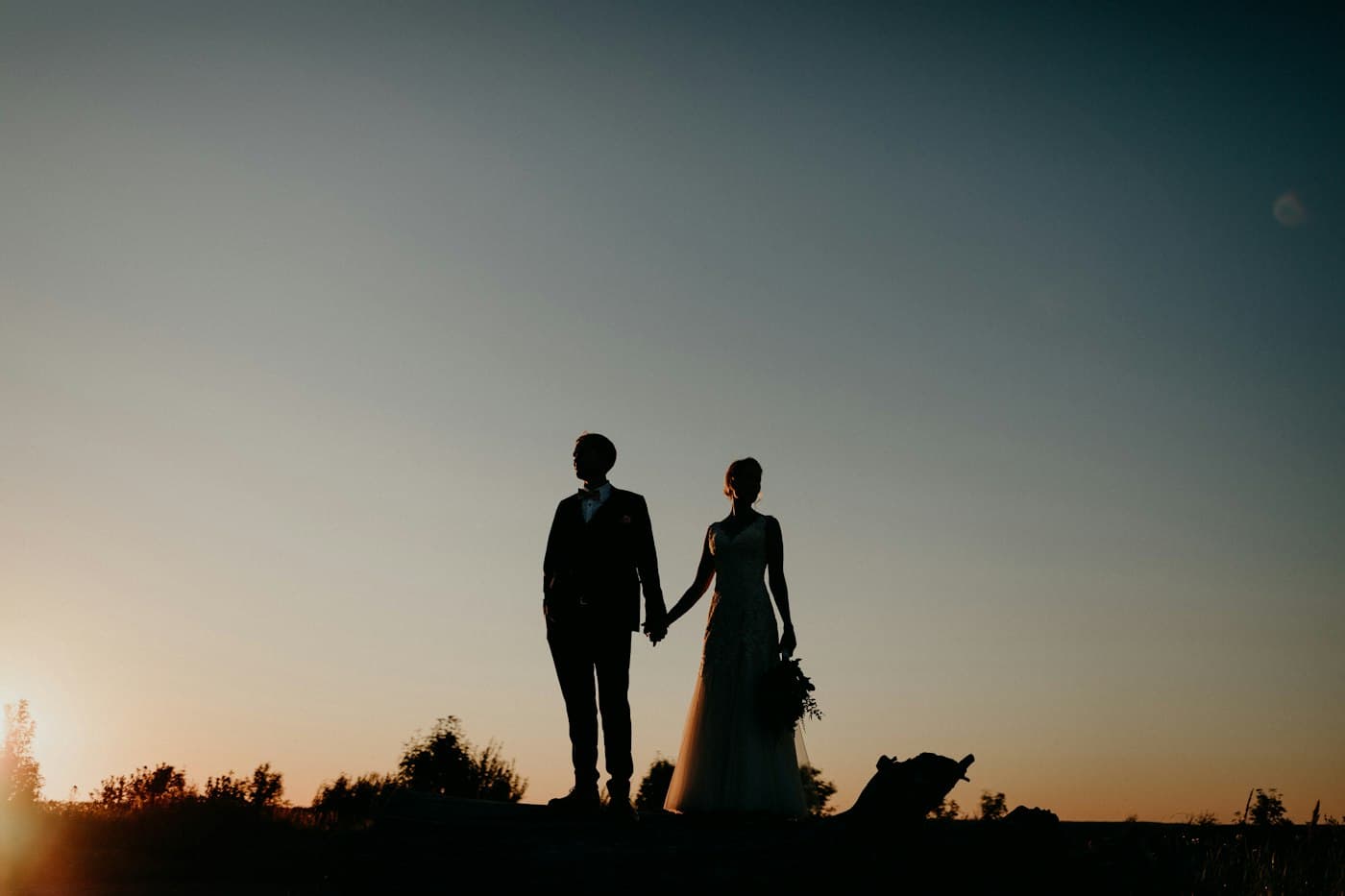
These two describe the finish, and they start before the edit. A light & airy photographer exposes brightly, lifts the shadows and keeps colours pale, so the frame fills with soft light and white. A dark & moody photographer exposes for the brightest part — usually a face — and lets the rest fall into shadow, with blacks that stay rich rather than muddy. Done well, both keep skin looking like skin and a white dress white.
Light & airy flatters gardens, beaches and bright quintas; it can struggle in a dark church or a reception at night, where lifting everything towards white turns it grey. Dark & moody flatters candlelit dinners, old stone and stormy coasts — a cellar in the Douro, a palace in Sintra, an Azores cliff in cloud — and can struggle in flat midday sun. That is why the whole-gallery test matters most for these two: ask to see the style in the light your wedding will actually have. See dark & moody photographers.
How to recognise a style in a whole wedding
A portfolio is a photographer’s best frames from many weddings. A complete gallery is what one couple received. Ask for two or three complete galleries from weddings like yours — a similar size, similar light, a similar time of year — and look for:
- The ratio of posed to unposed photos, and of the two of you to your guests.
- Midday and dark rooms, not only golden hour: summer sun is hard, and many receptions are indoors at night.
- The family photos: how many groups, how natural they look, how much of the day they took.
- Consistency: does the colour and the finish hold from the morning to the last dance?
- The quiet parts: the speeches, the dinner, the walk between places. Documentary photographers show themselves here; others go thin.
- How many photos there were, and how long the gallery took to arrive.
Every photographer on Lens & Vows is approved from three whole weddings, and those weddings are on their page. Real weddings gathers them in one place, in order, as the couples received them.
Mixing styles is normal
Very few photographers are only one thing. A common mix is documentary through most of the day, a set time for directed portraits, a planned list of family groups and one consistent edit. Ask about the mix in minutes rather than adjectives: “How long do the portraits take? How many family groups can you do, and in how long? Until when do you stay at the party?” The answers describe your day better than any label.
Which style for which wedding?
- A large family wedding with a long lunch and a late party: documentary coverage with a planned family list — or classic, if a complete set of groups matters most.
- An elopement on a clifftop: any approach works with two people; the finish matters more. Light & airy at sunrise, dark & moody in cloud and wind.
- A palace or city venue, outfits chosen with care: editorial, or fine art with editorial portraits.
- A garden quinta in June: fine art or light & airy, provided the photographer’s midday work holds up.
- A candlelit dinner in a wine cellar or a convent: dark & moody, or documentary from someone at ease in low light.
These are tendencies, not rules. The best fit is the photographer whose whole weddings you would happily hang on your own walls.
Questions couples ask
What is the difference between documentary and candid wedding photography?
Candid simply means unposed, and almost every photographer takes candid photos. Documentary is a whole approach: the photographer directs as little as possible all day, and the gallery is built from real moments with only short portraits. A classic photographer may take candid photos too, but builds the album around posed ones.
Is fine art the same as light and airy?
Not exactly. Fine art is about composition and intent — every frame treated as a considered picture. Light & airy is a finish: bright exposure and pale tones. Many fine art photographers edit light and airy, which is why the words get mixed up, but fine art can also be done in deeper tones.
Can a photographer edit our photos in a different style from their portfolio?
Rarely with the same result. A style is mostly made on the day — where the photographer stands, how they expose, which light they choose — so a different edit afterwards cannot recreate it. Choose a photographer whose existing whole weddings you love, rather than asking someone to change.
How can we tell whether a photographer is really documentary?
Ask for two or three complete galleries and count: how many frames of guests, speeches and the party, against how many posed portraits. A documentary photographer’s galleries are full of the moments between the big ones. If every gallery is mostly portraits, the label is decoration.
Is dark and moody a good choice for a summer wedding in Portugal?
It can be, but ask to see it in bright sun. Summer ceremonies in Portugal often take place in full daylight, and moody work that only shines at night or under cloud will suit part of your day. Ask the photographer for a complete summer daytime wedding.
Does the style change the price?
Not by itself. The price follows hours, people, travel, the date and what you take home. Real film is the exception, because rolls, developing and scanning cost money for every frame. Couples who love the look but not the cost can ask for a film-style edit of digital photos.
What is a “film look” if the photographer shoots digital?
It is a way of editing digital photos so they resemble film: softer contrast, fine grain, gentle colour and warm skin. It gives a similar feel without the cost per frame or the lab time. If real film matters to you, ask which photos in a gallery were actually shot on film.
Where to go next: how to choose a wedding photographer, step by step, or browse photographers and filter by style.
Sources
- Aftershoot — Wedding photography styles: 11 popular styles explained (December 2024) (opens in a new tab) · aftershoot.com
- Susan Stripling — How to choose your wedding photography style (opens in a new tab) · susanstripling.com
- Laura Fitzgerald Photography — What “dark & moody” actually means in wedding photography (February 2026) (opens in a new tab) · laurafitzgeraldphotography.co.uk