There are three common ways to marry in Portugal. A civil marriage is handled by a Conservatória do Registo Civil and is legally binding from the day it takes place. A Catholic wedding also has civil effect, but the civil paperwork still starts at a Conservatória. A symbolic ceremony has no legal effect at all: you marry legally at home, before or after, and hold the ceremony you want in Portugal.
If you want the wedding in Portugal to be the legal one, most of the work is paperwork: gathering documents in your home country, having them legalised and translated, and opening the process at a Conservatória well ahead of the date. If you would rather put that effort into the day itself, a symbolic ceremony is the simpler road — and many couples from abroad take it.
The three ways to marry
- Civil. Done through a Conservatória do Registo Civil, in Portuguese, by a registrar. Legally binding in Portugal; ask your own country how it should be recognised and registered there.
- Catholic. A church wedding with civil effect, under the Concordat between Portugal and the Holy See. The civil preliminary process still happens at a Conservatória; the parish takes care of the religious side.
- Symbolic. Any ceremony you like, led by anyone you like, wherever you are allowed to hold it. It has no legal effect, so the legal marriage happens separately, usually at home.
Ministers of some other religious communities established in Portugal can also celebrate marriages with civil effect, after the same preliminary process at a Conservatória. If that applies to you, ask the Conservatória and your own community how it works in your case.
The civil route, step by step
Everything begins with the processo preliminar de casamento — the preliminary marriage process. In outline:
- Find your Conservatória. You open the process at a Conservatória do Registo Civil. Ask them early which documents they want, in what form, and how recent each one must be.
- Gather and prepare the documents. Papers from abroad usually need legalising and translating first (see below).
- Declare your intention to marry. At the Conservatória you declare that you intend to marry and hand in your documents. Ask whether you both need to be there in person.
- The registry checks. The Conservatória checks that there is no impediment, then authorises the marriage.
- Marry within the set period. Once authorised, the marriage has to take place within a set period. Ask how long it is, and plan so that your date falls inside it.
- Registration. After the ceremony the marriage is registered, and you can ask for a marriage certificate, the certidão de casamento.
The documents you will usually need
Your Conservatória will give you the exact list. For foreign citizens it usually includes:
- A valid passport or national ID card for each of you.
- A full birth certificate. It is often required to have been issued recently, so check how recent it must be before you order it.
- A certificate of legal capacity to marry, or of no impediment, from your home country. Some countries issue exactly this; others use a different document. Your embassy or consulate will know which one applies to you.
- If either of you has been married before, proof that the earlier marriage ended: a divorce decree or a death certificate.
Documents issued abroad usually need two more steps. First, legalisation: an Apostille if your country is part of the Hague Convention, otherwise legalisation through a consulate. Second, a certified Portuguese translation. Both take time, and some documents are only accepted if they are recent, so the order matters: not so early that a certificate goes stale, not so late that the translation holds everything up.
Language, interpreter and witnesses
The civil ceremony is conducted in Portuguese. If either of you does not speak Portuguese, an interpreter is usually required — ask the Conservatória how to arrange one. Ask, too, whether you need witnesses, and if so, what identification they should bring.
Where the civil ceremony can happen
The simplest option is the Conservatória itself, in a short ceremony. By arrangement, a registrar can also marry you at another place — a garden, a quinta, a hotel — at extra cost. Whether that is possible for your date, hour and place is up to the Conservatória, so ask before booking anything that depends on it.
Same-sex couples
Same-sex marriage has been legal in Portugal since 2010, and the civil process is the same for every couple. If you are marrying in Portugal because you cannot marry at home, ask your own country’s embassy or consulate how a Portuguese marriage will be treated there.
A Catholic wedding
A Catholic wedding in Portugal has civil effect, so you do not need a separate civil ceremony. The civil side still begins at a Conservatória with the preliminary process; when it is complete, the Conservatória issues a certificate for the parish where you will marry.
The religious side belongs to the Church: marriage preparation, baptism and confirmation certificates, and anything else the parish asks for. Couples from abroad usually start with their home parish, which liaises with the diocese in Portugal. Requirements differ from parish to parish, so start early and ask both what they need.
What a symbolic ceremony frees you to do
Many couples marry legally at home, before or after, and hold the ceremony in Portugal. With no paperwork attached to the ceremony, almost everything opens up:
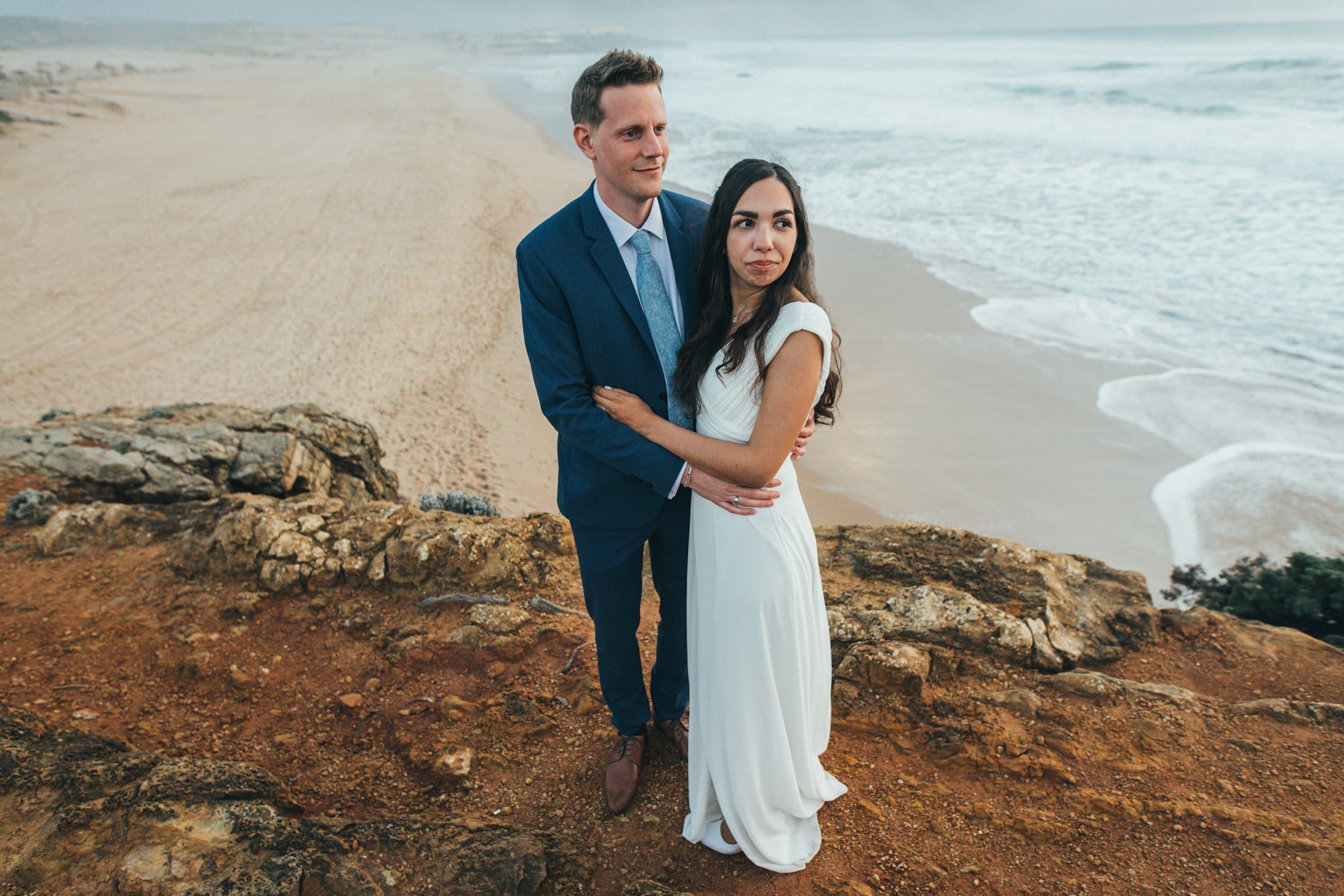
- The place. A clifftop, a vineyard terrace, a beach at dawn, a garden — wherever you are allowed to be, within the local rules for organised events (the elopement guide covers permits).
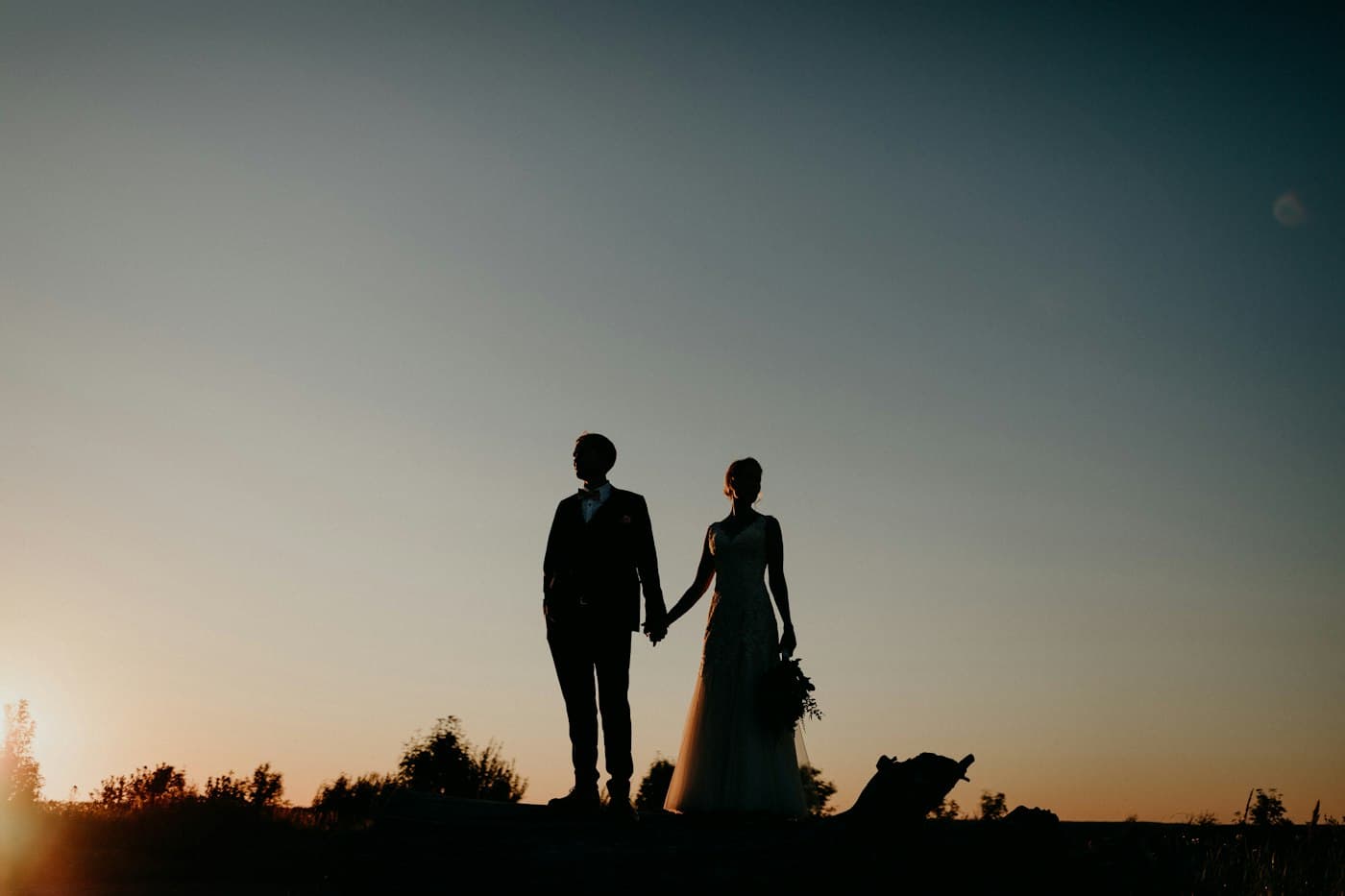
- The time. Sunrise, sunset, a Tuesday — the hour can follow the light rather than an office calendar.
- The language. Your own, or both of yours, with no interpreter.
- The celebrant. A friend, a family member, a celebrant you choose — or nobody but the two of you.
A timeline, in relative terms
There is no single schedule; it depends on your countries and your Conservatória. Start the paperwork several months ahead: apostilles and translations take time, and some documents must be recent when you hand them in. The order of things looks like this:
| When | Civil or Catholic wedding | Symbolic ceremony |
|---|---|---|
| As soon as you pick a date | Contact the Conservatória (and, for a church wedding, both parishes). Ask for the document list, how recent each document must be, and how long the authorisation lasts. | Decide where and when you will marry legally at home. Start looking at places and photographers. |
| A few months before | Order certificates, apostilles and translations in the right order. Open the processo preliminar. Arrange the interpreter. | Check the local rules for the place you have chosen. Settle the celebrant and the vows. |
| The weeks before | Confirm the authorisation, the time and the place with the Conservatória. Confirm the interpreter and any witnesses. | Go through the plan with your photographer, including a back-up spot if the weather turns. |
| After the wedding | The marriage is registered and you can ask for a certidão de casamento. For use abroad you may need an apostille on it. | Nothing to register in Portugal: your legal marriage is the one at home. |
Where your photographer fits in
- A civil ceremony is short. Tell your photographer what kind of ceremony it is, so they are in place before it starts rather than still looking for parking.
- At the Conservatória, ask whether photos are allowed during the ceremony and whether there is room for a photographer to move.
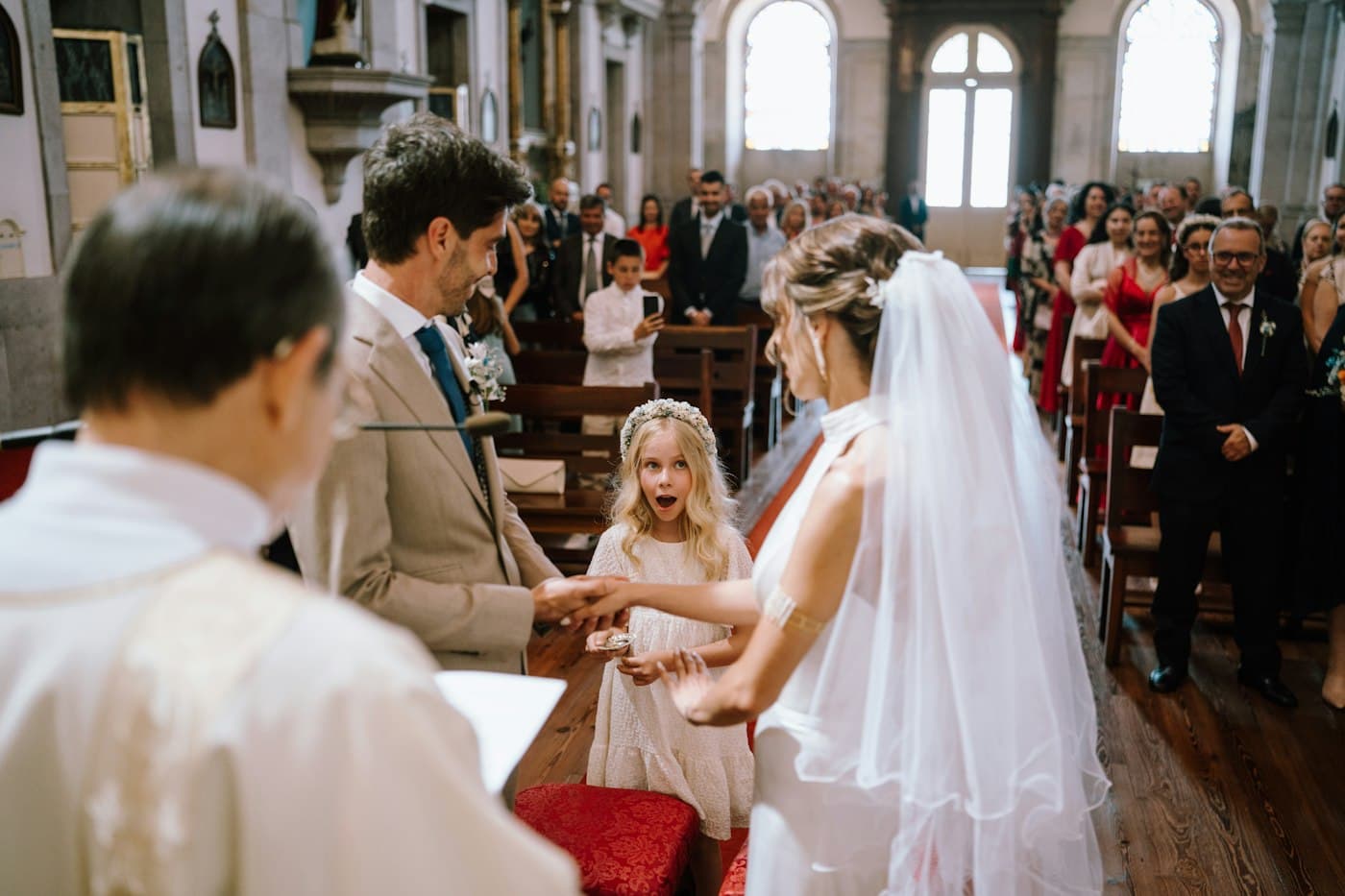
- In a church, ask the parish whether photos are allowed during the ceremony, whether flash is allowed, and where the photographer may stand. Rules vary from church to church, and a good photographer will want to know before the day.
- For a symbolic ceremony, your photographer can help decide where you stand: which way the light falls, what is behind you, where the guests will be.
Where to go next: if you are leaning towards something small, read how to plan an elopement in Portugal. To shape the day around the light, see a wedding-day timeline. Once you have a date, browse photographers, or tell us about your day and see who is free.