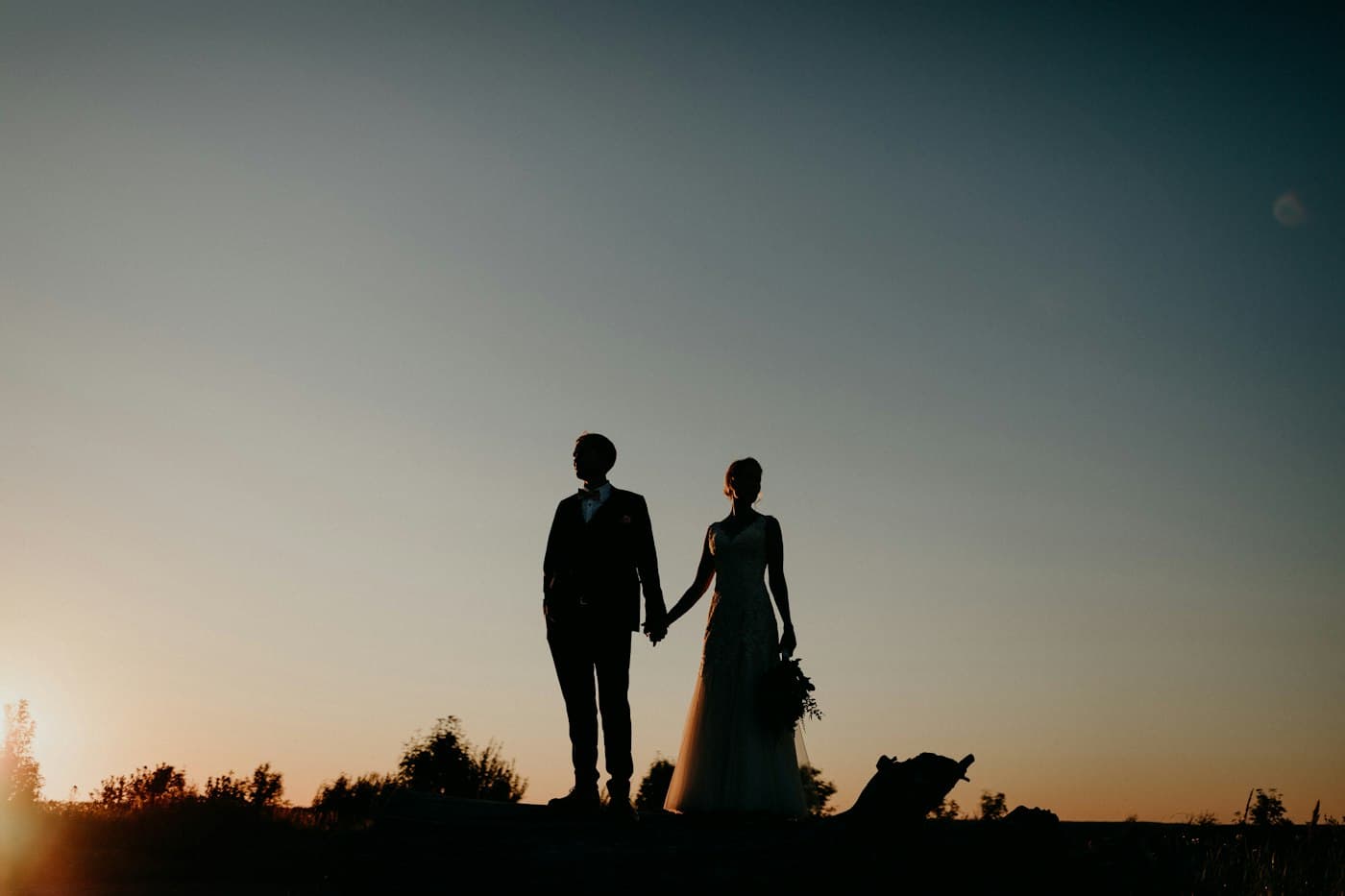
Build your timeline backwards from sunset. The time the sun goes down on your date decides when the ceremony should start, when portraits will glow rather than squint, and how much daylight is left for the family photos. In Portugal the swing is large: in June the sun sets after nine in the evening, in October around seven, and by early November, once the clocks have gone back, around half past five.
Then put two things into the plan on purpose: a short walk away from dinner for golden-hour portraits, and enough slack that a late bus or a long queue of hugs after the ceremony does not eat the best light.
Why the timeline decides your photos
A good photographer can work in any light, but nobody can move the sun. A ceremony at two in the afternoon in July puts everyone under hard light from straight above: squinting faces, dark shadows under the eyes, a white dress glaring against black shade. The same ceremony a few hours later, with the sun low and behind you, looks like a different day. Getting ready by a big window, a ceremony in shade or soft backlight, family photos in open shade and portraits in the last hour of sun — that sequence does a great deal of the work of making a gallery feel calm and warm.
Sunset times by month
Approximate times for Lisbon, mid-month, on the local clock. Sunset shifts quickly in spring and autumn, so check the exact time for your date and place.
| Month | Sunset in Lisbon, approx. | Golden hour from, approx. |
|---|---|---|
| April | 20:15 | 19:15 |
| May | 20:40 | 19:40 |
| June | 21:05 | 20:05 |
| July | 21:00 | 20:00 |
| August | 20:30 | 19:30 |
| September | 19:45 | 18:45 |
| October | 19:00 | 18:00 |
| Early November, after the clocks go back | 17:30 | 16:30 |
- Porto is within a few minutes of Lisbon.
- The Algarve sees the sun go down a little earlier in summer.
- Madeira is further west on the same clock, so sunset there is later than in Lisbon all year.
- The Azores keep their clocks an hour behind the mainland, so check their times in local Azores time.
- The clocks go back on the last Sunday of October. A midsummer sunrise in Lisbon is a little after 6:10, if you are considering a dawn ceremony.
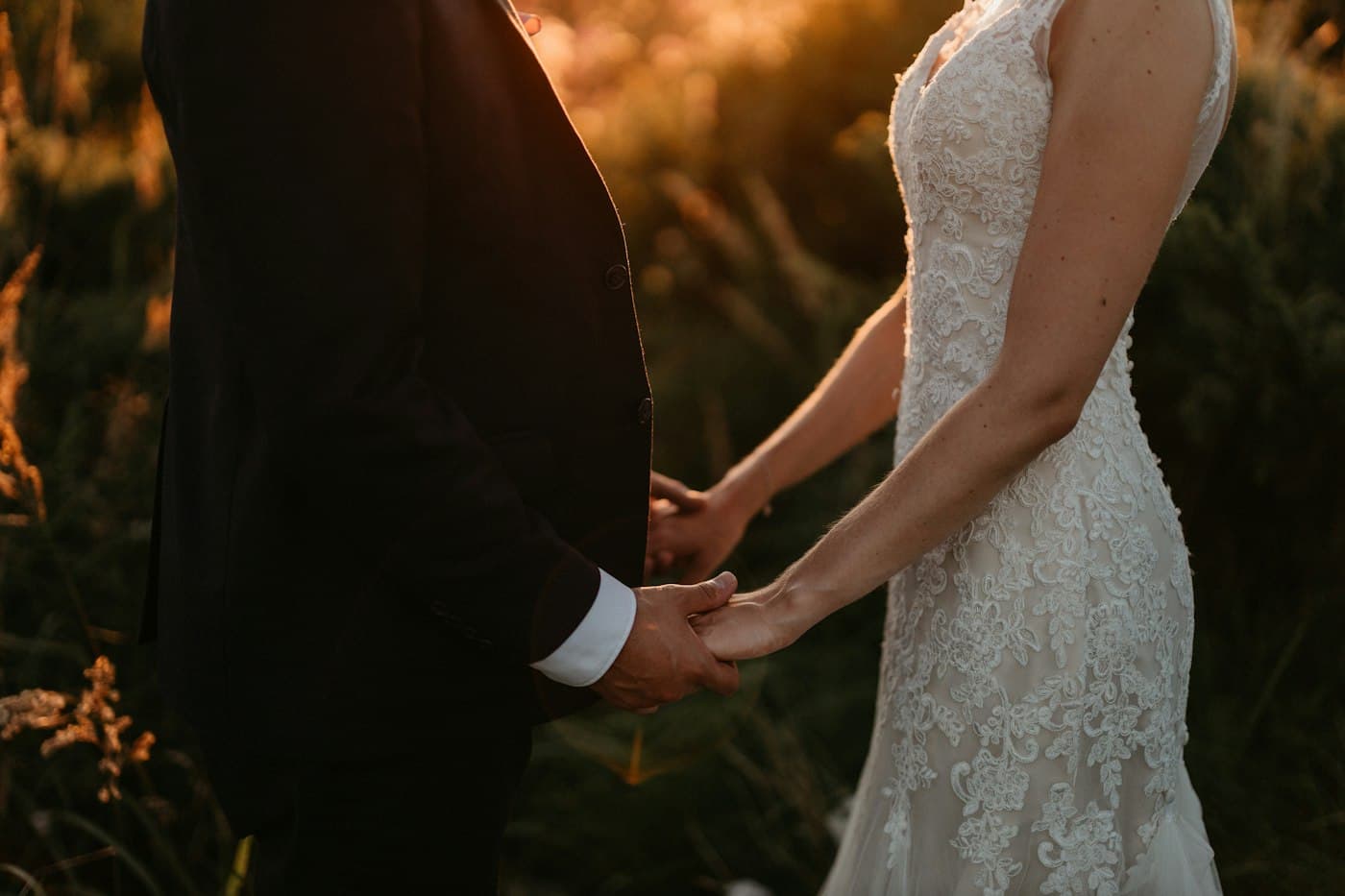
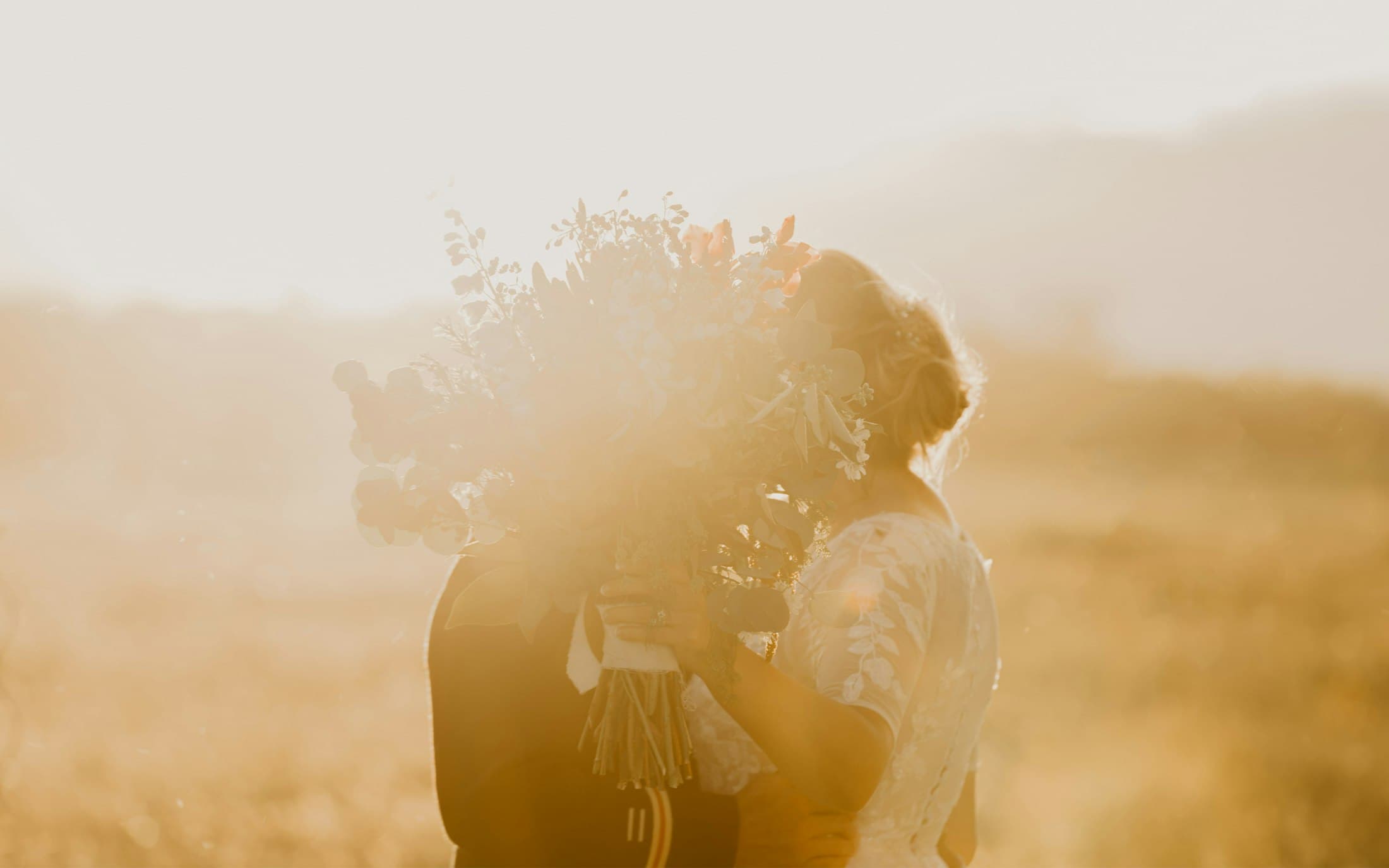
Golden hour is roughly the last hour before sunset: low, warm, forgiving light. Blue hour is the short time after the sun has gone, when the sky turns deep blue and lit windows begin to glow — lovely for a few frames with the venue behind you.
Golden-hour portraits
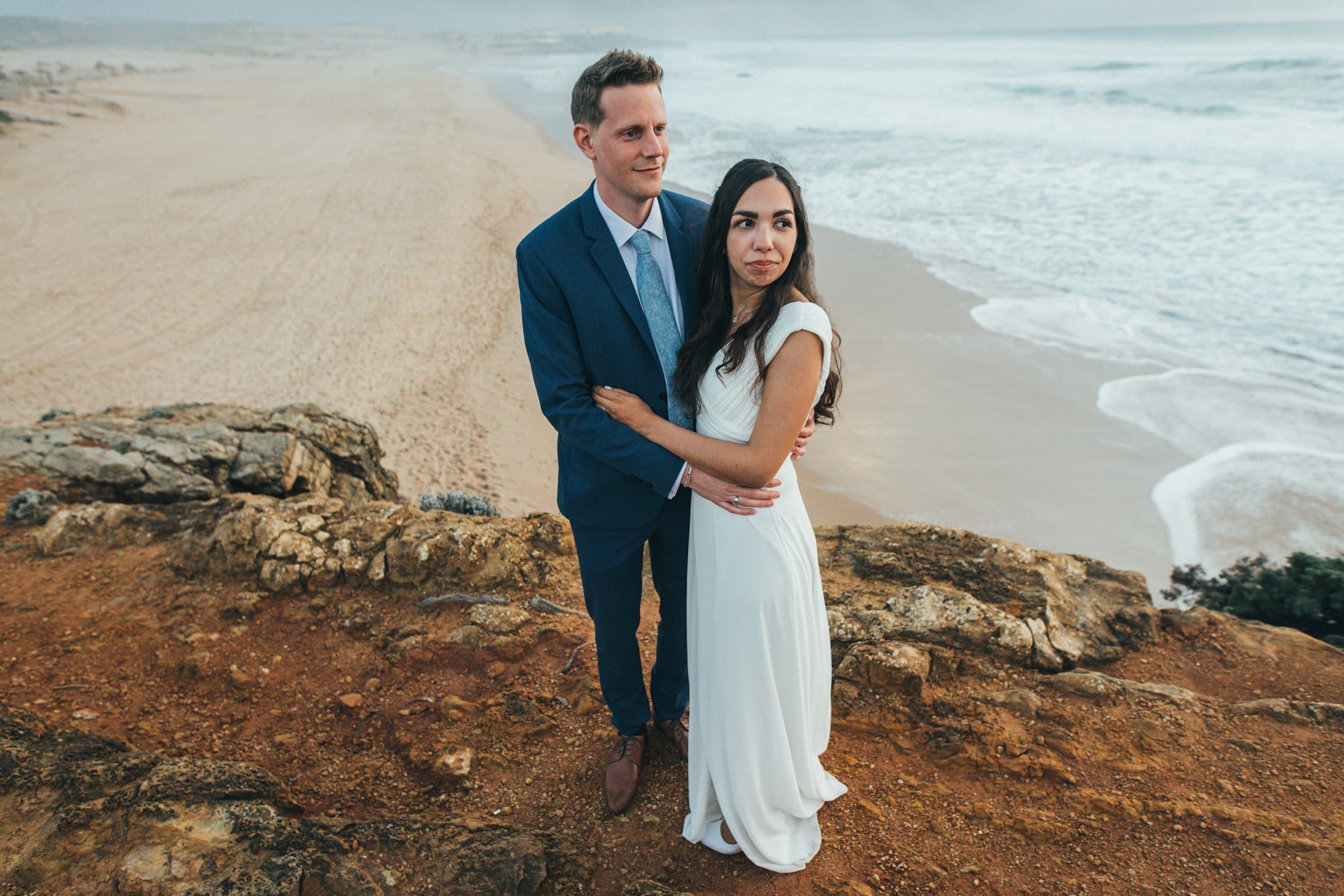
You do not need to leave your own party for long. Plan a short walk away from dinner, fifteen to twenty minutes, in the last hour before sunset — ideally between courses. Tell the venue and whoever runs the evening so the food waits for you, and ask your photographer to pick the spot in advance so you are not wandering about looking for one. In June that hour falls well into dinner; in October it often falls during drinks, before anyone sits down.
Getting ready, first look and ceremony
- Getting ready. Choose the room with the biggest window, not the biggest bed. Clear the clutter, keep the dress, shoes and rings together, and switch off the overhead lights — daylight from a window is softer and truer.
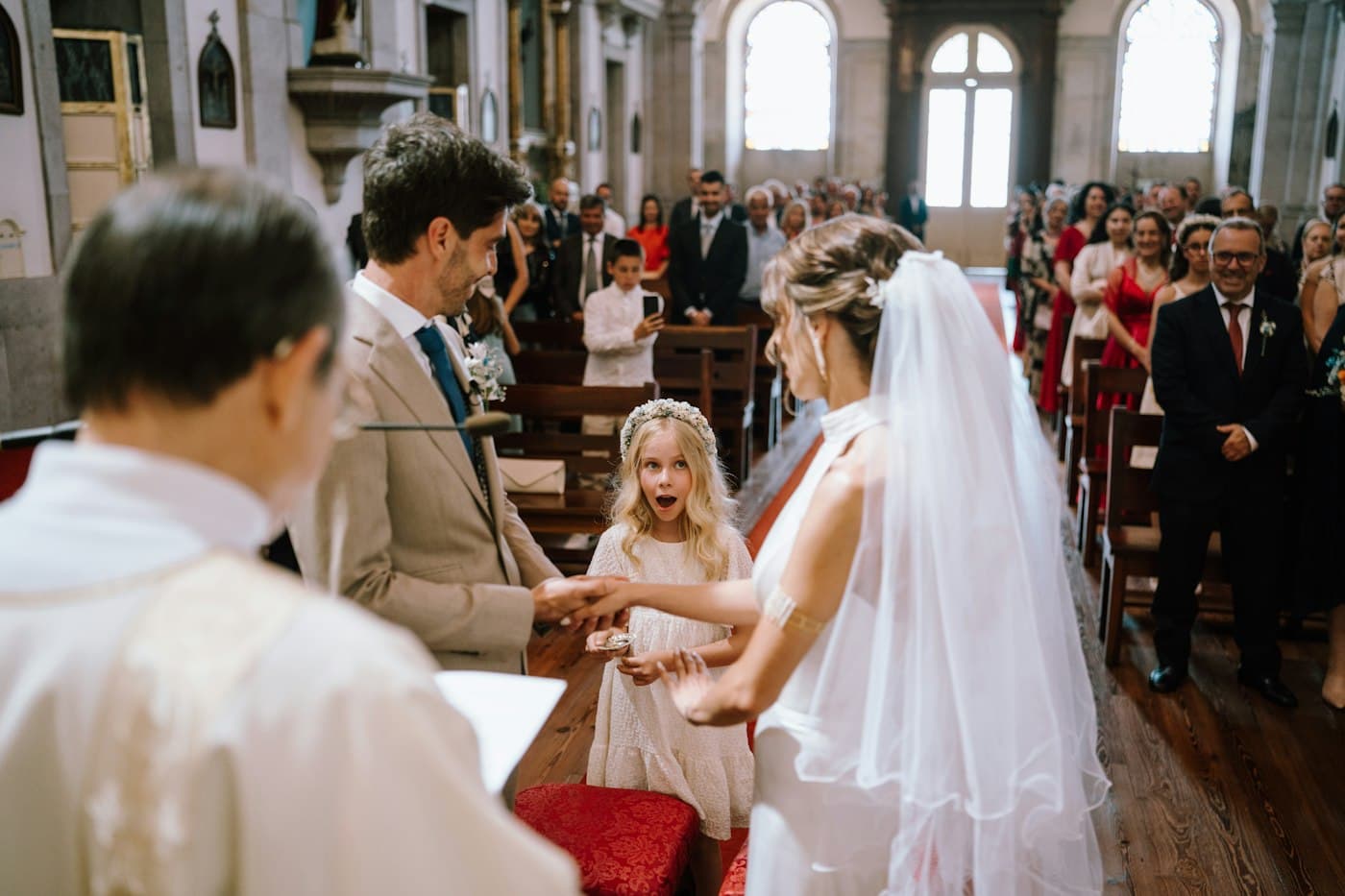
- First look or not. A first look, seeing each other privately before the ceremony, lets you do couple portraits and some family photos earlier and frees time later. Others want the first sight to happen at the ceremony. Both work; decide early, because it changes the schedule.
- Ceremony and the sun. In summer, midday and early-afternoon sun is harsh. Look for shade that covers both of you and the front rows — half-shade, with one of you in sun and one in shadow, is the hardest light of all. With no shade, ask whether you can stand with the sun behind you: backlight is far kinder than sun in your faces.
Family photos without the chaos
- Write a list of the groups, with names, and send it to your photographer before the day. Keep it to the combinations you really want on the wall.
- Ask one helper who knows everyone — a cousin, a close friend — to gather each group in turn. Your photographer does not know which one is your aunt.
- Do them straight after the ceremony, while everyone is still in one place, and in open shade rather than full sun.
- Allow a few minutes per group, more for the big ones, and tell guests where the drinks are so the rest drift away.
Portuguese rhythm: long meals, late parties
Portuguese weddings often have long lunches or dinners, with several courses and time to talk between them, and the dancing often goes on late into the night. If many of your guests are local, plan with that rhythm rather than against it. If most are flying in, ask your venue how late music can go on and how guests will get back, and decide how much of the party you want photographed.
Two example timelines
Examples, not rules: every venue, church and journey changes them. The June day has a late-afternoon ceremony; in October everything moves earlier, because the light goes earlier.
| June · sunset about 21:05 | October · sunset about 19:00 |
|---|---|
| 13:30 Photographer arrives: details, getting ready | 12:00 Photographer arrives: details, getting ready |
| 17:30 Ceremony | 16:00 Ceremony |
| 18:15 Family photos, in open shade | 16:45 Family photos, in open shade |
| 18:45 Drinks; candid photos of guests | 17:15 Drinks; candid photos of guests |
| 20:00 Dinner starts | 18:15 Golden-hour portraits, 15–20 minutes, during drinks |
| 20:30 Golden-hour portraits, 15–20 minutes, between courses | 19:00 Sunset |
| 21:05 Sunset, and a few blue-hour frames | 19:30 Dinner starts |
| 22:30 Speeches, cake, first dance | 21:30 Speeches, cake, first dance |
| 00:30 Photographer leaves, with the party going | 23:00 Photographer leaves, with the party going |
How coverage hours map onto the day
Full-day coverage usually runs eight to twelve hours; that is how the full-day packages on Lens & Vows are described. Both examples above come to about eleven hours, from getting ready to the first part of the party. If you choose fewer hours, trim the ends rather than the middle: start with the last part of getting ready, or let the photographer go after the first dance. The middle — ceremony, family photos, golden hour — is where the light and the story are.
Leave room for things to slip
- Add a buffer after the ceremony and around every journey: traffic, parking and walking in wedding shoes all take longer than planned.
- Give your photographer, your venue and whoever runs the day the same written timeline, with the sunset time printed on it.
- Ask your photographer what happens if the day runs over the hours you booked, so it is decided before the day rather than on it.
- Have a rain and wind plan you do not need to invent on the morning: see a rain plan.
Where to go next: still choosing a month? Read the best months by region. For a day with plan B built in, see a rain plan, and to find coverage for the whole day, browse full-day wedding photographers.