An elopement in Portugal is usually a short ceremony for two — or for two and a few people who matter — somewhere beautiful, followed by an hour or two of portraits. The legal side is either done at home, before or after, or through a Conservatória in Portugal. Once that is settled, the plan comes down to four choices: the landscape, the time of day, the season and the photographer.
The short version: pick the landscape first, then the light. Sunrise gives you empty places; sunset gives you warmth and an easy morning. Avoid the busiest weeks of summer at the best-known spots, dress for wind on the coast, and choose a photographer who knows the area well enough to have a second spot ready.
Legal or symbolic
A legal marriage in Portugal goes through a Conservatória do Registo Civil: a preliminary process with documents from your home country, usually legalised and translated, and a ceremony in Portuguese, with an interpreter if either of you needs one. By arrangement it can take place outside the Conservatória, at extra cost. All of that is in getting legally married in Portugal.
Many couples choose a symbolic ceremony instead: they sign the papers at home and keep the day in Portugal for themselves. Then the place, the hour, the language and the person who leads the vows are entirely yours to choose.
Choosing a landscape
Portugal fits very different scenery into a small country. A rough guide by region:
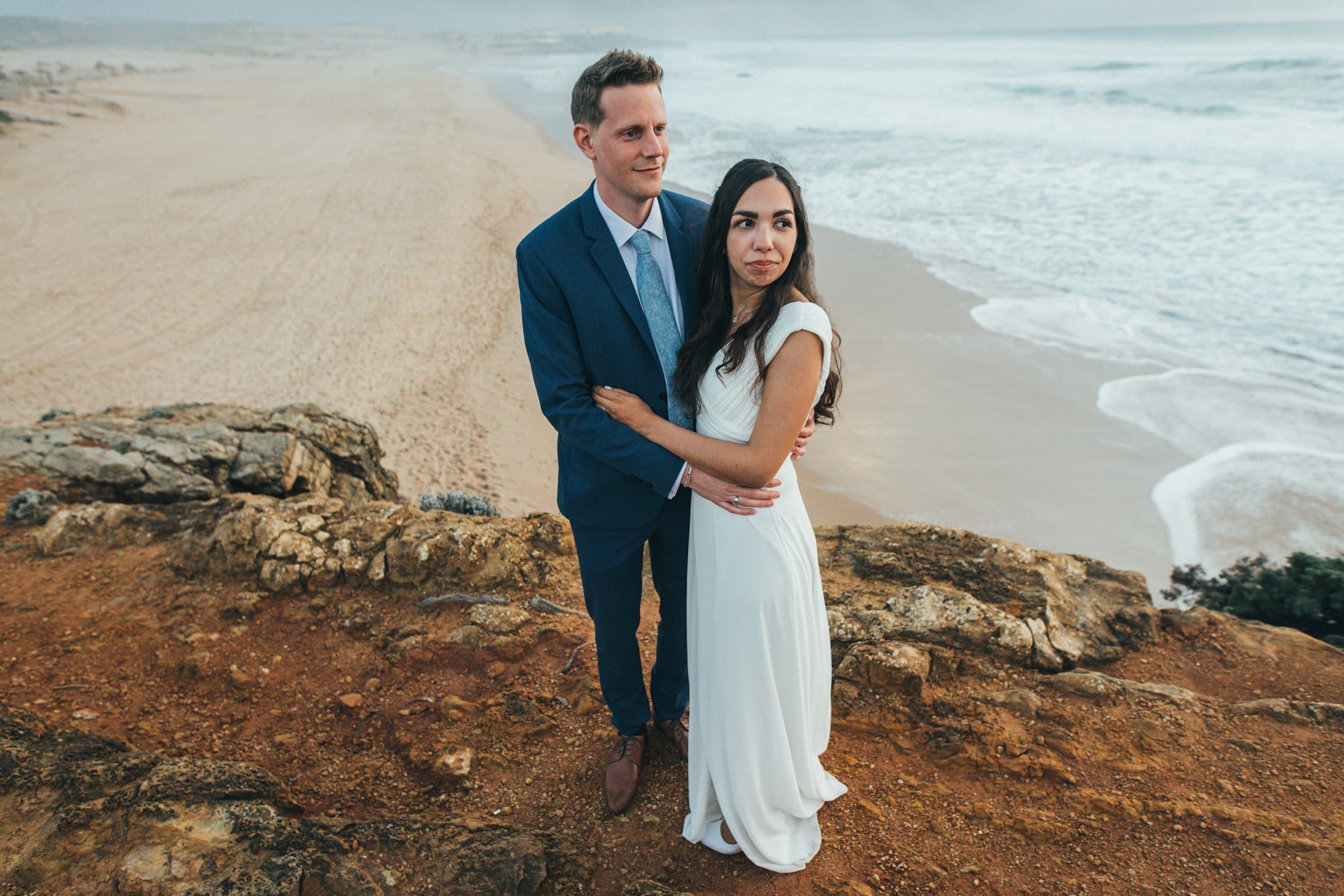
- [Lisbon & Sintra](/portugal/lisbon). Cliffs above the Atlantic near Cabo da Roca, the wooded hills of Sintra, and Lisbon’s miradouros over the rooftops. Sintra’s hills lie within the Sintra-Cascais Natural Park and keep their own cooler, often misty weather, even in summer.
- [Comporta](/portugal/comporta). Dunes, long beaches, pine woods and rice fields. Flat, quiet and soft in colour.
- [Porto & Douro](/portugal/douro). The terraced vineyards of the Douro valley, folding down to the river. Very hot in July and August.
- [Alentejo](/portugal/alentejo). Wide plains, cork oaks, olive groves and white villages. Big skies and long light, and serious heat in high summer.
- [Algarve](/portugal/algarve). Golden cliffs, sea stacks and small coves. The driest and sunniest part of the country.
- [Madeira](/portugal/madeira). Levadas — narrow paths along old irrigation channels — through laurel forest, and steep sea cliffs. Mild all year, though the weather can differ between the north and south coasts.
- [Azores](/portugal/azores). Crater lakes, a green volcanic coast and hydrangeas flowering in summer. The weather changes fast; “four seasons in a day” is a fair description.
Sunrise or sunset
- Sunrise gives you the quietest version of almost any place: viewpoints and beaches that are crowded by midday can be close to empty at dawn. The cost is an early alarm — in midsummer, hair and make-up happen in the dark.
- Sunset gives warmer light, an unhurried day and dinner afterwards. Expect more people at well-known viewpoints, and on the west coast in summer, more wind.
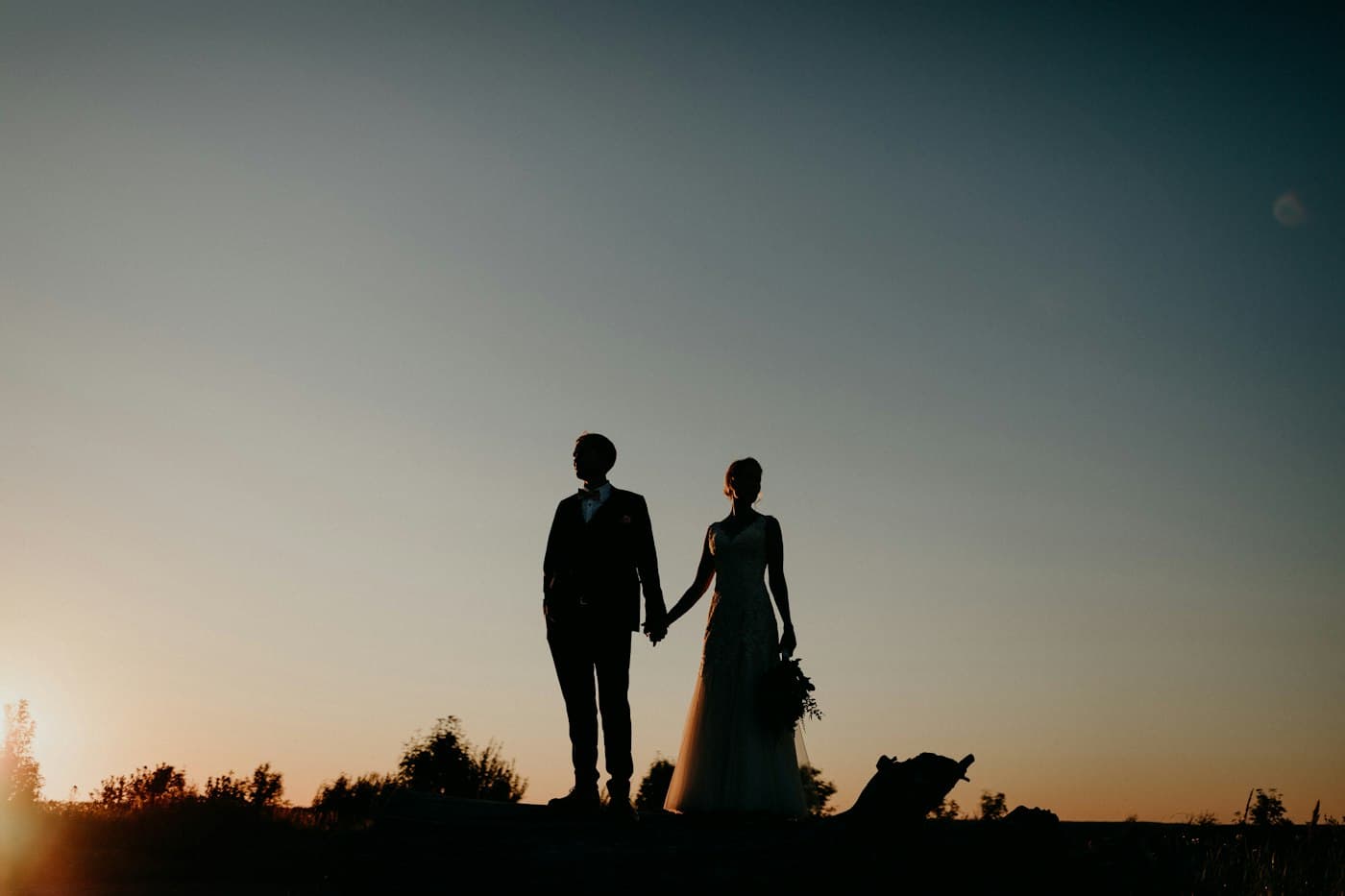
Either way, portraits are usually planned around golden hour, roughly the last hour before sunset or the first after sunrise. Check the times for your exact date and place; the wedding-day timeline has approximate sunset times month by month.
Seasons, weekdays and crowds
- Weekdays are quieter than weekends almost everywhere, and it is often easier to find your first-choice photographer free.
- Spring and autumn usually bring gentler light, fewer visitors and less heat than July and August.
- High summer is busy at the famous spots, very hot inland and windy on the west coast in the afternoons. It can still be beautiful: plan for early or late light, and have shade and water.
- Late autumn to early spring is when most of the rain falls, more in the north than in the south. Quiet places and low, soft light — with a real back-up plan.
For the climate region by region, see the best months by region.
Wind, shoes and tides
- Wind. On the west coast a strong north wind, the nortada, often picks up on summer afternoons. A long veil will fly — wonderful in photos for a minute, a nuisance for an hour. Consider veil weights or a shorter veil, hair that can take a breeze, and a layer to wear between photos.
- Shoes. Cliff paths are uneven and sandy, and calçada — the polished stone paving of Portuguese streets — is slippery and unkind to heels. Walk in flat shoes and change at the spot if you want something finer in the photos.
- Tides. Some coves almost disappear at high tide, and some beaches can only be reached at low tide. Check the tide times for your date before you fix the hour, and never let yourselves be cut off below a cliff.
- Cold and heat. A clifftop at sunrise can be cold even in summer; an inland afternoon can be fierce. Bring layers, water and sunscreen.
Permits and drones
Portraits on a public beach or at a viewpoint are one thing; an organised ceremony, with a celebrant, guests, chairs or decoration, is another. Some beaches, parks and town squares need permission from the câmara municipal (the town council) or from the park authority, and protected areas have their own rules. Ask your photographer and check locally, well before the date.
How long, and who comes
Most elopement coverage runs two to four hours. Two hours covers a short ceremony and portraits in one place; four gives you time for getting ready, a move between two spots, and both the ceremony and the last light. See elopements for how photographers on Lens & Vows put their packages together.
For a symbolic ceremony you can bring a celebrant, ask a friend to lead the vows, or simply read them to each other. Witnesses have no legal role in a symbolic ceremony, but one or two people you love change the feel of the day — and someone can hold the coats.
A sample half-day
An example, not a rule: a summer sunset elopement near the coast, counted back from sunset.
| When | What happens |
|---|---|
| About 3½ hours before sunset | The photographer arrives where you are getting ready: details, last touches, and the first time you see each other, if you want that moment on camera. |
| About 2½ hours before | Drive to the first spot. Allow for traffic, parking and the walk in. |
| About 2 hours before | The ceremony: vows, rings, and a few minutes simply to stand there. |
| About 1½ hours before | A toast and relaxed photos with anyone who came, then portraits as the light softens. |
| The last hour before sunset | Golden hour at the second spot — a cliff edge, a dune, a vineyard terrace. |
| Sunset and the short blue hour after | Last frames, then dinner. |
What to ask a photographer
- Do you know this area, and have you photographed there at this time of year and of day?
- Will you scout the spot beforehand, or can you show us photos from a recent visit?
- Where do we go if it rains, the wind is too strong or the place is crowded — what is the back-up spot?
- How do we travel between places, how long does it take, and does that time count in the coverage?
- Do we need permission for a ceremony there, and can you help us find out?
- What should we wear on our feet for the walk in?
- When will we see the photos, and how are they delivered?
Where to go next: browse elopement photographers or all photographers, read about the legal options, or tell us about your day and see who is free on your date.