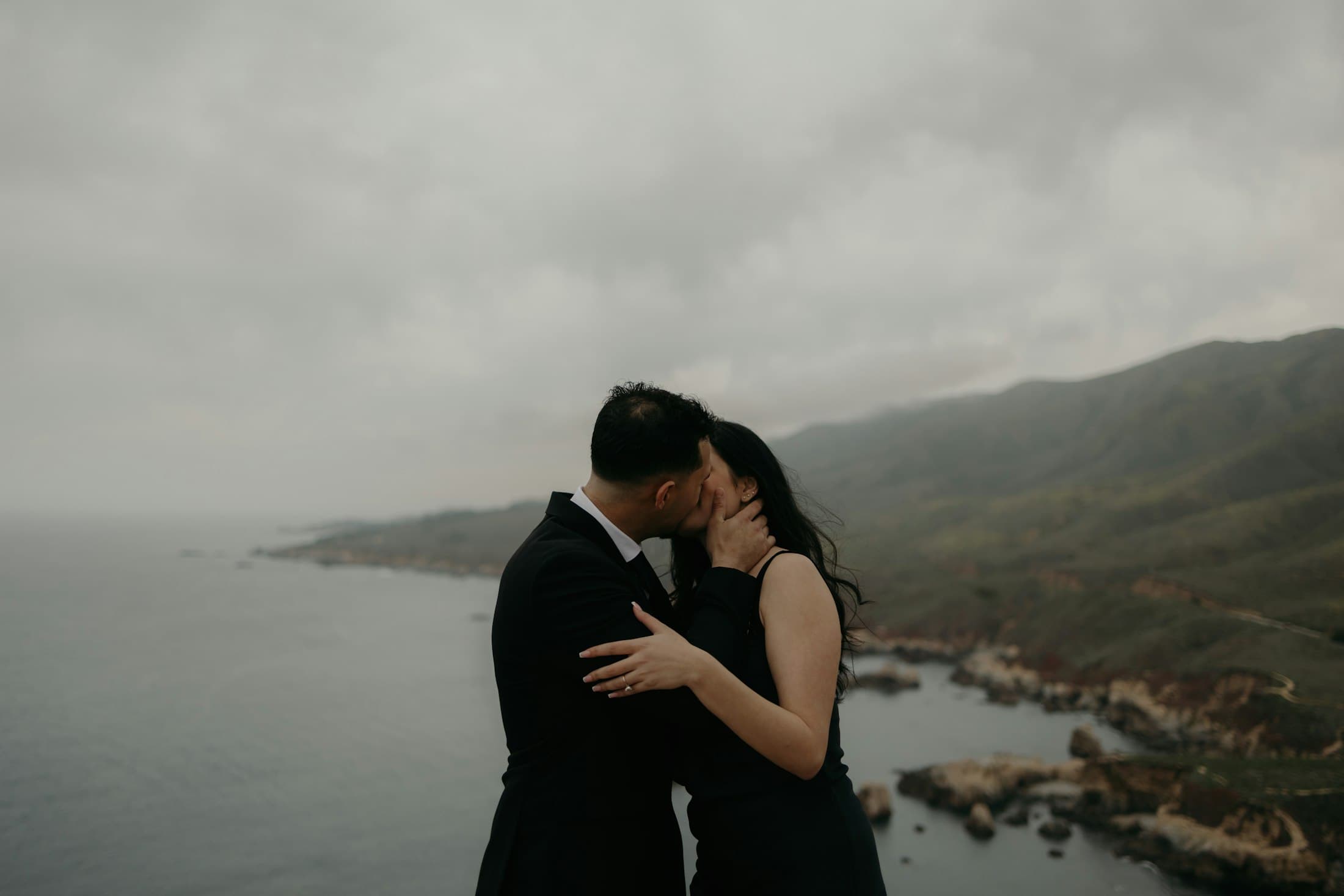
In Portugal, rain falls mostly from late autumn to early spring, and more in the north than in the south. A spring or autumn wedding in Porto, the Minho or the hills of Sintra should have a rain plan ready; a high-summer wedding in the Algarve is more likely to need a plan for heat and sun. Wherever you marry, a plan B is not pessimism. It is a decision you make calmly months ahead, so that nobody has to make it in a panic on the morning.
A good plan has three parts: where the day moves to if it rains, who makes the call and by when, and what you need on hand. And because the Portuguese summer brings its own weather, heat and wind deserve a plan too.
Where and when rain is more likely
- Season. Most rain falls between late autumn and early spring. Summer on the mainland is mostly dry, though a shower is never impossible.
- North and south. Porto & Douro and the Minho are wetter than the south. The Algarve is the driest and sunniest region.
- Sintra. The hills around Sintra have their own cooler microclimate and are often misty, even in summer, when Lisbon down the road is in full sun.
- Madeira. Mild all year, but the north and south coasts can have quite different weather on the same day — which also means a back-up spot may be a short drive away.
- Azores. The weather changes fast; “four seasons in a day” is a fair description. A rain plan belongs in every Azores wedding, in any month.
For the climate month by month and region by region, see the best months by region.
Decide plan B when you choose the venue
The best rain plan is chosen at the same time as the venue, because it mostly depends on the venue. Questions worth asking before you book:
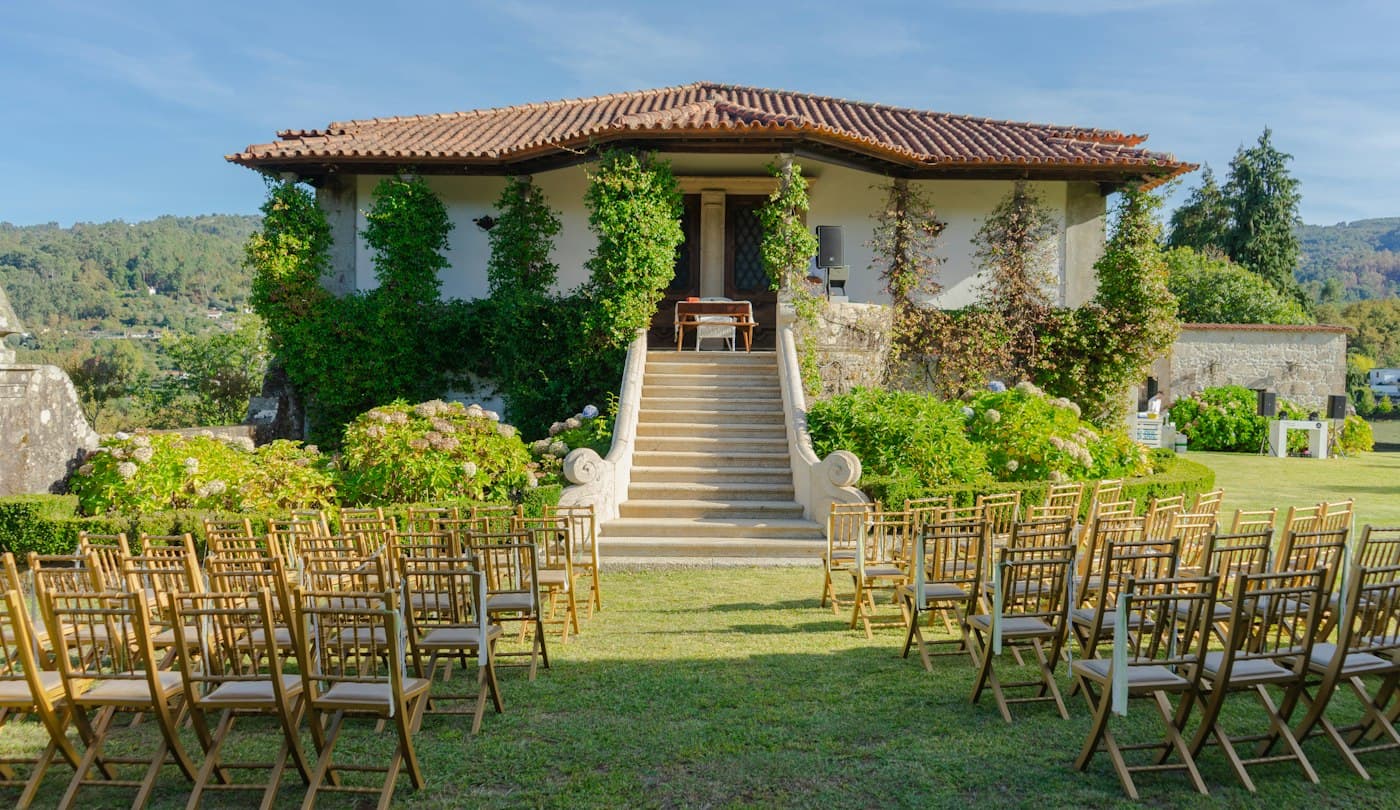
- Is there a covered space big enough for the ceremony, and another for dinner — or is it the same room, and how is it turned round between the two?
- Can a tent or marquee go up, who arranges it, and by when does it have to be ordered?
- When must the call be made on the day, and who makes it? Ask the venue the latest moment they can still switch the set-up.
- Is there somewhere covered, with good daylight, for portraits and family photos — a porch, an arcade, a cloister, a room with tall windows?
- If the ceremony is somewhere else, a church, a beach or a viewpoint, how will guests get between places in the rain?
Then make sure you actually like your plan B. If the covered space is a room you would hate to marry in, it is far better to know that now, while you can still change the venue or the season. Choosing a venue has more on what to look at before you sign.
What rain does to photos
Rain is not the end of good photos. Overcast light is soft and even: no squinting, no hard shadows, skin looks its best. And rain itself can be beautiful:
- Clear umbrellas keep faces visible and let the light through.
- Wet calçada, the stone paving of Portuguese streets, shines and holds reflections, especially at dusk when the lights come on.
- Backlit drops, caught against a dark background with light behind them, look like sparks.
- Doorways, porches and windows give soft, directional light for portraits.
- Mist in Sintra or over the Douro’s hills can make a landscape look painted.
What does not work so well is a dark room with a low ceiling and everyone crammed in. Ask your photographer how they handle dim interiors and whether they bring lighting, and show them the covered spaces at the venue — or photos of them — before the day.
A practical kit
- Umbrellas in neutral colours — white, clear or black — for the two of you, the parents and anyone in the ceremony. Bright umbrellas with logos end up in every photo.
- Towels, for hands, shoes and wet chairs.
- A second pair of shoes, and something to walk in from the car.
- A plan for hair: a style that survives damp air, and someone who can fix it.
- A shawl, jacket or wrap you would be happy to be photographed in.
- Cover for anything paper: vows, the seating plan, the guest book.
- Signs, or one named person, to send guests to the covered space if the plan changes.
Heat and wind are weather plans too
In much of Portugal, summer brings the opposite problem.
- Heat. The interior — the Alentejo and the Douro valley — is very hot in July and August. Put the ceremony in shade or late in the day, have water out wherever guests wait, offer fans or parasols, and keep the family photos short and in shade. Think of older guests and of anyone in a suit.
- Wind. The west coast often has a strong north wind on summer afternoons, the nortada. Ask the venue where the most sheltered spot is at the hour of your ceremony, and orient the ceremony so guests are not facing straight into it. Weight the veil or choose a shorter one, put candles in lanterns, and fix down anything light: signs, flowers, programmes, confetti cones.
- Sun. Midday sun is hard on people and on photos. A wedding-day timeline shows how to move the key moments into softer light.
What to agree with your photographer
- Back-up portrait spots under cover, at or near the venue — ideally seen in advance rather than found on the day.
- Whether they bring their own clear umbrellas, and lighting for dark interiors.
- What happens if the weather pushes the timeline back: can they stay longer, and how is that handled?
- Whether a short break in the rain is worth chasing for portraits, and who will tell you when it comes.
- For an outdoor ceremony far from the venue, the point at which you all agree to move indoors instead.
Where to go next: compare the weather where you are thinking of marrying in the best months by region, use choosing a venue to ask the right questions about covered space, and plan the day’s light with the wedding-day timeline.