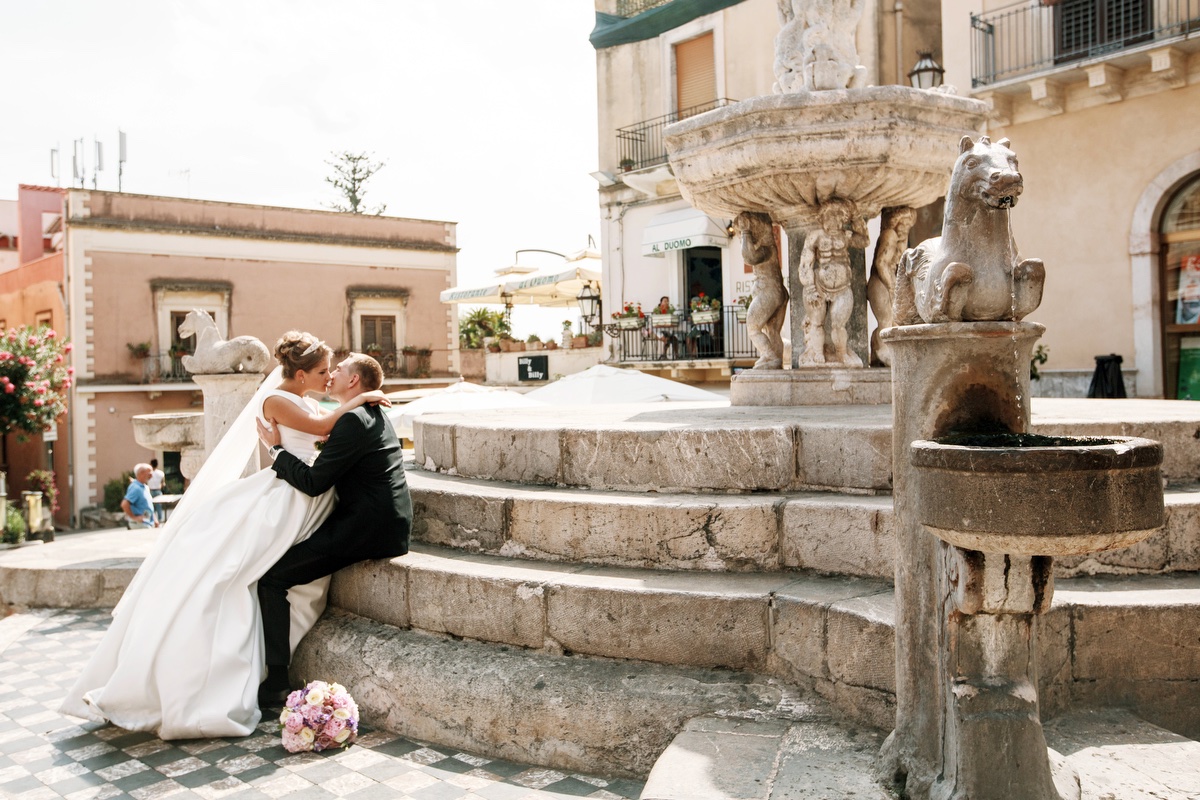
Founding photographerVerified — Identity verified by Lens & Vows

Natalia D.from €1,400
Paris, Provence +6 · RomanticWedding photographers in France
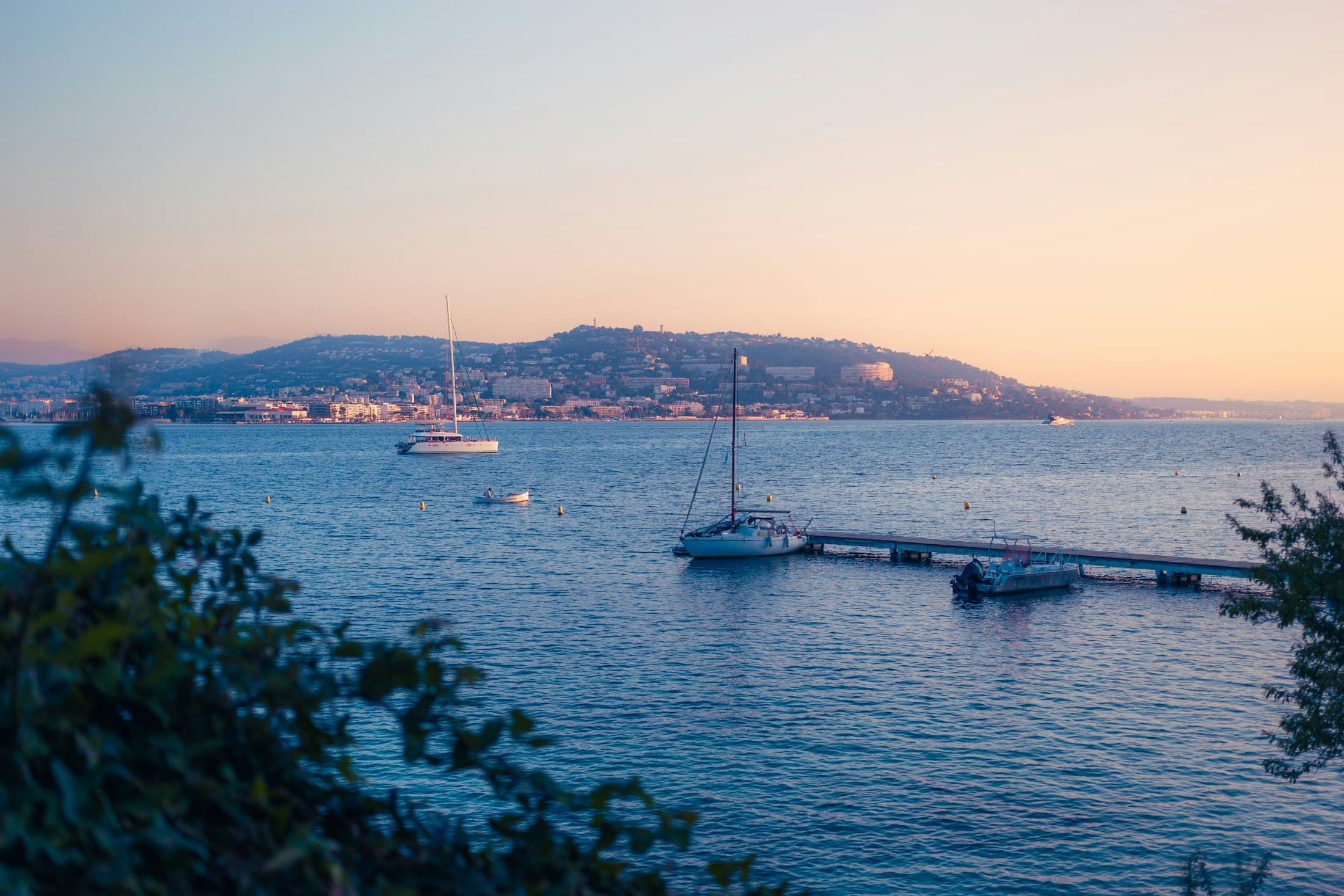
An old hill town above a yacht harbour, a bay of sand and palms, and two wooded islands a short boat ride away.
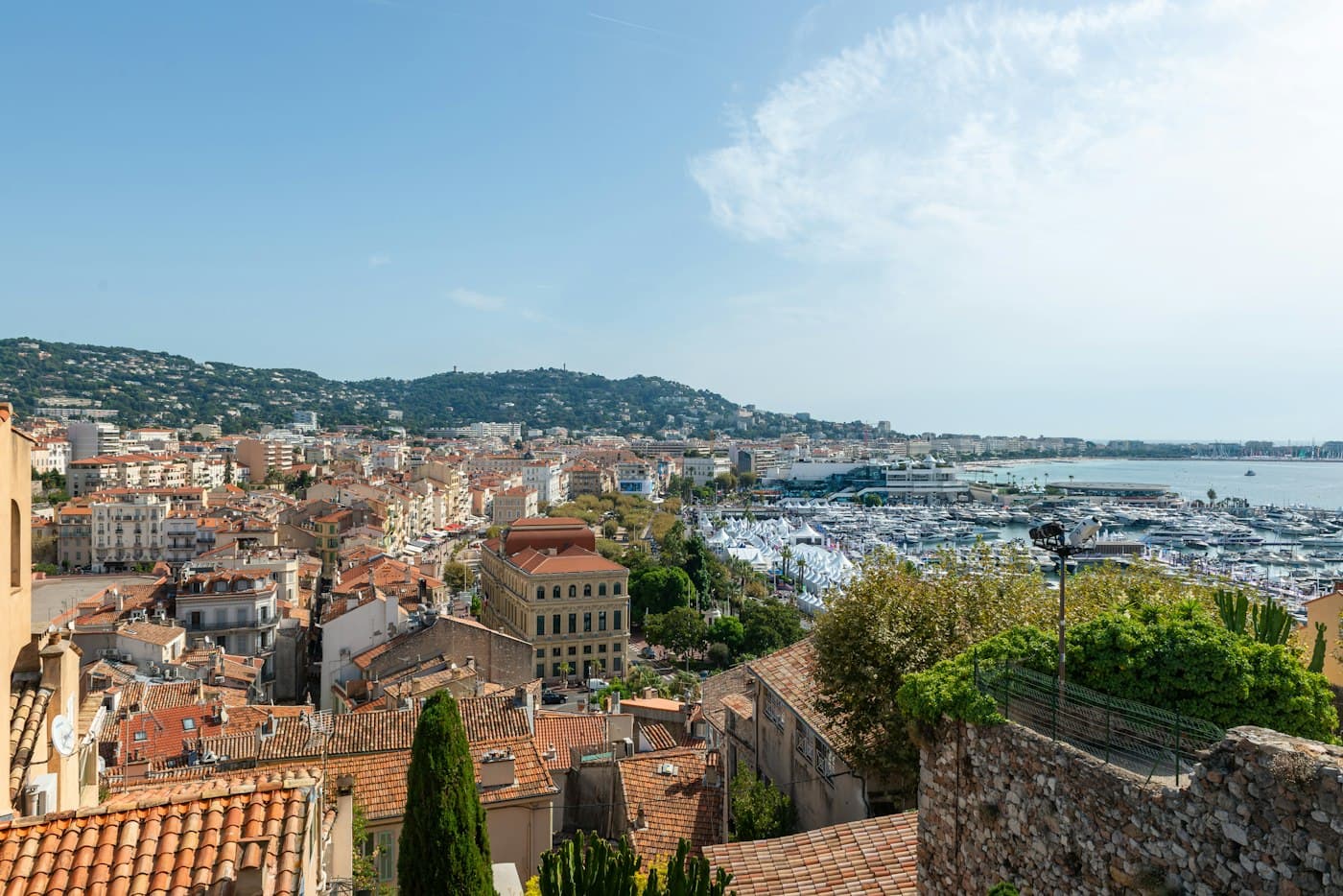
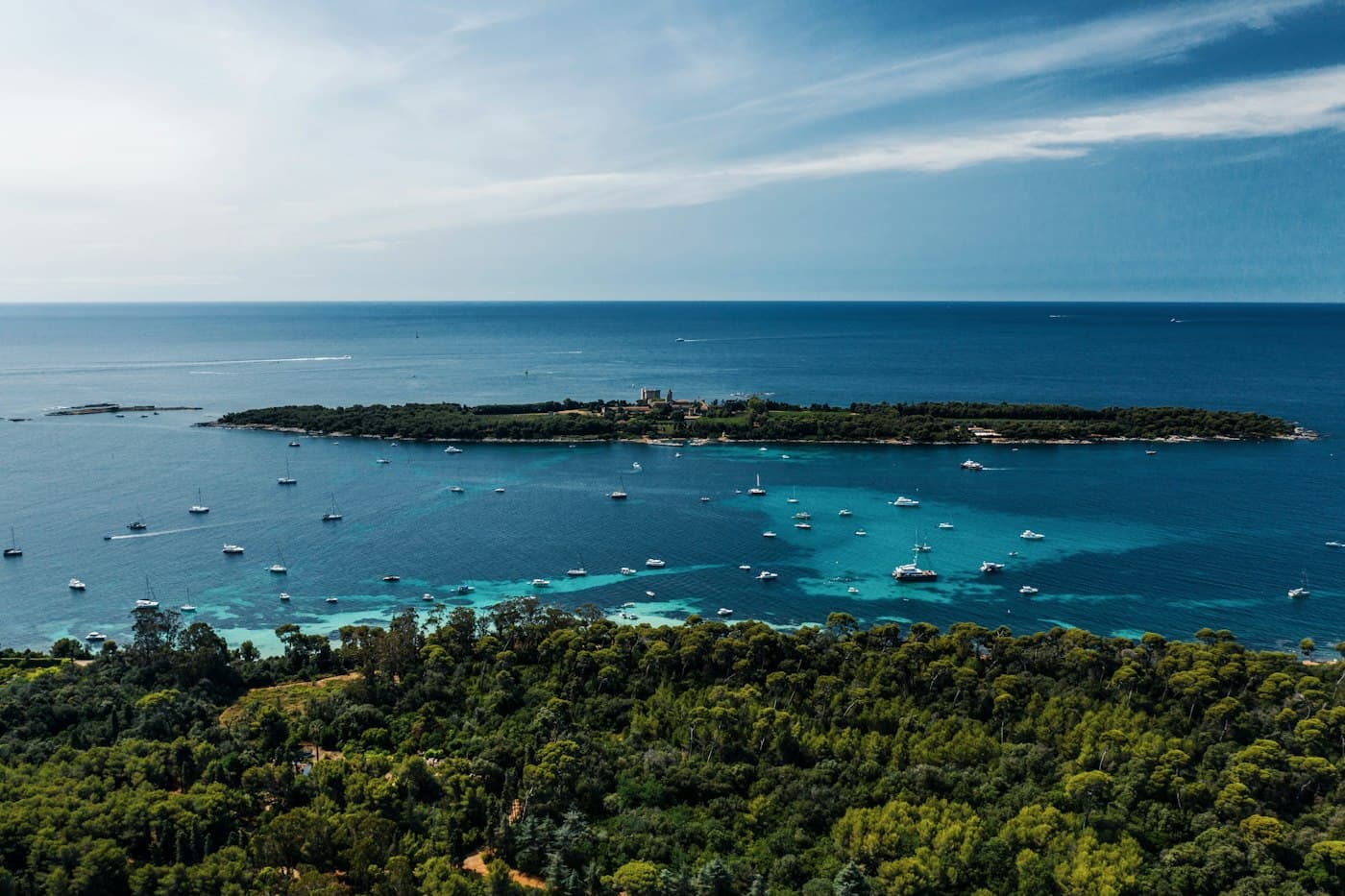
Cannes is two towns in one frame. On the hill to the west, Le Suquet — the old town, 66 m above the Old Port — keeps a watchtower begun in the 11th century and a Gothic church; along the bay runs the Croisette, 2.65 km of boulevard, palms and beaches out to the Pointe Croisette. Offshore lie the Lérins islands: Sainte-Marguerite with its pine and eucalyptus woods, and Saint-Honorat, where monks have lived since 410 and still make wine.
Weddings here are usually polished affairs — a hotel terrace or a villa in the hills, dinner by the sea — and the town’s calendar matters as much as the weather: the film festival (11–22 May 2027) and the big trade fairs at the Palais des Festivals fill the hotels. From late September to March, the sun sets behind the jagged outline of the Estérel across the bay.
Photographers
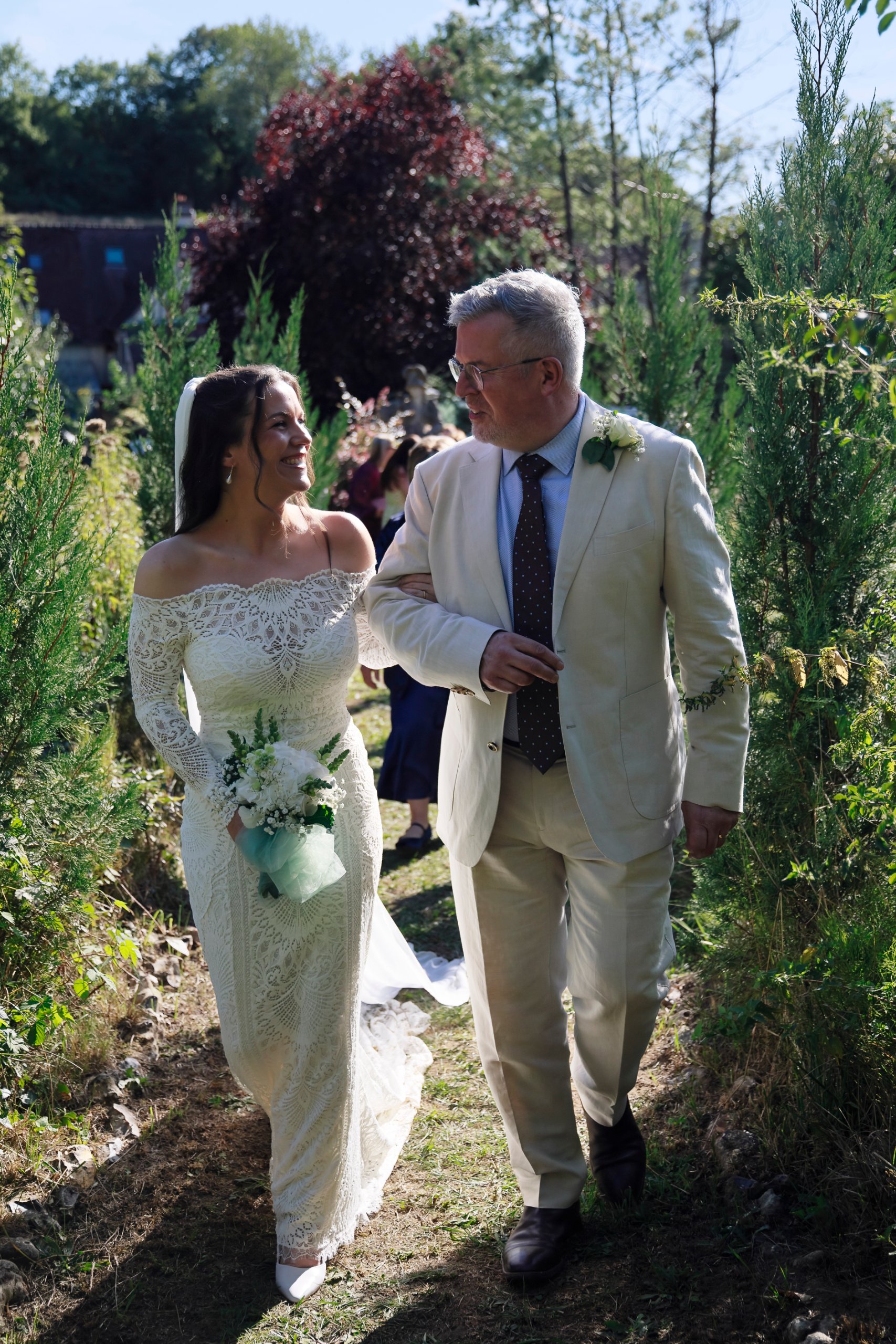
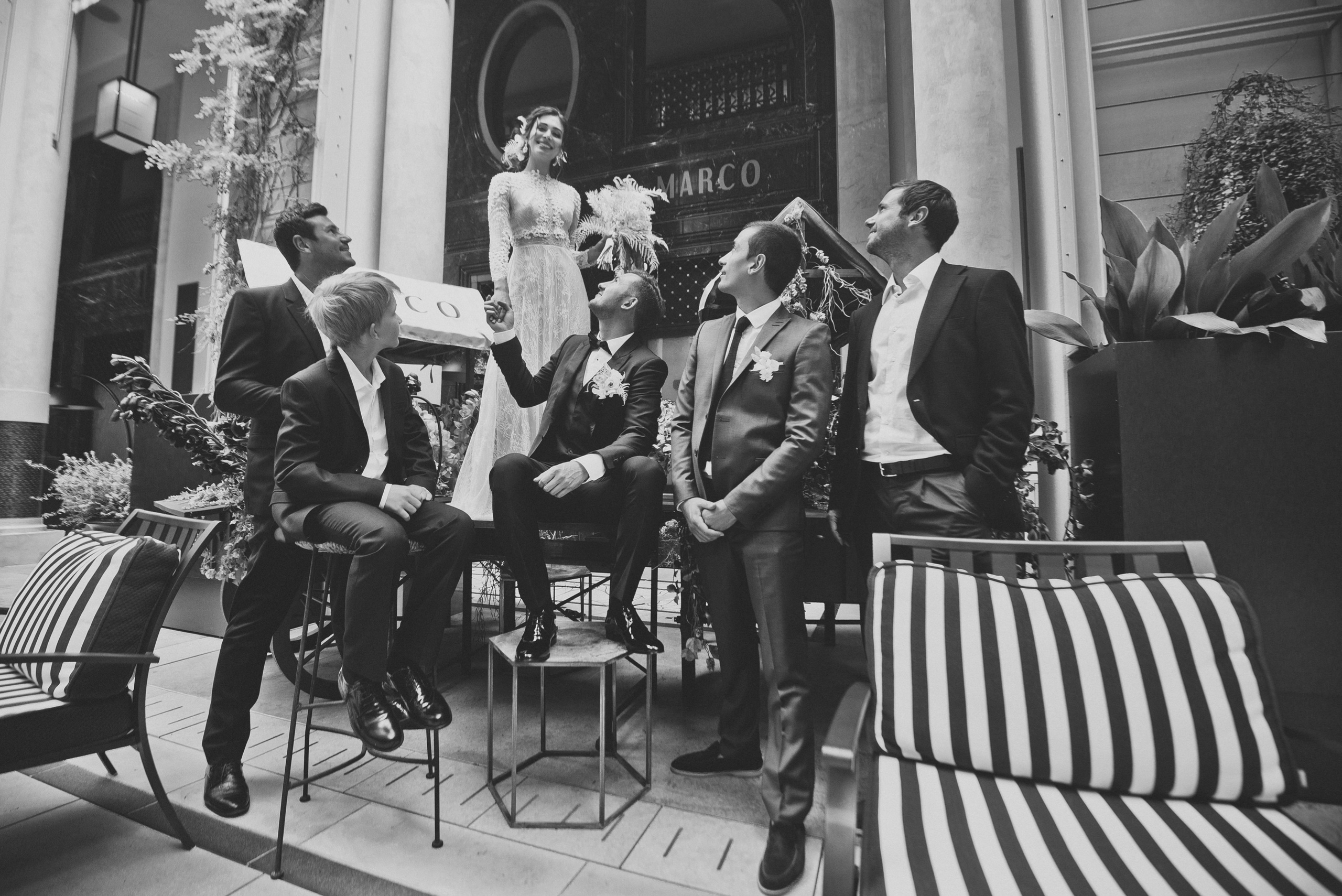
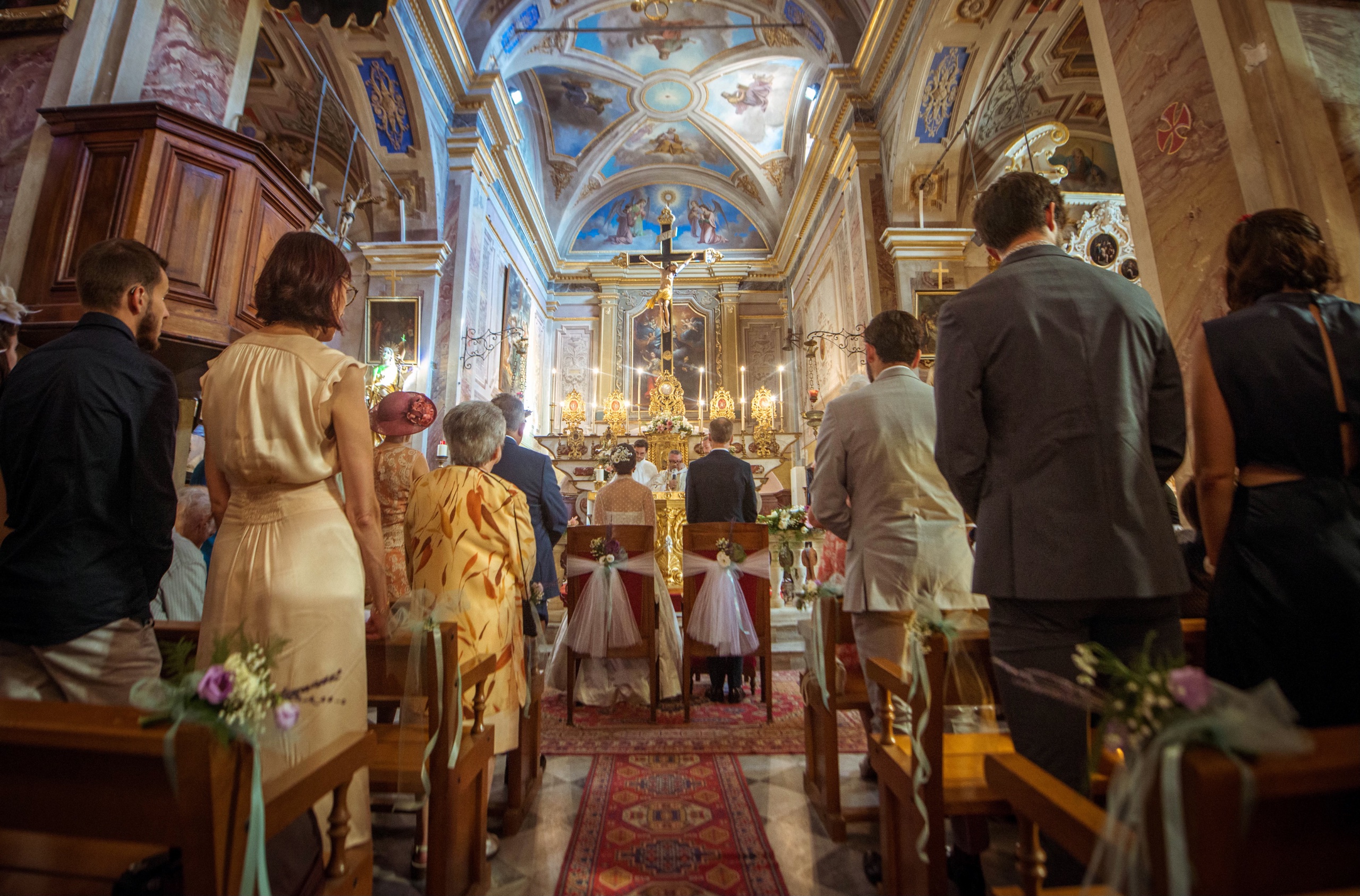
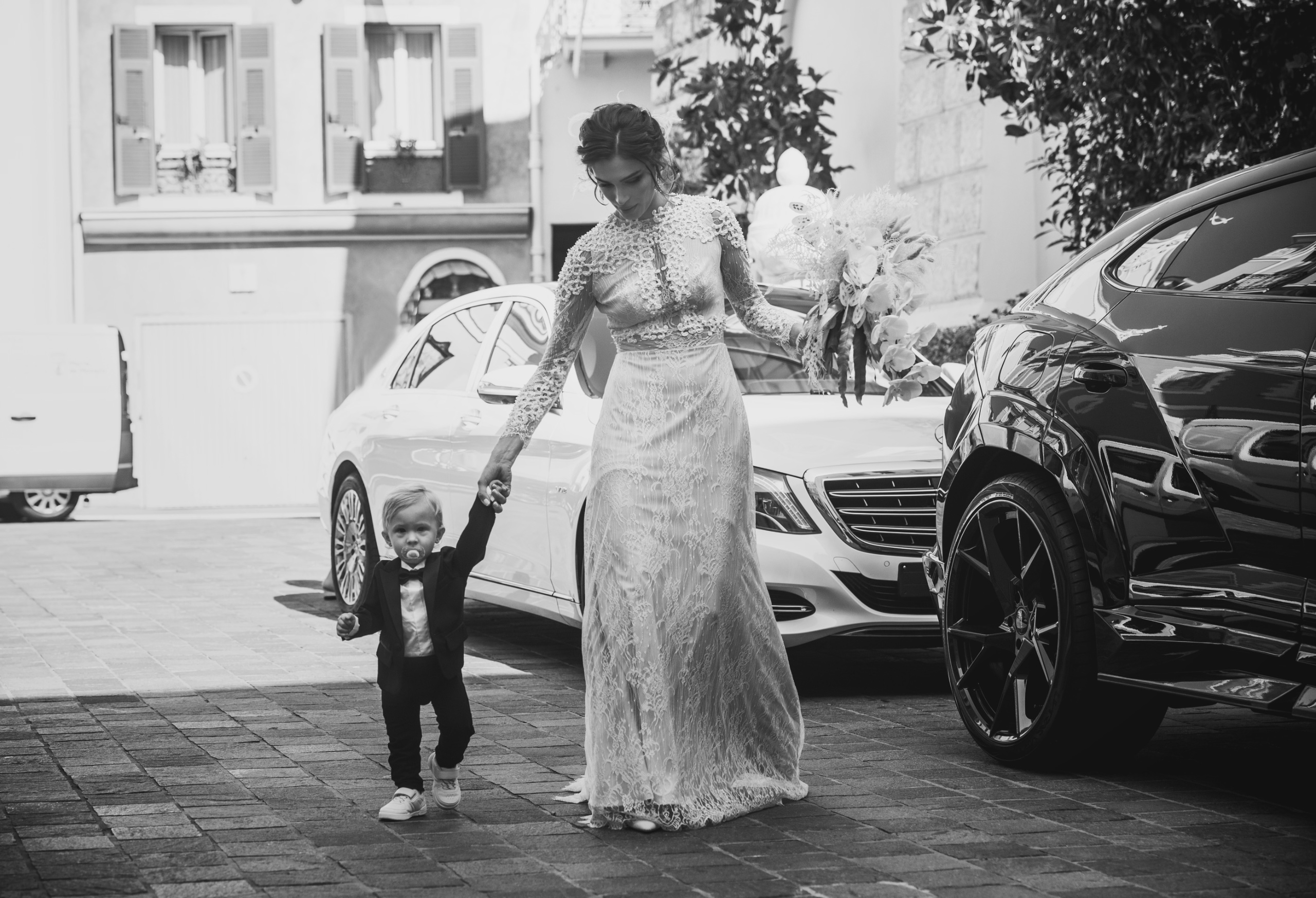
They shoot everywhere on the French Riviera — in Cannes too. Their whole weddings are on their pages.
See all 3 photographers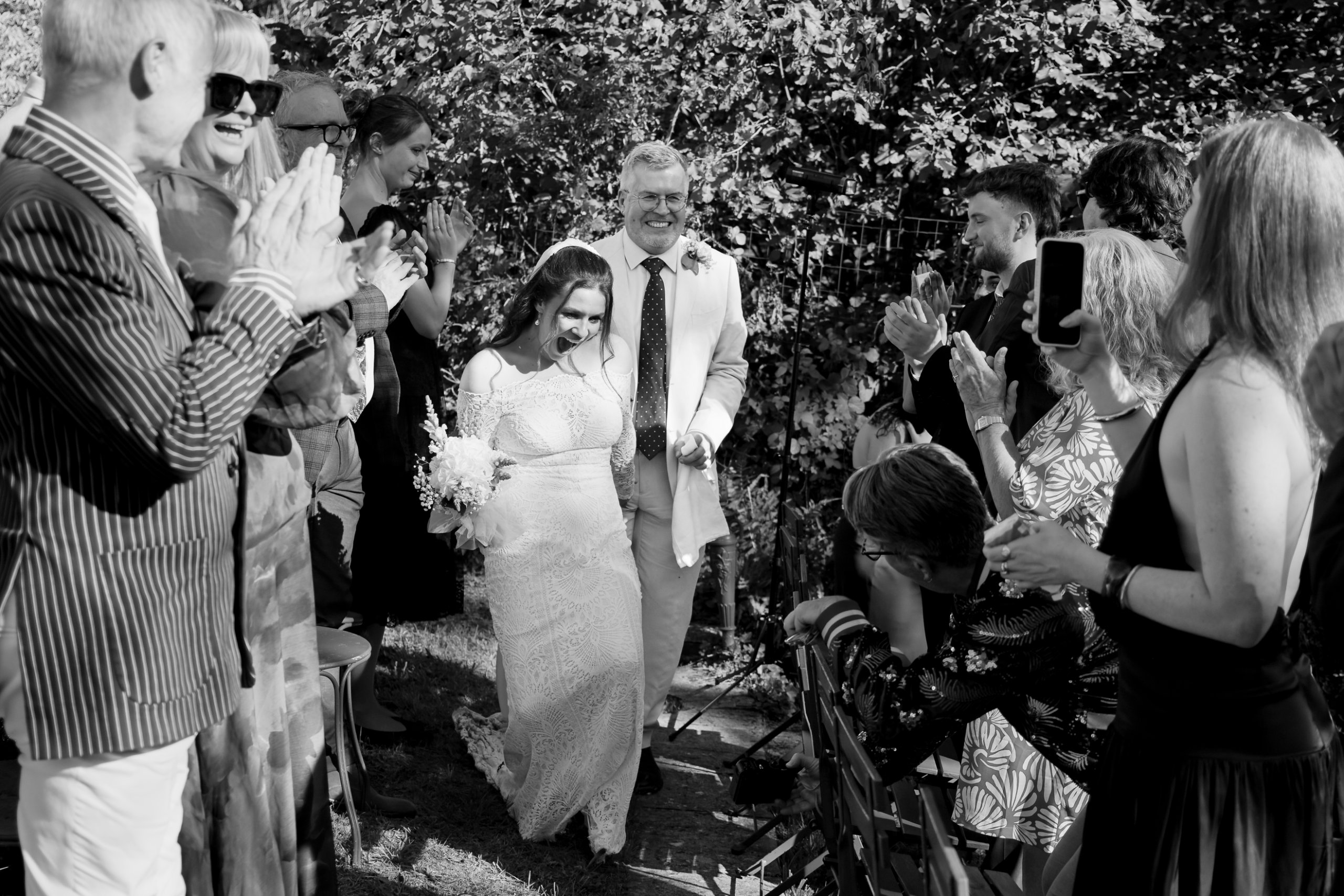

Ceremonies
The town hall of 1876, by the city architect Louis Hourlier, stands beside the Old Port. Cannes marries couples where one of you, or a parent, lives in Cannes or has lived there without a break for a month; you file together, by appointment, at least three months ahead, and the date is set from the wedding calendar. Same-sex couples marry here like any other.
The Suquet’s parish church, built from 1521 to 1627 — Gothic, with a Renaissance porch and a square bell tower in Romanesque style — stands on the Place de la Castre beside the old tower. A Catholic wedding is prepared with your home parish and follows the civil marriage.
The usual setting for a symbolic ceremony: a hotel lawn or a private beach facing the bay, and dinner on the same terrace. Along the Croisette, public beaches alternate with private ones linked to the grand hotels; chairs or an arch on a public beach need the town hall’s permission.
Belle Époque and modern villas on the slopes of La Californie, east of the centre, with the bay and the islands below. Ask how guests get up the hill at night, and whether the house is allowed to host events.
Portraits
Steep lanes climb to the Place de la Castre, the church and the 22 m tower, begun around 1080 to watch the bay and finished in 1365. From the top, the view runs over the Old Port to the Croisette. Morning light is soft up here, before the heat and the visitors.
White sand below the promenade, empty at dawn and full by late morning in summer. The bay faces south, so early light comes in low from the east along the beach; on 15 June 2027 the sun rises at about 05:50.
Boats from Cannes cross to both islands. Sainte-Marguerite, 3.2 km long, has pine woods, some of Europe’s oldest eucalyptus groves and the Fort Royal, where the Man in the Iron Mask was held from 1687. Saint-Honorat is smaller and quieter — a monastery island since 410, with vines and a fortified monastery over the sea; its round walk takes about 50 minutes. Check the time of the last boat back.
From the Pointe Croisette or the Old Port’s jetty, the outline of the Estérel closes the bay to the west. From late September to March the sun goes down behind it; in summer it sets further north, behind the hills, and the best light is on the water.
Through the year
May, June and September are the sweet spot. Météo-France’s 1991–2020 normals for the Cannes station give average highs of 21.9 °C in May, 25.5 °C in June, 28.2 °C in July, 28.6 °C in August and 25.3 °C in September. July and August are nearly dry (under 25 mm a month, on fewer than three days), but September brings the first storms (92.1 mm) and October and November are the wettest months (134.3 and 145.4 mm). The sun sets at about 21:15 on 15 June 2027 and 19:43 on 15 September. The film festival runs from 11 to 22 May 2027.
French Riviera, month by month
Practical
Nice Côte d’Azur airport is about 24 km away; the smaller Cannes–Mandelieu airport is close by. TGVs from Paris stop at Cannes station on their way to Nice, and regional trains run along the coast.
During the film festival the Croisette around the Palais is fenced and crowded, and rooms are hard to find. The Palais des Festivals also hosts big trade fairs through the year — MIPCOM, for television, every October. Check its calendar before you fix a date.
French rules forbid hobby flights above public space in built-up areas and near aerodromes — and Cannes–Mandelieu airport lies just west of the town. Leave any aerial shot to a professional operator who checks the official restrictions map (Géoportail) first.
In France a civil wedding is held where one of you, or a parent, has a home or has lived continuously for at least a month when the banns are published; the banns are posted for ten days. Couples living abroad usually marry at home and hold a symbolic ceremony here.
Questions
Yes, if one of you, or a parent, lives in Cannes or has lived there continuously for a month when you file. You file together, by appointment, at least three months before the date; foreign documents need a sworn translation, and the town hall may ask for a certificate of custom.
For a wedding, yes: from 11 to 22 May 2027 the Croisette is fenced off around the Palais, crowds follow the red carpet and hotels are full. The weeks just before and after give you the same May light without the crush.
By the boats that leave from Cannes harbour. Sainte-Marguerite is the closer island — its fort is only 1.3 km from the tip of the Croisette — and the larger and more wooded; Saint-Honorat, the monks’ island, is calmer. Plan around the timetable, and take the last boat back seriously.
It can: the Cannes station averages 92.1 mm over 4.8 rainy days in September, usually as short storms, against under 25 mm in July and August. The sea is still warm and the days long, so keep a covered plan for the ceremony and enjoy the month.
French Riviera
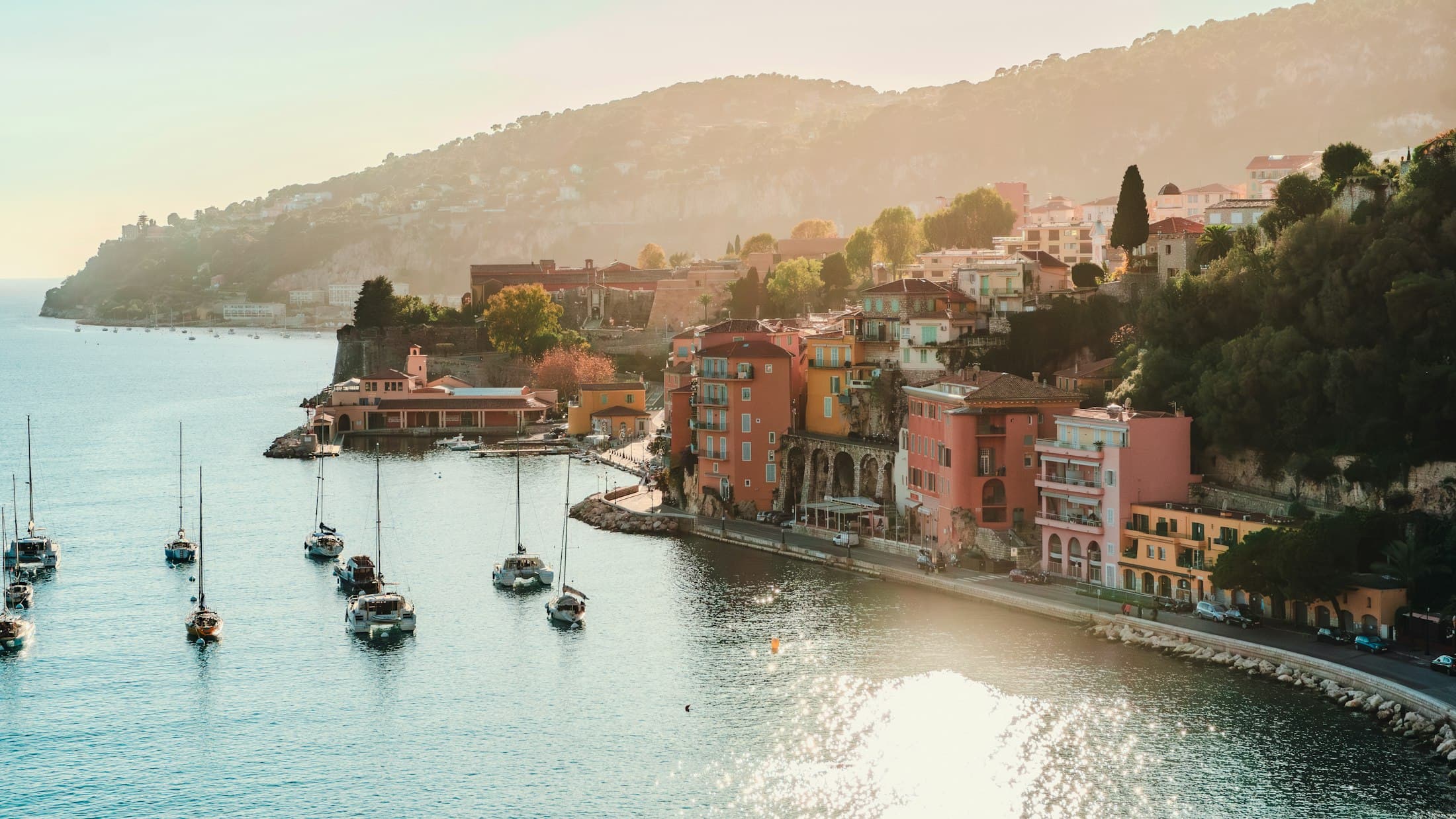 French RivieraThe whole region: when to marry, the kinds of places, the light, getting there.
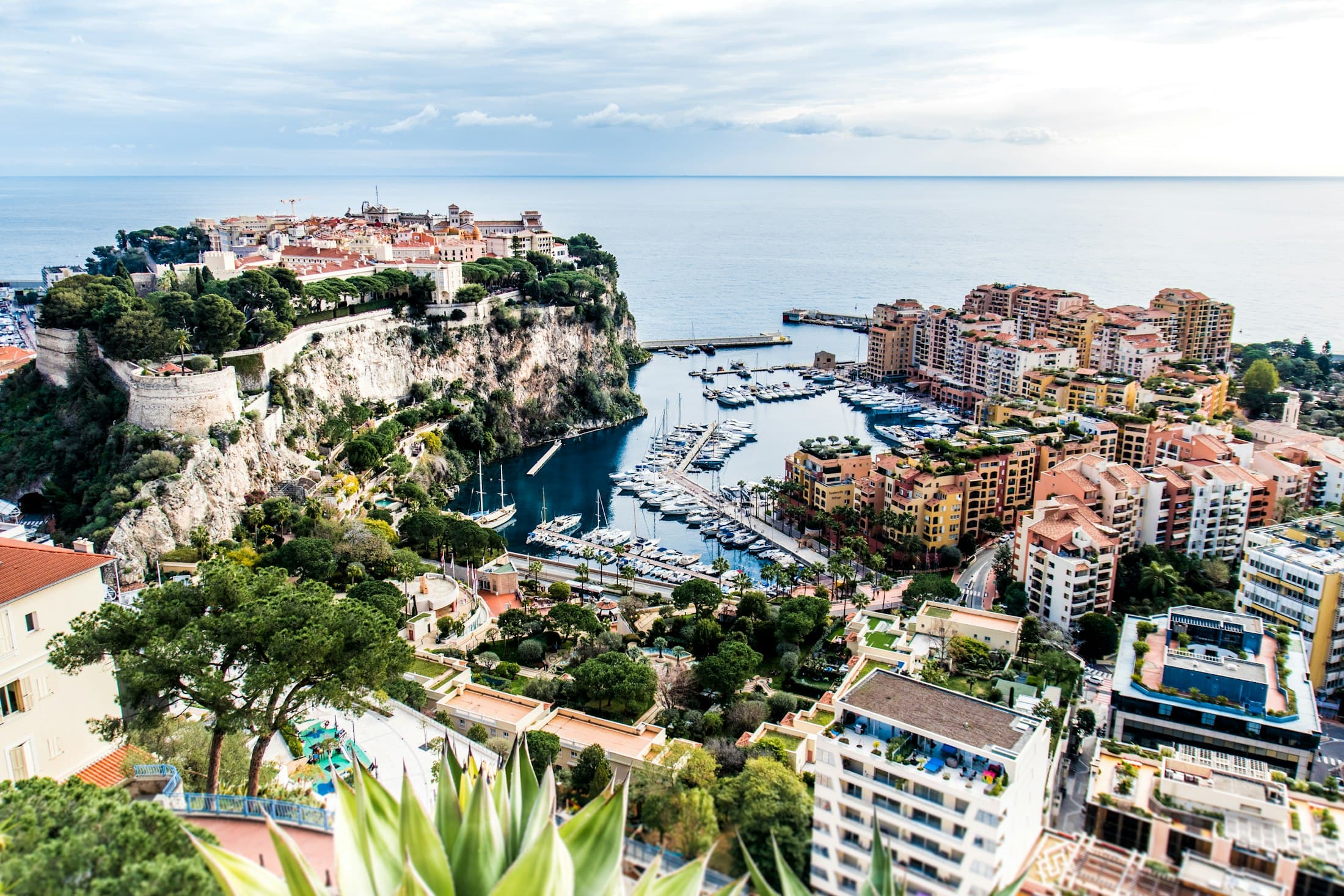 MonacoA sovereign principality of about two square kilometres: the Rock and its palace on one side of the harbour, Monte-Carlo on the other.
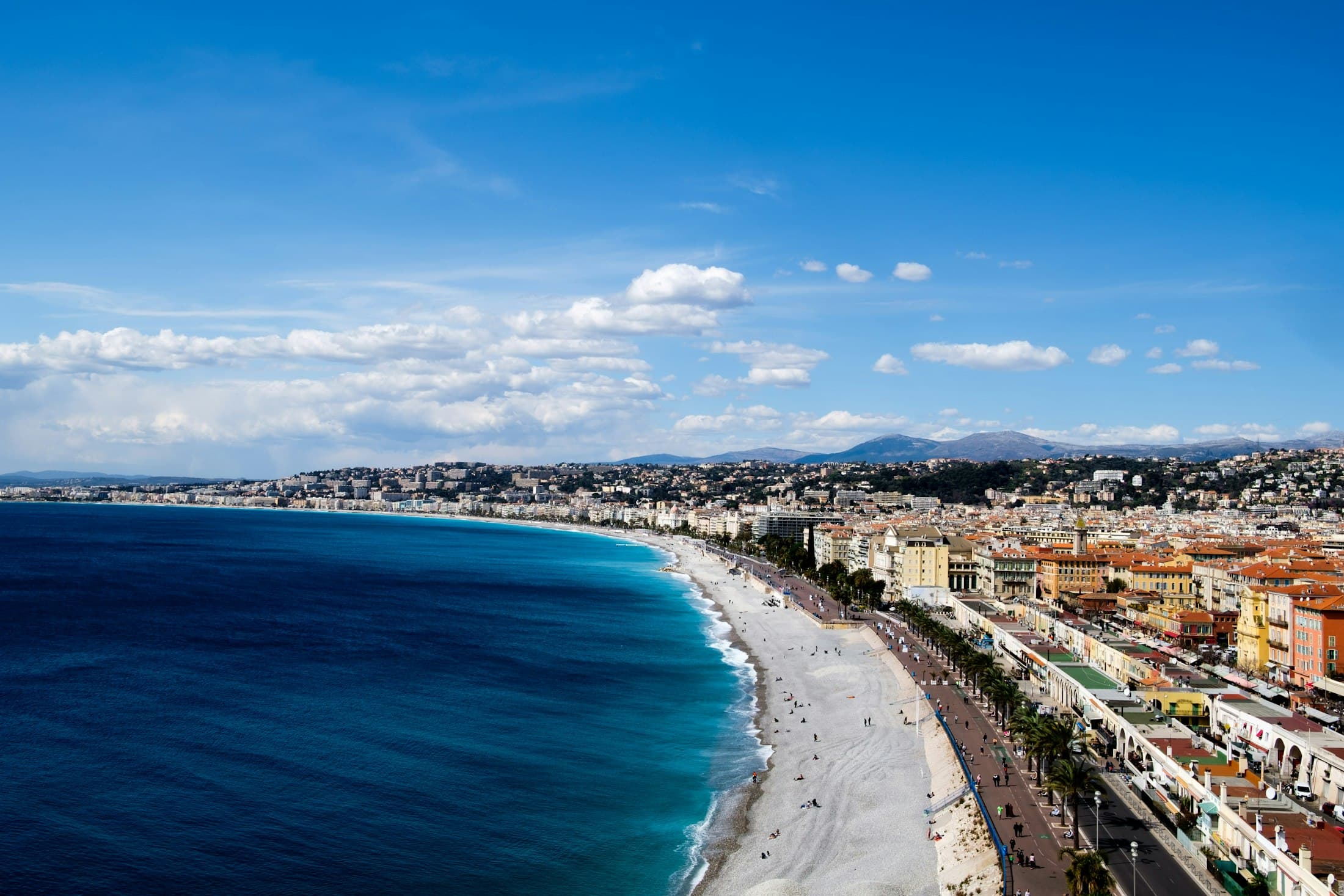 NiceA Belle Époque winter resort turned year-round city: the curve of the Baie des Anges, ochre lanes in the old town and a wooded hill above both.
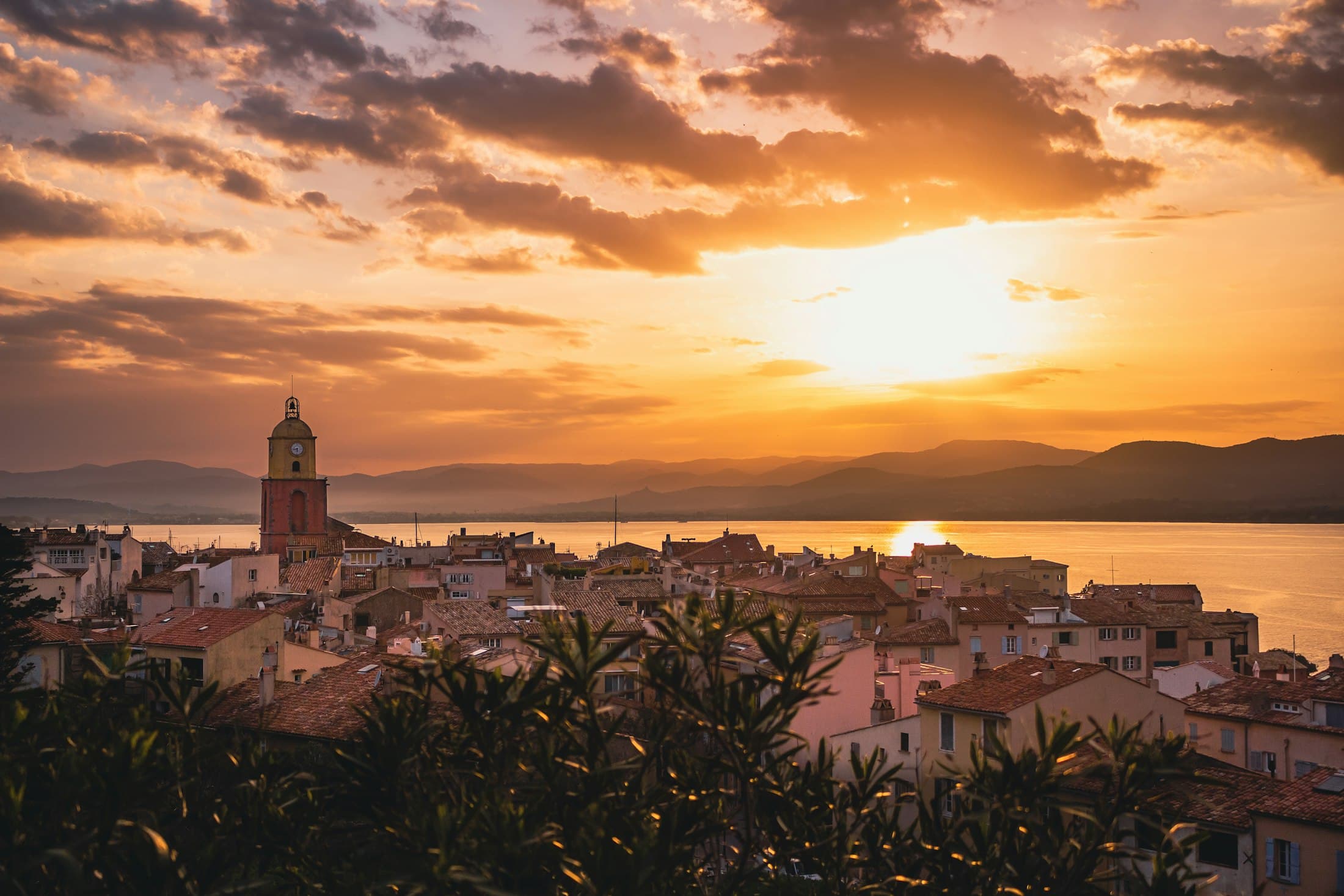 Saint-TropezA fishing port turned legend at the end of its own peninsula: pastel houses on the quay, an ochre bell tower, a citadel on the hill and sand around the cape.
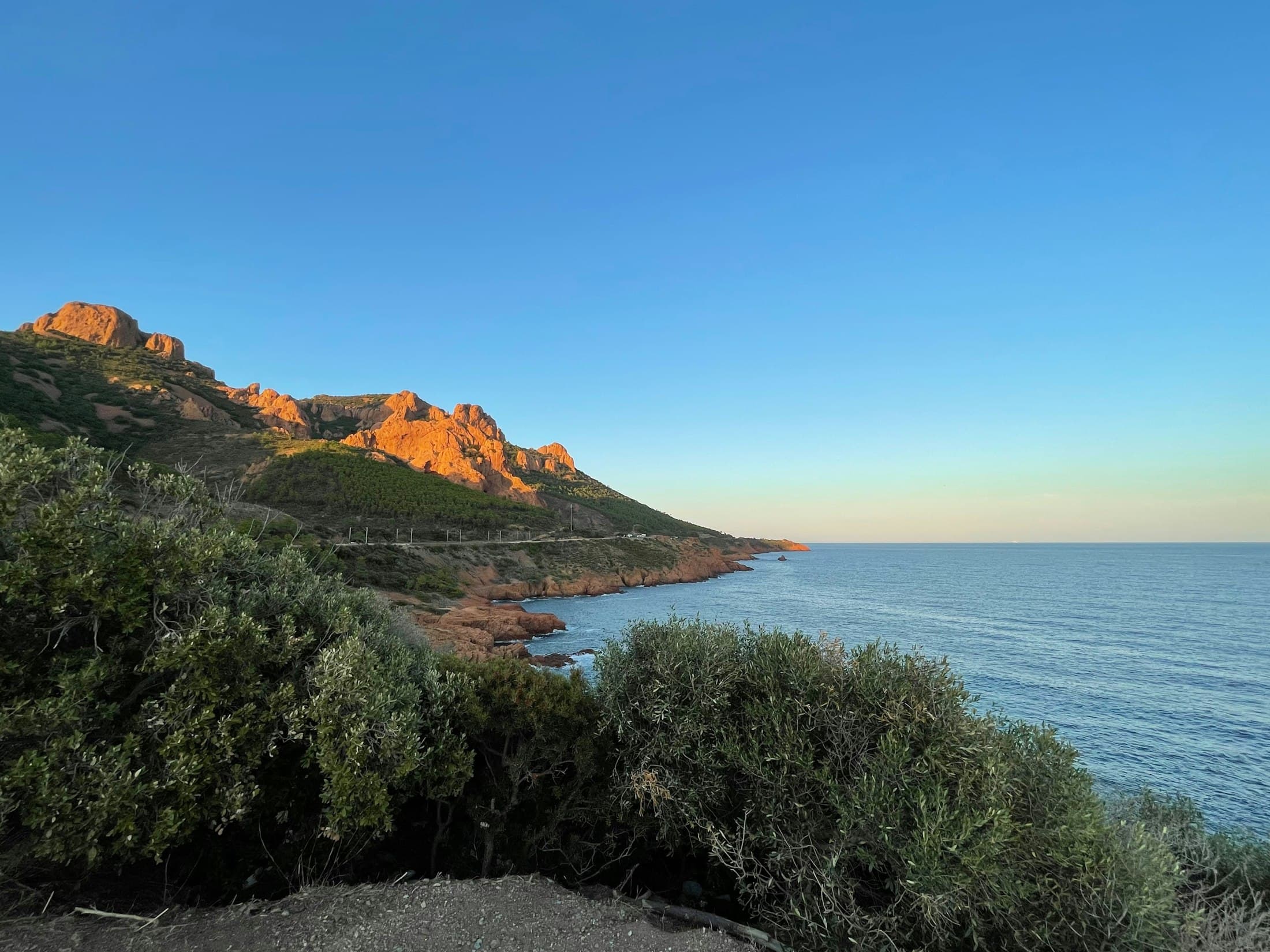 Saint-Raphaël & the EstérelRed volcanic rock dropping into a blue sea: a seaside town with a Byzantine-style basilica and, east of it, the wild coast of the Estérel.
Plan
Not sure yet?
The place, the date, the guests, the photos you like. Our concierge checks who is free and fits, and comes back with photographers to choose from.