Getting married in San Francisco, Napa & Yosemite
The grand staircase of San Francisco’s City Hall, the Golden Gate seen from its headlands, old courtyards among the vineyards of Sonoma, the cliffs of Big Sur, the tallest trees on Earth and the granite walls of Yosemite Valley.
San Francisco sits on its peninsula between the Pacific and the bay, with the Golden Gate Bridge at its northern tip and the Marin Headlands on the far side.
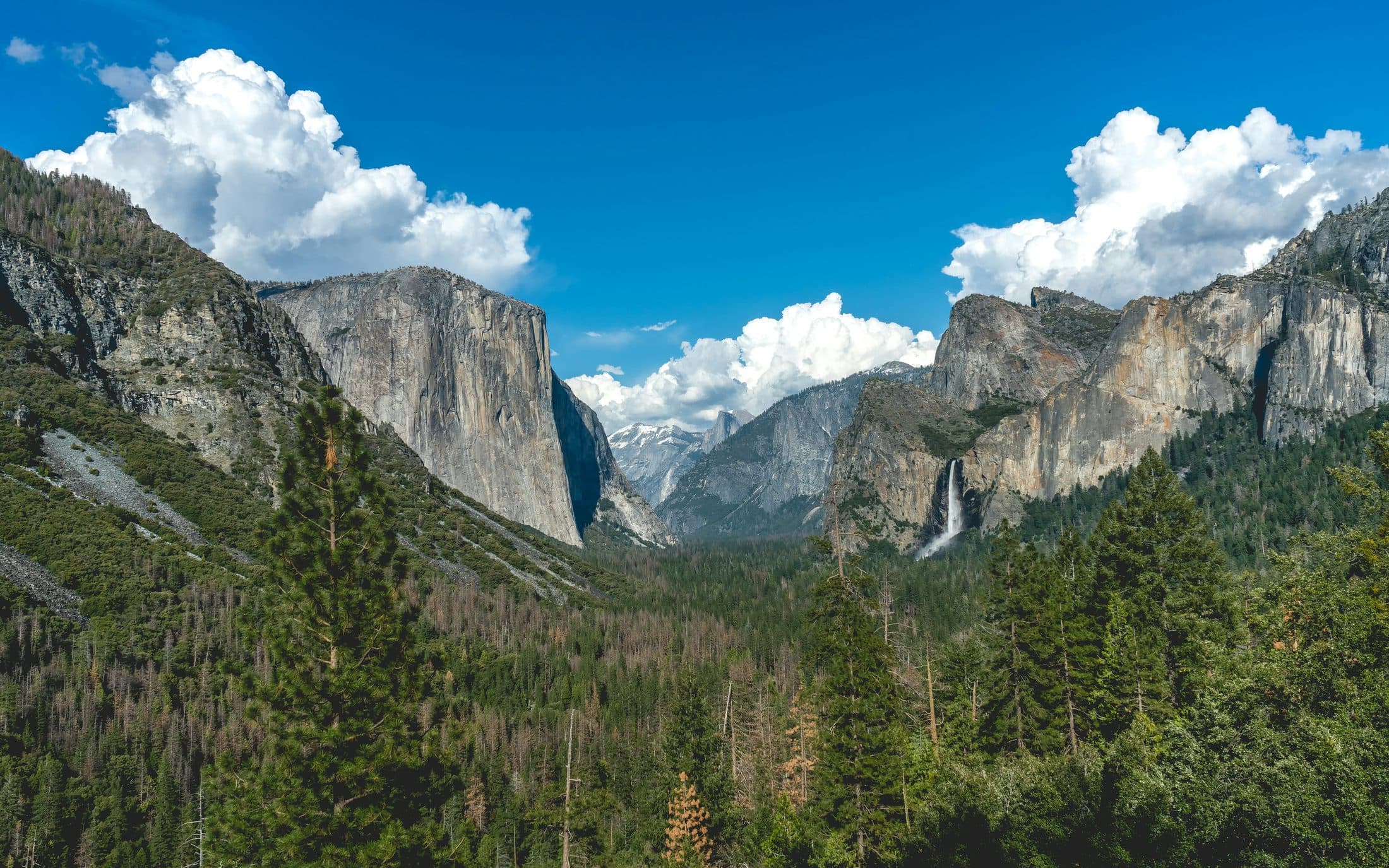
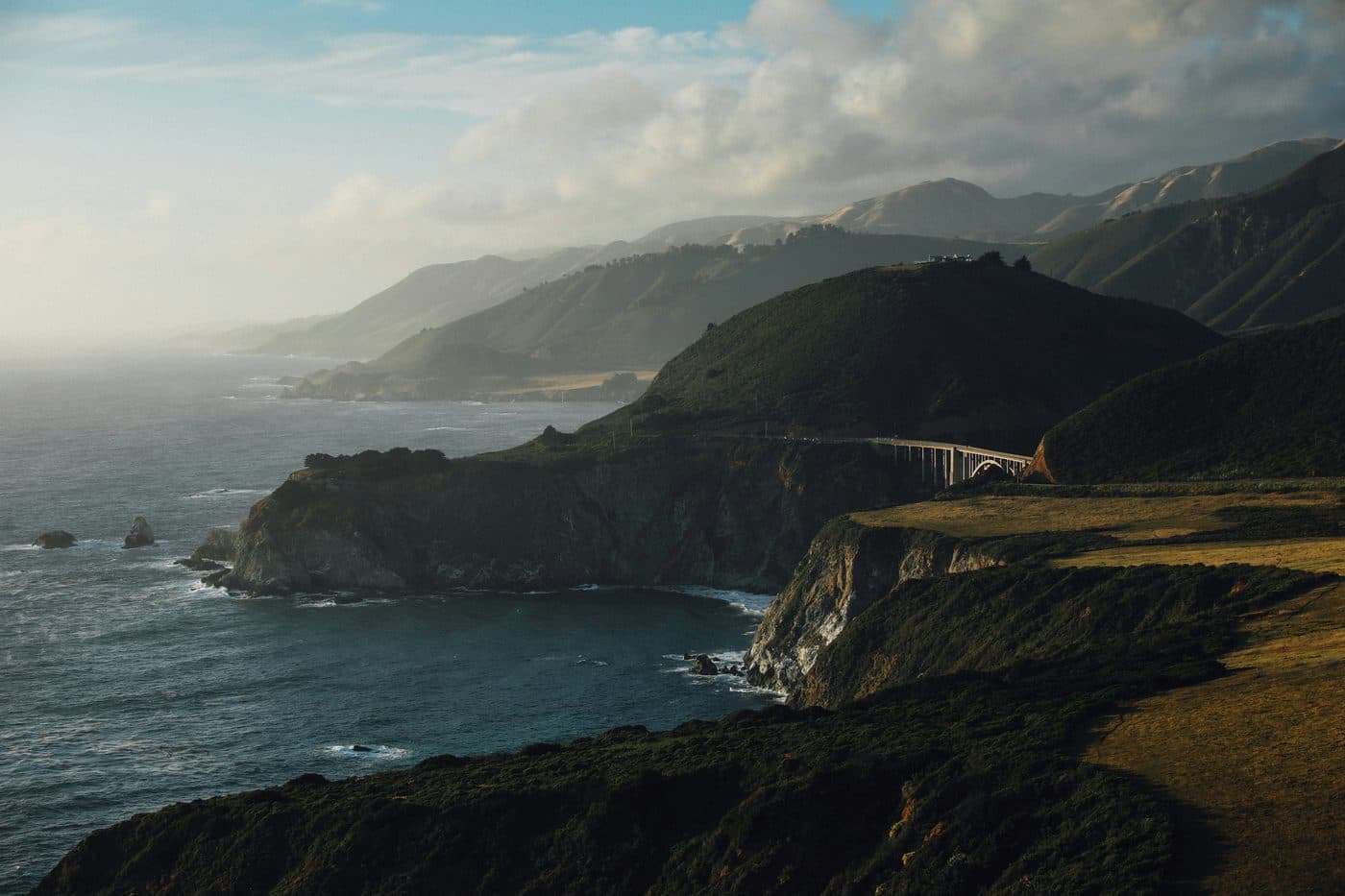
An hour or so north, across the bay, lie the wine valleys of Napa and Sonoma. Further up the coast and inland from it stand the redwoods: Muir Woods just over the bridge, Armstrong Redwoods in Sonoma County, Humboldt Redwoods and, near the Oregon border, Redwood National and State Parks, on UNESCO’s list since 1980. To the south the road runs past Carmel to Big Sur, where Highway 1 crosses Bixby Creek on its concrete arch and the mountains drop straight into the sea. Inland, across the Central Valley, rises Yosemite, inscribed in 1984, its valley floor at about 1,220 m (4,000 ft) between walls of glacier-cut granite.
Couples marry here under the dome of City Hall, on a wine estate, in the courtyard of a state historic park or in a redwood grove, and others elope to Big Sur or Yosemite with a handful of guests. In California you both go in person to a county clerk, with valid photo ID, for a marriage license; neither residency nor US citizenship is required, the license is good for 90 days anywhere in the state, and the ceremony needs an authorized officiant and, on a public license, at least one witness. The same license serves a chapel, a beach or a park, so couples from abroad can sign here or marry at home first and exchange vows here. Parks are the catch: almost every ceremony on public land needs its own permit, applied for separately and often months ahead.
Through the year
When to marry in San Francisco, Napa & Yosemite
May, June, September and October are the easiest months, for different reasons in different places. NOAA’s 1991–2020 normals for San Francisco Downtown give highs of 18 °C (64 °F) in May, 19 °C (67 °F) in June and 21 °C (70 °F) in both September and October, the warmest months of the year in the city, with a precipitation day (0.01 inch, 0.25 mm, or more) on 4 days in May, fewer than 2 in June and September and 3 or 4 in October. The National Park Service calls mid-September to October the clearest time at the Golden Gate; by July, summer fog takes over most of the coast. Napa is another climate, at 25 °C (77 °F) in May and 29 °C (84 °F) in September, and Yosemite Valley reaches 32 °C (89 °F) in July and August. In Yosemite, smoke is most common in August and September, when one to three weeks of unhealthy or worse air occur most years. December and January bring the rain: 11 or 12 days a month and about 115 mm (4.5 in) in the city, more at Big Sur.
- January: Quieter
- February: Quieter
- March: Quieter
- April: Good with planning
- May: Best
- June: Best
- July: Good with planning
- August: Good with planning
- September: Best
- October: Best
- November: Quieter
- December: Quieter
- April to JuneAround the Golden Gate the wildflowers peak in April, May and early June. Yosemite’s falls are at their fullest from about March to June, loud enough that it can be hard to hear vows beside them, and spring floods, most often in May, can close part of the park. Tioga and Glacier Point Roads usually stay shut by snow until late May or June. Napa warms from 22 °C (72 °F) in April to 28 °C (82 °F) in June, with rain on about 6 days in April and 1 in June.
- July to OctoberIt barely rains anywhere: under 2 days a month in the city, Napa and Big Sur from June to September. The coast sits under fog in July and August, with San Francisco at about 19 °C (66 °F) in July and Big Sur’s mornings gray until around midday, while Napa stays near 29 °C (84 °F), with about 8 days of 32 °C (90 °F) or more in September. Yosemite Falls usually has little or no water from mid- to late July. Keep a plan for smoke: wildfires are common in summer and autumn, and the federal Fire and Smoke Map (fire.airnow.gov) shows the air on the day.
- November to MarchThe hills turn green and the city averages 14 °C (58 °F) in December and January, with rain on 11 or 12 days. Big Sur takes the most, about 240 mm (9.5 in) in January and again in December, and the road there is the thing to watch: Regent’s Slide closed part of Highway 1 from February 2024, and Caltrans reported all of it open only on 14 January 2026. Yosemite Valley may be rainy or snowy in any winter storm, at about 9 °C (48 °F) in January, and most of the park lies under snow from about November.
In numbers
- Average high in the best months
- May 17.8°C (64°F) · Jun 19.2°C (67°F) · Sep 21.2°C (70°F) · Oct 21.0°C (70°F)
- NOAA NCEI
- Days with 0.01 in (0.25 mm) of rain or more, best months
- May 4 · Jun 1.6 · Sep 1.2 · Oct 3.5
- NOAA NCEI
- UNESCO World Heritage
- Yosemite National Park (1984)
- Redwood National and State Parks (1980)
Weather station: San Francisco Downtown, normals 1991–2020 · Checked 2 November 2026
Places
Where couples marry here
The kinds of places — ask your photographer which ones they know well.
San Francisco and the Golden Gate
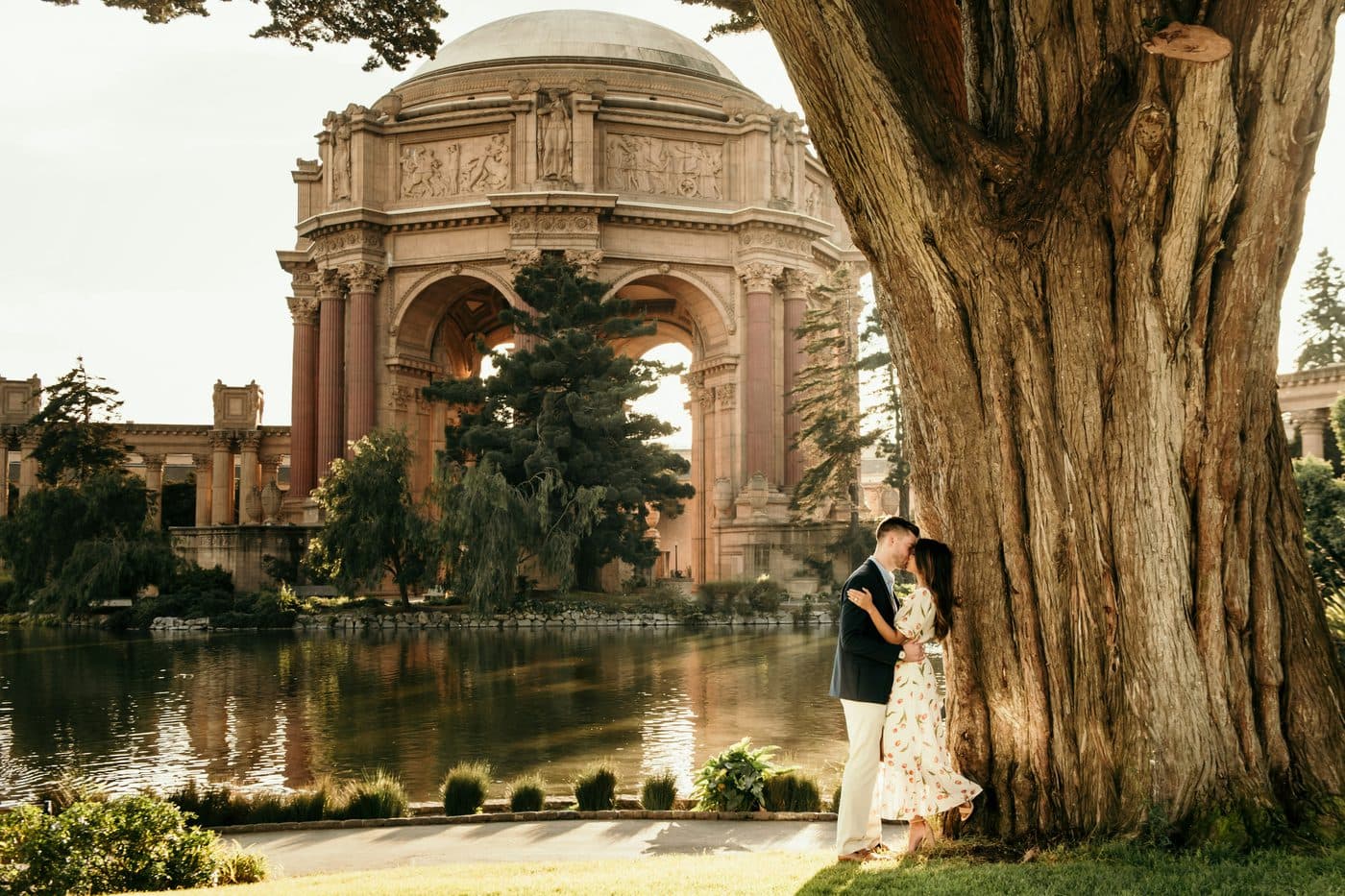
City Hall, rebuilt after the 1906 earthquake, has its dome, rotunda and sweeping staircase. With six guests or fewer you can book a small civil ceremony there with a commissioner from the County Clerk; with more, or at a weekend, you book through City Hall Events, from $1,200 for an hour and up to 100 guests as of November 2026. The land around the bridge has several owners. The Golden Gate National Recreation Area, which holds Baker Beach, Crissy Field, the Marin Headlands and Battery Spencer, requires a permit for a ceremony of any size, takes applications up to a year ahead with a $60 non-refundable fee, grants no exclusive use and warns that most sites are fully booked. The Bridge District asks for a permit when images taken on its property are for commercial use. The Presidio Trust and San Francisco Recreation and Parks, for Golden Gate Park and the Marina Green, have their own terms, so ask them, and ask about the lagoon at the Palace of Fine Arts too. On a rainy day, City Hall and its rotunda stay dry.
Napa and Sonoma
Most weddings here happen on private estates among the vines, whose terms you settle with each one. The public places are in Sonoma, where California State Parks offers two settings at Sonoma State Historic Park: the Barracks Courtyard, just off Sonoma Plaza, for up to 250 seated guests, and the gardens of the Vallejo Home, 800 m (half a mile) west, for up to 300. Its posted rules ban drones and drinking alcohol in the park, so ask the event coordinator what a permit changes. In Glen Ellen, about 20 minutes north of Sonoma, Jack London State Historic Park lets up to 300 guests gather at the old Winery Ruins, surrounded by hills and vineyards. In Napa Valley itself, Bothe-Napa Valley State Park has coast redwoods within reach of the vines.
Big Sur
Bixby Creek Bridge stands 21 km (13 miles) south of Carmel on Highway 1, Pfeiffer Big Sur State Park 42 km (26 miles) and Julia Pfeiffer Burns State Park 60 km (37 miles). Julia Pfeiffer Burns allows small elopements only, of 10 to 20 people depending on the spot, with no reception, seating or exclusive access, and none on Fridays to Sundays from the Friday before Memorial Day to Labor Day. Apply up to a year ahead, and more than 30 days before at the very least. Its waterfall overlook and McWay Falls are closed to events and filming until further notice, by a notice of December 2024; there is no beach access at all, and drones are banned even for filming. All California State Parks treat a still photo shoot as a film shoot needing a California Film Commission permit, so ask the park’s film office whether your portraits count. Point Lobos, which the park says its first people held sacred, isn’t suggested here as a backdrop; drones are prohibited there too.
Yosemite and the redwoods
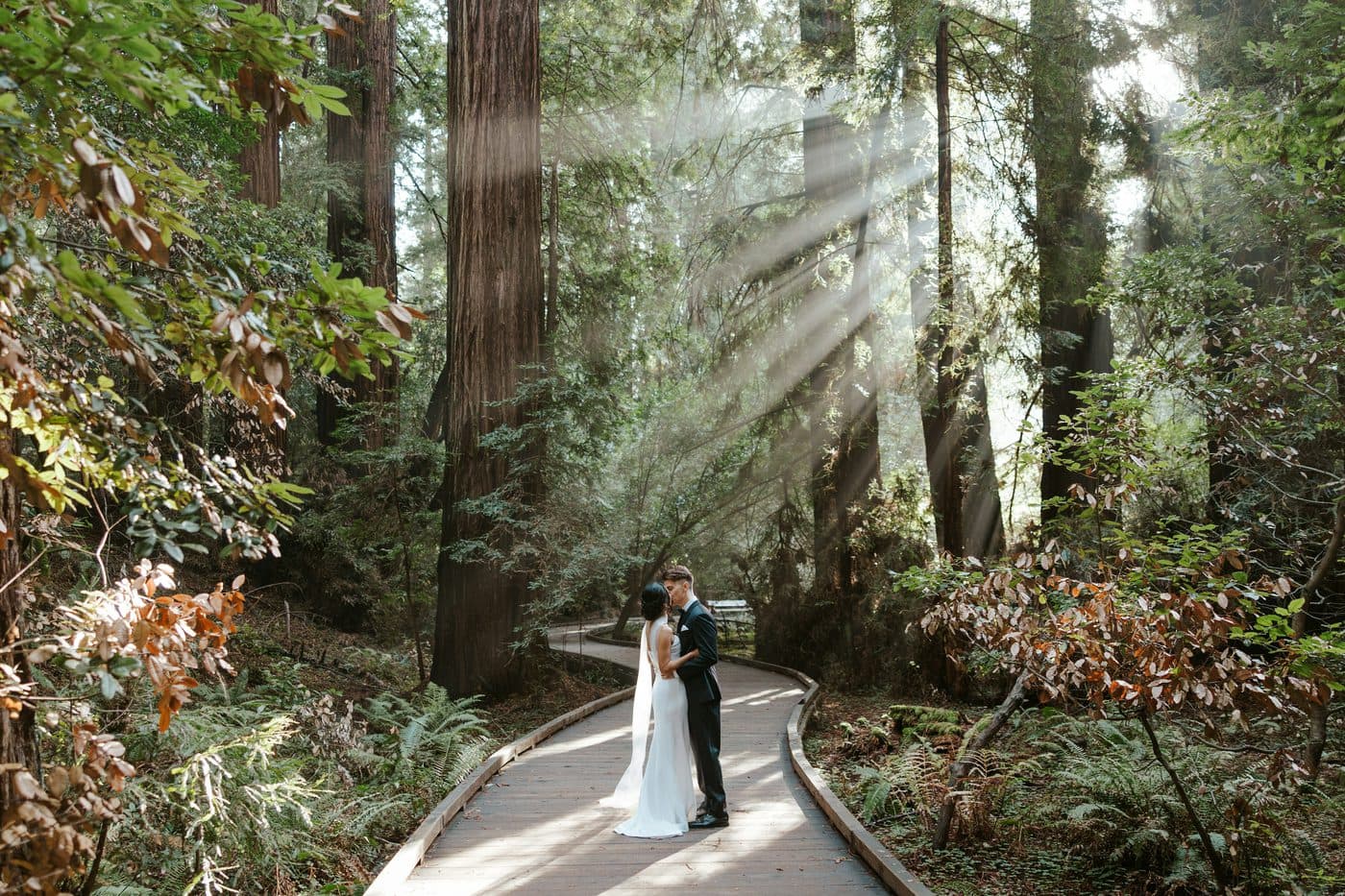
Yosemite requires a special use permit for any ceremony: $150, sent by post with a check or money order up to a year ahead and more than 21 days before, with $50 an hour for a monitor at larger gatherings; ask the office if you have no Social Security number. You get two hours and no exclusive use; none on holidays or holiday weekends. No chairs, arches, amplified sound, drones or thrown rice and petals; no standing under the sequoias; and nothing disturbed on protected cultural sites. Sites include Lower Yosemite Fall (50 people), Bridalveil Fall (50), Swinging Bridge (20), Glacier Point (50, not in July or August) and Tenaya Lake (50). The park advises before 10 am. Further north, redwood groves need their own bookings: Armstrong Redwoods holds ceremonies for up to 150 at one picnic area, booked up to 18 months ahead, Humboldt Redwoods up to six months ahead but never in Founders Grove or Rockefeller Forest, and Redwood National Park needs at least 14 days’ notice. At Muir Woods, parking must be reserved in any case. Under federal rules, no photo permit is needed for a permitted wedding, nor for eight people or fewer, hand-carrying their gear in open areas. Fees as of November 2026.
Light
How the light falls
At midsummer the sun rises over San Francisco at about ten to six and sets at about twenty-five to nine, far round to the north-west; the soft last hour begins around half past seven and about half an hour of dusk follows. By mid-September it sets at about quarter past seven, almost due west, and by mid-October at about half past six; on 21 December it is up from about twenty past seven to about five to five. Fog changes everything on the coast in summer: it can leave the bridge’s towers floating or hide them altogether, and at Big Sur morning fog usually burns off by midday, so plan portraits for the afternoon there. Yosemite Valley’s sunset comes at about twenty past eight in June, but its granite walls take the direct sun well before that, and the park’s own advice for a ceremony is the morning. In the redwoods, light comes down in shafts through the tall canopy.
Travel
Getting there
San Francisco International Airport is 30 minutes from downtown on BART, whose station is in the International Terminal, and about 22 km (14 miles) by road. From City Hall, without traffic, it is 76 km (47 miles) to Napa, about an hour and five minutes; 73 km (46 miles) to Sonoma, about an hour and ten; 116 km (72 miles) to Armstrong Redwoods, just under two hours; 187 km (116 miles) to Carmel, about two hours twenty-five; 230 km (143 miles) to Pfeiffer Big Sur, about three hours; 303 km (188 miles) to Yosemite Valley, about four and a half hours; and 369 km (230 miles) to Humboldt Redwoods, nearly five hours. Orick, by Redwood National Park, is 504 km (313 miles), about six and a half hours. Fresno’s airport is closer to Yosemite, at 150 km (93 miles), and YARTS buses reach the valley from Merced, Fresno, Sonora and Mammoth Lakes. As of November 2026 entrance costs $35 a car for seven days, and non-US residents aged 16 or over pay $100 more each. No reservation is needed to enter in 2026. Anyone flying a drone for pay needs an FAA Part 107 Remote Pilot Certificate, and the National Park Service bans launching, landing or flying one in national parks. A paid flight needs a registered aircraft, stays below 120 m (400 feet) and, as a rule, doesn’t pass over people outside the shoot. The Park Service’s ban takes in Muir Woods and the Golden Gate’s parks, and drones are banned at and near the bridge. State parks allow them only where no posted order forbids it: many here do.
Photographers
Photographers in San Francisco, Napa & Yosemite
No one in San Francisco, Napa & Yosemite yet
The first photographers in San Francisco, Napa & Yosemite are joining now. Tell our concierge your date and your plans — it checks who is free and fits.
Plan
Read before you plan
- Getting married in the USA as foreigners: the license, your entry, state by stateHow couples who live abroad marry legally in the United States: there’s no federal license, so each state and county sets its own wait, validity, witnesses and fee. What US immigration says about visitors marrying, what to bring, who can marry you, same-sex couples, the apostille and what happens back home.
- How to choose a wedding photographer: the steps, and the questions to askThe decision in order — whole weddings, style, availability, the package, the contract and deposit, cancellation, delivery and a conversation — then a checklist of questions, with why each one matters.
- A wedding-day timeline for photosFrom getting ready to the last dance, planned around the light.
- Deposits and payment protectionWhat you pay when, and what happens if plans change.
- How to get married in the USA when you live here: license, ceremony, and afterFor couples who live in the US: how a marriage license works when every state and county sets its own rules, what the wait and the fee are, who can marry you, marrying in another state, same-sex couples, and what changes after the day: certificate, surname and tax.
- Which country for a destination wedding? The law, prices, crowds and light, comparedThe legal route for couples who don’t live there, season and crowds, price levels, light, flights, venues and permits for photographs — Portugal, Italy, Spain, Greece, France and Austria compared with official figures, as of October 2026.
- A rain plan that still looks goodCovered spots, umbrellas and what photographers do on grey days.
- Wedding photography contract checklist: what it should say, and how Lens & Vows handles each pointThirteen things a good contract covers — the day and the hours, what is delivered, deposit and balance, cancellation on either side, date changes, illness, image rights, personal data, backups, travel, overtime and complaints — and what our terms say about each.
United States
Other places
 Hawaii
 Alaska
 Seattle & Washington State
 Portland & Oregon
 Los Angeles & Santa Barbara
 San Diego & Palm Springs
 Las Vegas & Lake Tahoe
 Utah
 Arizona
 Colorado
 Wyoming & Montana
 Texas
 Chicago & the Great Lakes
 Nashville & the Smokies
 New Orleans
 Florida
 Charleston & Savannah
 New York & the Hudson Valley
 Boston & Cape Cod
 Maine & Vermont
 Washington, D.C. & Virginia