Getting married in Hawaii
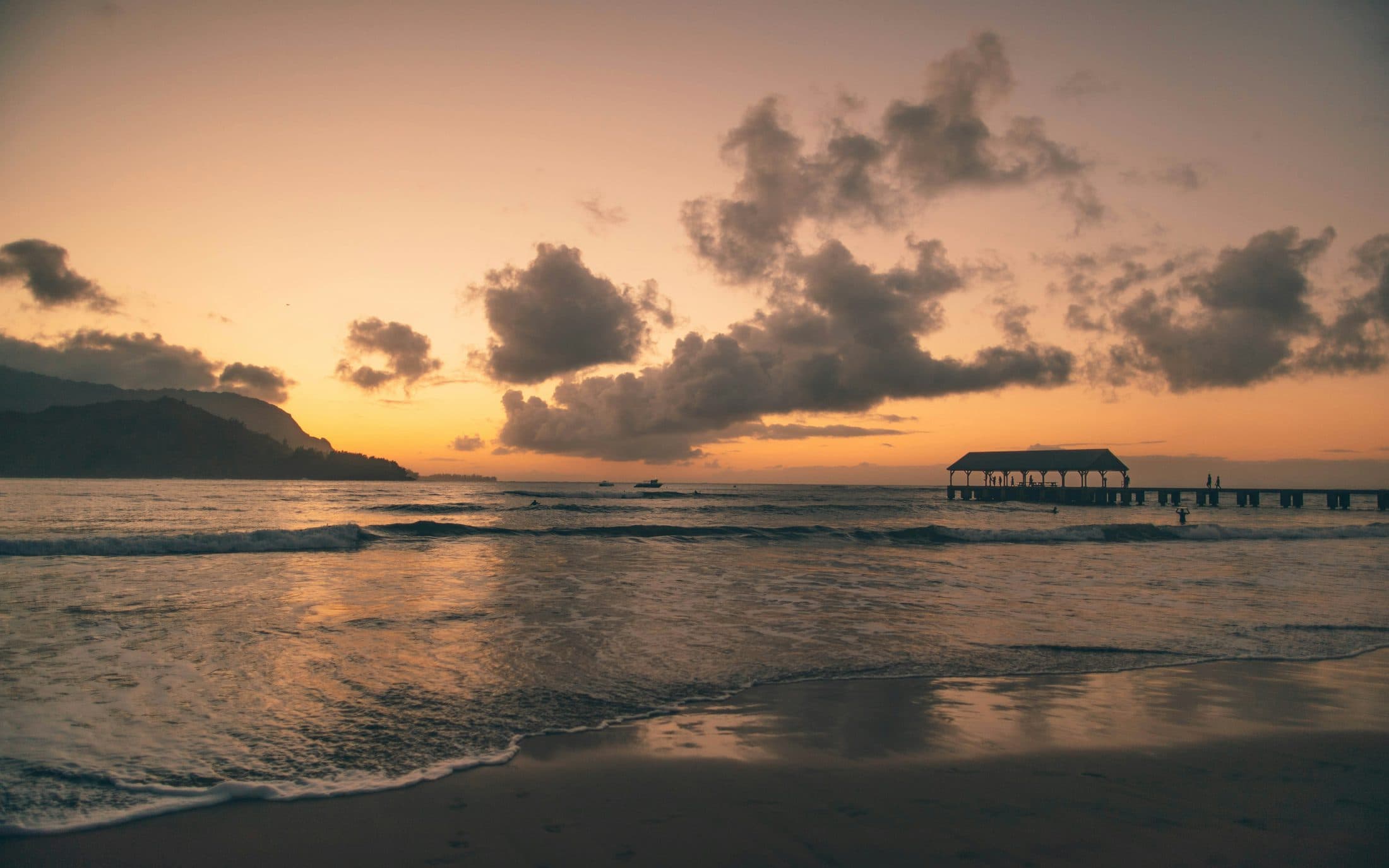
Four islands, four kinds of weather: Hanalei’s bay under green ridges on Kauai, the dawn at Lanikai on Oahu, Wailea’s sunsets on Maui and the black lava shores of the Big Island, with the trade winds over them all.
Hawaii is not one climate. The northeast trade winds drop their rain on the windward coasts and leave the leeward ones sunny and dry, so that Hilo, on the Big Island, has rain on 272 days a year and the airport at Kona, 131 km (81 miles) away by road, on 50. Oahu has Honolulu, the main airport, Diamond Head above Waikiki, and the windward beaches of Kailua and Lanikai. Maui runs from the dry sands of Wailea and Kihei out to Hana and up to Haleakalā, at 3,055 m (10,023 ft). Kauai has Hanalei Bay, the cliffs of the Nāpali Coast and the deep, colorful gorge of Waimea Canyon. The Big Island has the lava, the black sand and the World Heritage site of Hawaiʻi Volcanoes.
On almost all public beaches a ceremony needs a Wiki Permit, a right-of-entry permit from the Department of Land and Natural Resources: two hours at most, and no arches, altars, tables or chairs, only flowers, leis, hand-carried things and seats for those who need them. The state says these events average ten people and asks to hear first about anything over 25 or 30. Bigger weddings go to a private site, a county park or a state park. To marry legally, you meet a license agent together, in person, no more than 30 days before the ceremony and with photo ID; there is no waiting period or residency rule, the license lasts 30 days and works only in Hawaii, and your officiant must be licensed by the state.
Through the year
When to marry in Hawaii
April, May and June sit between the wet season and the peak of hurricane season: in NOAA’s US Climate Normals 1991–2020 for Honolulu airport, highs climb from 28 °C (83 °F) to 31 °C (87 °F), and rain falls on six to eight days a month, a day counting as NOAA counts it, with 0.01 inch (0.25 mm) or more, so a passing shower is enough. June’s total is just 13 mm (0.5 in). August is the hottest, at 32 °C (89 °F). The National Weather Service dates the wet season from October to April, when winter storms bring the heaviest rain: from October to March Honolulu gets 38 to 60 mm (1.5 to 2.4 in) a month, and Kahului, on Maui, has rain on about ten days in March and December, against five in June. Hurricane season runs from June through November, peaking in August and September, the state’s emergency agency says. Hurricanes aren’t usual here, but a date in those months needs a plan for a storm. Windward coasts are another world: Princeville, on Kauai’s north shore, has rain on 26 days in July.
- January: Quieter
- February: Good with planning
- March: Good with planning
- April: Best
- May: Best
- June: Best
- July: Good with planning
- August: Good with planning
- September: Good with planning
- October: Good with planning
- November: Quieter
- December: Quieter
- April to JuneThe driest stretch on the leeward coasts: Kihei, on Maui, has rain on about two days in April and May and on one day or fewer in June, and Kahului gets just 4 mm (0.2 in) that month. Days lengthen to a sunset of about a quarter past seven on Oahu. Lumahai Beach, on Kauai’s north shore, can be permitted only between Memorial Day and Labor Day, because the state judges its surf hazardous the rest of the year.
- July to OctoberThe hottest months, with highs of 31 to 32 °C (87 to 89 °F) at Honolulu. August has the fewest rainy days there, under six, but it and September are the peak of hurricane season. Watch the Central Pacific Hurricane Center and agree a second date with your photographer. State parks close for storms and refund reservations automatically, less service charges, so don’t rely on one for the only hour you have.
- November to MarchFrom November through April, thousands of humpback whales are in these waters, and the sun sets before six at midwinter. Highs stay near 27 °C (80 °F) at Honolulu. Winter storms can interrupt the trade winds for days or weeks. When showers settle on a windward coast, the leeward side is often dry, so keep a second spot there and hold the portraits until you know which it will be; a big winter storm can soak both, so have a roof in reserve too.
In numbers
- UNESCO World Heritage
Weather station: Honolulu Intl AP, normals 1991–2020 · Checked 2 November 2026
Places
Where couples marry here
The kinds of places — ask your photographer which ones they know well.
The beaches and their permit
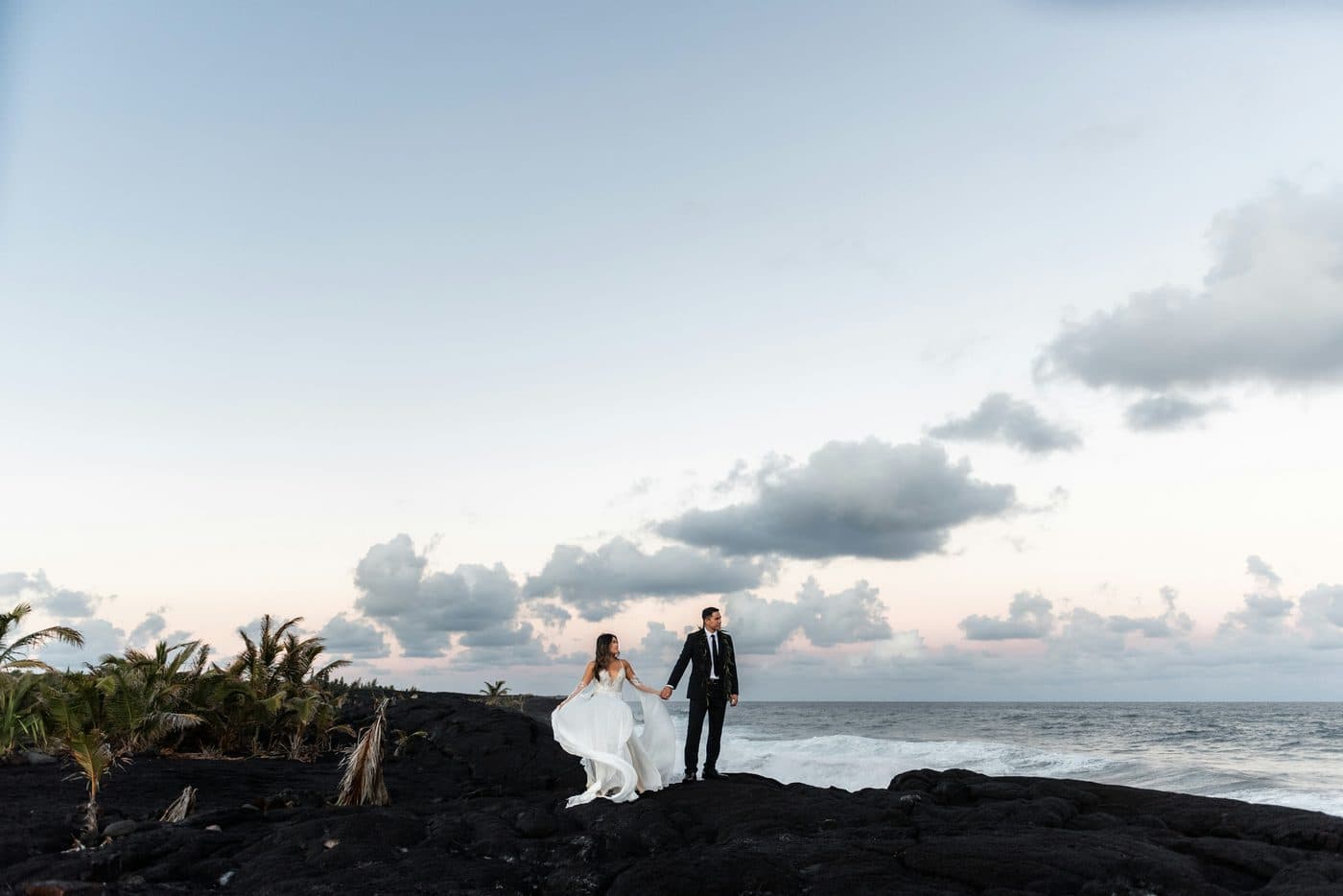
The state’s list of permitted beaches includes Lanikai, Kailua and Sunset Beach on Oahu; Wailea, Hāmoa and Kōkī on Maui; Hanalei Beach, south of the pier, on Kauai; Punaluʻu and Kehena, both black sand, on the Big Island. Not on it: most of Waikiki and Hanalei Pier itself, and ʻĀhihi-Kīnaʻu, on Maui, allows no commercial activity at all. Lawns and paths in a county beach park need that county’s own permit. A Wiki Permit also covers your photographer; photos alone need that or a Hawaii Film Office permit, even after a wedding on private land. The state’s 2016 guide gave the fee as 10 cents a square foot, $20 minimum, with liability insurance naming the state, so a professional usually applies. Stay 3 m (10 ft) from sea turtles and 15 m (50 ft) from monk seals, as NOAA recommends.
State parks: canyon, crater and coast
Every wedding or elopement in a state park needs a special-use permit, asked for 45 days ahead; an arch is judged case by case. Visitors from outside Hawaii must also book entry and parking at Diamond Head, ʻĪao Valley, Waiʻānapanapa and Hāʻena. Waimea Canyon’s lookouts sit on a scenic drive, 60 km (37 miles) from Lihue airport. Waiʻānapanapa, near Hana, has a volcanic coast, a stone arch and a small black sand beach, and a heiau too, which stays out of your plans. Hāʻena, home to Kēʻē Beach on Kauai’s north shore, has daily visitor limits.
Haleakalā and Hawaiʻi Volcanoes
Both national parks want small, private weddings away from the crowds, with a permit and, as of November 2026, a $150 fee. Haleakalā allows up to 25 people at overlooks such as Kalahaku and Leleiwi, or on the Kūloa Loop at Kīpahulu, never in the wilderness; apply at least three weeks ahead, and a sunrise needs a reservation too. No amplified sound, no banners, no food service, and flowers and leis leave with you. Summit temperatures can drop to −1 °C (30 °F). Hawaiʻi Volcanoes authorizes spots such as Kīpukapuaulu, Mauna Loa Lookout and the coast along Chain of Craters Road. It bans drones and warns of volcanic gases, so check air quality first. In most cases eight or fewer people with hand-carried gear need no photo permit, and a photographer at a permitted wedding never does.
Ground that is not a backdrop
Heiau, the old Hawaiian temples, are sacred places, not settings, whether at Puʻu o Mahuka on Oahu, Puʻuhonua o Hōnaunau on the Big Island or anywhere else. The Hawaii Film Office warns that ancient burials are not uncommon in undeveloped areas and that forests hide heiau and old taro terraces. The state refuses commercial activity at or near known sensitive sites, and if a historic property or burial turns up, a permit holder must stop and call the State Historic Preservation Division. Hawaiʻi Volcanoes calls its landscape sacred, and Haleakalā asks visitors not to stack, move or take rocks or to leave lei or photographs. A kahu, or priest, who gives a blessing can also advise you on what a place expects.
Light
How the light falls
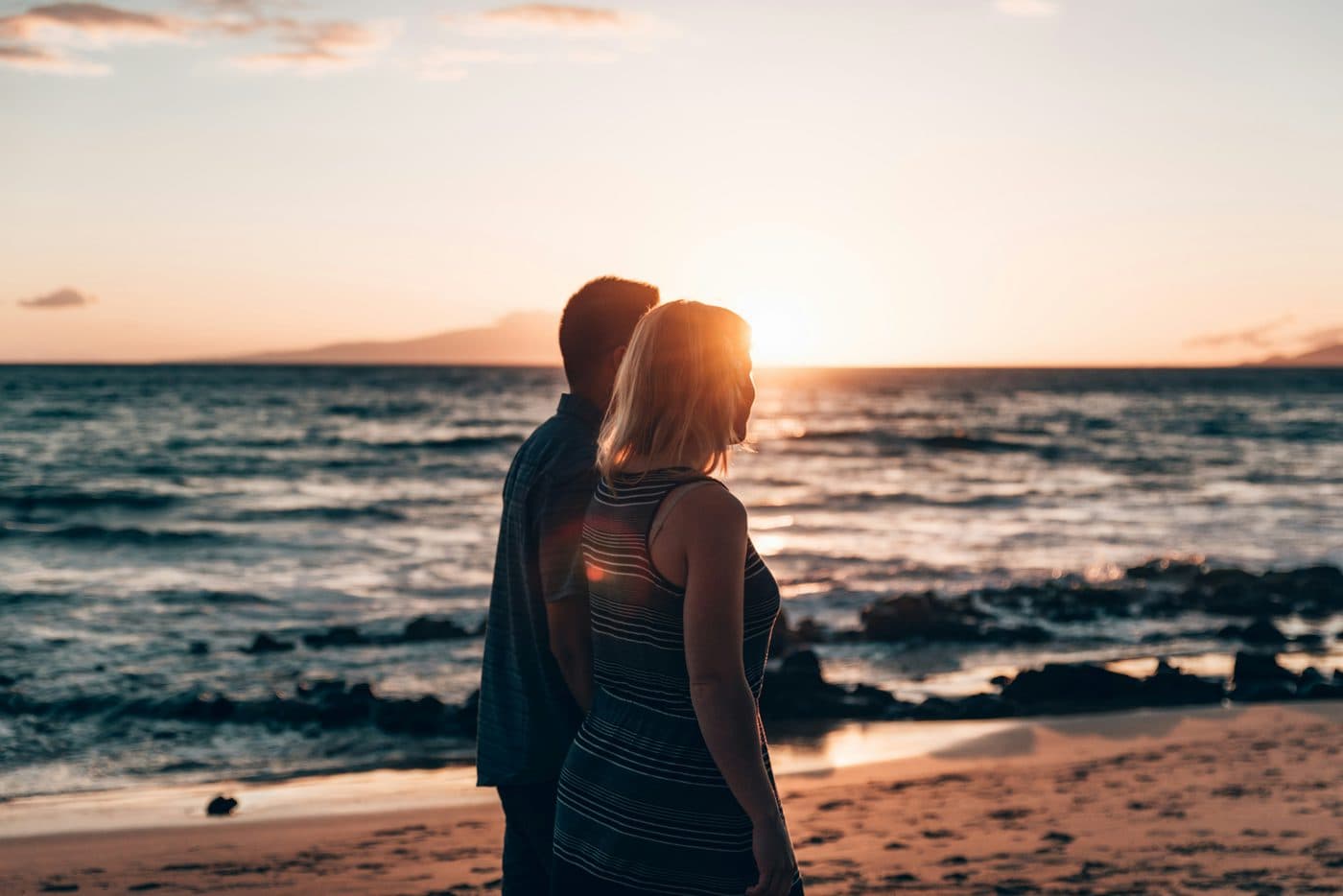
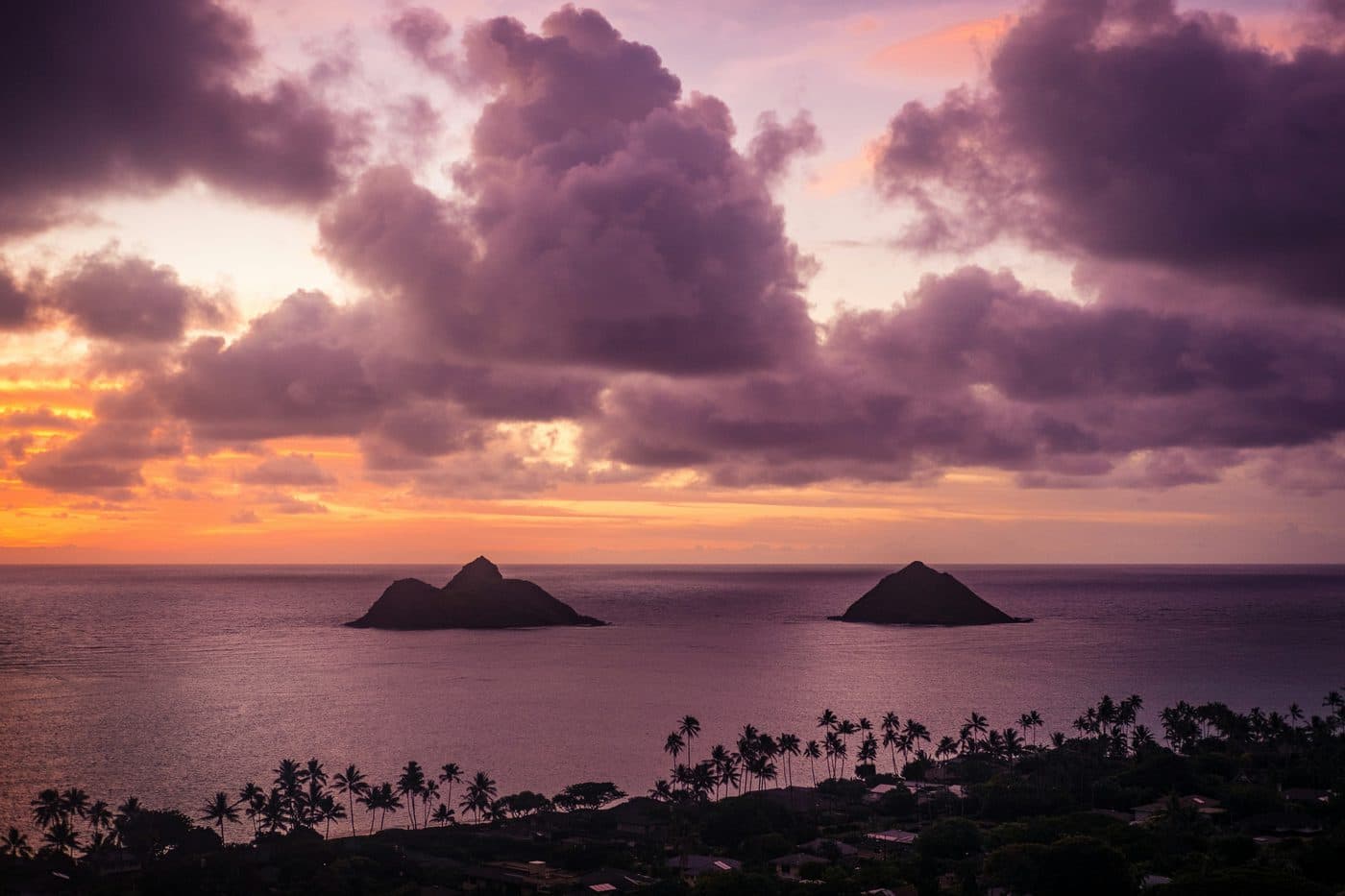
So close to the tropic, the sun drops fast. Honolulu’s sunset is at about a quarter past seven at midsummer and five to six at midwinter, its sunrise at ten to six and five past seven, and Hawaii keeps no summer time, so the clock stays put. The warm, low light lasts only some half an hour before sunset, and dusk about 25 minutes more: start the portraits earlier than you would at home. Choose the coast by the hour. Lanikai faces the dawn, and its two small islands stand black against it; Wailea looks toward the sunset over the sea. At Haleakalā’s overlooks, sunrise comes at about a quarter to six in June and five to seven in December, in the cold.
Travel
Getting there
Hawaii lies more than 3,200 km (2,000 miles) from the nearest continent. The state’s airports are Honolulu (HNL), Kahului (OGG), Lihue (LIH), Kona (KOA) and Hilo (ITO), with flights between the islands. By road, Honolulu airport is 42 km (26 miles) from Lanikai and 50 km (31 miles) from Haleʻiwa on the North Shore; Kahului is 29 km (18 miles) from Wailea and 78 km (49 miles) from Hana; Lihue is 52 km (32 miles) from Hanalei. Kahului to Haleakalā’s summit is only 57 km (36 miles), but the park says to allow 2.5 hours. Hilo is 47 km (29 miles) from Hawaiʻi Volcanoes, Kona airport 170 km (105 miles). Anyone flying a drone for pay needs an FAA Part 107 Remote Pilot Certificate, and the National Park Service bans launching, landing or flying one in national parks. On state land, the Hawaii Film Office reviews drones case by case, with at least 14 business days’ notice and $2 million of insurance naming the state.
Photographers
Photographers in Hawaii
No one in Hawaii yet
The first photographers in Hawaii are joining now. Tell our concierge your date and your plans — it checks who is free and fits.
Plan
Read before you plan
- Getting married in the USA as foreigners: the license, your entry, state by stateHow couples who live abroad marry legally in the United States: there’s no federal license, so each state and county sets its own wait, validity, witnesses and fee. What US immigration says about visitors marrying, what to bring, who can marry you, same-sex couples, the apostille and what happens back home.
- How to choose a wedding photographer: the steps, and the questions to askThe decision in order — whole weddings, style, availability, the package, the contract and deposit, cancellation, delivery and a conversation — then a checklist of questions, with why each one matters.
- A wedding-day timeline for photosFrom getting ready to the last dance, planned around the light.
- Deposits and payment protectionWhat you pay when, and what happens if plans change.
- How to get married in the USA when you live here: license, ceremony, and afterFor couples who live in the US: how a marriage license works when every state and county sets its own rules, what the wait and the fee are, who can marry you, marrying in another state, same-sex couples, and what changes after the day: certificate, surname and tax.
- Which country for a destination wedding? The law, prices, crowds and light, comparedThe legal route for couples who don’t live there, season and crowds, price levels, light, flights, venues and permits for photographs — Portugal, Italy, Spain, Greece, France and Austria compared with official figures, as of October 2026.
- A rain plan that still looks goodCovered spots, umbrellas and what photographers do on grey days.
- Wedding photography contract checklist: what it should say, and how Lens & Vows handles each pointThirteen things a good contract covers — the day and the hours, what is delivered, deposit and balance, cancellation on either side, date changes, illness, image rights, personal data, backups, travel, overtime and complaints — and what our terms say about each.
United States
Other places
 Alaska
 Seattle & Washington State
 Portland & Oregon
 San Francisco, Napa & Yosemite
 Los Angeles & Santa Barbara
 San Diego & Palm Springs
 Las Vegas & Lake Tahoe
 Utah
 Arizona
 Colorado
 Wyoming & Montana
 Texas
 Chicago & the Great Lakes
 Nashville & the Smokies
 New Orleans
 Florida
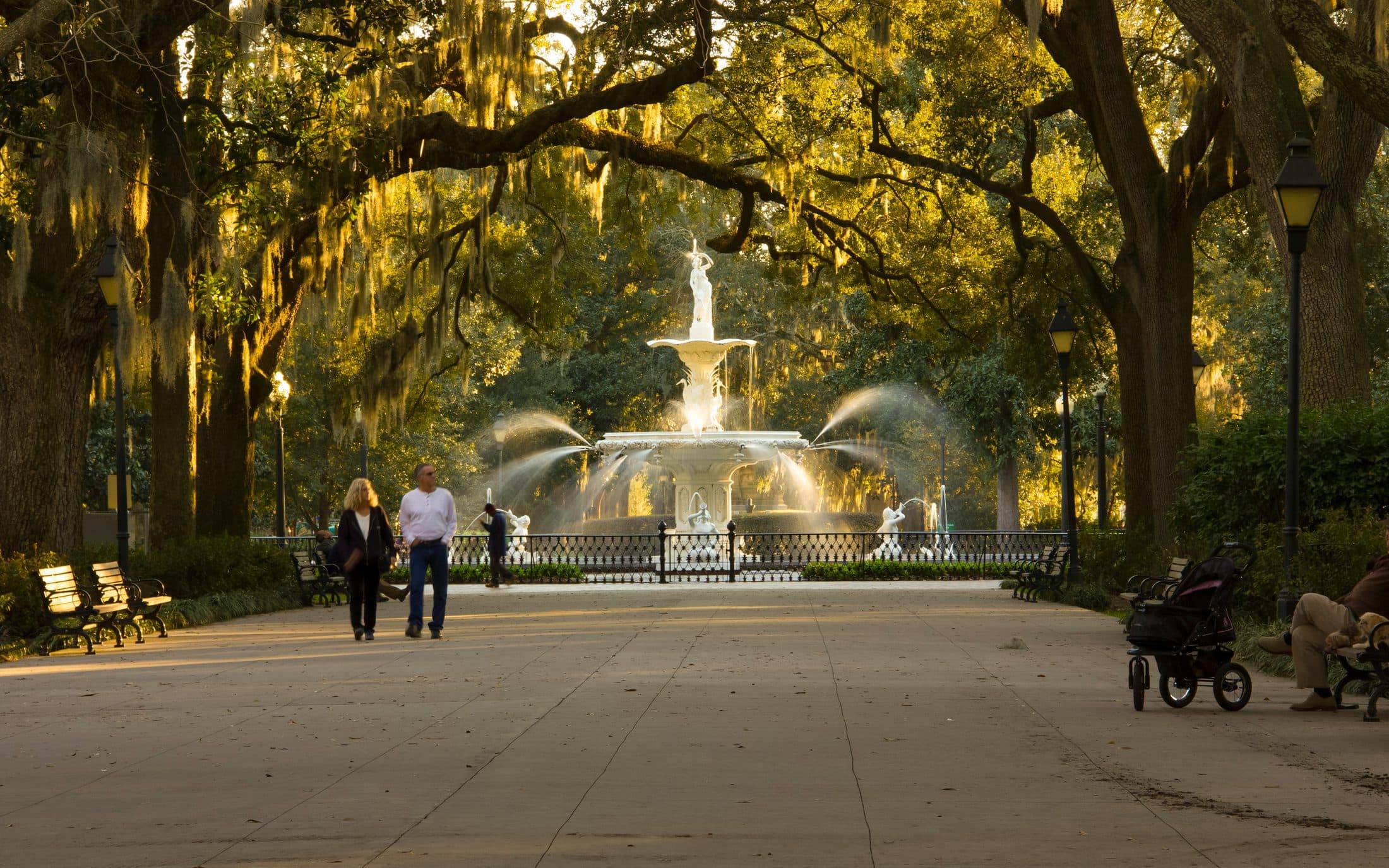 Charleston & Savannah
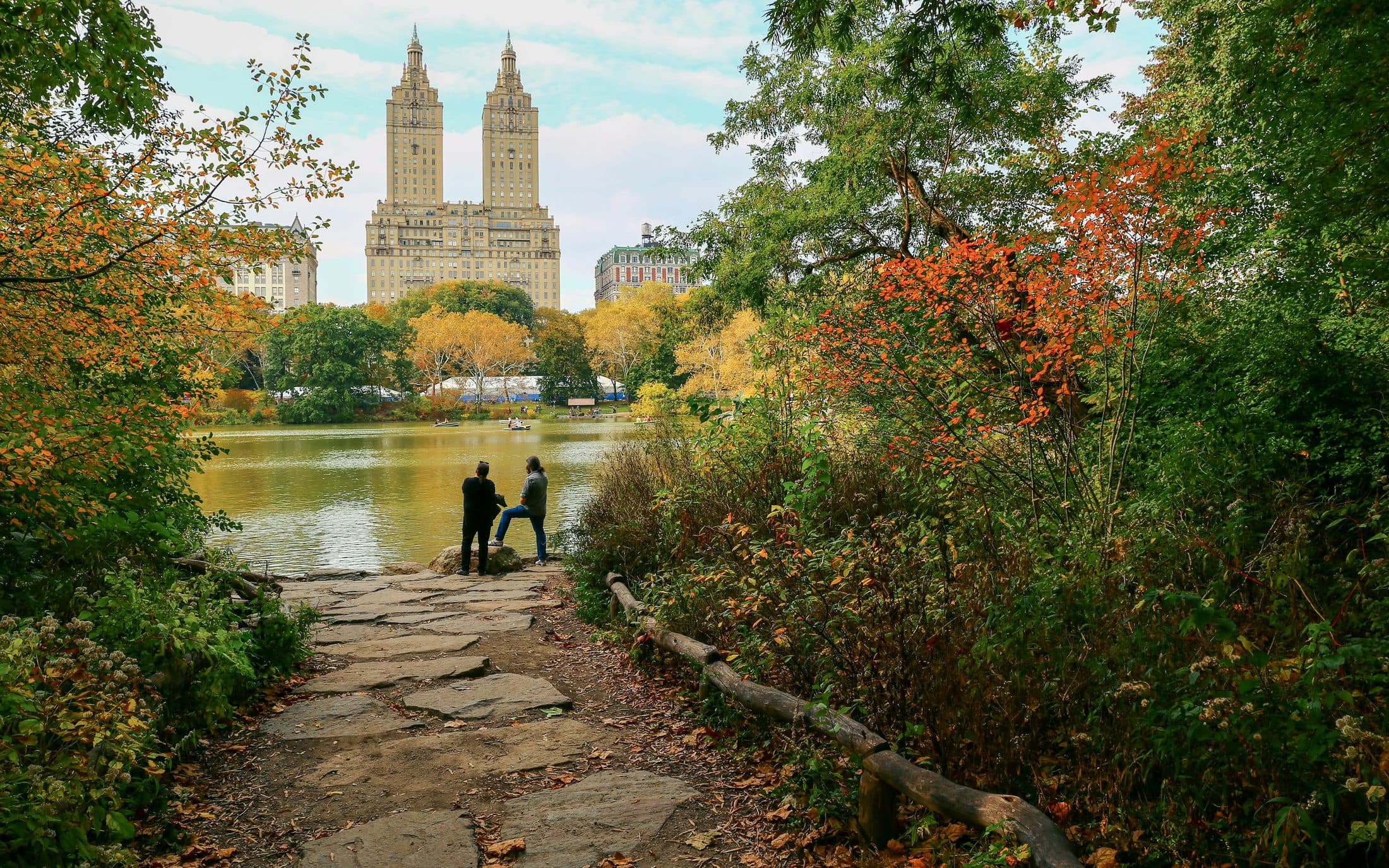 New York & the Hudson Valley
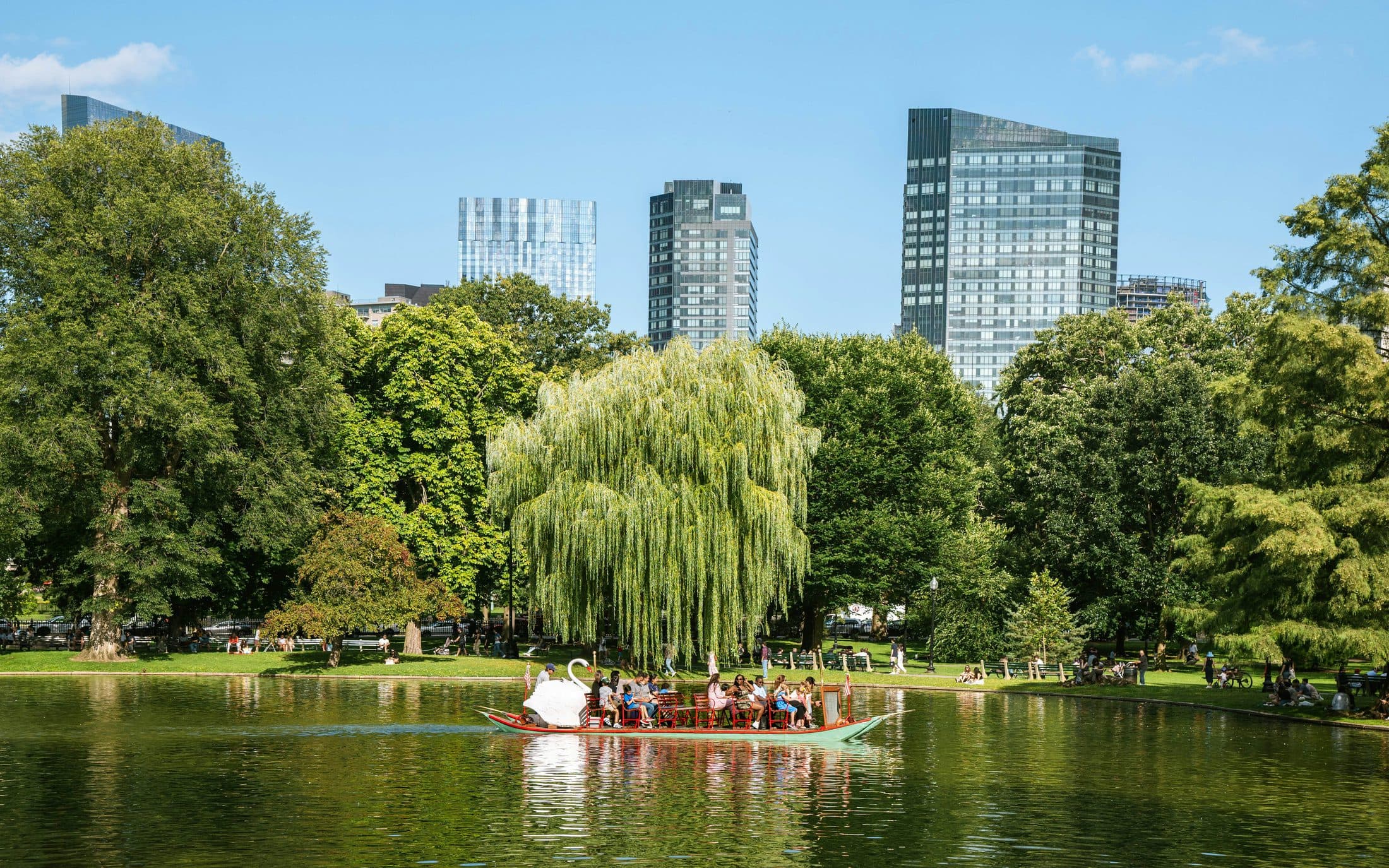 Boston & Cape Cod
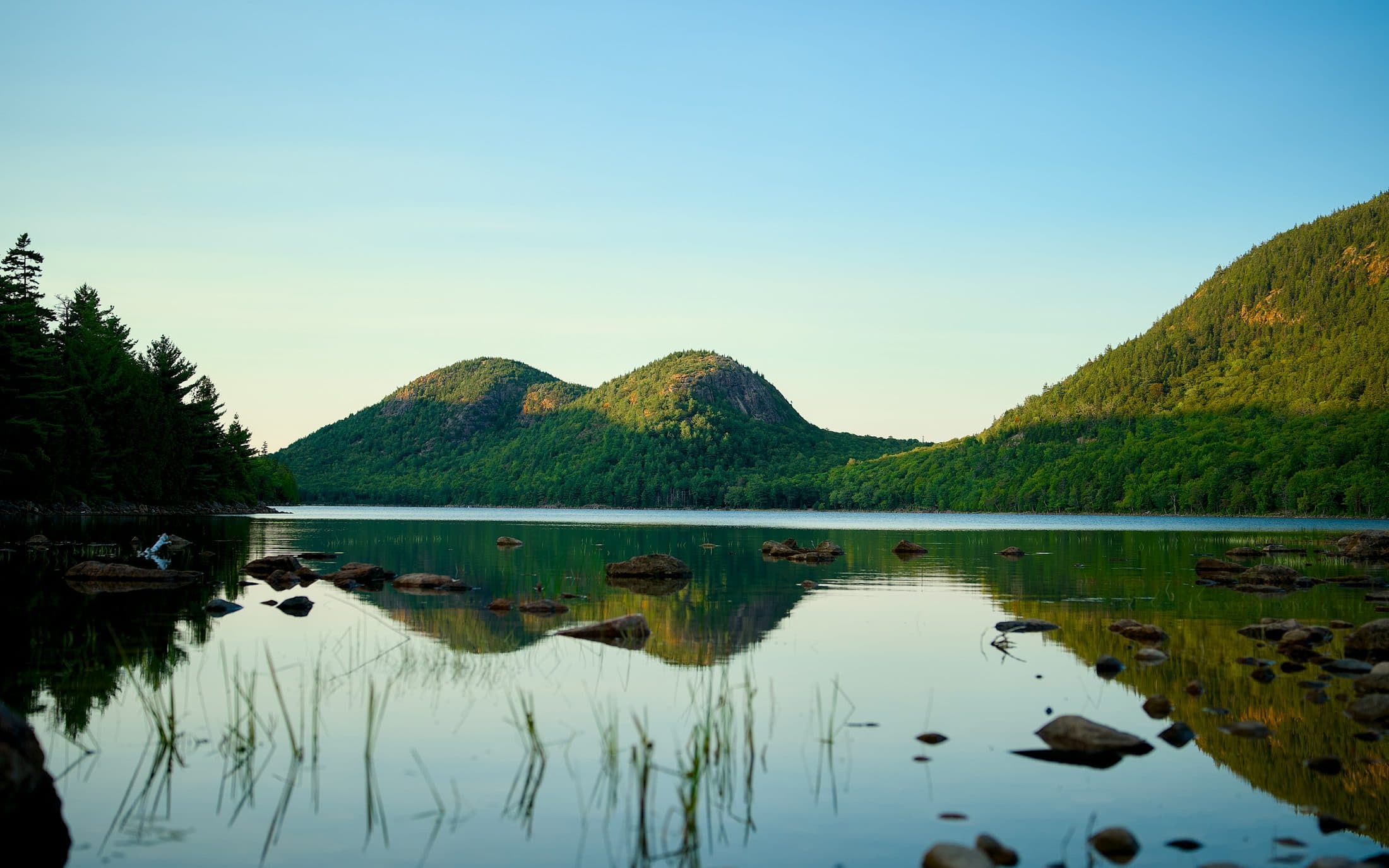 Maine & Vermont
 Washington, D.C. & Virginia