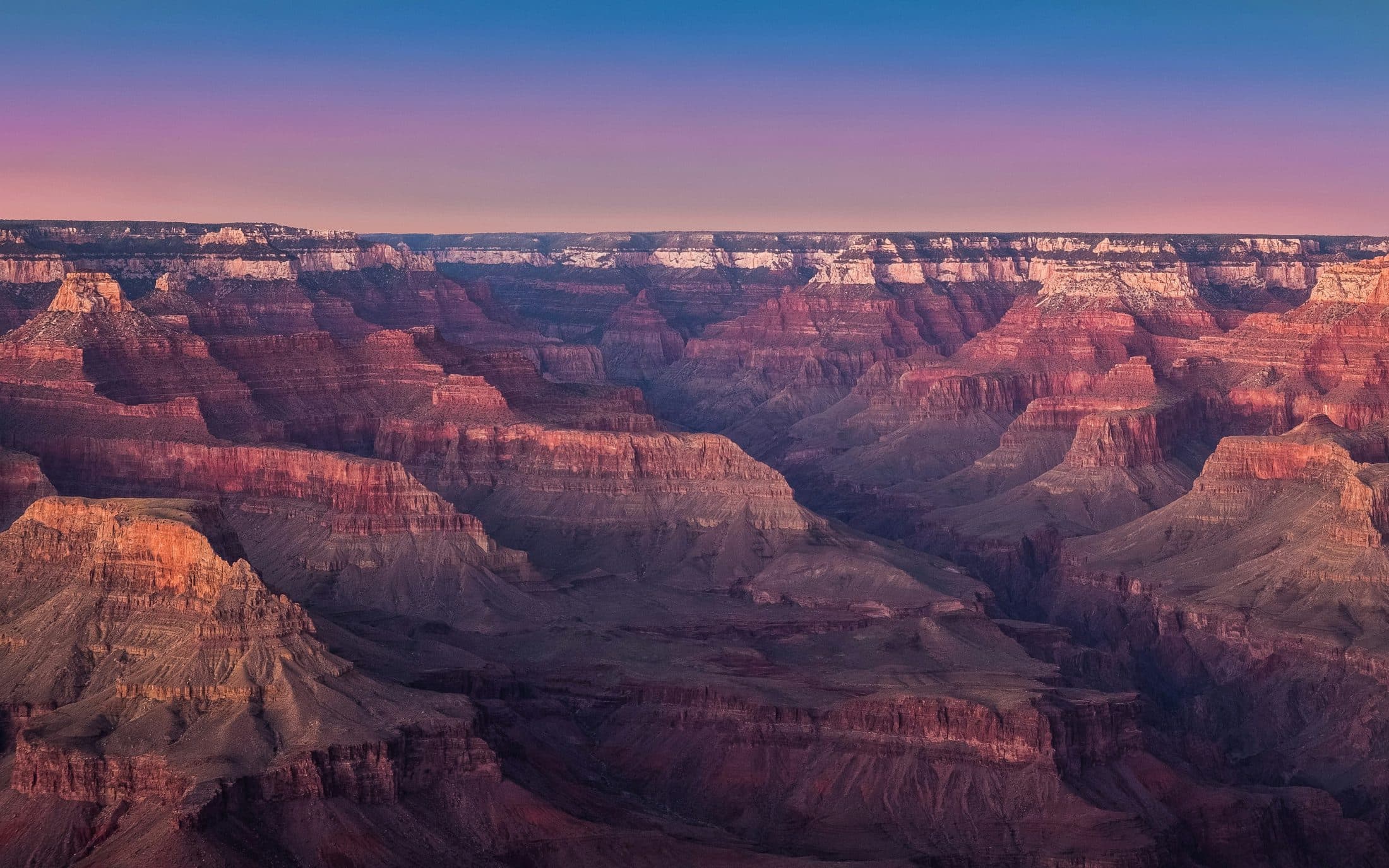
Getting married in Arizona
A canyon 1.5 km (0.9 mile) deep, Sedona’s red rock and creeks, the saguaro deserts around Phoenix and Tucson, and the sandstone of the Navajo Nation near Page, where the rules are the Nation’s own.
Arizona climbs from low desert to high forest, and the date follows the height.
Phoenix, at 337 m (1,107 ft), has highs of 20 °C (68 °F) in January and 41 °C (107 °F) in July, and Tucson runs close behind. Sedona, among red rock at 1,286 m (4,220 ft), sits between the two worlds. The South Rim of the Grand Canyon, a World Heritage site, is at about 2,135 m (7,000 ft) and open all year. As of November 2026, the North Rim is still recovering from the Dragon Bravo Fire of 2025, open only in season and with many trails closed. Page, at 1,302 m (4,270 ft), stands above the Colorado River beside the Navajo Nation, whose land holds Antelope Canyon and Monument Valley.
Couples here marry at a canyon viewpoint under a park permit, at a state park in Sedona or the Superstitions, or in a city park in Phoenix. Each landowner has its own rules, and tribal nations are governments with laws of their own: on their land, ask first. To marry legally, you get a license from the clerk of the superior court in any Arizona county. Maricopa County, around Phoenix, issues it the same day, and no blood test is required. You both appear in person with government photo ID, since its online route is for Arizona residents only. It lasts a year. State law requires an authorized officiant and two witnesses aged 18 or over, who sign it, and the officiant has 30 days to return it.
Through the year
When to marry in Arizona
April and October suit most of the state, and March suits the low desert. In NOAA’s US Climate Normals 1991–2020 for Sedona, highs are 20 °C (68 °F) in March, 24 °C (75 °F) in April and 26 °C (79 °F) in October, with rain on three to six days a month, a day counting as NOAA counts it, with 0.01 inch (0.25 mm) or more, so a passing shower is enough. July is the hottest month, at 36 °C (97 °F). Phoenix has 26 °C (78 °F) in March and 32 °C (89 °F) in October, and from June to August 25 to 29 days a month of 38 °C (100 °F) or more. On the South Rim, Grand Canyon airport has 16 °C (61 °F) in April and 19 °C (66 °F) in October, with nights below freezing. The monsoon runs from June 15 to September 30, Saguaro National Park says: rain in Tucson goes from under two days in April to nine in July, and Grand Canyon airport has rain on 11 days in each of July and August.
- January: Quieter
- February: Good with planning
- March: Best
- April: Best
- May: Good with planning
- June: Good with planning
- July: Quieter
- August: Quieter
- September: Good with planning
- October: Best
- November: Good with planning
- December: Quieter
- March to mid-JuneThe desert has its best weeks first: Phoenix goes from 26 °C (78 °F) in March to 35 °C (95 °F) in May, and wildflowers may color the Superstitions in spring if the rains allow. The rim warms later. The park says snow isn’t uncommon in May, but by June the airport has 28 °C (83 °F) and just two days of rain, the driest month in much of the state. Shoshone Point, the South Rim’s largest outdoor site, can be permitted from May 15. For the North Rim, read the park’s status page before you think of a date there.
- Mid-June to SeptemberMarry in the morning. At the canyon, days often begin clear and clouds build by mid-morning, and thunderstorms can bring lightning, fire and flash floods. Hermit Road’s shuttle stops during storms. Around Tucson, the rain falls mostly in the afternoon over the mountains and sends water down washes that were dry: stay out of canyons when rain is expected, and if caught, climb. In the low desert, Saguaro’s advice is to finish any hike by 10 a.m. once highs pass 35 °C (95 °F), and not to hike at all above 43 °C (110 °F). Phoenix can restrict its trails during Extreme Heat Warnings. Agree a second date with your photographer.
- October to FebruaryThe summer rains usually fade by mid-September, and October is the rim’s last gentle month. Shoshone Point closes for the season after October 15. By January the airport has 7 °C (44 °F) by day and −9 °C (16 °F) at night, the South Rim averages 147 cm (58 in) of snow a year, and icy roads can close for a while, so leave room in the day. Hermit Road opens to private cars from December to February. This is the low desert’s turn: Phoenix has 25 °C (77 °F) in November and 20 °C (68 °F) in January, and Tucson’s winter brings rain about once a week for a couple of months. As of November 2026, Lipan Point is closed for repaving through December 23.
In numbers
- UNESCO World Heritage
- Grand Canyon National Park (1979)
Weather station: Sedona, normals 1991–2020 · Checked 2 November 2026
Places
Where couples marry here
The kinds of places — ask your photographer which ones they know well.
The Grand Canyon’s rims
Every ceremony needs a permit, whatever its size, issued to the couple, not to a planner, and up to a year ahead. The park’s table, dated January 2025 and still current in November 2026, gives $280: a $70 application plus $210. South Rim sites include Shoshone Point for 85 people, reached by a dirt road, with six hours and the only catering; Grandeur Point for 45, on the accessible Rim Trail; Moran and Lipan points for 35; and Pima Point for 30, reached by shuttle from March through November. Permits run two hours, and each site takes one event a day. No arches, balloons or amplified sound, nothing thrown, chairs only for accessibility, and flowers only in the hand. The sites stay open to the public. Your photographer and officiant enter free with a copy of the permit. North Rim sites are on the list too, from May 15 to October 15, so ask whether they’re open.
Sedona: national forest and a state park
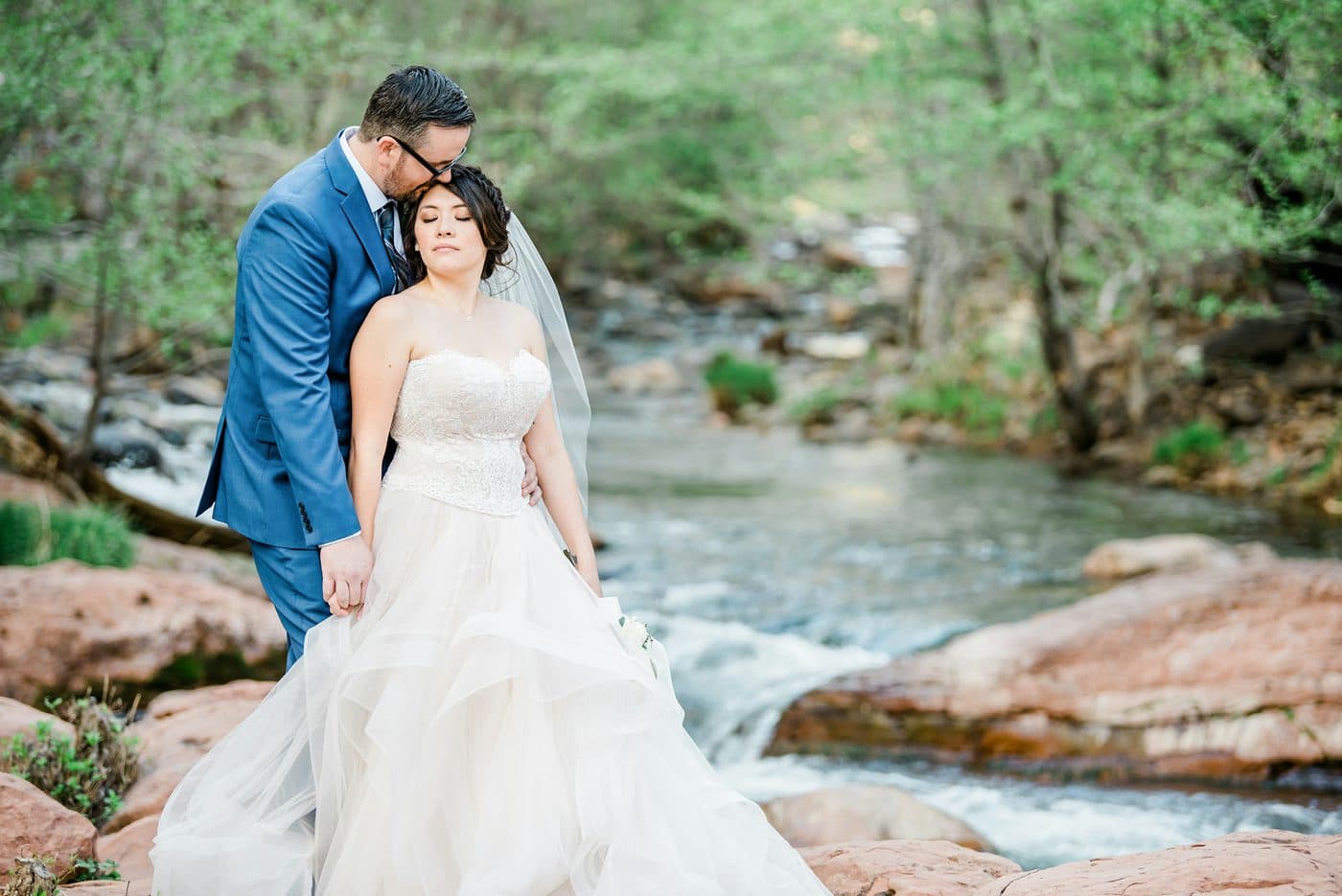
Much of the red rock is in Coconino National Forest, whose pages say that certain events, such as large parties and weddings, need a permit, so ask the Red Rock Ranger District before choosing a spot. Its most photographed scene is Cathedral Rock reflected in Oak Creek at Red Rock Crossing, and some areas need a pass to park. A commercial shoot needs no permit if five or fewer people are on site, including those behind the camera, but models, sets or props not native to the place can change that. Red Rock State Park hosts weddings by reservation, including on its visitor center roof and at a spot it calls the Wedding Tree, and Dead Horse Ranch State Park, near Cottonwood, does too. Arizona’s state parks ask nothing for personal engagement photos, but commercial photographers must apply, with a $1 million insurance certificate, and allow up to 30 days. Only some parks take weddings, so check the state’s list.
Phoenix, Tucson and the saguaros
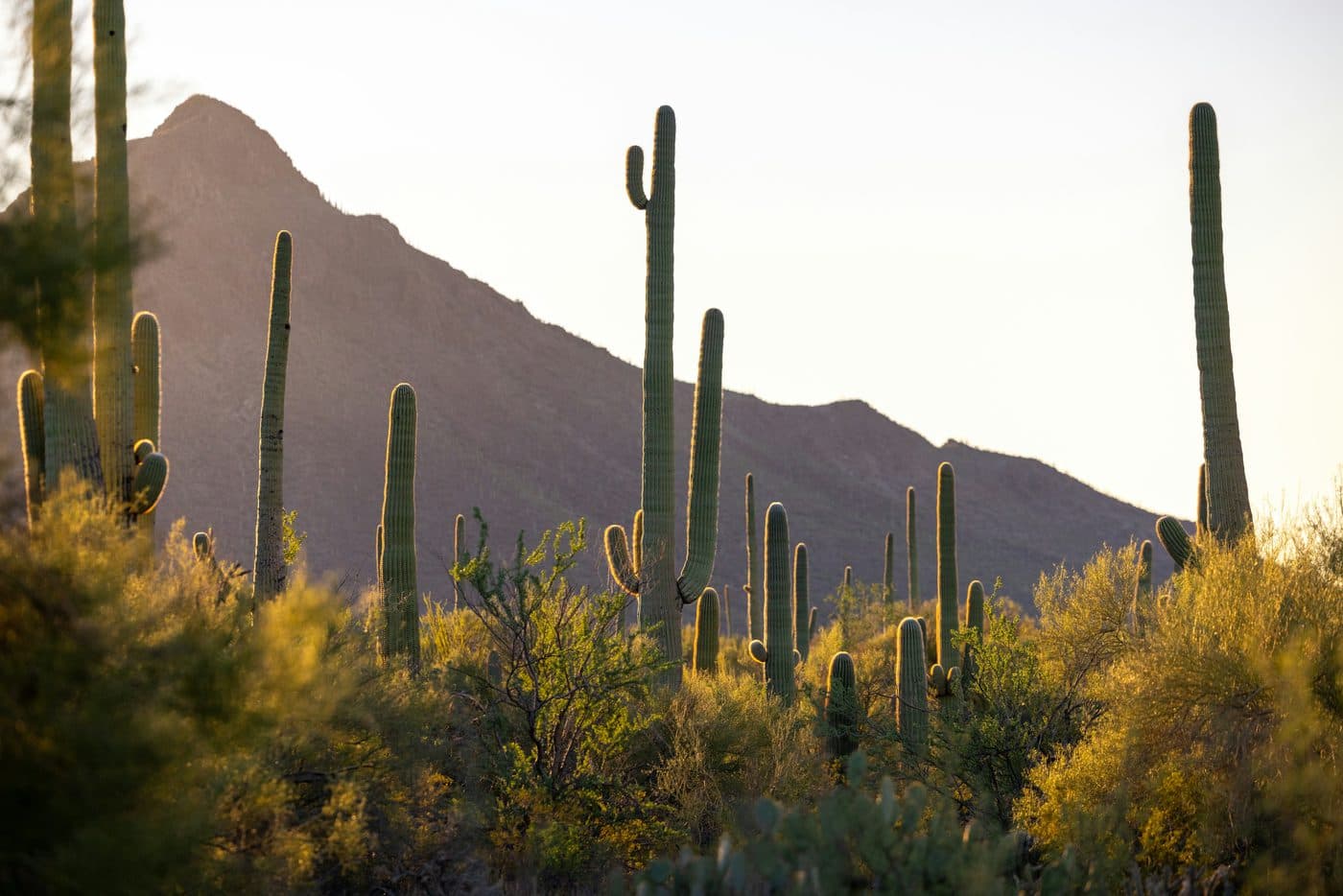
Phoenix suggests its own parks for weddings, Papago Park with its sandstone buttes and South Mountain among them; South Mountain, at over 6,400 hectares (16,000 acres), allows no amplified music. Lost Dutchman State Park, 55 km (34 miles) from the airport, takes weddings under the Superstition Mountains. Saguaro National Park, on both sides of Tucson, wants small, simple and quiet ones: as of November 2026, a $100 application at least four weeks ahead, no chairs, tables, arches, flowers or amplified sound, no reception, and 18 people on any trail. Pima County’s Tucson Mountain Park, with the Gates Pass overlook, asks commercial photographers for prior written permission, free but with insurance, at least 10 working days ahead; the photographer applies, not the couple.
The Navajo Nation: Antelope Canyon, Monument Valley, Horseshoe Bend
Tribal land isn’t public land. The Navajo Nation closes its areas to non-Navajos without a valid permit, considers all its tribal park scenic areas sacred sites, and enforces its own law. At Antelope Canyon, guides are mandatory and it says plainly that it issues no photography or filming permits for Upper and Lower Antelope, and is taking no applications; don’t plan a shoot there. Monument Valley requires a special use permit for photography, filming and weddings, asked for at the visitor center, and commercial photos without a permit are prohibited. Everywhere: drones are confiscated, alcohol is forbidden, don’t climb the monuments, and ask before photographing Navajo people. Horseshoe Bend splits three ways, the park service says: the bend lies in Glen Canyon National Recreation Area, the parking lot in the City of Page, and the overlook on the Navajo Nation. Ask all three before planning anything beyond a visit. Glen Canyon wants special use applications 45 business days ahead.
Other nations and ground that is not a backdrop
The Havasupai Tribe prohibits photography for commercial purposes and all drones on its reservation, which is dry, and bars photos of tribal members, homes, burial grounds and sacred sites. Grand Canyon West is on the sovereign land of the Hualapai Tribe, and commercial filming and photography there need the Tribe’s permission. The Hopi Tribe’s preservation office says pictures of ceremonies and dancers taken without permission have harmed its people. The National Park Service calls the canyon and the Colorado River significant sacred sites for the park’s 11 traditionally associated tribes, and has banned the scattering of ashes for that reason. Ancestral homes such as Montezuma Castle and Walnut Canyon, and Wupatki’s pueblos, which that park calls the footprints of ancestors, are never a setting. Leave rock, plants and artifacts where they are.
Light
How the light falls
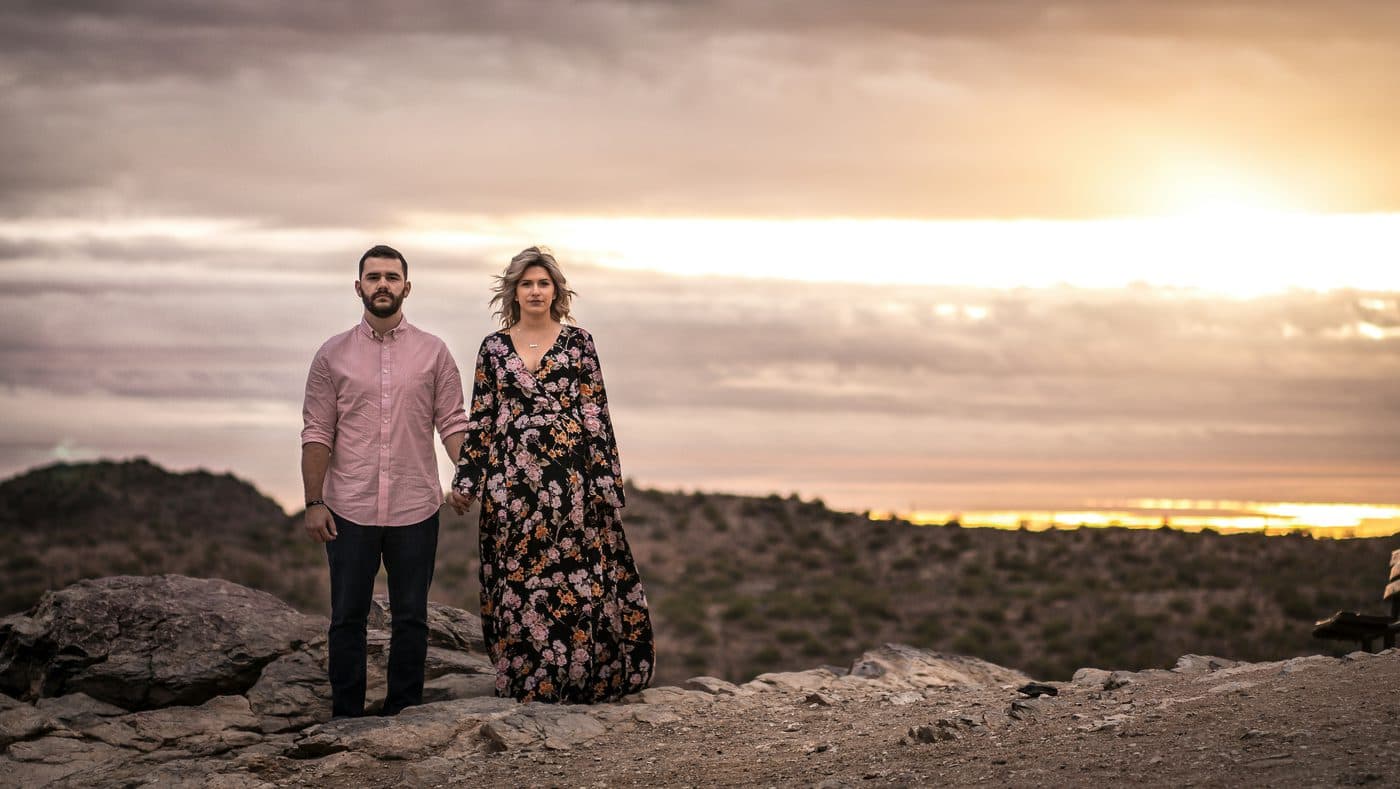
Most of Arizona keeps no summer time, but the Navajo Nation does, so from March to November it runs an hour ahead of Page, Flagstaff and the Grand Canyon: confirm which clock a tour or permit uses. At Grand Canyon Village, the sun sets at about ten to eight at midsummer and at twenty past five at midwinter, and rises at about ten past five and twenty-five to eight. Phoenix is much the same, with a sunset at about twenty to eight in June and twenty-five past five in December. The warm, low light lasts some 35 to 40 minutes before sunset, and dusk about half an hour more, so start the portraits early. Rim viewpoints fill for sunset, so allow extra time to park, as the park advises at Lipan Point. As of fall 2026, Monument Valley’s scenic drive closes at 5 or 6 p.m., with last entry at 2:30 or 3:30 p.m.
Travel
Getting there
Commercial flights serve Phoenix (PHX), Flagstaff and Las Vegas for the canyon, the park says, and Tucson (TUS) has its own airport. By road, Phoenix airport is 195 km (121 miles) from Sedona, 377 km (234 miles) from the South Rim, 456 km (283 miles) from Page and 189 km (117 miles) from Tucson airport. Flagstaff airport is 41 km (25 miles) from Sedona and 145 km (90 miles) from the South Rim, and Las Vegas airport 448 km (278 miles). The South Rim is 220 km (137 miles) from Page, and the park gives 341 km (212 miles) by road to the North Rim. Page to Monument Valley is 202 km (126 miles), and Tucson airport to Saguaro’s east district 26 km (16 miles). The walk to Horseshoe Bend is 2.4 km (1.5 miles) round trip, with little shade. Anyone flying a drone for pay needs an FAA Part 107 Remote Pilot Certificate, and the National Park Service bans launching, landing or flying one in national parks. The ban covers the Grand Canyon and Glen Canyon, and all Navajo Tribal Parks ban them too.
Photographers
Photographers in Arizona
No one in Arizona yet
The first photographers in Arizona are joining now. Tell our concierge your date and your plans — it checks who is free and fits.
Plan
Read before you plan
- Getting married in the USA as foreigners: the license, your entry, state by stateHow couples who live abroad marry legally in the United States: there’s no federal license, so each state and county sets its own wait, validity, witnesses and fee. What US immigration says about visitors marrying, what to bring, who can marry you, same-sex couples, the apostille and what happens back home.
- How to choose a wedding photographer: the steps, and the questions to askThe decision in order — whole weddings, style, availability, the package, the contract and deposit, cancellation, delivery and a conversation — then a checklist of questions, with why each one matters.
- A wedding-day timeline for photosFrom getting ready to the last dance, planned around the light.
- Deposits and payment protectionWhat you pay when, and what happens if plans change.
- How to get married in the USA when you live here: license, ceremony, and afterFor couples who live in the US: how a marriage license works when every state and county sets its own rules, what the wait and the fee are, who can marry you, marrying in another state, same-sex couples, and what changes after the day: certificate, surname and tax.
- Which country for a destination wedding? The law, prices, crowds and light, comparedThe legal route for couples who don’t live there, season and crowds, price levels, light, flights, venues and permits for photographs — Portugal, Italy, Spain, Greece, France and Austria compared with official figures, as of October 2026.
- A rain plan that still looks goodCovered spots, umbrellas and what photographers do on grey days.
- Wedding photography contract checklist: what it should say, and how Lens & Vows handles each pointThirteen things a good contract covers — the day and the hours, what is delivered, deposit and balance, cancellation on either side, date changes, illness, image rights, personal data, backups, travel, overtime and complaints — and what our terms say about each.
United States
Other places
 Hawaii
 Alaska
 Seattle & Washington State
 Portland & Oregon
 San Francisco, Napa & Yosemite
 Los Angeles & Santa Barbara
 San Diego & Palm Springs
 Las Vegas & Lake Tahoe
 Utah
 Colorado
 Wyoming & Montana
 Texas
 Chicago & the Great Lakes
 Nashville & the Smokies
 New Orleans
 Florida
 Charleston & Savannah
 New York & the Hudson Valley
 Boston & Cape Cod
 Maine & Vermont
 Washington, D.C. & Virginia