Founding photographerVerified — Identity verified by Lens & Vows
John M.from £1,450
🇬🇧 The Peak District & Derbyshire, Yorkshire, United Kingdom · DocumentaryWedding photographers in the United Kingdom
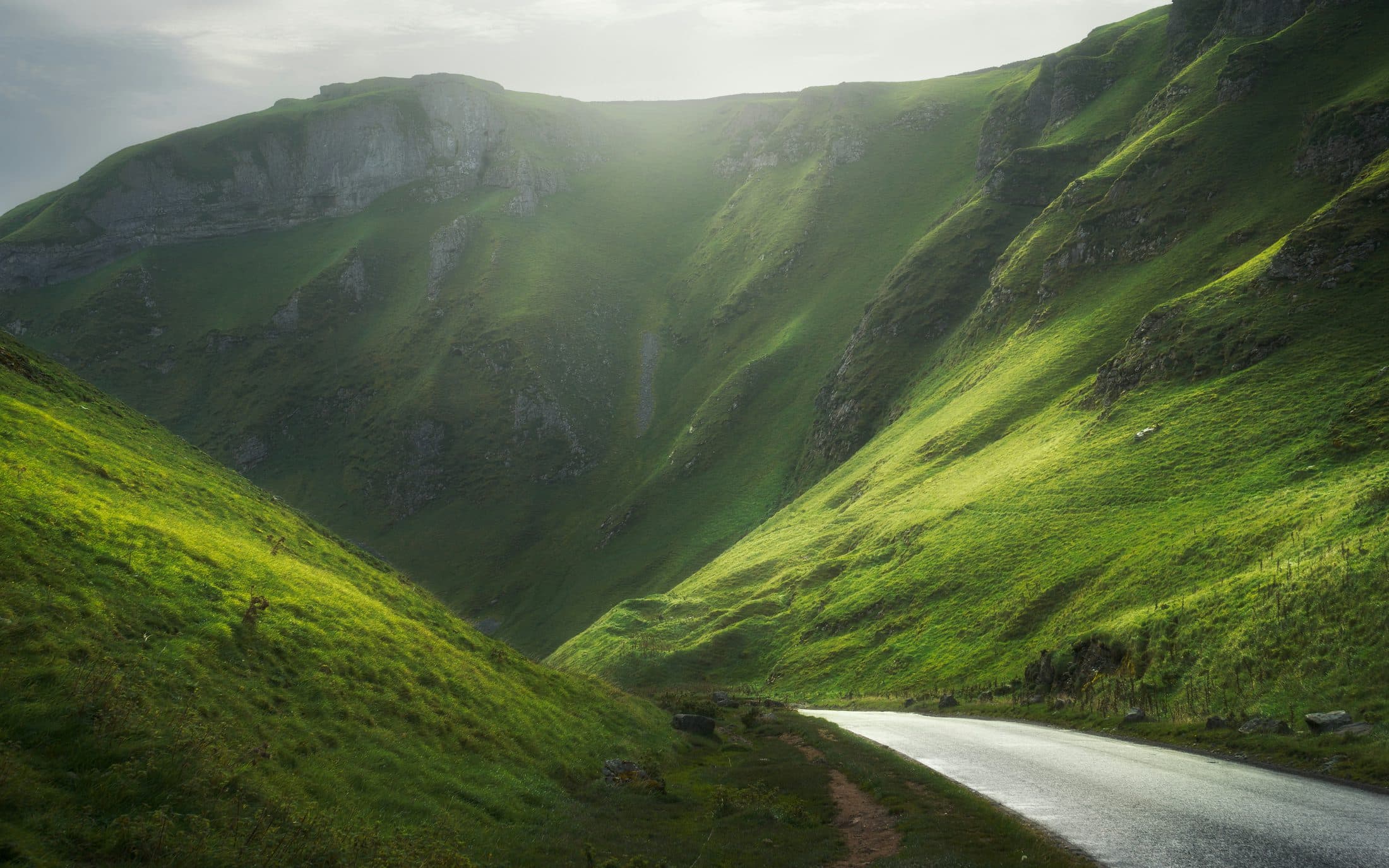
Britain’s first national park, in the heart of England: gritstone edges above the Hope Valley, steep limestone dales, Chatsworth and Haddon Hall, the spa town of Buxton and, down the Derwent, the mills where the modern factory began.
The Peak District was the first of Britain’s national parks, designated in 1951, and its 1,438 km² reach into five counties.
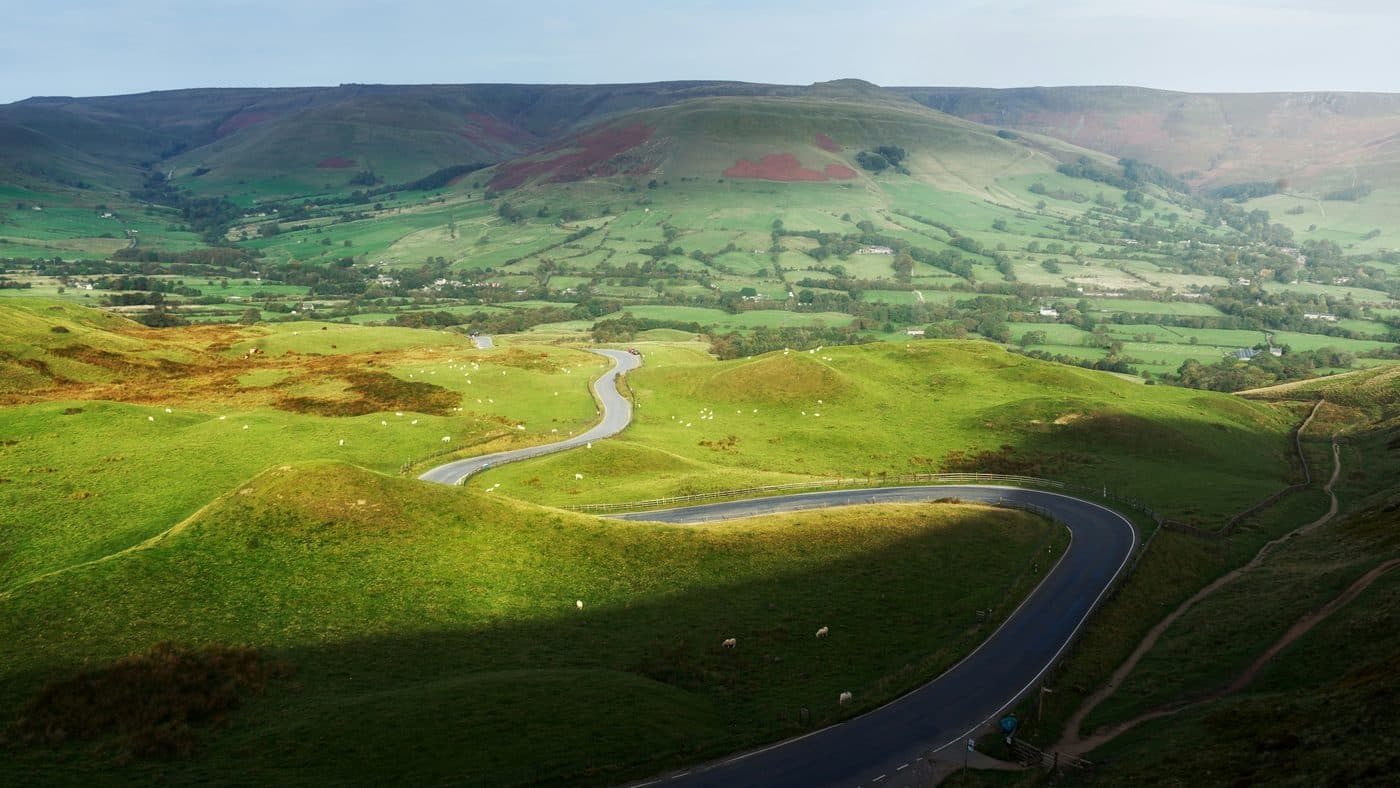
In the north, the Dark Peak is moorland and gritstone edges: Kinder Scout, at 636 m the park’s highest point, where the Mass Trespass of 1932 took place; Mam Tor, the 517 m ‘mother hill’, once a Bronze Age hilltop fortress, above Castleton and the Vale of Edale; and Stanage Edge, a gritstone escarpment some 5.6 km long, near Hathersage. In the south, the White Peak is steep limestone dales such as Dovedale; Bakewell stands on the River Wye, with Chatsworth 7 km away and Haddon Hall in the same valley. Buxton was made a fashionable spa by the fifth Duke of Devonshire from the late 1770s, and beyond the park the Derwent runs on past Matlock Bath towards Derby through 24 km of 18th- and 19th-century cotton mills, a World Heritage Site since 2001 — the valley where, in UNESCO’s words, the modern factory began.
Couples come for a wedding in a country house or a converted barn, a ceremony in Chatsworth’s Painted Hall or in the old riding school at Calke Abbey, or an elopement and portraits on an edge at sunset, by a reservoir or in a limestone dale. As everywhere in England and Wales, a legal wedding needs a week’s stay before the notice, 28 days after it and a register office, an approved venue or a place of worship — outdoors only in a venue’s own grounds — and most couples from abroad also need a Marriage Visitor visa. So many sign the papers at home and make their vows here; up on the moors and the edges, a ceremony is always a symbolic one.
Photographers
They still have dates open here. Their whole weddings and free dates are on their page.
See the photographerBooking through Lens & Vows
Through the year
May to September is the season. At Buxton — a spa town about 300 m up, whose weather station has kept records since 1865 — average highs climb from about 14.5 °C in May to 19 °C in July, the warmest month, and 1 mm of rain or more falls on 12 to 14 days a month. May is the driest and the sunniest month, with about six hours of sun a day. This is wet upland country: some 1,340 mm of rain a year at Buxton, against about 1,160 for the UK as a whole. The moors and edges lie higher than the town, the Derwent valley and Derby lower, so a day on the tops needs a warm layer and a covered plan. From October to January rain falls on 16 or 17 days a month, and Buxton sees frost on about 50 nights a year. April and October suit couples who don’t mind cool days.
Weather station: Buxton, normals 1991–2020 · Checked 24 November 2026
Places
The kinds of places — ask your photographer which ones they know well.
Peveril Castle, whose keep Henry II added, towers above Castleton; from Mam Tor the view runs over the Vale of Edale to Kinder Scout, and from Edale the Pennine Way sets off on its 431 km to Scotland. Mam Tor, Winnats Pass and Kinder belong to the National Trust: photographs for your own use are welcome, a wedding or engagement shoot is arranged with the property in advance, fee included, and no drones fly from its land. English Heritage, which looks after Peveril, books celebration and engagement shoots at least 30 days ahead (sometimes two weeks) and allows drones only before or after opening hours, by arrangement.
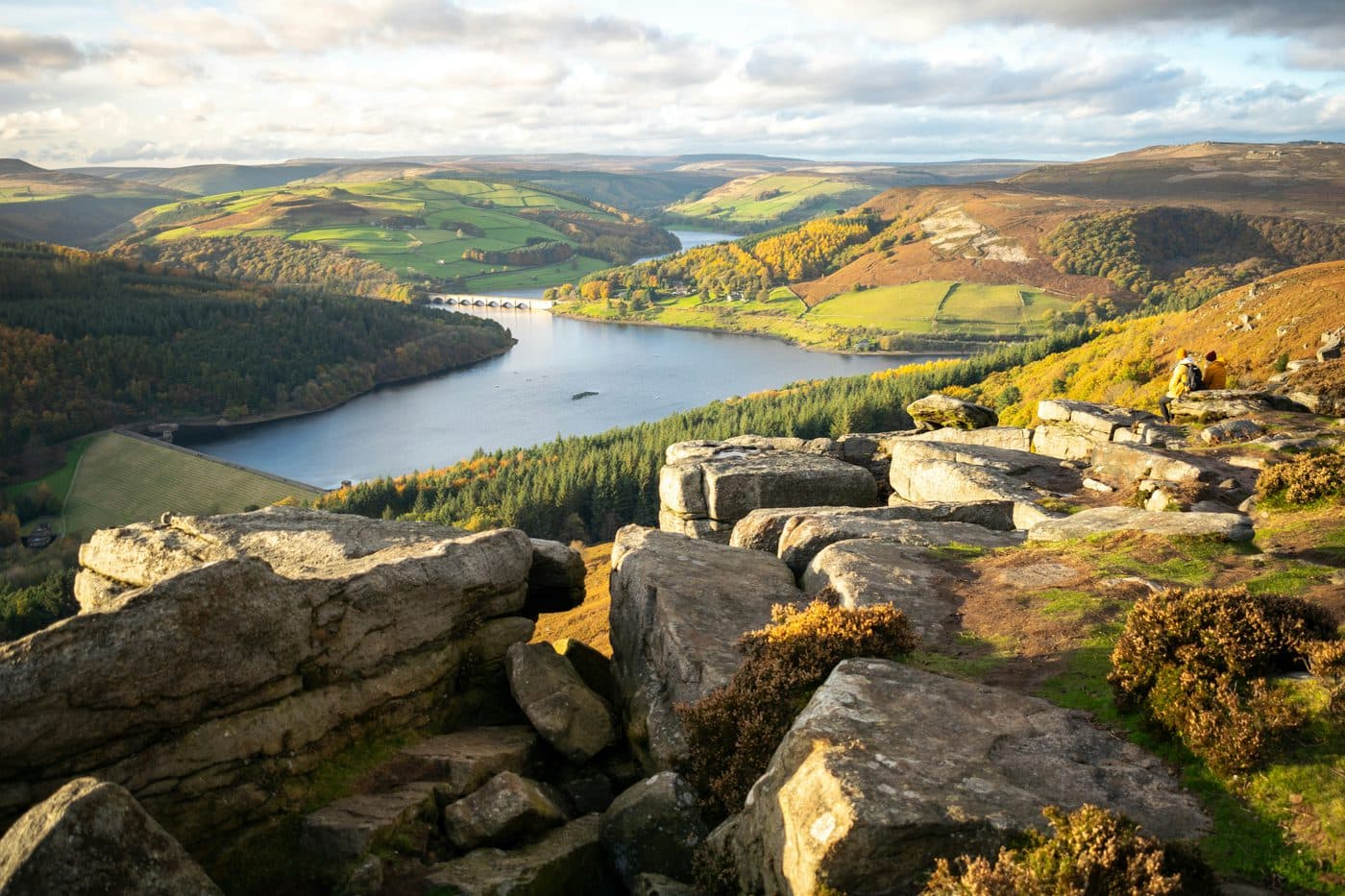
Stanage Edge, a gritstone escarpment considered the home of rock climbing, is about 3 km uphill from Hathersage station, and its most famous scene, from the 2005 film of Pride & Prejudice, can be recreated at the top with care. It belongs to the National Park Authority, which owns just over 4% of the park: commercial photography on its land, even for social media alone, needs a licence and usually a fee, agreed in writing beforehand — never afterwards — and from spring to late summer the ring ouzels nesting among the rocks can close some paths. Near Grindleford, the National Trust’s Longshaw estate keeps the ancient oaks of Padley Gorge. To the north, the Derwent, Howden and Ladybower reservoirs fill the Upper Derwent Valley, where drones and barbecues are banned around Fairholmes at all times. The Dambuster memorials on the Derwent dam, like the graves of Eyam’s plague of 1665–66, are places of remembrance, never a backdrop.
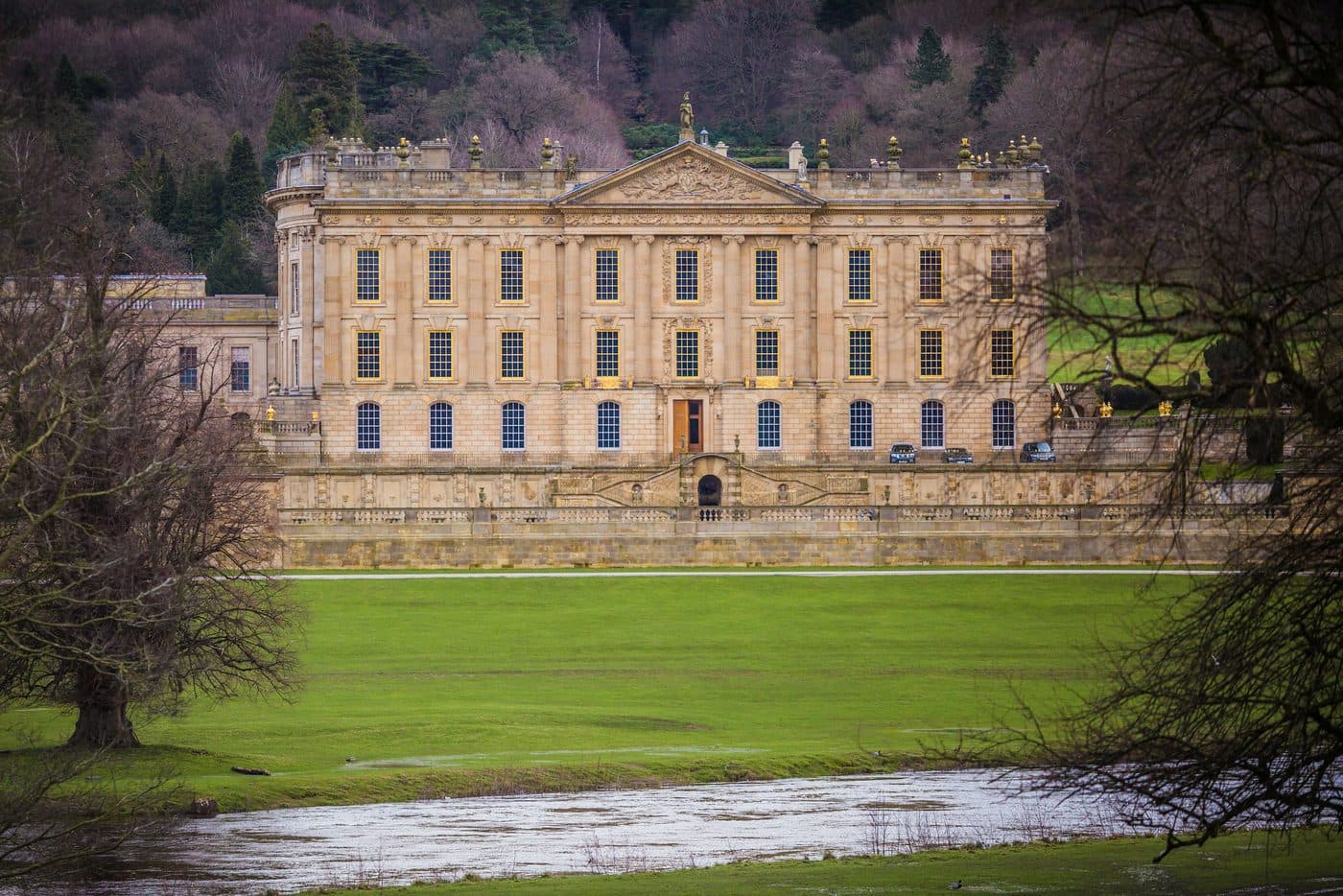
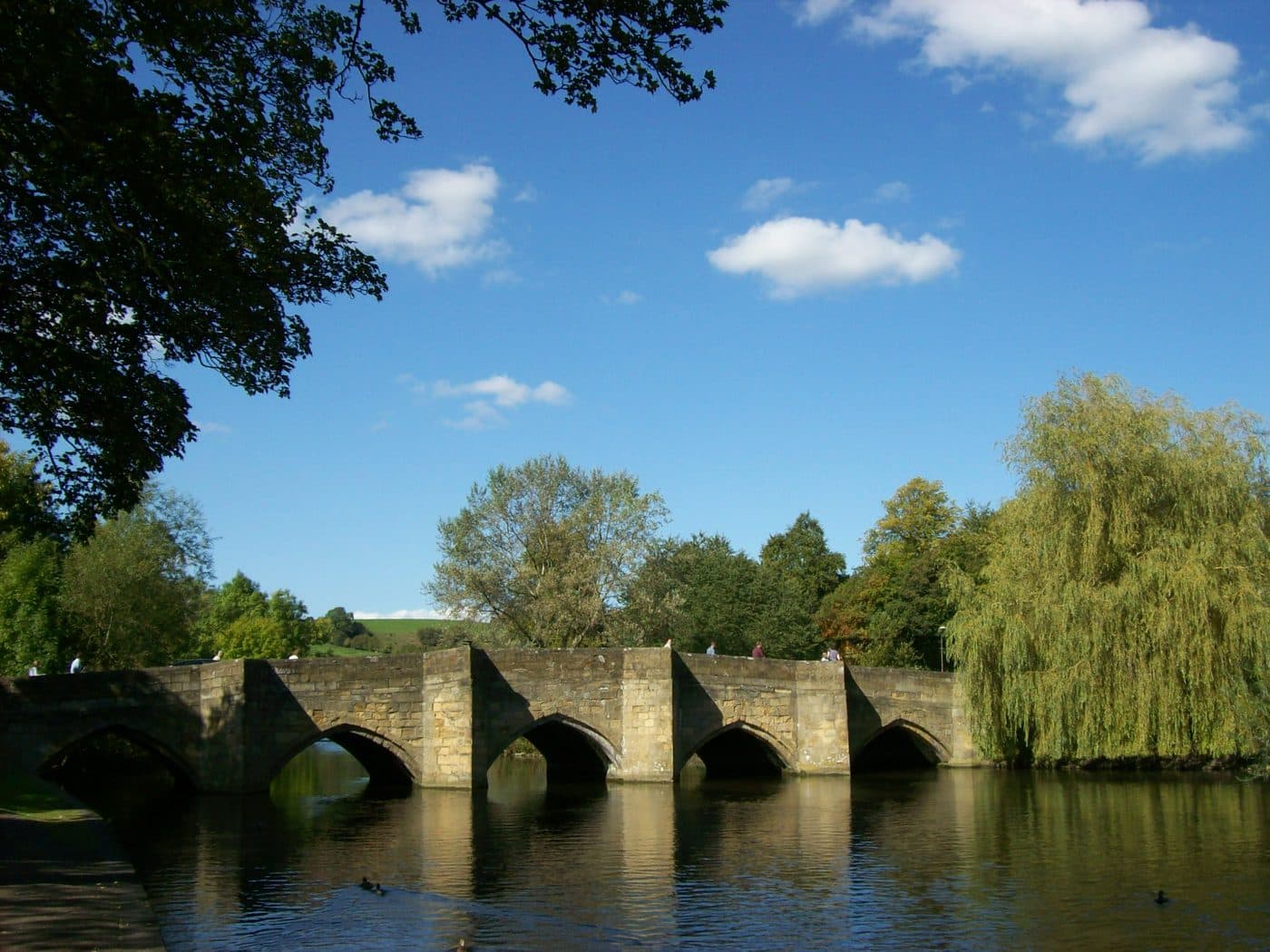
Chatsworth, home of the Devonshire family for nearly five centuries and cared for by a charitable trust, holds wedding ceremonies in its Painted Hall, with its 42-hectare garden for the photographs. Otherwise it allows no professional photography — wedding, engagement or portrait — anywhere on the estate unless booked through one of its own packages, turns visitors in wedding clothes away from the house, garden and grounds, and bans drones everywhere. In the valley of the Wye, Haddon Hall is still a private home: personal photographs are welcome, tripods and lights are not, drones only with written consent, and private occasions are arranged with its estate office. Bakewell, 7 km from Chatsworth, has a Grade I-listed stone bridge over the Wye; further south, a walk from the National Trust’s Ilam Park, with views to Thorpe Cloud, leads to the stepping stones of Dovedale.
Buxton’s Crescent, built in 1780–88 for the fifth Duke of Devonshire and now a spa hotel, stands opposite St Ann’s Well and its thermal water; behind it lie the Pavilion Gardens, laid out in 1871 over some 9 hectares, and the Opera House of 1903. Down the Derwent, the World Heritage mills run 24 km from Matlock Bath through Cromford, Belper, Milford and Darley Abbey nearly to the centre of Derby. Of the county’s great houses, all three in the National Trust’s care, Calke Abbey — the ‘un-stately’ home of peeling paint and abandoned rooms — is licensed for civil weddings in its old riding school, a listed barn on a 240-hectare estate; Kedleston Hall, an extravagant temple to the arts, does not allow wedding photography on site; and at Hardwick, built by Bess of Hardwick in the late 1500s, the Trust now also runs English Heritage’s Old Hall.
Light
At midsummer the sun rises over the Hope Valley at about twenty to five and sets at about twenty to ten, out in the north-west; dusk lasts until about half past ten, and from mid-May to the end of July the sky never gets fully dark. At eight in the evening the sun is still some eleven degrees up, low enough to warm the gritstone. At midwinter it is up only from about twenty past eight to ten to four, never more than 13 degrees high. May averages about six hours of sun a day at Buxton, December little more than one. High on the edges the evening light lasts until sunset, while in the deep dales and in Winnats Pass the hills hide the sun earlier; on the many grey days the light is soft and even, kind to faces and to the greens of the dales. Britain’s summer time runs from the last Sunday of March to the last Sunday of October.
Travel
Manchester Airport is about 45 km from Castleton and 40 km from Buxton, under an hour by road, and East Midlands Airport about 22 km from Derby and 56 km from Matlock. Trains on the Hope Valley line between Manchester and Sheffield stop at Edale, Hope, Bamford, Hathersage and Grindleford — about 45 minutes from Manchester Piccadilly to Edale, a quarter of an hour from Sheffield to Grindleford — and others run from Manchester to Buxton in about an hour, and from Derby up the Derwent to Belper, Cromford, Matlock Bath and Matlock in about 35 minutes. From London St Pancras, fast trains reach Derby in about 1 h 25 and Sheffield in about two hours; by road Bakewell is some 255 km from central London. Drones: under the UK’s rules you need a Flyer ID for any drone of 100 g or more, and an Operator ID from 250 g, or from 100 g with a camera; fly below 120 m and at least 50 m from people. In the park a drone also needs the landowner’s permission where it takes off and lands; the National Trust and Chatsworth allow none, nor does the Upper Derwent around Fairholmes. Check the Met Office’s warnings before a day on the moors.
Plan
United Kingdom