Getting married in Cornwall & Devon
England’s far south-west: Cornwall’s cliffs, turquoise coves and harbour towns, St Michael’s Mount at the end of its causeway, and in Devon the granite tors of Dartmoor and a World Heritage coast.
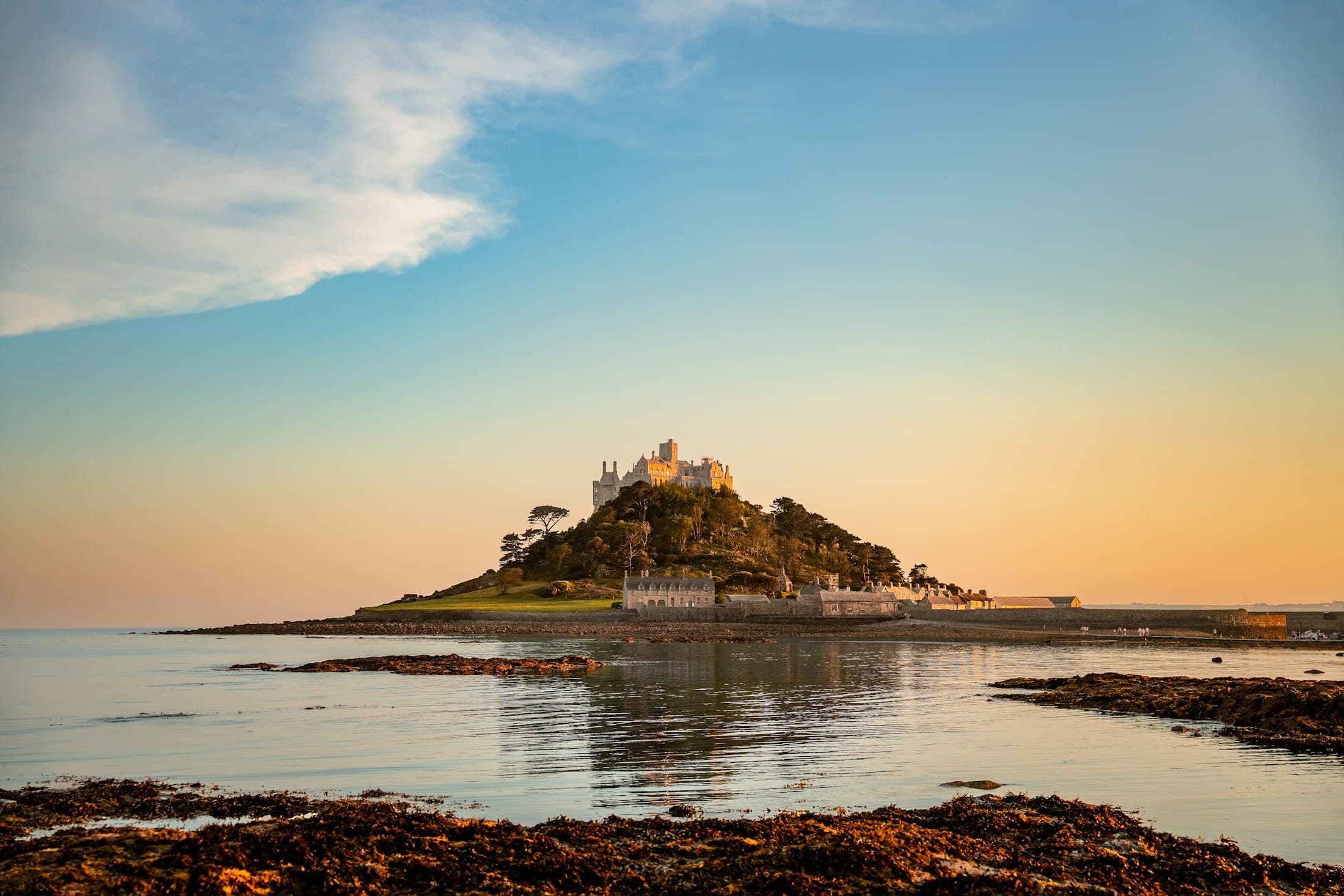
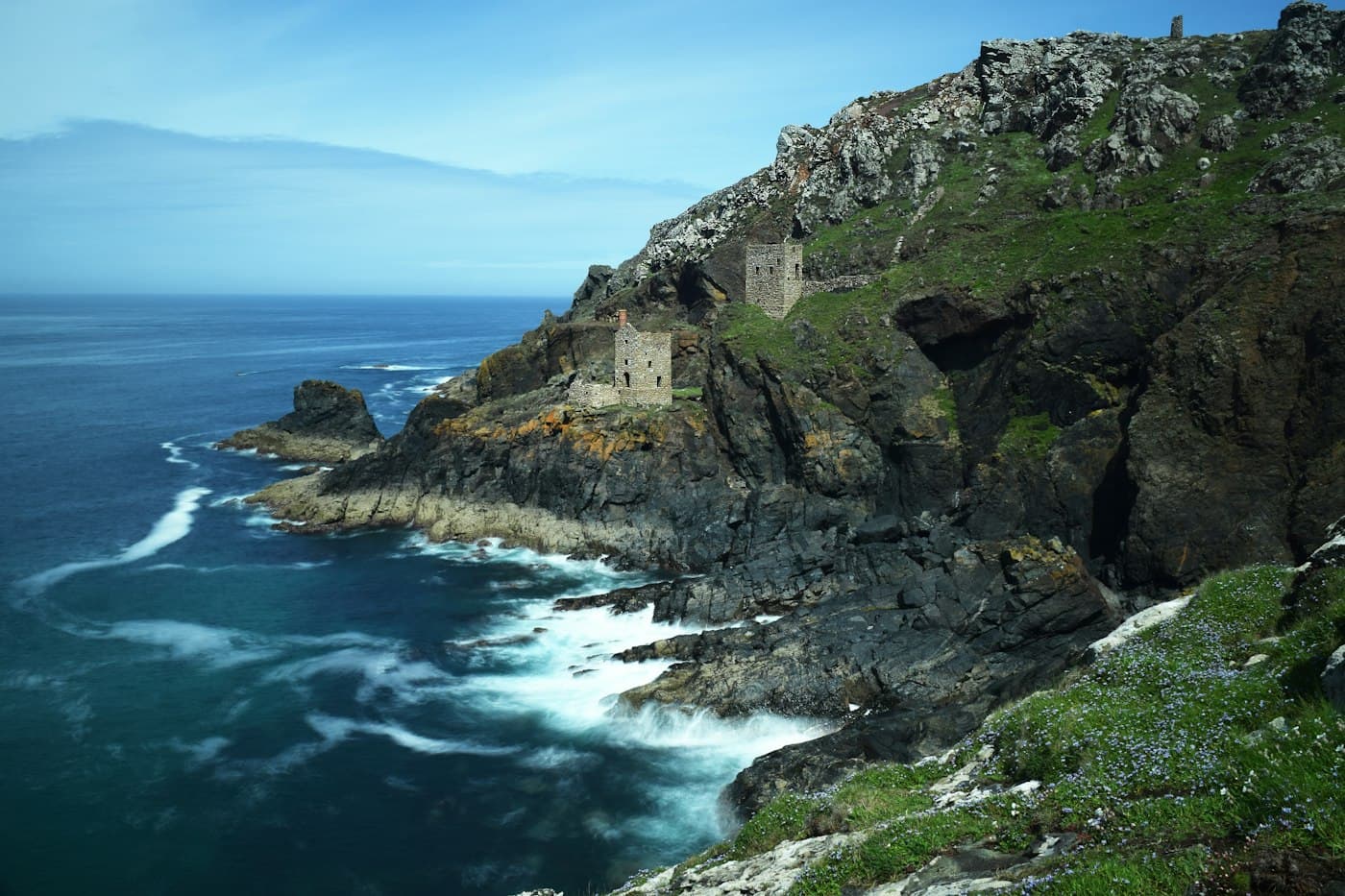
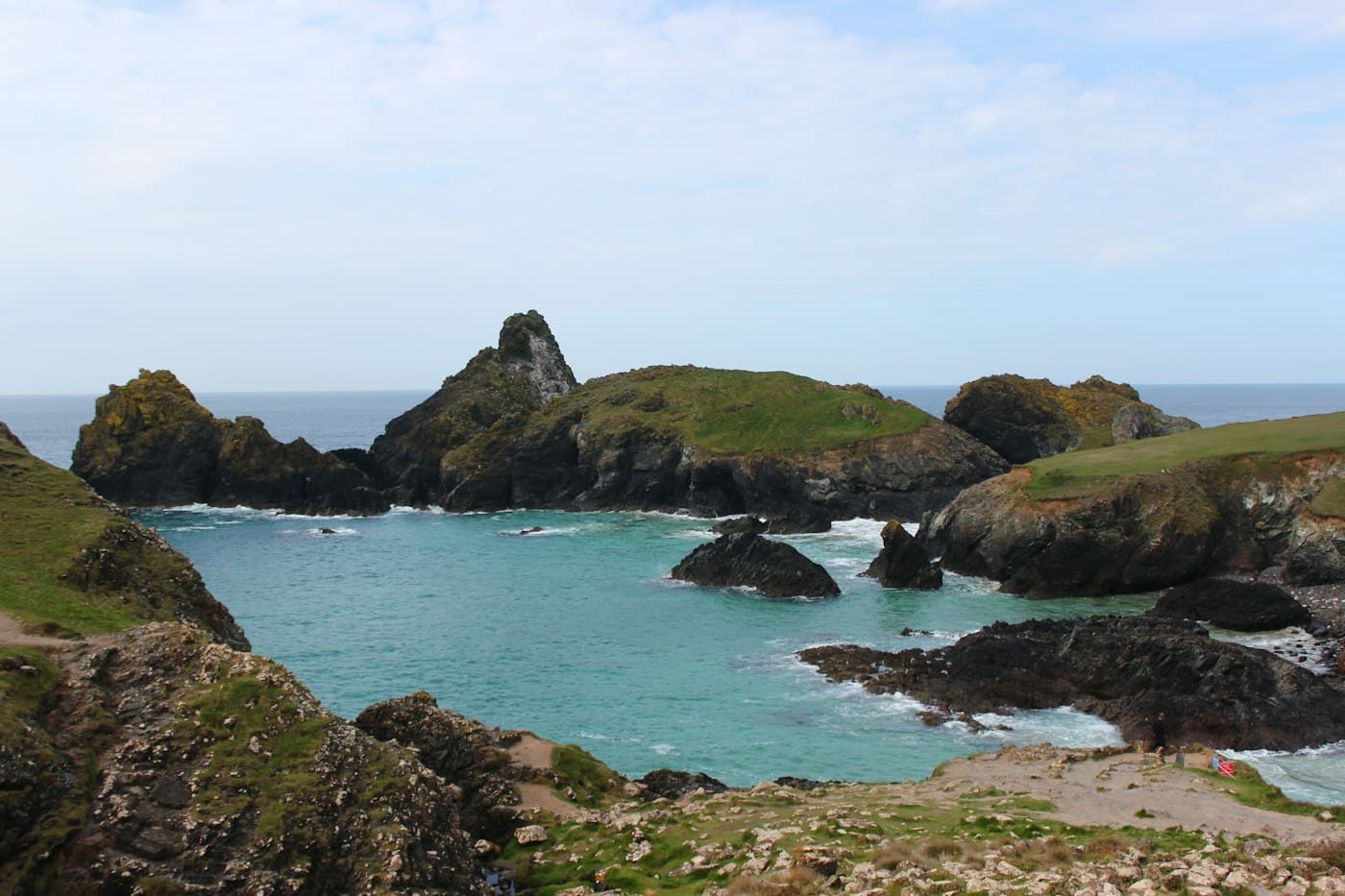
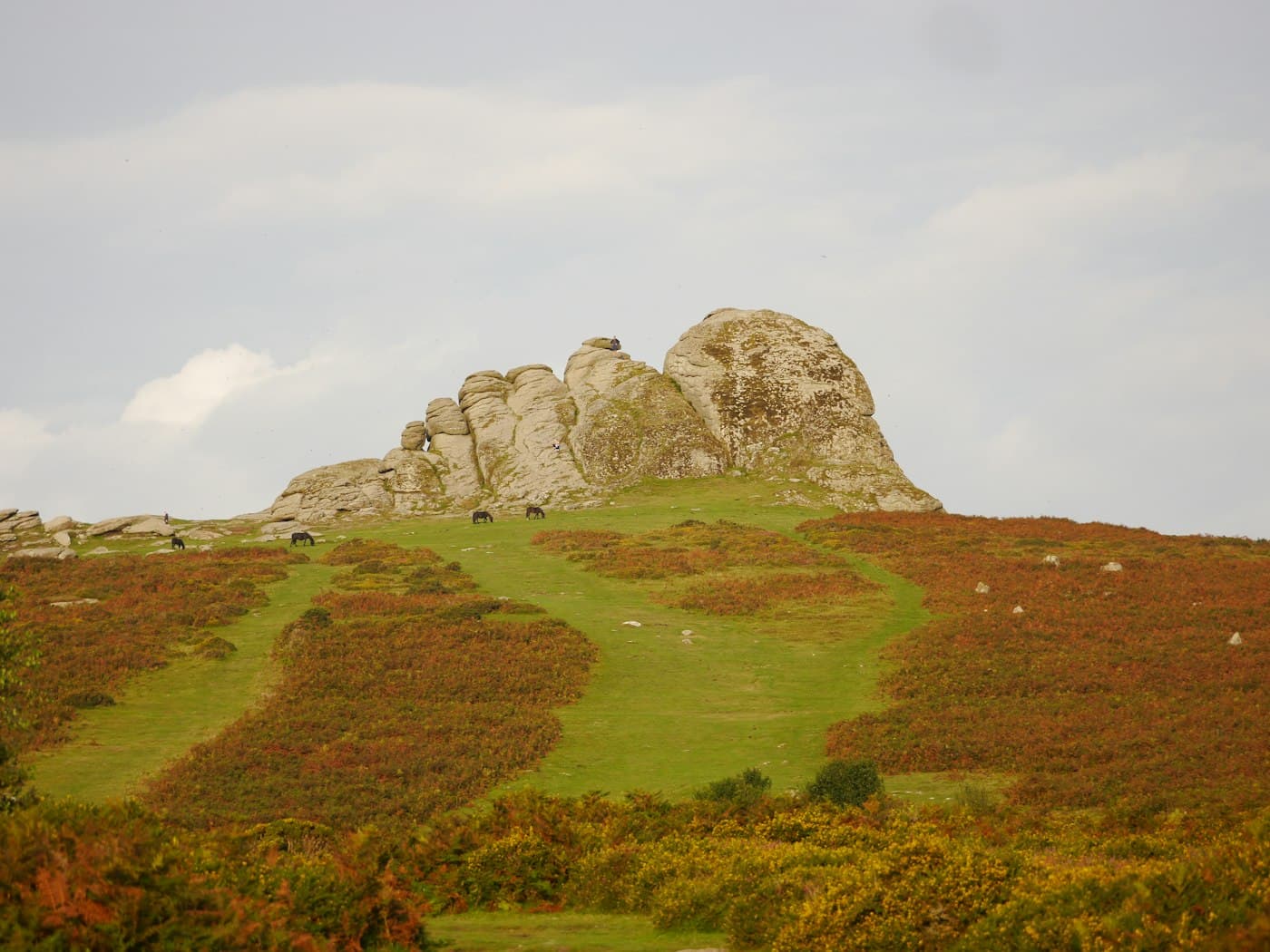
Cornwall is England’s south-western tip, a long peninsula with the sea on three sides: the harbour and beaches of St Ives; the Tin Coast towards Land’s End, where the Crowns engine houses of Botallack cling to the foot of the cliffs, part of the Cornish mining landscape that has been a World Heritage site since 2006; the castle of St Michael’s Mount on its tidal island in Mount’s Bay; and on the Lizard the white sand and rock stacks of Kynance Cove. On the north coast the ruins of Tintagel, tied by legend to King Arthur, stand half on the mainland and half on an island reached by a footbridge. East across the Tamar lies Devon: the open moor of Dartmoor, a national park of 954 km² with more than 365 granite tors, and in East Devon the cliffs of the Jurassic Coast, a World Heritage coast that holds some 185 million years of the Earth’s history.
Couples come for small weddings and elopements by the sea: vows in a country house, a hotel, a barn or a garden, then portraits on a headland, a beach or a harbour wall in the evening light. As everywhere in England and Wales, a legal wedding needs a week’s stay before the notice, 28 days after it and a register office, an approved venue or a place of worship — outdoors only in a venue’s own grounds — and most couples from abroad also need a Marriage Visitor visa. So many marry legally at home and hold a celebrant-led ceremony here, on a clifftop or a beach.
Through the year
When to marry in Cornwall & Devon
May, June and September are the easiest months. At Camborne, in west Cornwall, June has the fewest days with 1 mm of rain or more — about nine and a half — and May and June the most sun, some seven hours a day, more than the UK average; highs run from about 14.5 °C in May to 17 °C in June and 17.5 °C in September. July and August are the warmest, with highs near 19 °C, and the busiest: the coast roads and car parks fill, and Kynance Cove, for one, is extremely busy from July to September, its car park closing when full. Rain comes in every month, on about 155 days a year, most of all from October to January, on 15 to 18 days a month, when the Atlantic winds are at their strongest. Inland and in south Devon the summer is warmer: about 20 °C in July at Plymouth and 22 °C at Exeter Airport.
- January: Quieter
- February: Quieter
- March: Quieter
- April: Good with planning
- May: Best
- June: Best
- July: Good with planning
- August: Good with planning
- September: Best
- October: Good with planning
- November: Quieter
- December: Quieter
- SpringThe days lengthen fast — by mid-May the sun sets just after nine — and May is the sunniest month, with highs of about 12 to 14.5 °C in April and May and only ten to twelve wet days a month. The gardens come into flower, and the coast is quieter than it will be in summer.
- SummerThe warmest weeks, with highs of 17 to 19 °C, and the longest evenings: in late June the sun sets at about twenty-five to ten and the sky stays light until after ten. It is also the busiest season on the beaches and the roads, so plan portraits for early morning or the evening, and keep a covered place in mind for a passing shower — a church porch, a barn, the car itself.
- Autumn and winterSeptember is still mild, around 17.5 °C. From October the Atlantic lows bring the wettest, windiest months, with rain on 15 to 18 days a month until January. Frost is rare — about seven nights a year at Camborne — but at midwinter the day lasts only about eight hours, with the sun low over the sea all day. A winter elopement works with a flexible date, a calm day between two fronts and a fireside to come back to.
In numbers
- UNESCO World Heritage
Weather station: Camborne, normals 1991–2020 · Checked 26 October 2026
Places
Where couples marry here
The kinds of places — ask your photographer which ones they know well.
St Ives and the Tin Coast
The harbour and beaches of St Ives, then west towards Land’s End the Tin Coast, where the Crowns engine houses of Botallack stand at the foot of the cliffs on National Trust land. Photographs for your own use are welcome there; a wedding or engagement shoot is arranged with the property in advance, fee included, and the Trust does not allow drones on any of its land.
St Michael’s Mount
A castle on a tidal island, looked after by the St Aubyn family and the National Trust. At low tide a cobbled causeway is open for around four hours a day, a 15-minute walk; at high tide boats make the crossing. Professional photography needs written permission and a licence agreed in advance, and drones are banned on the island, the causeway and the beach, which lie in a flight-restriction zone.
The Lizard and Kynance Cove
White sand, turquoise water and rock stacks in a tidal cove on the Lizard peninsula, reached by a steep ten-minute walk from the National Trust car park on the cliffs. Come early or late in the day: from July to September the cove is extremely busy and the car park closes when it is full. It is a tidal beach, so check the tide times too.
Dartmoor and the Devon coast
Open moor and granite tors such as Haytor, where the ponies grazing all belong to farmers. Flying a drone on Dartmoor’s common land is an offence under the park’s byelaws, and commercial photography on the National Park Authority’s own land, Haytor Down among it, is asked for at least 20 working days ahead. On the coast, East Devon’s cliffs are part of the Jurassic Coast World Heritage site.
Light
How the light falls
Cornwall lies far to the west in Britain’s time zone, so its summer evenings come late: on 21 June the sun sets at St Ives at about twenty-five to ten, out to the north-west over the sea, and the sky stays light until about twenty past ten; from the end of May to mid-July it never gets fully dark. At midwinter the sun is up from about twenty past eight to twenty past four, never more than 16 degrees above the horizon, so the low light lasts all day. West Cornwall is one of Britain’s sunnier corners — about 1,670 hours of sunshine a year at Camborne, against about 1,400 for the UK as a whole — and after a shower the light off the sea is clear and bright. The coves and headlands of the north coast face the summer sunset. Britain’s summer time runs from the last Sunday of March to the last Sunday of October.
Travel
Getting there
Cornwall Airport Newquay has flights from London (Stansted all year, Gatwick in summer), Manchester, Dublin and, in summer, Düsseldorf and Zürich; St Ives and Penzance are about 60 km away by road. Exeter Airport, in Devon, is about 190 km from Penzance and 40 km from Haytor. Trains run from London Paddington to Penzance, and the Night Riviera sleeper makes the trip overnight six nights a week, arriving before eight in the morning; by road London is about 460 km away. Many lanes are narrow and the coast roads slow in summer, so leave time between places. Drones follow the UK Civil Aviation Authority’s Drone Code: a Flyer ID for any drone of 100 g or more, an Operator ID for one of 250 g or more or with a camera, below 120 m and never over crowds — and none over National Trust land or Dartmoor’s commons. Before a day on the coast, check the Met Office’s weather warnings.
Photographers
Photographers in Cornwall & Devon
No one in Cornwall & Devon yet
The first photographers in Cornwall & Devon are joining now. Tell our concierge your date and your plans — it checks who is free and fits.
Plan
Read before you plan
- Getting married in the UK as foreigners: the visa, Scotland, England and WalesHow couples who don’t live in the UK marry there legally: the Marriage Visitor visa (an ETA isn’t enough), Scotland’s notice by post and outdoor weddings, England and Wales’s week of residence and 28 days, Northern Ireland, documents, costs, and registering the marriage back home.
- How to choose a wedding photographer: the steps, and the questions to askThe decision in order — whole weddings, style, availability, the package, the contract and deposit, cancellation, delivery and a conversation — then a checklist of questions, with why each one matters.
- A wedding-day timeline for photosFrom getting ready to the last dance, planned around the light.
- Deposits and payment protectionWhat you pay when, and what happens if plans change.
- How to get married in the UK when you live here: notice, ceremony, church, and afterFor couples who live in the UK: giving notice in England and Wales, Scotland or Northern Ireland, what to bring and what it costs, a register office, an approved venue, a church or a humanist celebrant, and what changes after the day — certificate, surname, tax, will and leave.
- Which country for a destination wedding? The law, prices, crowds and light, comparedThe legal route for couples who don’t live there, season and crowds, price levels, light, flights, venues and permits for photographs — Portugal, Italy, Spain, Greece, France and Austria compared with official figures, as of October 2026.
- A rain plan that still looks goodCovered spots, umbrellas and what photographers do on grey days.
- Wedding photography contract checklist: what it should say, and how Lens & Vows handles each pointThirteen things a good contract covers — the day and the hours, what is delivered, deposit and balance, cancellation on either side, date changes, illness, image rights, personal data, backups, travel, overtime and complaints — and what our terms say about each.
United Kingdom
Other places
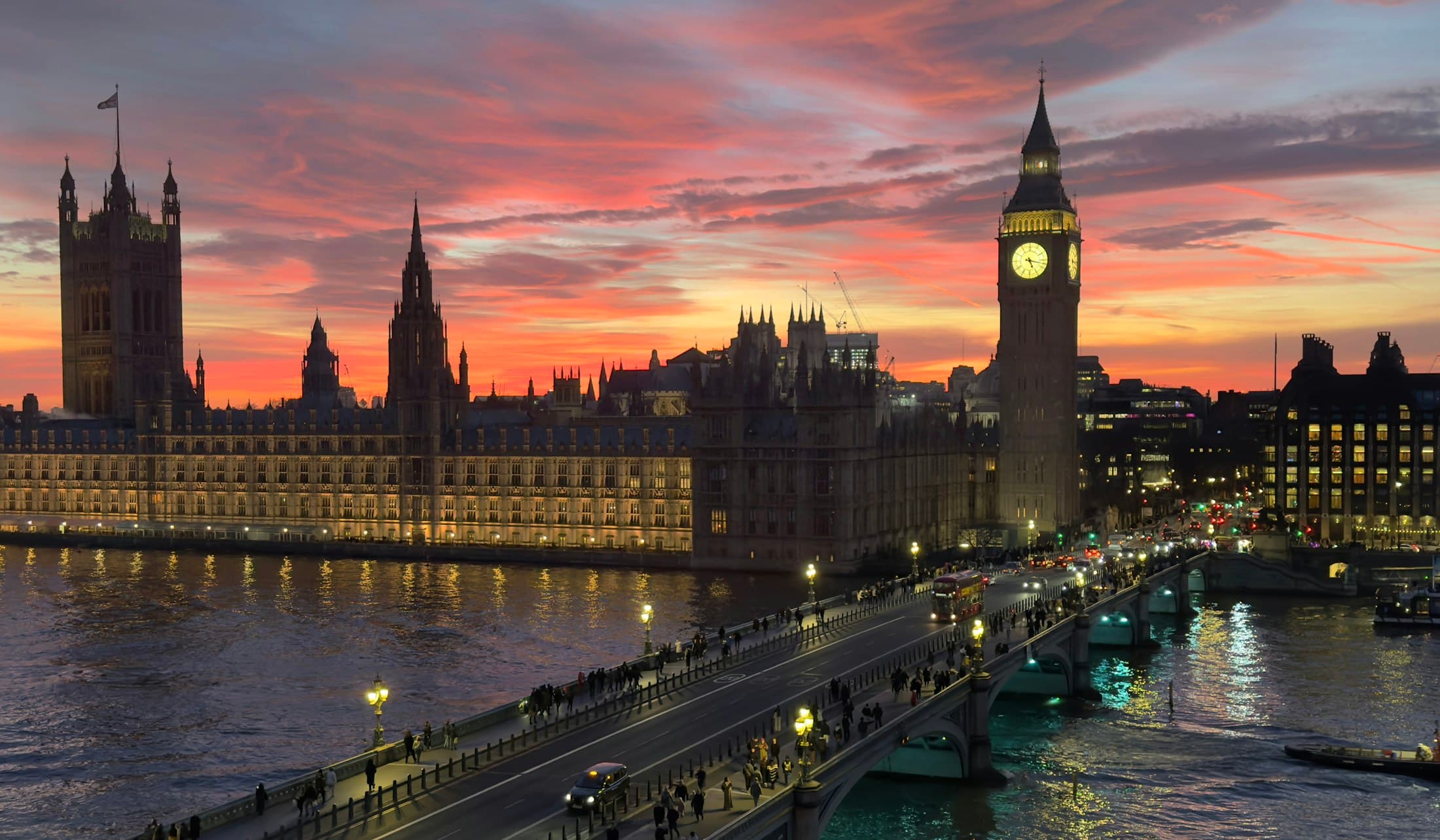 LondonBest: May · Jun · Jul · Aug · SepPhotographers joining
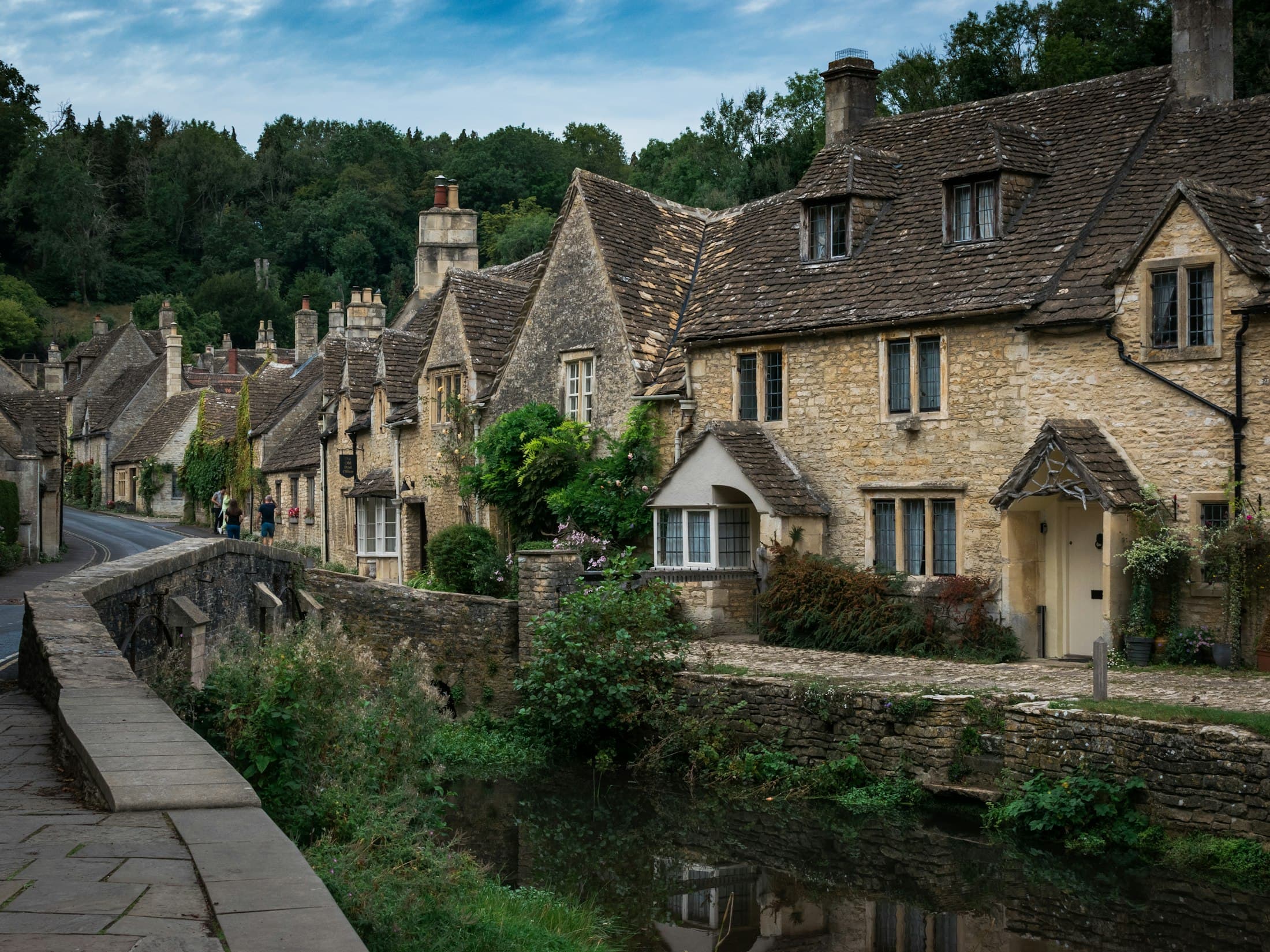 The CotswoldsBest: May · Jun · Jul · Aug · SepPhotographers joining
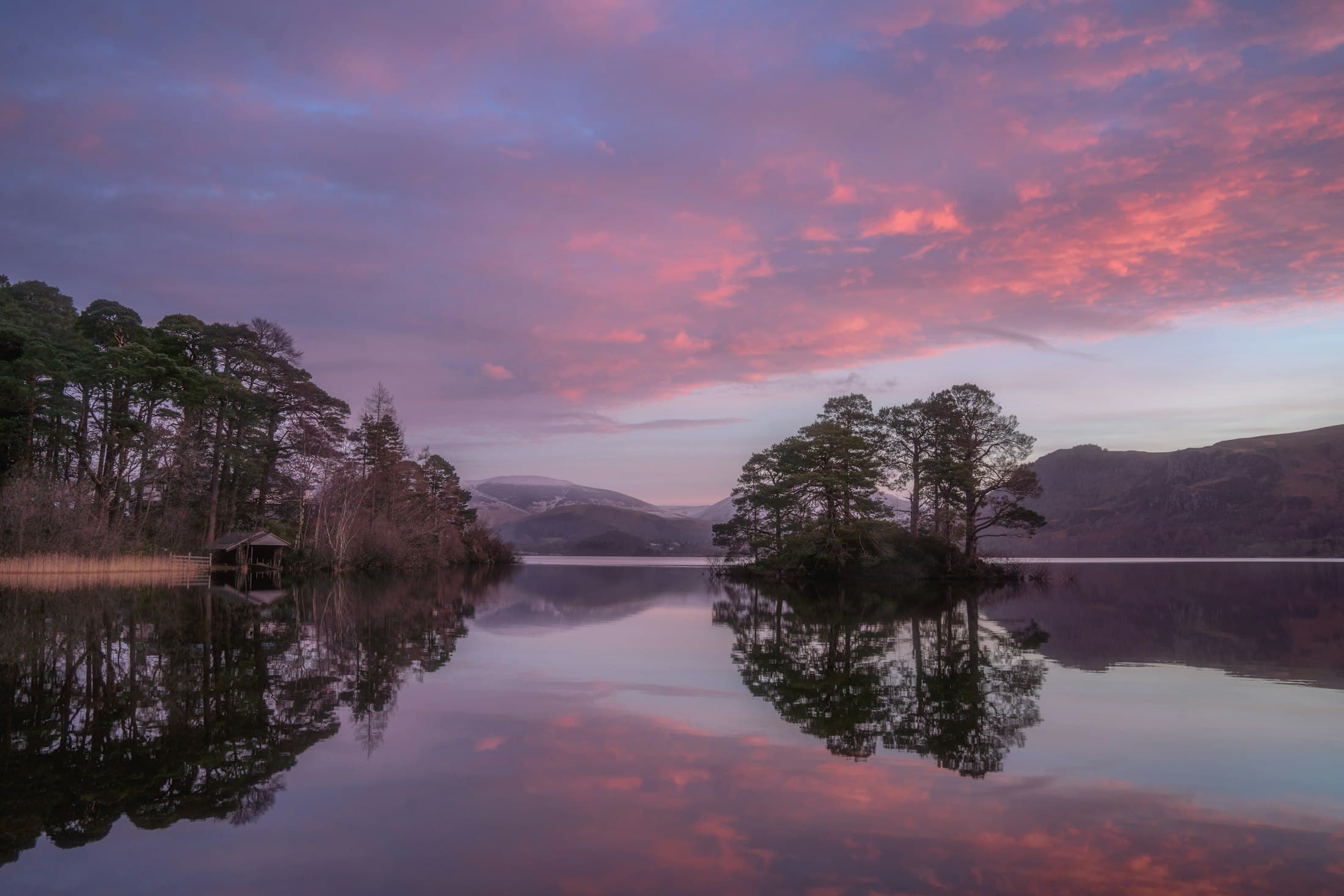 The Lake DistrictBest: May · Jun · SepPhotographers joining
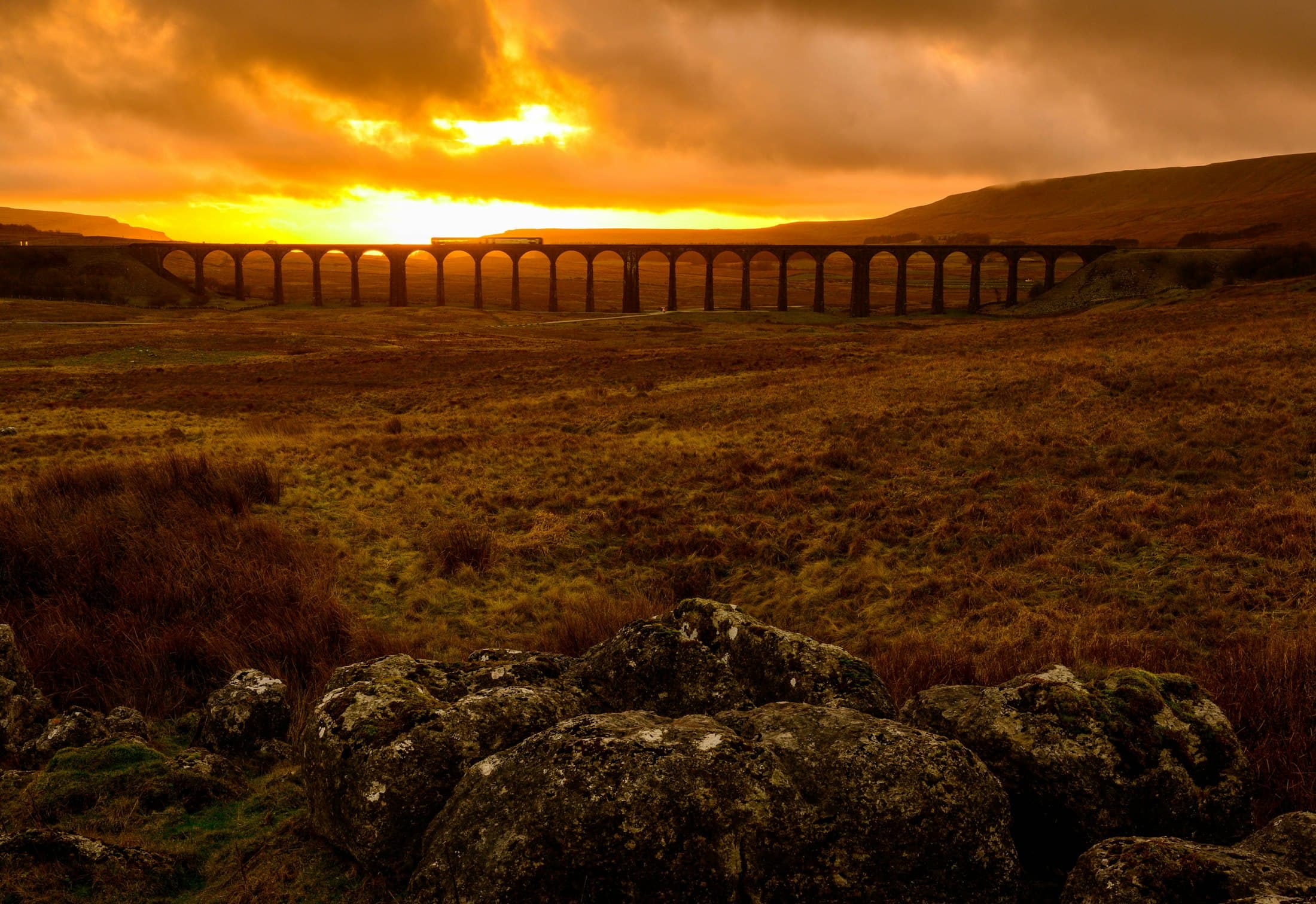 YorkshireBest: May · Jun · Jul · Aug · SepPhotographers joining
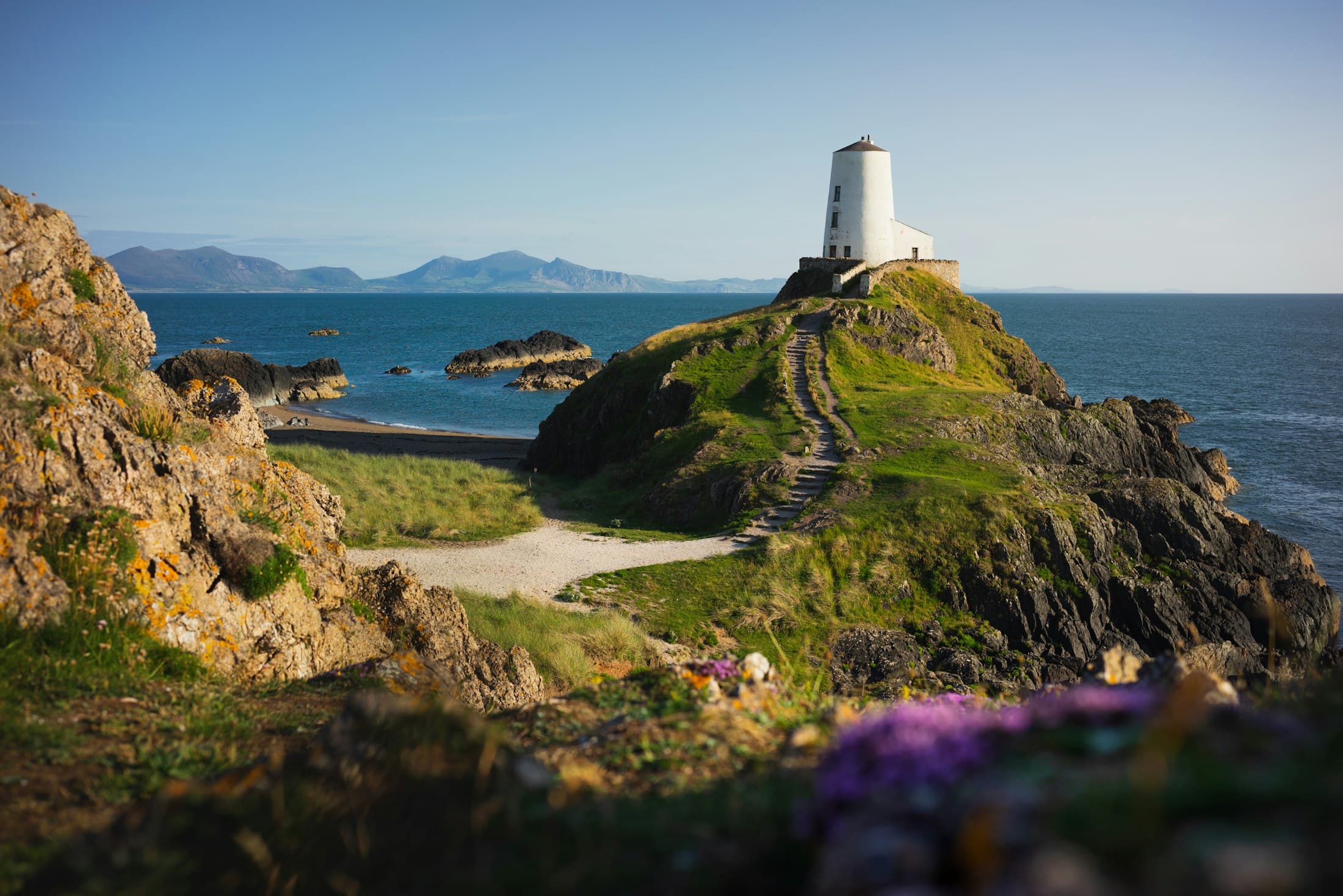 WalesBest: May · Jun · Jul · AugPhotographers joining
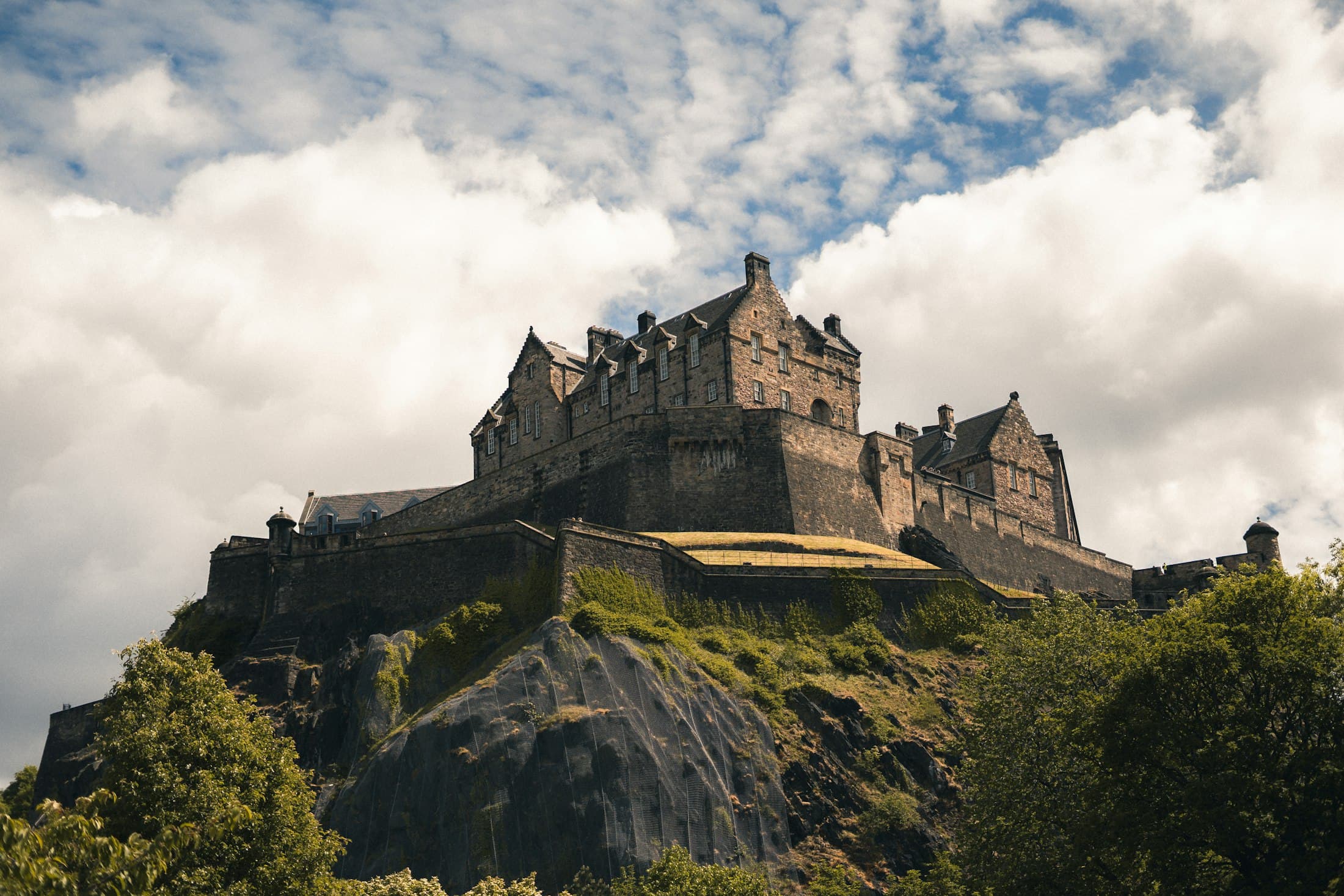 EdinburghBest: May · Jun · Jul · SepPhotographers joining
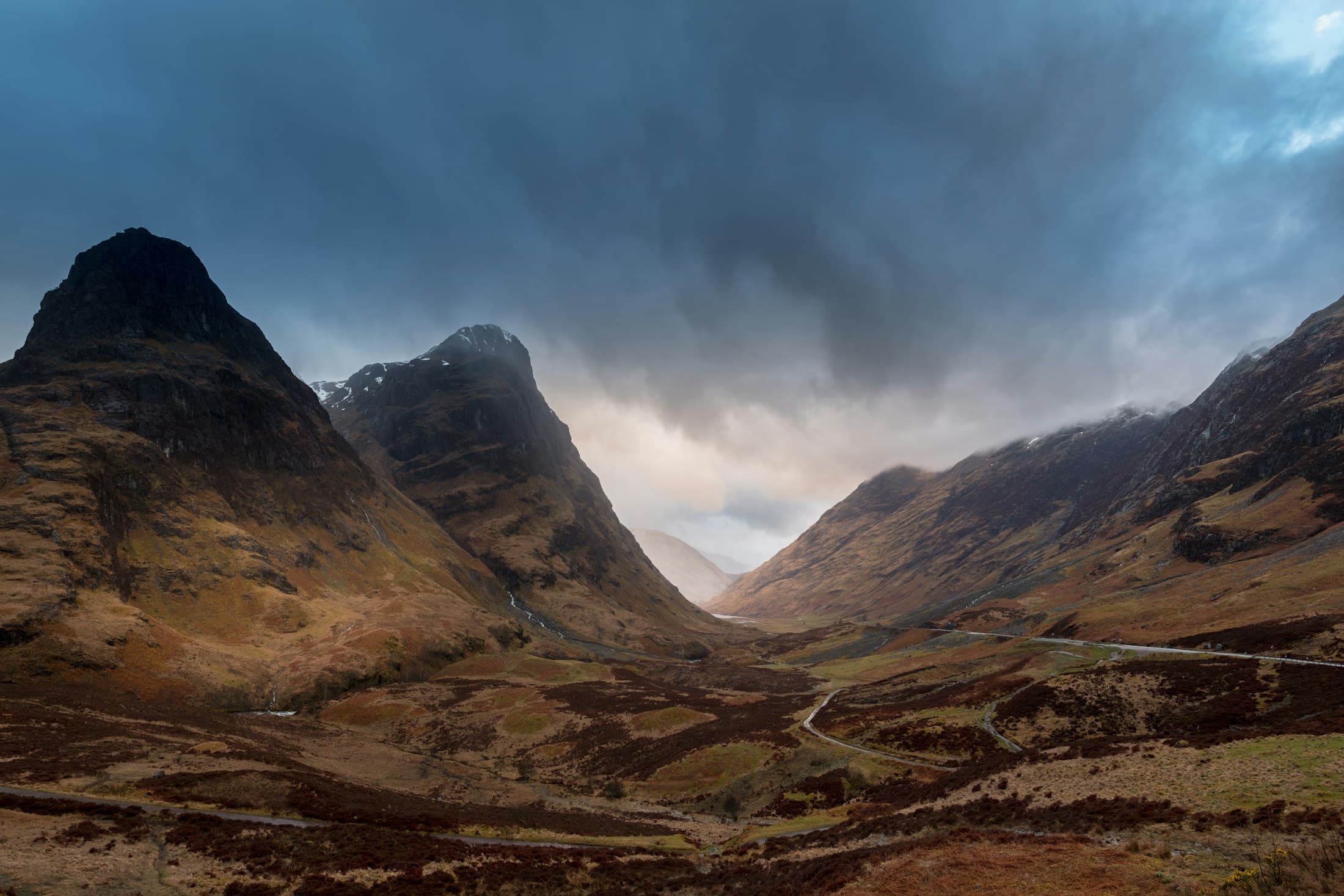 The Scottish Highlands & IslandsBest: May · JunPhotographers joining