In short
- Couples who don’t live in the UK can marry there legally, but the UK has three marriage laws — England and Wales, Scotland and Northern Ireland — each with its own notice, places and fees (GOV.UK; NRS; nidirect).
- Anyone who isn’t British, Irish or settled in the UK needs a Marriage Visitor visa to give notice or marry — £135 each, applied for no earlier than three months before travel; the £20 ETA that Europeans and Americans visit on doesn’t allow it (GOV.UK, October 2026).
- Scotland asks for no stay before the notice: each of you sends an M10 form (£45) to the registrar where you’ll marry, at least 29 days ahead, and a registrar, minister or humanist celebrant can marry you almost anywhere, outdoors included (NRS).
- England and Wales ask you to live seven days in one registration district, give notice there together and in person (£46.50 each), then wait 28 days — about five weeks in the country — and marry at a register office, an approved venue or a registered place of worship (Marriage Act 1949, ss. 27 and 31).
- Humanist weddings are legal in Scotland and Northern Ireland but not yet in England and Wales; same-sex couples can marry in all three (Ministry of Justice, 2026; NRS; nidirect).
In this guide
- Three laws, one country: how they compare
- First, the Marriage Visitor visa
- Scotland: notice by post, no stay, almost any place
- Where you can marry in Scotland
- England and Wales: a week’s stay, then 28 days
- Where you can marry in England and Wales
- Northern Ireland
- Divorced before?
- Same-sex couples
- What it costs
- After the wedding: the certificate, the apostille, home
- A timeline, in relative terms
- Where your photographer fits in
- Questions couples ask
- Sources
The UK asks for no residence in Scotland or Northern Ireland, and only a week of it in England and Wales — but it does ask for a visa. In 2025 a quarter of Scotland’s 27,191 marriages, 6,596, were of couples who don’t live there, 792 of them with both partners from outside the UK; Gretna alone registered 4,094 (NRS). This guide is for couples who live abroad; couples who live in the UK have their own guide.
Three laws, one country: how they compare
| Scotland | England and Wales | Northern Ireland | |
|---|---|---|---|
| Stay before the notice | None | Seven days in one registration district | None |
| Where the notice goes | The registrar of the district where you marry — by post or email, originals before the day | Your register office, both of you together, in person | The registrar of the district where you marry — by post or in person |
| Minimum notice | 29 days before the wedding (10–12 weeks advised) | 28 days after the notice | 28 days (eight weeks usual) |
| Notice fee, each | £45 | £46.50 (£63 if referred to the Home Office) | £22 |
| Civil ceremony | Any place agreed with the council, indoors or out, except religious premises | A register office or an approved venue — its grounds too, since 2022 | A registration office or an approved place |
| Religious or belief ceremony | Wherever the celebrant agrees | A registered place of worship; Quaker and Jewish weddings anywhere | Anywhere, with the officiant’s agreement |
| Humanist weddings | Legal since 2005 | Not legal | Legal since 2018 |
| Same-sex marriage | Since December 2014 | Since March 2014 | Since January 2020 |
Wales shares England’s marriage law, and the vows can be said in Welsh (Marriage Act 1949, s. 52). Wherever you marry, two witnesses sign — in Scotland and Northern Ireland they must be 16 or over (NRS; nidirect).
First, the Marriage Visitor visa
You must apply for a visa to give notice or marry in the UK unless you are a British or Irish citizen, have indefinite leave to remain or EU Settlement Scheme status, or are already in the UK on a visa of more than six months (GOV.UK). For couples who marry and go home, that is the Marriage Visitor visa: £135 each, applied for online no earlier than three months before you travel, a decision usually within three weeks, and up to six months in the UK (GOV.UK, updated 9 September 2026). If you both need one, each of you applies and pays.
An ETA is not enough. Most Europeans, Americans, Canadians and Australians visit with an Electronic Travel Authorisation (£20), but it doesn’t let you “marry or register a civil partnership, or give notice” (GOV.UK). The Immigration Rules make everyone who isn’t a “relevant national” — British, Irish or settled under the EU Settlement Scheme — obtain entry clearance before travelling to marry (Appendix V: Visitor, V 1.1), and the GOV.UK visa checker gives the same answer for France, Portugal and the United States. A Standard Visitor visa doesn’t allow it either.
- What it asks for: proof that you plan to marry in the UK — a booking confirmation, or emails with the venue — and that you’ve paid towards the costs, that your relationship is genuine and that you’ll leave at the end of your visit; certified translations of anything not in English or Welsh (GOV.UK).
- What it allows: giving notice and marrying within six months of arrival, and what other visitors may do — but no work, no study and no extension (GOV.UK).
- Without it: if you give notice without the right visa, the Home Office is told and may investigate — the wait can stretch to 70 days — or refuse your notice, and then you cannot marry in the UK (GOV.UK; Immigration Act 2014, s. 48).
Scotland: notice by post, no stay, almost any place
Scotland asks for no residence: “If either of you are a non-UK national, you can get married in Scotland” (NRS), and a quarter of its weddings are of couples who live elsewhere. Each of you sends a marriage notice to the registrar of the district where the ceremony will take place (Marriage (Scotland) Act 1977, s. 3).
- Choose the place and the celebrant first. The notice names them, and a religious or belief ceremony may take place only on the date and at the place on the Marriage Schedule (s. 6(5)); “‘Surprise’ marriages … are not possible in Scotland” (NRS).
- Get your visas before you send the notices. The registrar must report anyone who isn’t a relevant national and holds no relevant visa to the Home Office, which can stretch the 28 days to 70 (NRS; 1977 Act, Sch. 1A).
- Each of you completes an M10 form, with the celebrant and witness details form and, if you’re not a UK national, the declaration of status form; the fee is £45 each (NRS).
- Send them at least 29 days before the date — the registrar must have them by then, and 10 to 12 weeks ahead is better (NRS); Edinburgh and Highland councils ask for no more than three months ahead. Some offices accept emailed copies, but the original forms and documents must reach them before the ceremony (NRS).
- Collect the Marriage Schedule: for a religious or belief ceremony, one of you collects it in person from the registration office no more than seven days before the ceremony; for a civil one, the registrar brings it (NRS). Arrive in time to do it.
- Return it within three days: signed straight after the ceremony by both of you, the celebrant and two witnesses aged 16 or over, it goes back to the registrar within three days, by hand or by post (NRS; s. 15).
Documents (NRS; s. 3): each of you sends a birth certificate, a valid passport and evidence of your usual residence and, if married before, the final decree of divorce or the death certificate — a decree nisi isn’t accepted, and a divorce granted outside the UK comes with a foreign divorce questionnaire. Anything not in English needs a translation certified by the translator; an EU multilingual standard form can stand in for one if the registrar finds it sufficient (s. 3(3ZA)).
A certificate of no impediment. If you’ve lived in the UK less than two years, NRS asks for a Certificate of No Impediment or your country’s equivalent; the Act asks it of anyone domiciled outside the UK, “if practicable”, and not of a same-sex couple whose country won’t issue one for that reason (s. 3(5)). Without it, warns mygov.scot, “you may not be able to marry”. England and Wales and Northern Ireland don’t list one.
Where you can marry in Scotland
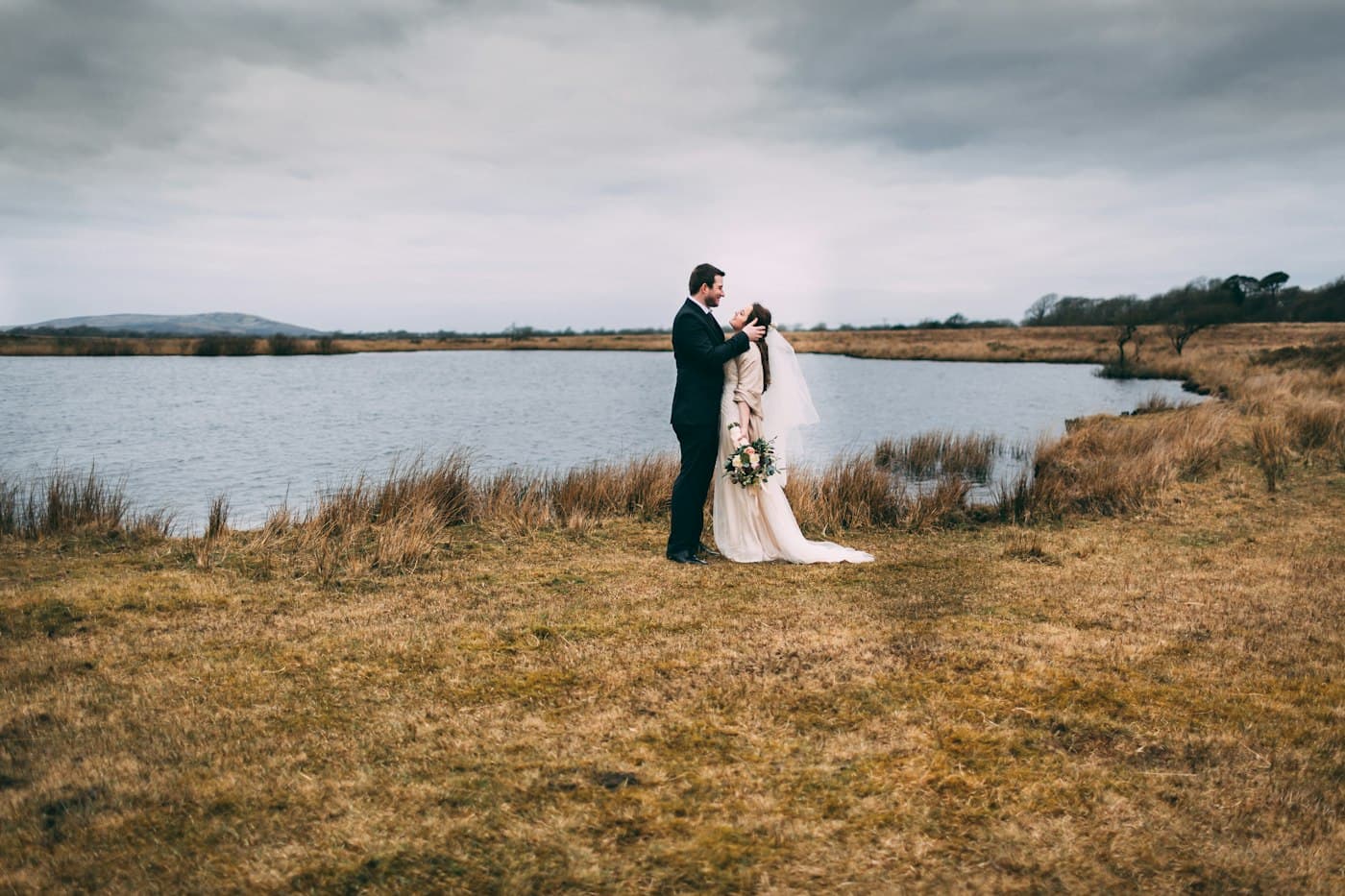
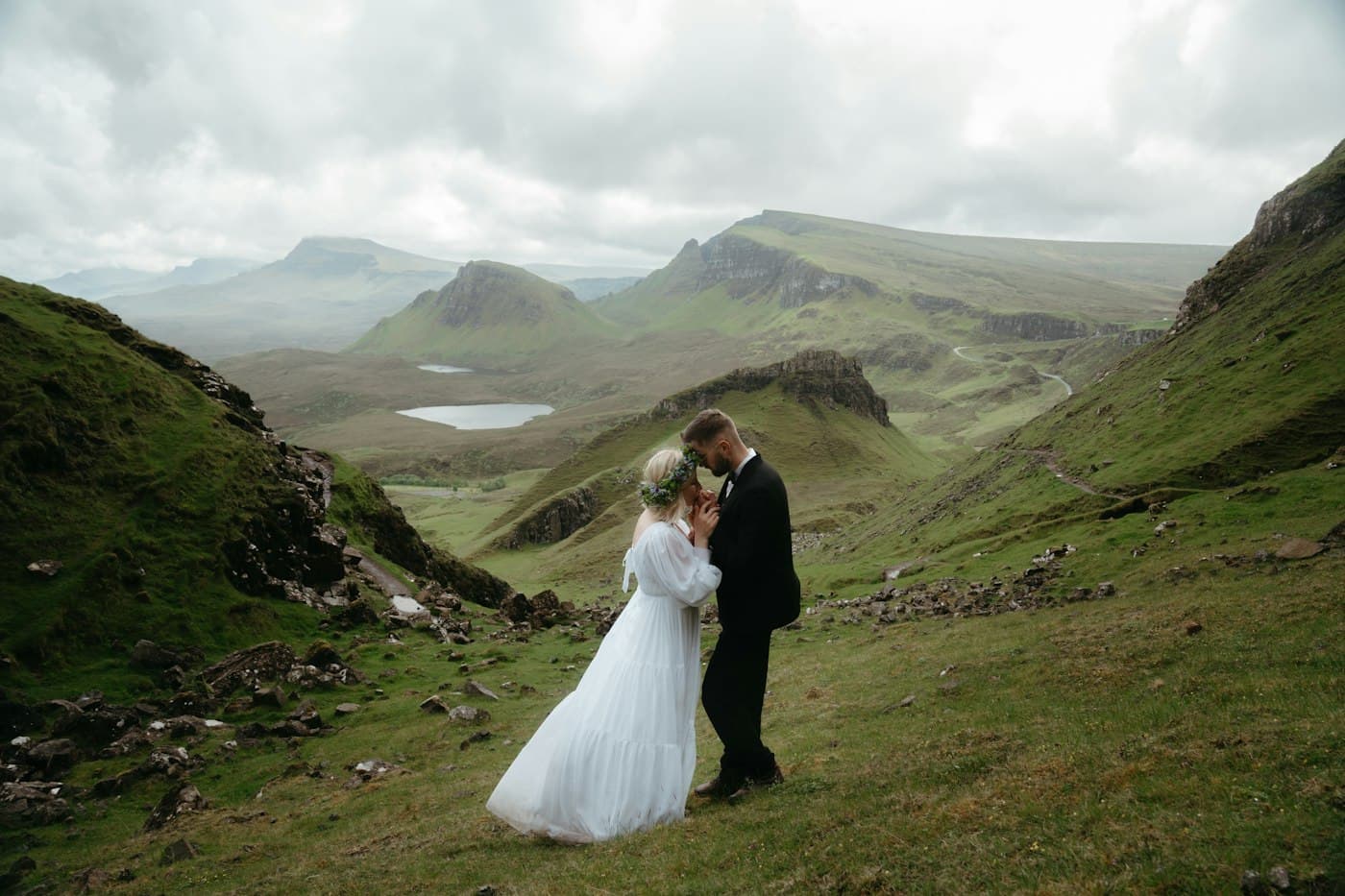
“Ceremonies in Scotland may take place at any indoor or outdoor location, as long as it’s accessible to your chosen celebrant or registrar” (NRS, May 2026). A civil ceremony can be held at any place you and the council agree, except religious premises (s. 18); a religious or belief ceremony wherever your celebrant agrees. That is how couples marry legally by a loch, on a beach or on a hill — with the landowner’s permission, as Highland Council reminds them.
- Civil: a registrar, in the registration office or at your chosen place. The statutory ceremony fee is £55, but councils charge their own for ceremonies away from the office: in Highland £480 on a weekday at a venue and £525 to £620 for a “wilderness ceremony” on a hill or a lochside, plus 50p a mile (April 2026); in Edinburgh £495 to £675 at a place of your choice, the statutory fees included (April 2025 prices).
- Humanist: Humanist Society Scotland has married couples legally since 2005, “pretty much anywhere, inside or outside”, for around £520 including membership, travel on top (HSS); celebrants of other belief bodies can too.
- Church: couples from outside Scotland can marry in a Church of Scotland church if the local minister agrees, and its ministers can marry couples anywhere, though not all will (Church of Scotland). Since 2022 its ministers who choose to may marry same-sex couples.
- A friend or a celebrant from home can marry you only as a member of a religious or belief body, with a temporary authorisation from the Registrar General granted in advance (s. 12; NRS); NRS takes applications no earlier than three months before the wedding. Only registrars conduct civil marriages — Scotland has no independent civil celebrants (NRS).
England and Wales: a week’s stay, then 28 days
England and Wales want you in the country first. Each of you must have lived in a registration district for the seven days immediately before giving notice (Marriage Act 1949, s. 27) — “You must have lived in that registration district for the past 7 days” (GOV.UK). If either of you isn’t British, Irish or EU-settled, you give notice together, at a register office in the district where at least one of you lives; you sign a declaration before the superintendent registrar, so it can’t be done by post (s. 28; GOV.UK).
- Book the venue, the registrar and the notice appointment from abroad: you must decide where to marry before giving notice, and the notice names the final venue (GOV.UK).
- Arrive and stay seven nights in the district where you’ll give notice; if your home is abroad, you give a UK contact address (GOV.UK).
- Give notice together, with originals: passports, proof of address, proof of any change of name, a passport-sized photo of each of you, your visa as proof of immigration status, a decree absolute, final order or death certificate if married before, and translations of anything not in English (GOV.UK). The fee is £46.50 each, or £63 if the notice must be referred to the Home Office (Fees Regulations 2016, as amended from 6 April 2026).
- Wait 28 days: the notice is displayed for 28 days, so the earliest wedding day is the 29th — “if you give notice on 1 May, the earliest date you can get married … is 30 May” (GOV.UK; s. 31). A referral can stretch it to 70 days; after that you have 12 months (s. 33).
- Marry at the place named in the notice, with two witnesses; you sign the marriage schedule with the registrar, and the register office registers it (GOV.UK).
Where you can marry in England and Wales
- A register office: £62 for the registrar (GOV.UK), with nothing religious in the ceremony — no hymns, no readings from the Bible or the Torah (GOV.UK; s. 45).
- An approved venue: a hotel, a stately home or another place the council has approved. Since 6 April 2022 the ceremony can be held in its grounds — the “linked outdoor areas” within the boundary of its land — at a “seemly and dignified location” (S.I. 2022/295). The council sets the fee: for 2026–27, £580 to £690 in Gloucestershire, the Cotswolds’ county, £790 to £1,198 in Cornwall, £993 to £1,683 in Westminster.
- Not at home, on a beach or on a hilltop: a house is no approved venue — a wedding at home is allowed only when one of you is house-bound or detained (s. 26(1)(dd)) — and marrying knowingly where the premises aren’t approved makes the marriage void (s. 49).
- A place of worship registered for marriages — a church, chapel, synagogue, mosque, gurdwara or temple — with an authorised person, or a registrar for £114.50 (GOV.UK). Quaker and Jewish weddings follow their own usages and can be held anywhere (s. 26; Ministry of Justice, 2026).
- The Church of England marries couples in a parish where one of them lives or has a qualifying connection — baptism or six months’ residence or worship there, a parent who lived or worshipped there, a parent or grandparent married there (Church of England Marriage Measure 2008). If either of you isn’t a relevant national, banns and a common licence aren’t available: you give notice at a register office like any other couple, unless a special licence from the Archbishop of Canterbury has been granted (s. 5(3); Church of England). The Church in Wales sets its own rules.
- Humanist weddings aren’t legal here: “Non-religious belief organisations, such as Humanists, cannot conduct legally binding weddings at all” (Ministry of Justice, July 2026). A consultation on reform closed on 24 September 2026, and any law will come “when parliamentary time allows”; until then humanist couples marry at a register office and hold their ceremony separately (Humanists UK).
Northern Ireland
“Any two persons, regardless of where they live, may marry in Northern Ireland” (GRO, marriage guidance notes, January 2025). Each of you sends a marriage notice form, GRO 446 (£22), to the registrar of the district where you’ll marry, in the 12 months before the wedding and at least 28 days ahead — eight weeks is normal, ten if either of you has been married before (nidirect). You can post it; at least one of you must then visit the registrar before the day — to collect the Marriage Schedule for a religious or belief ceremony, issued no more than 14 days before, or to finalise a civil one (GRO).
Civil weddings take place at a registration office — £36 on a weekday in office hours, £162 in the evening or on a Saturday, £216 on a Sunday or holiday — or at a council-approved place, outdoors too, with shelter for bad weather; religious and belief ceremonies “anywhere in Northern Ireland”, with the officiant’s agreement (nidirect; Causeway Coast and Glens Council). Humanist celebrants have married couples legally since the Court of Appeal’s ruling in Smyth (June 2018; the first, under an interim order, in June 2017), each with a temporary authorisation for the wedding; same-sex couples since January 2020 in a civil ceremony and since September 2020 in a religious one (Judiciary NI; nidirect; GOV.UK). Northern Ireland has no region on our site yet.
Divorced before?
Bring the final decree — a decree absolute or final order; a decree nisi or conditional order isn’t accepted (GOV.UK; NRS; GRO NI). In England and Wales a divorce granted outside the UK, the Channel Islands or the Isle of Man is checked when you give notice, for £55, or £83 if the General Register Office checks it (GOV.UK); in Scotland you add a foreign divorce questionnaire (NRS). Send scans ahead and ask how long the check takes.
Same-sex couples
Same-sex couples can marry in all three: in England and Wales since March 2014 (Marriage (Same Sex Couples) Act 2013), in Scotland since December 2014 (Marriage and Civil Partnership (Scotland) Act 2014), in Northern Ireland since January 2020. The Church of England and the Church in Wales can’t marry same-sex couples, and other faiths only in buildings registered for it (GOV.UK; 2013 Act, s. 1); in Scotland, Church of Scotland ministers who opt in may, and humanist celebrants do. Scotland doesn’t require a certificate of no impediment that your country refuses only because you are a same-sex couple (1977 Act, s. 3(5)). Ask at home whether your marriage will be recognised.
What it costs
| Item | Cost (October 2026) | Source |
|---|---|---|
| Marriage Visitor visa | £135 each | GOV.UK |
| ETA — for visiting, not for marrying | £20 | GOV.UK |
| Scotland: notice | £45 each (a rise to £57 has been proposed) | NRS |
| Scotland: civil ceremony | £55 by law; away from the office, the council’s fee — £480–£620 in Highland, £495–£675 in Edinburgh | Fees Regulations 2006; Highland Council; City of Edinburgh Council |
| Scotland: humanist celebrant | About £520, travel on top | Humanist Society Scotland |
| Scotland: marriage certificate | £10 within a month, then £15 | NRS |
| England and Wales: notice | £46.50 each; £63 if referred | Fees Regulations 2016, as amended 2026 |
| England and Wales: register office ceremony | £62 | GOV.UK |
| England and Wales: approved venue | The council’s fee — £580–£690 Gloucestershire, £790–£1,198 Cornwall, £993–£1,683 Westminster (2026–27) | Councils |
| England and Wales: a foreign divorce checked | £55, or £83 by the GRO | GOV.UK |
| England and Wales: marriage certificate | £12.50 | Fees Regulations 2016 |
| Northern Ireland: notice | £22 each | nidirect |
| Northern Ireland: civil ceremony | £36 weekdays; £162 evenings and Saturdays; £216 Sundays and holidays | nidirect |
| Northern Ireland: marriage certificate | £15 | nidirect |
| Apostille on a UK certificate | £45, plus postage | GOV.UK (FCDO) |
After the wedding: the certificate, the apostille, home
- In the UK. In England and Wales the signed schedule goes to the register office, which registers the marriage; in Scotland and Northern Ireland you return it to the registrar within three days (GOV.UK; NRS; nidirect).
- The certificate: £12.50 in England and Wales, £10 in Scotland within a month of the wedding, £15 in Northern Ireland.
- An apostille, if your country asks for one: the FCDO’s Legalisation Office, £45 a document plus postage, usually within 25 working days; a marriage certificate gets a paper apostille, never an e-Apostille (GOV.UK, October 2026). The UK left the EU’s public-documents regulation at the end of 2020, so an EU country may ask for one too.
- At home, each country has its own rule: some record a marriage made abroad, some don’t. Ask your registry or consulate before the wedding.
A timeline, in relative terms
| When | Scotland | England and Wales | Symbolic |
|---|---|---|---|
| Six months or more before | Choose the place and celebrant; order a certificate of no impediment and translations | Book the venue and registrar; raise a foreign divorce | Ask the site about permits and drones |
| About three months before | Apply for the visas; send the M10 forms once you have them, 10–12 weeks ahead | Apply for the visas; book the notice appointment | — |
| Five weeks or more before | — | Arrive; stay seven nights in one registration district | — |
| At least 29 days before | The registrar must have both notices | Give notice together, in person | — |
| In the last seven days | One of you collects the Marriage Schedule in person (religious or belief ceremony) | — | — |
| Within three days after | Return the signed schedule to the registrar | The register office registers it; order certificates | Nothing to register |
Where your photographer fits in
- Scotland’s freedom is the photographer’s too: with the legal ceremony by a loch or on a hill, the vows, the signing and the portraits happen in one place — plan for wind and rain, and ask the landowner (Highland Council).
- Witnesses: two. In Scotland the law asks only that they be 16 or over (1977 Act, s. 13), so at an elopement your photographer can be one.
- The signing of the schedule, straight after the ceremony, belongs on camera.
- August Saturdays go first: in England and Wales August is the most popular month to marry (14.3% of 2023’s weddings) and Saturday the most popular day (41.9%) (ONS); in Scotland, July to September is the busiest quarter (NRS).
- Permits and drones: the National Trust, English Heritage, Cadw, Historic Environment Scotland and the Royal Parks want permission, and often a fee, for wedding photos — £100 plus VAT for an hour’s permit in a Royal Park, with ten days’ notice — and none lets a drone fly from its land without it. A visiting drone pilot also needs the CAA’s Flyer ID and Operator ID: “We do not recognise overseas registrations” (CAA). Then read how to choose a wedding photographer.
Questions couples ask
Can foreigners get legally married in the UK?
Yes. Unless you’re British, Irish or settled in the UK, each of you needs a Marriage Visitor visa (£135). In Scotland you send your notices by post at least 29 days ahead and can marry almost anywhere; in England and Wales you must first stay seven days in one registration district, give notice in person and wait 28 days.
Do we need a visa to get married in the UK if we visit with an ETA?
Yes. An ETA doesn’t allow you to give notice or marry: the Immigration Rules require a Marriage Visitor visa, obtained before you travel, even from countries whose citizens visit without one (GOV.UK; Appendix V: Visitor, V 1.1).
How long do we have to be in England to get married?
About five weeks at least: you must live seven days in a registration district before giving notice in person, and the wedding can’t be sooner than 28 days after the notice (Marriage Act 1949, ss. 27 and 31). Scotland and Northern Ireland require no stay.
Can we get married outdoors in the UK?
In Scotland, almost anywhere — a beach, a hillside, a lochside — with a registrar or a religious or humanist celebrant (NRS). In England and Wales, only in the grounds of an approved venue, since April 2022. In Northern Ireland, at an approved outdoor place for a civil wedding, or anywhere for a religious or belief one.
Are humanist weddings legal in the UK?
In Scotland since 2005 and in Northern Ireland since 2018, yes. In England and Wales, not yet: a reform was consulted on in 2026, but until a law passes, humanist couples marry at a register office and hold the humanist ceremony separately.
Do we need a certificate of no impediment to marry in the UK?
In Scotland, usually yes: NRS asks for one, or your country’s equivalent, from anyone who has lived in the UK less than two years. England and Wales and Northern Ireland don’t list one; you declare that you’re free to marry when you give notice.
Next: the regions — Edinburgh, the Scottish Highlands & Islands, London, the Cotswolds, Cornwall & Devon or all of the United Kingdom — and the wedding day timeline. When you have a date, see the wedding photographers in the UK or tell us about your day, and see who is free.
Sources
- GOV.UK — Marriages and civil partnerships in England and Wales (updated 22 October 2026) (opens in a new tab) · gov.uk
- GOV.UK — Marriages and civil partnerships: give notice (opens in a new tab) · gov.uk
- GOV.UK — Marriages and civil partnerships: documents you’ll need to give notice (opens in a new tab) · gov.uk
- GOV.UK — Marriage Visitor visa (updated 9 September 2026) (opens in a new tab) · gov.uk
- GOV.UK — Get an electronic travel authorisation (ETA) to visit the UK (updated 22 October 2026) (opens in a new tab) · gov.uk
- GOV.UK — Immigration Rules, Appendix V: Visitor (8 October 2026) (opens in a new tab) · gov.uk
- GOV.UK — Immigration Rules, Appendix Visitor: Permitted Activities (opens in a new tab) · gov.uk
- GOV.UK — Check if you need a UK visa (a French national coming to marry) (opens in a new tab) · gov.uk
- Home Office — Marriage and civil partnership referral and investigation scheme: statutory guidance (31 March 2025) (opens in a new tab) · gov.uk
- legislation.gov.uk — Marriage Act 1949, s. 27 (seven days’ residence before notice) (opens in a new tab) · legislation.gov.uk
- legislation.gov.uk — Marriage Act 1949, s. 31 (the 28-day waiting period) (opens in a new tab) · legislation.gov.uk
- legislation.gov.uk — Marriage Act 1949, s. 5 (banns and common licence for non-relevant nationals) (opens in a new tab) · legislation.gov.uk
- legislation.gov.uk — Marriage Act 1949, s. 26 (ways of marrying; Quakers and Jews; the house-bound) (opens in a new tab) · legislation.gov.uk
- legislation.gov.uk — Immigration Act 2014, s. 48 (investigation) and s. 62 (“relevant national”) (opens in a new tab) · legislation.gov.uk
- legislation.gov.uk — Marriages and Civil Partnerships (Approved Premises) (Amendment) Regulations 2022 (outdoor ceremonies, from 6 April 2022) (opens in a new tab) · legislation.gov.uk
- legislation.gov.uk — Registration … (Fees) Regulations 2016, Schedule 1 (as amended from 6 April 2026) (opens in a new tab) · legislation.gov.uk
- legislation.gov.uk — Marriage (Same Sex Couples) Act 2013, s. 1 (opens in a new tab) · legislation.gov.uk
- legislation.gov.uk — Church of England Marriage Measure 2008 (qualifying connections) (opens in a new tab) · legislation.gov.uk
- Church of England — Information for foreign nationals (opens in a new tab) · churchofengland.org
- Ministry of Justice — Tying the knot: reforming weddings law in England and Wales (consultation, 16 July–24 September 2026) (opens in a new tab) · gov.uk
- Humanists UK — Our celebrants stand ready to give couples the legal humanist weddings they’re waiting for (24 September 2026) (opens in a new tab) · humanists.uk
- Gloucestershire County Council — Ceremony fees (2026–27) (opens in a new tab) · gloucestershire.gov.uk
- Cornwall Council — Prices for legal ceremonies (updated 1 April 2026) (opens in a new tab) · cornwall.gov.uk
- Westminster City Council, A Day to Remember — registrars’ attendance fees, April 2026–March 2027 (opens in a new tab) · adaytoremember.london
- NRS — Registering a marriage or civil partnership (updated 20 May 2026) (opens in a new tab) · nrscotland.gov.uk
- NRS — Registering a marriage: if you’re a non-UK national (opens in a new tab) · nrscotland.gov.uk
- NRS — Registering a marriage: sending your documents (opens in a new tab) · nrscotland.gov.uk
- NRS — Registering a marriage: after submitting your documents (opens in a new tab) · nrscotland.gov.uk
- NRS — Making arrangements for a marriage or civil partnership (updated 28 May 2026) (opens in a new tab) · nrscotland.gov.uk
- NRS — Marriage and civil partnership celebrants (opens in a new tab) · nrscotland.gov.uk
- legislation.gov.uk — Marriage (Scotland) Act 1977, s. 3 (notice, translations, certificate of no impediment) (opens in a new tab) · legislation.gov.uk
- legislation.gov.uk — Marriage (Scotland) Act 1977, s. 18 (where civil marriages may be solemnised) (opens in a new tab) · legislation.gov.uk
- legislation.gov.uk — Registration Services (Fees, etc.) (Scotland) Regulations 2006, Schedule 3 (opens in a new tab) · legislation.gov.uk
- NRS — Registration services fees: consultation paper (13 July 2026) (opens in a new tab) · nrscotland.gov.uk
- mygov.scot — Marriage and civil partnerships in Scotland (updated 12 October 2026) (opens in a new tab) · mygov.scot
- Highland Council — Choose your ceremony venue (opens in a new tab) · highland.gov.uk
- Highland Council — Submit your forms (opens in a new tab) · highland.gov.uk
- Highland Council — Wilderness ceremonies: fees (April 2026) (opens in a new tab) · highland.gov.uk
- City of Edinburgh Council — Legal requirements for marriage and civil partnership (opens in a new tab) · edinburgh.gov.uk
- City of Edinburgh Council — Fees for a civil ceremony in an agreed Edinburgh venue (from 1 April 2025) (opens in a new tab) · edinburgh.gov.uk
- Humanist Society Scotland — Humanist weddings and civil partnerships (opens in a new tab) · humanism.scot
- Humanist Society Scotland — Are humanist weddings legal? (opens in a new tab) · humanism.scot
- Church of Scotland — Weddings (archived 24 February 2026) (opens in a new tab) · web.archive.org
- Church of Scotland — Same-sex marriage (opens in a new tab) · churchofscotland.org.uk
- NRS — Vital events 2025: marriages and civil partnerships (25 August 2026) (opens in a new tab) · nrscotland.gov.uk
- NRS — Marriages and civil partnerships time series (Gretna; couples resident elsewhere) (opens in a new tab) · nrscotland.gov.uk
- GRO Northern Ireland — Marriage guidance notes (January 2025) (opens in a new tab) · nidirect.gov.uk
- nidirect — How and when to give notice for marriage (opens in a new tab) · nidirect.gov.uk
- nidirect — Getting married in a civil ceremony (opens in a new tab) · nidirect.gov.uk
- nidirect — Getting married in a religious/belief ceremony (opens in a new tab) · nidirect.gov.uk
- nidirect — Marriage/civil partnership and immigration control (opens in a new tab) · nidirect.gov.uk
- Causeway Coast and Glens Borough Council — Premises approval for civil marriages (outdoor places) (opens in a new tab) · causewaycoastandglens.gov.uk
- Judiciary NI — Smyth’s (Laura) Application [2018] NICA 25 (28 June 2018) (opens in a new tab) · judiciaryni.uk
- Northern Ireland Office — Changes to the law in Northern Ireland (same-sex marriage, updated 22 October 2020) (opens in a new tab) · gov.uk
- GOV.UK — Get your document legalised (updated 19 October 2026) (opens in a new tab) · gov.uk
- ONS — Marriages and civil partnerships in England and Wales: 2023 (18 November 2025) (opens in a new tab) · ons.gov.uk
- National Trust — Photography and filming at the places we care for (opens in a new tab) · nationaltrust.org.uk
- English Heritage — Wedding FAQs (opens in a new tab) · english-heritage.org.uk
- The Royal Parks — Wedding and lifestyle photography (opens in a new tab) · royalparks.org.uk
- Cadw — Filming and photography (opens in a new tab) · cadw.gov.wales
- Historic Environment Scotland — Filming at Historic Scotland sites (opens in a new tab) · historicenvironment.scot
- UK Civil Aviation Authority — Registering to fly drones and model aircraft (opens in a new tab) · caa.co.uk