Founding photographer
Adolf B.from €2,500
Madrid, Valencia & the Costa Blanca +4 · DocumentaryWedding photographers in Spain
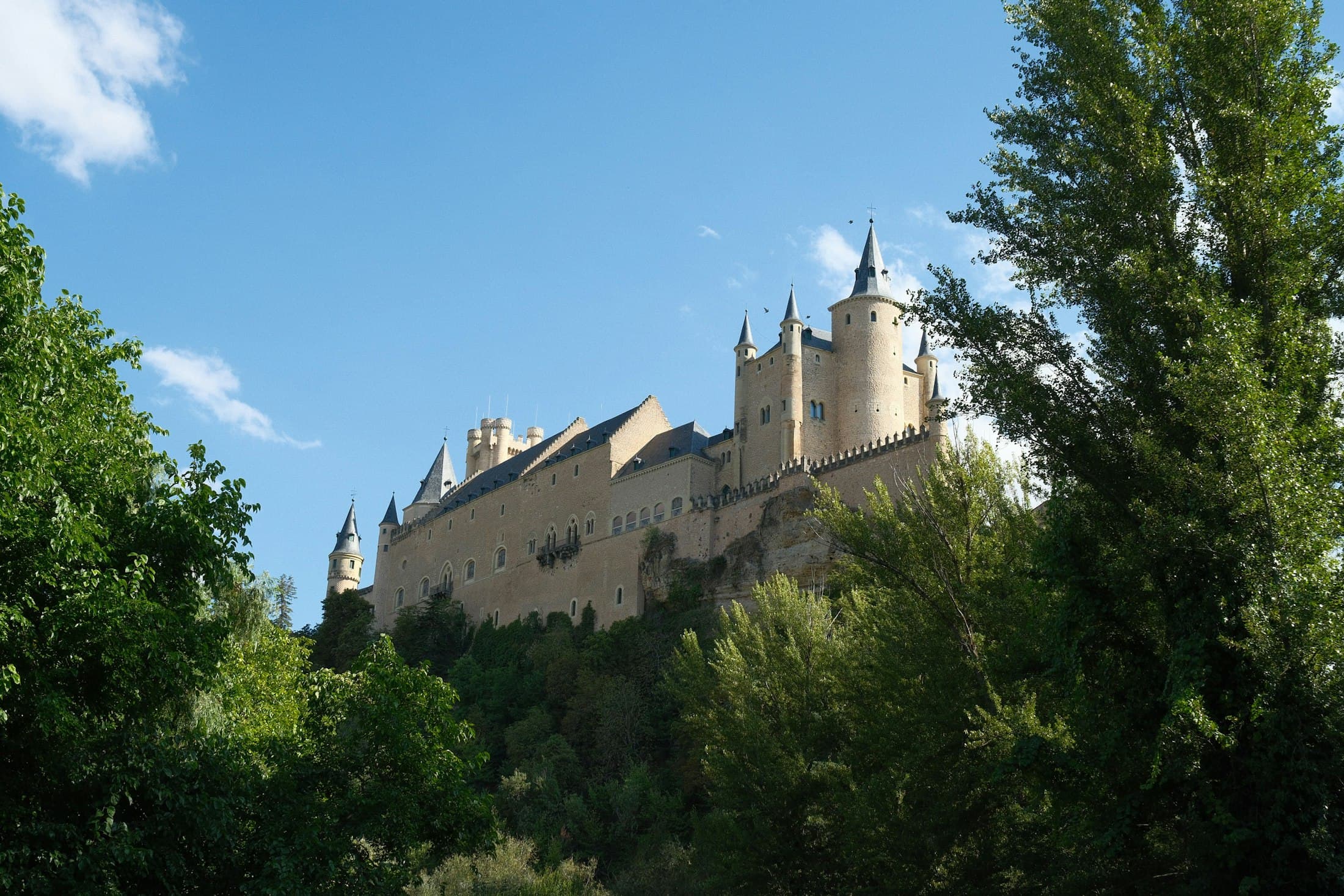
A Roman aqueduct, a castle on the tip of a rock, and a council that will marry you in the courtyard of a royal mint — half an hour from Madrid by fast train.
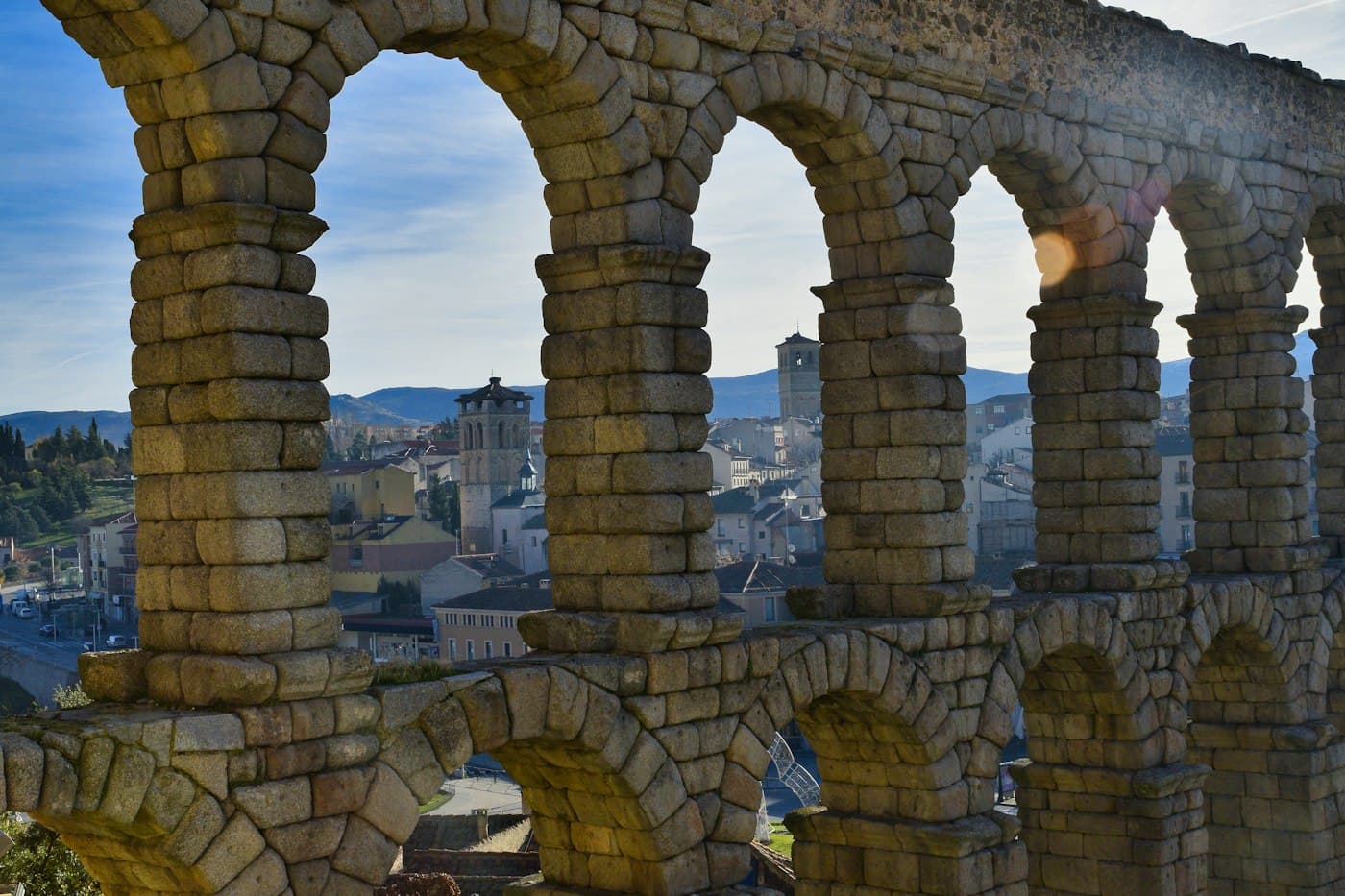
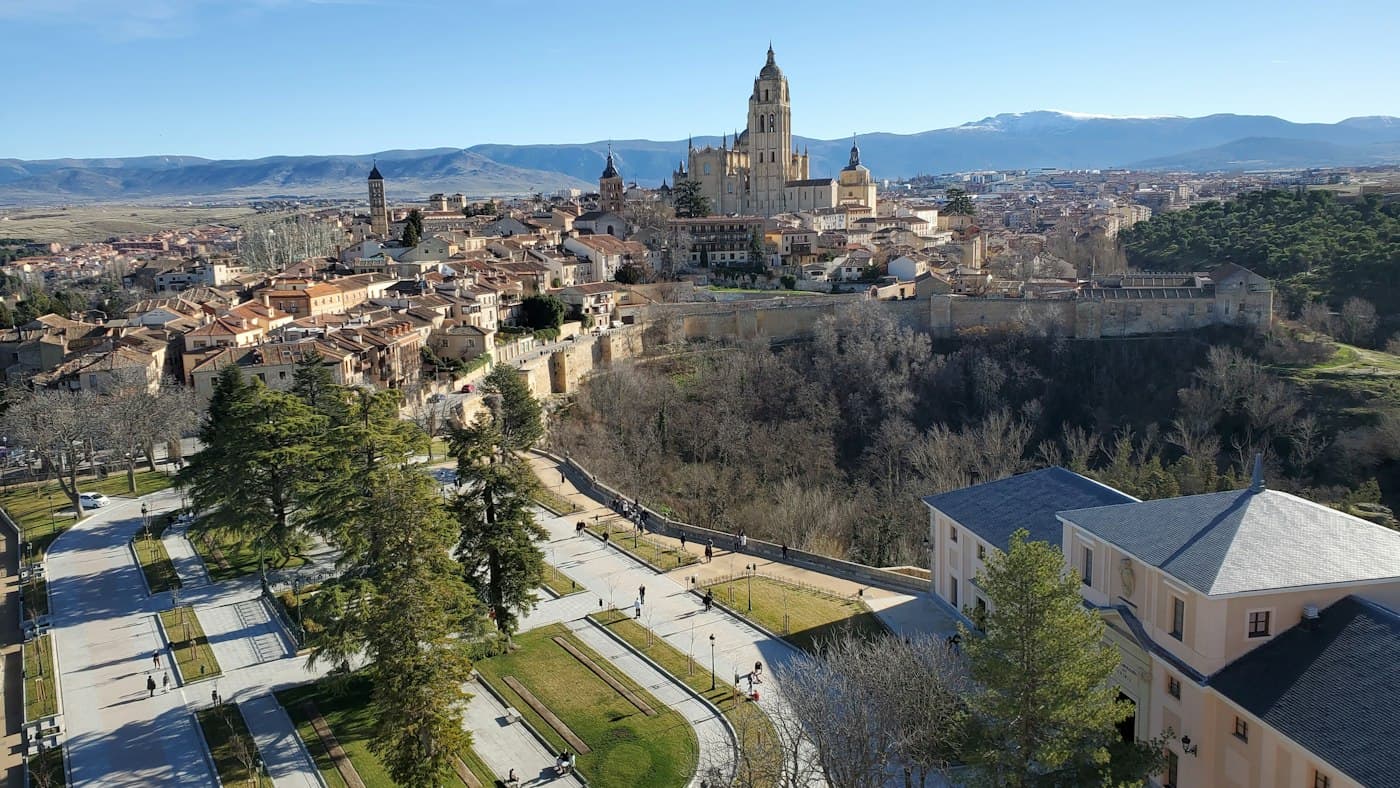
Segovia stands at about 1,000 metres, across the Sierra de Guadarrama from Madrid, in Castilla y León: an old town on a long stone ridge that the tourist office compares to a ship, with the Alcázar at its prow, where the Eresma and Clamores valleys meet. The old town and its aqueduct have been a UNESCO World Heritage site since 1985. The aqueduct is the first thing you see: 167 granite arches from the 2nd century AD, the stones joined without mortar, 28.10 metres high where they cross the Plaza del Azoguejo.
What sets Segovia apart for a wedding is how far the council’s ceremonies leave the town hall. Besides its own rooms on the Plaza Mayor, it marries couples in the courtyard or garden of Philip II’s mint on the Eresma, in the garden of a Romanesque church that became the Zuloaga family’s workshop, in a garden by the walls and in a patio in the old town. Portraits are then a short drive or a walk down into the valleys, looking back up at the rock, and in the evening the temperature drops quickly at this height: dinner outside needs a layer, even in June.
Photographers
They shoot everywhere in Madrid — in Segovia too. Their whole weddings are on their pages.
See all 7 photographers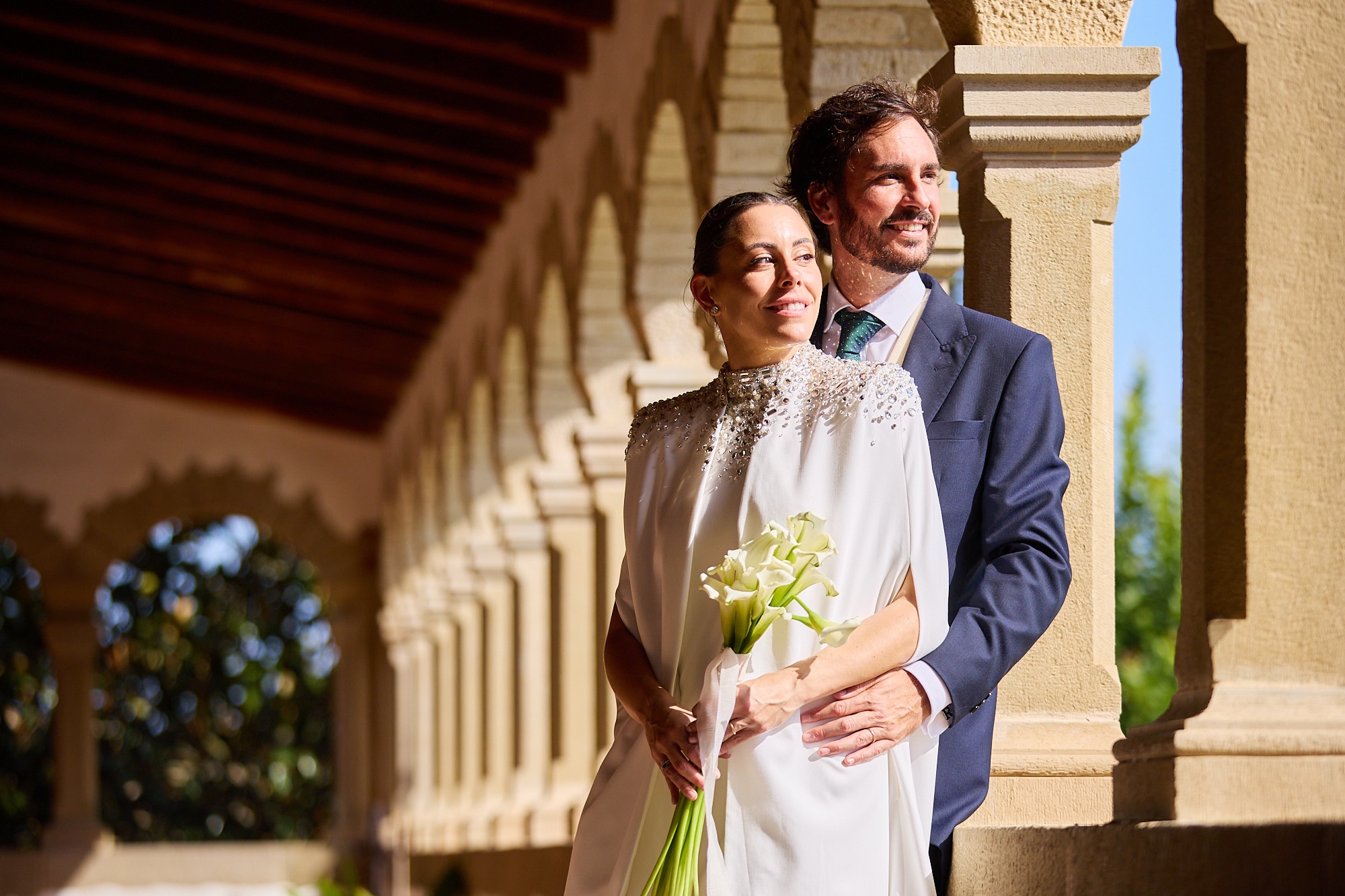
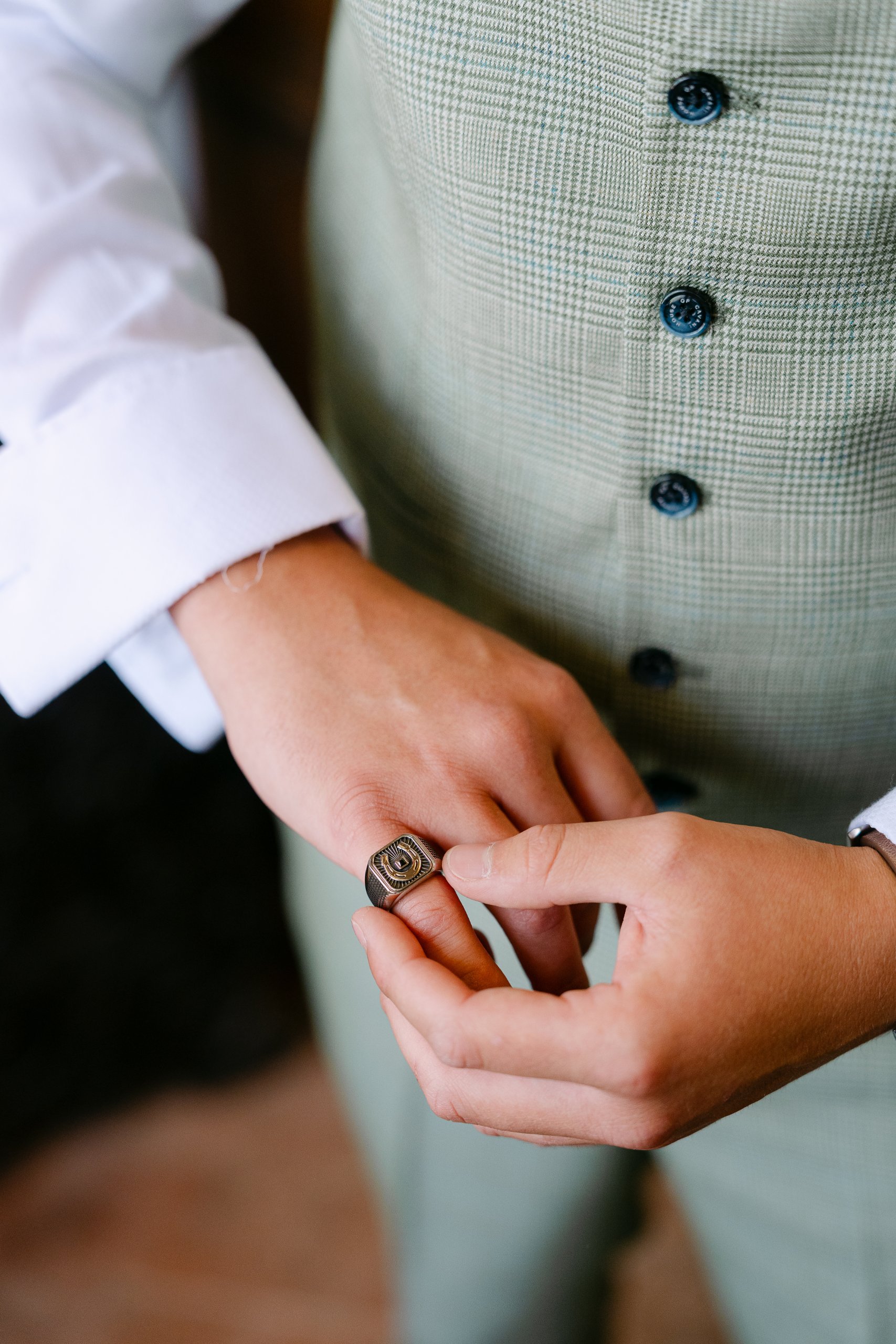
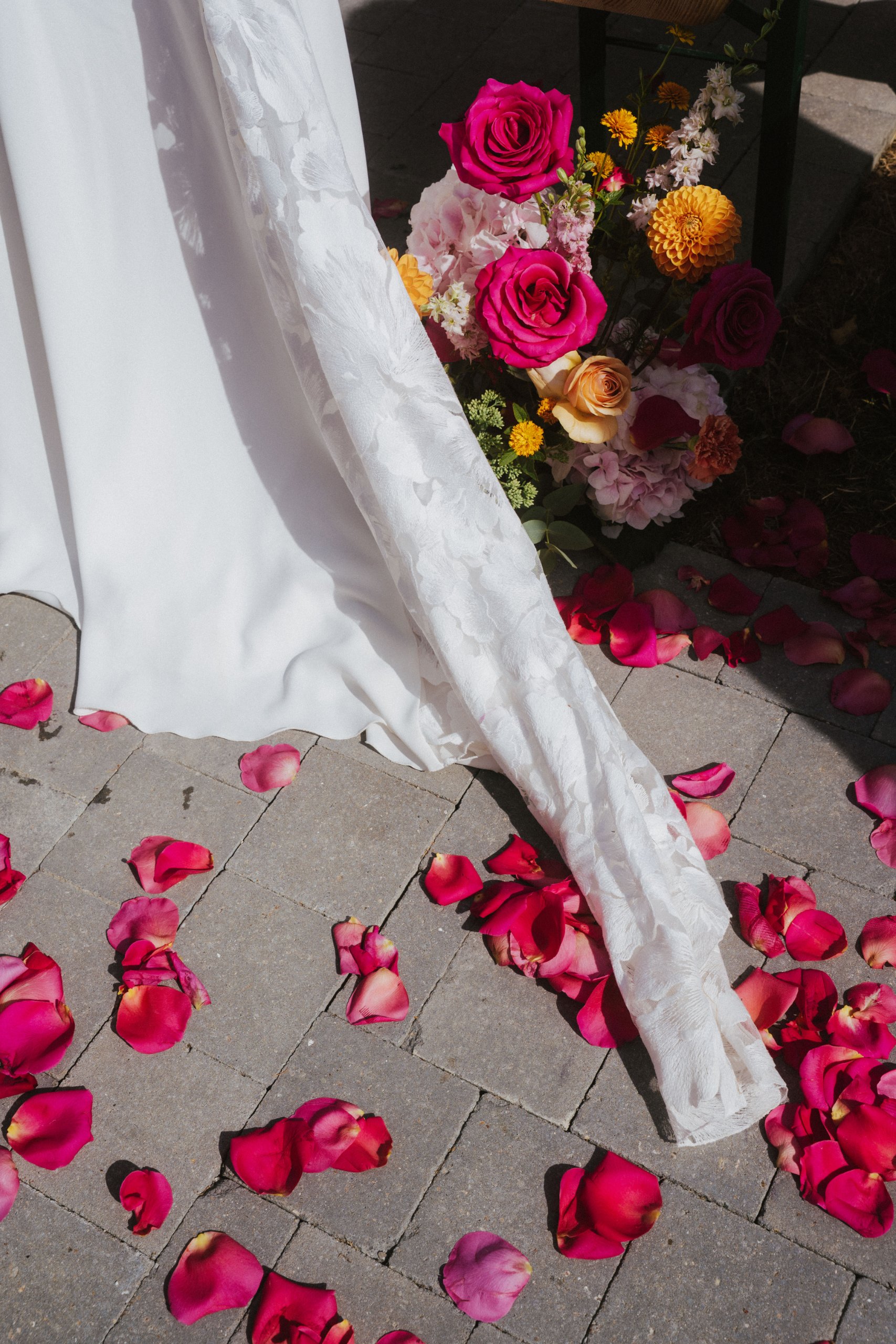
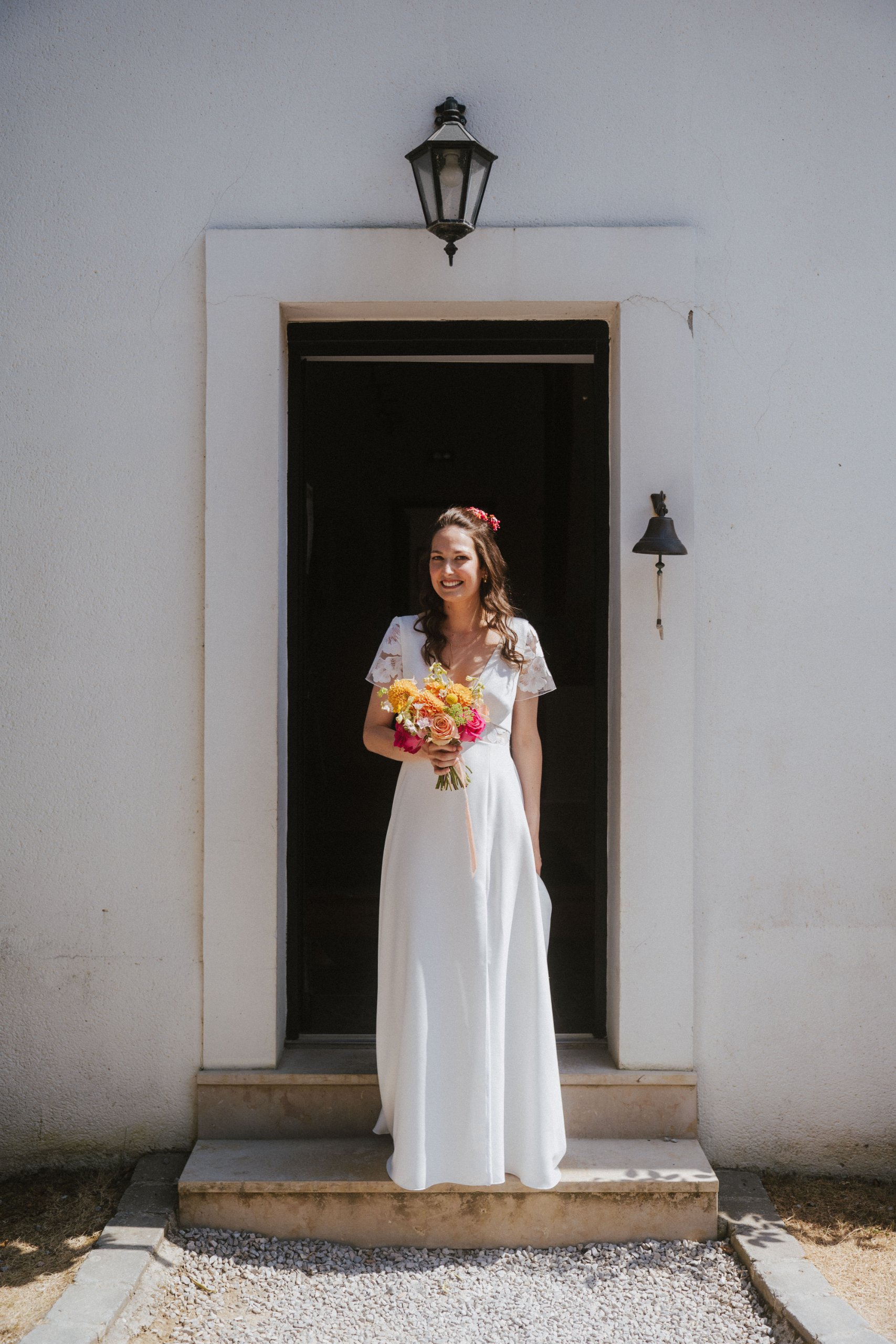
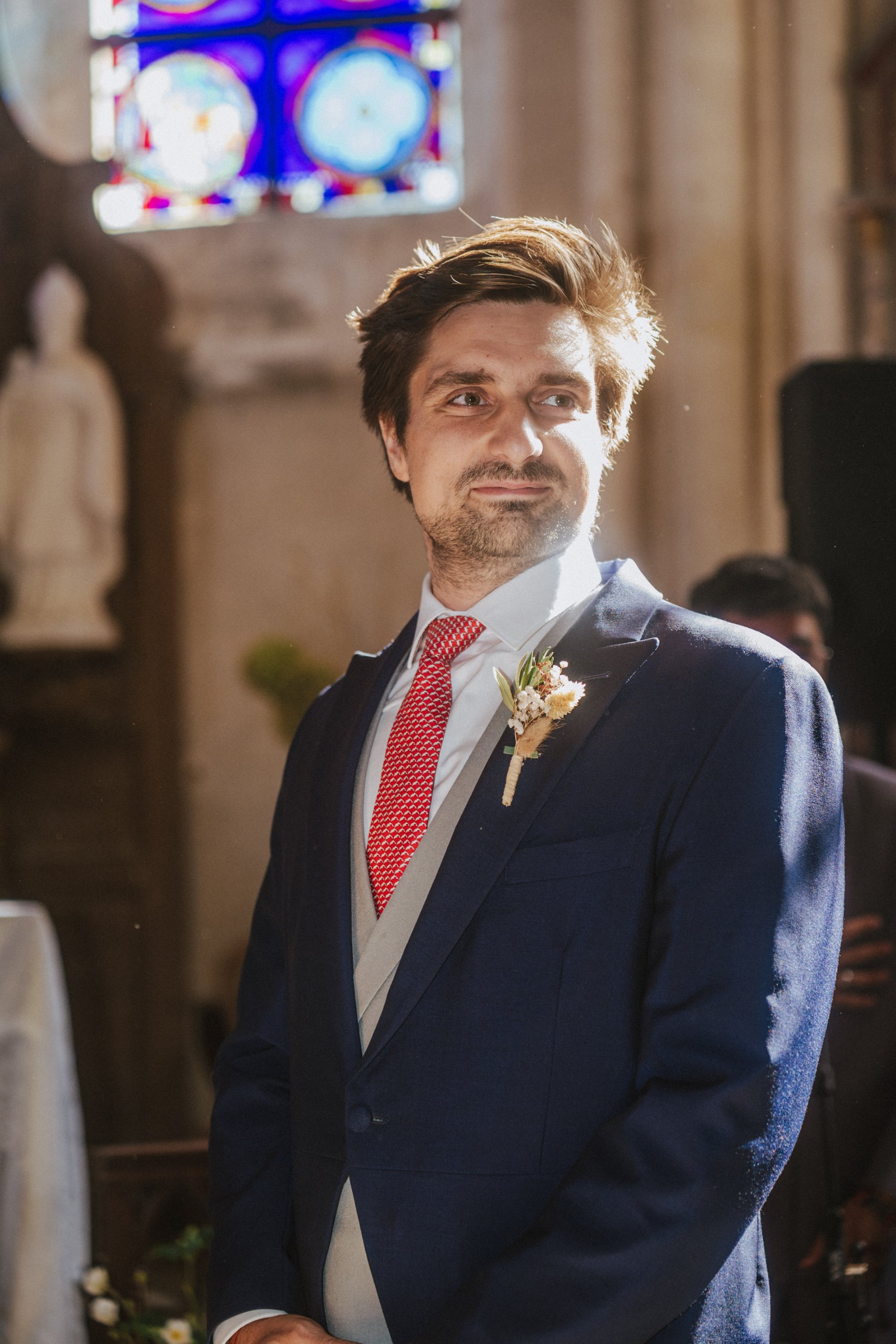
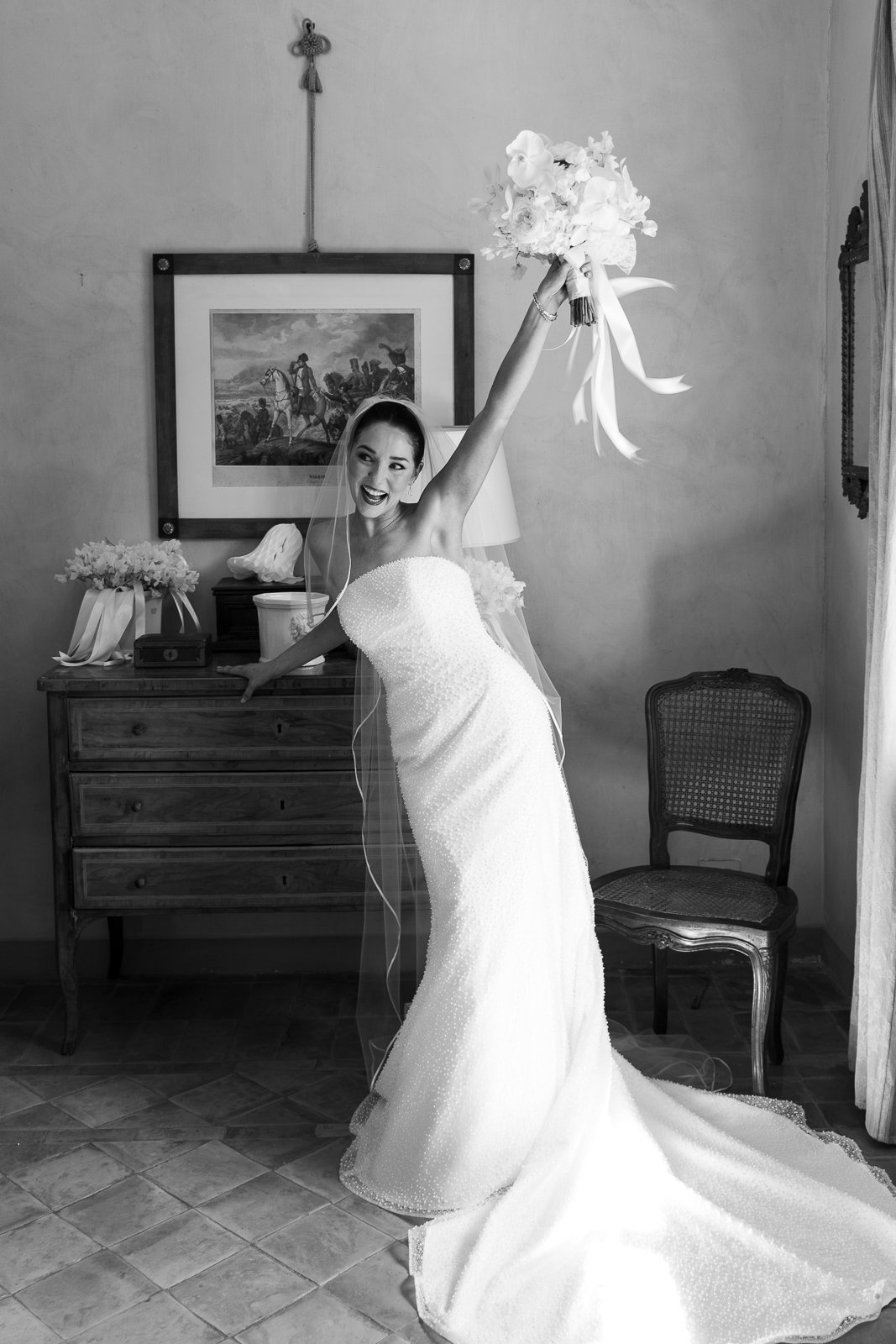
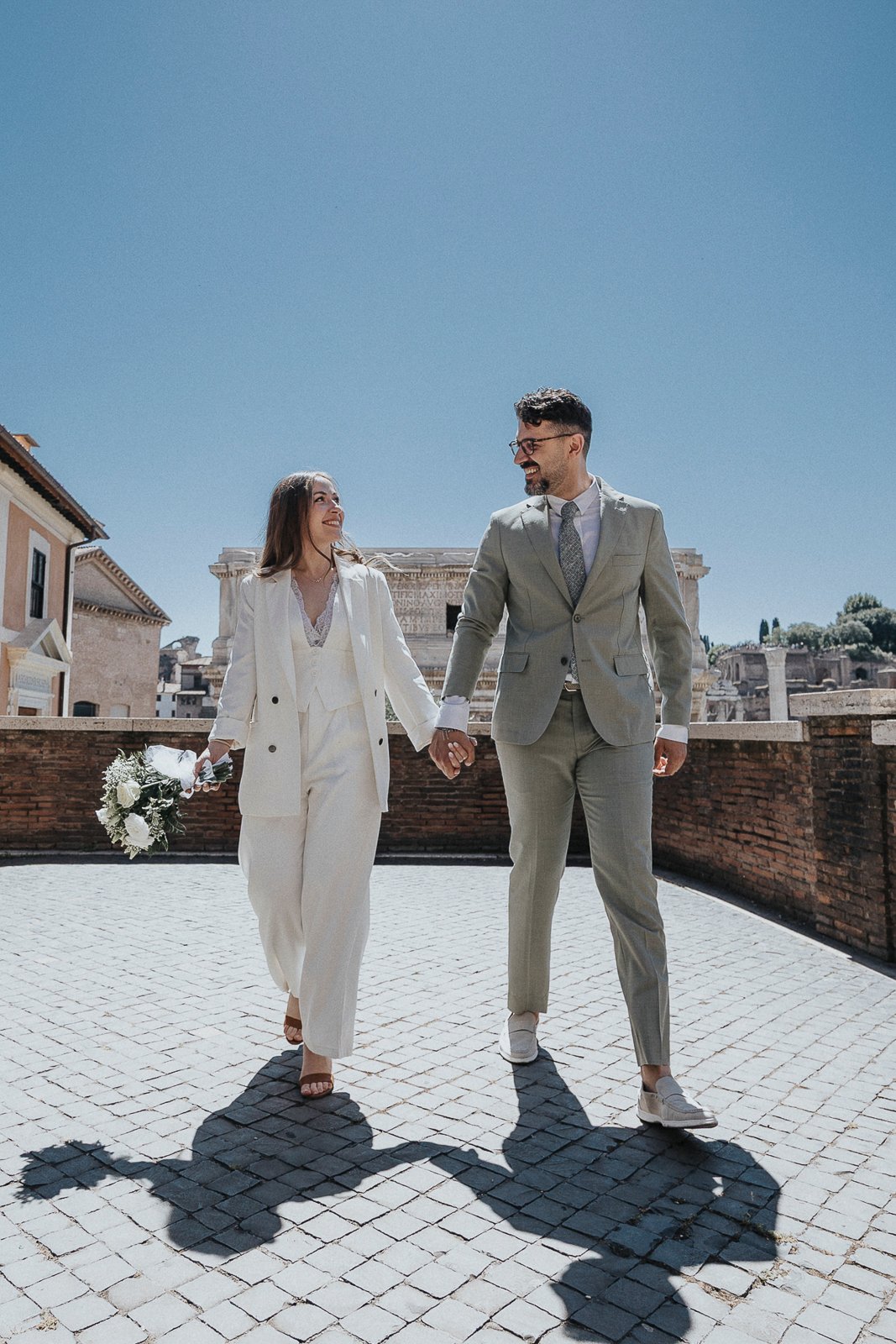
Booking through Lens & Vows
Ceremonies
Philip II’s water-powered mint on the Eresma, by Juan de Herrera, built between 1583 and 1586 and now a museum. The ceremony is in its upper courtyard, by the fountain, or in its garden: €541.97 and €642.09 as the council’s page gives them in November 2026. The council’s rules provide a table, eight chairs and sound, leave anything else and the decoration to you, keep a room for rain and allow about an hour; the couple and guests may also visit the lower courtyard and the channels.
The Sala Blanca or the Salón de Actos of the Casa Consistorial, Plaza Mayor 1: €239.28 in November 2026, the council’s lowest fee. The mayor or a councillor marries you, from Monday to Friday, mornings and afternoons, and on Saturdays at 12:00, 13:00, 17:00 or 18:00.
The garden of the Romanesque church that the ceramist Daniel Zuloaga made his workshop, and which now holds the Museo Zuloaga: €719.83, the council’s highest fee (November 2026).
The Jardín de los Poetas lies beside the city wall and the Puerta de Santiago, above the Eresma valley: €572.60. The patio of the Casa de Andrés Laguna, the smallest outlay outside the town hall: €342.92 (both November 2026). Before applying, ring the council on 921 419 844 to ask whether the space is free on your date.
Portraits
The meadow below the rock is the classic view of the castle’s prow. The tourist office’s Mirador del Alcázar y los Dos Valles is a little further: follow the road towards the Arco de la Fuencisla and take the path on the left just before the arch. The castle stands at the western tip of the old town, so the last hour is the time: on 15 June 2027 the sun sets at 21:50, with golden light from 21:09 to 22:11 (NOAA’s solar equations); on 15 September at 20:26.
The gardens of the Plaza Reina Victoria Eugenia, in front of the castle gate, are open from 8:00 to 22:00, longer than the castle itself (10:00 to 19:30 in summer, to 18:00 from November to March). At the Plazuela del Real Alcázar the rock narrows and looks south over the Clamores valley. Inside the castle tripods are not allowed and commercial photography needs its Patronato’s prior permission.
The two tiers of arches are at their highest over this square. The stairs beside them climb to the viewpoint at the Postigo del Consuelo, where the city shows through the upper arches. The square is rarely empty: early morning is the quiet time.
The mint’s water system survives along with its dam on the Eresma, so the portraits run beside moving water and under the trees of the valley. If you marry here, the council’s rules allow photographs and filming before, during and after the ceremony, as long as they don’t get in the way of its services.
Beside the road down from La Lastrilla and the Parador: the whole north side of the city, and the stone “ship” of the old town from end to end. It takes a car and a little time, and suits a single wide picture of the two of you with Segovia behind.
Through the year
AEMET’s Segovia station (1,008 m, normals 1988–2010) averages highs of 25.8 °C in June and 24.0 °C in September, with rain on about five days in each, and lows of about 12 °C. May is greener but wetter, with 19.7 °C and rain on 10 days, and storms on nearly four. July and August reach 29–30 °C. October averages 18.0 °C and nine rainy days; snow falls on a few days from December to March.
Madrid, month by month
Practical
Fast Avant trains reach Segovia-Guiomar from Madrid-Chamartín in about 30 minutes. The station is 6–7 km outside town: bus 11 takes about 15 minutes to the aqueduct, so a morning ceremony needs guests on an early train, or a coach from Madrid.
Much of the walled town is pedestrian or limited to residents, and its low-emission rules have been annulled and redrafted, so check them with the council (921 419 800) or your hotel, which under those rules could register its guests’ number plates. At the Casa de Moneda all vehicles stay outside the grounds.
The rules for the Casa de Moneda ban throwing rice, or anything else that could damage the space, and any fireworks. The council may also ask for a deposit, returned if there is no damage. Check the current rules with the Concejalía de Turismo (921 466 707) before ordering anything.
A drone over the city is an urban flight: a registered operator must notify the Ministry of the Interior at least five days ahead (Real Decreto 517/2024).
A civil wedding needs one of you to live in Spain, where the marriage file is opened; the council then asks for proof of it when you book. A Catholic one goes through your parish; most couples from abroad marry at home and hold a symbolic ceremony here.
Questions
The council’s list of wedding places doesn’t include it, and the Alcázar’s own site publishes nothing about weddings. Couples marry at the Casa de Moneda or in one of the gardens and take portraits in front of the castle or from the meadow below. Photos for a commercial purpose inside need the Patronato’s permission.
It depends on the place. As the council’s page gives them in November 2026: €239.28 at the town hall, €342.92 in the Casa de Andrés Laguna’s patio, €541.97 and €642.09 at the Casa de Moneda, €572.60 in the Jardín de los Poetas and €719.83 in the garden of San Juan de los Caballeros.
Not in a civil ceremony: the marriage file that comes first belongs to a registry or notary where one of you is domiciled, and the council marries you only once it is under way. A Catholic wedding through your own parish needs no residence; so couples from abroad choose that, or marry at home and hold a symbolic ceremony here.
June and September: average highs of 24–26 °C and about five rainy days a month at AEMET’s station. Lows of about 12 °C make the evenings cool. May is wetter, July and August reach 29–30 °C, and from December to March there can be snow.
No: it is the capital of a province in Castilla y León, across the Sierra de Guadarrama. We list it with Madrid because that is how couples and guests reach it, about half an hour from Chamartín by fast train.
Madrid
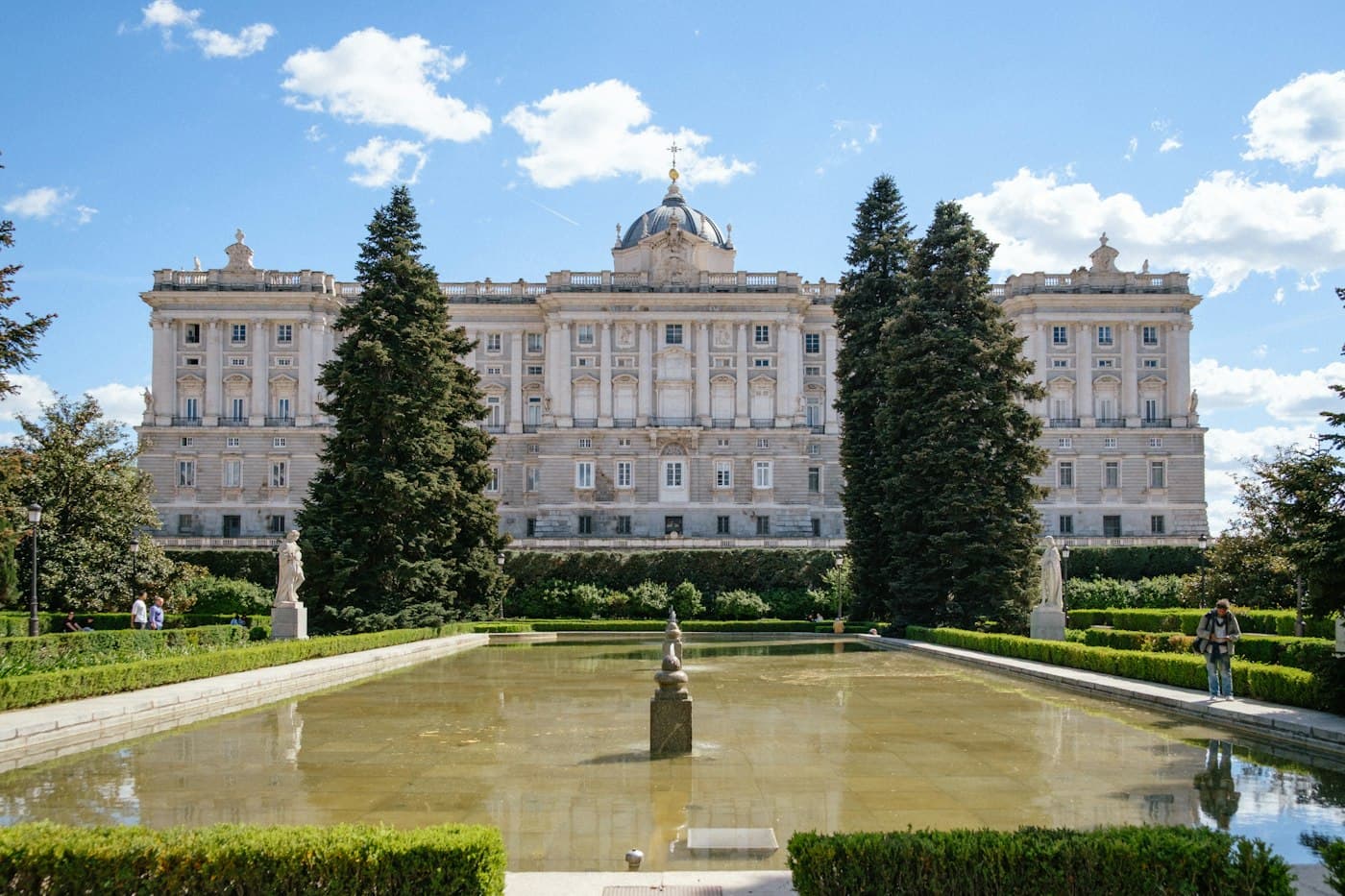 MadridThe whole region: when to marry, the kinds of places, the light, getting there.
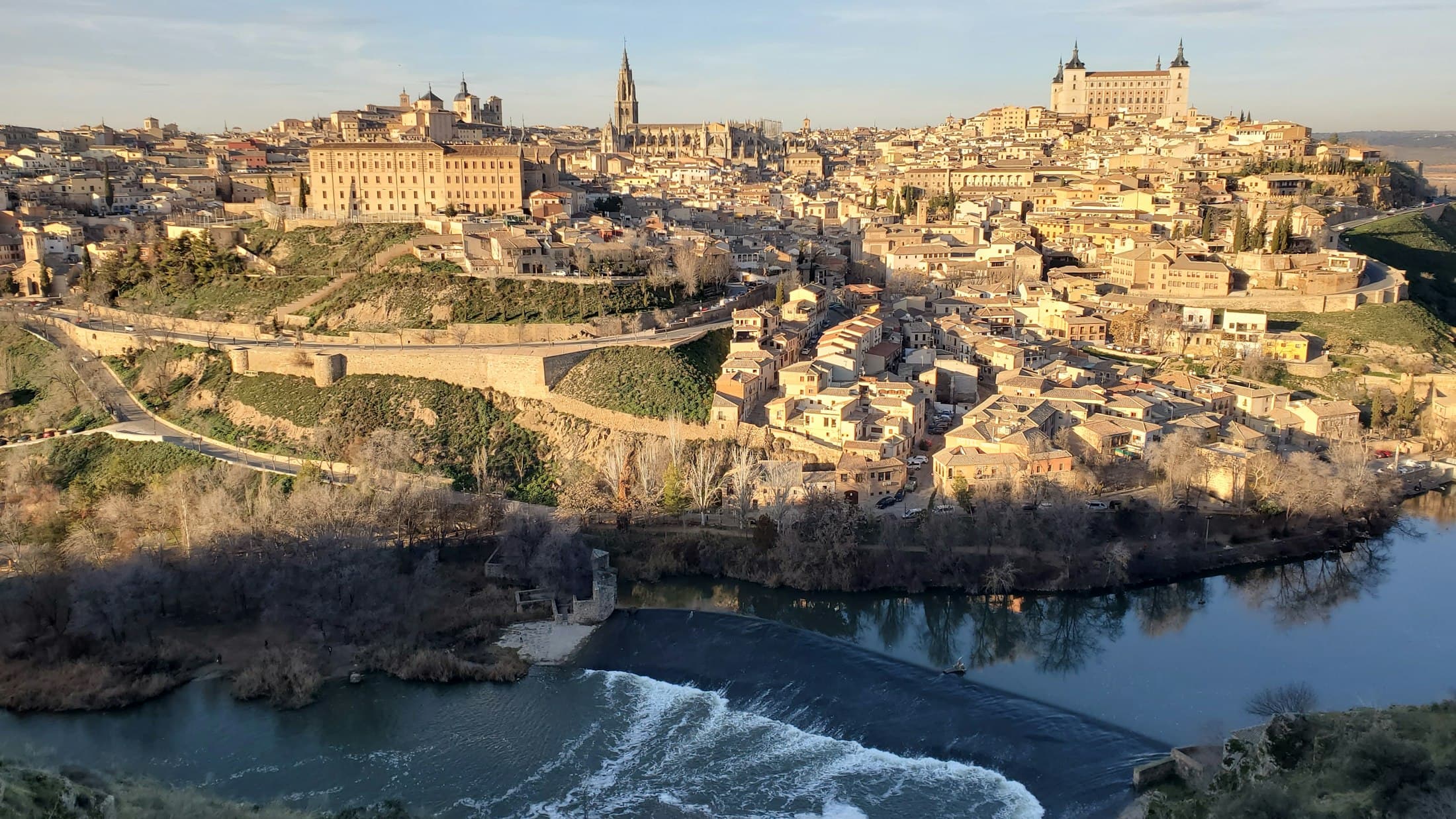 ToledoA walled hill in a loop of the Tagus, with old country estates on the far bank looking straight back at it — and half an hour from Madrid by train.
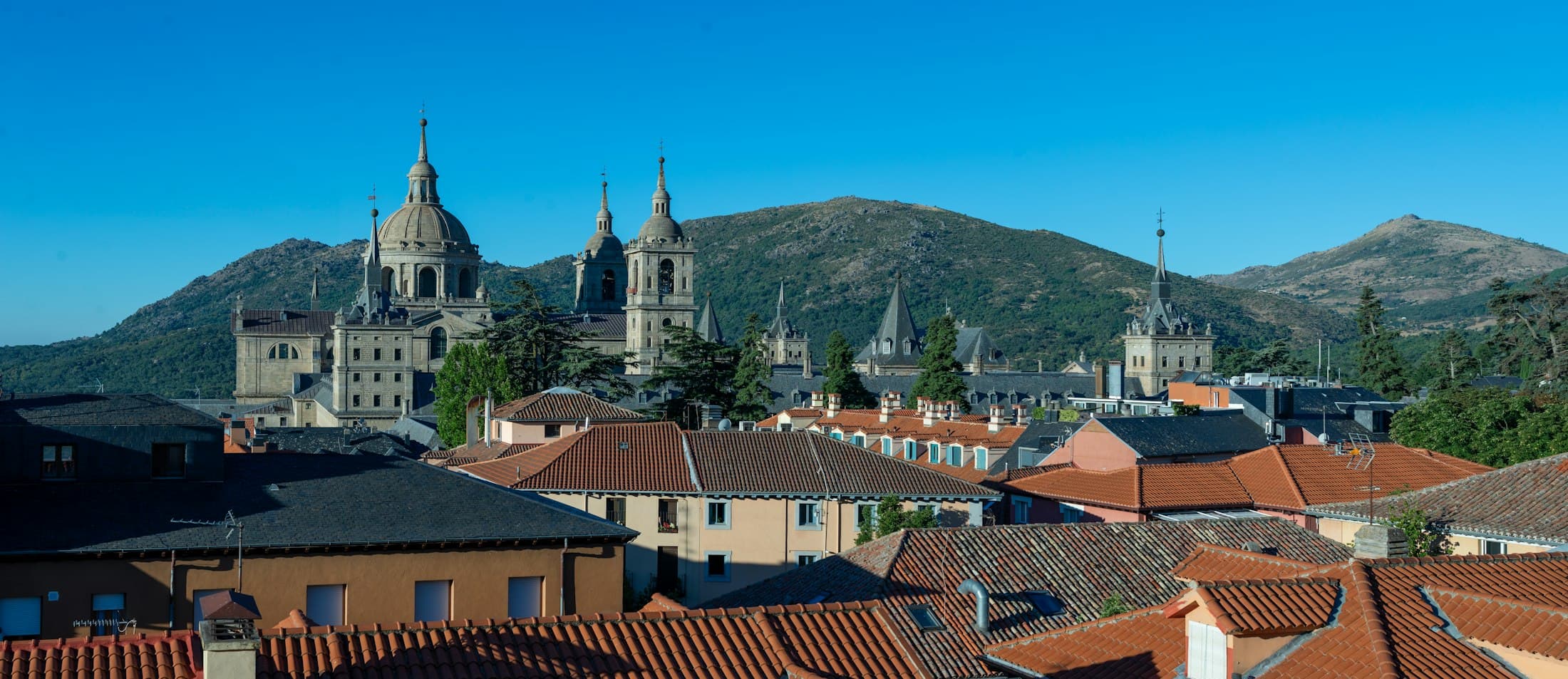 El EscorialA royal monastery that still marries couples in its basilica on Fridays and Saturdays, under the pine slopes of the Sierra de Guadarrama, 47 km from Madrid.
Plan
Not sure yet?
The place, the date, the guests, the photos you like. Our concierge checks who is free and fits, and comes back with photographers to choose from.