Founding photographerVerified — Identity verified by Lens & Vows


Tina Y.from €2,400
The Rhine & the Moselle, Berlin & Brandenburg +40 · Documentary, EditorialBased in the Netherlands · travels to weddings in GermanyWedding photographers in Germany
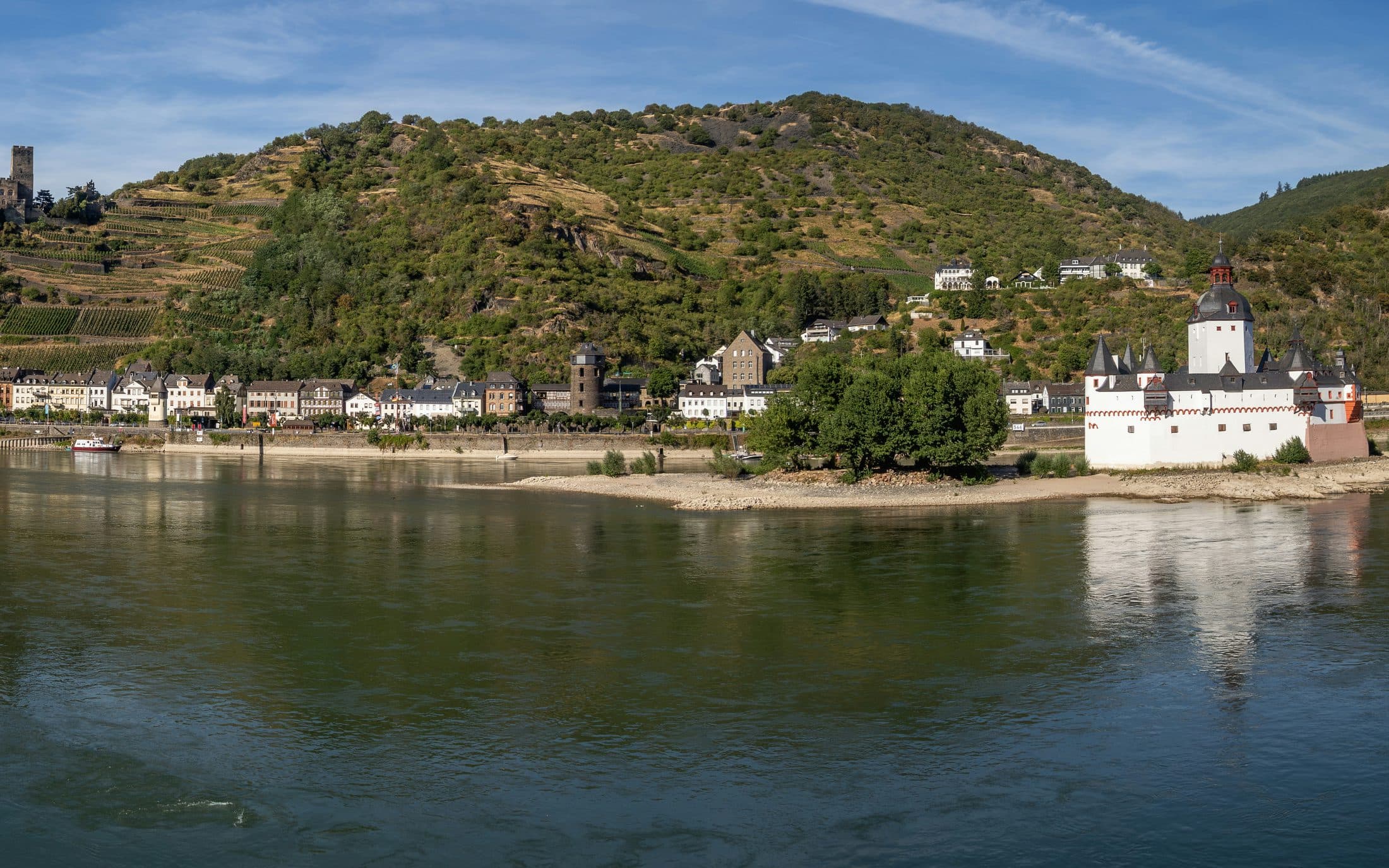
Two river valleys of castles and slate vineyards, one to two hours from the airports of Frankfurt and Cologne: the Rhine gorge between Rüdesheim and Koblenz, the wine villages of the Rheingau, the looping Moselle below Cochem’s castle, and Cologne’s twin spires on the Lower Rhine.
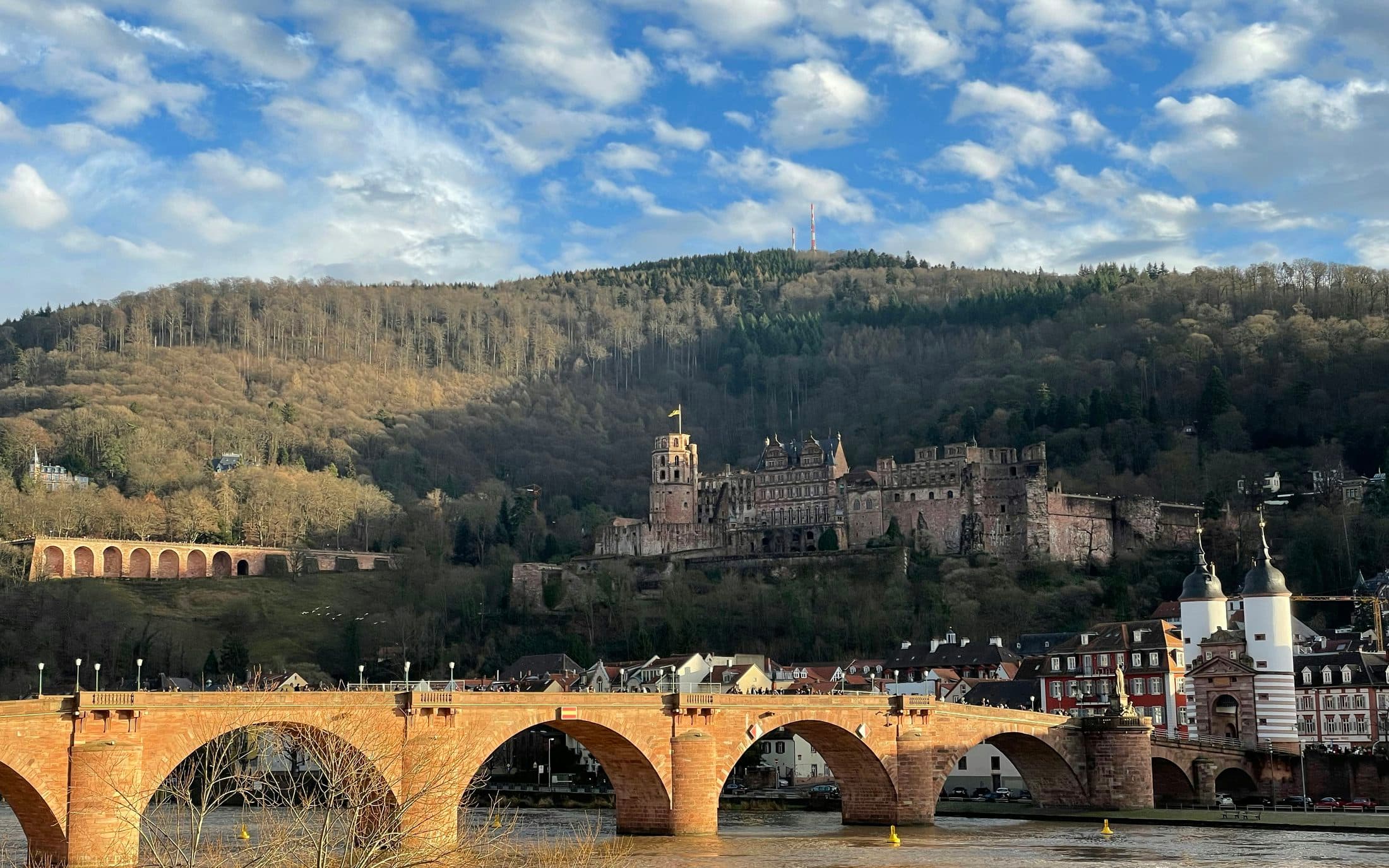
South of Koblenz the Rhine cuts through the Rhenish Slate Mountains in a 65 km gorge, now a World Heritage site: some sixty small towns, slopes terraced for vines for over a thousand years and about 40 hilltop castles and fortresses, with the river narrowing to 130 m at the Loreley rock. Upstream, around Rüdesheim and Eltville, it runs along the wine villages of the Rheingau; downstream lies Cologne, whose Gothic cathedral was begun in 1248 and finished in 1880. West of Koblenz the Moselle comes down from Roman Trier in long loops through its own slate valley, past the Calmont at Bremm, where the vines climb slopes of up to 68 degrees, and past Cochem, under a castle rebuilt in neo-Gothic style in the 19th century.
Couples from Germany and from abroad marry here in castles and old monasteries, then carry on among the vines or beside the water: Cochem’s castle chapel, the electoral castle at Eltville and Eberbach Monastery all host registry-office ceremonies, and Cologne marries couples in its town hall or, from Thursday to Saturday, at the places on the city’s own list, medieval gates and Rhine boats among them. In Germany a marriage is legal only before a registrar, at a Standesamt (registry office) or a place it has set aside for weddings; a religious or symbolic ceremony alone isn’t a legal marriage.

Photographers
They still have dates open here. Their whole weddings and free dates are on their pages.
See all 2 photographers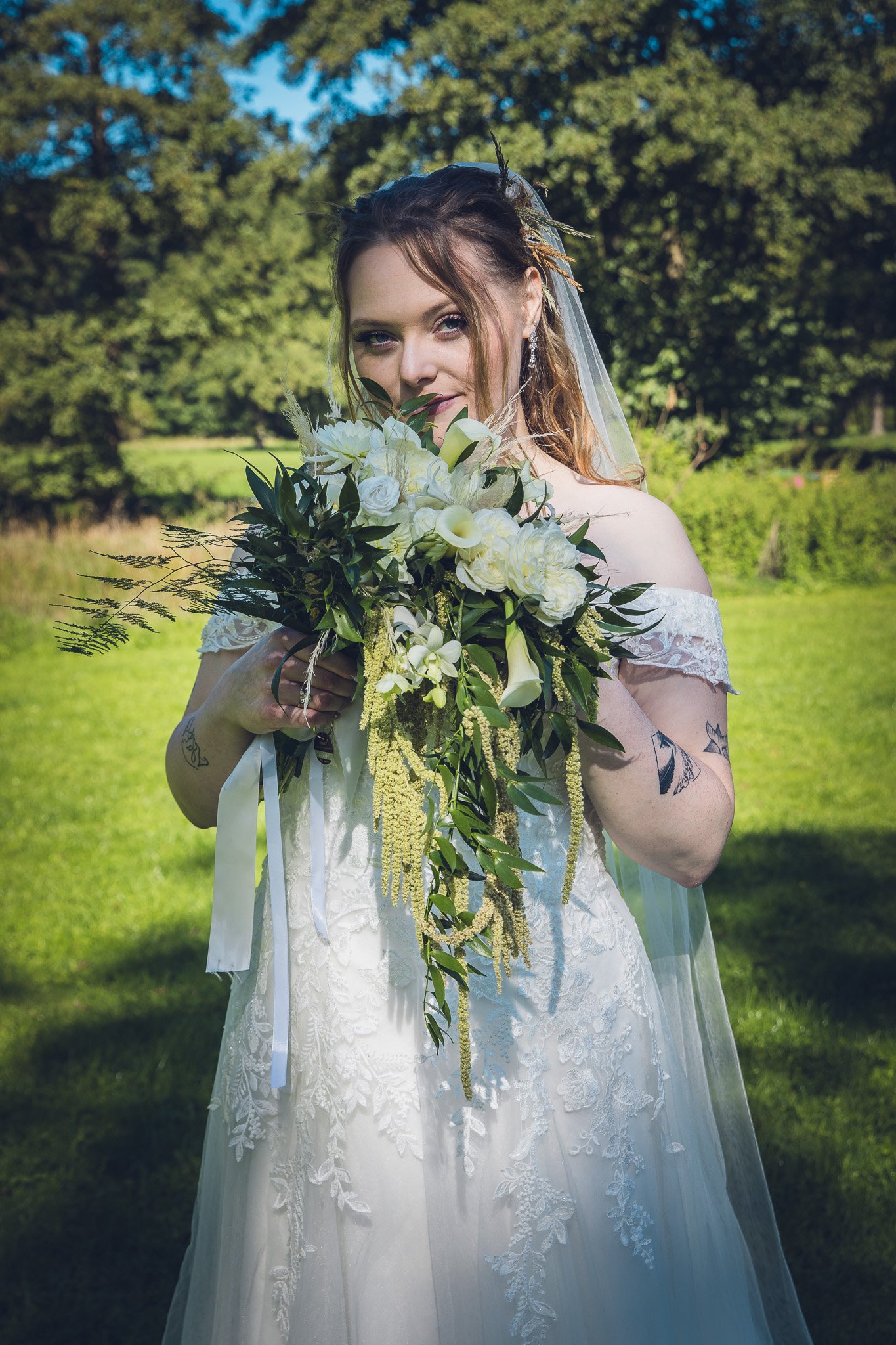
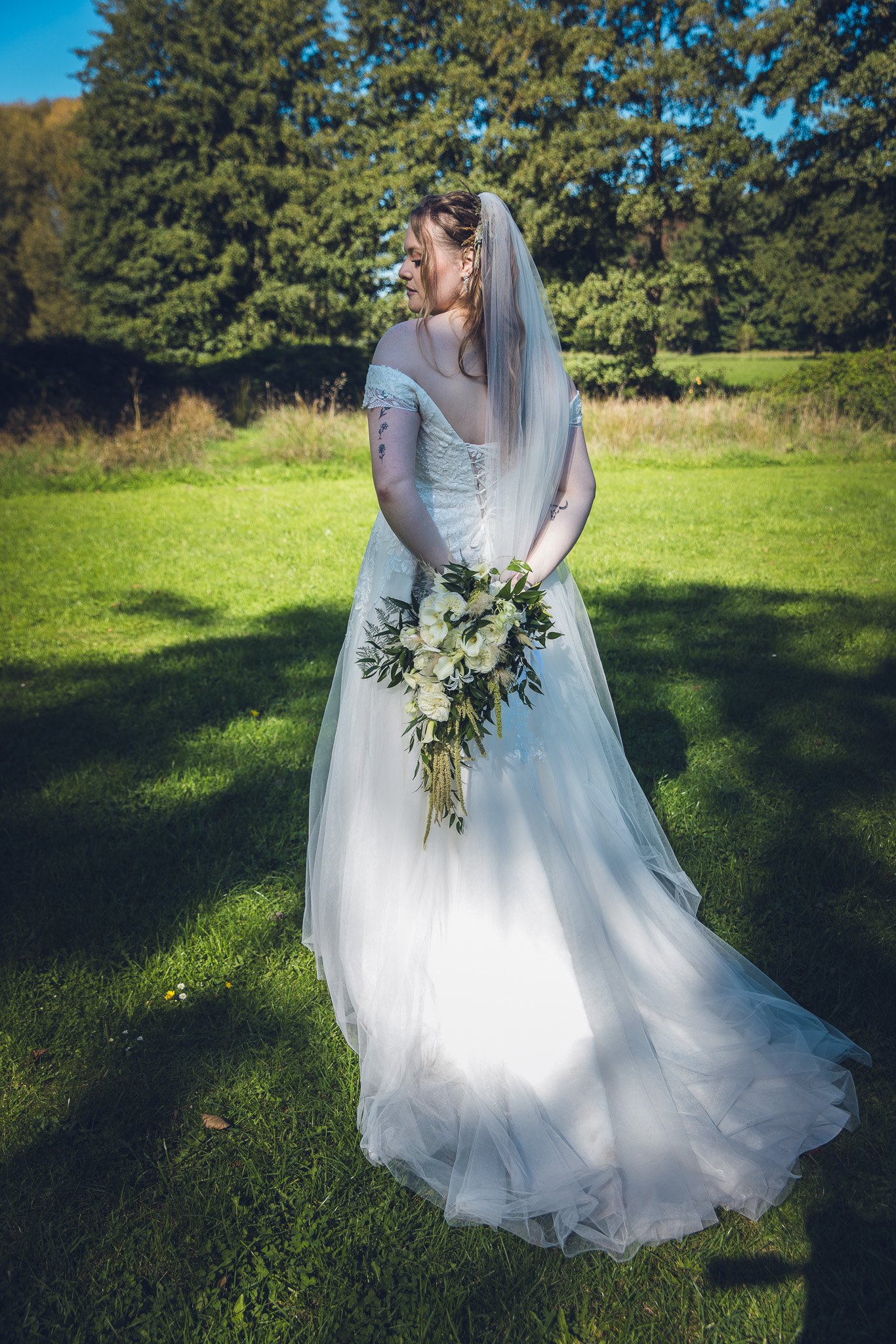
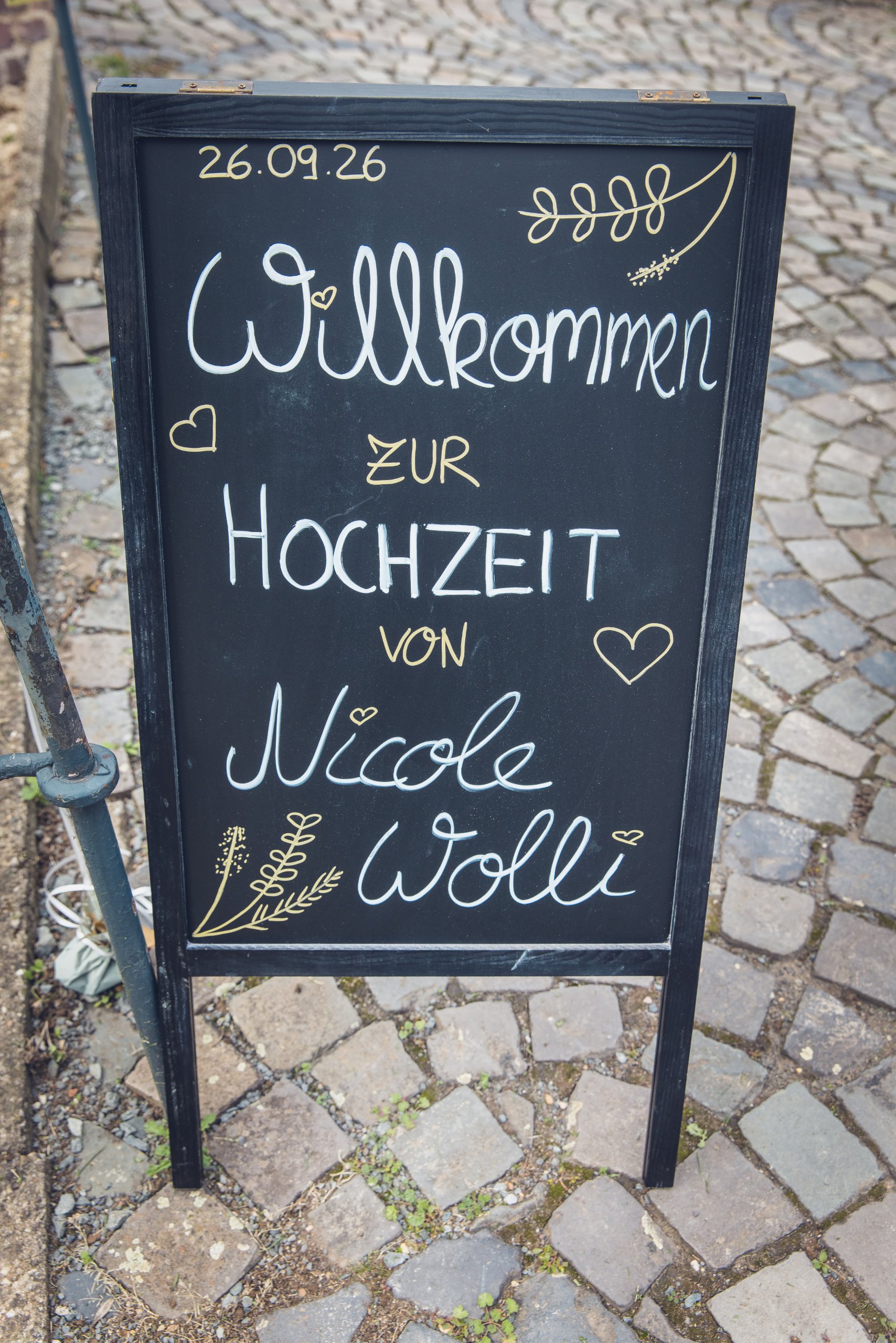
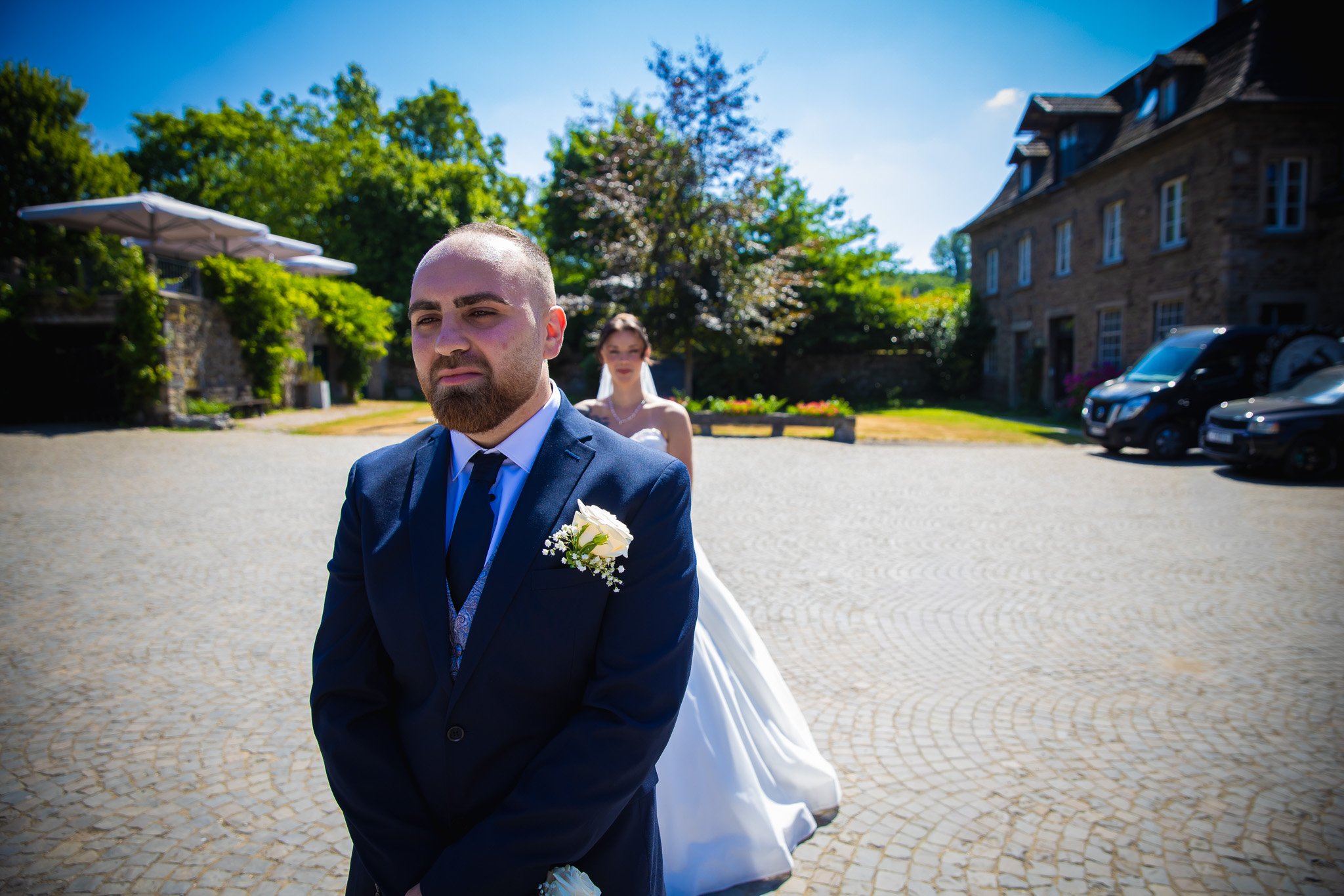
Booking through Lens & Vows
Through the year
May, June and September are the surest months: in the Deutscher Wetterdienst’s 1991–2020 figures for Geisenheim, in the Rheingau, the highs are 20 to 24 °C and rain of 1 mm or more falls on eight or nine days a month. July and August reach about 26 °C, with five or six days of 30 °C or more a month. October cools to 15 °C, with about three hours of sun a day. Rain increases to the west and north: Geisenheim has 525 mm a year, Trier on the Moselle 747 mm and Cologne Bonn Airport 802 mm, with its wettest months in June, July and August. Whatever the month, keep a roof in the plan: a castle hall or a monastery cellar.
Weather station: Geisenheim, normals 1991–2020 · Checked 2 November 2026
Places
The kinds of places — ask your photographer which ones they know well.
Bacharach, Oberwesel, St. Goar and Boppard line the river below their castles, and at Kaub the white castle of Pfalzgrafenstein stands on an island in midstream. The Loreley rock, where the valley is at its narrowest, has a viewpoint high above the bends. Castles here have many owners, so ask each one before planning a shoot, and treat the terraces as what they are, working vineyards: stay on the paths or get the grower’s word first. There is no fixed crossing for 80 km between Mainz and Koblenz, so check which bank your guests are on and when the last ferry runs.
The electoral castle at Eltville is a branch of the town’s registry office, with halls indoors and, outdoors, the castle’s outer ward, looking out over the Rhine, for 20 to 120 people. In the hills behind, Eberbach Monastery has had its own registry-office branch since 2007, in the abbot’s former apartment, and its wine cellars, baroque refectory and old brewery are good cover in the rain; a photo permit comes from the monastery’s foundation, by email, with the date, the place, the number of people and the purpose. At Rüdesheim, the wooded heights above the town look down on the river and its islands.
Cochem’s castle stands on a rock above the town, and its former chapel hosts civil ceremonies. Upstream, the viewpoint above Bremm looks over a tight loop of the river and the Calmont, Germany’s steepest vineyard. Burg Eltz, in the forest of a side valley, is a different case: it is private, photography there is for private purposes only, and the castle can be seen only from its equally private forest, so a hired photographer needs the owner’s answer before anything is planned. Ask at Cochem’s castle too: we could find no published rule on wedding shoots there.
The cathedral is best seen from across the Rhine, with the old town at its feet. Inside, photo shoots are not allowed, even private ones, and a sightseeing visit has needed a ticket since 1 July 2026. Civil ceremonies take place in the historic town hall and its Spanish Building and, from Thursday to Saturday, at the listed places, booked directly with each: the Eigelstein and Severin city gates and the Ulrepforte among them. South of the city, the rococo palaces of Augustusburg and Falkenlust at Brühl are museums, with no weddings, no photography inside and no commercial shoots in the park without a special grant from the management; only private pictures are free.
Light
The gorge runs roughly north-north-west, so on most evenings the towns on the west bank lose the sun first while the slopes above Kaub and St. Goarshausen, on the east bank, keep it to the end; in the morning it is the other way round. At midsummer the sun rises over Bacharach at about twenty past five and sets at about twenty to ten, out in the north-west and more nearly along the valley; it is ten degrees up at about twenty past eight, and the sky stays light until nearly half past ten. In mid-May it sets at about ten past nine, in mid-September at about a quarter to eight and in mid-October at about twenty to seven. At midwinter it is up only from about twenty-five past eight until half past four, never more than 17 degrees high. On the Moselle the loops turn the light from bend to bend, and the great vineyards face south. Cologne, further north, keeps the sun until about ten to ten in June; seen from the east bank, the cathedral catches the morning sun and stands against the sky in the evening. Geisenheim averages seven and a half hours of sun a day in June and July and just over one in December.
Travel
Frankfurt Airport has its own long-distance station, with direct ICE trains to Cologne in about 50 minutes and to Koblenz in about 70; Cologne Bonn Airport has its own ICE station and S-Bahn trains, 17 km from the city. By road from Frankfurt Airport it is 54 km to Rüdesheim, 76 km to Bacharach, 116 km to Koblenz, 159 km to Cochem and 183 km to Trier; Koblenz to Cochem is 56 km. Frankfurt to Bingen takes about 50 minutes by IC, and Koblenz to Trier about 1 hour 20 by regional train. Ferries cross at Bingen–Rüdesheim, Niederheimbach–Lorch, Kaub, St. Goar and Boppard. Under the EU drone rules, the operator of a drone of 250 g or more, or of any drone with a camera, must be registered (in Germany, with the Federal Aviation Office, the LBA) and insured, may fly no higher than 120 m and, from 250 g, must hold the EU competency certificate; the restricted zones are on the government’s dipul map. Check the dipul map first: the Rhine and the Moselle are federal waterways, and within 100 m of one, or of a railway or federal road, a drone must stay lower than its distance from them and more than 10 m away, unless the operator agrees. It may not cross homes or nature reserves without consent, or enter an airport’s control zone without clearance. Drones are banned at Burg Eltz, within 1.5 km of it, and over the palaces and park at Brühl.
Real weddings
Plan
Germany