Founding photographerVerified — Identity verified by Lens & Vows

Tina Y.from €2,400
Frankfurt & Heidelberg, Berlin & Brandenburg +40 · Documentary, EditorialBased in the Netherlands · travels to weddings in GermanyWedding photographers in Germany
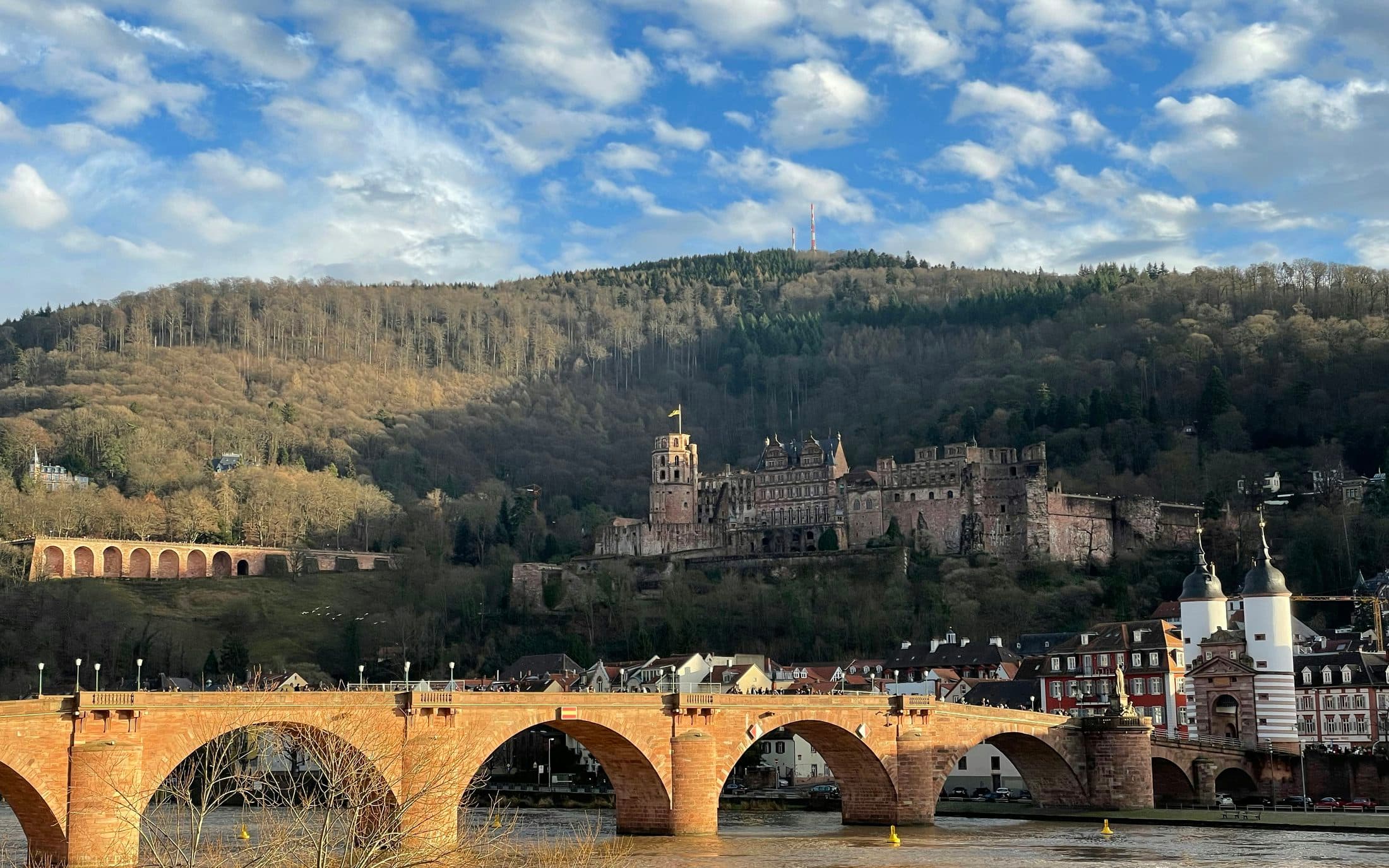
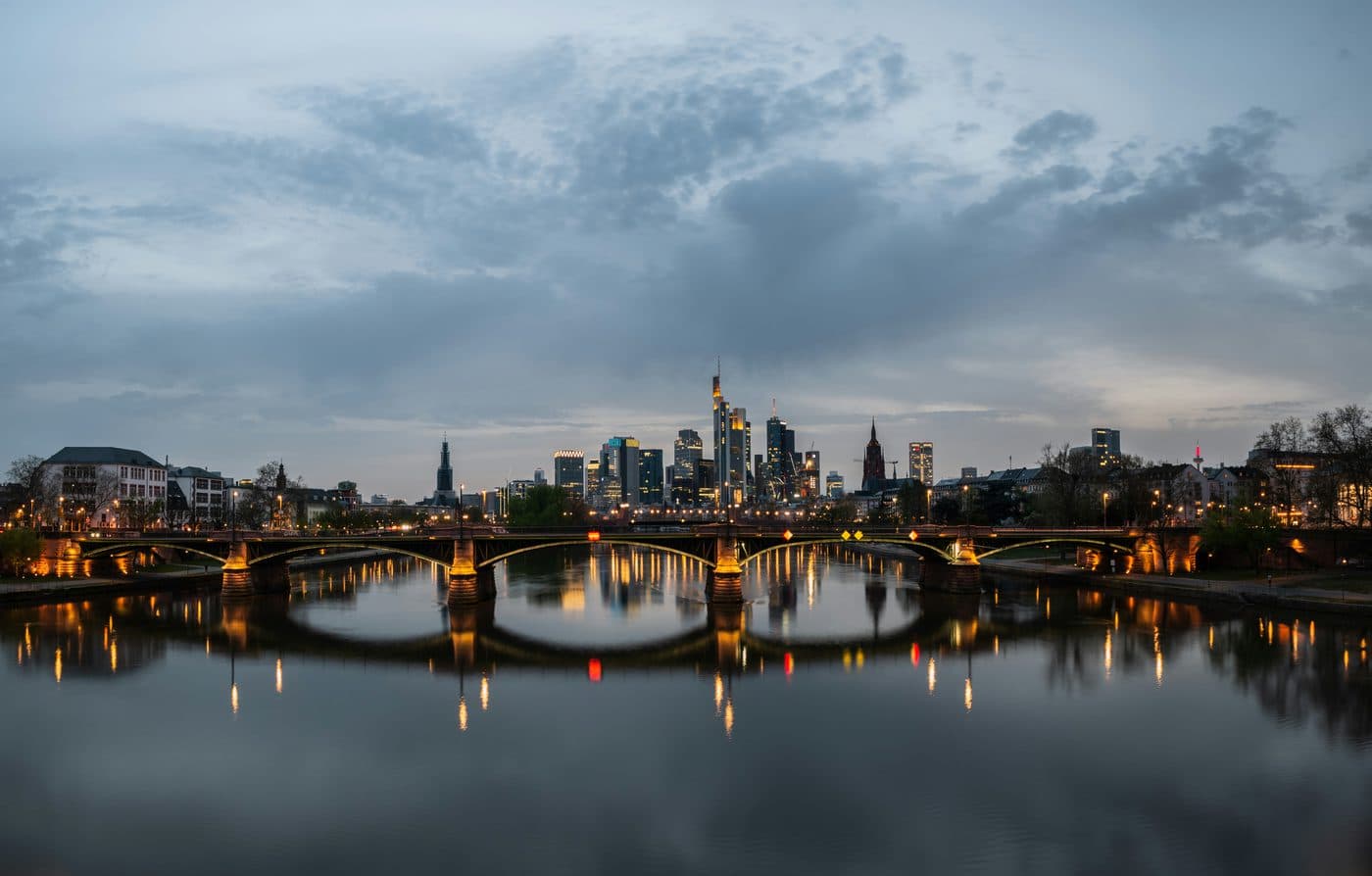
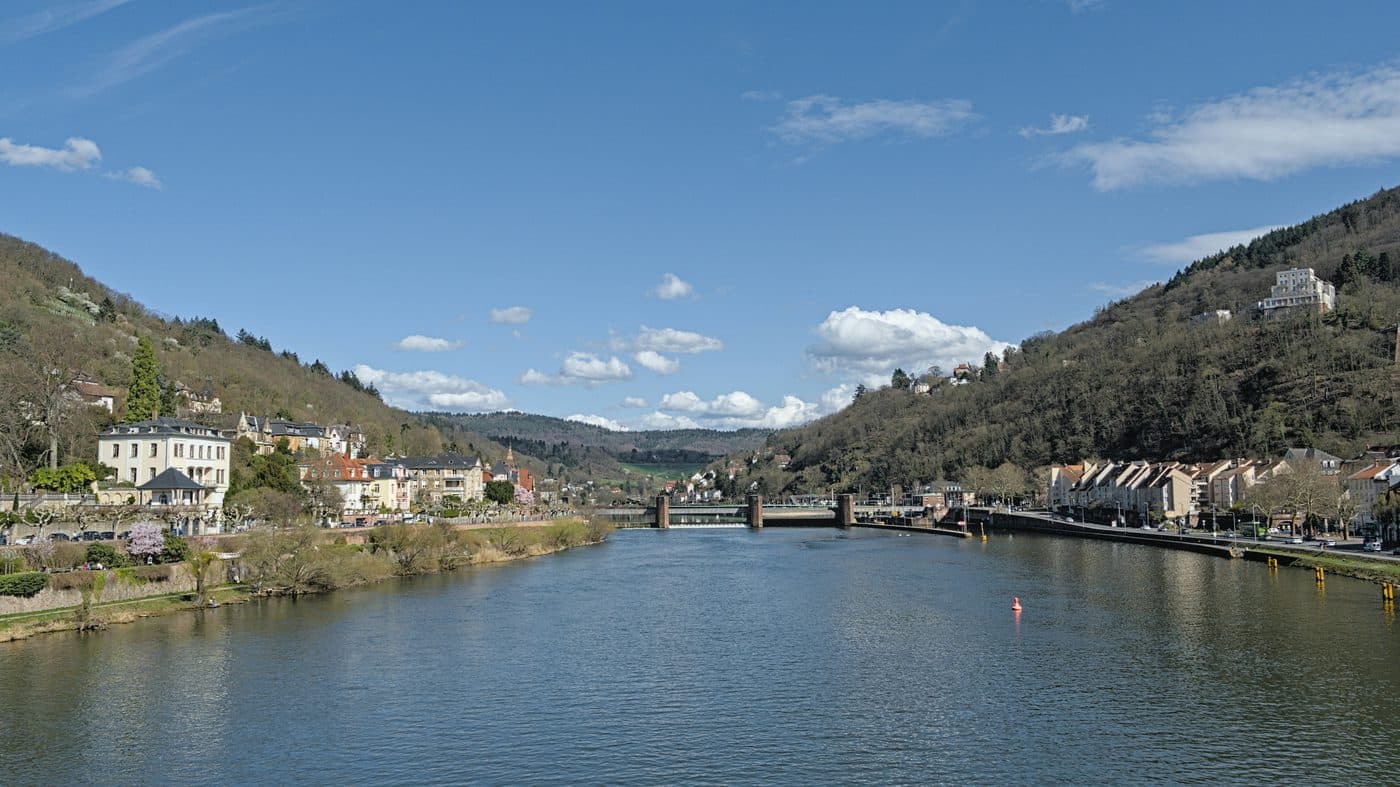
A skyline on the Main and, an hour to the south, a ruined castle above an old stone bridge: Frankfurt and Heidelberg, two very different cities on either side of an hour’s train ride, with the wooded Neckar valley and its castles running east from Heidelberg.
Frankfurt sets towers beside half-timbered gables: its old town, between the Römer and the cathedral, was rebuilt and finished in 2018, and the skyline rises just behind it along the Main. An hour to the south, Heidelberg stands where the Neckar comes out of its valley, with a bridge of Neckar sandstone below and above it the ruin of the castle, destroyed in the wars of 1689 and 1693. Upstream the valley closes in: Neckarsteinach, 15 km to the east, has four medieval castles around a bend of the river, built between 1100 and 1230, two of them ruins open to the public.
These are city weddings with a view, for couples from the region and for those flying in: a ceremony at a registry office in Frankfurt or in Heidelberg’s town hall, whose historic wedding room holds 20 people at most, or at Heidelberg Castle through the city’s marketing company, then portraits along the river. In Germany a marriage is legal only before a registrar, at a Standesamt (registry office) or a place it has set aside for weddings; a religious or symbolic ceremony alone isn’t a legal marriage.
Photographers
They still have dates open here. Their whole weddings and free dates are on their page.
See the photographerBooking through Lens & Vows
Through the year
May, June and September are the surest months: in the Deutscher Wetterdienst’s 1991–2020 figures for Frankfurt/Main, at the airport, the highs are 20 to 24 °C and rain of 1 mm or more falls on eight or nine days a month. July and August reach about 26 °C, with five to seven days of 30 °C or more a month. The upper Rhine plain is warmer still: Mannheim, the nearest station to Heidelberg with the full 30 years, averages 20 such days a year to Frankfurt’s 16. October cools to 15 °C, with about three hours of sun a day. When the weather turns, Frankfurt’s Palmengarten has glasshouses, with a permit; at Schwetzingen, by contrast, pictures inside the palace aren’t allowed even in the rain.
Weather station: Frankfurt/Main, normals 1991–2020 · Checked 2 November 2026
Places
The kinds of places — ask your photographer which ones they know well.
The stepped gables of the Römer, the old town hall, face the half-timbered houses across the Römerberg, and the rebuilt lanes of the old town run from there to the cathedral. Ask the registry office whether a ceremony in the Römer is possible and which rooms and dates are open. A few minutes’ walk away, the Eiserner Steg, a footbridge over the Main, is hung with love locks and looks along the river to the towers. The square is a busy public place: come early in the morning for an empty frame.
The river runs west through the city, so the bridges east of the centre look along the water to the skyline, with the sun going down behind it. The embankments on both sides make long, level walks for portraits. The city’s Palmengarten has lawns and, for a rainy day, glasshouses; it grants photo permits by email, so say when, for how long, for what purpose and with how much equipment.
The ruin stands on the hillside above the old town, with the Hortus Palatinus garden and the Artillery Garden, whose Elizabeth Gate looks over the castle and the town. The rules are clear: a shoot with a hired photographer needs the castle administration’s written permission, applied for at least ten working days ahead, and carries a fee quoted on request, with a further paid licence to publish the pictures. Keepsake snapshots without a photographer are free in the outdoor areas, and drones are forbidden. Civil ceremonies at the castle are booked through Heidelberg Marketing; the town hall’s wedding room is the alternative.
On the north bank, across the Old Bridge, the Philosopher’s Walk has the panorama of the river, the town and the castle. Higher up on the same hill is the Thingstätte, an open-air stage built in 1934–35 for Nazi propaganda: not a place to shoot. Upriver at Neckarsteinach, the Hinterburg and Schadeck ruins are open to the public, with views down the valley. West of Heidelberg, the palace garden at Schwetzingen welcomes professional photographers for a flat €90 paid on the day (as of March 2025), including entry for up to ten people, during opening hours only, without tripods, reflectors or decorations, and with no pictures inside the palace.
Light
Through the centre of Frankfurt the Main runs west, so the evening sun comes straight up the river and goes down behind the towers. At midsummer it rises at about a quarter past five and sets at about twenty to ten, out in the north-west; it is ten degrees up at about twenty past eight, and the sky stays light until nearly half past ten. In mid-May it sets at about five past nine, in mid-September at about twenty to eight and in mid-October at about twenty-five to seven. At midwinter it is up only from about twenty past eight until about twenty-five past four, never more than 17 degrees high. Heidelberg, a little further south, has much the same hours, and its geography does the rest: the castle stands on a north-facing slope and falls into shade early, while the Philosopher’s Walk across the river faces south and holds the sun. The valley opens west to the plain, so the last light comes up the Neckar from there. Frankfurt averages about seven and a half hours of sun a day in June and July and just over one in December.
Travel
Frankfurt Airport has a regional station under Terminal 1, with S-Bahn lines S8 and S9 into the city, and its own long-distance station; the old town is 13 km by road. From Frankfurt’s main station, ICE trains reach Heidelberg in about an hour, and from the airport some run direct in under an hour, while others need a change and take up to about an hour and a half. By road from the airport it is 83 km to Heidelberg; from there it is 14 km to Schwetzingen, 18 km to Neckarsteinach and 31 km to Eberbach, upriver. Under the EU drone rules, the operator of a drone of 250 g or more, or of any drone with a camera, must be registered (in Germany, with the Federal Aviation Office, the LBA) and insured, may fly no higher than 120 m and, from 250 g, must hold the EU competency certificate; the restricted zones are on the government’s dipul map. Check the dipul map first: the Main and the Neckar are federal waterways, and within 100 m of one, or of a railway or federal road, a drone must stay lower than its distance from them and more than 10 m away, unless the operator agrees. It may not cross homes or nature reserves without consent, or enter an airport’s control zone without clearance. Drones are forbidden at Heidelberg Castle and in the garden at Schwetzingen.
Plan
Germany