Founding photographerVerified — Identity verified by Lens & Vows
Tina Y.from €2,400
Munich & Bavaria, Berlin & Brandenburg +40 · Documentary, EditorialBased in the Netherlands · travels to weddings in GermanyWedding photographers in Germany
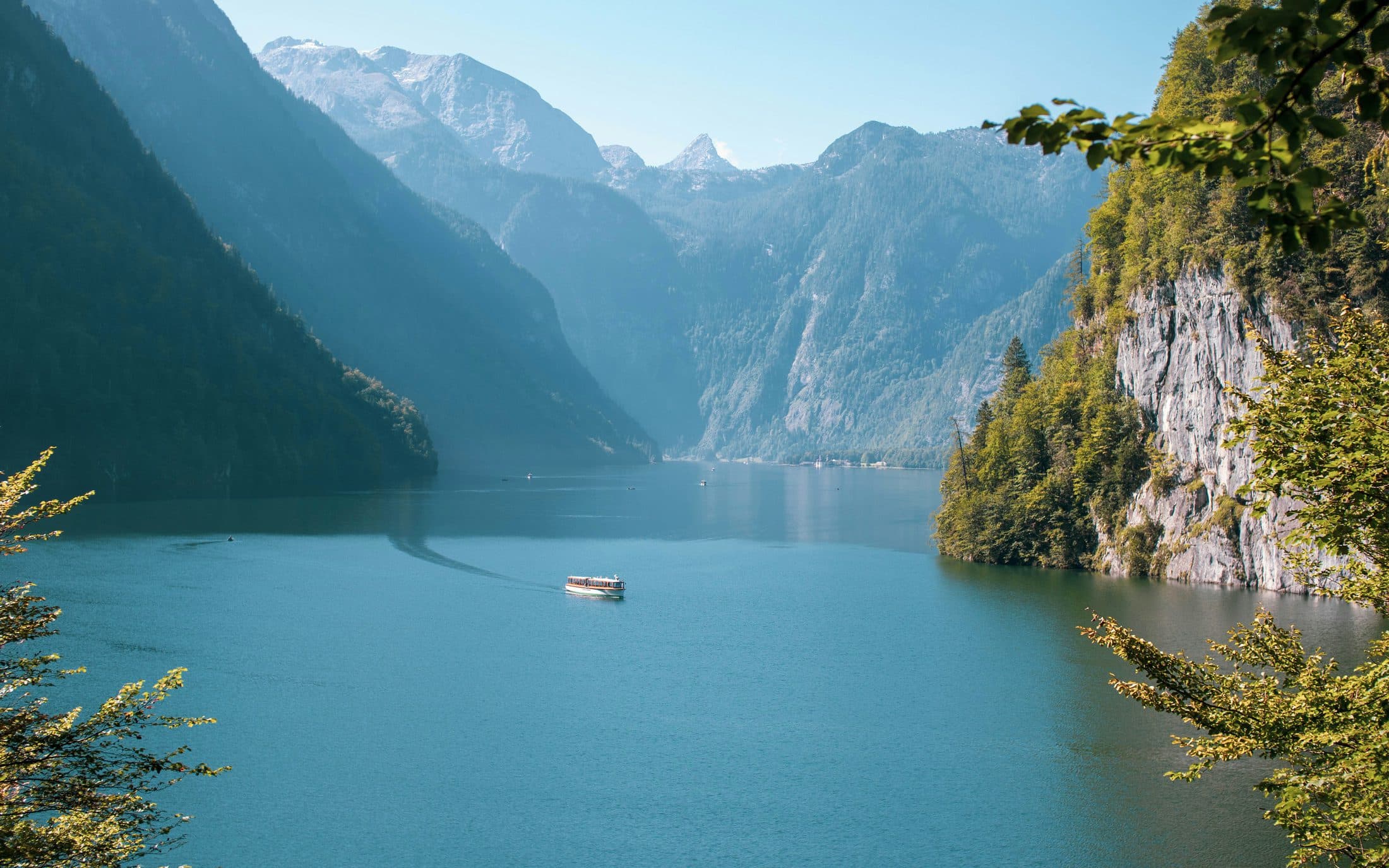
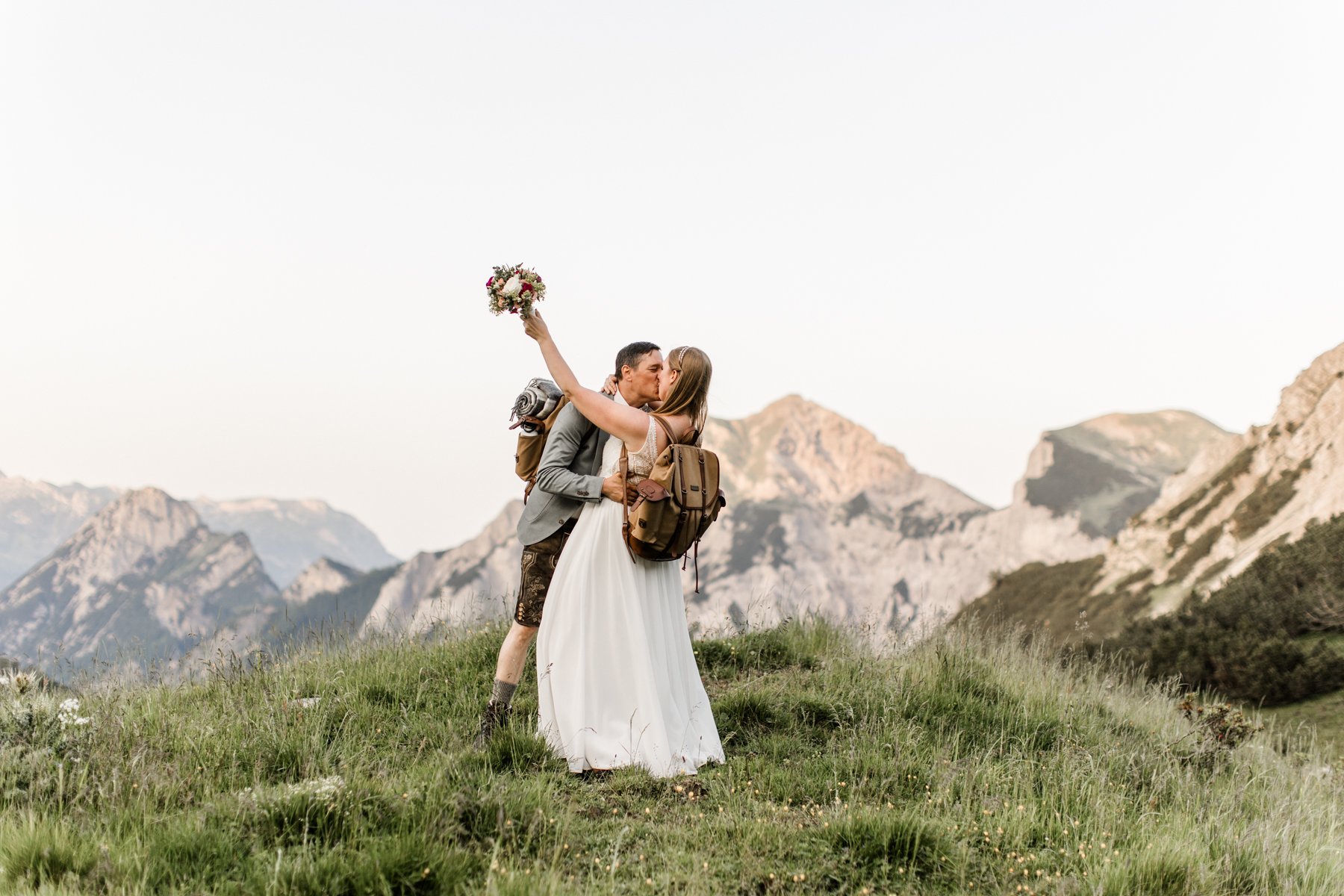
Munich’s palace gardens, Neuschwanstein above the Pöllat gorge, the fjord-like Königssee with its electric boats, the islands of the Chiemsee and Germany’s highest wedding room, up on the Zugspitze.
Munich lies on the Isar, with the English Garden running 5.5 km from the old town along the river and the park of Nymphenburg Palace to the west.
South of the city the land climbs to the Alps and the Zugspitze, at 2,962 m the highest peak in Germany. Near Füssen, in the Allgäu, stands Neuschwanstein, inscribed by UNESCO in 2025 with King Ludwig II’s other palaces: Linderhof, the king’s house on the Schachen and Herrenchiemsee, on its island in the Chiemsee, Bavaria’s largest lake. In the far south-east the Königssee lies between the steep walls of the Watzmann and the Hagengebirge. Away to the north-west, Rothenburg ob der Tauber, a free imperial city from 1274 to 1803, keeps its town walls and the Plönlein, where two old gate towers stand side by side.
Couples marry here in registry rooms that can be sights in themselves — the former Benedictine monastery of St. Mang in Füssen, the new town hall on Munich’s Marienplatz, a room on the high plateau of the Zugspitze — then go on to a castle hotel, a hall by a lake or a house in the mountains, with portraits in a palace park or on an Alpine shore. In Germany a marriage is legal only before a registrar, at a Standesamt (registry office) or a place it has set aside for weddings; a religious or symbolic ceremony alone isn’t a legal marriage. Each office has its own terms: Munich’s marries a couple only if at least one of them is registered as living in the city, and only in its own rooms, so couples from abroad can sign the papers elsewhere and exchange their vows here.
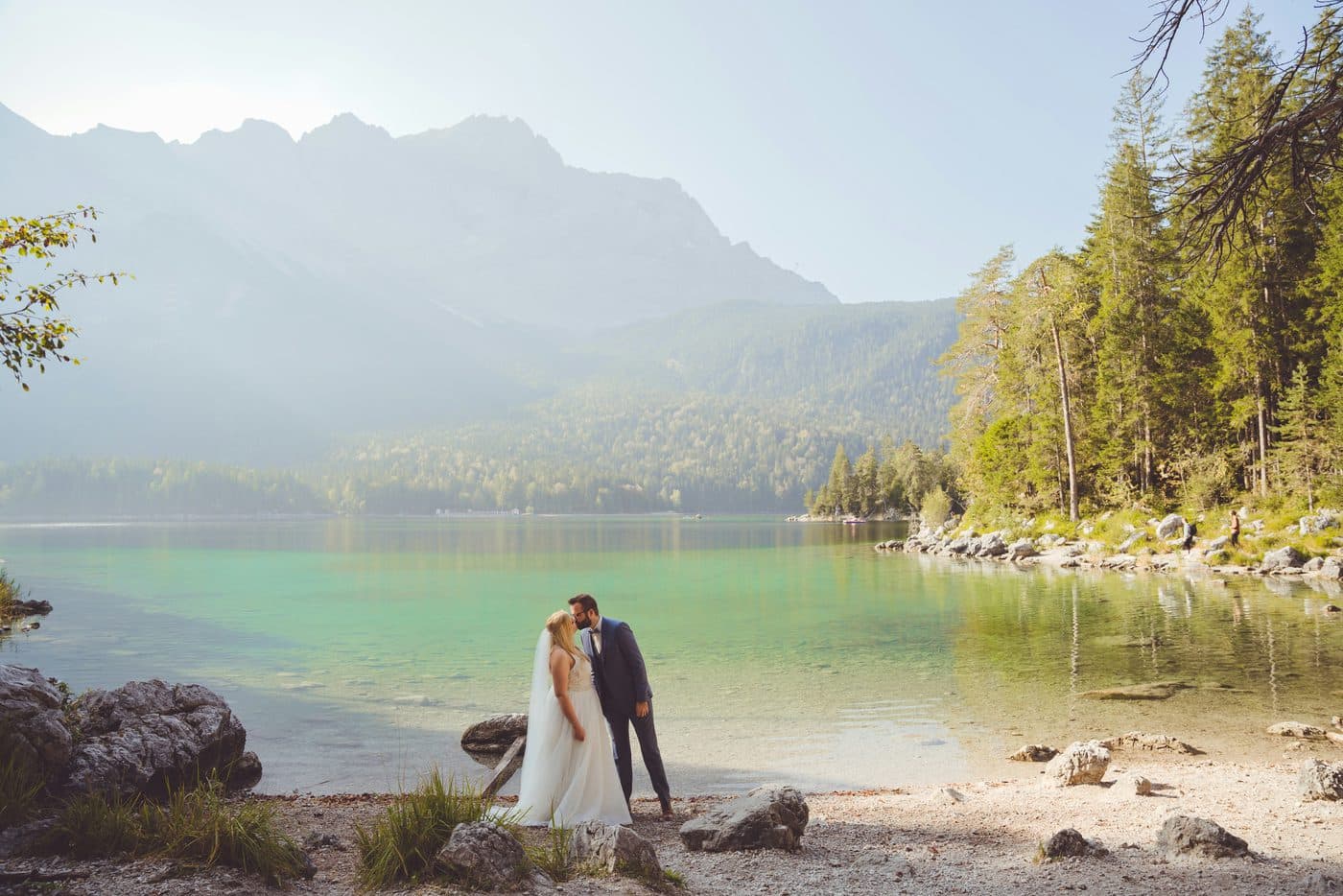
Photographers
They still have dates open here. Their whole weddings and free dates are on their pages.
See all 3 photographers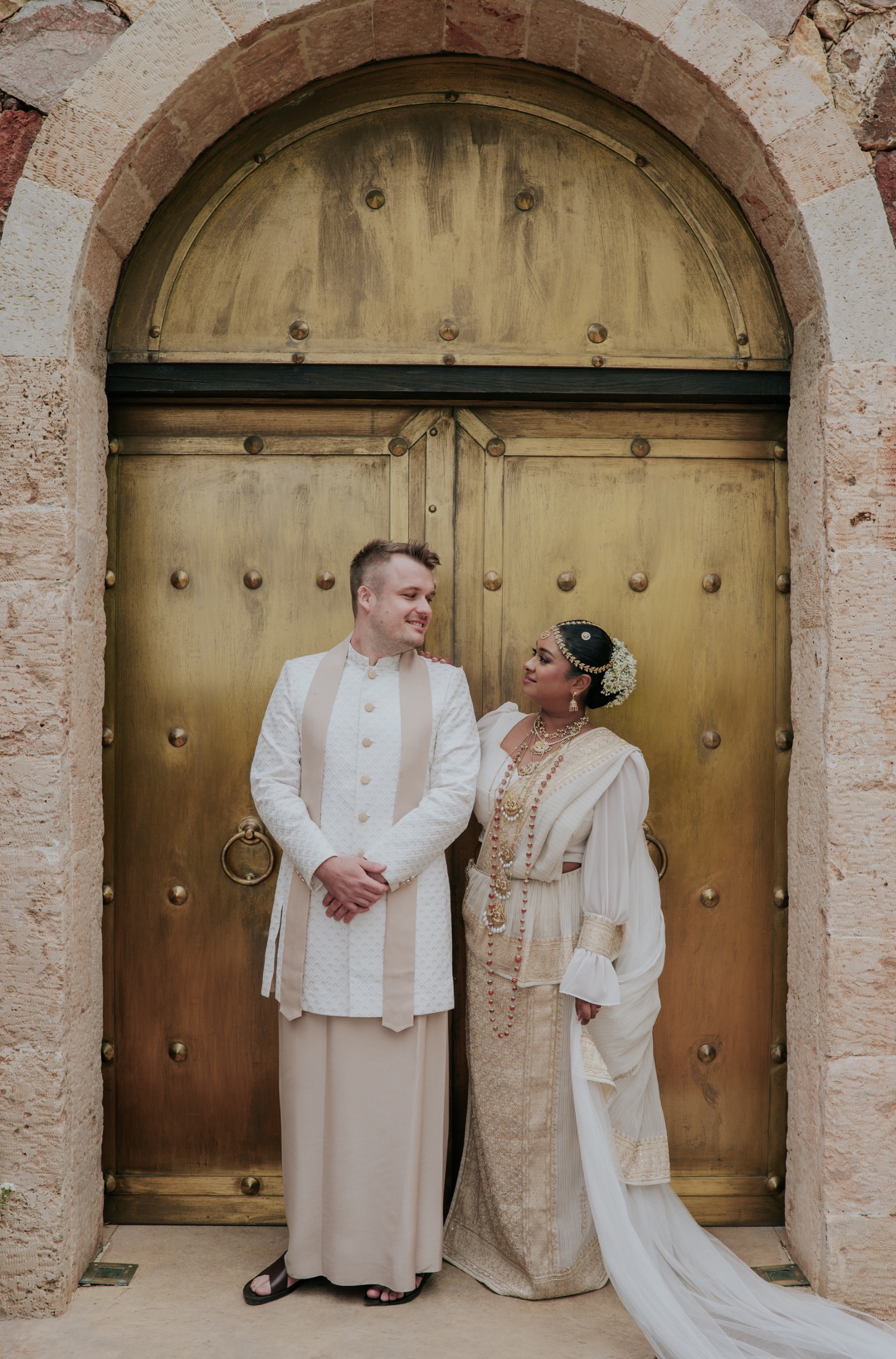
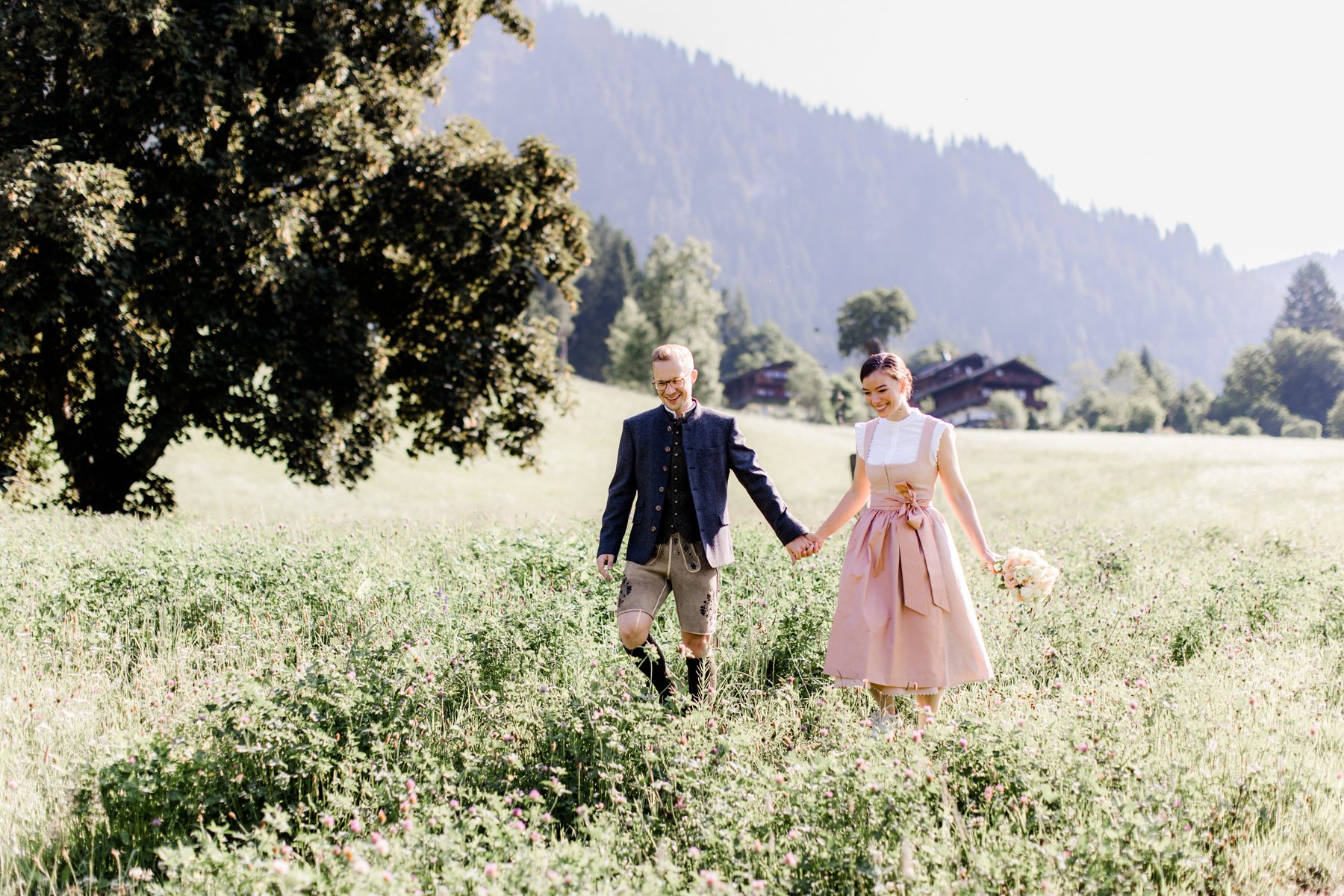
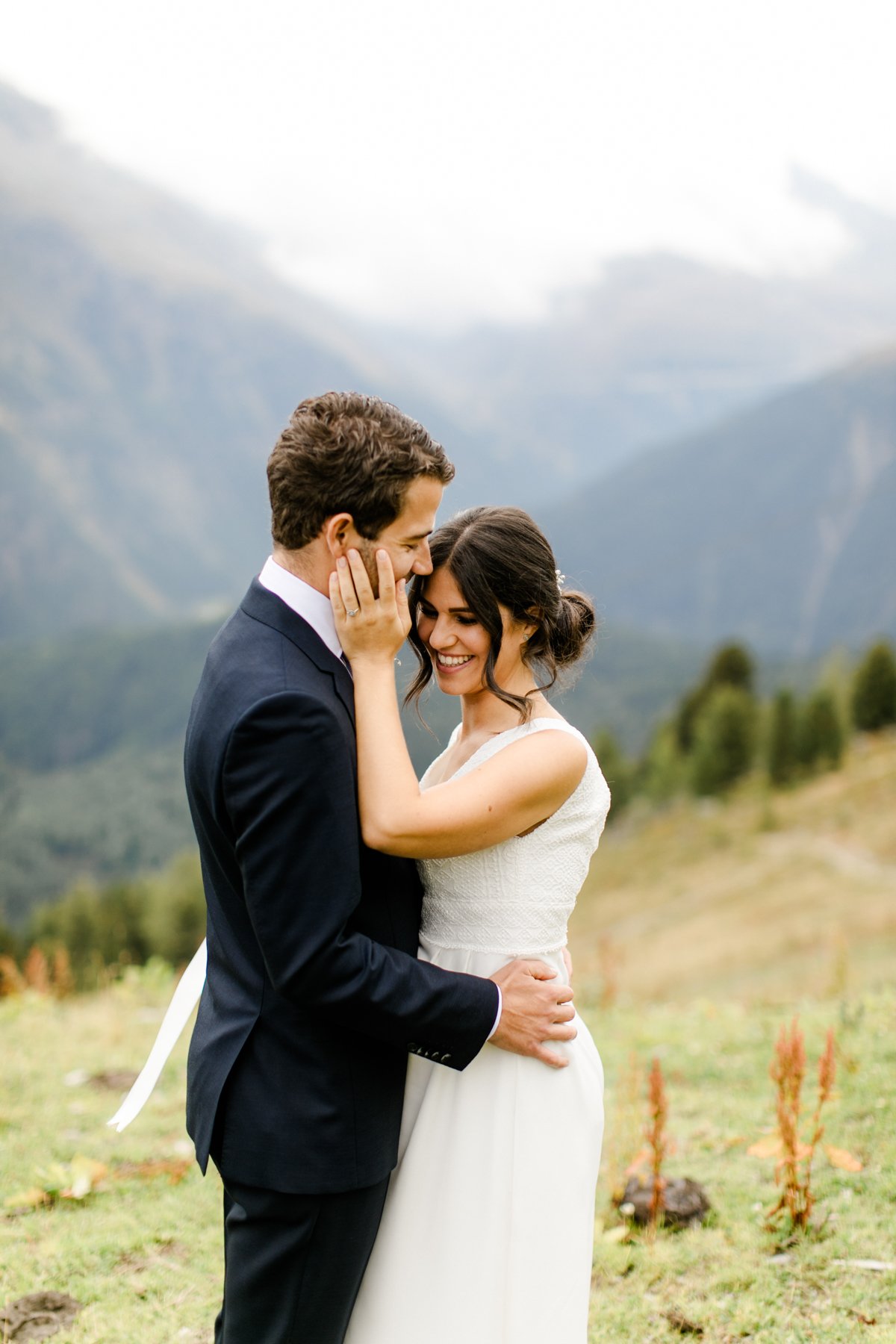
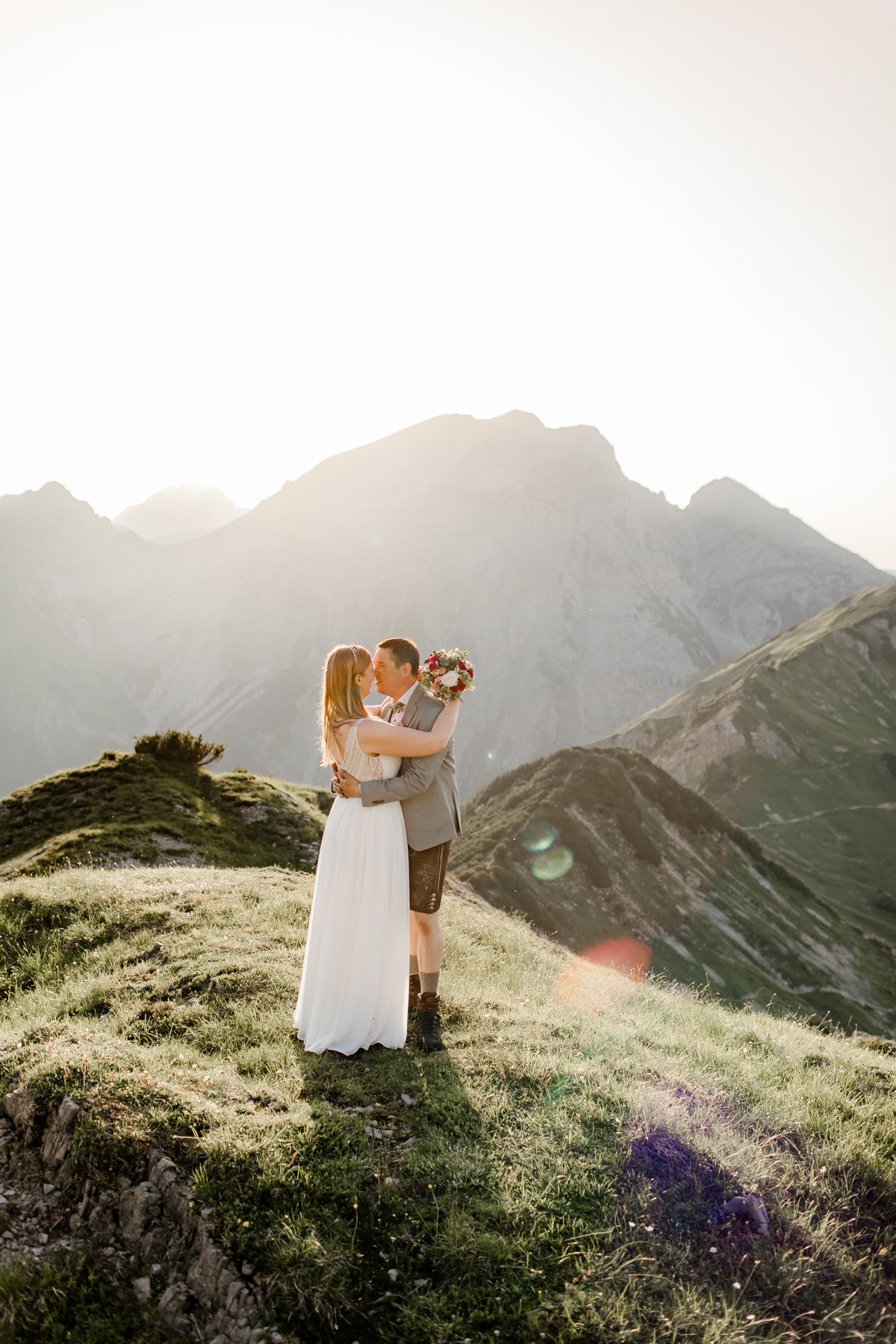
Booking through Lens & Vows
Through the year
June to September are the easiest months. In the Deutscher Wetterdienst’s (DWD) 1991–2020 values for München-Stadt, highs average 23 °C in June, 25 °C in July and August and 20 °C in September, with 10 to 13 days a month of 1 mm of rain or more. It is also the wettest stretch: about 120 mm a month from June to August, against about 50 mm in January and February, and more in the mountains — at Garmisch-Partenkirchen 170 to 190 mm, on about 15 or 16 days — so keep a covered place close to any outdoor plan. September is drier, at 78 mm. In Munich the Oktoberfest runs from mid-September to early October (18 September to 3 October in 2027): check its dates before you fix yours. May and October are cooler, at 19 and 15 °C, and from December to February snow lies on 8 to 12 days a month in Munich and on 21 to 27 in Garmisch-Partenkirchen.
Weather station: München-Stadt, normals 1991–2020 · Checked 2 November 2026
Places
The kinds of places — ask your photographer which ones they know well.
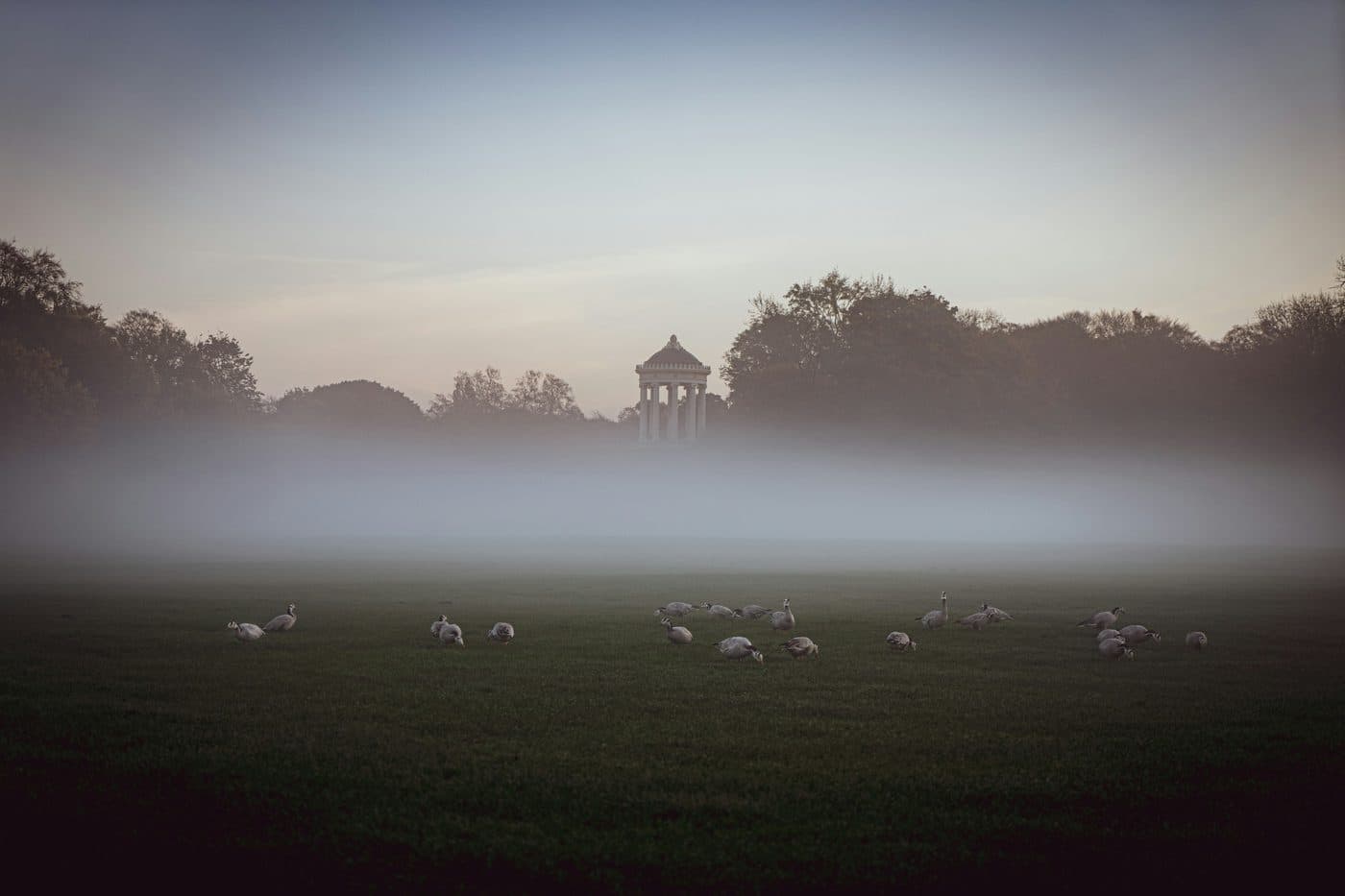
The English Garden, laid out from 1789, has the Monopteros temple and the Chinese Tower; Nymphenburg’s park has its central canal, marble cascade, lakes and old oaks; the Hofgarten, by the Residenz, has its pavilion of 1615 and, when rain comes, its arcades. All three belong to the Bavarian Palace Administration, which allows wedding shoots in its gardens and parks without notice, for private use: no drones, no bridal car, no softboxes, flash or other equipment, and no shoots inside the buildings open to visitors. A photographer who wants to publish the pictures has to ask, and pay. For the ceremony, Munich’s registry marries at Ruppertstraße 11 and Mandlstraße 14; its small council chamber in the new town hall goes by lot, on set Fridays, for a fee.
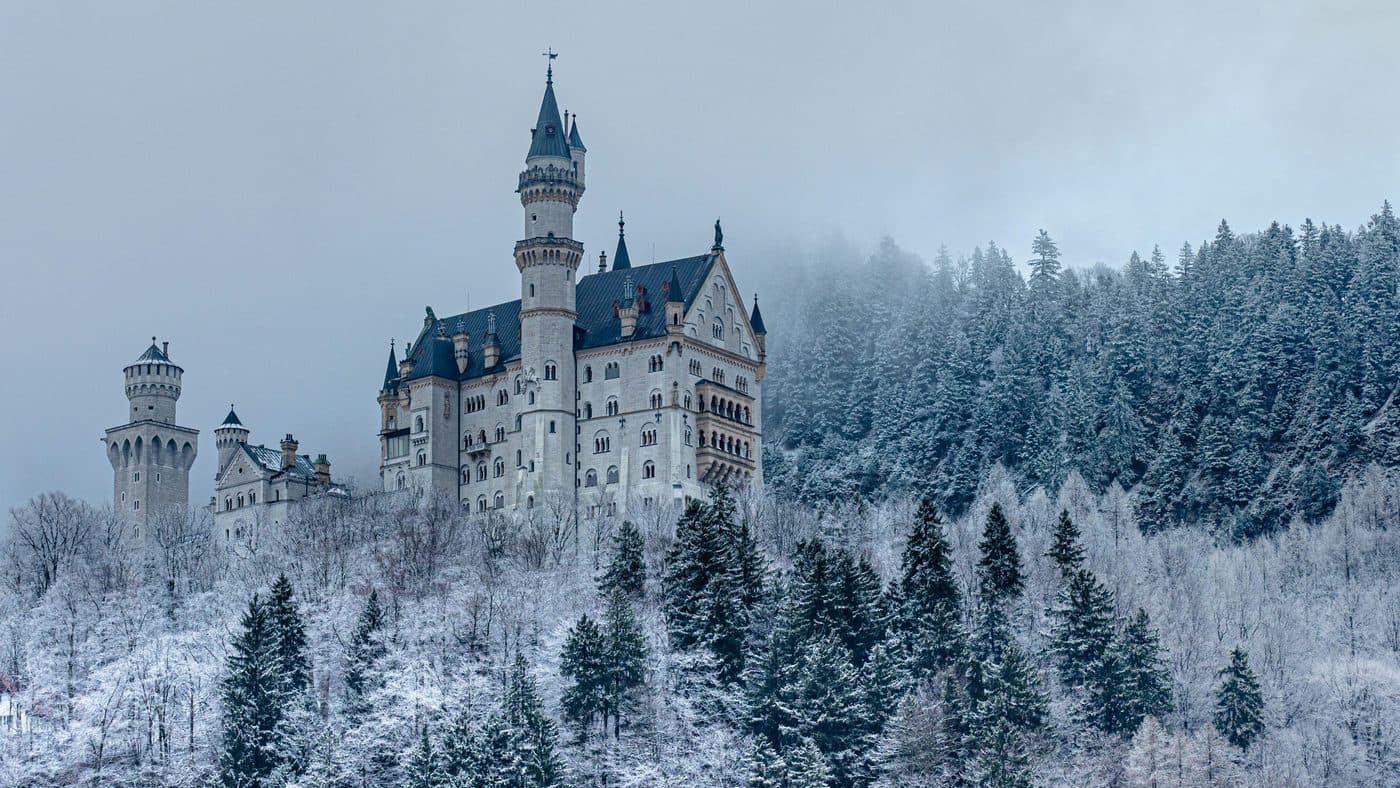
The castle can be visited only on a guided tour, and wedding shoots aren’t possible inside. From the ticket centre in Hohenschwangau it is about 1.5 km up a steep road, 30 to 40 minutes on foot — think of the dress — or there is a bus towards the Marienbrücke, the bridge over the Pöllat gorge, and horse-drawn carriages. The Administration’s rule names gardens and parks, so ask it about the paths around the castle; Linderhof’s gardens, 45 km away by road, fall under it. In Füssen the registry marries couples in the former monastery of St. Mang, now the town hall, usually several on the same day: confetti and rice are banned there, though a modest scattering of petals is allowed in the courtyard.
The Königssee lies in Berchtesgaden National Park. Its boats, electric since 1909, take about 35 minutes to St. Bartholomä, a pilgrimage church with wine-red onion domes that can be reached only by water. The park bans any economic use without a permit from the district’s nature conservation authority; its own example is non-private filming, applied for in writing at least ten working days ahead, for a fee, so ask it about a hired photographer before you plan anything. At Grainau the Eibsee lies below the Zugspitze, whose high plateau holds the highest wedding room in Germany: the Garmisch-Partenkirchen registry marries there once a month, with places given out exactly six months ahead and €250 on top of the usual fees. Guests go up by cogwheel train or cable car.
Bavaria’s largest lake, about an hour from Munich by train to Prien, where boats leave from the Prien/Stock pier and, in the summer timetable, a steam tram of 1887 runs the 1.8 km from the station down to the harbour. On the Herreninsel stands Ludwig II’s Herrenchiemsee New Palace, whose state rooms open only on guided tours, in a park under the Palace Administration’s rule for wedding shoots. On the Fraueninsel are the Benedictine abbey of Frauenwörth and its church. Check the last boat back before you plan the portraits, above all on the winter timetable, which starts in late September.
Light
At midsummer the sun comes up over Munich at about a quarter past five and sets at about twenty past nine; the soft last hour begins around eight, and some forty minutes of dusk follow. By mid-September it sets at about half past seven and by mid-October at about half past six; on 21 December it is up only from about eight until about twenty past four. The mountains take it sooner: at the Königssee and in the deep valleys the ridges cut off the sun well before it sets, so photographers there time portraits by the mountains, not the clock. July brings 241 hours of sun to Munich and December 66. On a föhn day, when a warm, dry wind comes down from the Alps, the air clears and the peaks look close enough to touch.
Travel
Munich Airport is about 40 minutes from the city’s main station on the S1 and S8 trains, one every ten minutes between them. By road from Munich it is 86 km to Prien, about an hour; 100 km to the Eibsee, about an hour and twenty minutes; 129 km to Füssen, about an hour and forty; and 160 km to the Königssee, just under two hours, though Salzburg Airport, in Austria, is only 31 km from the lake. Rothenburg is 242 km from Munich, 79 km from Nuremberg Airport and 190 km from Frankfurt Airport. For Neuschwanstein, take the train to Füssen and the bus to Hohenschwangau, where parking is all private. On ice or snow, German law requires winter tyres. Under the EU drone rules, the operator of a drone of 250 g or more, or of any drone with a camera, must be registered (in Germany, with the Federal Aviation Office, the LBA) and insured, may fly no higher than 120 m and, from 250 g, must hold the EU competency certificate; the restricted zones are on the government’s dipul map. The national geo-zones limit flights over homes, close to federal roads, waterways and railways, and over nature reserves and national parks. Berchtesgaden National Park does not allow drones at all, and the Palace Administration refuses wedding flights on its land.
Plan
Germany