Founding photographerVerified — Identity verified by Lens & Vows


Tina Y.from €2,400
Hamburg & the North Sea, Berlin & Brandenburg +40 · Documentary, EditorialBased in the Netherlands · travels to weddings in GermanyWedding photographers in Germany
A city of brick warehouses and canals on the Elbe and, two to three hours to the north-west, the open North Sea: the dunes and thatched villages of Sylt, stilt houses on the sands of St. Peter-Ording and a lighthouse alone in the salt marsh at Westerhever.
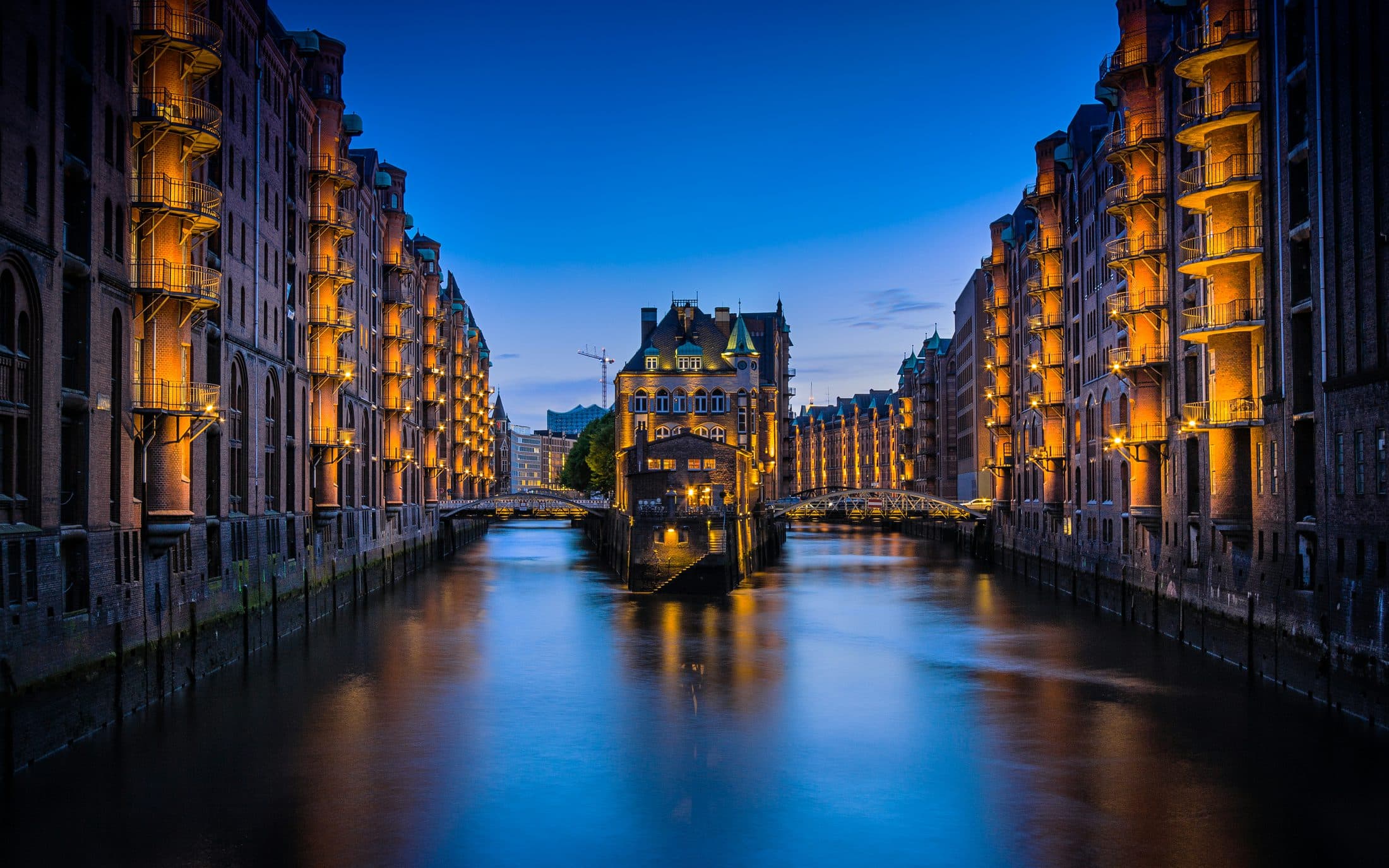
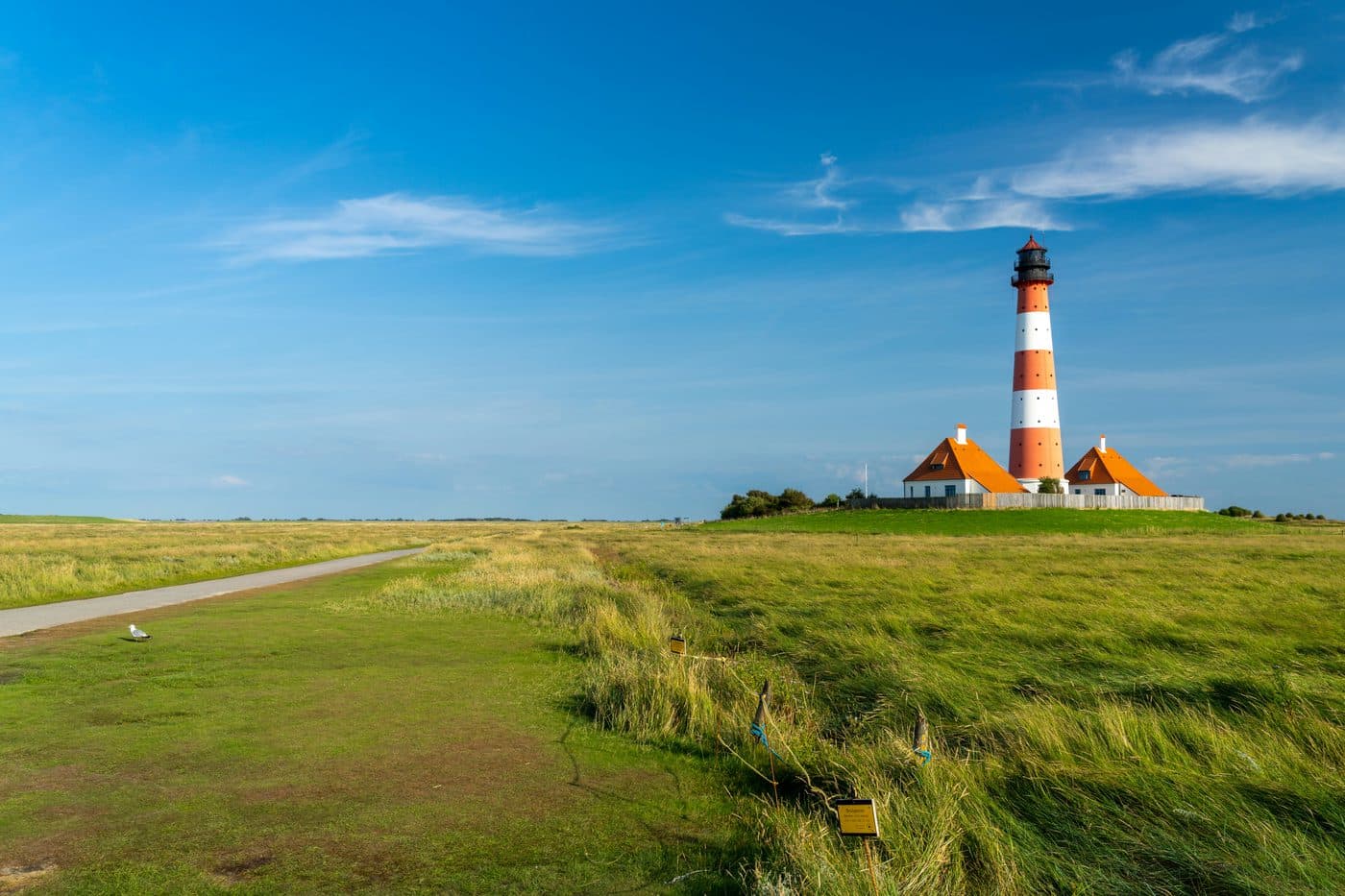
Hamburg grew from its port, and the Speicherstadt shows it best: 15 great warehouse blocks of red brick, built from 1885 to 1927 on narrow islands in the Elbe and cut by short canals, a UNESCO World Heritage site together with the neighbouring Kontorhaus district and its Chilehaus. Beside it rises the Elbphilharmonie, with a public viewing platform 37 metres up; inland lies the Alster, the lake at the city’s heart; downriver, Blankenese climbs its hillside above an Elbe beach. The North Sea coast is another world. Sylt, 38.5 km long and a third of it dunes, has long west-facing beaches, thatched villages and, at List, Europe’s largest area of shifting dunes, up to 30 metres high. On the Eiderstedt peninsula, St. Peter-Ording has 12 km of sand and houses on stilts, and the lighthouse of Westerhever, built in 1906, stands on its mound in the salt marsh. All of them look onto the Wadden Sea, the world’s largest unbroken system of sand and mud flats and a UNESCO natural site, where the tide turns about every six and a quarter hours.
In Germany a marriage is legal only before a registrar, at a Standesamt (registry office) or a place it has set aside for weddings; a religious or symbolic ceremony alone isn’t a legal marriage. Here that gives couples two good ways to marry. In Hamburg they go to one of the seven registry offices or, on one Friday a month, the Phoenix Hall of the Rathaus, then spend the rest of the day on portraits along the canals, the Alster and the Elbe. On the coast, registrars also marry couples in a thatched hall at Kampen, in the best room of an old Frisian house at Keitum, on an old cutter out of List and in a stilt house above the sand. Couples who have signed the papers at home can hold their vows on the beach instead: Sylt’s pastors will bless a marriage with sand underfoot.
Photographers
They still have dates open here. Their whole weddings and free dates are on their page.
See the photographerBooking through Lens & Vows
Through the year
May to September are the easiest months, though no month here is reliably dry. In the German Weather Service’s 1991–2020 records for Hamburg-Fuhlsbüttel, the highs run from about 18 °C in May to 23 °C in July and August, and a millimetre of rain or more falls on 10 to 12 days a month. May has the most sun, about seven hours a day; September has the fewest wet days of the five, and April, cooler at 14 °C, the fewest of the year. The coast runs cooler and windier, and its seasons run late: at List, on Sylt, May has 15 °C and seven wet days, August is warmest at 21 °C, and from August to December it rains on 11 to 14 days a month. Whatever the date, keep a room or a roof in the plan.
Weather station: Hamburg-Fuhlsbüttel, normals 1991–2020 · Checked 2 November 2026
Places
The kinds of places — ask your photographer which ones they know well.
The canals are at their best from the bridges, and the classic view is from the Poggenmühle bridge, towards the turreted house on its point between two canals; at dusk the warehouses’ towers and iron balconies light up. This is a busy quarter and a World Heritage site, so keep the group small and clear of the pavements. Across the water, the Elbphilharmonie’s Plaza looks over the city and the port from 37 metres up, by ticket; ask the concert hall before planning more than a few frames there.
On one Friday a month a registrar marries up to four couples in the Phoenix Hall of the Rathaus: on top of the legal fees, the registry office adds a €322.40 service charge and the Rathaus €300 for the rooms, and dates go quickly on the city’s booking portal. Couples who live elsewhere give notice at home and can then book a ceremony at any of the seven offices. For portraits there are the Alster and the hillside of Blankenese above the river. In the Loki Schmidt Garden, the university’s botanical garden, a shoot with a hired photographer needs a signed permit, shown at the gate, at €150 an hour plus VAT, with no drones and nobody in the flower beds.
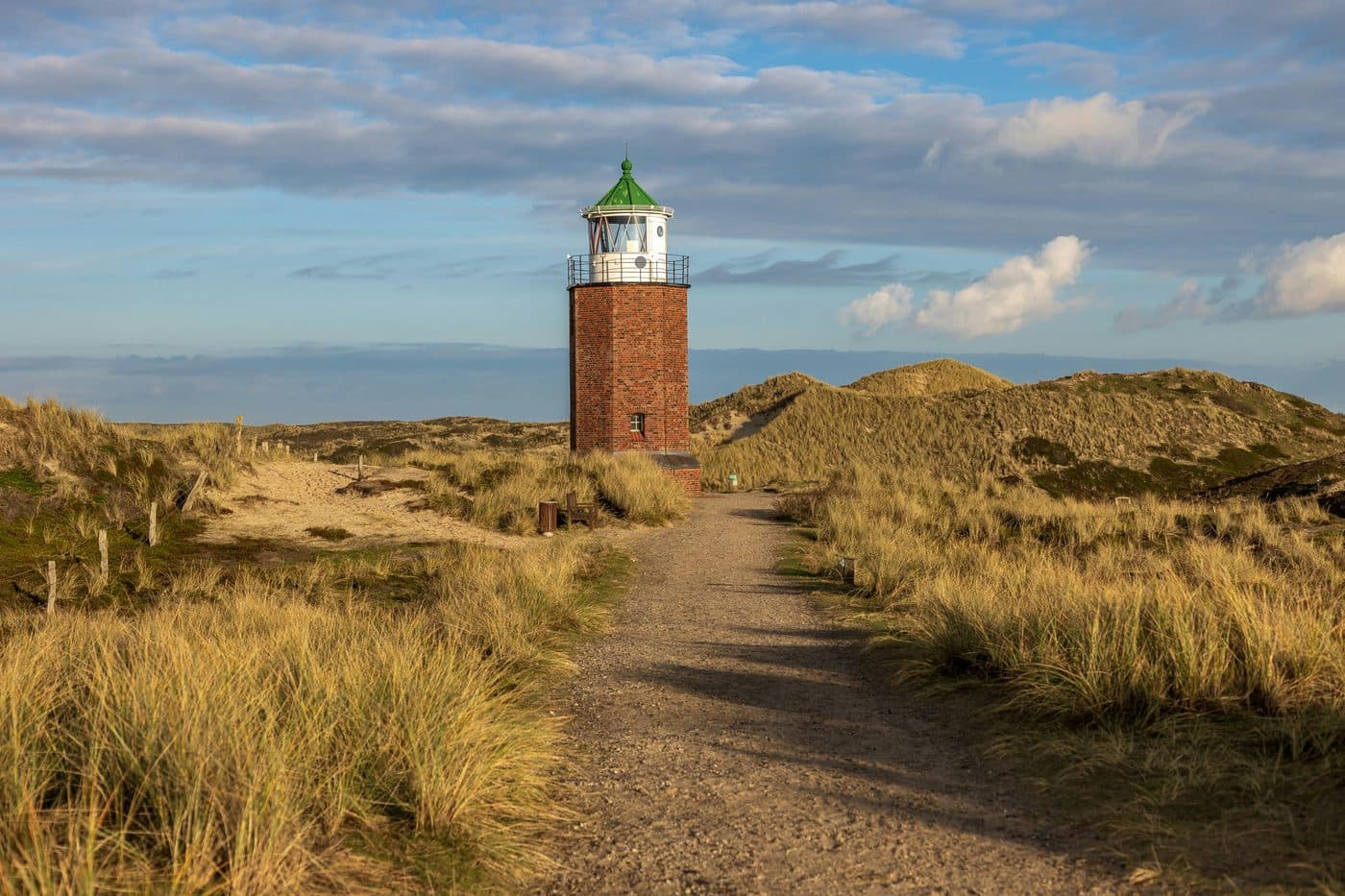
The island’s registry office marries couples in Westerland town hall, in a thatched hall at the heart of Kampen, in the best room of the old Frisian house at Keitum, with space for 12 guests, at the Sylt Museum, and below deck on an old cutter off List. St. Severin at Keitum is a favourite for church weddings. The west side has the surf and the sunset; the east side has the mud flats, where the tide is most plain to see. Stay on the marked beach crossings, because the dunes are protected, and expect the resort tax, €3 to €4.10 a person a day in high season, to be checked at the beach entrances, for day visitors too. Of the five lighthouses, only Hörnum’s can be visited; the two at List, Germany’s northernmost, are for photographs from outside.
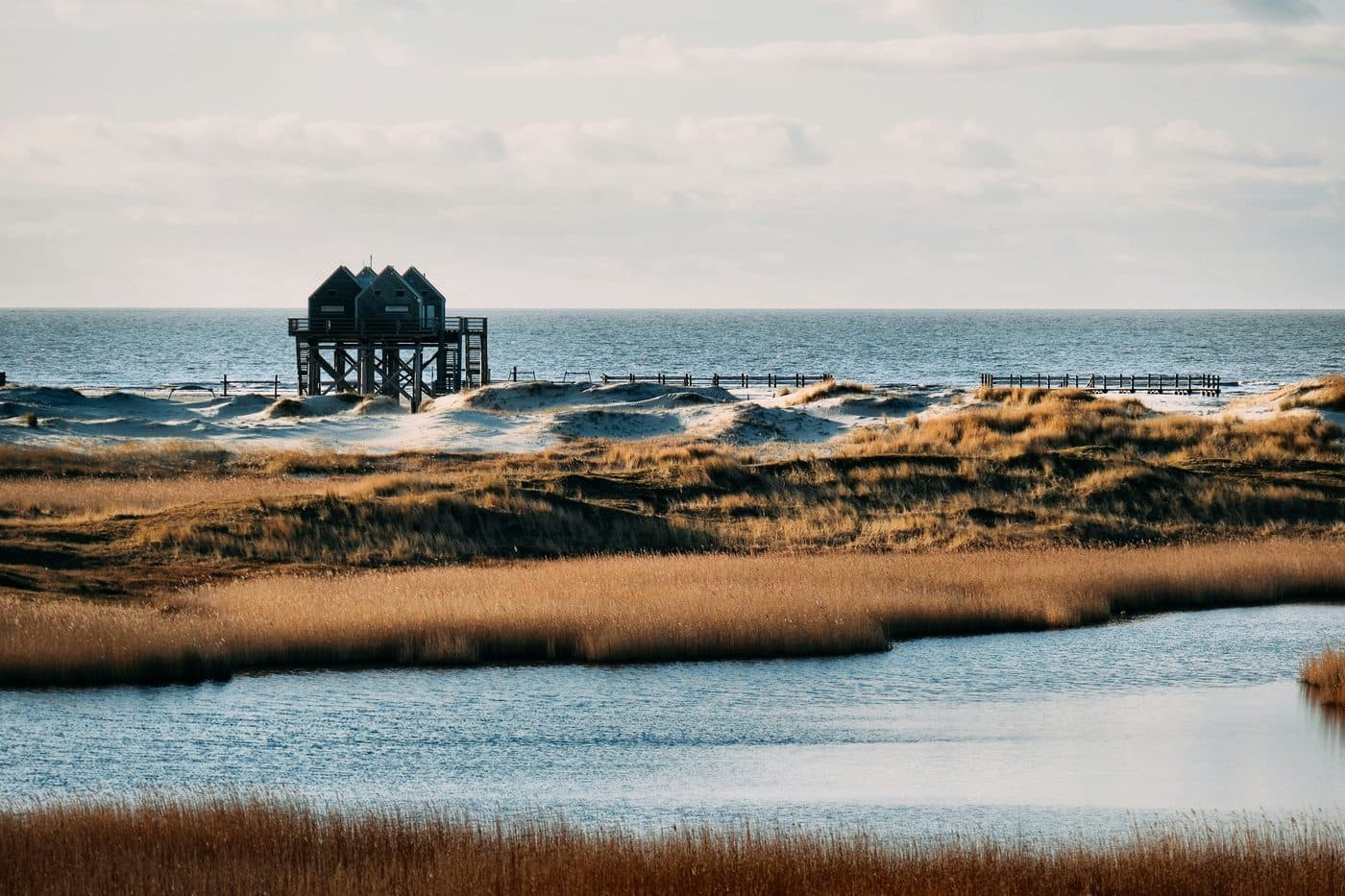
The whole beach at St. Peter-Ording lies in the national park and the World Heritage site. The registrar marries couples in a stilt house more than 8 metres above the sand. Filming and photography are allowed on all public areas under the beach rules, but every commercial shoot must be registered with the tourist office, so a hired photographer should write first. The dunes are off limits except for one marked photo dune at Ording, and anything larger than a small set-up needs the park’s permission. At Westerhever the lighthouse rises 41.5 metres from the salt marsh between two identical keepers’ houses. The old brick path to it, 1,200 metres long and 45 cm wide, opens only from June to September, one way, back from the tower, and is closed for bridge repairs as of November 2026; the village’s church of St. Stefanus takes weddings.
Light
At midsummer the sun rises over Hamburg at about ten to five and sets at about five to ten, far round in the north-west, and the sky stays light until about a quarter to eleven; at twenty past eight it is still ten degrees up, so the gentle light comes late. On Sylt it sets at about ten past ten, out over the sea from the west-facing beaches, and dusk lasts until after eleven; by mid-September it sets almost due west at about a quarter to eight, and by mid-October at about half past six. At midwinter the sun is up in Hamburg only from about twenty-five to nine until four, at most 13 degrees high, with dusk at about a quarter to five. Sunshine peaks in May, at about 220 hours in Hamburg and about 250 at List, and falls to about 36 and 43 in December.
Travel
Hamburg Airport is about 12 km from the centre, and S-Bahn line S1 reaches the central station every ten minutes in 25 minutes. For Sylt, regional trains leave Hamburg-Altona every hour and take about three hours, crossing the causeway to Westerland. The causeway carries only trains, so drivers load the car at Niebüll, about 195 km from Hamburg, for a 35-minute crossing, or take the ferry from Rømø in Denmark to List; Sylt’s airport has direct flights from several German cities and from Vienna and Zurich. St. Peter-Ording is about 143 km from Hamburg, just under two hours by car, and Westerhever 16 km further, with a paid car park just before the lighthouse. Under the EU drone rules, the operator of a drone of 250 g or more, or of any drone with a camera, must be registered (in Germany, with the Federal Aviation Office, the LBA) and insured, may fly no higher than 120 m and, from 250 g, must hold the EU competency certificate; the restricted zones are on the government’s dipul map. Hamburg’s airport control zone begins at ground level: a general clearance allows flights up to 50 metres in good visibility, and a restricted zone needs a permit from the city’s aviation authority, at least a week ahead. Over a national park a drone needs the conservation authority’s express consent, and at St. Peter-Ording drones are banned except in one marked area, with an exemption from the state aviation authority, at least a week ahead, and the written consent of the park, the municipal office and the tourist office.
Plan
Germany