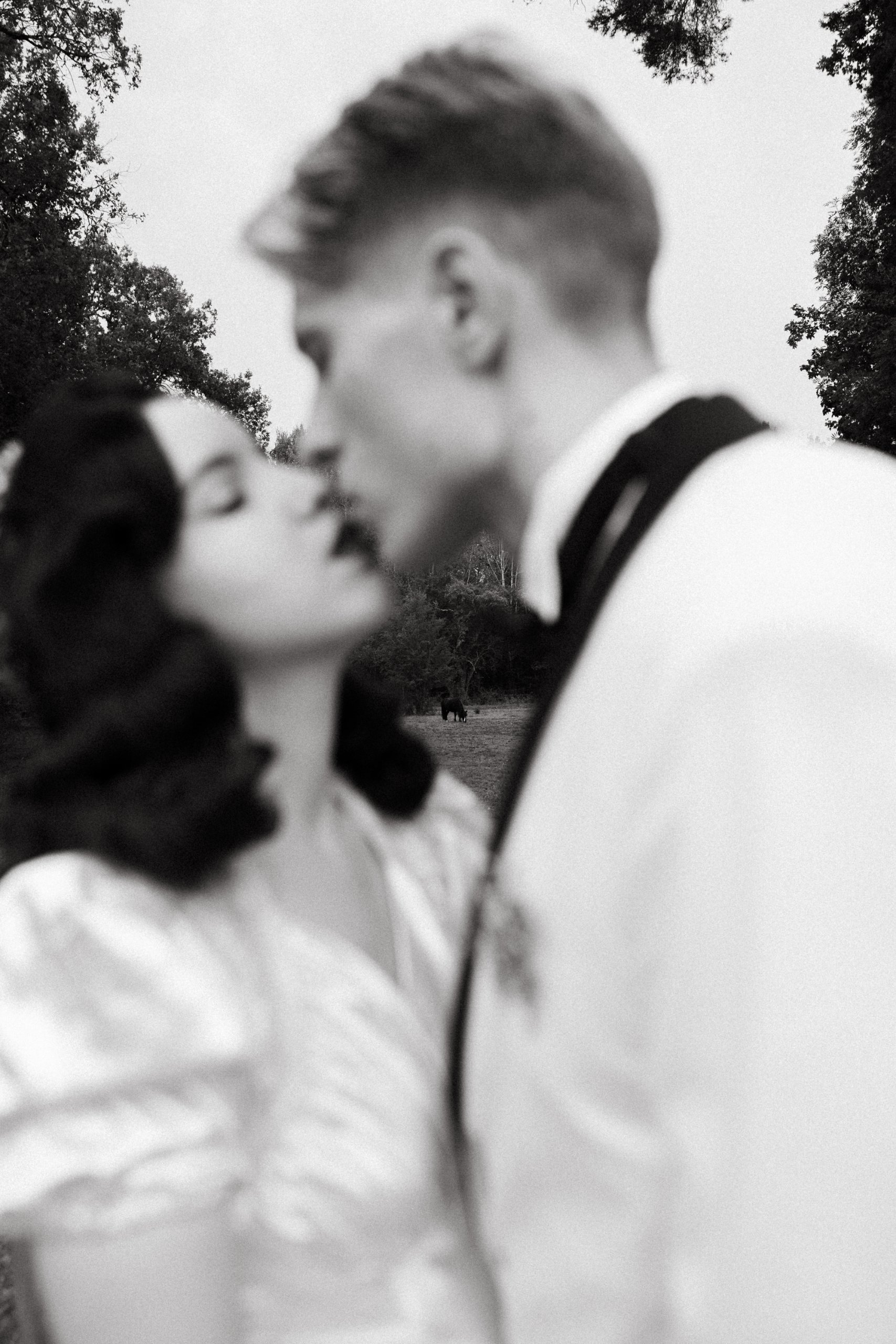
Founding photographer

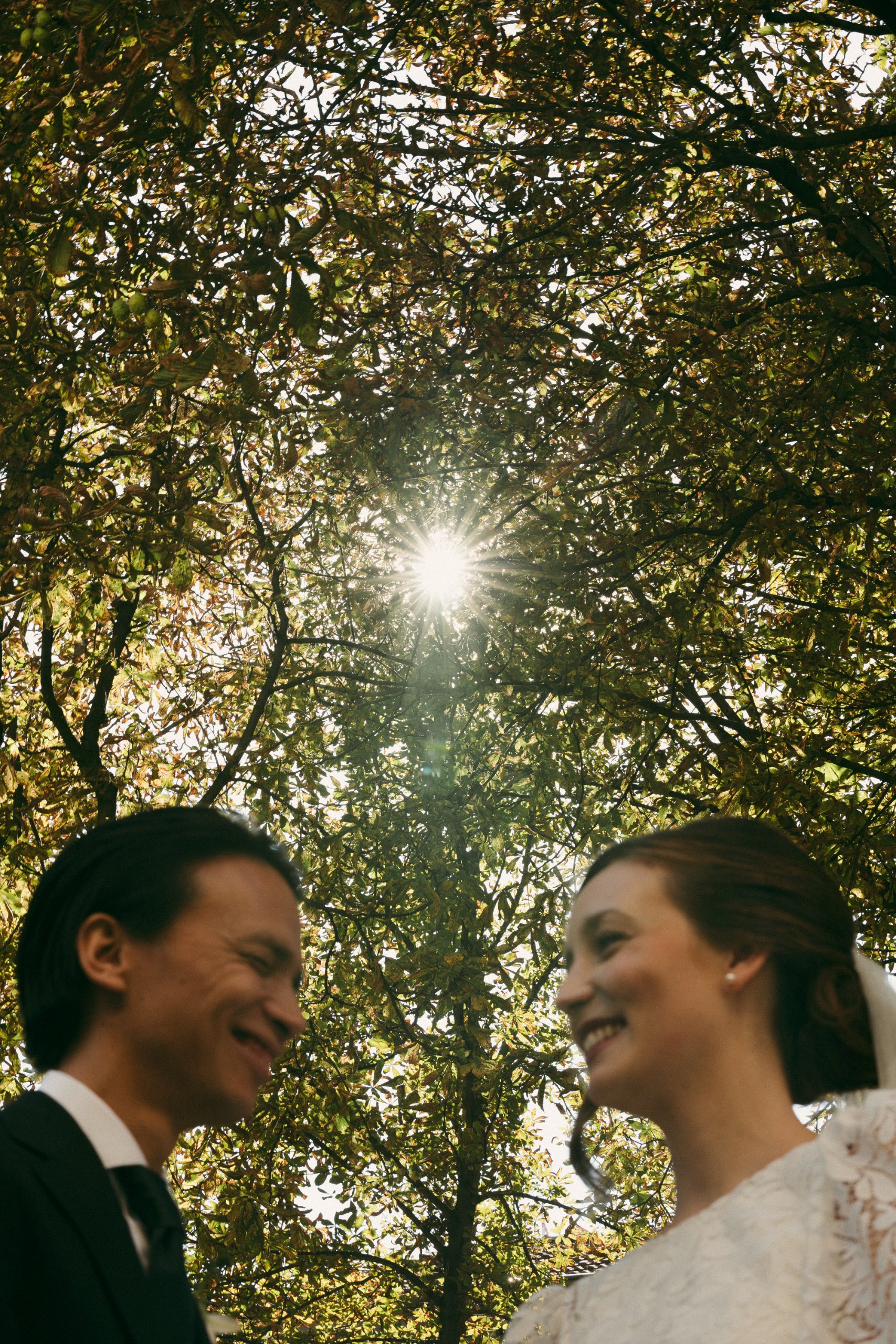

Alina L.from €2,000
Occitanie & Languedoc, Paris +7 · Documentary, Fine artWedding photographers in France
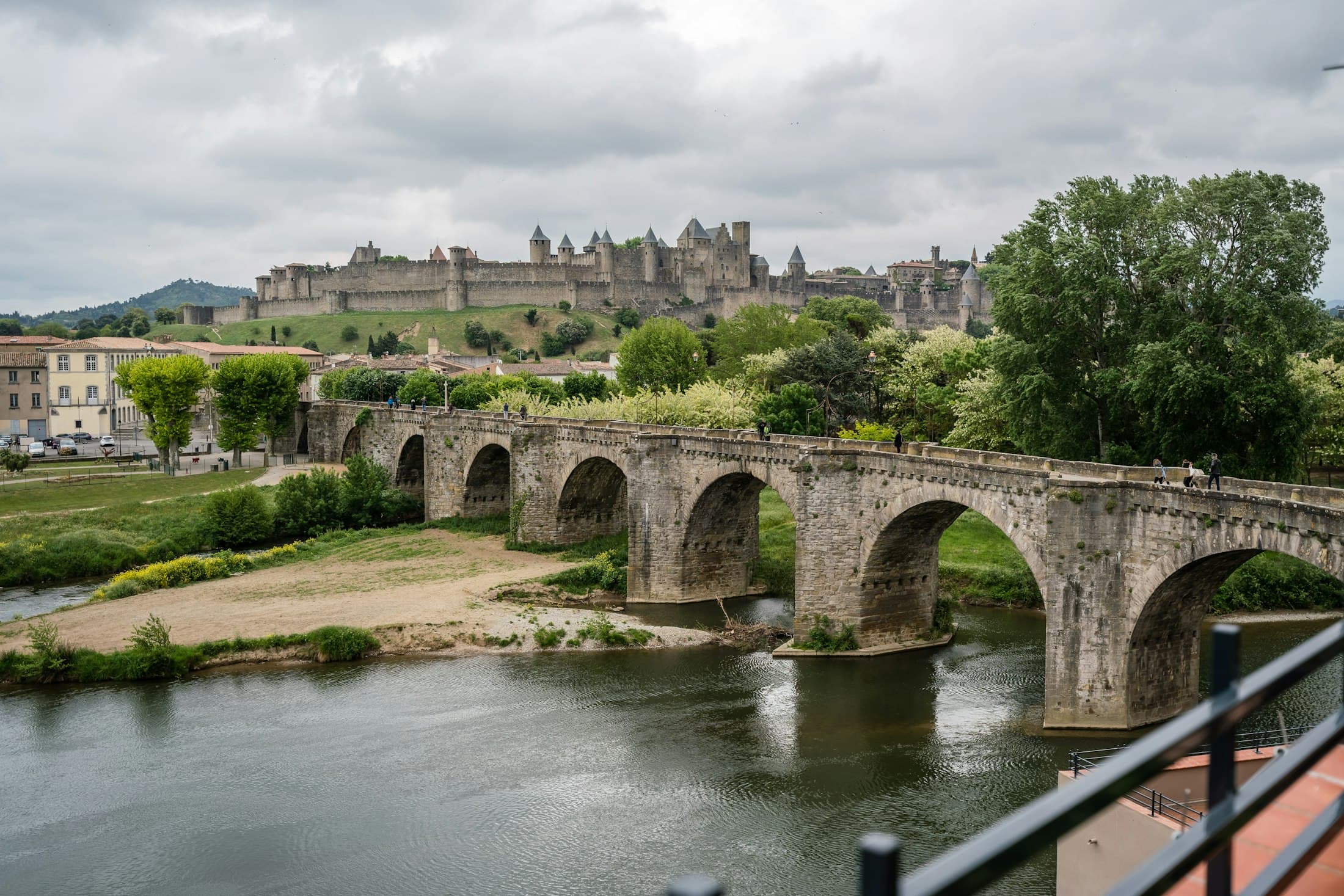
A double ring of walls and 52 towers above the Aude, a medieval bridge below them, and in the lower town a city hall that marries couples six days a week.
Carcassonne, about 46,000 people, is two towns facing each other across the Aude.
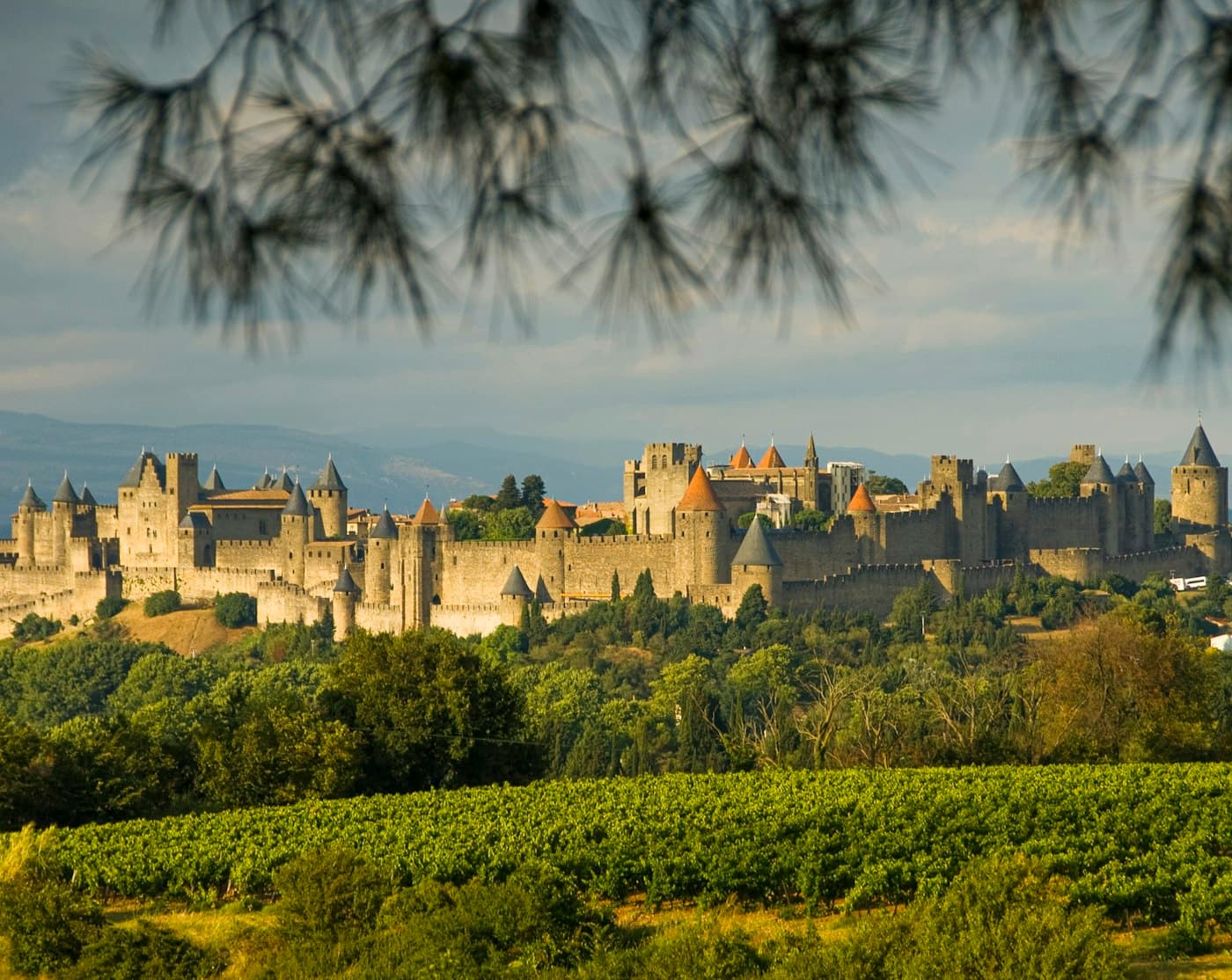
On its hill stands the Cité, listed by UNESCO since 1997: 3 km of double walls and 52 towers, saved after the government decided in 1849 to pull them down and restored from 1853 under Viollet-le-Duc, with houses still lived in behind them. On the left bank lies the Bastide Saint-Louis, the grid town begun in 1247. Between them runs the Pont-Vieux, 225 metres of stone and twelve arches, and to the north, between the station and the André-Chénier garden, the Canal du Midi.
A wedding here moves between the two. The legal ceremony is in the lower town, in the old town hall, and only for a couple with a home here; the portraits are on the bridge and along the walls; dinner is inside the Cité or out among the vines. Couples from abroad usually marry legally at home and hold a symbolic ceremony, which frees the whole day for the walls and the evening light.
Photographers
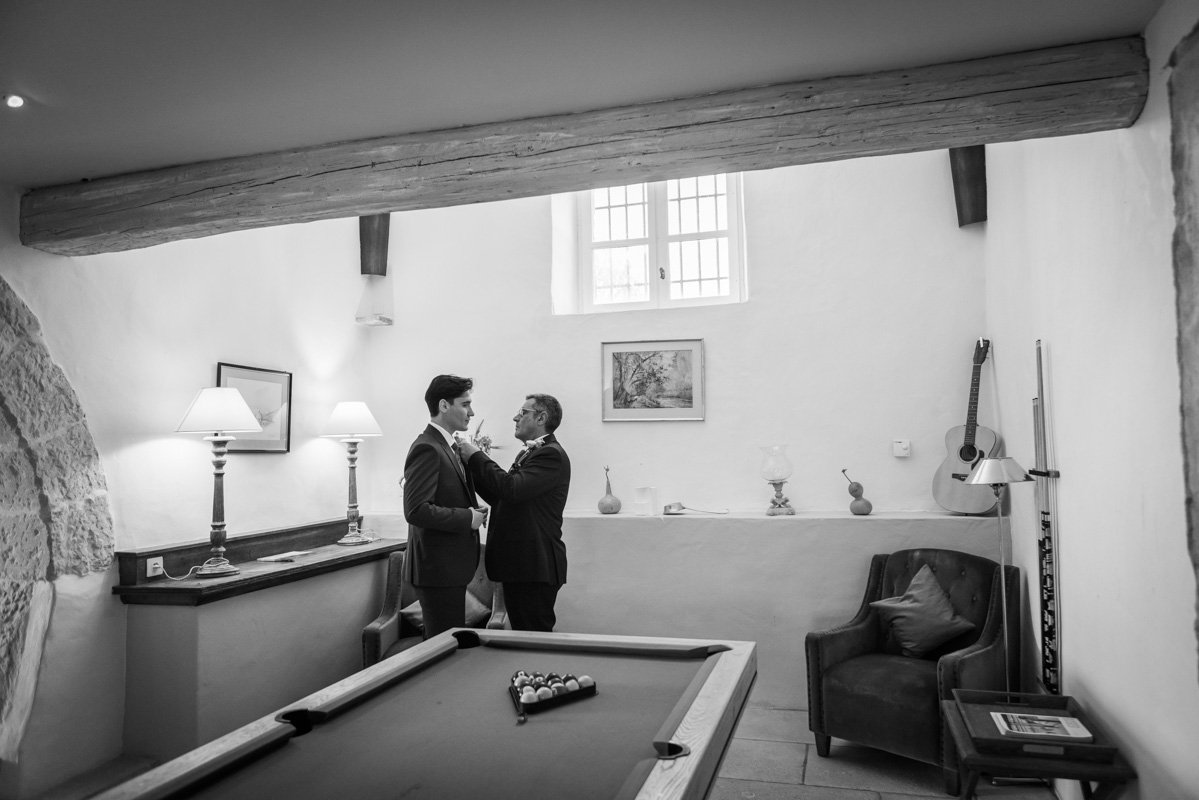
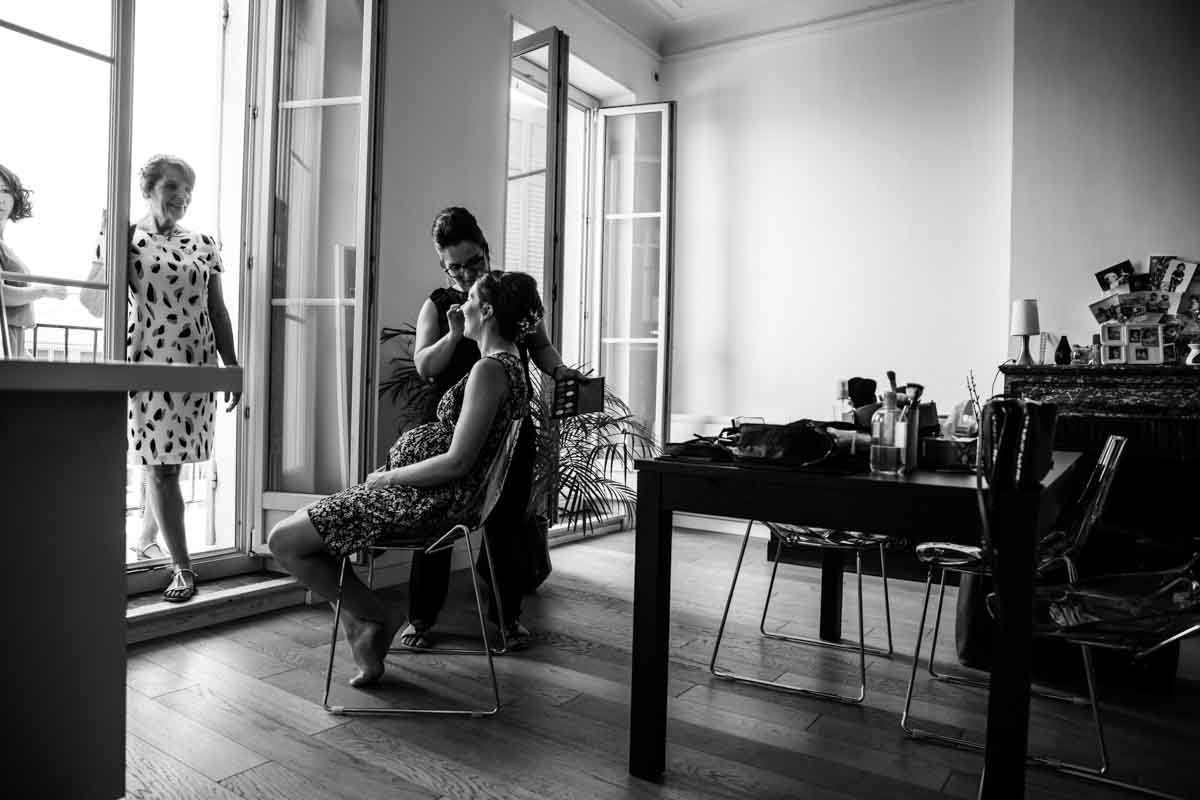
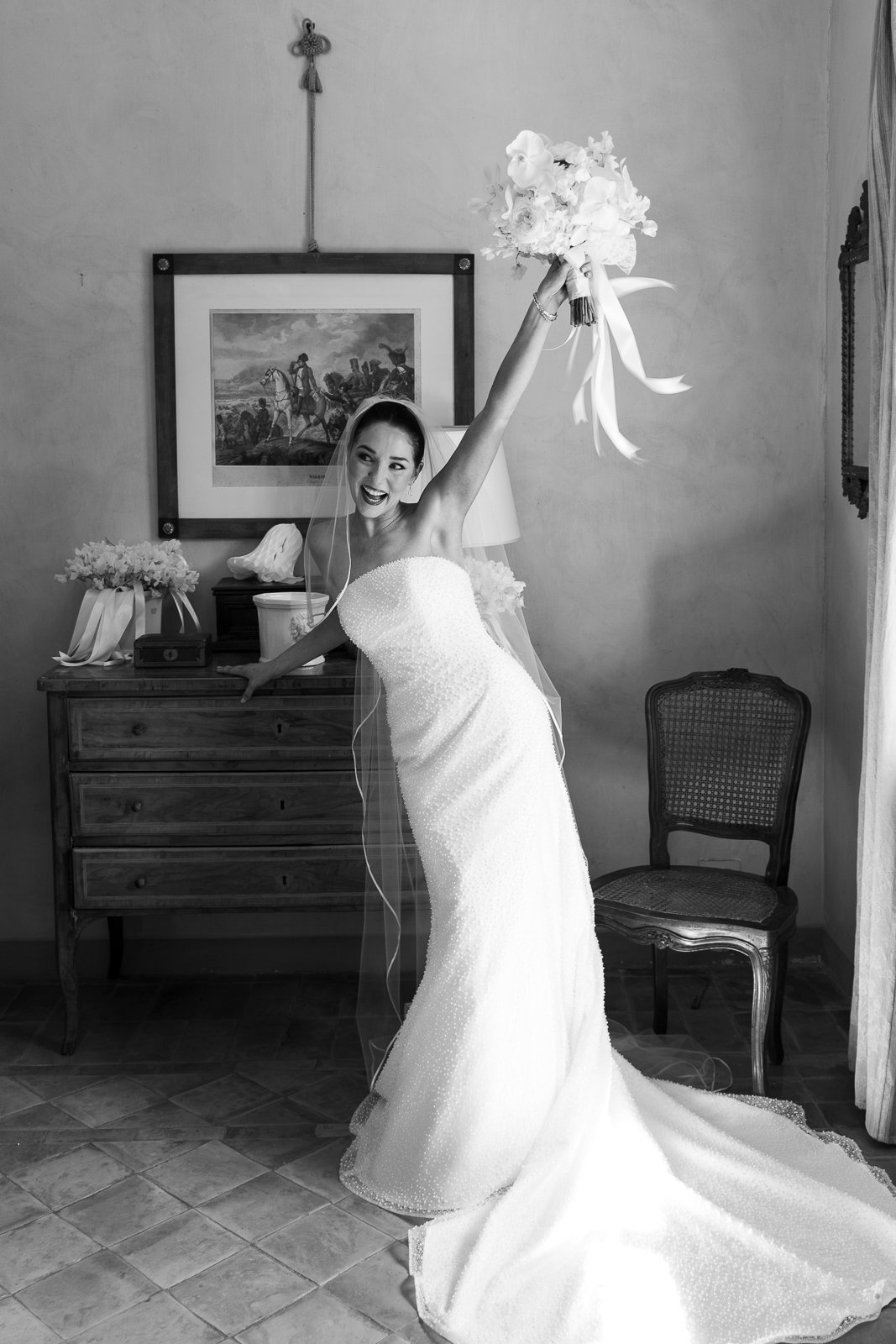
They shoot everywhere in Occitanie & Languedoc — in Carcassonne too. Their whole weddings are on their pages.
See all 5 photographers
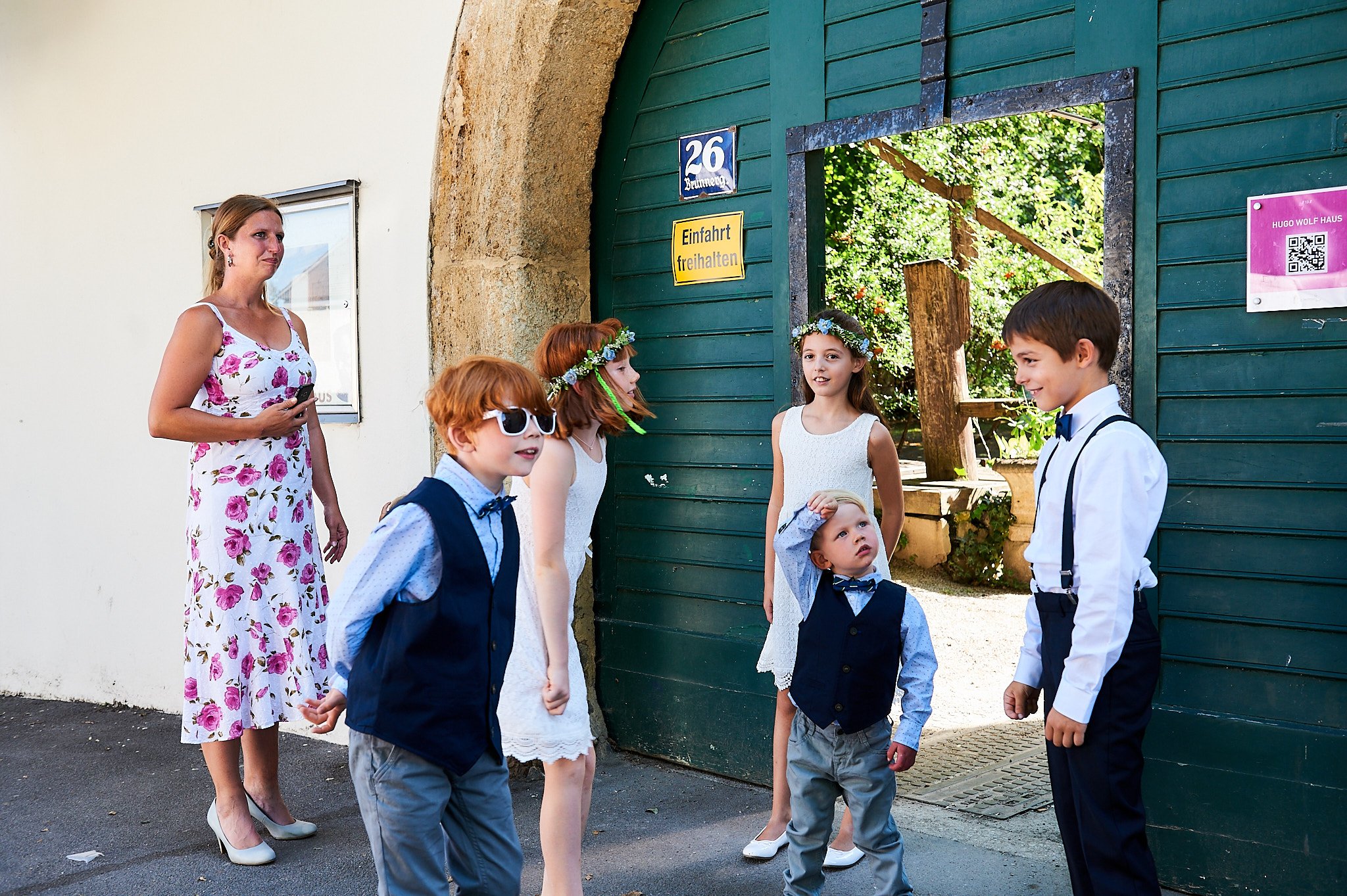
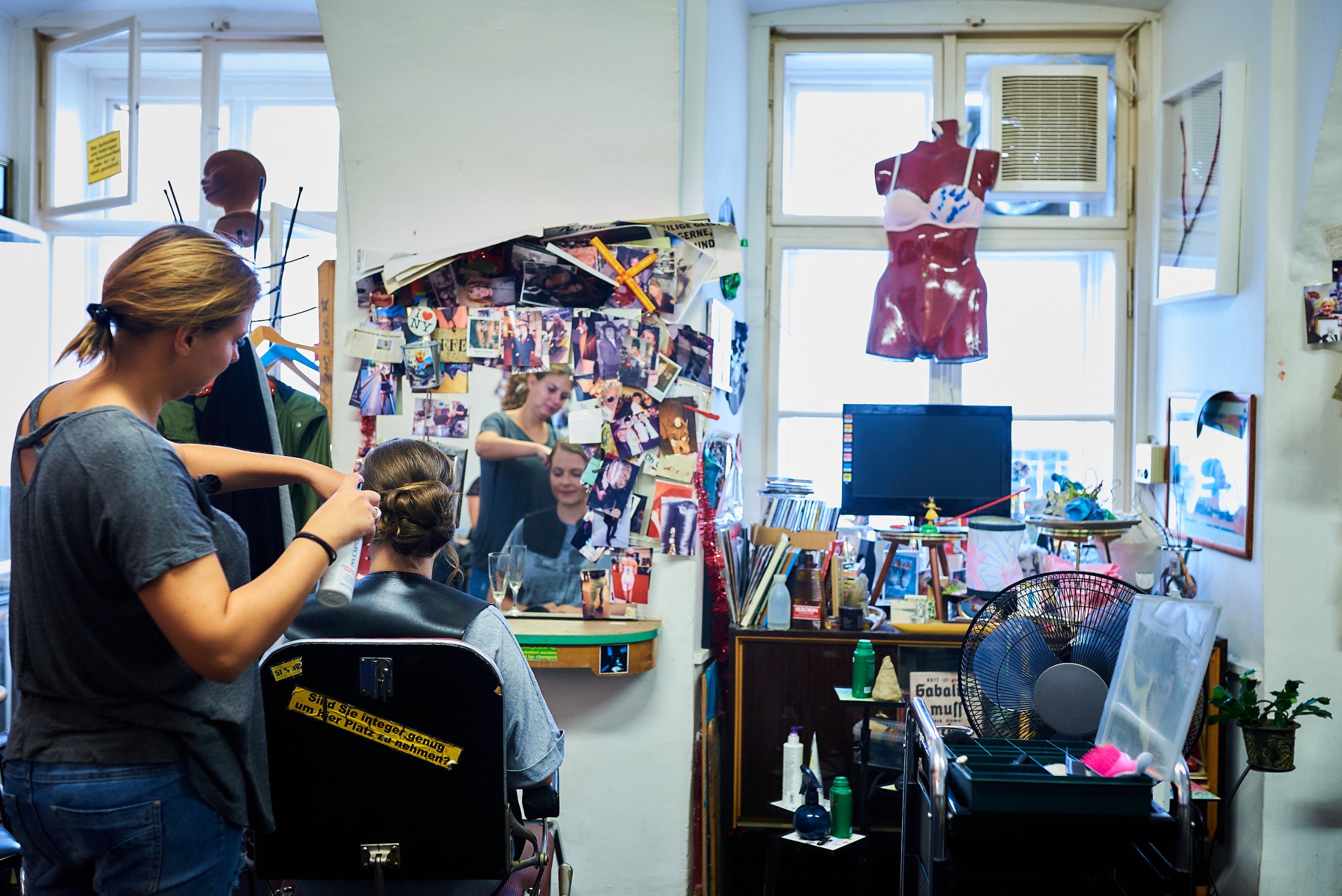
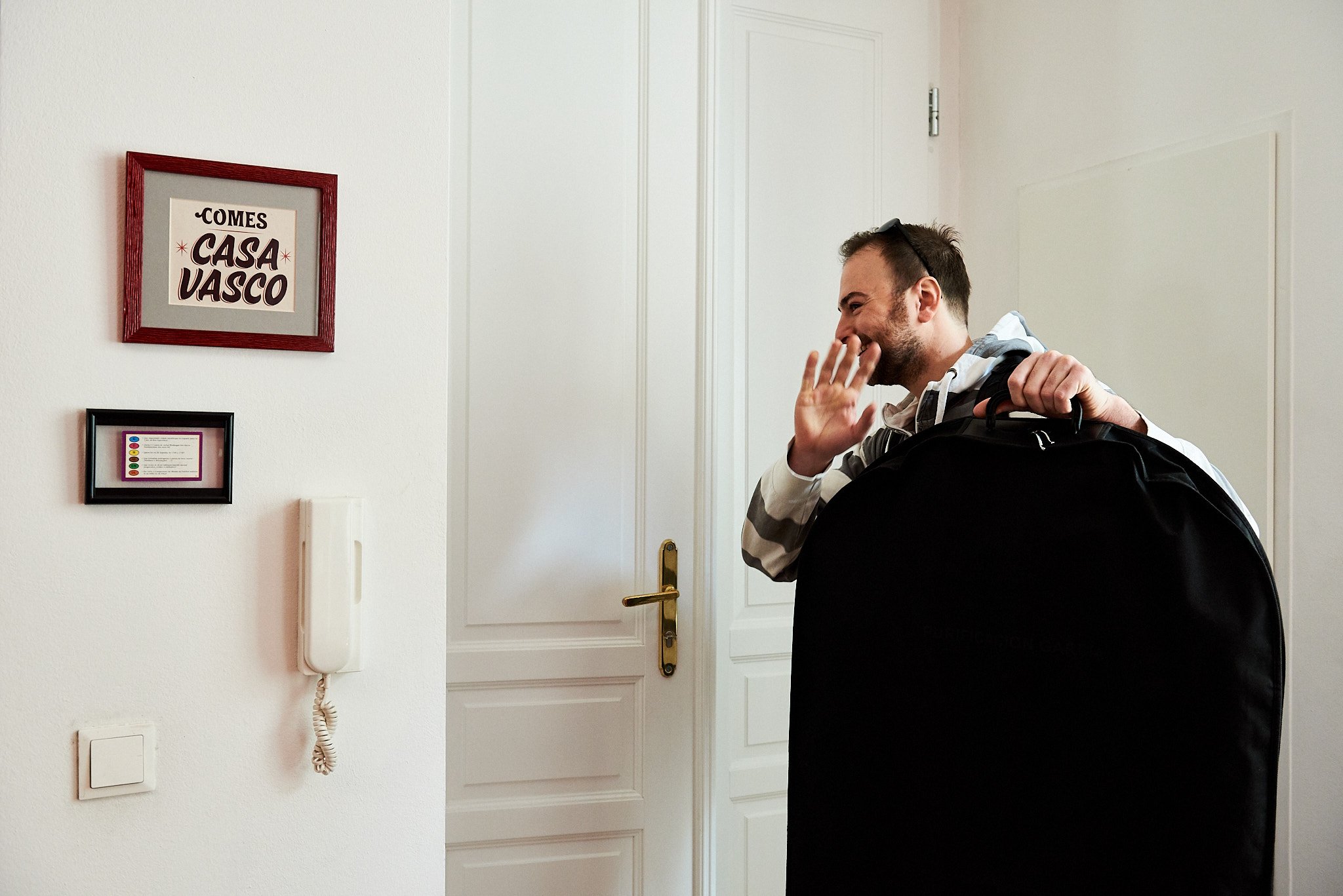
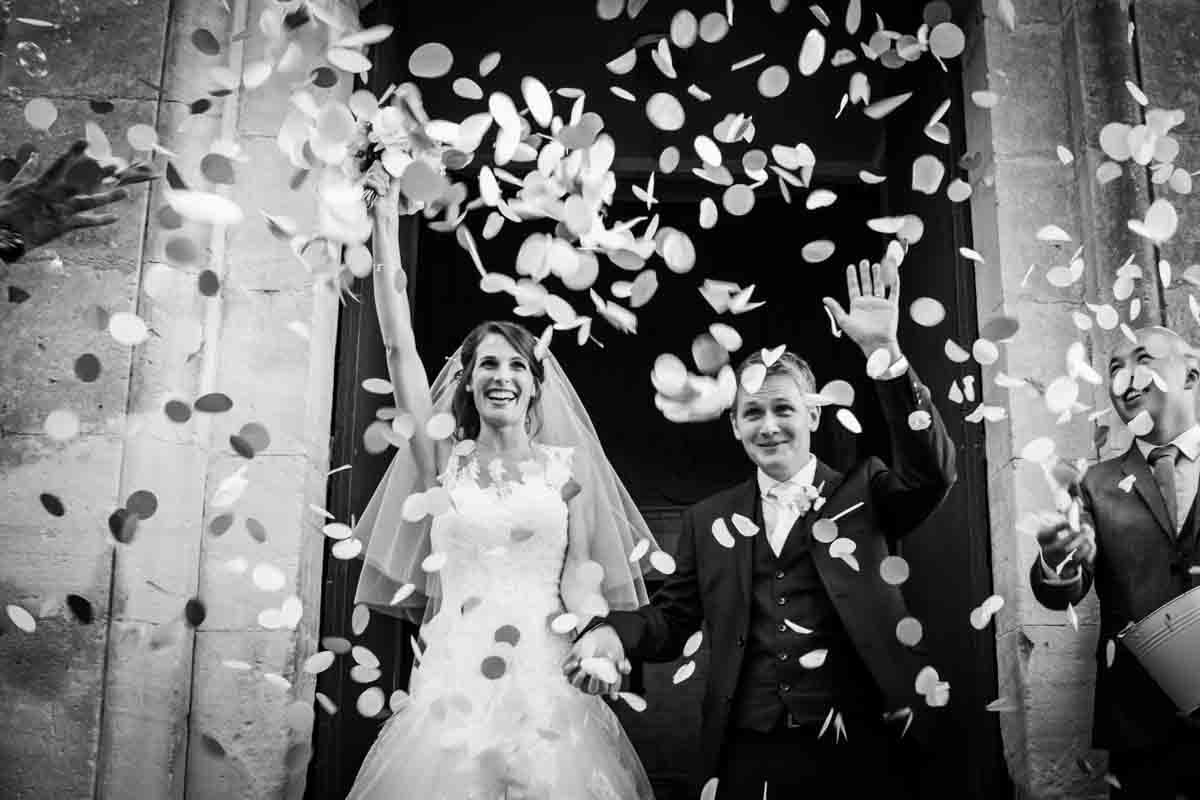

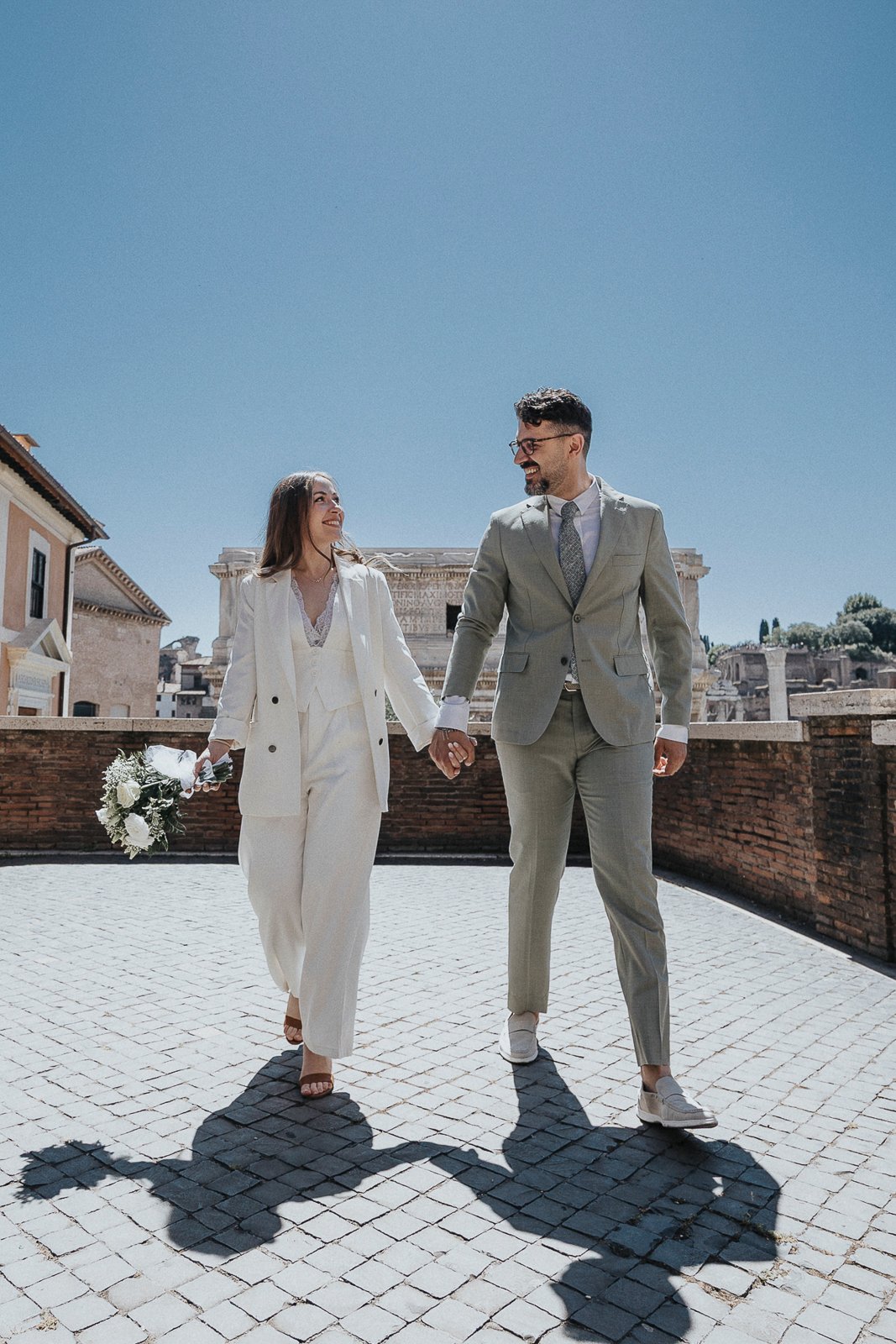
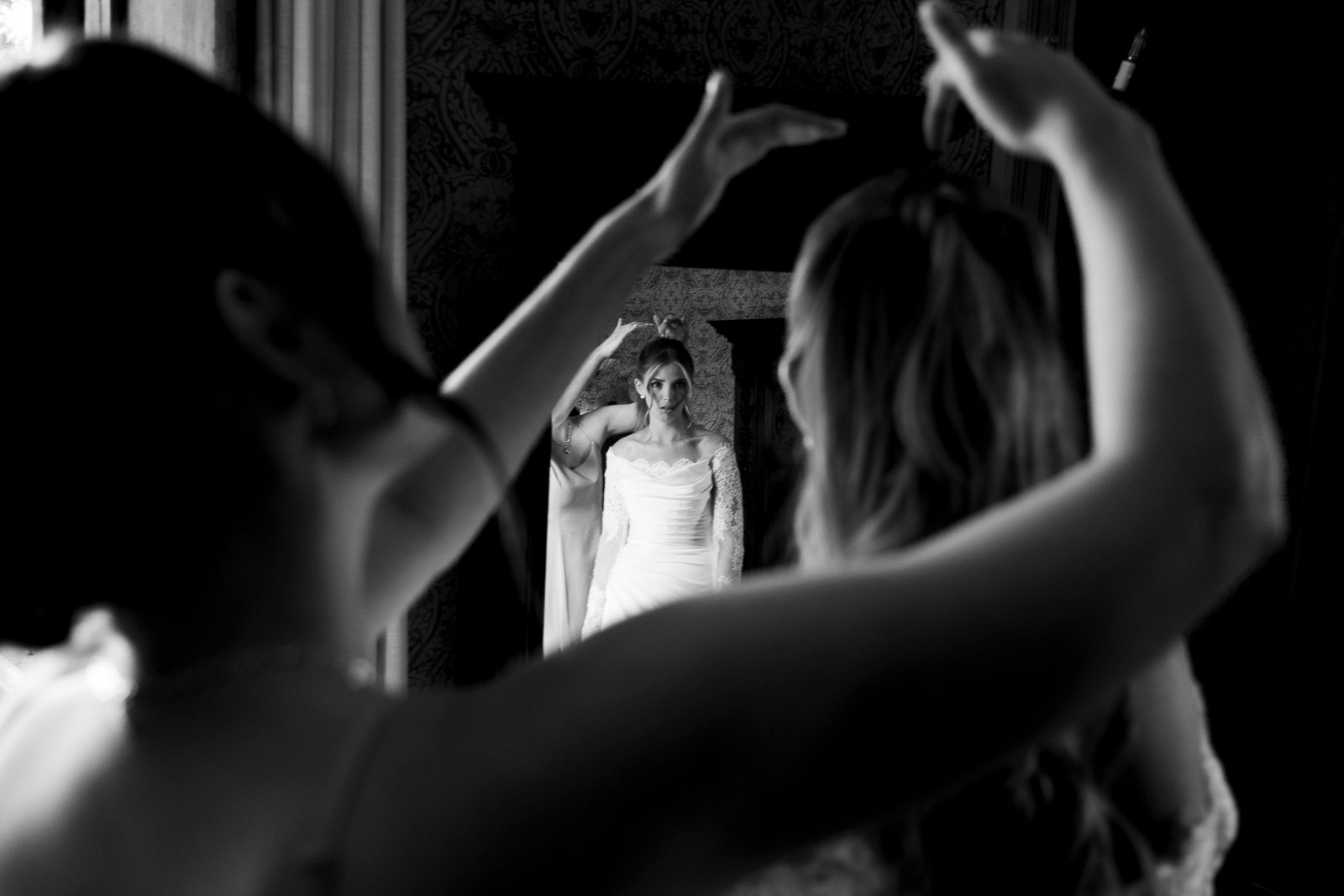
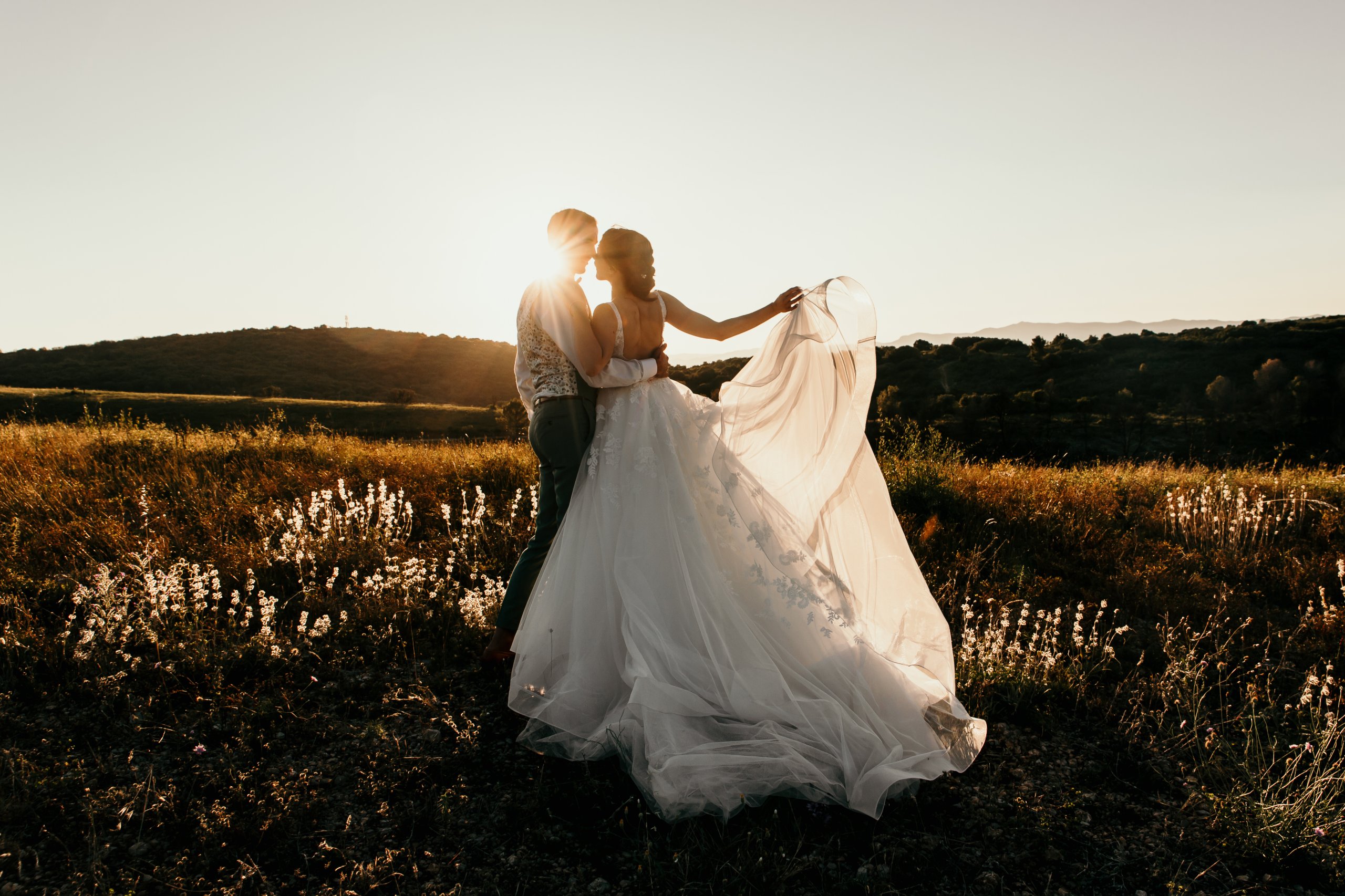
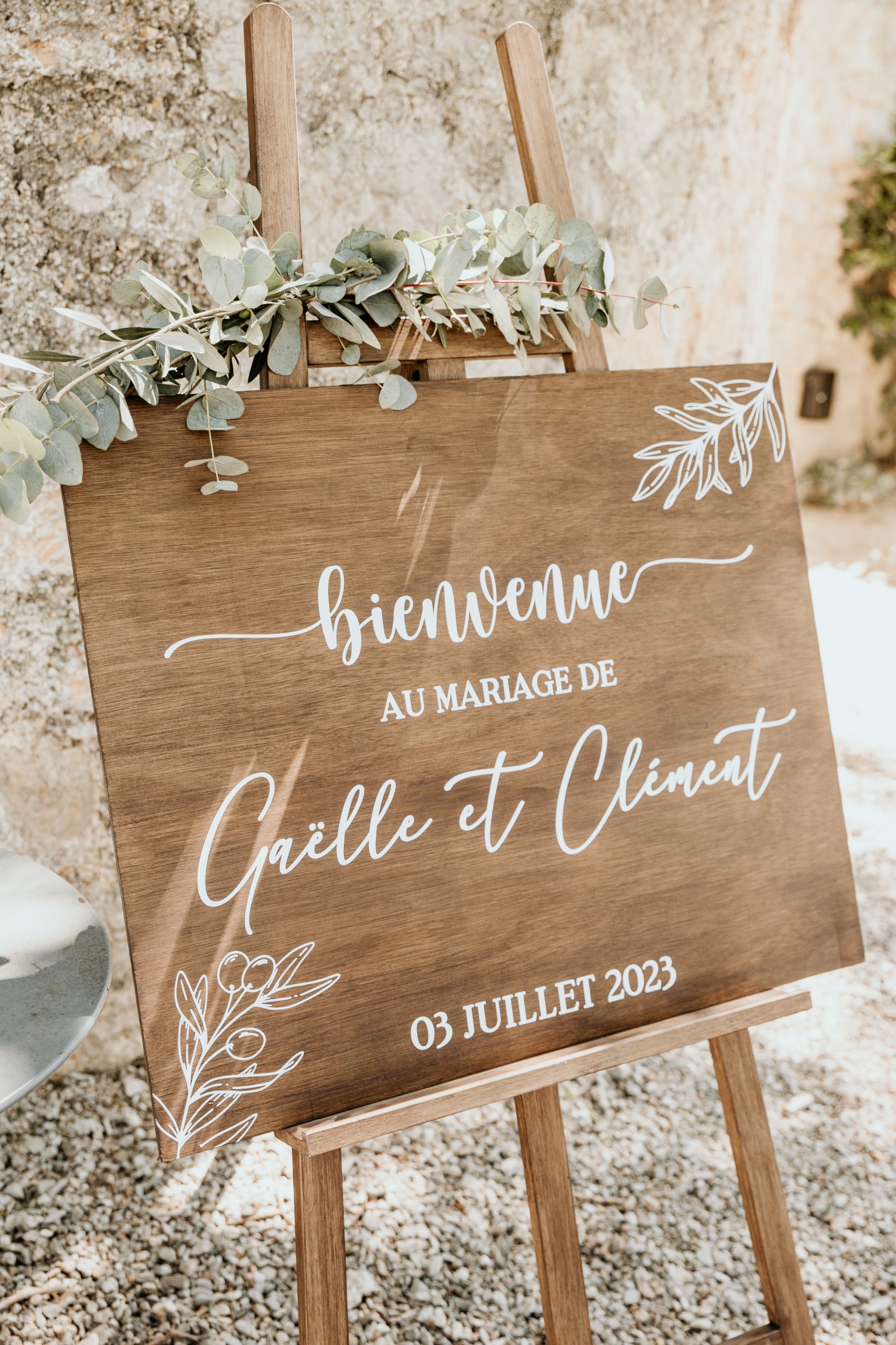

Booking through Lens & Vows
Ceremonies
The city’s guide puts civil ceremonies on the first floor of the old town hall, under the porch to the left, with a lift under the porch to the right. They are held Monday to Saturday, not on Sundays or public holidays, from 10:30 to 11:30 and from 14:30 to 17:30. You may bring your own equipment for music, and rings can be exchanged at the end, after the signing, if you tell the secretary beforehand. The guide dates from 2019: confirm the room and hours when you book.
In France it may only follow the civil one. The diocese of Carcassonne and Narbonne asks couples to register with the parish about nine months ahead, before the end of October for a wedding the following year, to speak to the parish before fixing a date, and gives priority to couples who live there or whose parents do. It publishes nothing on the Basilica of Saint-Nazaire in the Cité: ask the parish whether it takes weddings from outside.
Built on the site of the old bishop’s palace, next to Saint-Nazaire, it lists weddings among its private events, with cocktails, ceremonies and banquets. Its rooms run from 27 to 580 m², and its Saint-Nazaire space holds up to 260 people. Ask it directly what can be set up outside and what that means for a symbolic ceremony.
Vineyards surround the town, and in Occitanie weddings gather on wine estates: on private land you choose the place and the hour, and for a symbolic ceremony nobody needs a home in the commune. Ask each estate about the harvest, from late August into September, and whether guests can sleep there, since the drive back follows dinner.
Portraits
Twelve round arches from the early 14th century, reserved for walkers, with the walls filling the view uphill. The bridge lies west of the Cité, so the evening sun falls on the walls: on 15 June 2027 it sets at 21:32, with golden light from 20:49 to 21:54 (NOAA’s solar equations); on 15 September at 20:01.
The landscaped walk between the outer and inner ramparts looks out to the mountains and over the Bastide. The Cité itself is open day and night and free, through the Porte Narbonnaise or the Porte d’Aude, so you can be here before the shops and the day’s visitors.
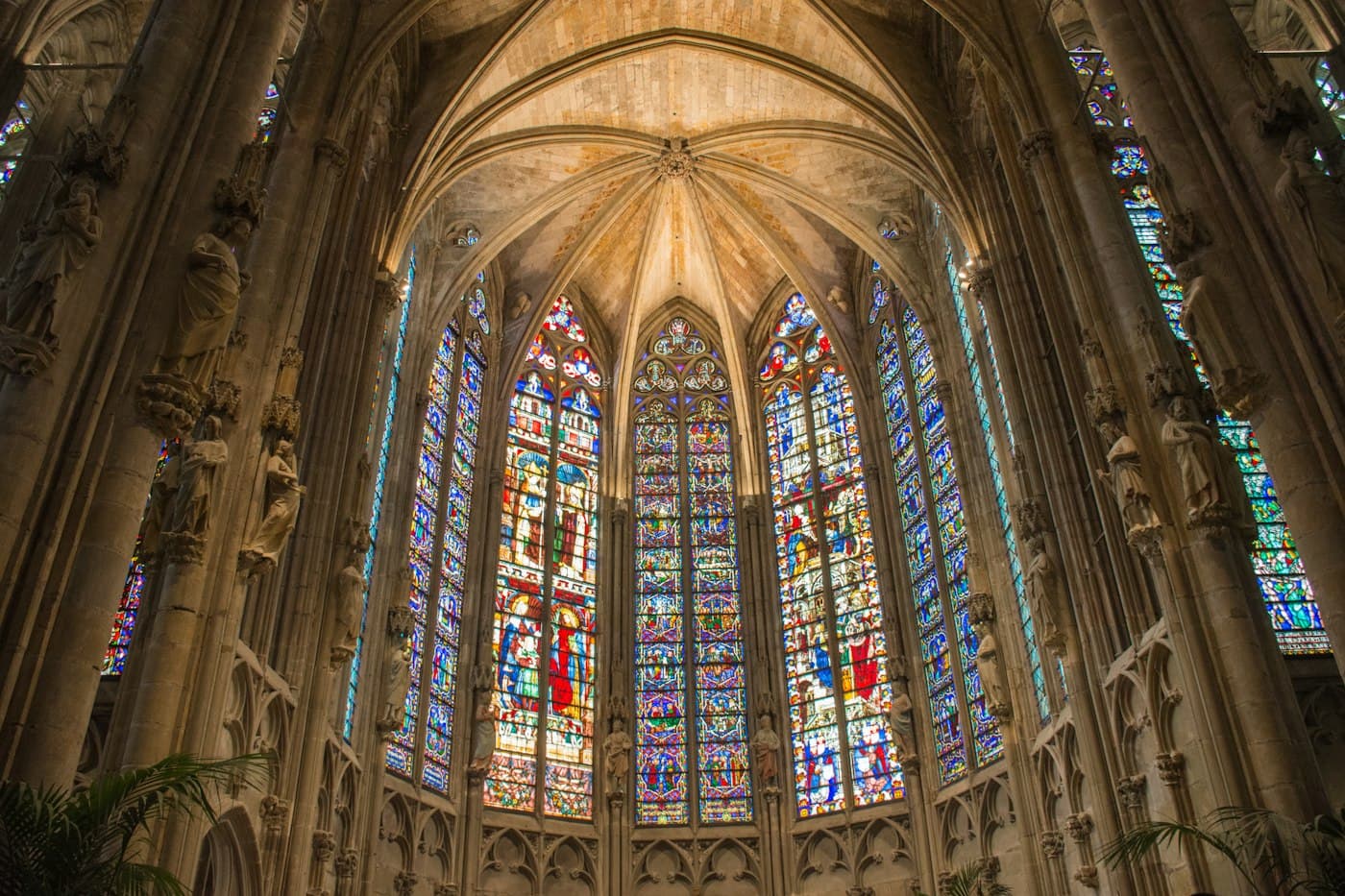
A Romanesque nave of the 12th century opens into a slender Gothic choir built between 1269 and 1330, its stained glass from the 1280s on. On a clear day the colour falls across the stone. It is a working church: ask the parish before a session with a photographer.
The 12th-century castle of the Trencavels needs a ticket: open 10:00 to 18:30 from April to September (last entry 17:45), 9:30 to 17:00 from October to March. Visitors may photograph without flash. A shoot is another matter: write to the monument’s events team first (evenementiel-carcassonne@monuments-nationaux.fr).
A UNESCO site since 1996, with oleanders along the towpath in summer. The stretch at Carcassonne’s port is the only one lit at night, which suits the end of the day; for a quieter frame the tourist office names the locks of La Douce and Herminis.
Through the year
At Météo-France’s Carcassonne station (1991–2020 normals) average highs are 21.4 °C in May, 25.9 °C in June and 24.8 °C in September, with rain on five or six days a month in June and September and about eight in May. July and August touch 29 °C, with 30 °C or more on 12 to 13 days each. Wind is the local fact: gusts of 58 km/h or more on five to seven days a month in summer, and over nine in May, so hold on to veils and plan for arches and tents. The Festival de Carcassonne fills July, with about 120 shows and nearly 200,000 spectators; on 14 July the Embrasement, a tradition since 1898, sets the Cité alight with fireworks. In 2026 the Feria ran from 27 to 30 August: check 2027’s before you choose a date.
Occitanie & Languedoc, month by month
Practical
Carcassonne’s own airport has routes to Dublin, Cork, Manchester, East Midlands, London Stansted, Porto and Brussels Charleroi, among others, and a shuttle timed to its flights; it announced a closure from 2 November to 13 December 2026. Toulouse-Blagnac, Béziers and Perpignan are about an hour by road and Montpellier two. Trains reach Toulouse in 41 minutes and Montpellier in 1 h 24; from the station to the Cité is about 30 minutes on foot.
The wedding room’s corner of rue Aimé-Ramond and rue Courtejaire is pedestrian: park on Place du Général-de-Gaulle, on the boulevards or under the Jacobins. For the Cité, car parks P0 and P1 are at the Porte Narbonnaise and P2 at the Porte d’Aude. A coach may set guests down in front of the Porte Narbonnaise from September to June, then wait at P1; in July and August it may not, and must go straight to P1.
French rules ban flights at night, over gatherings of people and over public space in a built-up area, so a drone needs the special procedure for the Cité and the town. Carcassonne’s airport is also on the town’s west side: check the official restriction map before planning any flight, even over an estate.
One of you, or a parent, must have a home here, with at least a month’s continuous residence when the banns go up for their 10 days. Both of you bring the complete file to the registry at least two months ahead, by appointment; the city may hear you together or apart. A foreign partner needs a birth certificate, a certificate of single status and a certificat de coutume, each under six months old on the wedding day and translated by a consulate or a sworn translator.
Questions
Only if one of you, or a parent, has a home there. The city asks for the complete file at least two months before and celebrates Monday to Saturday. Couples from abroad without that tie marry at home and hold a symbolic ceremony here.
Not at the mairie: the city’s guide puts civil ceremonies in the old town hall in the lower town. Inside the walls, the Hôtel de la Cité lists weddings and ceremonies among its events, and the Basilica of Saint-Nazaire is a question for its parish, after your civil wedding.
Yes: the city takes a date in advance, in person or by telephone (04 68 77 70 42, mariage@mairie-carcassonne.fr), and confirms it when the complete file goes in, at least two months before the wedding.
The Festival de Carcassonne runs through July, and on 14 July the Embrasement draws crowds to watch the fireworks. In July and August coaches can no longer set guests down at the Porte Narbonnaise. May, June and September avoid all of this, though May is the windiest of the three.
The Cité’s streets, ramparts and Lices are free and open to everyone. The Château comtal is a monument with its own rules: visitors photograph without flash, and for anything more the events team of the Centre des monuments nationaux decides. Saint-Nazaire is a matter for its parish.
Occitanie & Languedoc
 Photo: Audrey C.Occitanie & LanguedocThe whole region: when to marry, the kinds of places, the light, getting there.
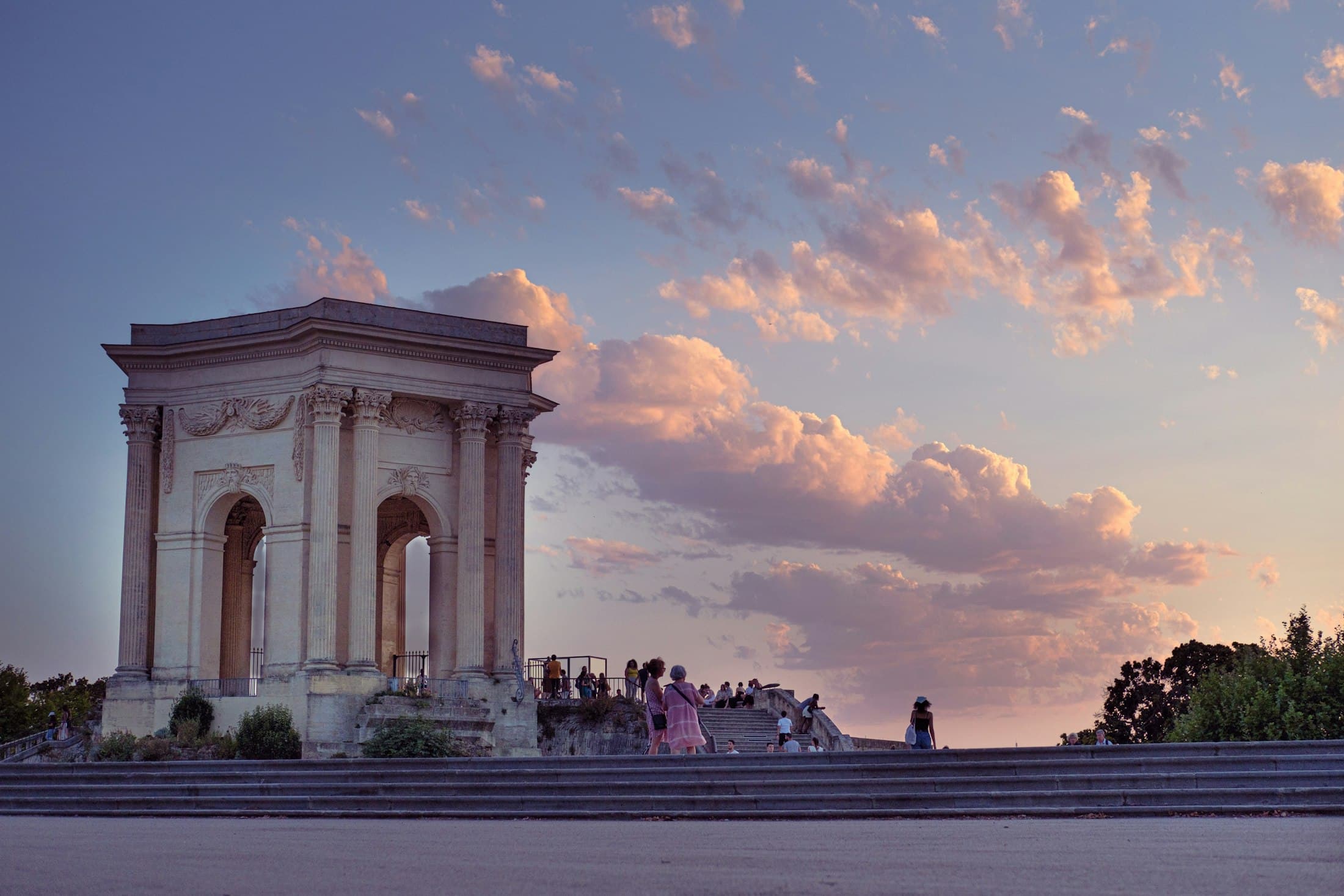 MontpellierA stone city of squares and an old botanical garden, which marries couples in a park at the edge of town or at its city hall, with a 17th-century folie down the same avenue.
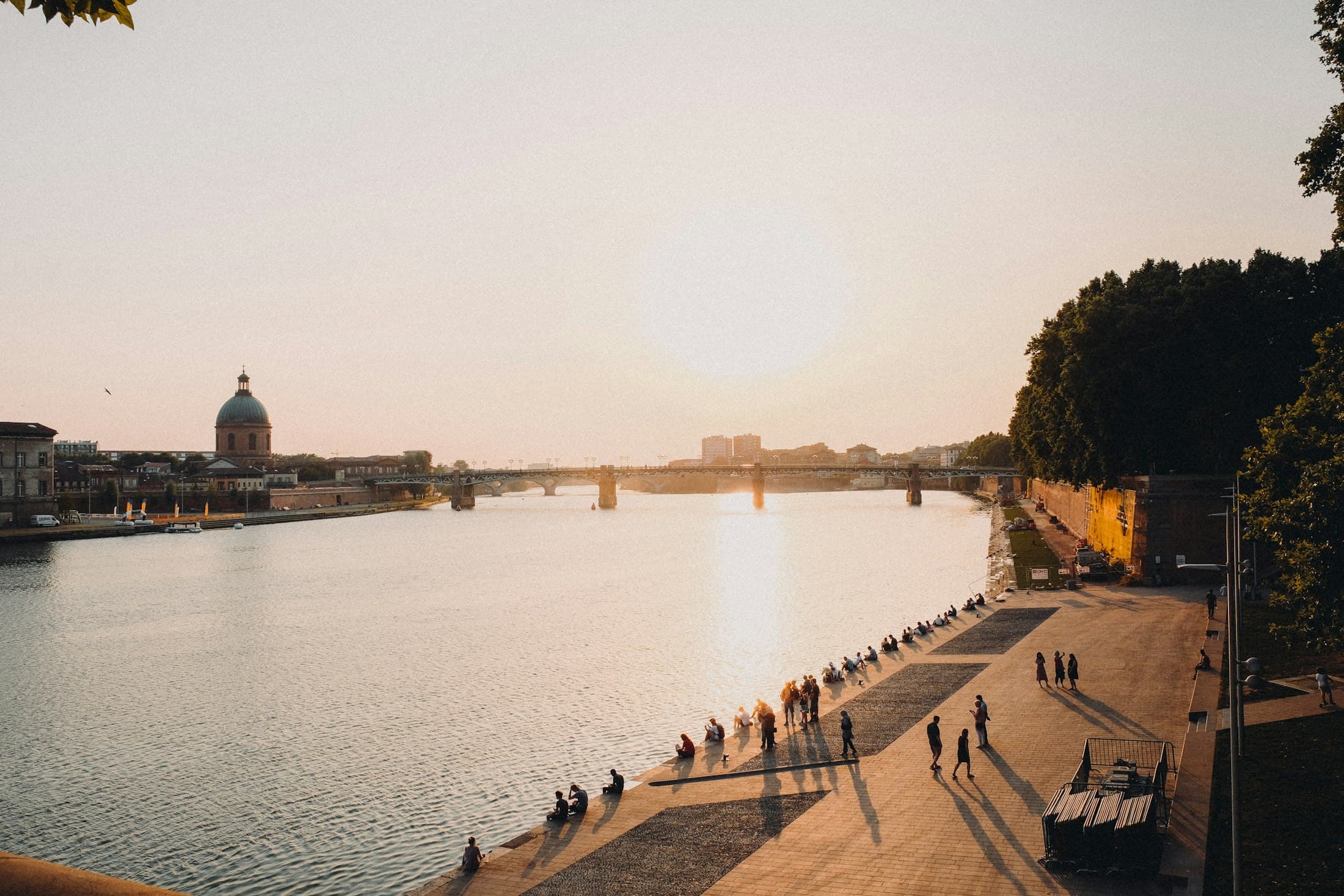 ToulouseThe pink-brick capital of the south-west, where civil weddings take place in a 60-metre painted gallery in the city hall and the quays fill with people at sunset.
Plan
Not sure yet?
The place, the date, the guests, the photos you like. Our concierge checks who is free and fits, and comes back with photographers to choose from.