
Founding photographer

Gabriele P.from €2,200
Loire Valley, Paris +25 · Documentary, EditorialBased in Austria · travels to weddings in FranceWedding photographers in France
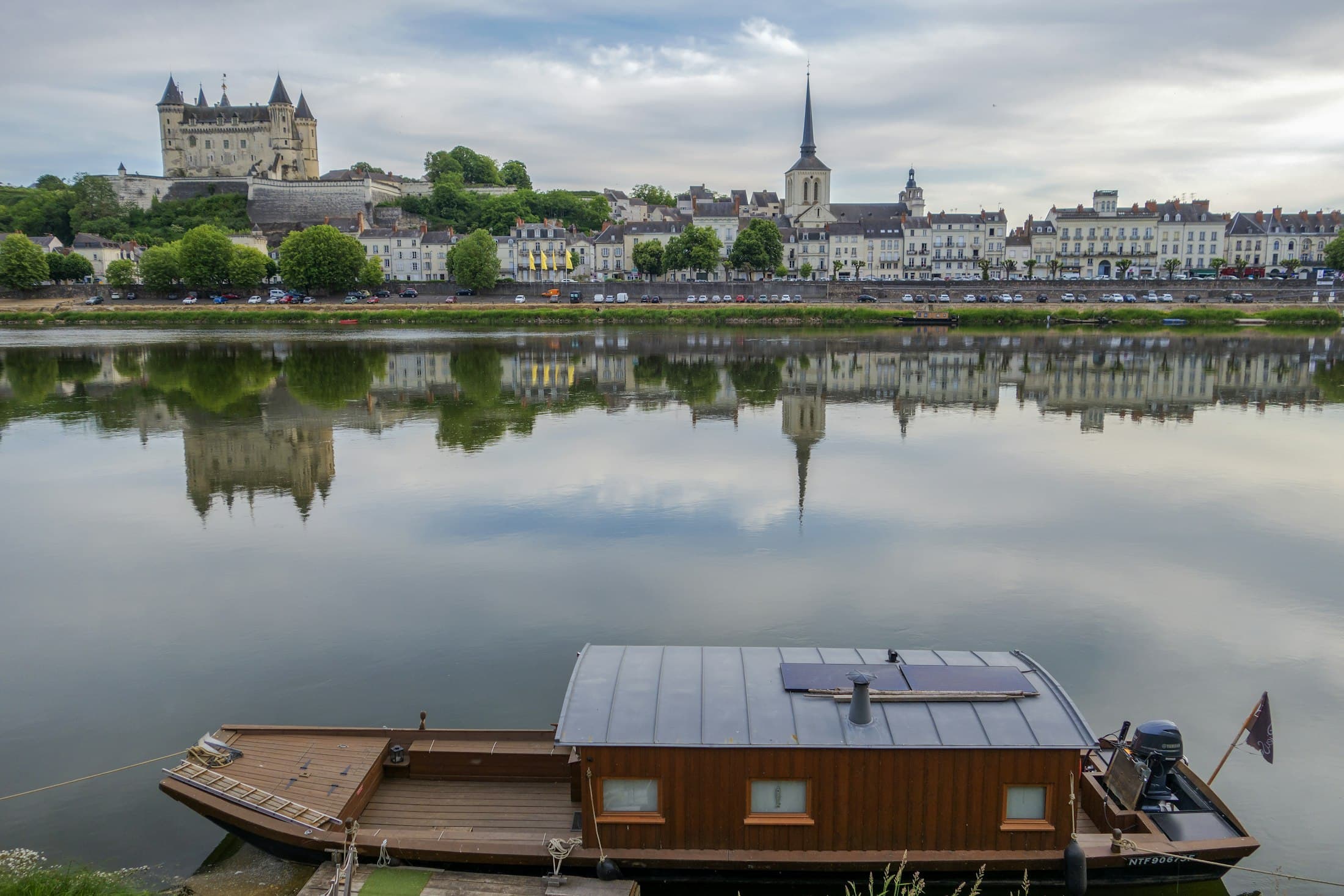
White tuffeau, a fairy-tale château over the river and a town hall that began as a fortified tower; the wine underneath is sparkling, in cellars cut from the same rock.
Saumur, about 26,000 people, sits where the Thouet meets the Loire, on a very wide river bed broken by islands.
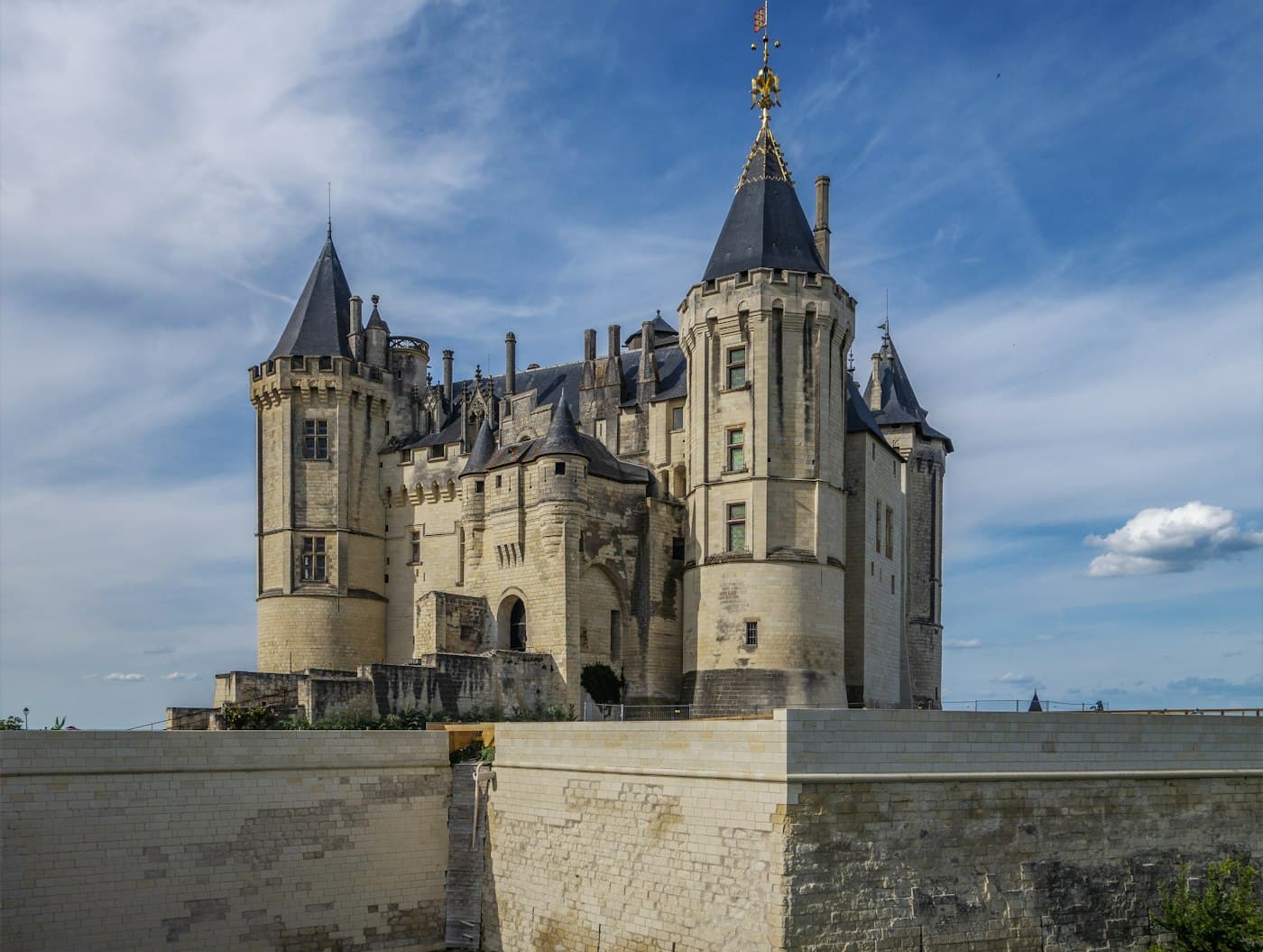
Above it stands a château whose first fortifications go back to the 10th century, and which appears in the September page of the Très Riches Heures du duc de Berry; the town owns it and keeps its museum there. The cavalry school, home of the Cadre Noir, made the town’s name among riders. The stone is tuffeau, and the Saumur area counts some 1,200 km of underground galleries, some of them now full of sparkling wine.
A wedding here has three natural parts. If you qualify, the civil ceremony is on the first floor of the town hall, on the river front, in a neo-Gothic hall full of dragons. The reception may go underground, into the cellars of Saint-Hilaire-Saint-Florent a few minutes away, or out to the Abbey of Fontevraud, about 15 km away, which publishes a weddings section of its own. And the photographs go back to the river, where the château and the town hang upside down in the water on a still evening.
Photographers
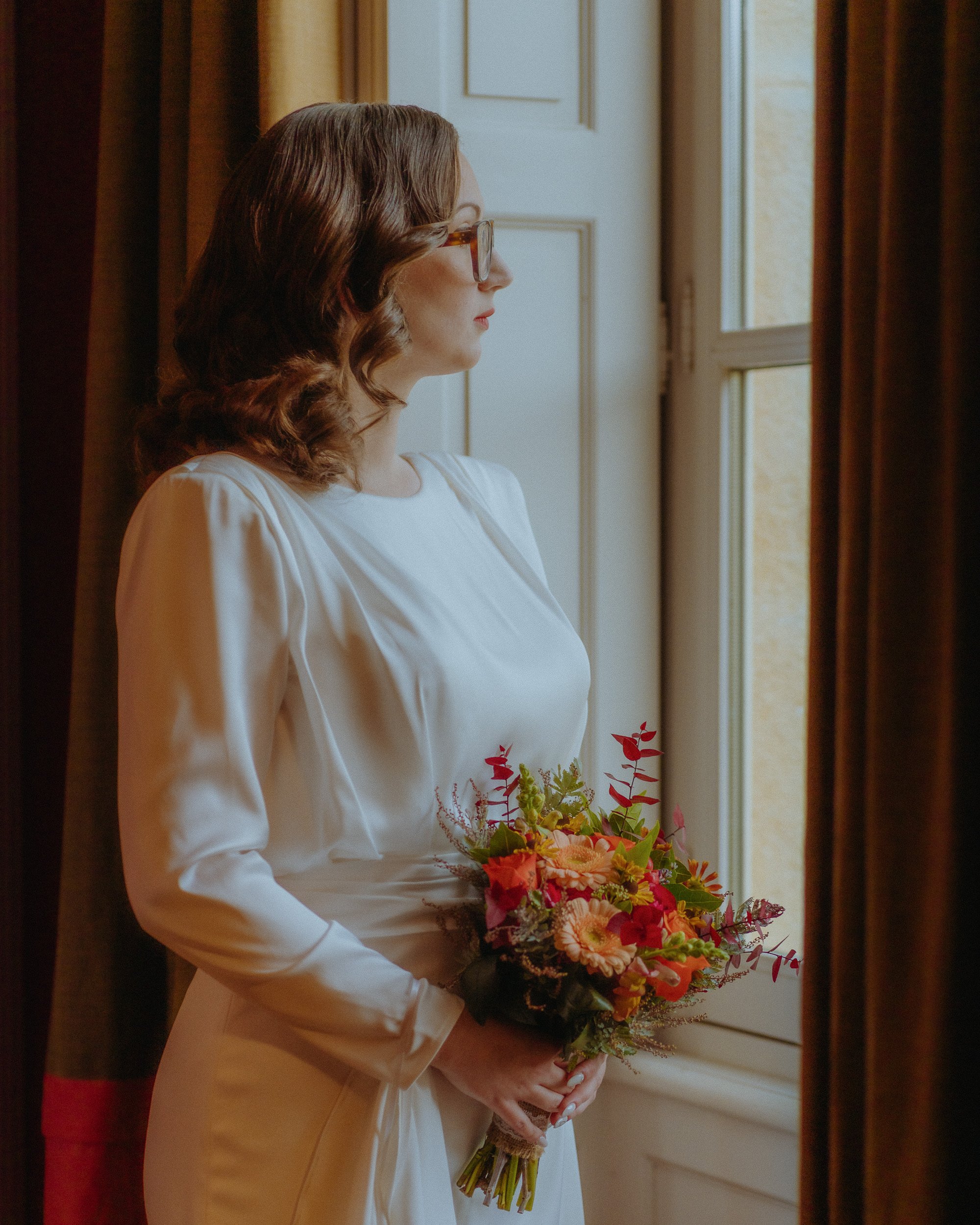
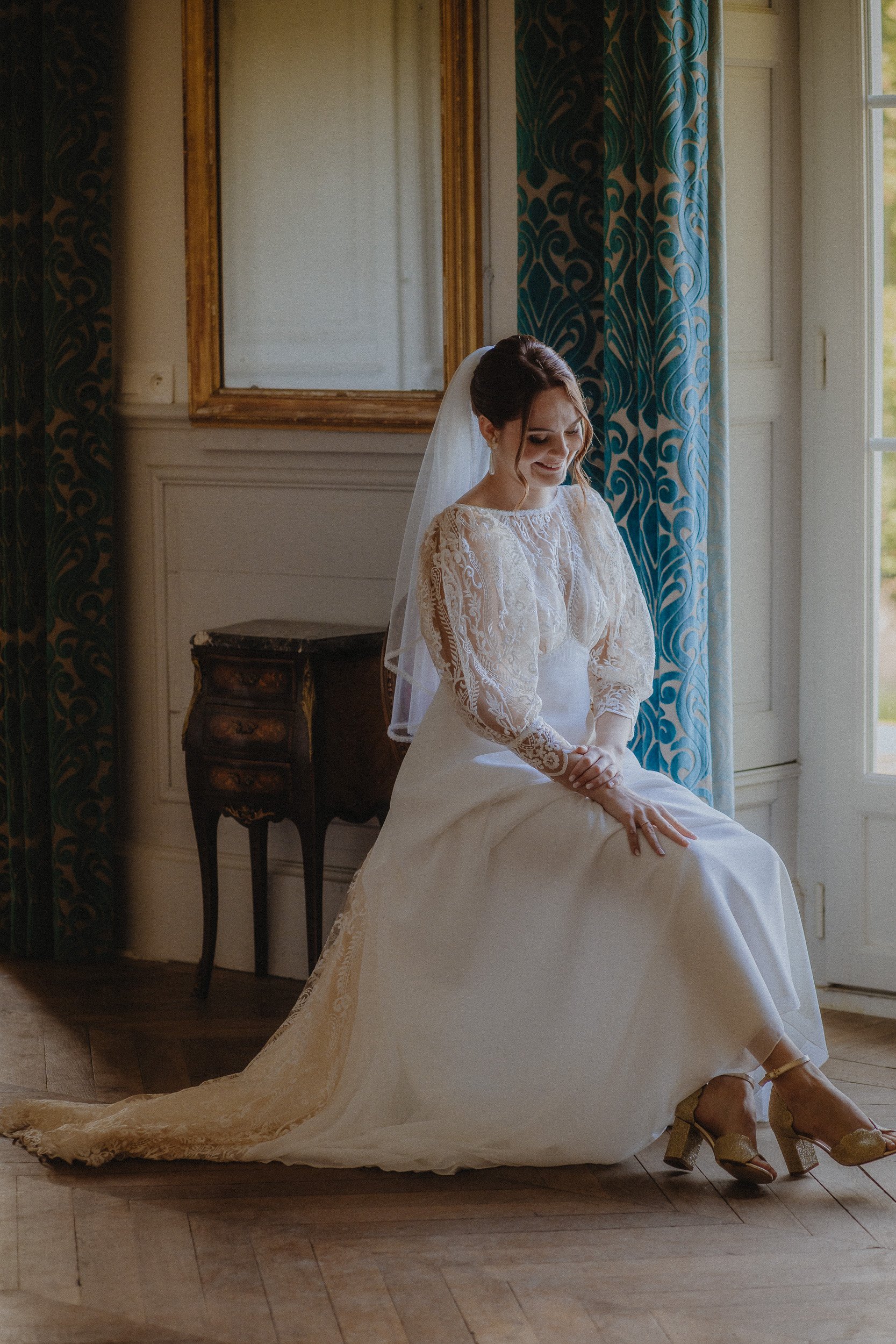
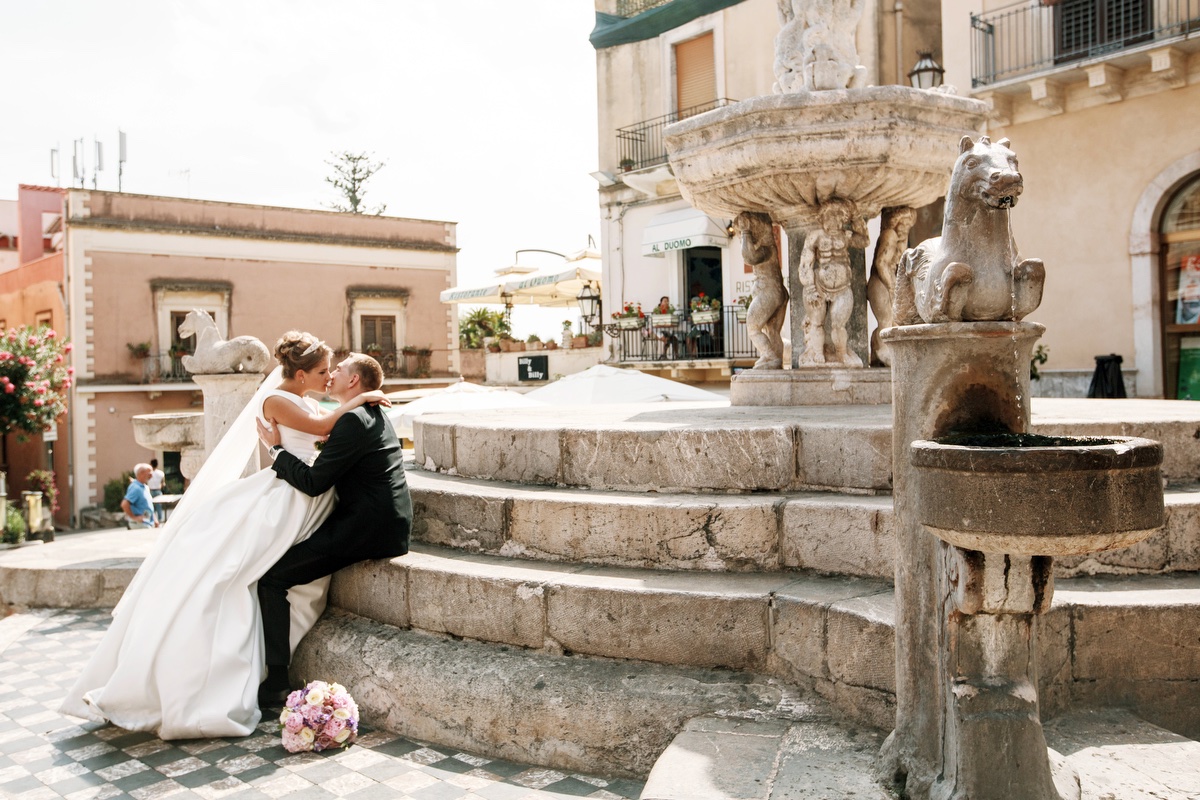
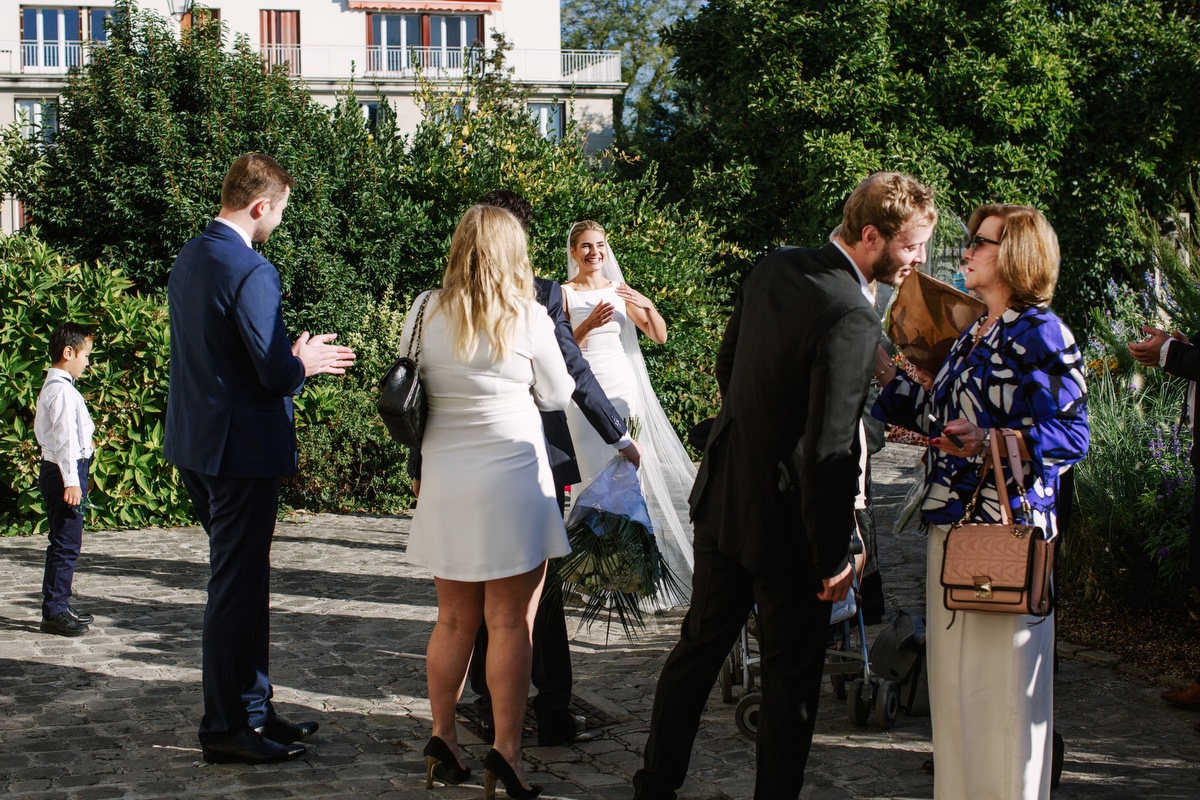
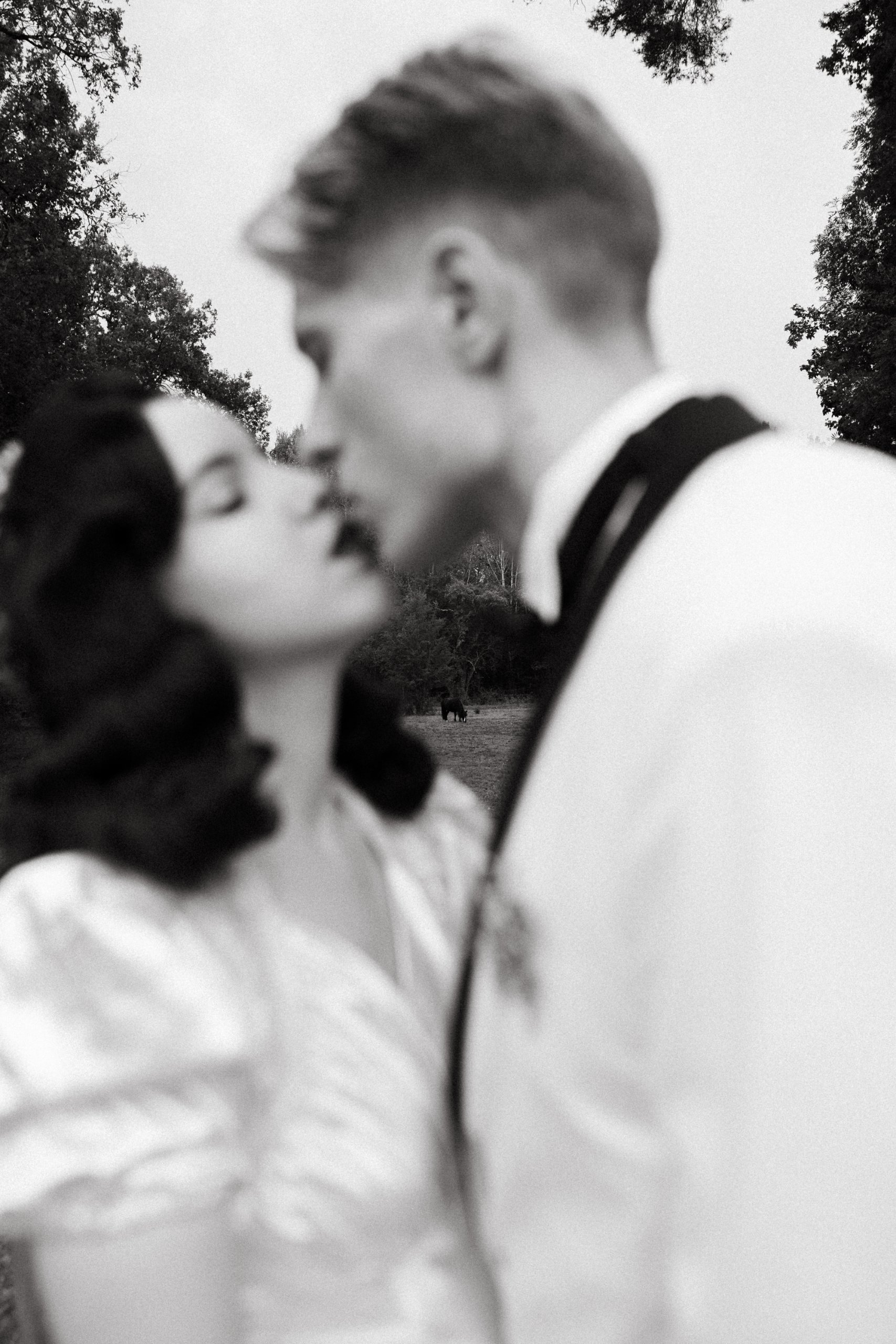
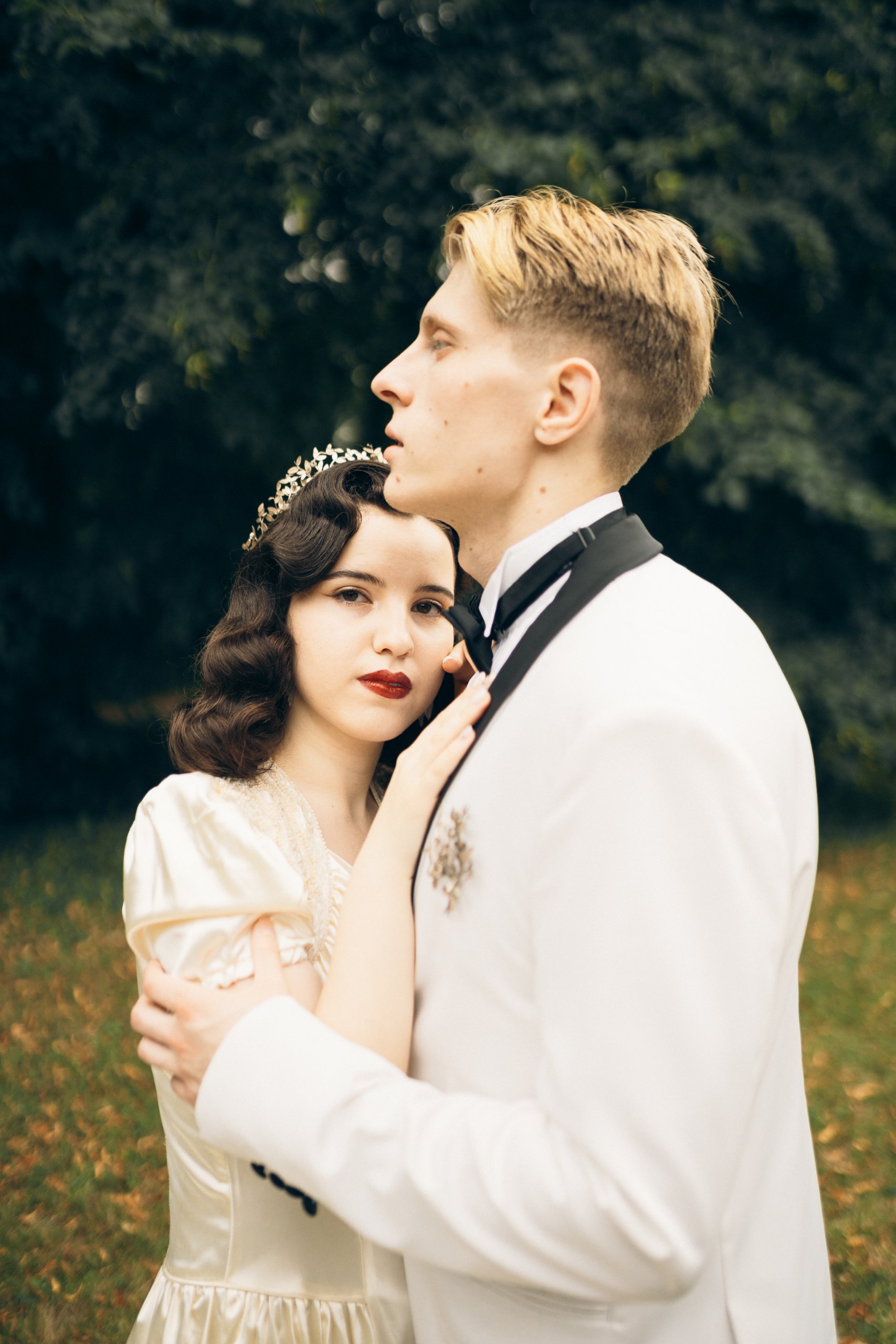
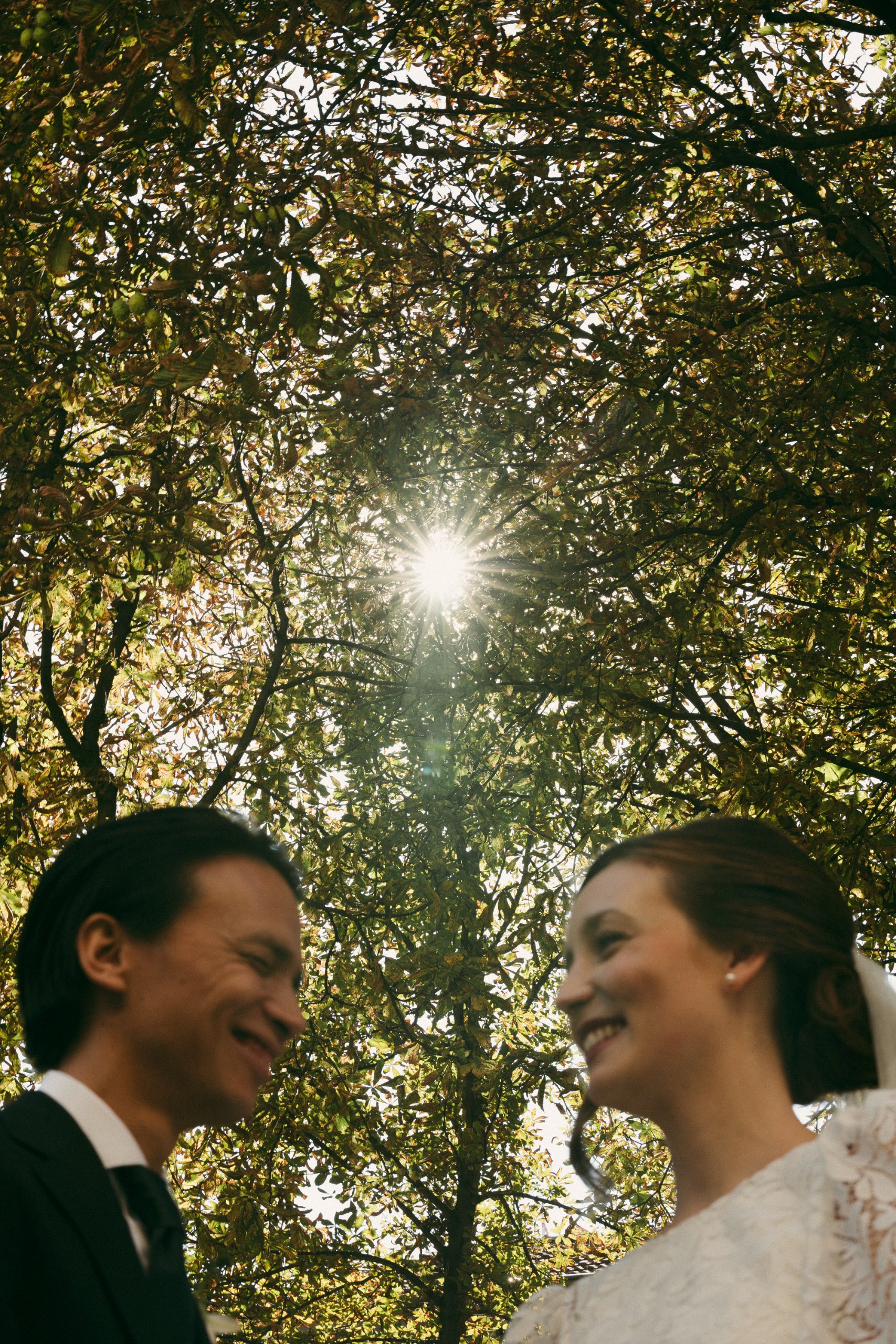
They shoot everywhere in the Loire Valley — in Saumur too. Their whole weddings are on their pages.
See all 9 photographers







Booking through Lens & Vows
Ceremonies
The town’s heritage service says this is probably the oldest town hall in the Loire Valley: a defensive tower rebuilt around 1500 and finished about 1517, its bastion wall nearly five metres thick, with an extension of 1858–63 by Charles Joly-Leterme. His first floor holds the wedding hall, reached by a monumental staircase: linenfold panelling, pointed doors crowned with dragons’ heads, painted beams carrying the letter S, and a great chimneypiece borne by two dragons. Its capacity isn’t published: ask.
As anywhere in France, one of you or a parent must have a home in the commune, or a continuous month’s residence when the banns go up for ten days. The town hall is on Rue Molière and sees people by appointment. A 2026 job description for its registry has staff working Saturday mornings and afternoons for weddings, but we found no published calendar for couples: ask for your date.
About 15 km south-east of Saumur, the abbey founded in 1101, where Henry II, Eleanor of Aquitaine and Richard the Lionheart lie, has a weddings section on its site and invites you to hire the whole abbey for private receptions, with vaulted spaces from 20 to 1,000 people and a hotel and starred restaurant on the site. It publishes no prices, deadlines or rules for ceremonies: use its enquiry form.
At Saint-Hilaire-Saint-Florent, about five minutes by car or fifteen on foot from the centre, this house has made sparkling Loire since 1851 in cellars dug into the tuffeau. It lists reception spaces including the Cave d’Étienne Bouvet, a theatre built for its workers and its dispatch and dressing halls. Its page doesn’t mention weddings or numbers, so write to it first.
In France a church wedding may only follow the civil one, so a blessing comes after your legal wedding, at home or in France. We found no published rules for couples from outside the parish at Saumur’s churches: ask them well ahead.
Portraits
Across the river the whole town lines up: the château, a slate spire, the quays and the town hall’s towers, reflected when the water is still, with the flat Loire boats moored in front. In June the sun sets to the north-west, so the evening light reaches the river front: on 15 June 2027 it sets at 21:58, with golden light from 21:11 to 22:22 (NOAA’s solar equations); on 15 September at 20:13.
Round towers and pointed slate roofs on a spur of white stone. Part of the north rampart collapsed in 2001 and was rebuilt until 2007, with a new grand staircase finished in 2012, so the walls you see are a mix of old and restored. The château publishes nothing on weddings or photo sessions: ask the town’s museum before bringing a photographer in. The town and the river lie below its walls.
Straight after the ceremony: a vaulted porch with the arms of Maine-et-Loire’s towns on its keystones, a courtyard between the 16th-century façade and its 19th-century twin, polygonal stair towers, a checkerboard of brick and stone, and a weather vane of five cranes on the roof, the old sign of vigilance.
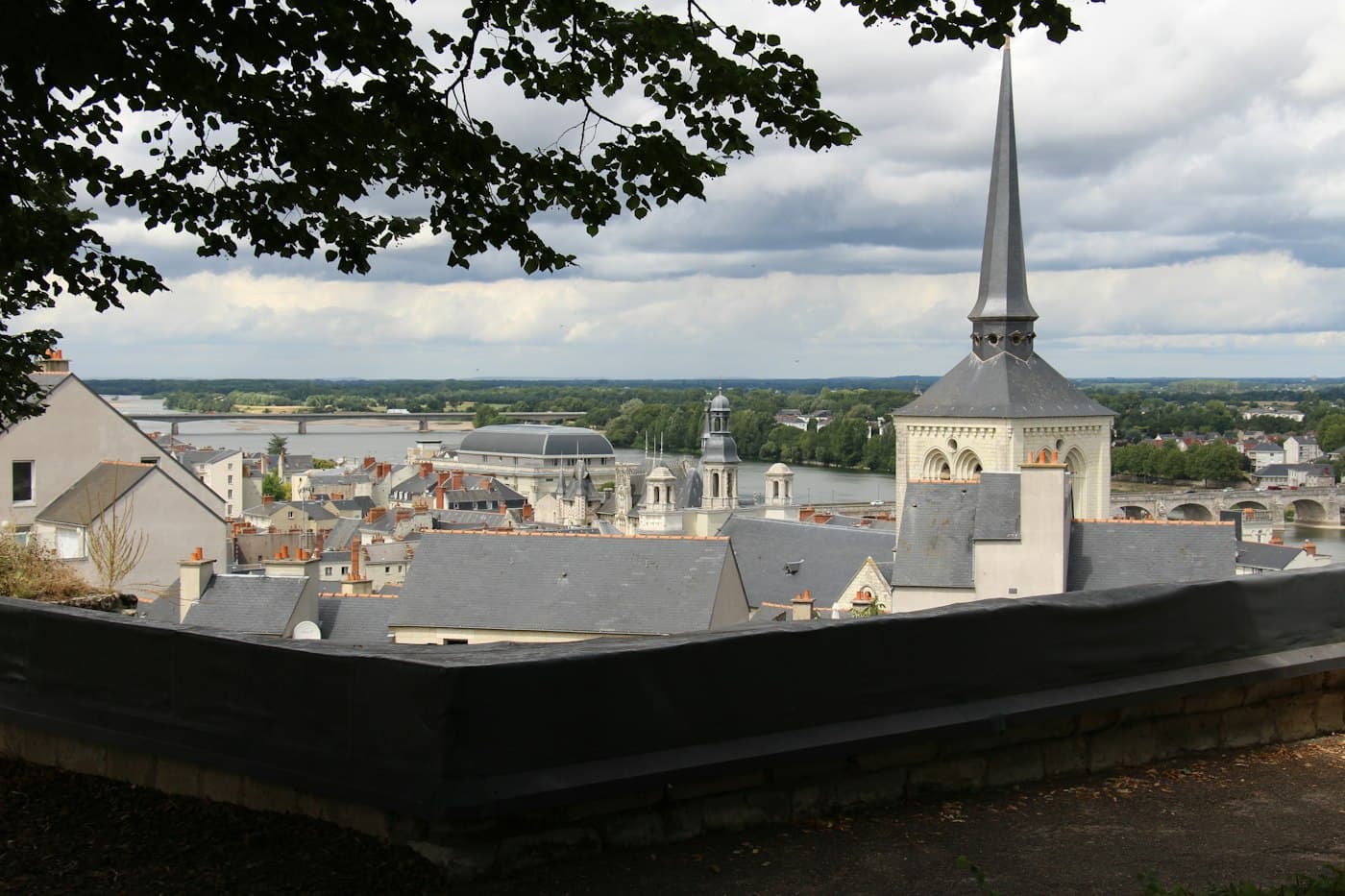
From the slope below the château the town falls away in grey slate and pale stone towards the river and its islands, with a tall slate spire in the middle. Evening or a clouded day suits it: white tuffeau burns out quickly in midday sun.
Tuffeau galleries under the ruins of the Abbey of Saint-Florent, with some 1,200 oak casks and an underground artwork, the Cathédrale Engloutie, on Bouvet-Ladubay’s tour. Low light and steady cool: a photographer needs the house’s agreement, and needs to see the place first.
Through the year
Saumur has no published Météo-France sheet of its own; the nearest we could open is Beaucouzé at Angers, about 47 km downstream (1991–2020 normals), which gives average highs of 23.5 °C in June and 22.4 °C in September, with rain on 6.8 and 7.6 days. July and August average about 26 °C, with some five days of 30 °C or more in each; July has the fewest rainy days, at 6.1. May is cooler, at 19.9 °C with rain on about nine days, and October is wetter, on nearly eleven.
Loire Valley, month by month
Practical
Saumur’s station is on the Tours–Saint-Nazaire and Chartres–Bordeaux lines, with regional trains, Intercités and some TGVs. We don’t quote journey times: look up your dates on SNCF, as they vary by train and day. Nantes is the region’s closer airport for this end of the valley.
The town, the château and the river front can be walked, but the château climbs a spur; the town hall’s wedding hall is upstairs too, so ask about access for anyone who can’t manage the staircase. Saint-Hilaire-Saint-Florent is a short drive and Fontevraud about 15 km, so plan a coach or shuttle if the reception is in either.
French open-category rules ban flights over any gathering of people, at night, and over public space in a built-up area, and set a ceiling of 120 metres. Most of the river front is covered by that: check the official Géoportail map first, and ask the owner before flying over any château, abbey or estate.
Being born here isn’t enough: France asks for a lasting link to the commune, through your home, a month’s residence or a parent’s. The file goes to the mairie, with originals, and the date is fixed with it once complete. Most couples from abroad marry legally at home; our guide to getting married in France sets out the steps.
Questions
Its site says nothing on weddings or private hire, so ask the town’s museum there. A legal civil ceremony in Saumur takes place with the mairie, in the town hall’s wedding hall as far as we can tell; and it needs one of you, or a parent, to live in the commune or to have been there for a month.
The abbey invites it: its events pages have a weddings section and offer the whole site for private receptions, with spaces for 20 to 1,000 people and a hotel on site. Its pages don’t set out the rules for a ceremony, the prices or the deadlines, so use its enquiry form. A legal wedding still has to be at a mairie.
Bouvet-Ladubay lists reception spaces in its cellars and buildings at Saint-Hilaire-Saint-Florent, but doesn’t say whether it takes weddings or how many guests, so write to it. Bring layers: the galleries are cut into the rock, and the visit is cool even in summer.
From across the Loire, where the château, the spire and the quays line up over the water. Go in the last hour of light: on 15 June 2027 the sun sets at 21:58, with golden light until about 22:22. A still evening gives you the reflection.
June and September: average highs of 22–24 °C at the Angers station, with rain on seven or eight days a month. July and August are warmer, about 26 °C, with July the driest month. In May and October it rains more; pack a covered plan whichever you choose.
Loire Valley
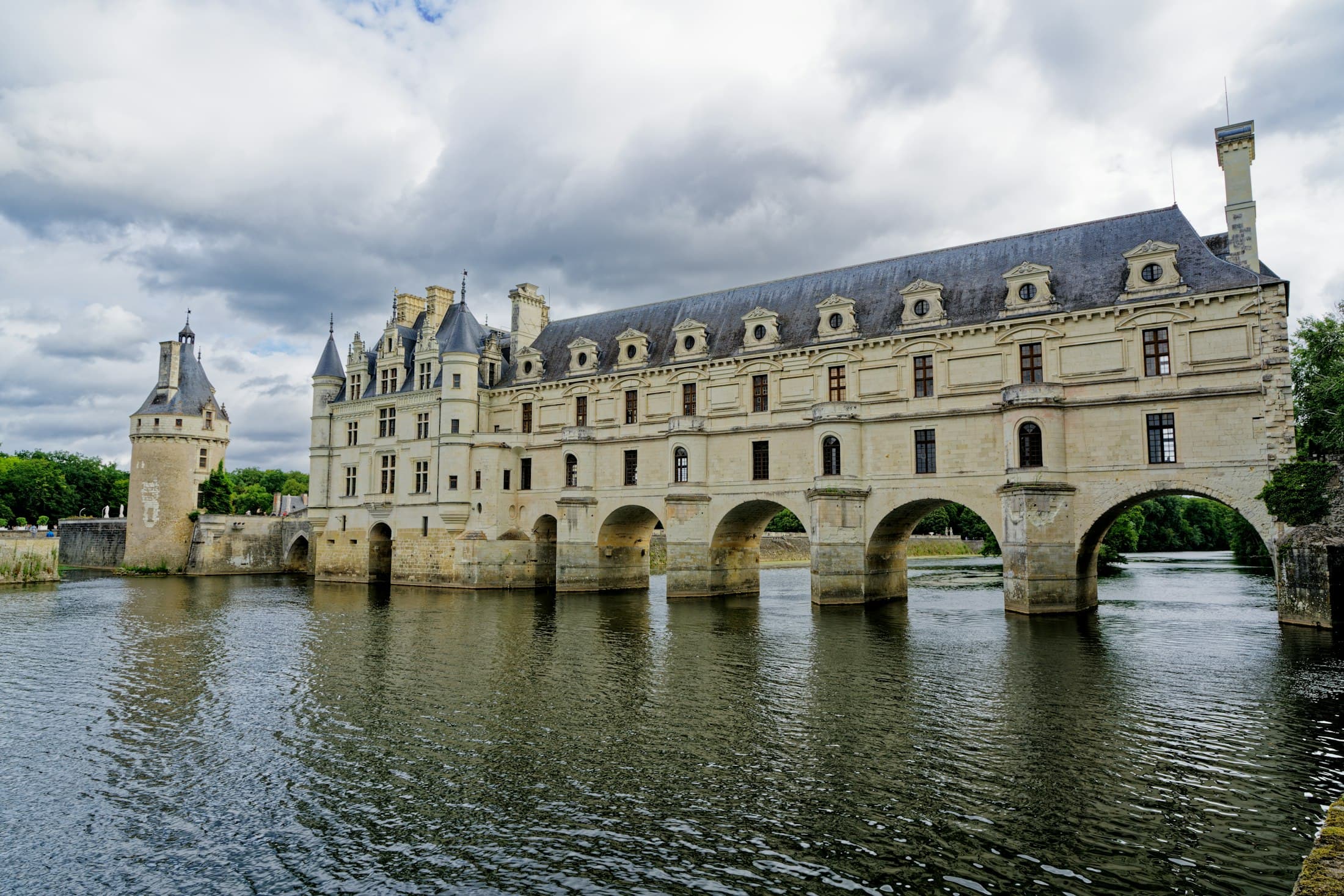 Loire ValleyThe whole region: when to marry, the kinds of places, the light, getting there.
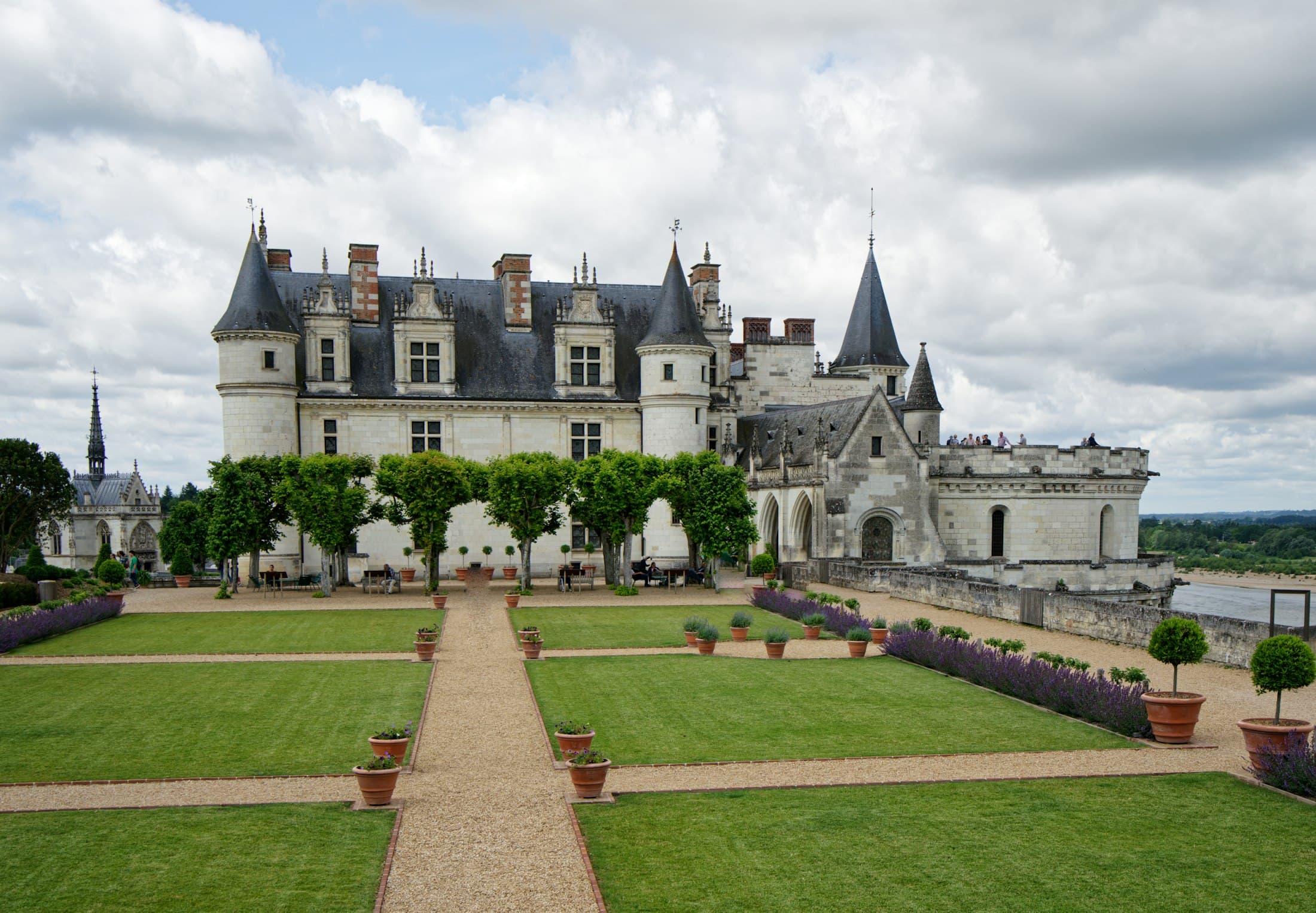 AmboiseA royal château on a spur above the Loire, where Leonardo da Vinci spent his last three years — and which, by its own rule, hosts no weddings.
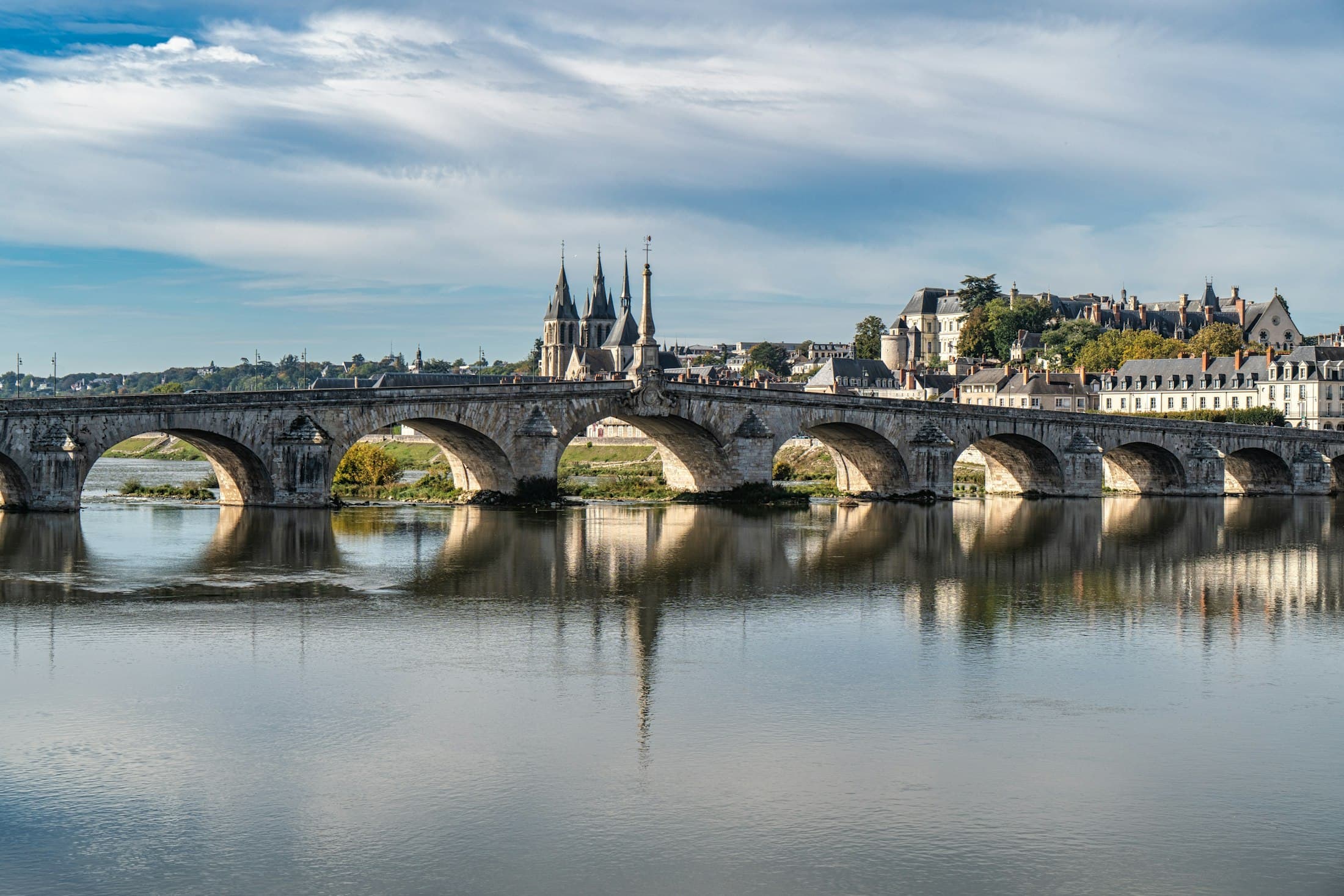 BloisA real town on a steep bank of the Loire: you marry in a bishop’s palace, and the royal château, a stone bridge and a giant staircase are a walk away.
Plan
Not sure yet?
The place, the date, the guests, the photos you like. Our concierge checks who is free and fits, and comes back with photographers to choose from.