Founding photographer
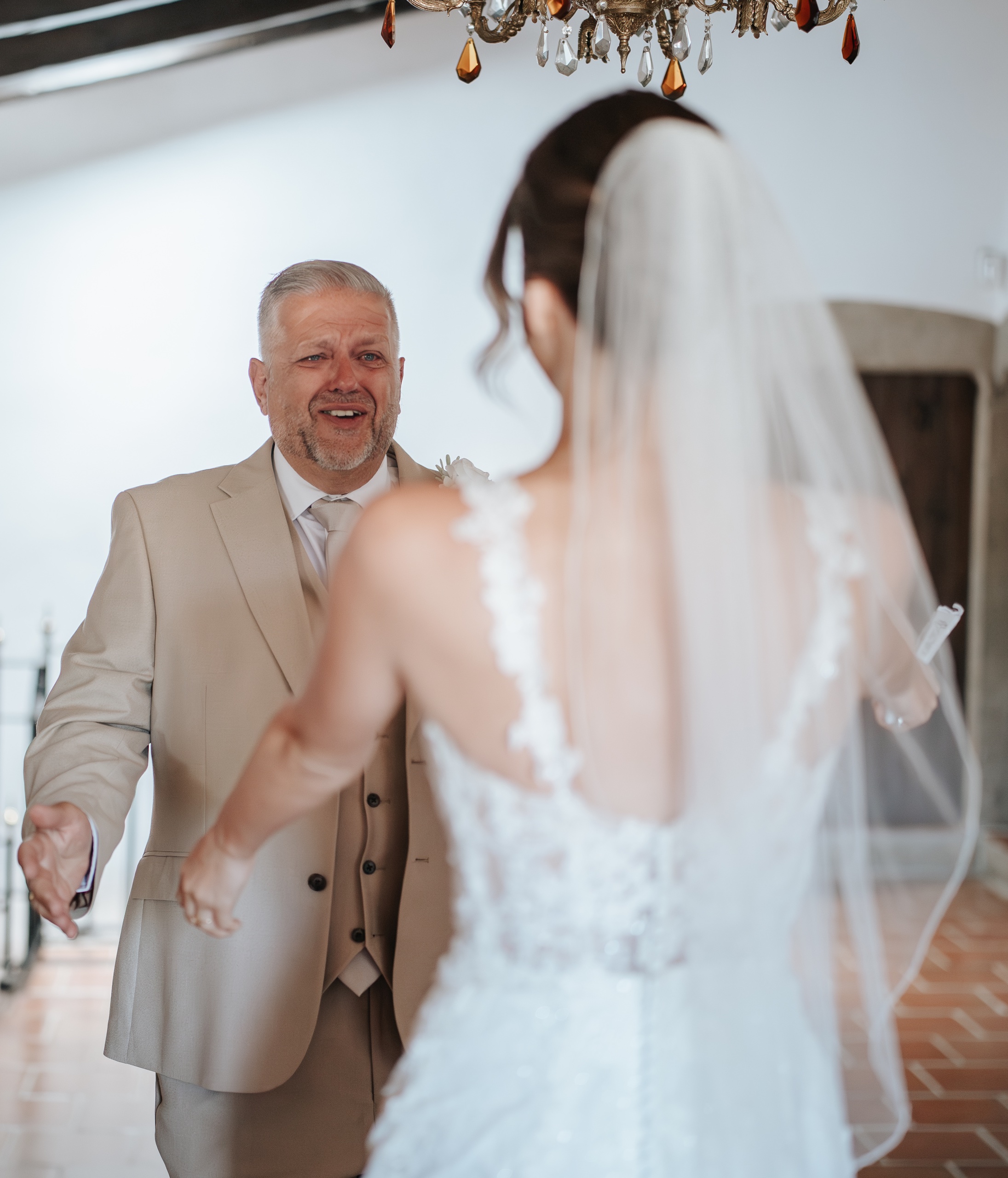
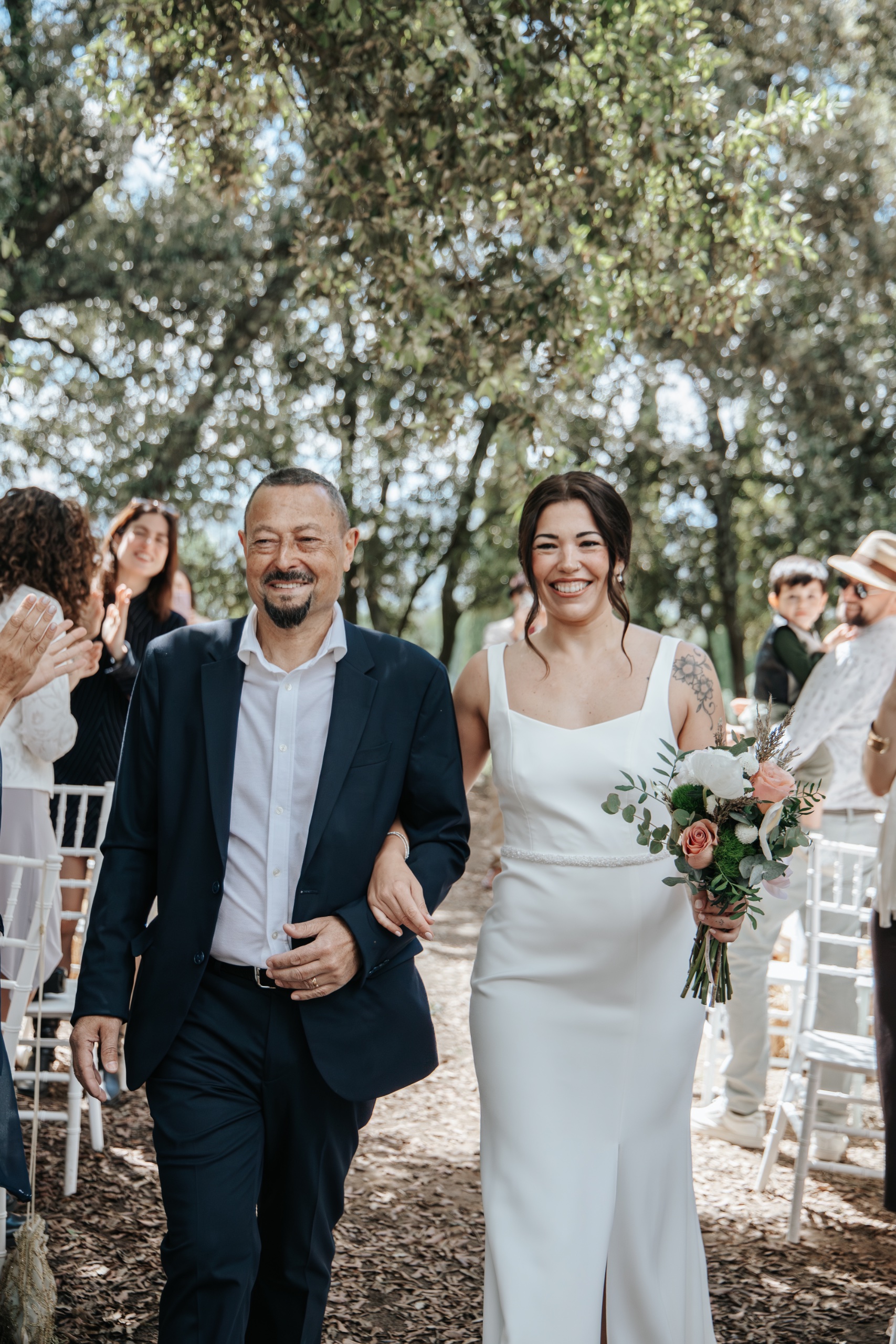
Evgenia G.from €800
Barcelona & Catalonia, Madrid +5 · Documentary, RomanticWedding photographers in Spain
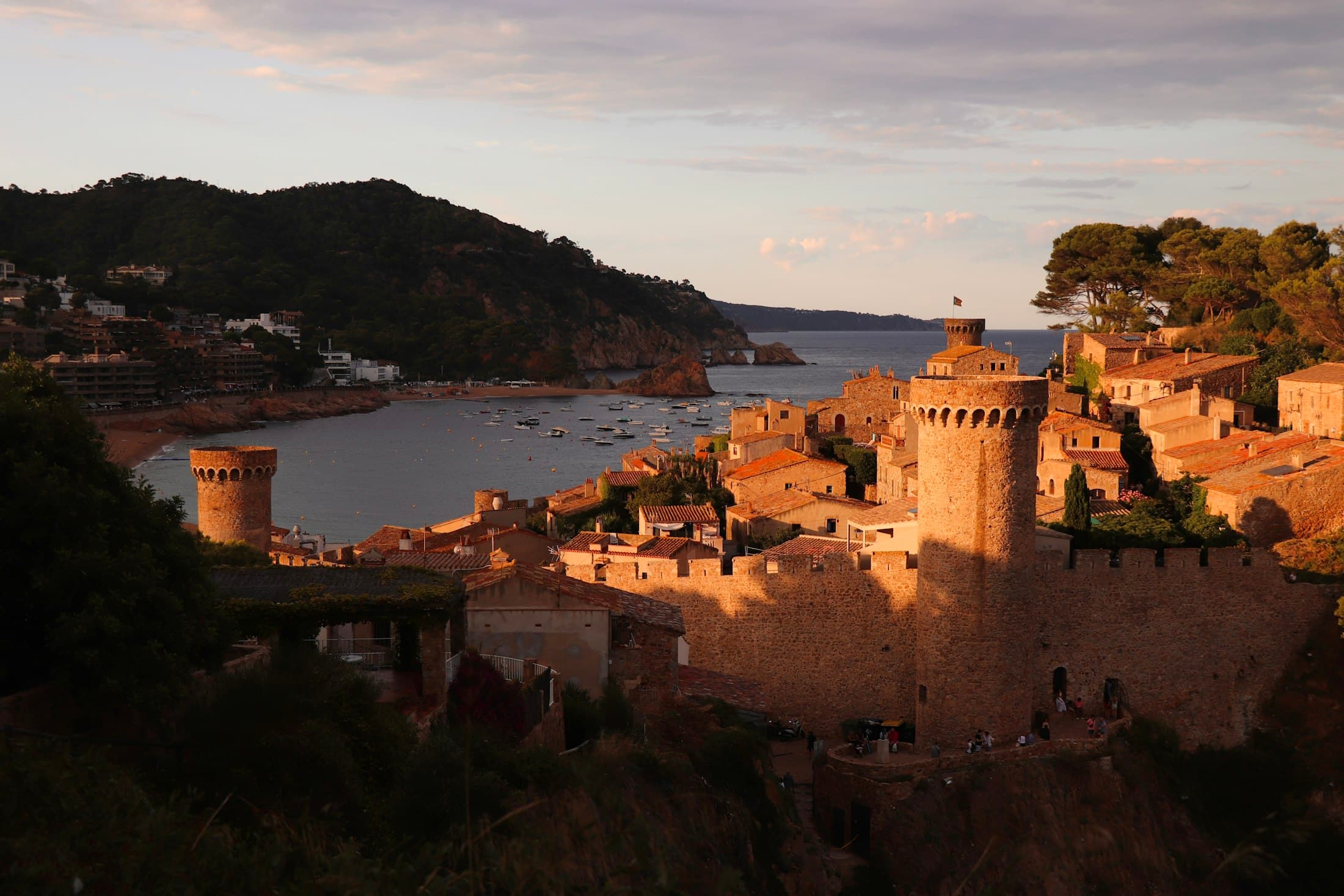
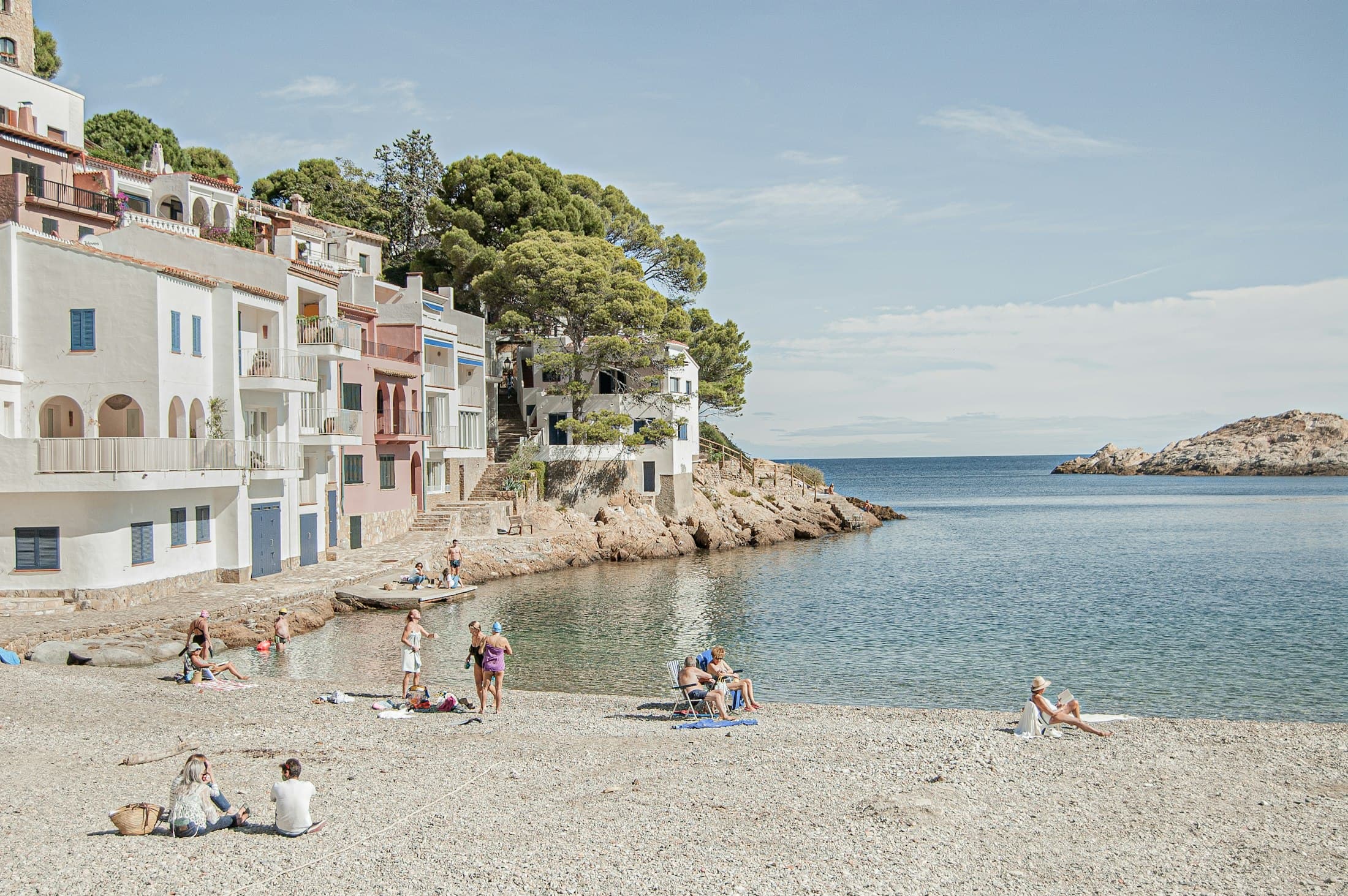
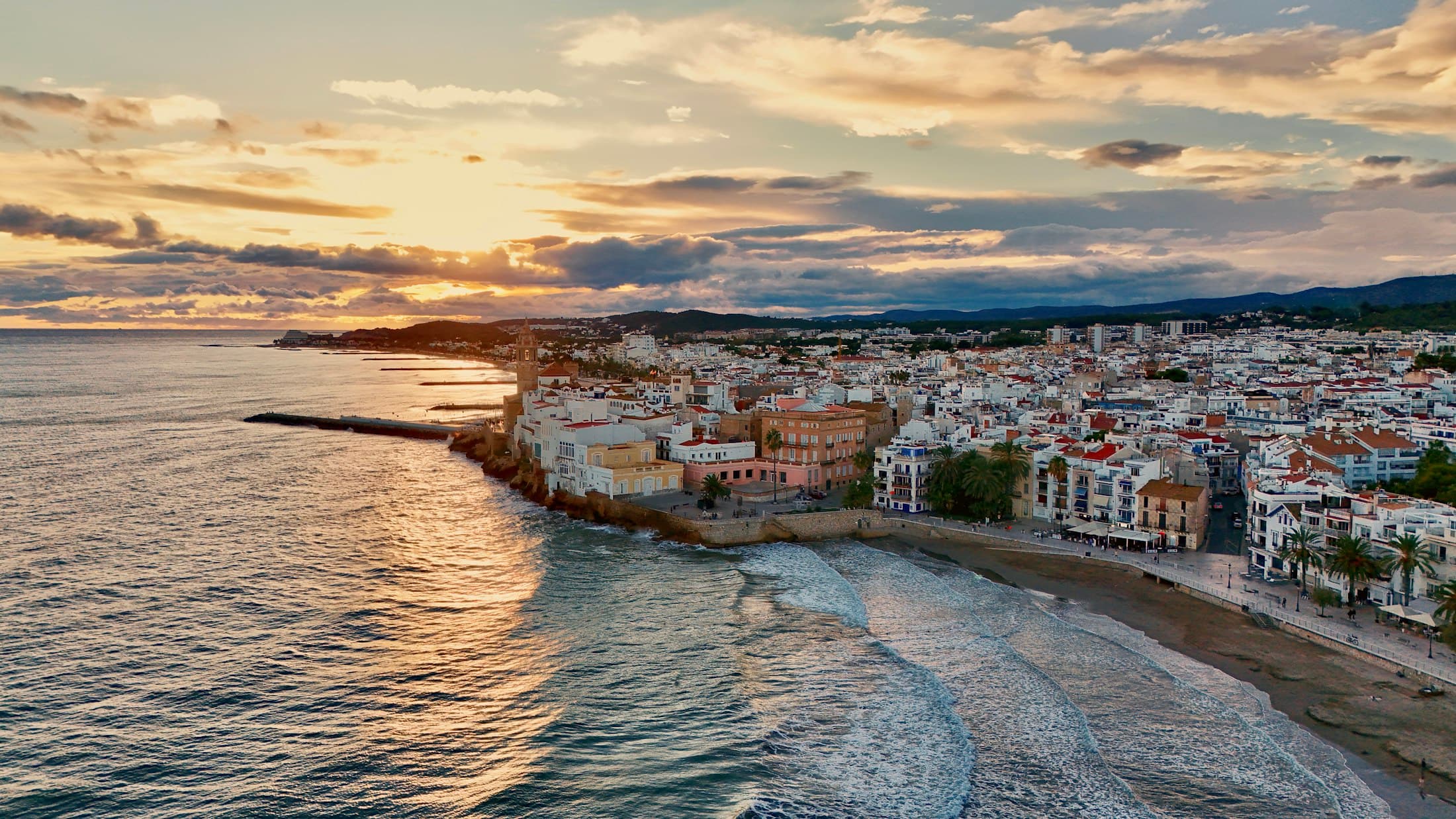
220 km of coves, pine headlands and stone villages between Blanes and the French border — a coast for small ceremonies and long dinners.
The Costa Brava is a coast, not a town, and couples pick one corner of it: the walled old town of Tossa de Mar in the south; the coves of Begur and the fishing beaches of Calella de Palafrugell and Llafranc in the middle; Cadaqués and Cap de Creus in the north. Inland, the Empordà has stone villages such as Peratallada, and old farmhouses (masies) turned into hotels.
Weddings here tend to be smaller and spread over a weekend: a welcome dinner in a village, the ceremony in a masia’s garden or above a cove, dancing in a courtyard. The coast faces east, so the sun rises out of the sea — the hour for an elopement — while the evening light belongs to the villages inland.
Photographers
They shoot everywhere in Barcelona & Catalonia — on the Costa Brava too. Their whole weddings are on their pages.
See the photographerCeremonies
Mas de Torrent is an 18th-century masia among vines and olive trees; Castell d’Empordà, a 14th-century castle above La Bisbal, holds ceremonies in its olive grove or the Remei chapel and the dancing in a cave, and asks for all 57 rooms for exclusive use.
The mayor or a councillor marries you, and each town sets its own rules. Palafrugell — Calella, Llafranc and Tamariu included — marries couples where one is registered, born or keeps a second home there, on Saturdays, in its council chamber for up to 35 people, with the request in two months ahead.
A symbolic ceremony on a headland or a garden terrace over the sea. Beaches and the coastal path are everyone’s: portraits are fine, but chairs or an arch need the town hall’s permission, and in July and August the coves are full by mid-morning.
Portraits
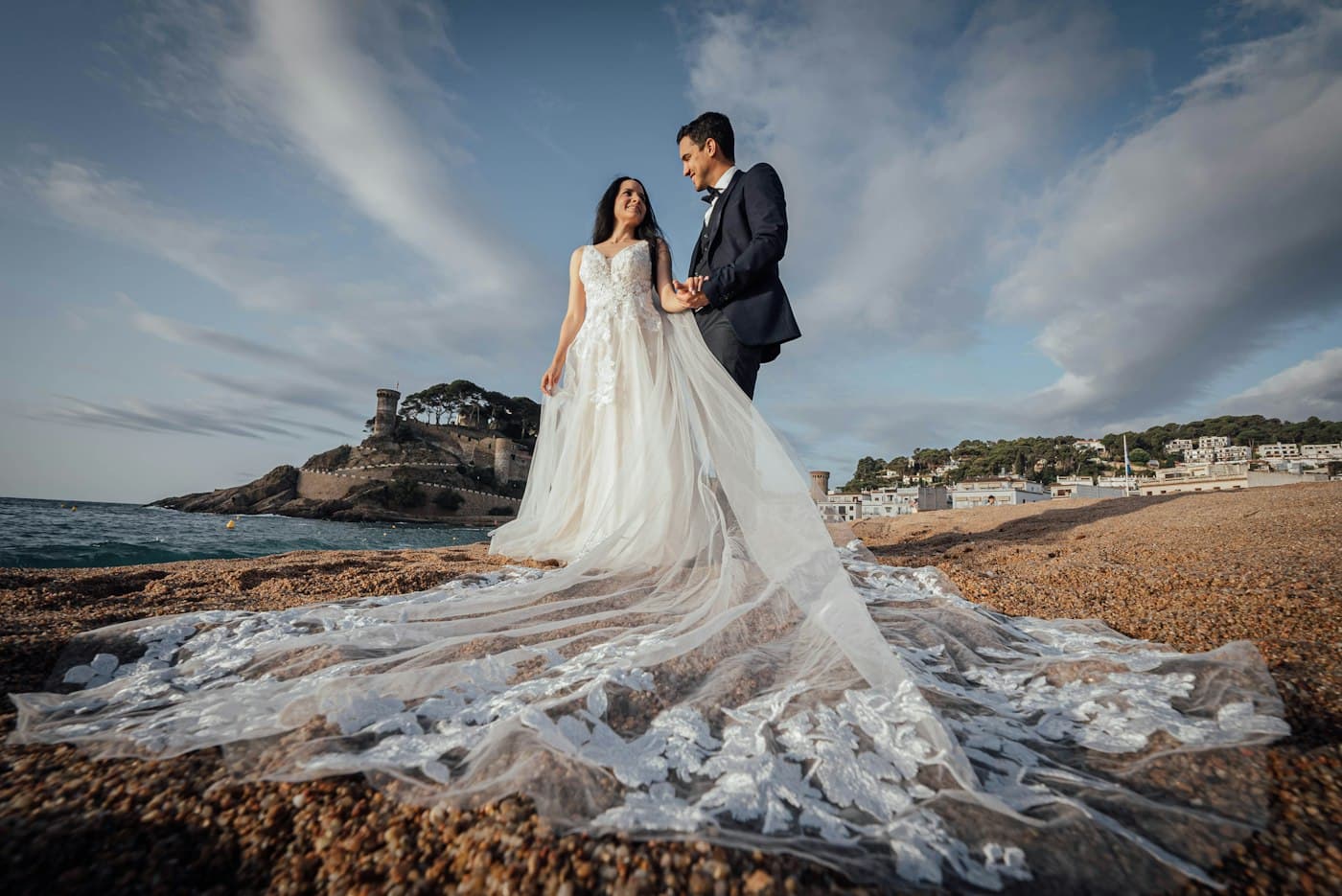
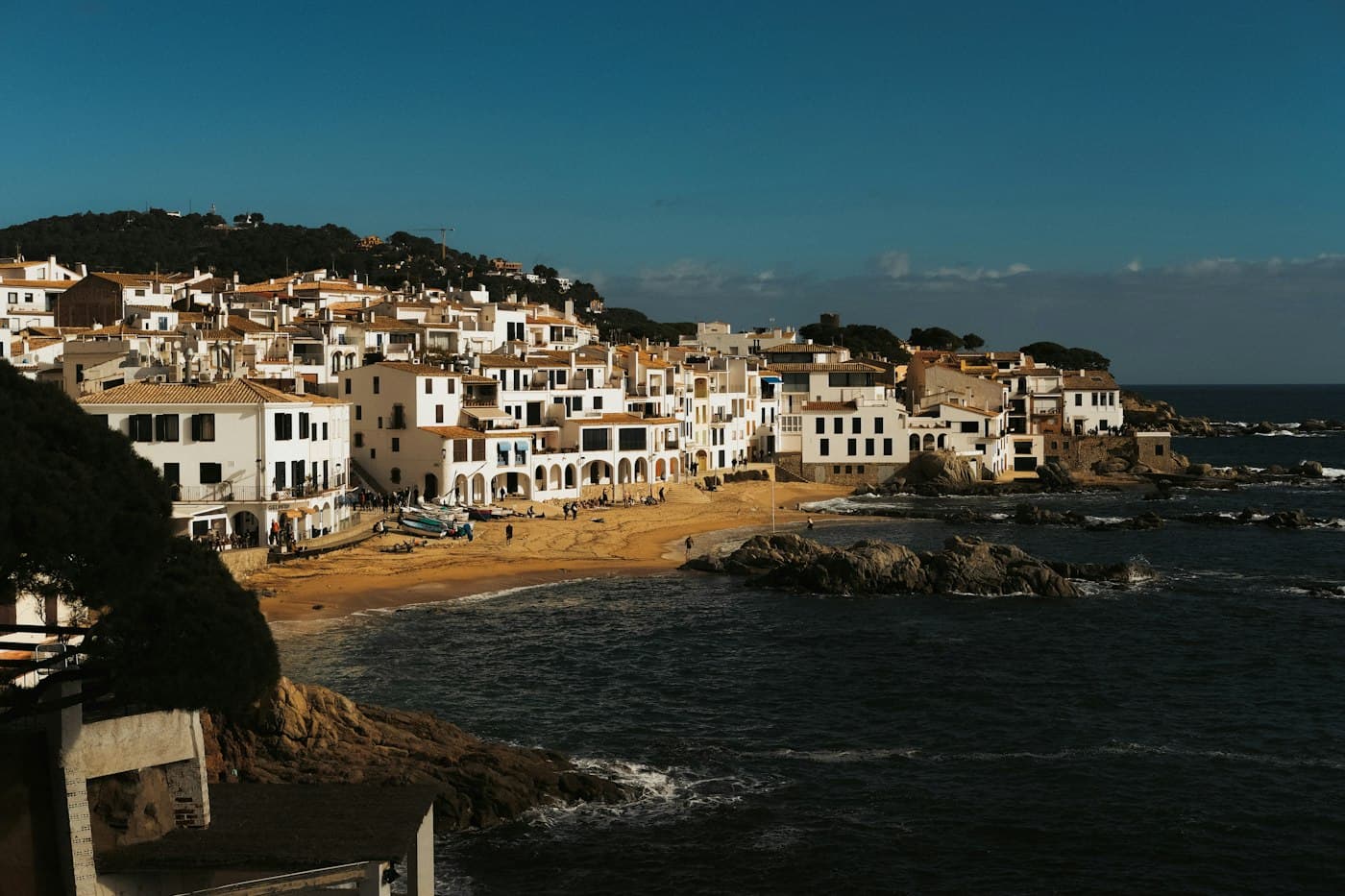
Les Voltes, the arcades of the old fishermen’s houses, and Port Bo beach with its boats, protected as a cultural asset since 1995. The sun rises out of the sea in front of them; by mid-morning in summer the beach is full.
The only medieval walled town still standing on the Catalan coast: walls and seven round towers from the 12th to 14th centuries on a headland, a lighthouse where the castle stood, and the bay below.
The village sits about 200 m above the sea, over eight coves and beaches — among them Aiguablava, some 80 m of fine sand and turquoise water, and the fishing cove of Sa Tuna — linked by the GR 92 coastal path. Walk in comfortable shoes and change at the cove.
The easternmost point of mainland Spain and its first sunrise: wind-carved rock and a lighthouse in a natural park. Stay on the marked paths — the cape is a strict nature reserve.
Inland, a medieval village of stone lanes and a moat cut into the living rock — shade at midday, when the coast is glaring.
Through the year
May, June and September are the best months. The nearest long-run station, Girona airport (AEMET 1981–2010, inland at 143 m), averages highs of 22.4 °C in May, 26.6 °C in June, 30.1 °C in July and 26.1 °C in September. Summer brings thunderstorms — 4.9 storm days in August and 3.8 in September — and October is the wettest month (88 mm). August is crowded: Begur’s 4,300 or so residents become more than 40,000 in summer. On the night of 23 June, Sant Joan, Catalonia lights bonfires and fireworks.
Barcelona & Catalonia, month by month
Practical
Girona–Costa Brava airport, 12.5 km from Girona, is the closest; Barcelona’s, much further south, has far more flights. High-speed trains from Barcelona, Madrid and France stop at Girona and Figueres–Vilafant. After that you need a car or coaches.
In 2026 private cars were barred from the lighthouse road every day in July and August from 09:30 to 21:30, and on set spring and autumn days; a shuttle runs from the free Corral d’en Morell car park in Cadaqués. Sunrise falls outside those hours — check the Generalitat’s calendar for your year.
The north wind on this coast can blow hard enough to be a real nuisance. Bring weights for anything standing, a plan for the veil and a sheltered second spot for the ceremony, especially on the northern headlands.
A civil wedding needs one of you to live in Spain, where the marriage file is opened, and the town’s consent; a Catholic one goes through your home parish; most couples from abroad marry at home and hold a symbolic ceremony here.
Questions
It depends on the picture: Tossa for medieval walls over a bay, Begur and Palafrugell for coves and fishing beaches, Cadaqués and Cap de Creus for bare rock and the first sunrise, the Empordà for masies, castles and stone villages. Pick one corner for the weekend — the coast is 220 km long.
In a symbolic ceremony, yes, but chairs or an arch on a public beach need the town hall’s permission, and summer beaches are full. A garden or terrace over a cove for the ceremony, and portraits on the sand at sunrise, is the easier plan.
It can: Girona airport averages 70 mm over 6.5 rainy days in September, with 3.8 storm days, and October is wetter still (88 mm). The rain often comes as short storms, so a covered place for the ceremony is usually enough.
Yes, once your marriage file is approved — which needs one of you to live in Spain — and if the town agrees, since each sets its own rules. Palafrugell, for example, marries couples where one is registered, born or has a second home there.
Barcelona & Catalonia
Plan
Not sure yet?
The place, the date, the guests, the photos you like. Our concierge checks who is free and fits, and comes back with photographers to choose from.