Verified — Identity verified by Lens & Vows

Erik V.from €900
Zagreb & the Plitvice Lakes, Dubrovnik +35 · DocumentaryBased in Austria · travels to weddings in CroatiaWedding photographers in Croatia
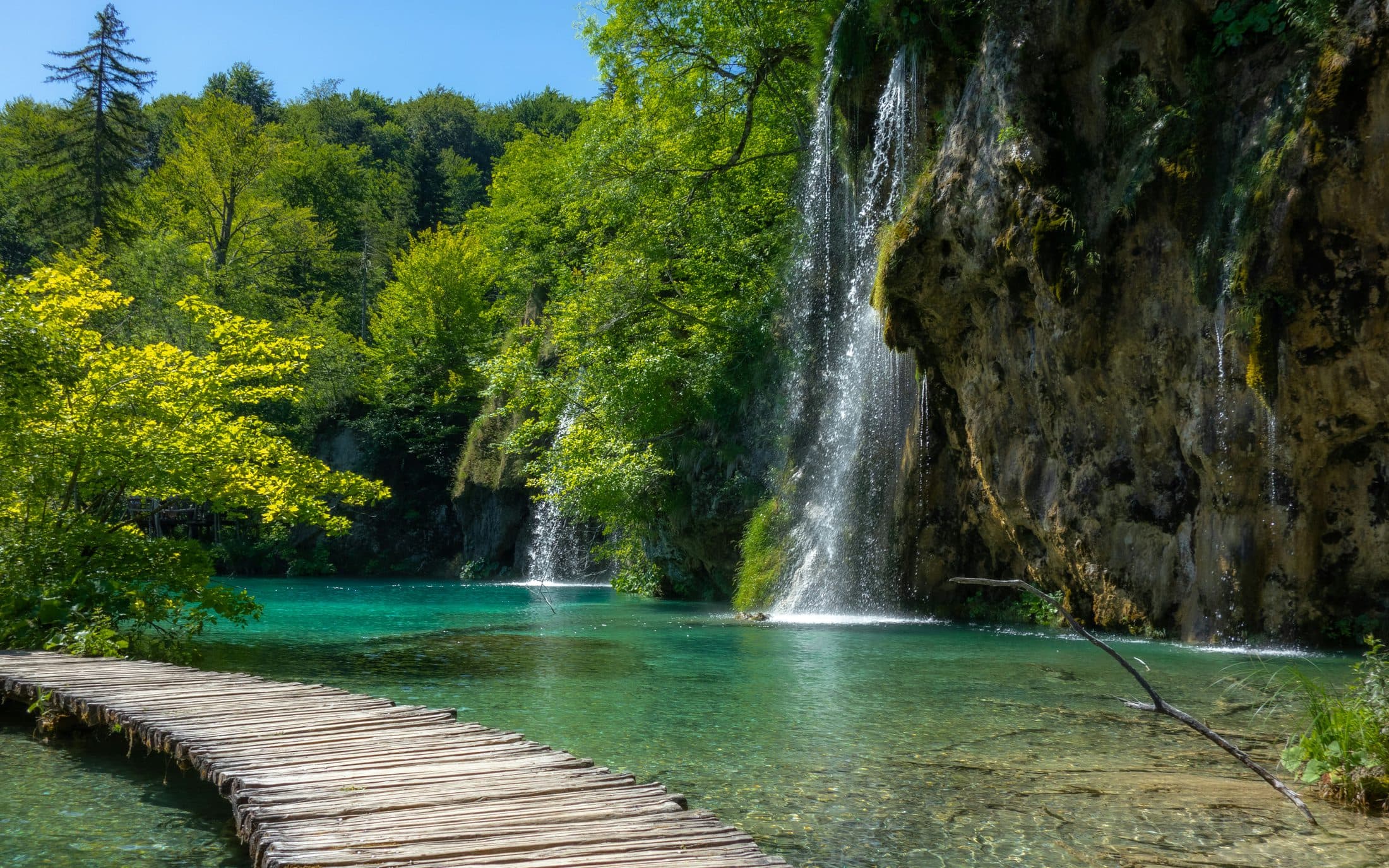
A capital on its hill and a national park of falling water: Zagreb’s Upper Town with St Mark’s colourful church, the parks of Maksimir and the Botanical Garden, Trakošćan’s castle above its lake in the Zagorje, Samobor below its ruined castle, and the Plitvice Lakes stepping down through the forest two hours to the south.
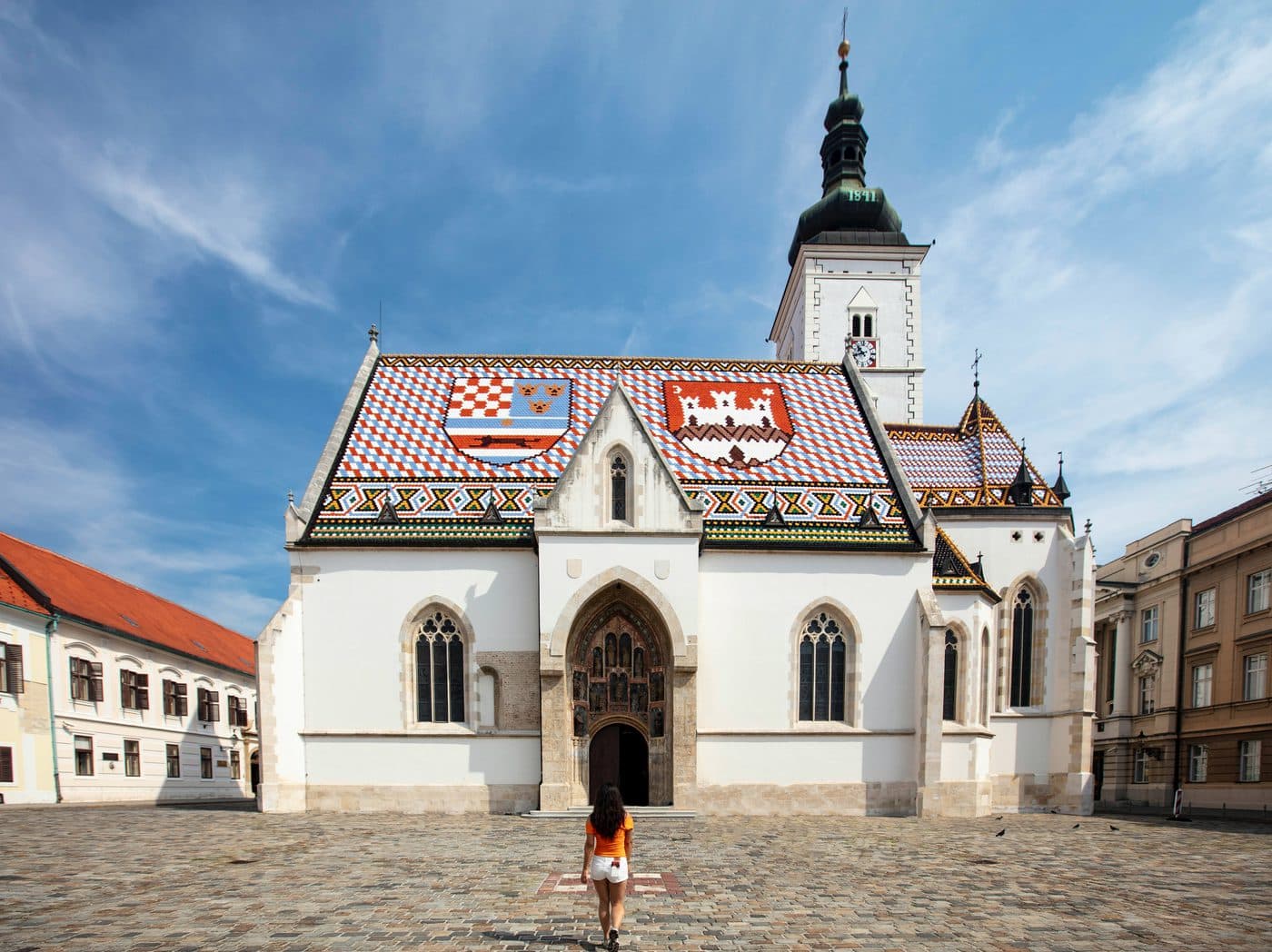
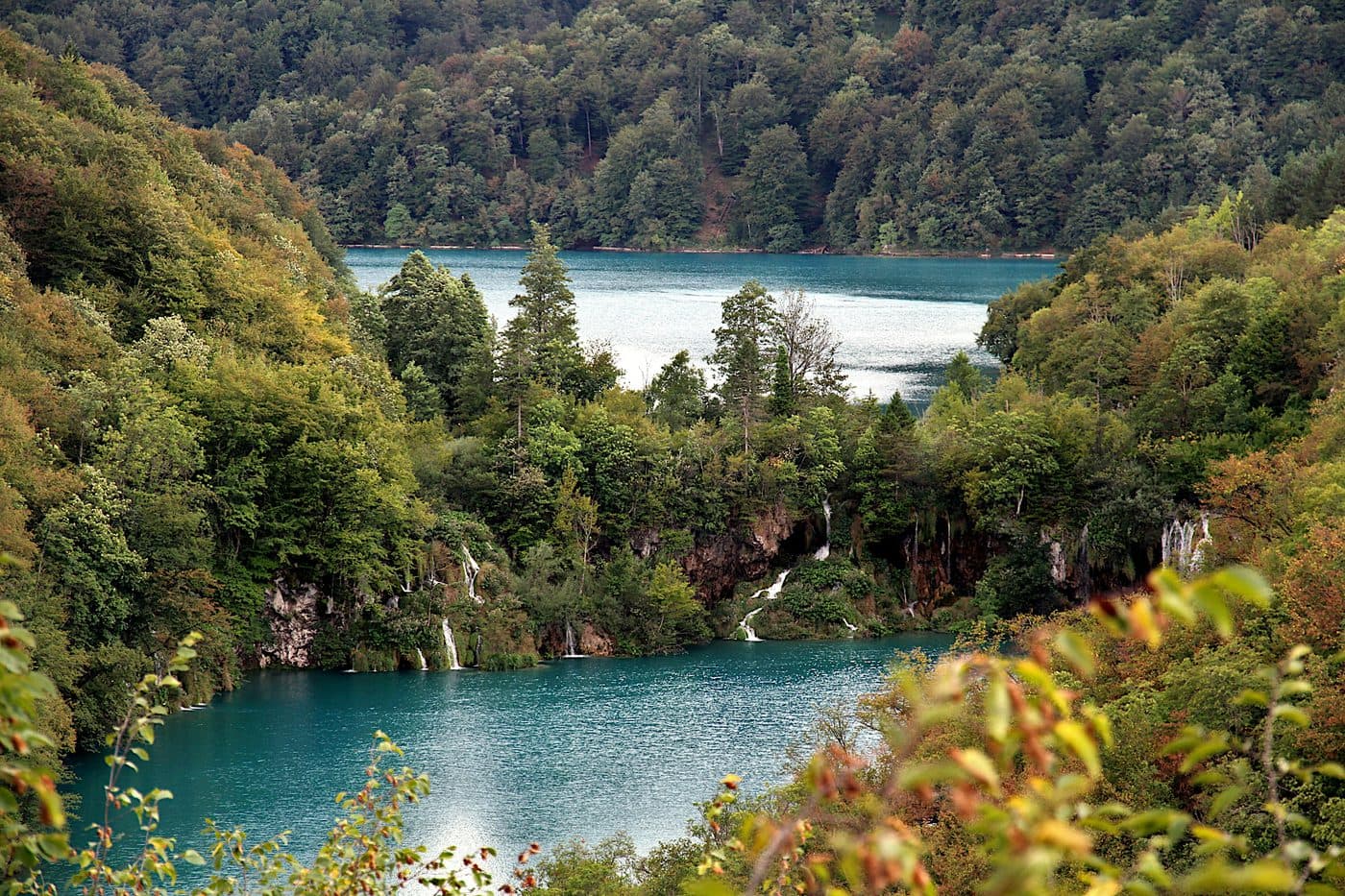
Zagreb’s Upper Town keeps one of the city’s oldest buildings, St Mark’s Church: built in the 13th century, it has a sumptuous Gothic south portal and, on its north-west wall, the oldest known coat of arms of Zagreb, from 1499. A funicular in service for more than a century links the Upper Town with the Lower Town, running again since 19 May 2026 after more than a year of renovation. East of the centre lies Maksimir, a protected landscape park of lawns, oak woods and five lakes, and by the railway the Botanical Garden, planted from 1892 in the English landscape style. About two hours south by road, the Plitvice Lakes became Croatia’s first national park in 1949 and joined UNESCO’s World Heritage List in 1979: 16 named lakes and several smaller ones step down over barriers of tufa, the Upper Lakes among forest on dolomite, the Lower Lakes in a limestone canyon, to the Sastavci falls, where the Korana river rises.
In Zagreb, four of the city’s registry offices marry couples in the two ceremonial halls of the Old City Hall, a minute’s walk from St Mark’s; the pictures then move to the Upper Town, the parks, a castle in the Zagorje or the lakes. In Croatia a marriage is legal before a registrar (matičar), in the registry office’s official room or, if the registrar agrees and for a special fee, at another suitable place, or before a minister of a church with an agreement with the state, such as the Catholic Church; couples from abroad can marry here on the same terms as Croatians, and same-sex couples can’t marry, but they can register a life partnership. The country page explains the notice and the papers.
Photographers
They still have dates open here. Their whole weddings and free dates are on their page.
See the photographerBooking through Lens & Vows
Through the year
May, June and September are the easiest months. In the Croatian Meteorological and Hydrological Service’s (DHMZ) 1971–2000 normals for Zagreb-Maksimir, the highs are 21 to 22 °C in May, 24 to 25 °C in June and 22 °C in September, and 1 mm of rain or more falls on eight to ten days a month. July and August are the warmest, at about 27 and 26 °C, with thunder on seven or eight days a month from June to August, and DHMZ’s longer series for the station, 1949–2024, counts eight days of 30 °C or more in each of them. At the lakes the season matters as much as the weather: the Upper Lakes usually stay closed in winter until early April, and from June to September tickets cost the most. Winter is cold and grey in Zagreb and colder still in the Lika highlands: snow lies on some 16 days in January at Gospić, the nearest station to the lakes with DHMZ’s normals. Whatever the month, keep a roof in the plan: a hall in town, a castle room, a covered terrace.
Weather station: Zagreb-Maksimir, normals 1971–2000 · Checked 3 November 2026
Places
The kinds of places — ask your photographer which ones they know well.
St Mark’s Church stands in the square at the heart of the Upper Town, and the Old City Hall, where the civil ceremonies take place, is a minute’s walk away. From there the lanes lead to the Lotrščak tower and the top of the funicular, and to the promenade that runs east from the tower along the hill’s southern edge, looking out over the roofs of the Lower Town; in autumn and winter the sun goes down in the south-west, to the right of that view. We found no published city rule on photo shoots in the streets, so ask the city before planning one with lights or a crew. The city’s protected parks are another matter, Maksimir and the garden squares of the Lower Town among them: the public body that manages them, Priroda Grada Zagreba, charges €100 a day (2026) to photograph a wedding there, with an approval asked for in advance; snapshots for yourselves need none.
Maksimir, east of the centre, is protected as a monument of landscape architecture: wide lawns, oak woods and a chain of five lakes, with a 17 m belvedere pavilion built in 1841–1843 and a Swiss-style chalet finished in 1842. The Botanical Garden near the main railway station, begun in 1890 and planted from 1892 in the English landscape style, has been protected since 1971 and holds 5,000 or more plant species. It opens for the season in spring and stays open until sundown, and its rules are strict — no walking on the lawns, no shouting, no picking flowers — so ask the garden before planning a shoot there.
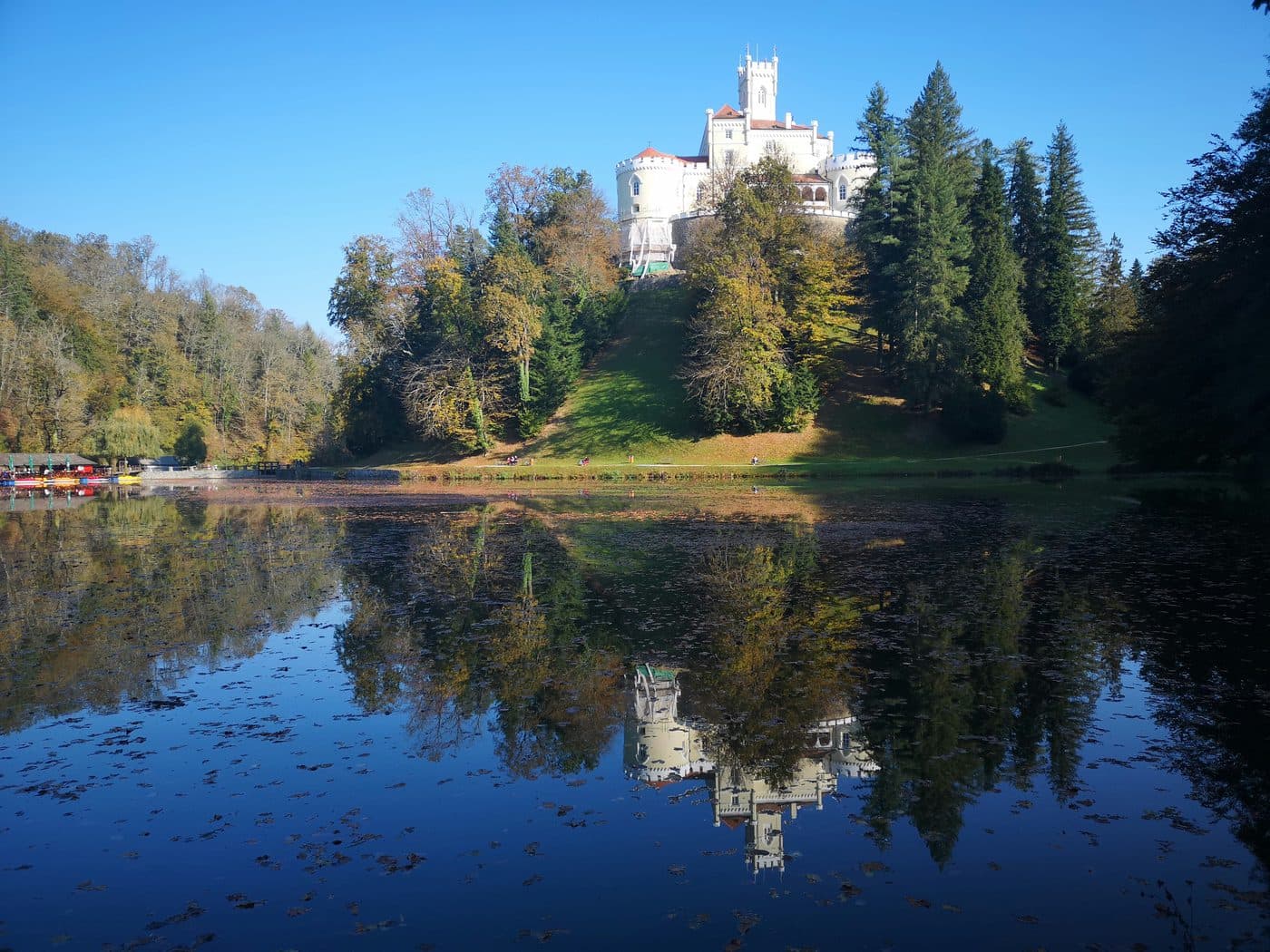
Trakošćan’s castle stands on a wooded hill in the Zagorje, 80 km north of Zagreb by road. Its oldest parts go back to the 13th century; in the mid-19th century it was remade as a residence and given a romantic landscape park and a lake, made both as a fishpond and as an ornament. Today it is a museum, open every day but Christmas and Easter, from 9:00 to 18:00 from March to October and to 16:00 in winter, and it prices weddings openly (from 10 September 2026, plus 25% VAT): a couple’s photos in the park €120; the park and up to an hour inside the castle after closing time, for up to ten people, €300; a wedding in the chapel €200, photos in the park included. Part of the path round the lake is closed after a landslide (November 2026). West of Zagreb, Samobor’s main square of listed late-Baroque, Classicist and Bauhaus houses lies below a hill with the ruins of a castle first built in 1268; the town says plainly that you enter the ruins at your own risk.
Croatia’s oldest and largest national park covers just under 300 km² of forest and meadow, and the lakes just under 1% of it. Two entrances on the D429 road, about 3 km apart, lead to the walks: from Entrance 1 into the Lower Lakes’ canyon and to the Great Waterfall, the largest fall in the park and in Croatia; from Entrance 2 to the electric boats across Lake Kozjak, the largest lake, and on to the Upper Lakes. Tickets are for a chosen time, and you may be an hour late at most; leaving the marked trails, swimming and drones are all banned. The park arranges weddings itself, with ceremonies at viewpoints, on Kozjak’s shore, on boats for 50 or 100 guests or in the wooden gazebo near Entrance 1, and photo sessions at its finest spots booked at least a week ahead. Any other professional photography needs the park’s permit, asked for at least 20 days ahead, and a ranger at your side: €130 for an hour or a whole day of photographs, the ranger €20 an hour, and the entry tickets on top (2026).
Light
Zagreb lies inland at almost 46° north, so summer evenings are long and winter days short. At midsummer the sun rises at about five past five and sets at about ten to nine, far round in the north-west; it is still 10 degrees up at about twenty to eight, and the sky stays light until about half past nine. In mid-May it sets at about twenty past eight, in mid-September at about ten past seven and in mid-October at about ten past six; at midwinter it is up only from about half past seven until a quarter past four, and no higher than about 21 degrees at noon. Zagreb-Maksimir averages almost nine hours of sun a day in July and under two in December, and autumn and winter bring fog, on eight to eleven days a month from October to January. At Plitvice the sun keeps much the same hours, but the Lower Lakes lie in a deep canyon and lose the direct sun before it sets; the viewpoints along the canyon’s east side look west across the water, with the morning sun behind them. Trakošćan’s museum closes at 18:00 in summer, so an evening session inside the castle is one you arrange with the museum.
Travel
Zagreb Airport is 18 km by road from the Upper Town; the airport shuttle bus reaches the city’s main bus station in 35 to 40 minutes, and the city bus 290 takes 45 to 50. From the airport it is 39 km to Samobor, 95 km to Trakošćan and 145 km to the Plitvice Lakes’ Entrance 1; from the Upper Town, 24 km to Samobor, 80 km to Trakošćan and 133 km, about two hours, to Plitvice. Buses from Zagreb’s main bus station reach Samobor in 30 to 40 minutes, and the coaches between Zagreb and Zadar stop at both park entrances; Zadar’s airport, 134 km from Entrance 1, is the other way in, from the coast. Drones fly under the EU’s rules: an operator registered in the EU country where they live (from outside the EU, in the first EU country they fly in), insured for filming, in sight, below 120 m and clear of people not involved, with the zones checked in Croatia Control’s AMC Portal app; beyond a targeted shot of a single site for its owner, filming from the air may also need the State Geodetic Administration’s approval, and over a national park or nature park the park’s consent too. At Plitvice drones are banned outright. At Trakošćan they need the museum’s written consent, asked for at least five working days ahead with the pilot’s A1/A3 or A2 certificate and liability insurance, and they never fly inside the castle; over Zagreb’s protected parks, Priroda Grada Zagreba charges €800 a day for filming from the air (2026).
Plan
Croatia