Verified — Identity verified by Lens & Vows


Erik V.from €900
Zadar & Šibenik, Dubrovnik +35 · DocumentaryBased in Austria · travels to weddings in CroatiaWedding photographers in Croatia
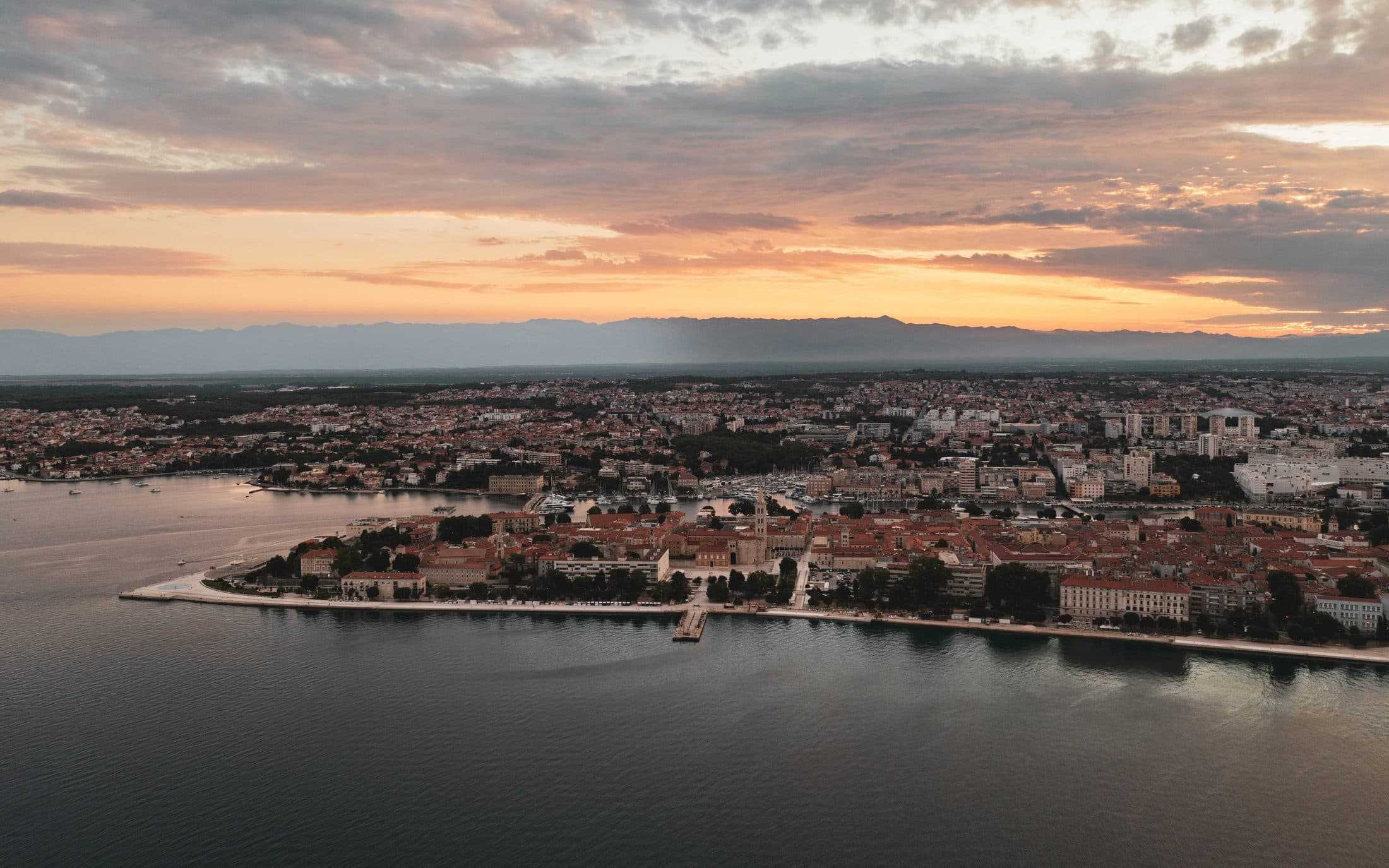
Zadar’s old town on its peninsula, where the Sea Organ plays under the waterfront and the Greeting to the Sun lights up at dusk, Nin in its sandy lagoon 18 km to the north and, 90 km to the south-east, Šibenik’s cathedral and fortresses, with the falls of the Krka, the islands of the Kornati and Primošten on its little peninsula close by.
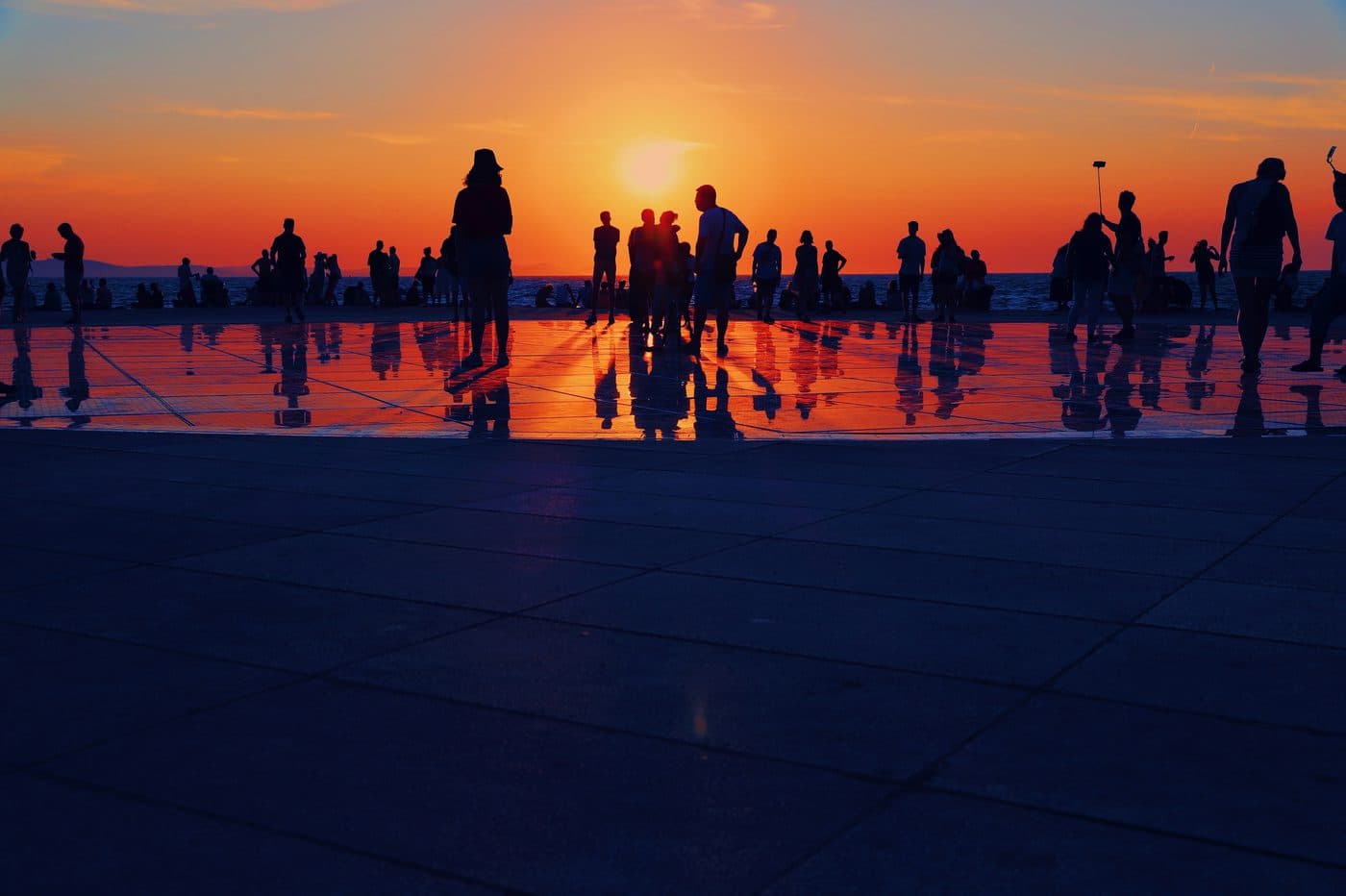
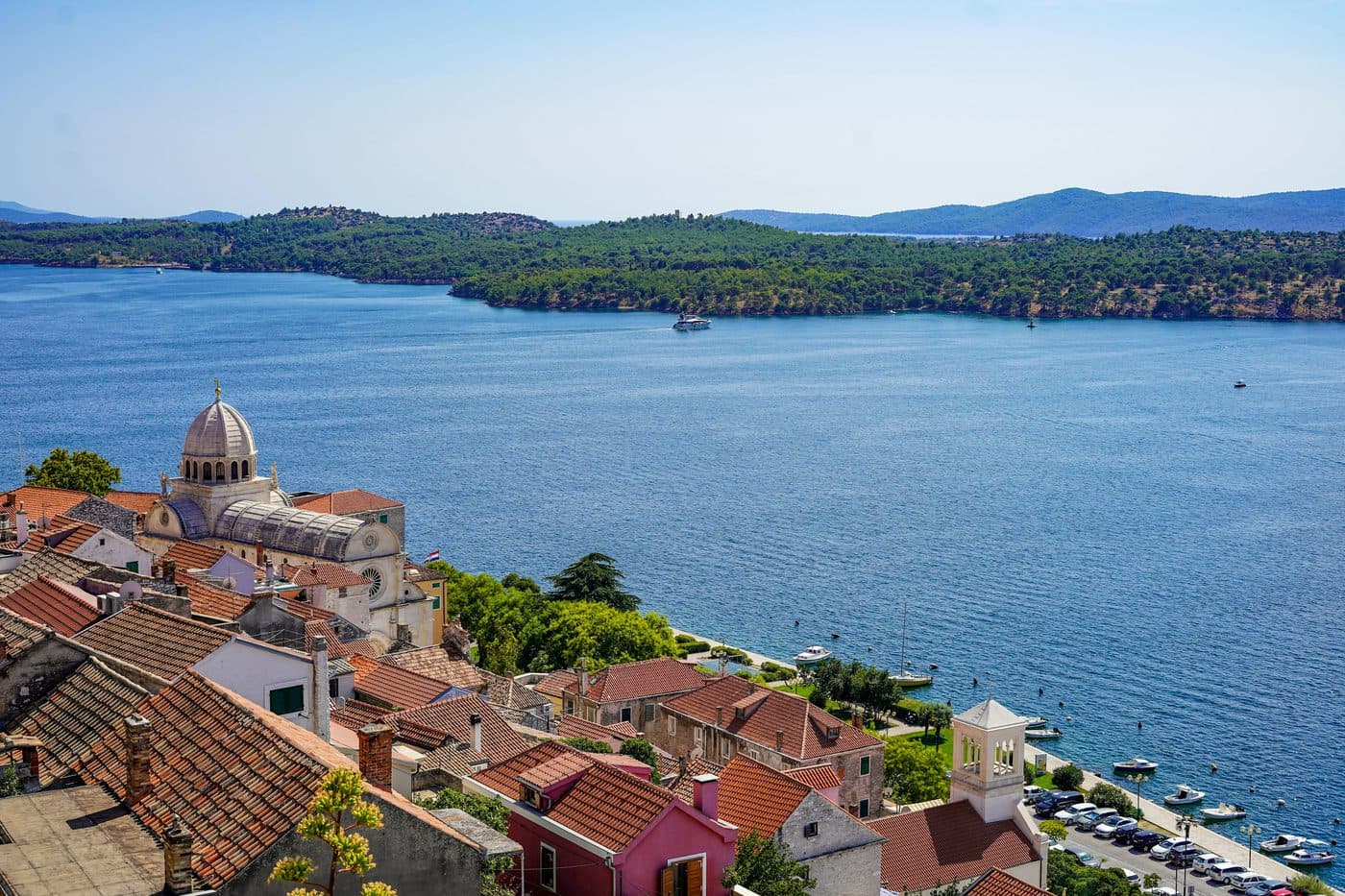
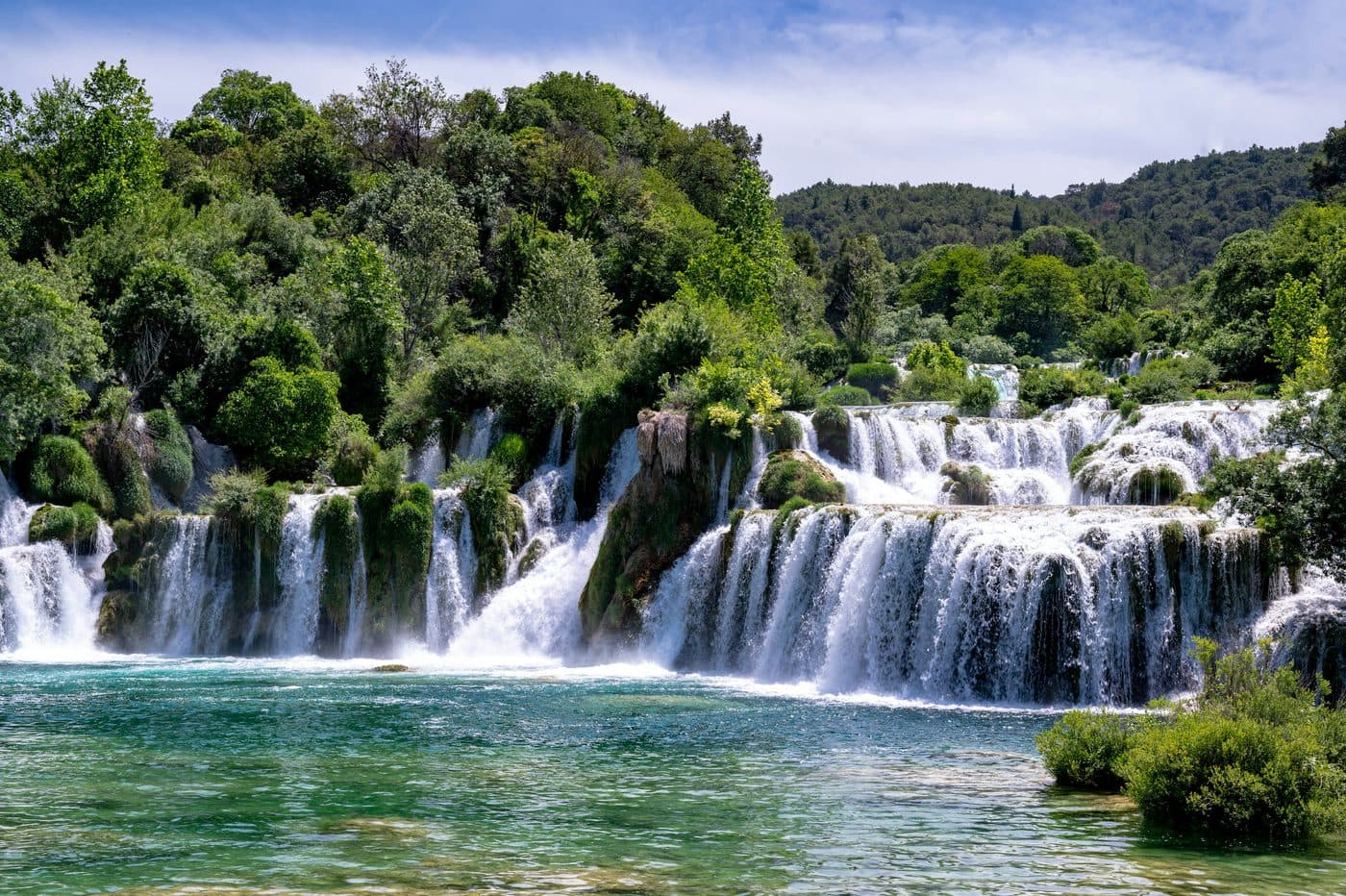
Zadar’s old town fills a peninsula between its harbour and the Zadar Channel, with the Roman forum, the church of St Donatus and walls that UNESCO lists among the Venetian works of defence of the 16th and 17th centuries. At its western point, along some seventy metres of the waterfront, 35 pipes laid at the level of the lowest tide make the Sea Organ sound with the waves, and beside it 300 glass panels in a circle 22 m across, the Greeting to the Sun, gather the day’s sunlight and light up after dark, looking over the channel, the islands and the sunset. Eighteen kilometres north, Nin, which its tourist board calls the oldest Croatian royal town, sits in a lagoon of sand beaches, healing mud, salt pans and birds. To the south-east, Šibenik climbs a hillside above its bay, which reaches the open sea through St Anthony’s Channel: its cathedral of St James, built entirely of stone between 1431 and 1535, is a World Heritage site, and so is St Nicholas’ fortress on the channel, while the fortresses of St Michael, Barone and St John stand above the town. Inland, the Krka drops over its travertine falls inside Krka National Park, the last of them a few kilometres above Skradin; offshore lie the islands of Kornati National Park; and 28 km south of Šibenik, Primošten’s old town fills a small round peninsula.
Couples who live here marry in church or before a registrar, in the county’s wedding rooms or, if the registrar agrees, at a place of their own. In Croatia a marriage is legal before a registrar (matičar), in the registry office’s official room or, if the registrar agrees and for a special fee, at another suitable place, or before a minister of a church with an agreement with the state, such as the Catholic Church; couples from abroad can marry here on the same terms as Croatians, and same-sex couples can’t marry, but they can register a life partnership. Notice is given to the registrar in person and the day is normally set between 30 and 45 days after it, so couples from abroad plan two trips or a month’s stay, or sign the papers at home and hold a ceremony of their own here, at the Greeting to the Sun at dusk or on a fortress above Šibenik. The state’s fees for a civil wedding are €27.87, and a wedding outside the official rooms costs an extra fee that the registrar works out from the distance, the hour and the day (as of November 2026).
Photographers
They still have dates open here. Their whole weddings and free dates are on their page.
See the photographerBooking through Lens & Vows
Through the year
May, June and September are the easiest months. At the Croatian Meteorological and Hydrological Service’s Zadar station (its 1971–2000 normals, the latest it publishes), highs reach about 21 °C in May, 25 °C in June and 24 °C in September, with rain (1 mm or more) on six or seven days a month and eight to ten hours of sun a day. July and August are the warmest, at 28 °C, with seven or eight days of 30 °C or more in each and rain on only four or five. Šibenik, further south, is hotter: in the service’s longer series it has about 17 days of 30 °C or more in each of July and August, against Zadar’s 10. October still reaches 20 °C but is the wettest month, with 107 mm, and September and November are almost as wet; from December to February highs stay at 11 to 12 °C.
Weather station: Zadar, normals 1971–2000 · Checked 3 November 2026
Places
The kinds of places — ask your photographer which ones they know well.
Both lie on the western point of the peninsula, where the waterfront looks over the Zadar Channel to the islands. At midsummer the sun sets there at a quarter to nine, far round in the north-west, and as it goes the Greeting to the Sun’s lights begin to play with the waves and the Sea Organ’s notes; the sunset here is famous, so expect company. The Roman forum and the church of St Donatus are 400 m behind, in the old town. We found no rule of the City of Zadar’s on wedding portraits on the waterfront or in the old town, so ask before planning a shoot with equipment.
Nin lies 18 km north of Zadar’s waterfront, on a bay that its tourist board describes as hiding sand beaches, healing mud, salt fields, a rich birdlife and rare plants; the county’s tourist board calls it the cradle of the medieval Croatian state, a town in a sandy lagoon lived in since Neolithic times. For a couple it means low, open light over water and sand. Nin publishes no rule on photo shoots that we could find.
The cathedral of St James stands by the sea in a small square that was once the heart of the old town, and its frieze carries 71 sculpted faces of men, women and children. Above the town, St Michael’s fortress looks over the sea and the Šibenik archipelago, and Barone over the old town, St Anthony’s Channel and the islands; with St John’s they are run by the city’s Fortress of Culture, which sells tickets for visits and hires out space for events, held outdoors and by season, with no indoor hall of the same size, so agree a weather plan in advance. St Nicholas’ fortress, the Venetian fort on the channel, can be visited only on the county nature institution’s organised boat trips from the Šibenik waterfront, about two hours, €19.50 a head in April, May and October and €27.50 from June to September (2026 prices).
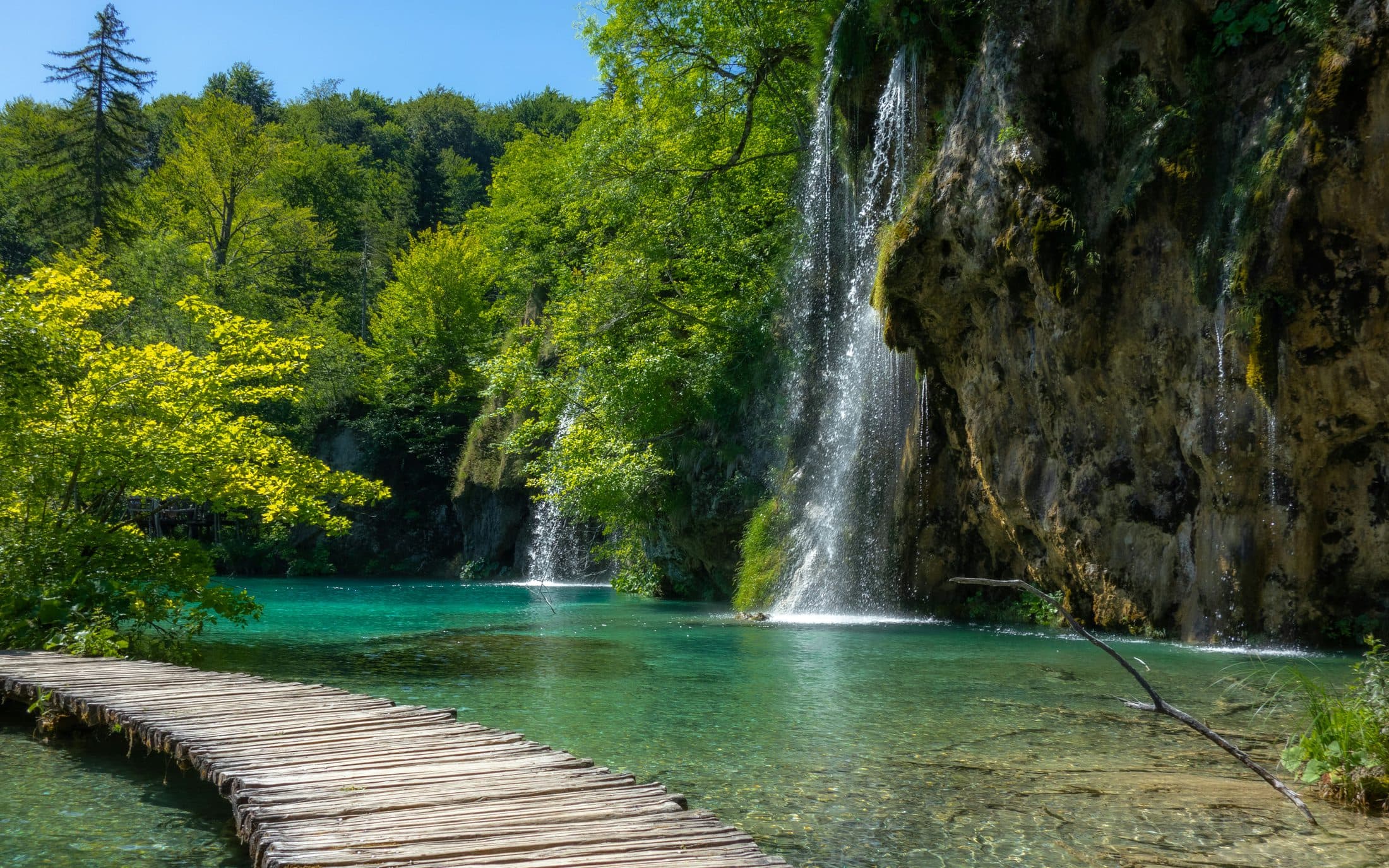
Skradinski buk, the last and longest of the Krka’s seven travertine barriers, spills the river over seventeen steps along 800 m, 200 to 400 m wide, falling 45.7 m in all. From April to October the park’s boats run there from Skradin and its buses from Lozovac, both in the ticket, which costs an adult €20 in April, May and October, €40 from June to September and €7 from November to March (2026 and 2027 prices). Pictures for yourselves are free, but commercial photography needs the park’s written decision, asked for at least a week ahead, and drones aren’t allowed at all, even briefly. The Kornati are islands, and their national park sells its tickets per boat; it charges €800 a day for commercial filming or photography and €1,400 a day for drone filming, with the permits it requires (2026). Primošten’s old town fills a small round peninsula 28 km south of Šibenik.
Light
At midsummer the sun rises in Zadar at about a quarter past five and sets at a quarter to nine, far round in the north-west; it drops below ten degrees at about twenty to eight, and the sky stays light until about twenty past nine. The waterfront at the western point looks out over the channel to the islands, so that last hour is the one Zadar is known for. In Šibenik the sun sets four minutes earlier, at 20:42. In mid-September it sets in Zadar at ten past seven and in mid-October at about a quarter past six; after the clocks change at the end of October it sets before five. At midwinter it rises at half past seven, sets at about twenty-five past four and climbs no higher than about 22 degrees. In the weather service’s 1971–2000 normals, Zadar has about eleven hours of sun a day in July and three and a half in December.
Travel
Zadar Airport is 18 km by road from the Sea Organ, about 25 minutes. Liburnija’s bus runs several times a day between the airport, the bus station and the old town in about 20 minutes, for €5 with luggage; the airport publishes each month’s timetable a few days before the month begins. For Šibenik and Primošten, Split Airport is nearer: 55 km to Šibenik, about an hour, and 38 km to Primošten. By road it is 90 km from Zadar’s waterfront to Šibenik and 18 km to Nin; from Šibenik it is 16 km to Lozovac, Krka’s main entrance, 21 km to Skradin, 28 km to Primošten and 35 km to Murter, where the Kornati park has its office. Drones fly under the EU’s rules: an operator registered in the EU country where they live (from outside the EU, in the first EU country they fly in), insured for filming, in sight, below 120 m and clear of people not involved, with the zones checked in Croatia Control’s AMC Portal app; beyond a targeted shot of a single site for its owner, filming from the air may also need the State Geodetic Administration’s approval, and over a national park or nature park the park’s consent too. Krka allows no drones; the Kornati charge for drone filming, as above.
Plan
Croatia