Verified — Identity verified by Lens & Vows
Erik V.from €900
Istria, Dubrovnik +35 · DocumentaryBased in Austria · travels to weddings in CroatiaWedding photographers in Croatia
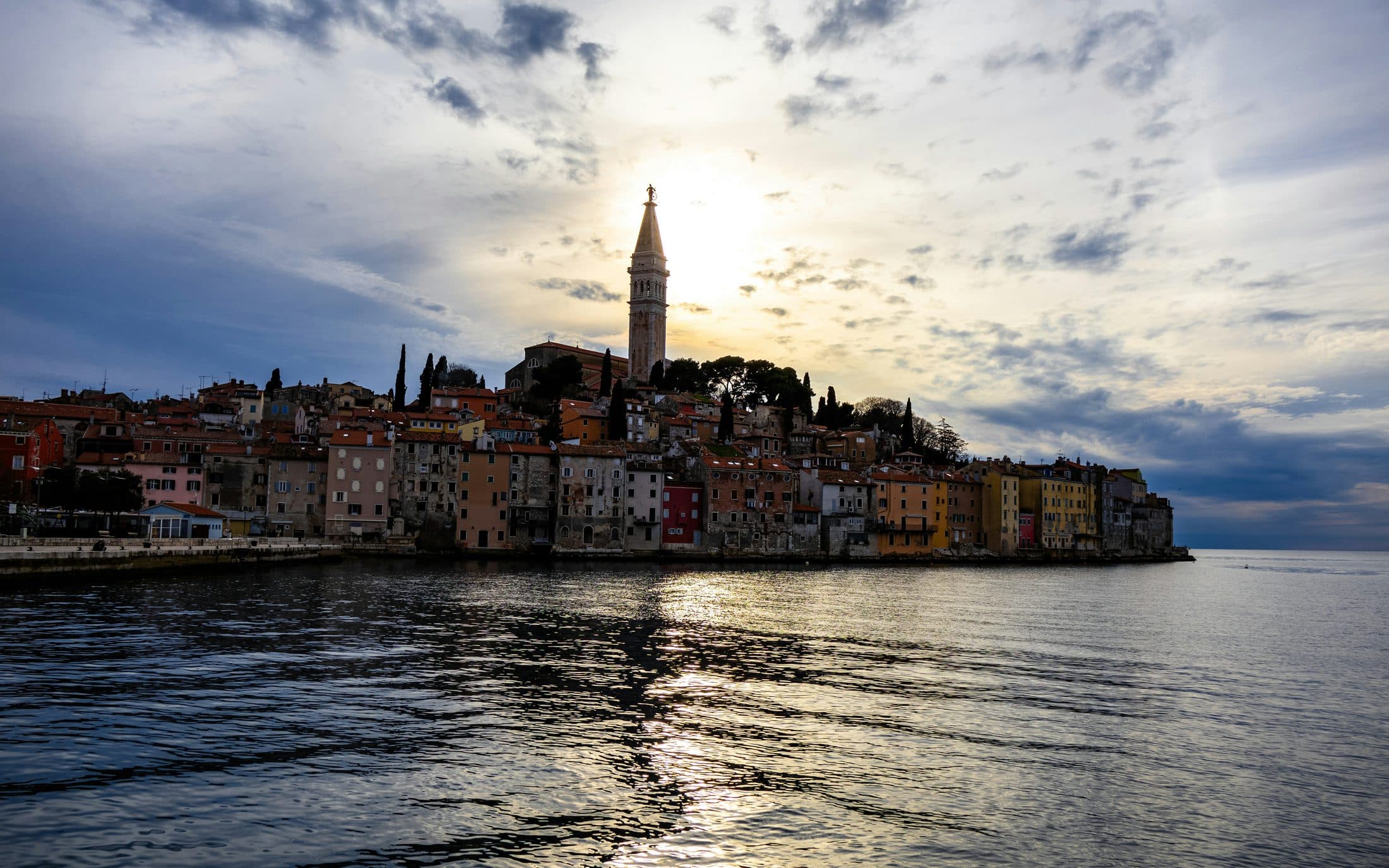
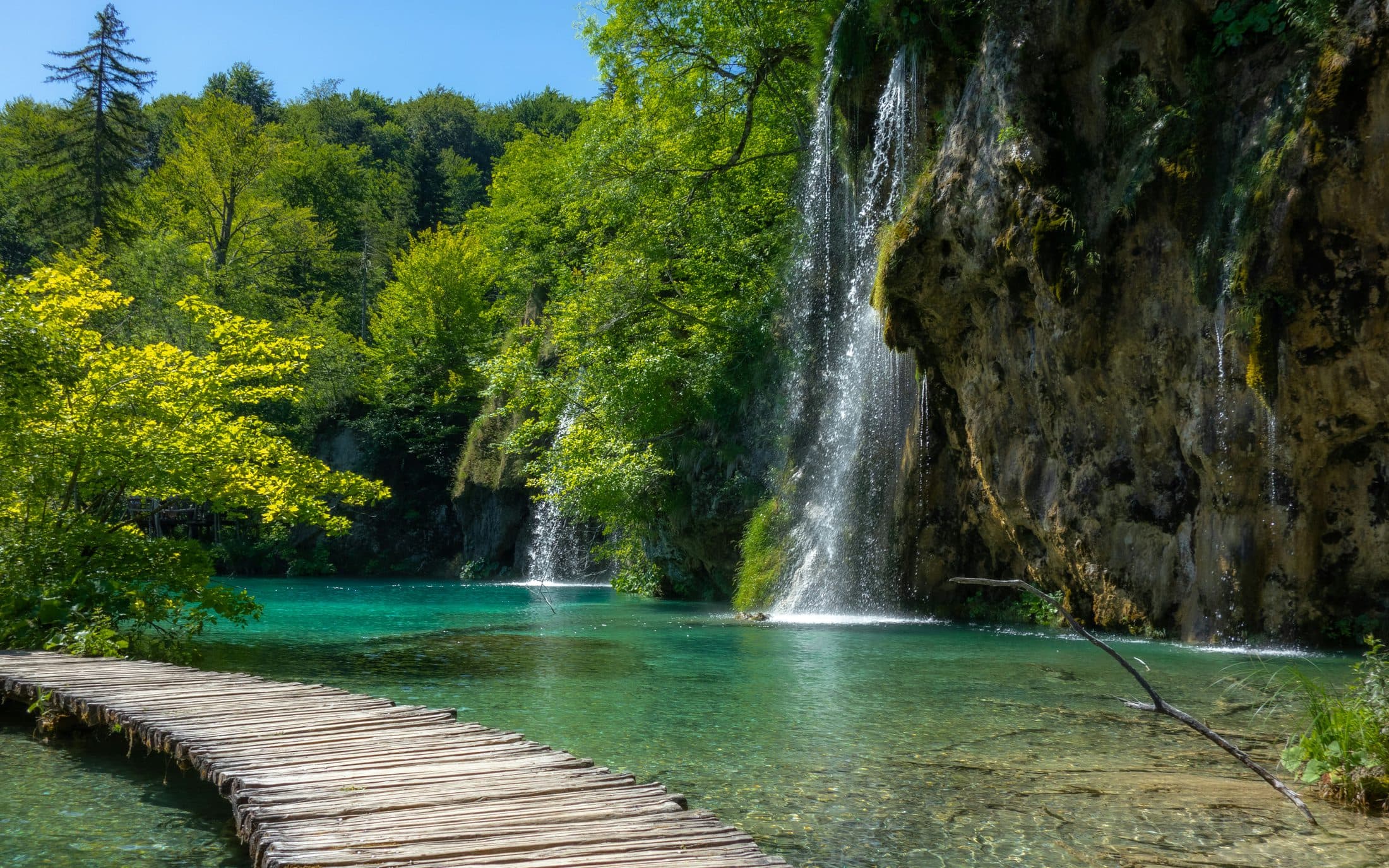
A peninsula at the top of the Adriatic, with the light of the open sea on one side and green hills on the other: Rovinj’s old town on its headland under St Euphemia’s tower, Pula’s Roman arena, Poreč and its 6th-century basilica, the Brijuni islands a short boat ride off Fažana, and the hill towns of Motovun and Grožnjan above vineyards and truffle woods.
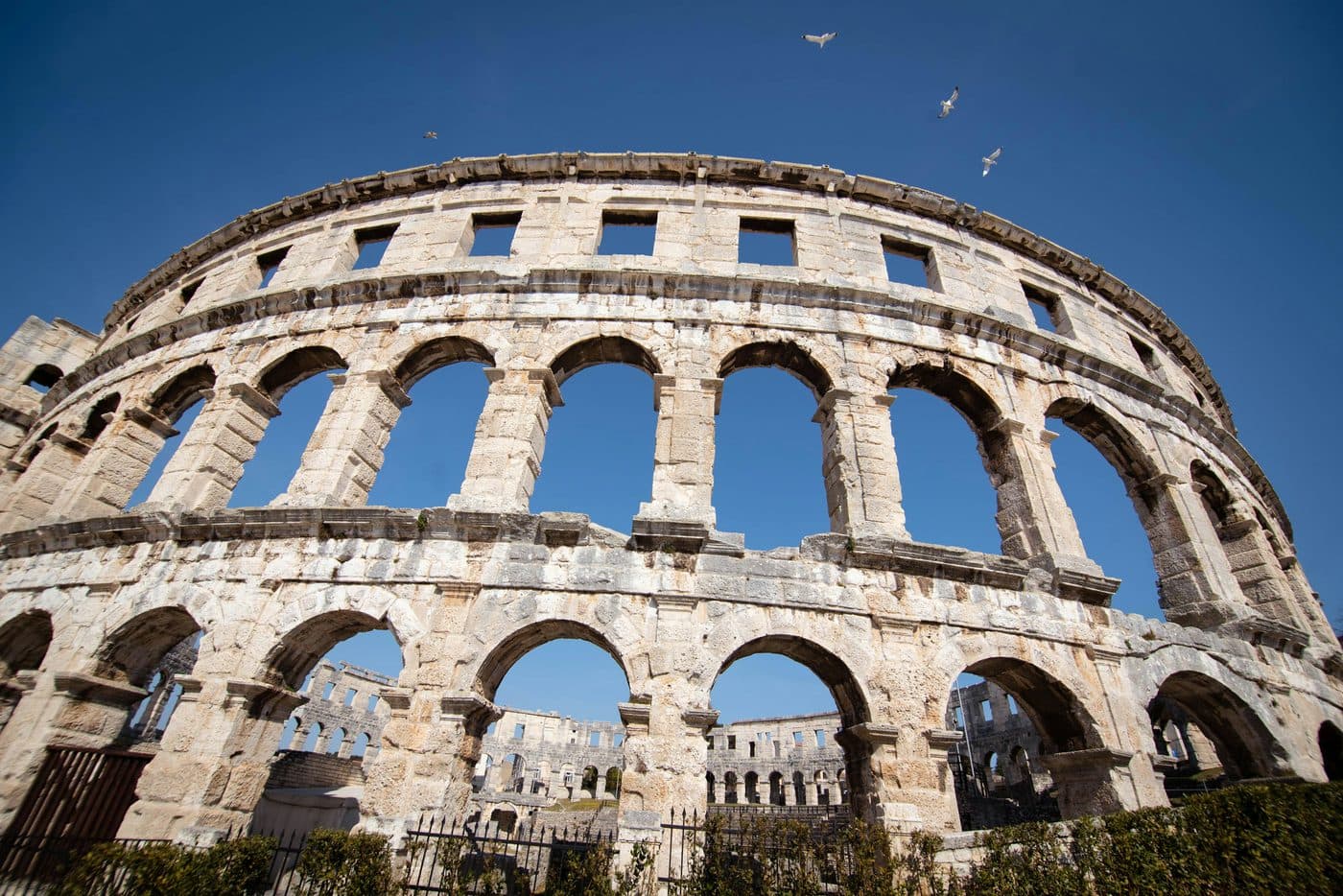
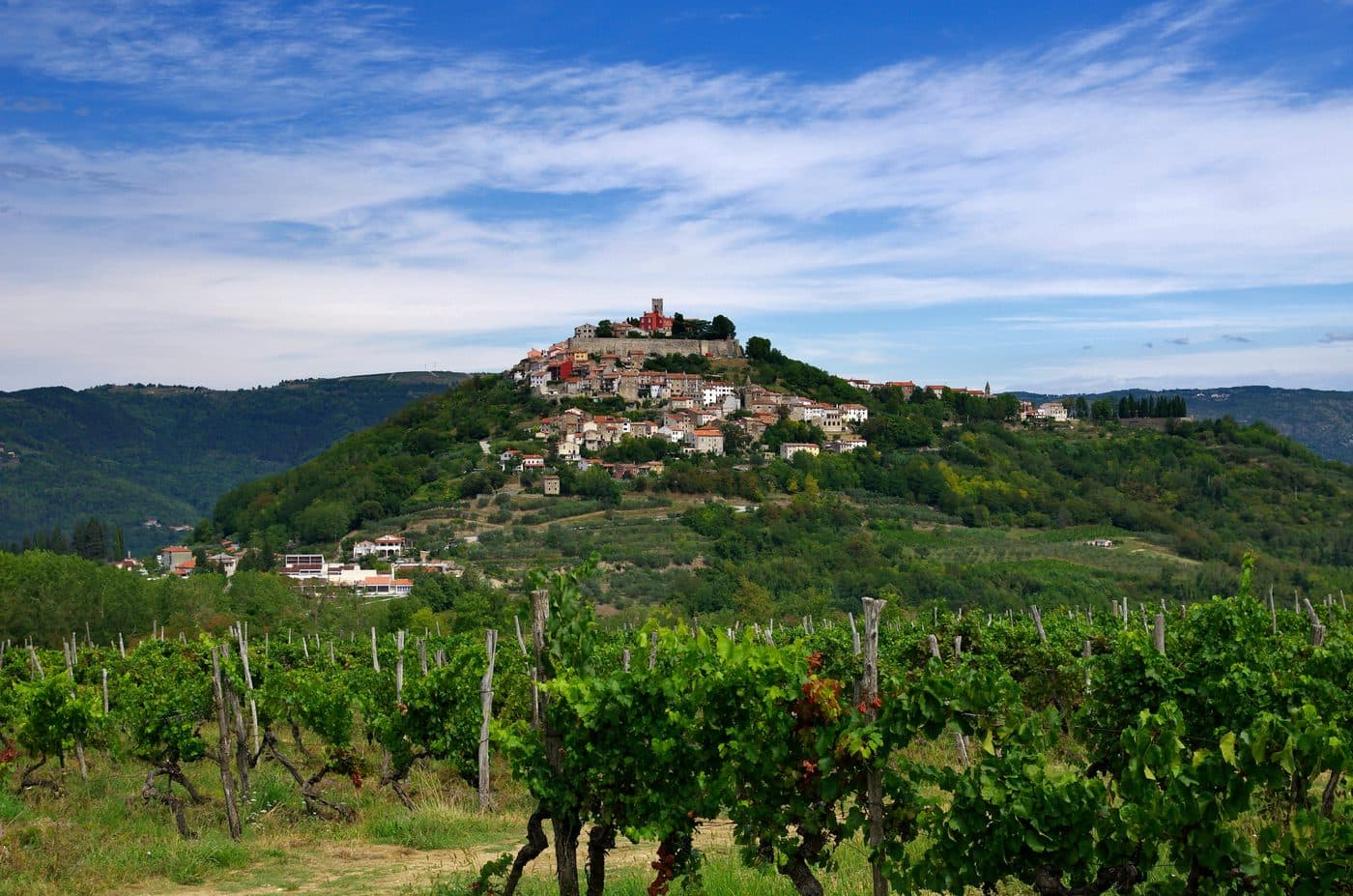
Istria is bilingual: Croatian and Italian are both official in the county, and its towns carry two names — Rovinj–Rovigno, Pula–Pola, Poreč–Parenzo, Motovun–Montona, Grožnjan–Grisignana. On the west coast, Rovinj’s old town fills a headland under the church of St Euphemia, finished in 1736 and the most important example of Istria’s coastal Baroque, whose Venetian-style bell tower carries a copper statue of the saint that turns with the wind. To the south, Pula keeps a Roman amphitheatre of the 1st century, up to 32 m high and set apart from all others by its four towers, and from Fažana the national park’s boat crosses in about 15 minutes to the Brijuni islands. Up the coast, Poreč’s Euphrasian Basilica, built in the mid-6th century, is the heart of a bishop’s complex on UNESCO’s World Heritage List. Inland, Motovun stands inside its walls 277 m up, above vineyards and the Motovun forest, famous for its truffles, and in Grožnjan music academies and art workshops fill the lanes from the beginning of May.
Couples marry in the old towns and churches of Rovinj and Pula, on the Brijuni, where the park itself hosts weddings, and in country houses among Istria’s vineyards and olive groves, with portraits on a waterfront or a hill town’s walls in the last light. In Croatia a marriage is legal before a registrar (matičar), in the registry office’s official room or, if the registrar agrees and for a special fee, at another suitable place, or before a minister of a church with an agreement with the state, such as the Catholic Church; couples from abroad can marry here on the same terms as Croatians, and same-sex couples can’t marry, but they can register a life partnership. The country page explains the notice and the papers.
Photographers
They still have dates open here. Their whole weddings and free dates are on their page.
See the photographerBooking through Lens & Vows
Through the year
May, June and September are the surest months: in the Croatian Meteorological and Hydrological Service’s (DHMZ) 1971–2000 normals for Rovinj, the highs are about 22 °C in May and 25 °C in June and September, and 1 mm of rain or more falls on only six to eight days a month. July and August are the hottest, at 28 to 29 °C, with about ten days of 30 °C or more in July and eleven or twelve in August, and the coast is at its fullest: across Croatia, hotel beds were 92% occupied in July 2025 and 97% in August. Autumn brings the rain back: October and November are Rovinj’s wettest months, with 97 and 98 mm, against 41 mm in July, and the interior is wetter than the coast — Pazin, in the middle of the peninsula, gets 1,086 mm a year to Rovinj’s 812. Whatever the month, keep a roof in the plan: a loggia, a covered terrace, a hall in town.
Weather station: Rovinj, normals 1971–2000 · Checked 3 November 2026
Places
The kinds of places — ask your photographer which ones they know well.
Rovinj’s lanes climb from the harbours to St Euphemia’s, which is open to visitors at hours that change with the season; services come first, so time a visit around them. South of the harbour, the Golden Cape (Zlatni rt) is a forest park of pines, cypresses and laurel along the bays of Lone and Škaraba, with Himalayan cedars planted in a six-pointed star in front of the Punta Corrente meadow, protected since 1948. Its keeper, Natura Histrica, allows no motor vehicles or fires inside, asks for larger gatherings to be announced by email, and wants anything set up taken away afterwards. North of the town, the Lim Bay, a flooded valley 12 km long, is a marine reserve. We found no published town rule on wedding shoots in the old town, so ask Rovinj before planning one with lights or a crew.
The Arena measures 132 by 105 m and once held about 23,000 people; its first storey runs right round the ring in 72 arches. It opens from 8:00 to 20:00 in April, to 21:00 in May and September, to 22:00 from June to August and to 19:00 in October, and from 9:00 to 17:00 from November to March, with the last tickets an hour before closing; an adult pays €10 (2026). Visitors may photograph anywhere inside, but photographing or filming for commercial purposes needs the Archaeological Museum of Istria’s approval first, so ask before you bring a photographer. South of the city, Cape Kamenjak’s low cliffs and coves are a protected landscape: walkers and cyclists enter free, cars pay €10 a day from mid-June to the end of September 2026, and everyone must be out by 22:00. Its price list charges €160 a day for commercial photography and €720 for filming from the air, but defines such filming as music videos, films and advertising, so ask whether a wedding shoot counts.
The Brijuni are a national park of islands off Fažana, reached by the park’s own boat from Fažana, about 15 minutes across, with tickets from its office in Fažana or online. The park hosts weddings itself: its page offers vows in the little 15th-century church of St Germanus and photographs among the archaeological sites, beside an olive tree 1,600 years old, in the Mediterranean garden or by the coves. Photographing a couple there costs €350 (2026, VAT included, decorations not), and any commercial shoot needs the park’s permission, asked for at least 15 days ahead. Visitors may walk and take photographs freely except in the Ministry of Defence’s zone, keep to the marked paths and must not disturb the animals. A legal wedding there, as anywhere outside a registry office, needs the registrar’s agreement and the special fee.
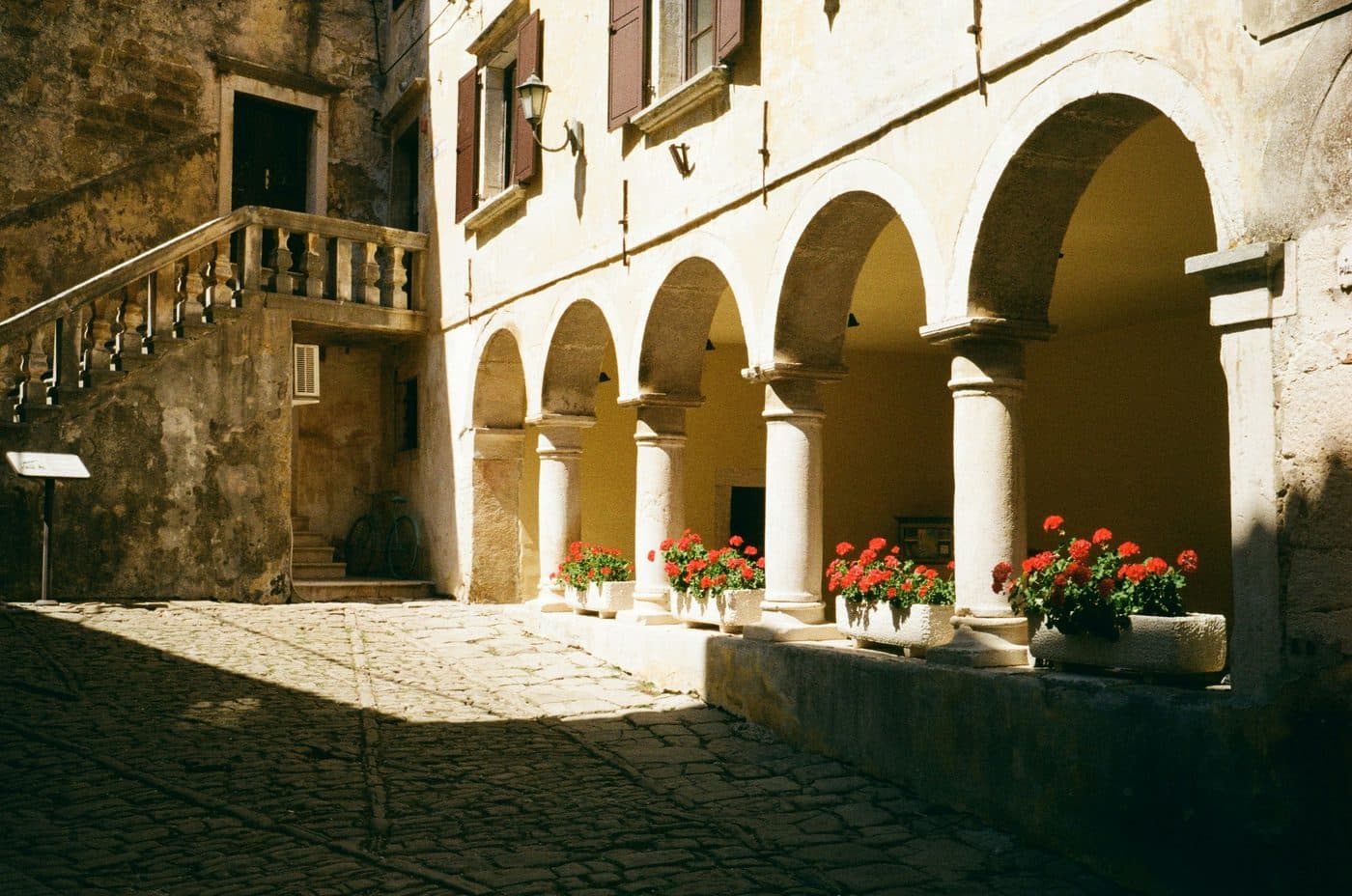
In Poreč, the Euphrasian complex — basilica, atrium, baptistery and bishop’s palace — is in UNESCO’s words the most complete surviving complex of its type, and still a working cathedral: it opens every day except Sundays and holy days of obligation, from 9:00 to 21:00 in July and August and for shorter hours the rest of the year, an adult pays €10 (as of November 2026), its bell tower can be climbed, and silence is asked for inside. Motovun’s walls look over vineyards and the Motovun forest, a protected reserve; inside them, a crenellated 13th-century bell tower stands beside St Stephen’s church and the town’s Romanesque palace, the largest secular building of its time in Istria. In Grožnjan, the 15th-century town gate opens onto a Renaissance loggia of 1587, where the town’s court once sat. We found no published rule on wedding shoots in these towns; ask the town, or the parish for a church, first.
Light
Istria’s west coast looks out over the open sea, so the sun sets over water all year from Rovinj, Poreč and Pula’s shore: far to the north-west at midsummer, almost due west in mid-September and south-west in winter. On 21 June it rises over Rovinj at about twenty past five and sets at about four minutes to nine; it is still ten degrees up at about a quarter to eight, and the sky stays light until about twenty-five to ten. In mid-May it sets at about half past eight, in mid-July at about ten to nine, in mid-September at about a quarter past seven and in mid-October at about twenty past six. At midwinter it is up only from about twenty to eight until twenty-five past four, no more than about 21 degrees high at noon. Rovinj averages ten and a half hours of sun a day in July and three in December (1971–2000). The hill towns stand above their valleys, so Motovun’s and Grožnjan’s walls keep the evening sun after the land below has lost it. From May to September the Arena stays open after sunset, so its last light can be had inside, as long as the tickets are bought an hour before closing; Kamenjak stays open until 22:00.
Travel
Pula Airport, 12 km by road from the Arena, is Istria’s own; a shuttle bus leaves for Pula’s bus station 30 minutes after each landing, for €6 one way (2026). From the airport it is 18 km to Fažana, 44 km to Rovinj, 62 km to Poreč, 73 km to Motovun and 89 km to Grožnjan. The north of the peninsula is closer to Trieste’s airport in Italy: 94 km to Grožnjan, 116 km to Motovun, 122 km to Poreč and 147 km to Rovinj. Rijeka’s airport, on the island of Krk, is 115 km from Rovinj, Ljubljana’s 209 km, Venice’s 256 km and Zagreb’s 260 km. Within Istria, Rovinj is 35 km from Pula’s Arena and 36 km from Poreč, and Motovun 29 km from Poreč and 18 km from Grožnjan; for the Brijuni, drive the 8 km from Pula to Fažana and take the park’s boat. Drones fly under the EU’s rules: an operator registered in the EU country where they live (from outside the EU, in the first EU country they fly in), insured for filming, in sight, below 120 m and clear of people not involved, with the zones checked in Croatia Control’s AMC Portal app; beyond a targeted shot of a single site for its owner, filming from the air may also need the State Geodetic Administration’s approval, and over a national park or nature park the park’s consent too. On the Brijuni, a flight needs the park’s permission and then that approval, and only operators registered for aerial imaging receive it; at Kamenjak, filming from the air is charged €720 a day (2026).
Plan
Croatia