Verified — Identity verified by Lens & Vows

Erik V.from €900
Split & Central Dalmatia, Dubrovnik +35 · DocumentaryBased in Austria · travels to weddings in CroatiaWedding photographers in Croatia
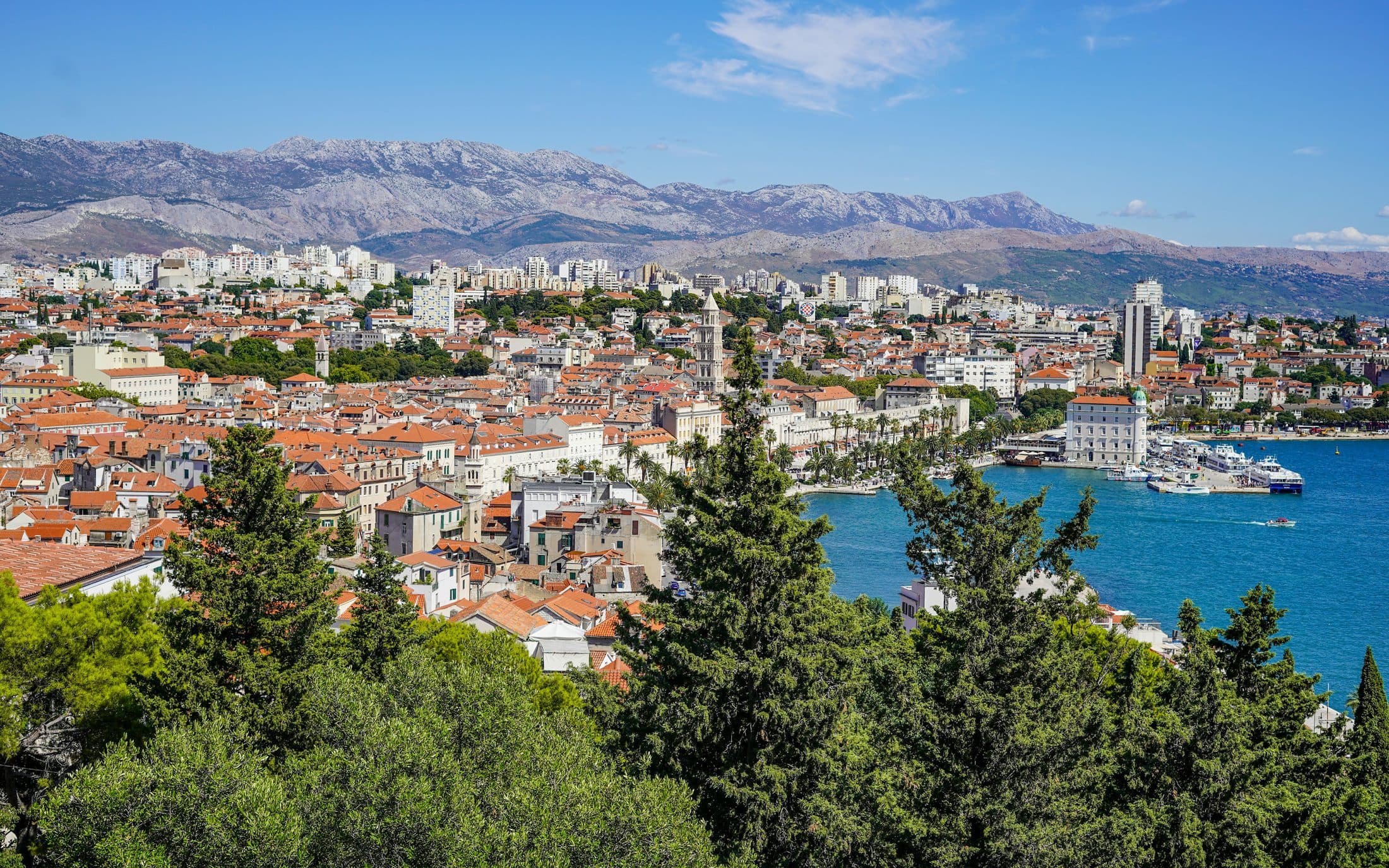
Diocletian’s Palace, where Split’s old town lives inside a Roman emperor’s walls, the wooded hill of Marjan at the city’s western end, Trogir on its island 29 km along the coast and, to the east, Omiš at the mouth of the Cetina and the Makarska Riviera beneath the cliffs of Biokovo.
Split grew inside the palace that the Roman emperor Diocletian built between the late 3rd and the early 4th centuries; in UNESCO’s words its ruins ‘can be found throughout the city’, and the cathedral was built in the Middle Ages from the materials of his mausoleum. At its heart lies the colonnaded Peristyle, under the cathedral’s bell tower, and along the palace’s southern front runs the Riva, the promenade over the harbour. West of the old town rises Marjan, a forest park that fills the end of the peninsula, with the Sustipan headland below it. Westward along the coast, 6 km from the airport, Trogir fills a small island between the mainland and Čiovo: Greek colonists founded it in the 3rd century BC, and UNESCO calls it a remarkable example of urban continuity, its street plan going back to the Hellenistic period, its cathedral of St Lawrence begun around 1200 and its Venetian defences ending in the Kamerlengo fortress. To the east, 25 km away by road, the Cetina leaves its canyon at Omiš and meets the sea, and beyond it the Makarska Riviera runs south-east beneath the bare limestone of Biokovo, a nature park.
Couples who live here marry in church or before a registrar, in the county’s wedding rooms or, if the registrar agrees, at a place of their own: a terrace over the sea, a garden, a fortress. Marjan’s own public institution lists the church of St Jerome, Sustipan and Bene among the places it offers for weddings. In Croatia a marriage is legal before a registrar (matičar), in the registry office’s official room or, if the registrar agrees and for a special fee, at another suitable place, or before a minister of a church with an agreement with the state, such as the Catholic Church; couples from abroad can marry here on the same terms as Croatians, and same-sex couples can’t marry, but they can register a life partnership. Notice is given to the registrar in person and the day is normally set between 30 and 45 days after it, so couples from abroad plan two trips or a month’s stay, or sign the papers at home and hold a ceremony of their own here, on the Riva at dusk or on a terrace above the islands. The state’s fees for a civil wedding are €27.87, and a wedding outside the official rooms costs an extra fee that the registrar works out from the distance, the hour and the day (as of November 2026).
Photographers
They still have dates open here. Their whole weddings and free dates are on their page.
See the photographerBooking through Lens & Vows
Through the year
May, June, September and October are the easiest months. At the Croatian Meteorological and Hydrological Service’s Split-Marjan station (its 1971–2000 normals, the latest it publishes), highs reach about 23 °C in May, 27 °C in June, 25 °C in September and 20 °C in October, with rain (1 mm or more) on six to eight days a month, and from May to September the sun shines eight to eleven hours a day. July and August are hot and dry: highs of 30 °C, about sixteen days of 30 °C or more in each, nights that stay above 20 °C on more than twenty of them and rain on only three or four days. The sea off Split averages 21 to 24 °C from June to September and 19 °C in October. November is the wettest month, with about 100 mm, and from December to February highs stay at 10 to 11 °C.
Weather station: Split Marjan, normals 1971–2000 · Checked 3 November 2026
Places
The kinds of places — ask your photographer which ones they know well.
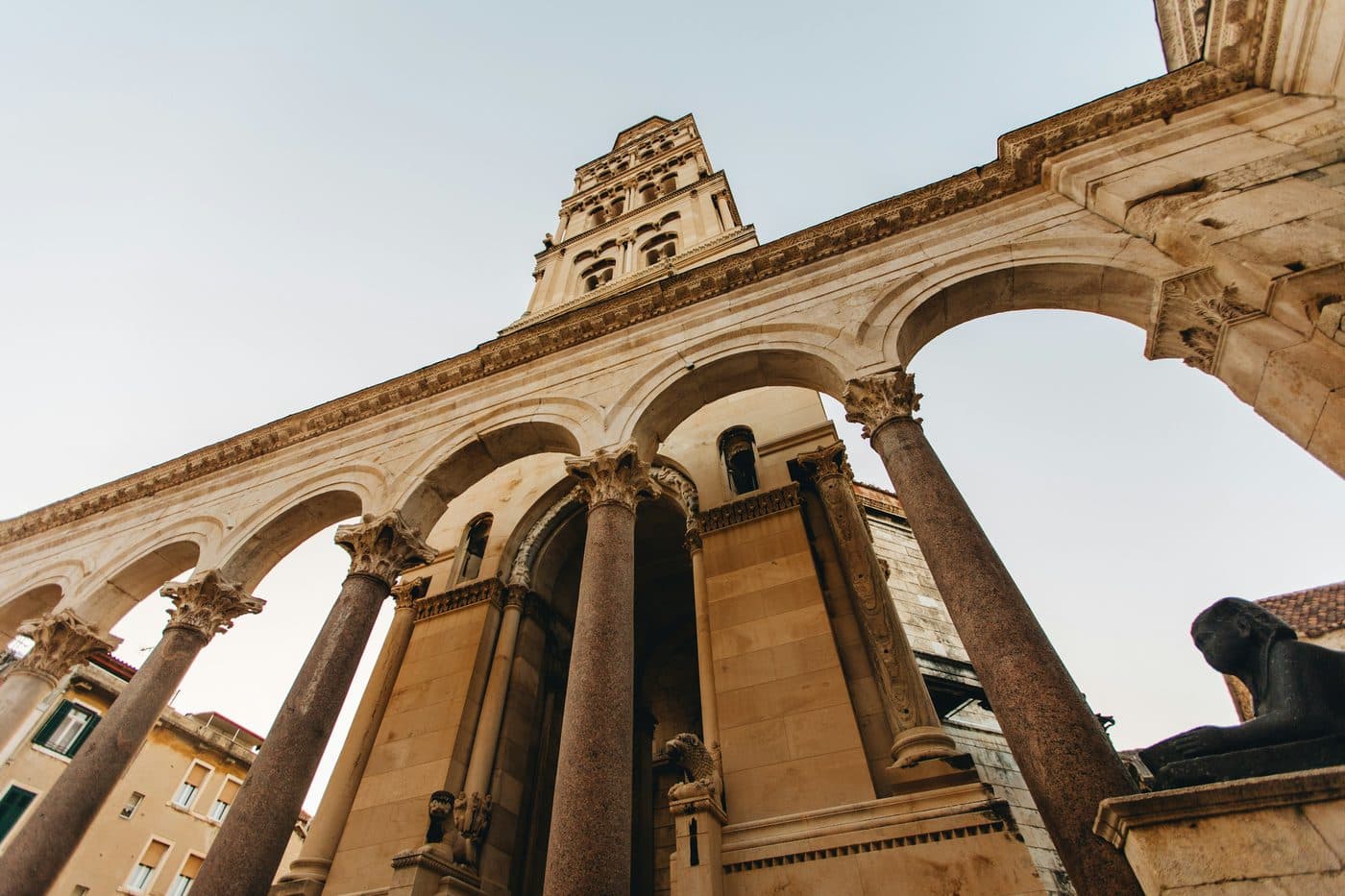
The Peristyle is the palace’s colonnaded heart, with arches on tall columns, the cathedral’s bell tower above them and a sphinx at one side; the lanes around it lead down to the Riva, which runs along the palace’s south front and faces south over the harbour. The old town is on UNESCO’s list and the Peristyle is its heart, so in summer come at first light. We found no rule that the City of Split publishes for wedding portraits in the palace, so ask before planning a shoot with lights, stands or a crowd of guests. For drones, check Croatia Control’s AMC Portal on the day: since mid-October 2026 it has declared temporary no-fly zones over Split six times.
Marjan, the wooded hill at the western end of the city, is a forest park run by a public institution that the City of Split founded in 2005, and it offers some of its own places for weddings: the church of St Jerome, the Sustipan headland, Bene and others, with a price list of its own for events and celebrations. Its rules ban fireworks, open fires and dogs off the lead, and anything they don’t expressly allow, so a shoot with equipment is a question for the institution; cars may pass the barrier into the park only with a vignette, €13.26 per vehicle (as of November 2026).
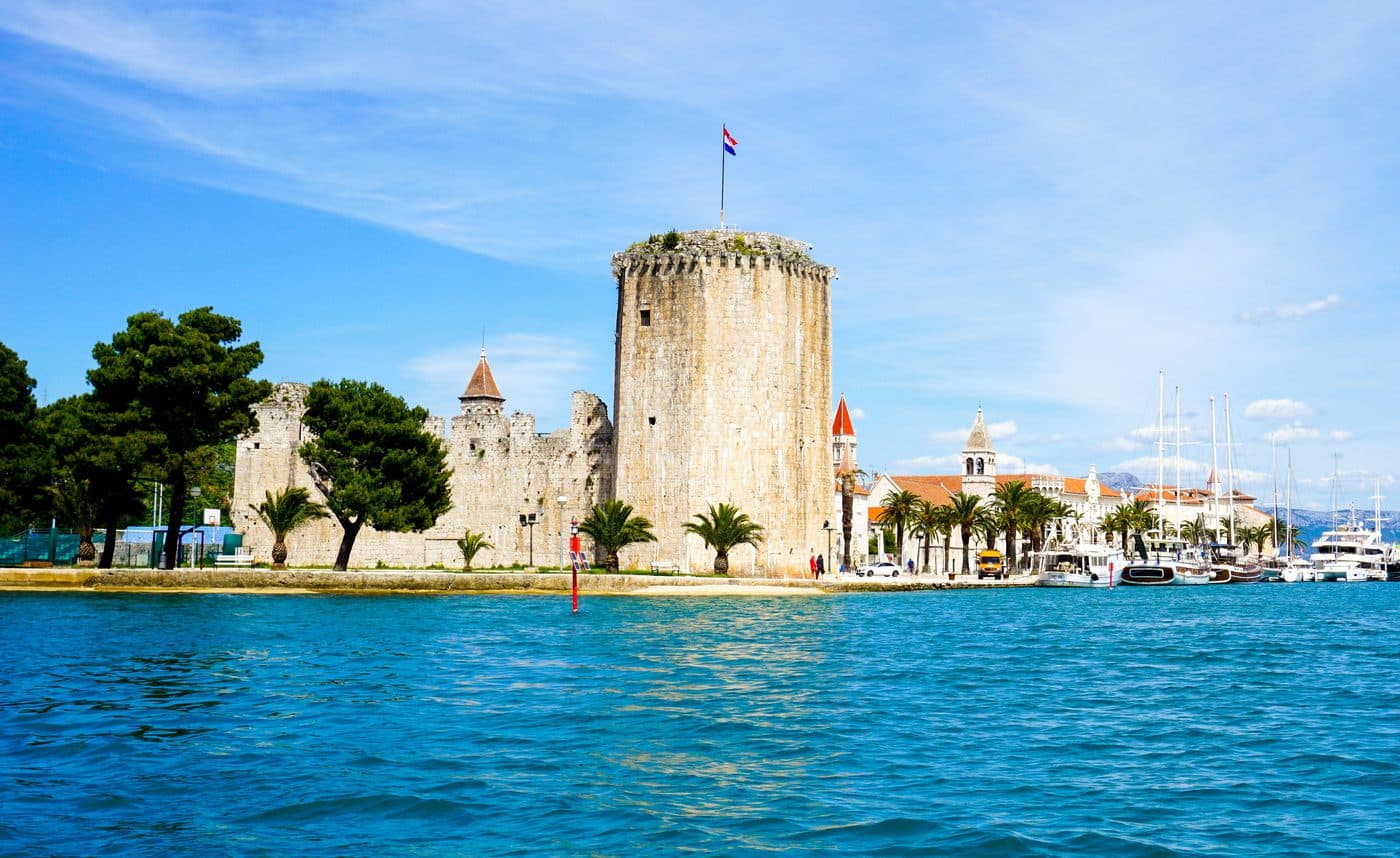
In Trogir the cathedral of St Lawrence dominates the main square, its main west portal finished in 1240, and the old town’s south waterfront ends at the Kamerlengo fortress, built from 1420 to 1437 at the island’s south-west corner with four towers at its angles. The town opens it to visitors, the view from its largest tower takes in the whole of Trogir, and in summer its courtyard holds concerts and shows. Trogir publishes no rule on wedding portraits that we could find. The town lies 5 km by road from Split Airport, so a couple can land, marry and have their portraits here without ever reaching Split.
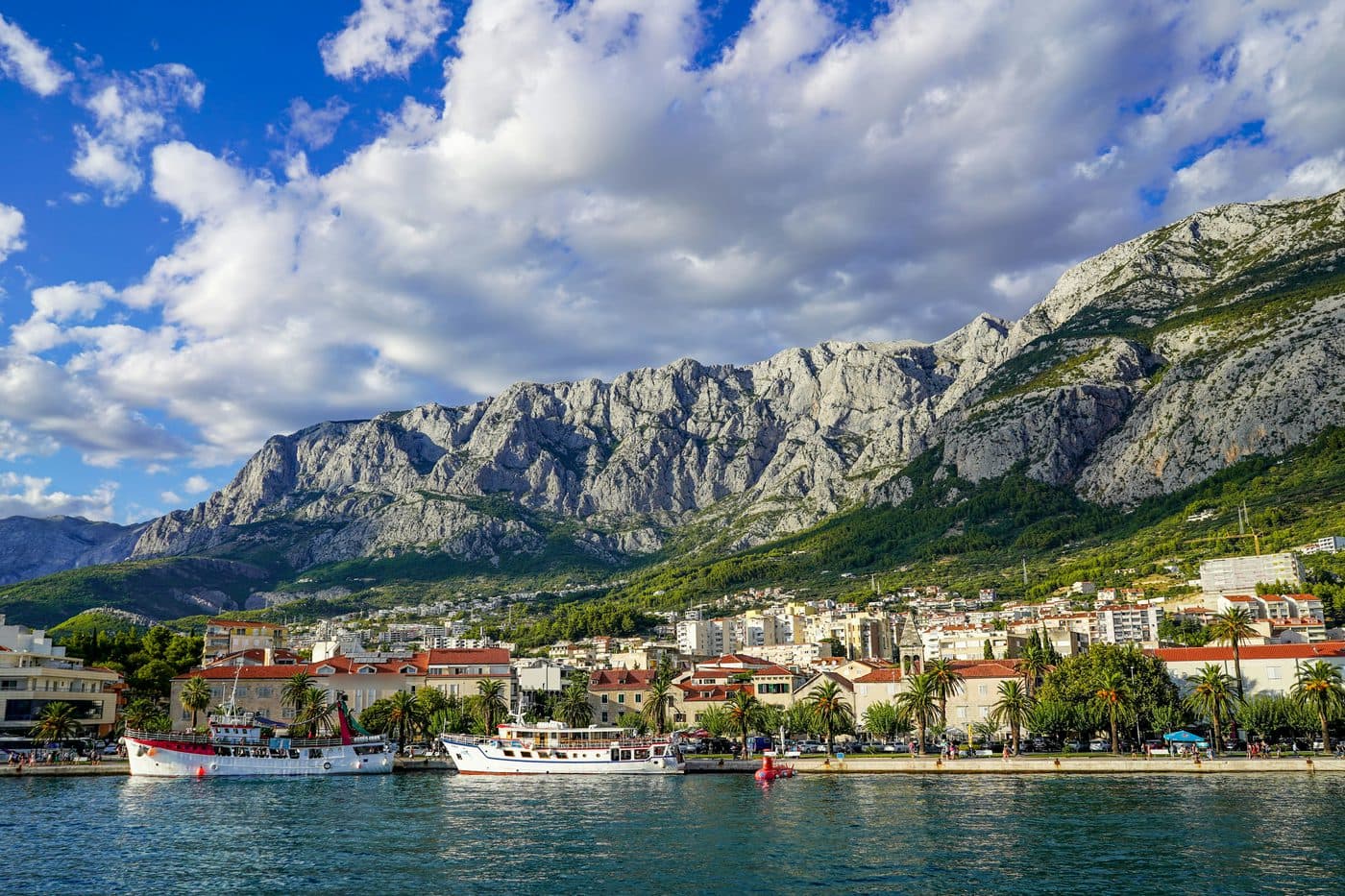
At Omiš the Cetina leaves a canyon of grey cliffs and meets the sea, 25 km by road from Split’s Riva; its last reach, with small boats moored under the rock, makes a quiet portrait. Beyond it the coast runs on beneath Biokovo to Makarska, 37 km further, where the mountain’s bare cliffs rise straight behind the harbour. Biokovo is a nature park: in its 2026 price list a day ticket costs €10 in April, May and October and €15 from June to September, and commercial photography needs the park’s special permission, with fees from €800 a day, €1,600 from the air, so ask whether a hired photographer counts. As of early November 2026 the park and its Skywalk viewpoint are closed to visits. The bora is known for its strength on this coast, so from autumn to spring keep a plan with walls around it.
Light
Split’s summer evenings end earlier than northern Europe’s. At midsummer the sun rises at about a quarter past five and sets at twenty to nine, far round in the north-west; it drops below ten degrees at about half past seven, and the sky stays light until about a quarter past nine. The Riva faces south over the harbour, so it is in sun most of the day and softens only in that last hour. In mid-September the sun sets at five past seven and in mid-October at about ten past six; after the clocks change at the end of October it sets before five. At midwinter it rises at about twenty-five past seven, sets at twenty past four and climbs no higher than about 23 degrees. In the weather service’s 1971–2000 normals, Split has about eleven hours of sun a day in July and four in December.
Travel
Split Airport lies at Kaštela, 20 km from Split and 6 km from Trogir; by road it is 24 km to the Riva, about half an hour, and 5 km to Trogir. An airport shuttle runs to Split’s main bus station throughout the day, and Promet Split’s public buses to Split and to Trogir stop at the airport; in summer the airport advises leaving an hour and a half early, because the road towards Split can be heavy. Croatian Railways’ daytime train from Zagreb takes about eight hours (in November 2026, the 13:49 from Zagreb Main Station arrives at 21:47), and seats on daytime trains between Zagreb and Split must be reserved, for €1.06. From the Riva it is 25 km by road to Omiš and 86 km to Makarska, about an hour and a quarter. Drones fly under the EU’s rules: an operator registered in the EU country where they live (from outside the EU, in the first EU country they fly in), insured for filming, in sight, below 120 m and clear of people not involved, with the zones checked in Croatia Control’s AMC Portal app; beyond a targeted shot of a single site for its owner, filming from the air may also need the State Geodetic Administration’s approval, and over a national park or nature park the park’s consent too.
Plan
Croatia