Getting married in Tromsø & the Arctic North
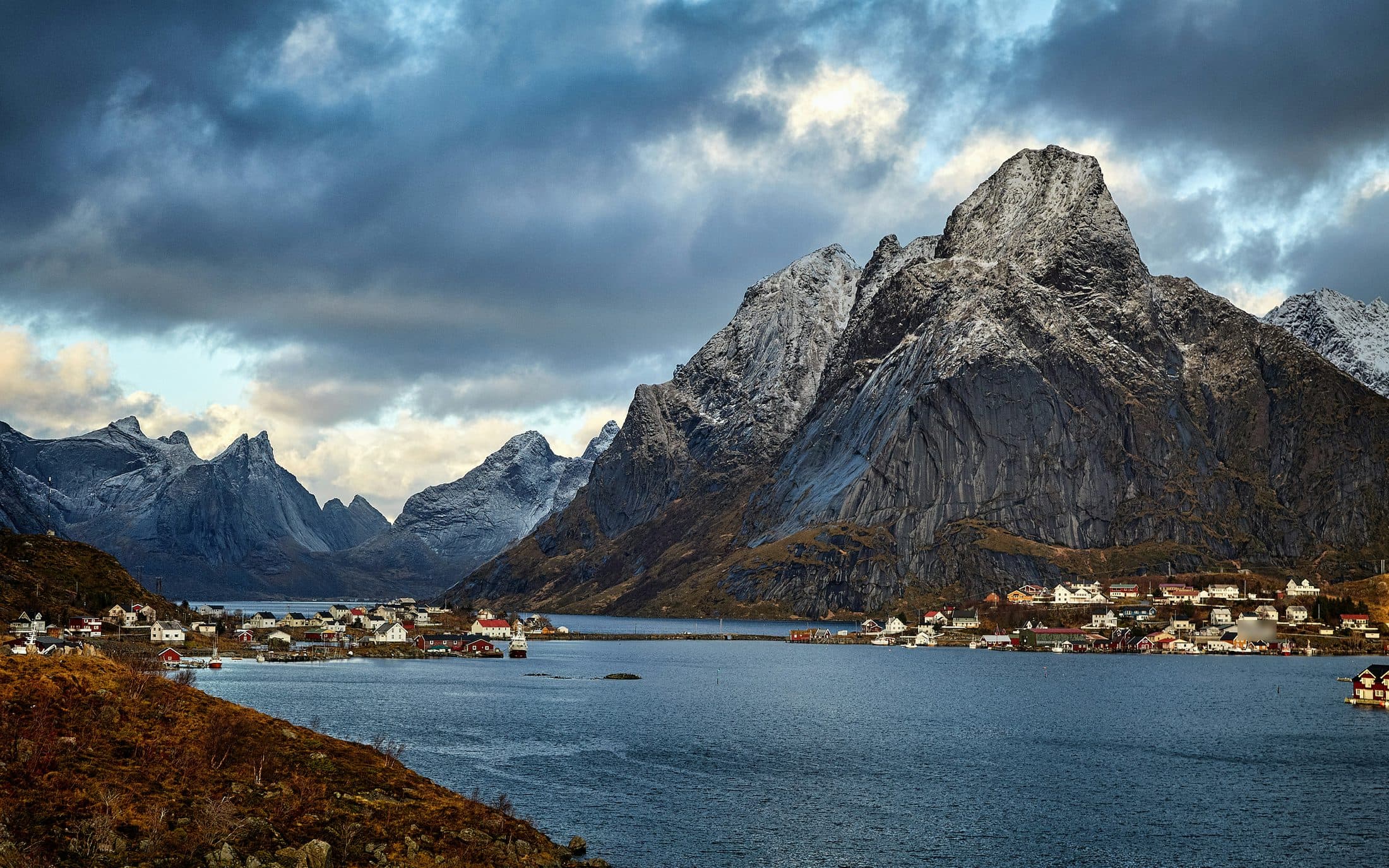
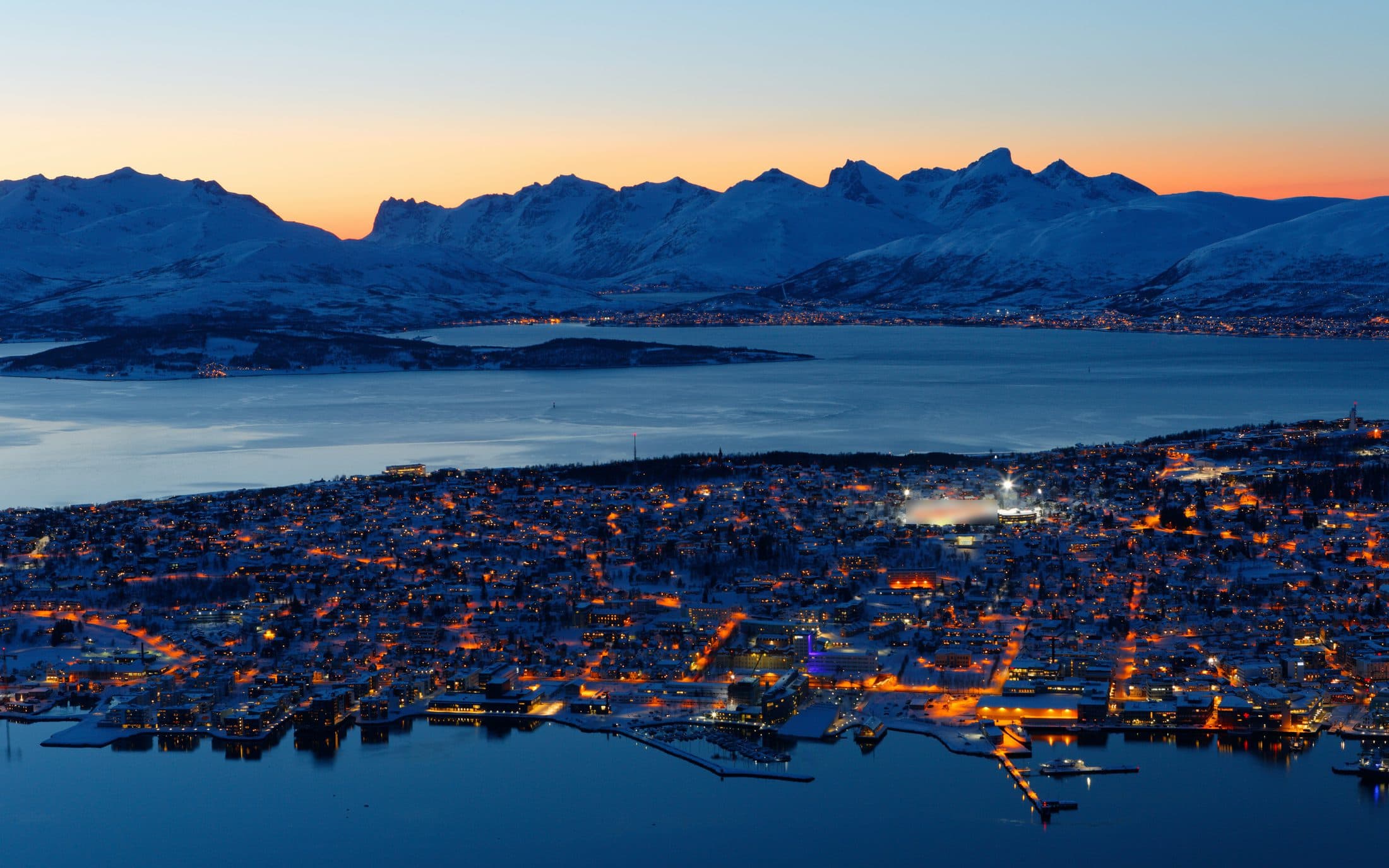
Norway’s Arctic city on the island of Tromsøya and the coast and mountains around it: the Arctic Cathedral across the sound, Storsteinen above the city by cable car or the Sherpa steps, and the lake of Prestvannet; Ersfjordbotn on Kvaløya and Sommarøy beyond it; Senja’s outer coast, with Bergsbotn, Tungeneset, Segla and Hamn; and the Lyngen Alps — under the midnight sun from May to July and the northern lights from late August to April.
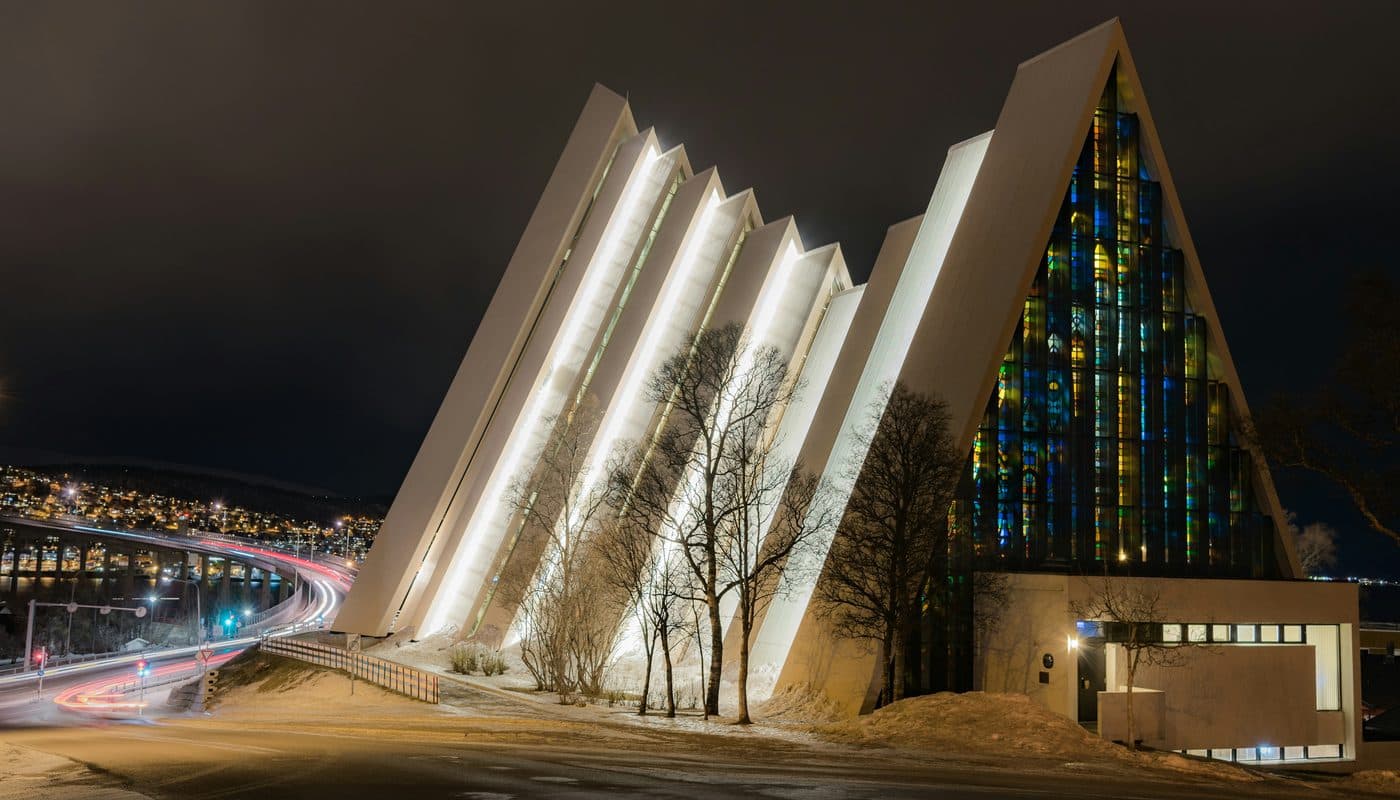
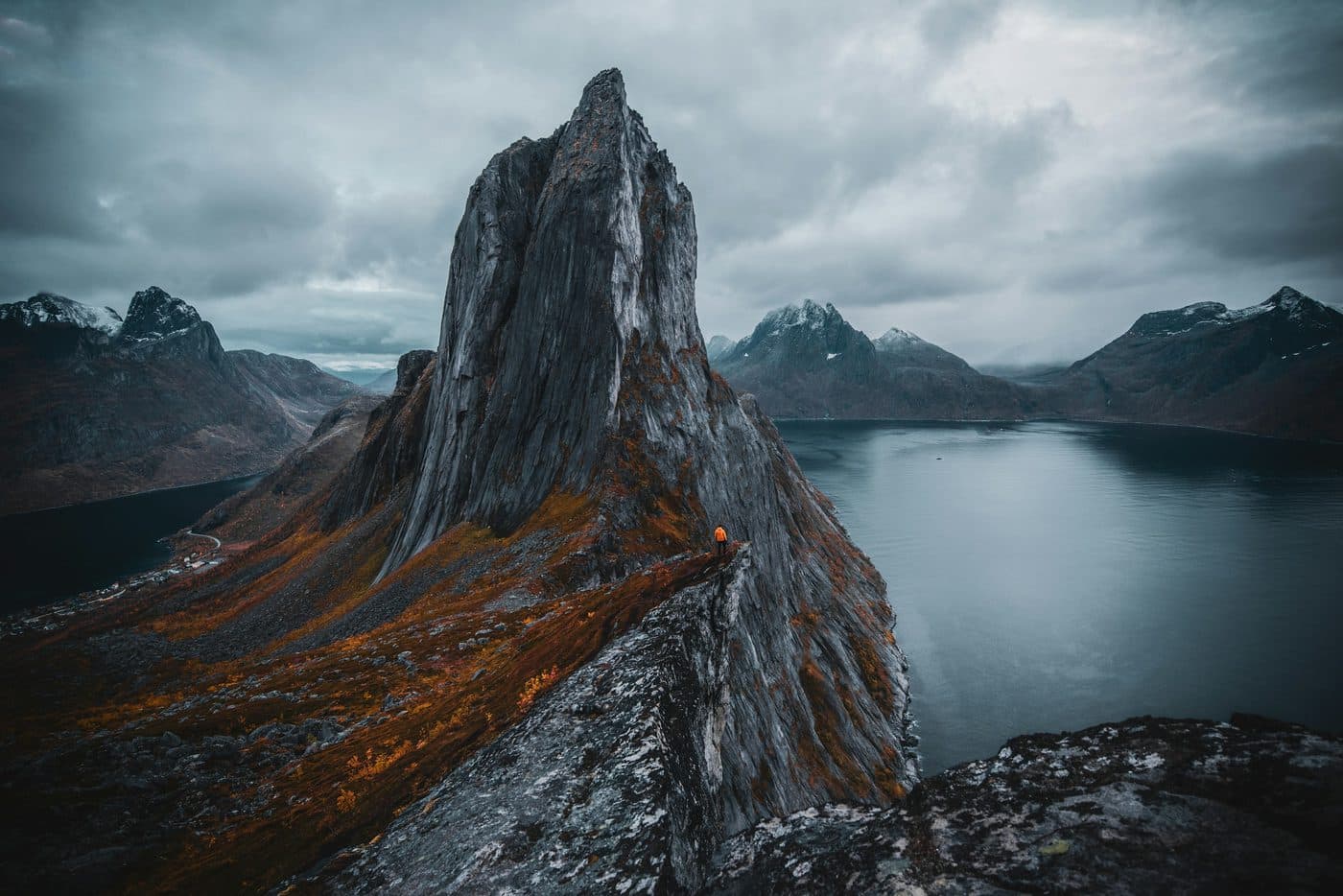
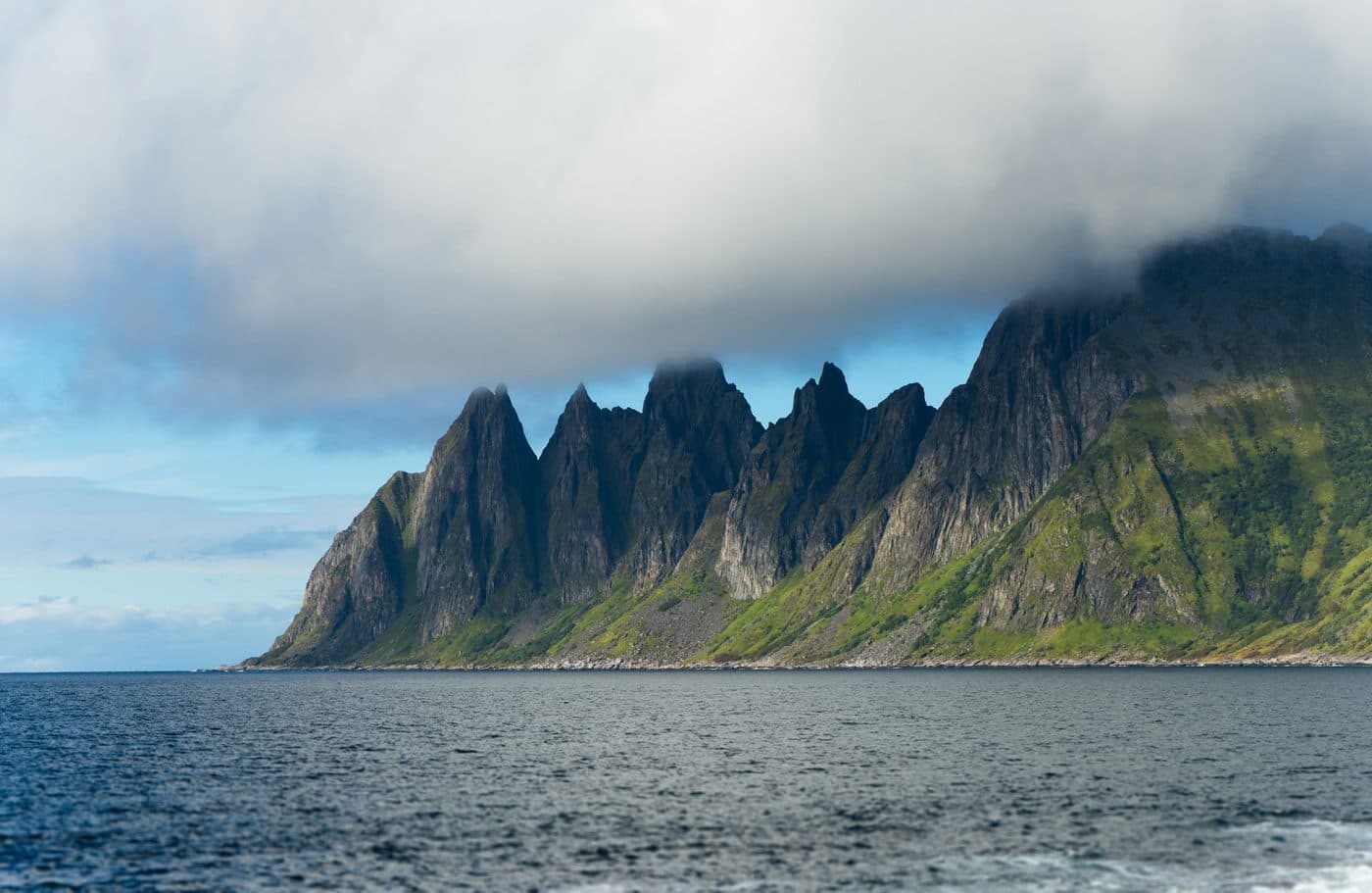
Tromsdalen Church, known as the Arctic Cathedral, was consecrated on 19 November 1965 on the mainland side of the sound: eleven aluminium-clad concrete panels on each side of its roof, a great glass front with a cross at the entrance and, on the east wall, a stained-glass window put in in 1972, which lights the church in the midnight sun. Close by, the Fjellheisen cable car climbs 752 m of cable from Solliveien in four minutes to Storsteinen, 421 m above the sea and the city; the Sherpa steps, more than 1,200 of them, built of mostly local stone by Sherpas from the Khumbu region of Nepal, take 40 to 60 minutes on foot. On top of Tromsøya, at 96 m, the lake of Prestvannet has a path of 1.8 km round it. West of the city, the Senja Scenic Route runs 102 km along the island’s outer coast from Botnhamn to Gryllefjord: at Bergsbotn a 44 m platform looks over the Bergsfjord and its peaks, and at Tungeneset, on the headland between the Steinsfjord and the Ersfjord, a walkway of Siberian larch leads out over the rocks to face the open sea and the sharp peaks of Oksen. East of Tromsø, the Lyngen Alps have been a protected landscape since 2004, Lyngsalpan, Ittugáissáid by its Sami name. No World Heritage site lies in the region.
Couples marry here at Tromsø’s town hall, in the Arctic Cathedral and the region’s other churches, and in small ceremonies of their own by a fjord or on a mountain, in the midnight sun or in the blue light of the polar night, with portraits on Storsteinen above the city, on Kvaløya’s and Senja’s beaches and, on clear winter nights, under the northern lights. In Norway a marriage is legal when the municipality marries you in a civil ceremony (a mayor, a deputy mayor or someone the council has authorised) or when a priest of the Church of Norway or an officiant of another registered faith or life-stance community marries you, with two witnesses present; couples from abroad can marry here legally once the Tax Administration (Skatteetaten) has tested the conditions and issued a certificate (prøvingsattest), which takes up to five weeks (longer when papers from abroad are checked) and is valid four months, each foreign partner sending a certificate of no impediment from home, apostilled or legalised, no older than four months and in English, in a Nordic language or with a state-authorised translation, and showing a lawful stay in Norway (a visa or visa-free entry counts); each municipality sets its own days, rooms and any fee, so ask the one where you will marry, and since 2009 two people of the same sex can marry, in the Church of Norway too. The Church of Norway marries members in its churches and leaves it to the priest when neither of you is one.
Through the year
When to marry in Tromsø & the Arctic North
June to August are the months for an outdoor wedding, and they come with light round the clock until late July. In the 1991–2020 normals of the Norwegian Meteorological Institute (MET Norway), as Norway reports them to the World Meteorological Organization, the Tromsø station, 100 m up on Tromsøya above the city, has highs of about 13 °C in June, 16 °C in July and 15 °C in August, with nights of 6 to 9 °C, and July is the warmest month of the year. Rain of 1 mm or more falls on 11 days a month from May to July and on 13 in August, and May and June are the driest months, with 57 and 58 mm, against 127 mm in October, the wettest. Winter is cold but not extreme for the latitude: from December to February the highs stay around or just below freezing and the nights fall to about −4 to −6 °C, with rain or snow on 13 to 15 days a month. March, with snow, daylight back and dark nights for the northern lights, May, with the midnight sun starting, and September, with the first dark skies and autumn colours, work for couples who come for the light.
- January: Quieter
- February: Quieter
- March: Good with planning
- April: Quieter
- May: Good with planning
- June: Best
- July: Best
- August: Best
- September: Good with planning
- October: Quieter
- November: Quieter
- December: Quieter
- March to MayBy mid-March the sun is up from about ten past six to twenty to six, and the nights stay dark enough for the northern lights until about 10 April. March is still winter, with highs just above freezing and nights of about −4 °C, and rain or snow on 14 days; April reaches 4 °C and May 9 °C, with rain on 13 and 11 days. The clocks go forward on the last Sunday of March (28 March 2027); by mid-April the sun sets at about a quarter to nine, and by mid-May it is down only from about a quarter to midnight to a quarter to two. From about 19 May it does not set at all.
- Late May to July: the midnight sunThe sun does not set in Tromsø from about 19 May to 25 July; at midsummer it is at its lowest at about a quarter to one in the morning, due north and still about three degrees above the horizon. Highs of 13 °C in June and 16 °C in July, nights of 6 to 9 °C and rain on 11 days a month: bring warm layers for an evening ceremony, and know that a portrait at midnight looks like late afternoon. The Sherpa steps up to Storsteinen are a walk for the snow-free season, usually from late spring to autumn; in snow or ice, take the cable car instead.
- August to OctoberAugust is still mild, at 15 °C by day with rain on 13 days, but the sun sets again, at about ten to ten in mid-August, and from late August the northern lights return. September cools to 11 °C and October to 5 °C, with rain on 15 and 16 days, and October is the wettest month, with 127 mm. In mid-September the sun sets at about twenty past seven, in mid-October at about five past five. The clocks go back on the last Sunday of October (31 October 2027).
- November to February: the polar nightThe sun does not rise in Tromsø from about 28 November to 14 January. At midwinter it stays about three degrees below the horizon at noon, and the sky is light enough to be outdoors without lamps from about half past nine to five to two, often in pastel colours; Visit Tromsø points out that the dark season is never fully dark. Highs from about 2 °C in November to −1 °C in January and February, nights of about −2 to −6 °C, rain or snow on 13 to 15 days a month. By mid-February the sun is up from about a quarter past eight to twenty to four.
In numbers
Weather station: Tromsø, normals 1991–2020 · Checked 6 November 2026
Places
Where couples marry here
The kinds of places — ask your photographer which ones they know well.
Tromsø’s town hall and the city
Tromsø municipality marries couples free of charge at the town hall, on Wednesdays, Thursdays and Fridays between 9:00 and 14:30 from 1 May to 31 August and on Fridays from 1 September to 30 April, never on public holidays, in Norwegian, Sami or English; if either of you doesn’t understand the language, you bring a qualified interpreter. Book the date at least two weeks ahead and send the Skatteetaten certificate at least two weeks before; the room seats 24 guests and the two witnesses, whom the town hall can find if you ask in advance, and the ceremony itself takes about five minutes. Weddings elsewhere or at other times are arranged directly with one of the municipality’s officiants. Balloons, rice, rose petals, confetti and alcohol are not allowed, outside the town hall either. Prestvannet, on top of the island, is 3 km from the centre.
The Arctic Cathedral and Storsteinen
Weddings in the Arctic Cathedral are booked through Tromsø’s church office or its online booking, not with the church itself; the summer months are much in demand, so book early, and the priest who will marry you meets you beforehand to plan the service. The cathedral closes to visitors during weddings and funerals. It forbids drones, with fines for anyone who flies one. Fjellheisen’s lower station, in Tromsdalen, is close by; from Storsteinen the views open out over the city, and the cable car is the way up when snow or ice covers the Sherpa steps.
Kvaløya, Ersfjordbotn and Sommarøy
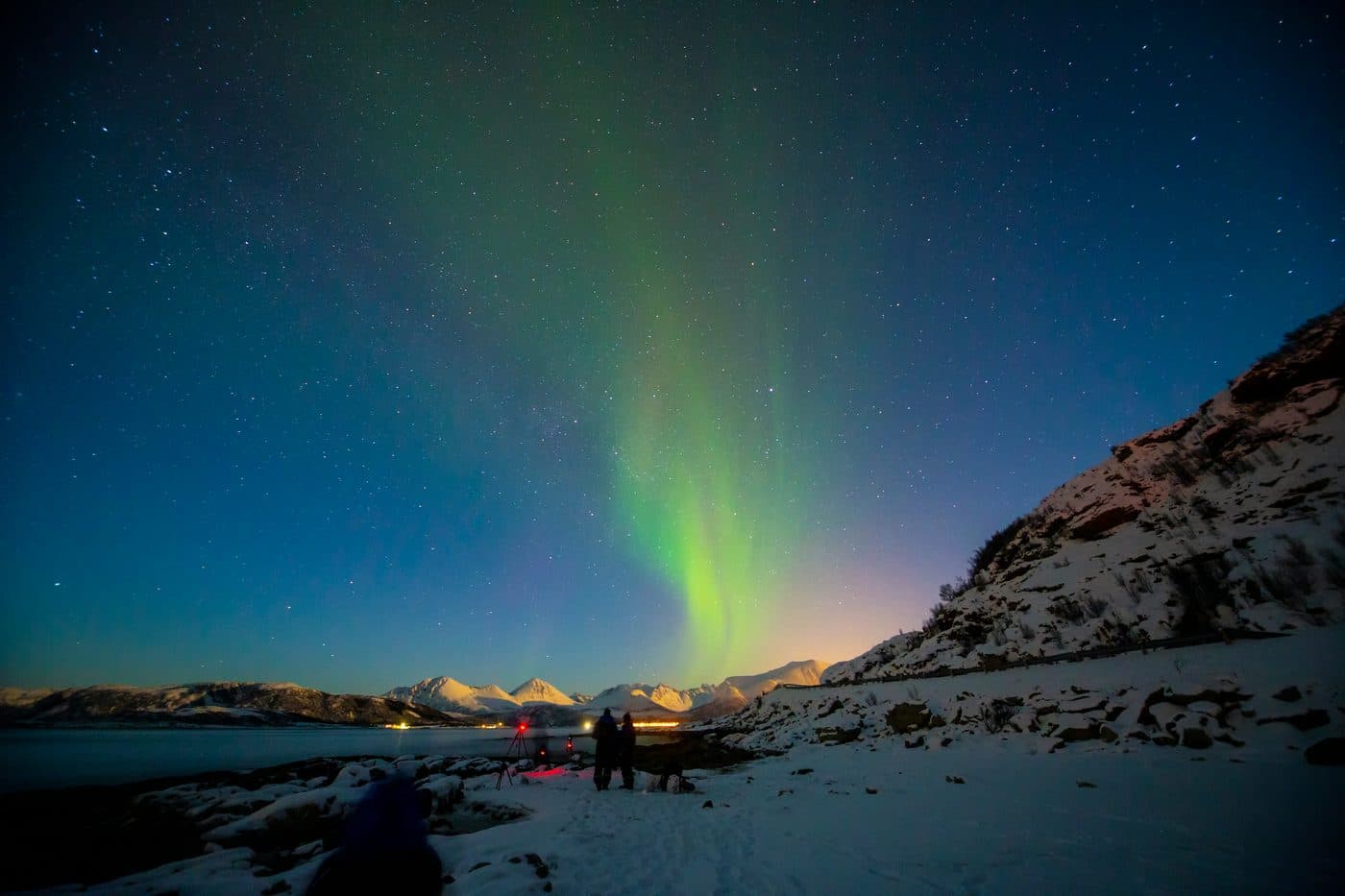
On Kvaløya, the island west of Tromsøya, Ersfjordbotn is 20 km by road from the centre, and Sommarøy, beyond it on the coast, 58 km. Brensholmen, 55 km away, is the quay for the ferry across to Botnhamn on Senja. For the northern lights, Visit Tromsø’s advice is to leave the city’s lights behind for the darker shores around it.
Senja and the Lyngen Alps
Bergsbotn is 213 km by road from Tromsø round by the bridge at Finnsnes, or 48 km from Botnhamn after the ferry from Brensholmen; Tungeneset and Ersfjordstranda, a beach of white, fine sand at the head of the Ersfjord, are about 15 km further on. Segla, 639 m, rises above Fjordgård, where the path starts at the school: a demanding walk of 4.6 km there and back, for May to September. The Lyngen Alps lie 140 km by road from Tromsø; the area is popular for ski touring, and drones are banned in principle in the protected landscape, with no exemption for private filming or photographs.
Light
How the light falls
The sun does not set in Tromsø from about 19 May to 25 July; at midsummer it is lowest at about a quarter to one in the morning, due north and still about three degrees up, and from about the end of April to mid-August it never goes more than six degrees below the horizon, so the sky never darkens. In mid-August it sets at about ten to ten, in mid-September at about twenty past seven and in mid-October at about five past five. From about 28 November to 14 January it does not rise: at midwinter it stays about three degrees below the horizon at noon, and the twilight is bright enough to work outdoors from about half past nine to five to two. Visit Tromsø gives late August to early April as the season for the northern lights, which need a dark, ideally clear sky, best between six in the evening and two in the morning; the sun goes far enough below the horizon for a properly dark sky from about the start of September to about 10 April. The MET Norway normals used here give no sunshine figure for Tromsø.
Travel
Getting there
Tromsø Airport, on Tromsøya, is 6 km from the city centre. By road from the centre, Prestvannet is 3 km, Ersfjordbotn 20 km, Brensholmen 55 km, Sommarøy 58 km, the Lyngen Alps at Lyngseidet 140 km and Bergsbotn, on Senja, 213 km. Drones fly under the EU’s rules — an operator registered where they live (in Norway with the Civil Aviation Authority, Luftfartstilsynet, at flydrone.no; someone living outside the EU registers in the first EU country or Norway they fly in), in sight, below 120 m and never over crowds — and in Norway a pilot from abroad must also notify the National Security Authority (NSM) before filming from the air, check the zones on dronesoner.no (near airports, central Oslo’s restricted area R102, the areas where filming from the air is banned) and have the landowner’s permission to take off and land; drones are as a rule banned in national parks and the large protected landscapes, and in many nature reserves, so ask the area’s managers first. Because the airport is on the island, the whole city, Tromsdalen with the Arctic Cathedral and Fjellheisen, and parts of Kvaløya lie inside the airport’s drone restrictions, and Visit Tromsø warns that flying a drone on Tromsøya is strictly forbidden; in the Lyngen Alps’ protected landscape drones are banned in principle.
Photographers
Photographers in Tromsø & the Arctic North
No one in Tromsø & the Arctic North yet
The first photographers in Tromsø & the Arctic North are joining now. Tell our concierge your date and your plans — it checks who is free and fits.
Plan
Read before you plan
- Getting married in Norway as foreigners: Skatteetaten’s certificate, documents, lawful stay and feesHow couples from abroad marry legally in Norway: no residence needed, the test of the conditions by the Tax Administration (Skatteetaten) and its certificate valid four months, the certificate of no impediment from home with an apostille, translations, a sponsor for each of you, a lawful stay on the day, the municipality’s civil wedding and its fees, church and humanist weddings, same-sex marriage since 2009, the certificate afterwards, and the symbolic route.
- How to choose a wedding photographer: the steps, and the questions to askThe decision in order — whole weddings, style, availability, the package, the contract and deposit, cancellation, delivery and a conversation — then a checklist of questions, with why each one matters.
- A wedding-day timeline for photosFrom getting ready to the last dance, planned around the light.
- Deposits and payment protectionWhat you pay when, and what happens if plans change.
- Which country for a destination wedding? The law, prices, crowds and light, comparedThe legal route for couples who don’t live there, season and crowds, price levels, light, flights, venues and permits for photographs — Portugal, Italy, Spain, Greece, France and Austria compared with official figures, as of October 2026.
- A rain plan that still looks goodCovered spots, umbrellas and what photographers do on grey days.
- Wedding photography contract checklist: what it should say, and how Lens & Vows handles each pointThirteen things a good contract covers — the day and the hours, what is delivered, deposit and balance, cancellation on either side, date changes, illness, image rights, personal data, backups, travel, overtime and complaints — and what our terms say about each.
Norway