Norway
Getting married in Norway
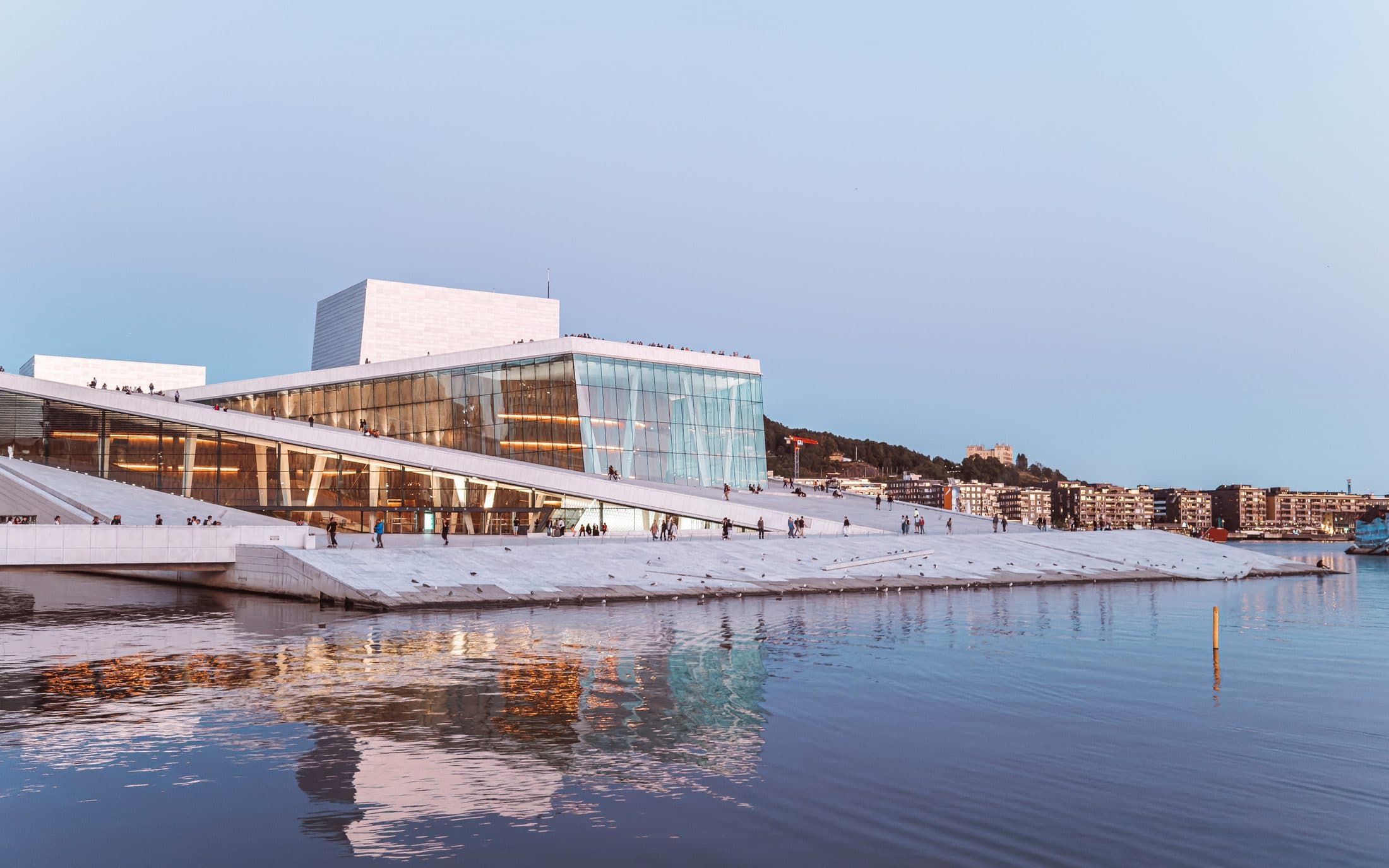
Oslo’s Opera House roof and the islands of the Oslofjord, Bergen’s Hanseatic wharf at Bryggen and the mountains above it, the Geirangerfjord, the Nærøyfjord and the Hardangerfjord, Preikestolen high above the Lysefjord, the fishing villages and white beaches of Lofoten, and Tromsø’s Arctic Cathedral under the midnight sun and the northern lights.
Norway reaches from the Skagerrak and the North Sea to the Arctic north, and its weather follows the coast: mild and wet in the west, drier and colder inland and in the north. July’s mean temperature is about 18 °C in Oslo, 15.5 °C in Bergen and 12 °C in Tromsø, and Bergen has rain (1 mm or more) on some 200 days a year against 115 in Oslo; on the west coast May and June are the driest months, with rain on about 13 days in Bergen and 10 at Stavanger-Sola. The light sets the seasons: on 21 June the sun sets at about a quarter to eleven in Oslo and after eleven in Bergen, and above the Arctic Circle it doesn’t set at all — in Tromsø from about 19 May to 25 July. At midwinter Oslo has the sun for about six hours, and Tromsø not at all from about 28 November to 14 January, only a blue twilight around noon.
A legal wedding is civil, in the Church of Norway or with another registered faith or life-stance community, and before any of them the Tax Administration (Skatteetaten) tests that you are free to marry and issues a certificate (prøvingsattest), valid four months. Couples from abroad apply on paper, by post, with a statement from a sponsor (forlover) for each of them and, for each foreign partner, a certificate of no impediment from home, apostilled or legalised, no older than four months and in English, a Nordic language or a state-authorised translation; allow up to five weeks, more when papers from abroad are checked. You don’t have to live in Norway, but each foreign partner must be lawfully in the country on the day — a visa or visa-free entry counts. The municipality marries you, usually in its town hall or wedding room and elsewhere by agreement, before at least two witnesses; its days and fees are its own. Since 2009 two people of the same sex can marry, in the Church of Norway too.
6 places
Where in Norway
A capital on its fjord, a Hanseatic port in the rain, the great western fjords, the cliffs above the Lysefjord, Arctic islands of fishing villages, or the far north of the midnight sun: each has its own light, landscape and best months. Start with the one that feels like you.
- OsloNorway’s capital at the head of the Oslofjord: the Opera House’s white marble roof sloping into the water at Bjørvika, Akershus Fortress on its rock above the harbour, the Royal Palace and its park, Frogner Park with the Vigeland installation’s granite and bronze figures, the stave church from Gol on the Bygdøy peninsula, Holmenkollen and the forest lakes of Nordmarka such as Sognsvann at the end of the metro, the islands in the fjord — Hovedøya, eight minutes by boat, and Gressholmen beyond it — and, 39 km to the south, Drøbak on the fjord.Best: Jun · Jul · AugPhotographers joining
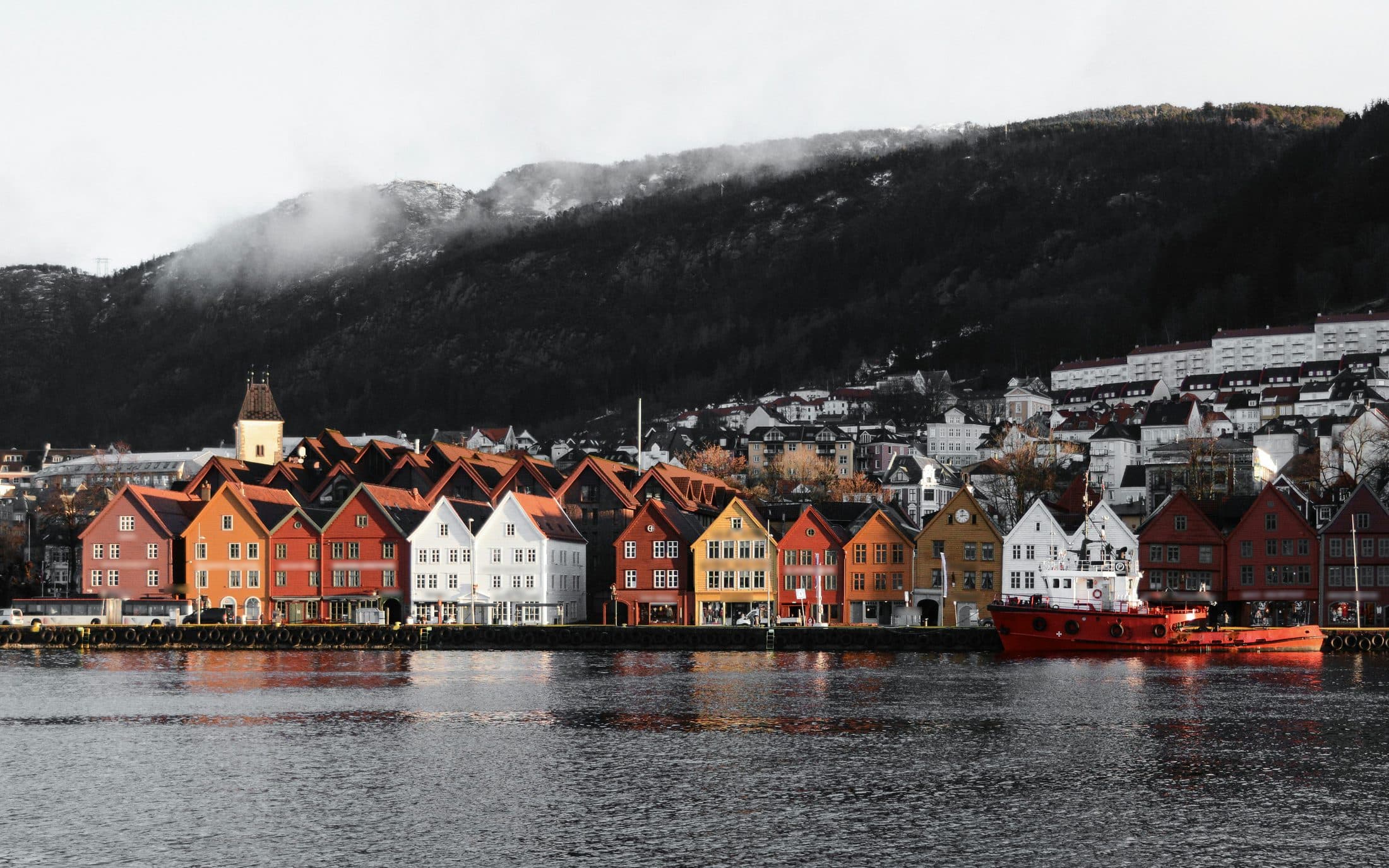 BergenBergen between its mountains and the sea: the Hanseatic wharf at Bryggen on the Vågen harbour, Mount Fløyen above it, reached by funicular, and Ulriken, the highest of the seven mountains around the city, the park at the tip of the Nordnes peninsula, Troldhaugen, the composer’s villa above Lake Nordåsvannet, Fantoft’s stave church, the white towers of Gamlehaugen in its English-style park, the lakes and woods on the mountains, and, south of the city in the Bjørnafjord, the island of Lysøen.Best: May · Jun · JulPhotographers joining
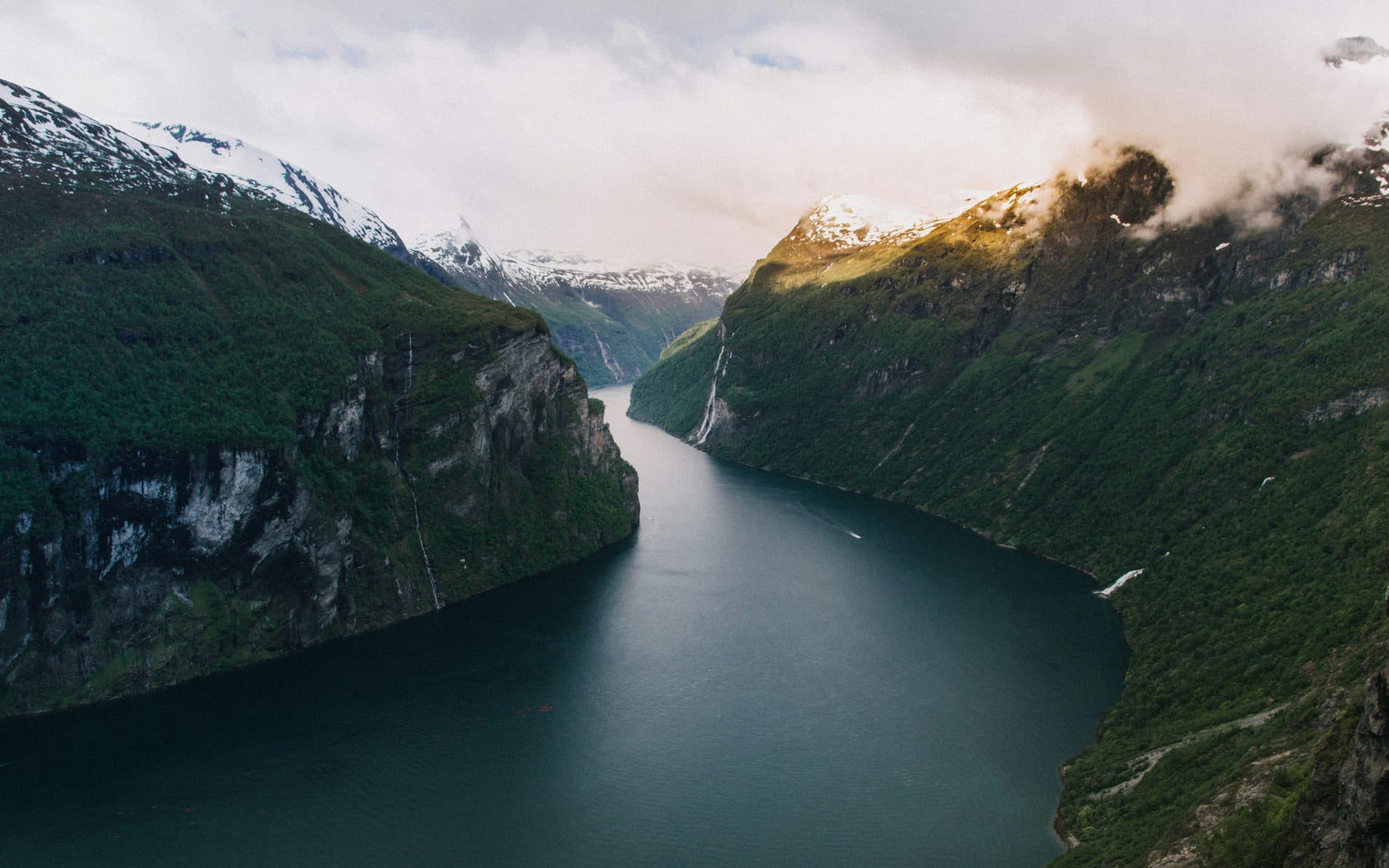 The Western FjordsWestern Norway’s fjord country: the Hardangerfjord with Trolltunga, Vøringsfossen and the orchards of Ulvik and Lofthus; the Sognefjord with Flåm, the Stegastein viewpoint, the narrow Nærøyfjord and the stave churches of Borgund and Urnes; Fjærland under the Jostedal glacier and Loen on the Nordfjord; the Geirangerfjord and the hairpin bends of Trollstigen; and on the coast, Ålesund’s Art Nouveau streets and the bridges of the Atlantic Road.Best: Jun · Jul · AugPhotographers joining
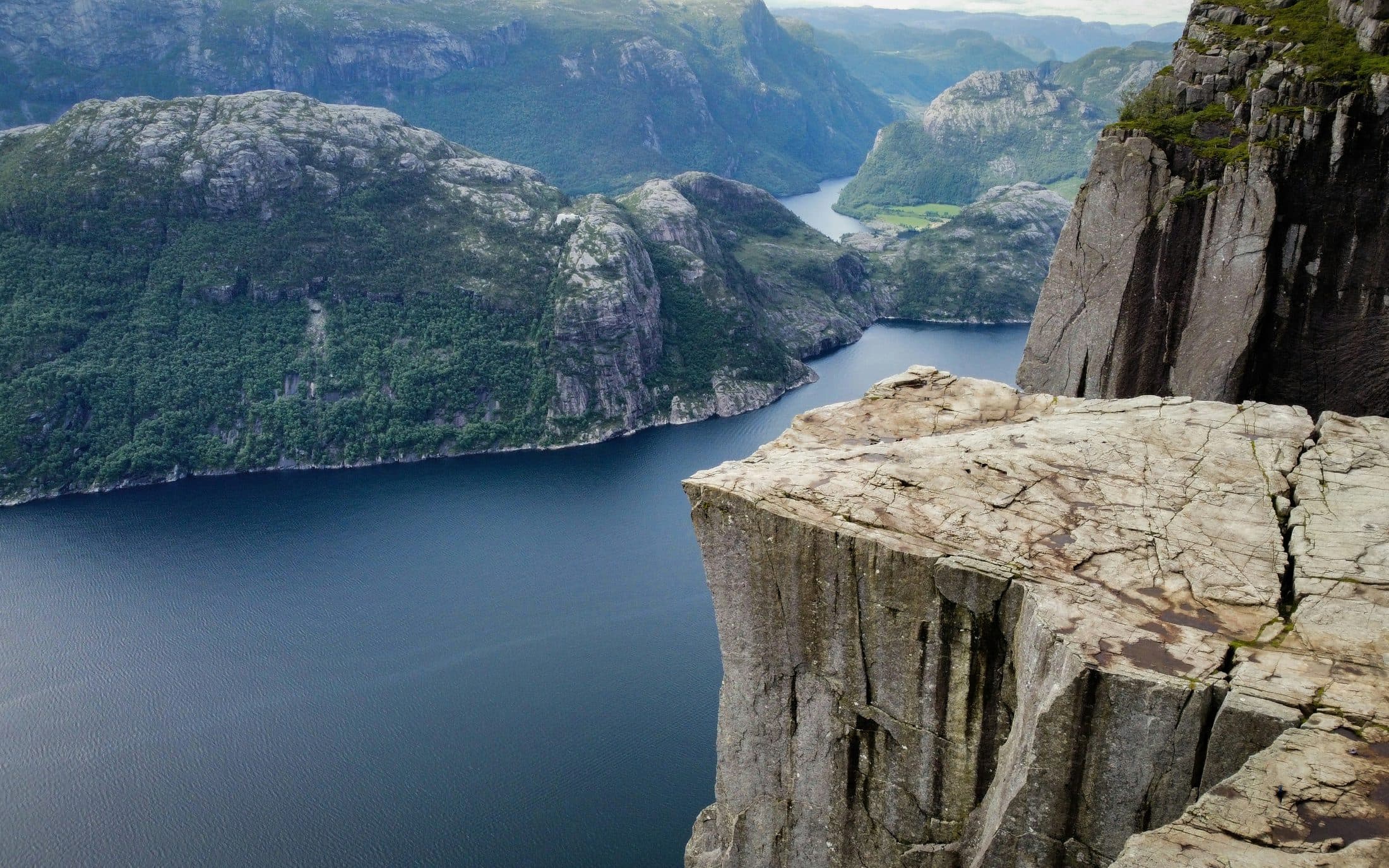 Stavanger & the LysefjordStavanger’s white wooden old town on its harbour and the Lysefjord to the east: Old Stavanger’s 173 wooden houses on Vågen and the red manor of Ledaal, Preikestolen standing 604 m above the fjord, Kjerag, the Lysefjord’s highest peak, with its famous boulder, the three swords of Sverd i fjell by the Hafrsfjord, the long beaches of Jæren south of the city, Dalsnuten above Sandnes and, on the island of Mosterøy, Utstein, Norway’s best-preserved medieval monastery.Best: Jun · Jul · AugPhotographers joining
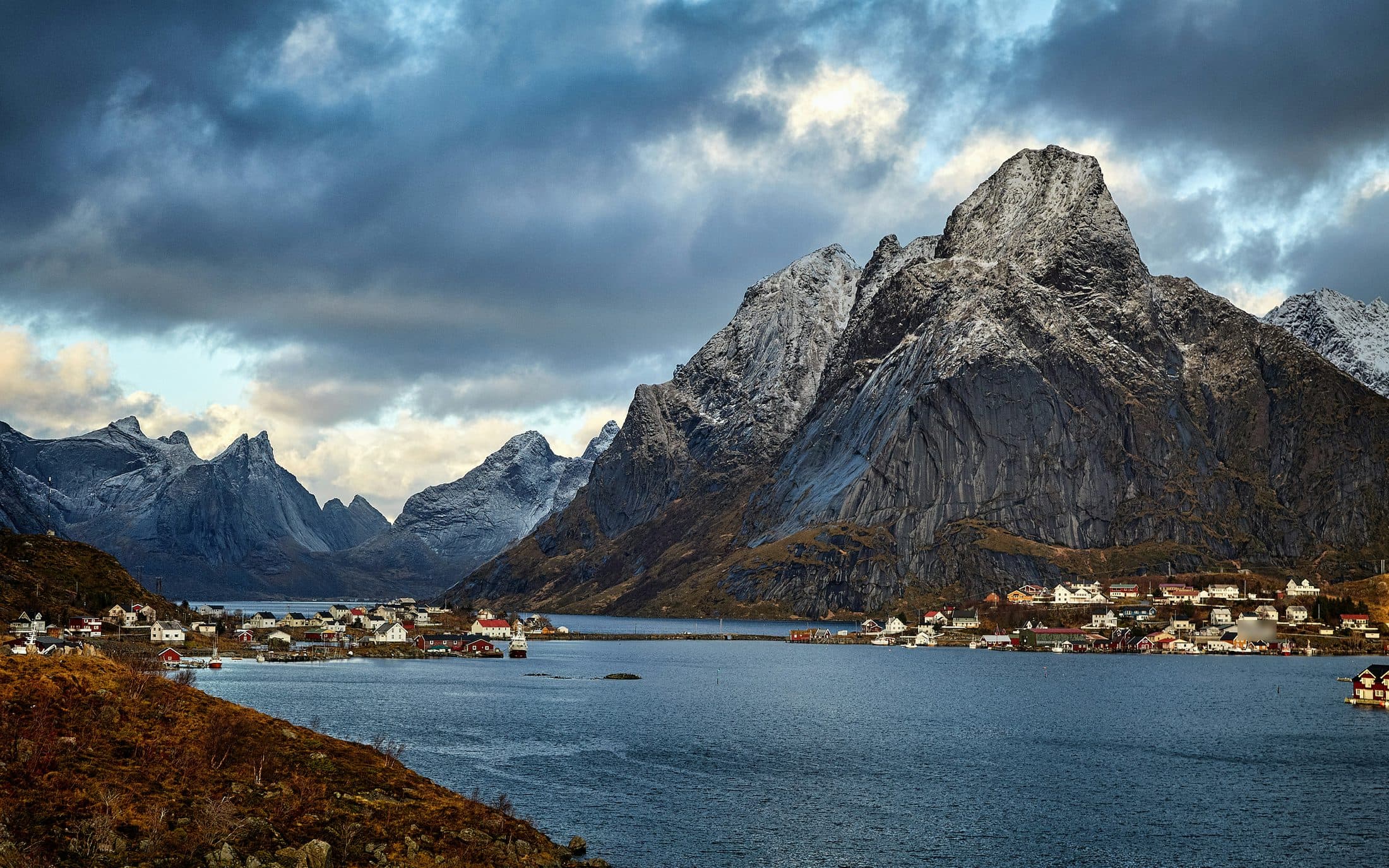 LofotenThe islands off Norway’s northern coast where the mountains rise straight out of the sea: Svolvær and Henningsvær on Austvågøy; the white beaches of Haukland, Uttakleiv, Unstad and Ramberg; the fishing village of Nusfjord; and at the western end Hamnøy, Reine and Sakrisøy below the peaks of Lofotodden National Park, the trails up Reinebringen and Ryten, the beach at Kvalvika and Å, where the road ends — under the midnight sun in June and the northern lights in winter.Best: Jun · Jul · AugPhotographers joining
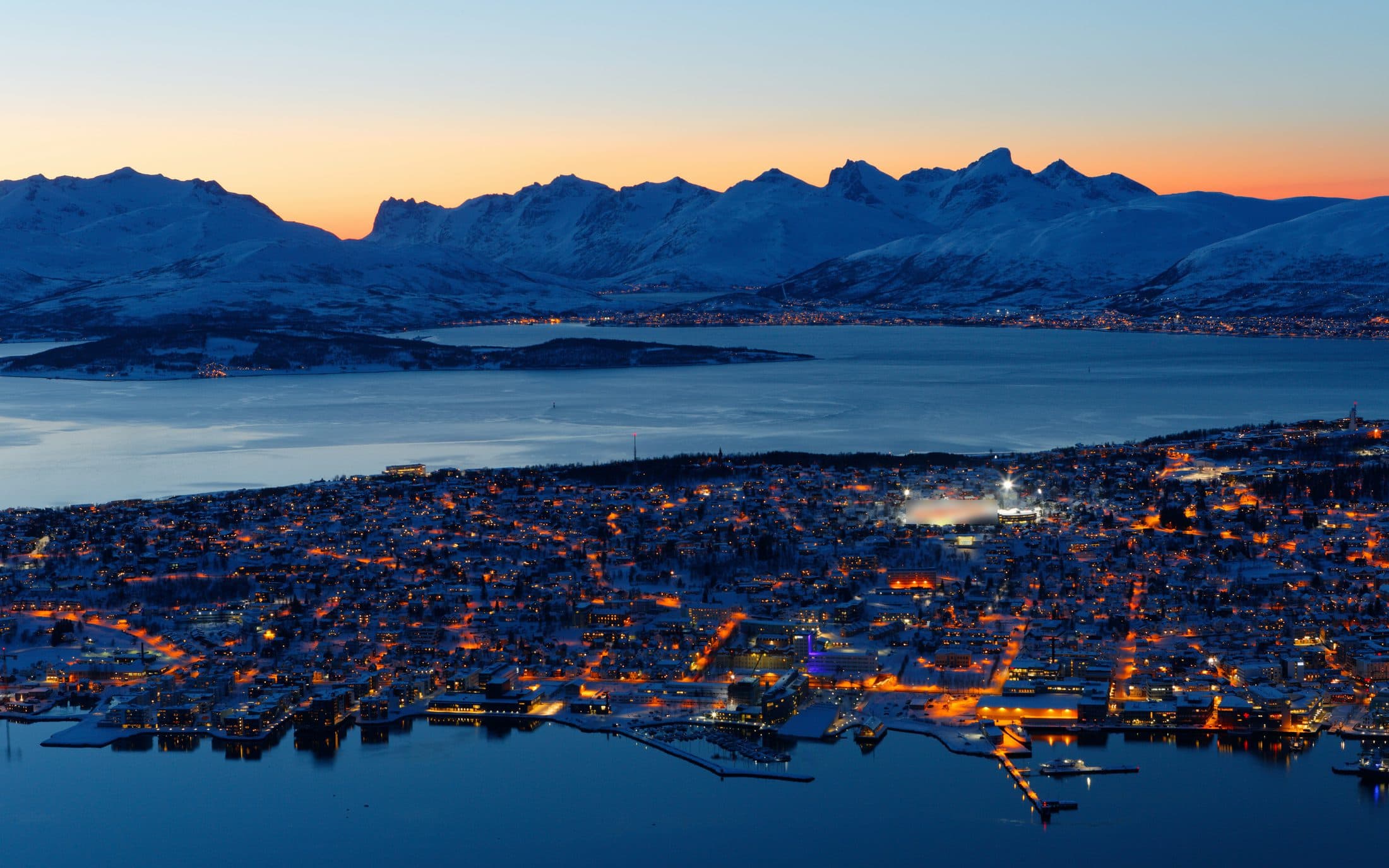 Tromsø & the Arctic NorthNorway’s Arctic city on the island of Tromsøya and the coast and mountains around it: the Arctic Cathedral across the sound, Storsteinen above the city by cable car or the Sherpa steps, and the lake of Prestvannet; Ersfjordbotn on Kvaløya and Sommarøy beyond it; Senja’s outer coast, with Bergsbotn, Tungeneset, Segla and Hamn; and the Lyngen Alps — under the midnight sun from May to July and the northern lights from late August to April.Best: Jun · Jul · AugPhotographers joining
Through the year
When to marry, region by region
Dark: the easiest months. Outlined: they work with some planning. Grey: the quieter, wetter or hotter part of the year there.
- Oslo
- January: Quieter
- February: Quieter
- March: Quieter
- April: Quieter
- May: Good with planning
- June: Best
- July: Best
- August: Best
- September: Good with planning
- October: Quieter
- November: Quieter
- December: Quieter
- Bergen
- January: Quieter
- February: Quieter
- March: Quieter
- April: Good with planning
- May: Best
- June: Best
- July: Best
- August: Good with planning
- September: Quieter
- October: Quieter
- November: Quieter
- December: Quieter
- The Western Fjords
- January: Quieter
- February: Quieter
- March: Quieter
- April: Quieter
- May: Good with planning
- June: Best
- July: Best
- August: Best
- September: Good with planning
- October: Quieter
- November: Quieter
- December: Quieter
- Stavanger & the Lysefjord
- January: Quieter
- February: Quieter
- March: Quieter
- April: Quieter
- May: Good with planning
- June: Best
- July: Best
- August: Best
- September: Good with planning
- October: Quieter
- November: Quieter
- December: Quieter
- Lofoten
- January: Quieter
- February: Quieter
- March: Good with planning
- April: Quieter
- May: Good with planning
- June: Best
- July: Best
- August: Best
- September: Good with planning
- October: Quieter
- November: Quieter
- December: Quieter
- Tromsø & the Arctic North
- January: Quieter
- February: Quieter
- March: Good with planning
- April: Quieter
- May: Good with planning
- June: Best
- July: Best
- August: Best
- September: Good with planning
- October: Quieter
- November: Quieter
- December: Quieter
The seasons
What each season brings
- April – MaySpringSpring comes late and fast. April’s mean temperature is about 6 °C in Oslo and 7 °C in Bergen and Stavanger, and in May it reaches about 11 °C in Oslo and Bergen and 10 °C in Stavanger and at Tafjord, deep in the fjords — but only 7 °C in Lofoten and 5.5 °C in Tromsø. On the west coast May and June are the driest months: rain (1 mm or more) falls on about 13 days in Bergen and 10 at Stavanger-Sola, against 18 or 19 a month from October to January, and on the inner Sognefjord, at Lærdal, on only 5 April days and 7 in May. The evenings lengthen fast: by mid-May the sun sets at about ten to ten in Oslo, after ten in Bergen and near midnight in Tromsø, where it stops setting from about 18 May.
- June – AugustSummerLong, mild days rather than heat: July’s mean is about 18 °C in Oslo, 15.5 °C in Bergen, 15 °C in Stavanger and at Tafjord, 13.5 °C in Lofoten and 12 °C in Tromsø, with afternoons of about 23 °C in Oslo, 20 °C in Bergen and the fjords and 16 °C in the north. Summer brings rain too: in Oslo on about 11 days in July and in August — August is its wettest month — and in Bergen on 15 July days and 17 in August. On 21 June the sun sets at about a quarter to eleven in Oslo and after eleven in Bergen and the fjords, and the sky never gets fully dark; north of the Arctic Circle it doesn’t set at all — in Svolvær, in Lofoten, from about 25 May to 18 July, and in Tromsø from about 18 May to 25 July.
- September – OctoberAutumnSeptember is still mild — a mean of about 12 °C in Oslo, 12.5 °C in Bergen and 13 °C in Stavanger — and in Oslo drier than high summer, with rain on 9 days. The west coast and the north turn wet: Bergen has rain on 17 September days and 18 in October, about 250 and 270 mm, and Lofoten, at Leknes, on 19 and 22. From the end of August the nights darken again in Tromsø and Lofoten, and on clear nights the northern lights can show. In mid-September the sun sets at about twenty to eight in Oslo and at eight in Bergen; in mid-October at about ten past six and half past six, and at about five in Tromsø; the clocks go back on the last Sunday of October.
- November – MarchWinterShort days, and in the north none at all: on 21 December the sun is up from about twenty past nine to ten past three in Oslo and from a quarter to ten to half past three in Bergen, while in Tromsø it stays below the horizon from about 28 November to 14 January and in Svolvær from about 7 December to 5 January — at midwinter Tromsø still has about four hours and twenty minutes of civil twilight around noon, a blue light rather than night, and the long nights are the season of the northern lights. The coast stays mild for its latitude — January’s mean is about 2.5 °C in Bergen and Stavanger and 1 °C in Lofoten — but wet, with some 290 mm on 19 December days in Bergen; January averages about −2 °C in Oslo and −3 °C in Tromsø. For winter travel, leave a spare day.
The legal basics
Three ways to say yes
What makes a wedding legally binding in Norway, in short. Couples from abroad can marry here legally — civilly, in church or with another registered faith or life-stance community — once the Tax Administration (Skatteetaten) has tested the conditions, and each foreign partner must be lawfully in Norway on the day.
- CivilThe municipality marries you — the mayor, a deputy mayor, or a staff member or councillor the council has authorised — before at least two witnesses (Marriage Act, §§ 11–12). Every municipality must offer weddings to its residents and to couples who don’t live in Norway but meet the conditions, usually in its town hall or wedding room, and a national rule makes that ordinary ceremony free for both and lets the municipality charge for extra costs beyond its usual times and places (§ 12 a; Regulation on municipal weddings, §§ 2–3). Each municipality publishes its own days and fees: as of November 2026, Oslo marries couples who live in Oslo or abroad free on Wednesdays and Fridays and for NOK 3,478 on Saturdays, in Norwegian or English, while Bergen charges couples who don’t live in Bergen NOK 2,500, and NOK 4,500 for a place of your choosing. Since 2009 two people of the same sex can marry (§ 1).
- ReligiousA priest of the Church of Norway marries you legally, and so do officiants to whom the state has given the right in other registered faith and life-stance communities — among them the Humanist Association (Human-Etisk Forbund), whose weddings can be legal (Marriage Act, § 12; Religious Communities Act, § 9). All need Skatteetaten’s certificate first (§ 14). The Church of Norway marries couples of any sex, though the Act lets a priest decline to marry two people of the same sex, or a divorced person whose former spouse is alive (§ 13); members can marry in church, and if neither of you is a member it is the priest’s decision. It is free when one of you is a member living in the parish; elsewhere a fee may apply, and the church holds some weddings outdoors after its own approval.
- SymbolicAny place, any words, any celebrant — but no legal weight: the route for couples who would rather sign the papers at home and celebrate here, on a fjord, a mountain or an Arctic beach. The right to roam lets anyone walk Norway’s uncultivated land all year, with consideration, but a gathering that may cause real damage or nuisance needs the landowner’s consent (Outdoor Recreation Act, friluftsloven, §§ 2 and 10). Drones fly under the EU’s rules — an operator registered where they live (in Norway with the Civil Aviation Authority, Luftfartstilsynet, at flydrone.no; someone living outside the EU registers in the first EU country or Norway they fly in), in sight, below 120 m and never over crowds — and in Norway a pilot from abroad must also notify the National Security Authority (NSM) before filming from the air, check the zones on dronesoner.no (near airports, central Oslo’s restricted area R102, the areas where filming from the air is banned) and have the landowner’s permission to take off and land; drones are as a rule banned in national parks and the large protected landscapes, and in many nature reserves, so ask the area’s managers first.
Before any legal wedding
Skatteetaten, which keeps the population register, tests the conditions for every marriage in Norway and issues the certificate (prøvingsattest) you give your officiant, valid four months (Marriage Act, §§ 6, 10, 14). Without Norwegian ID numbers and BankID you apply on paper, by post: each of you a declaration on your honour, and for each of you a statement from a sponsor (forlover) — an adult who knows you, not necessarily your witness. Each foreign partner adds a colour copy of the passport, an original certificate of no impediment from home (or, where none is issued, proof of civil status), apostilled or legalised, no older than four months and in English or a Nordic language or translated by a state-authorised translator, and proof of a lawful stay in Norway — for UDI, the immigration directorate, a visa or visa-free entry counts. If either of you was married before, add a declaration on the division of the estate; a foreign divorce must first be recognised by the County Governor (Statsforvalteren), with a narrow Nordic exception. Skatteetaten takes up to five weeks, longer when it checks papers from abroad, and accepts no electronic certificates.
Rules, documents and processing times change and depend on your nationality: always check with Skatteetaten and with the municipality — or the church or community — that will marry you, and with your own country’s registry or embassy, before you set a date; and, for photos or a drone in a national park, a fortress or a royal park, with whoever manages it.
Photographers
Photographers in Norway
The first photographers in Norway are joining now
We approve every photographer by hand, from three whole weddings, so the list starts small. Tell our concierge your date and your plans — it checks who is free and fits.
Plan your wedding
Guides
- Getting married in Norway as foreigners: Skatteetaten’s certificate, documents, lawful stay and feesHow couples from abroad marry legally in Norway: no residence needed, the test of the conditions by the Tax Administration (Skatteetaten) and its certificate valid four months, the certificate of no impediment from home with an apostille, translations, a sponsor for each of you, a lawful stay on the day, the municipality’s civil wedding and its fees, church and humanist weddings, same-sex marriage since 2009, the certificate afterwards, and the symbolic route.
- Which country for a destination wedding? The law, prices, crowds and light, comparedThe legal route for couples who don’t live there, season and crowds, price levels, light, flights, venues and permits for photographs — Portugal, Italy, Spain, Greece, France and Austria compared with official figures, as of October 2026.
- How to choose a wedding photographer: the steps, and the questions to askThe decision in order — whole weddings, style, availability, the package, the contract and deposit, cancellation, delivery and a conversation — then a checklist of questions, with why each one matters.
- A wedding-day timeline for photosFrom getting ready to the last dance, planned around the light.
- A rain plan that still looks goodCovered spots, umbrellas and what photographers do on grey days.
- Deposits and payment protectionWhat you pay when, and what happens if plans change.
- Wedding photography contract checklist: what it should say, and how Lens & Vows handles each pointThirteen things a good contract covers — the day and the hours, what is delivered, deposit and balance, cancellation on either side, date changes, illness, image rights, personal data, backups, travel, overtime and complaints — and what our terms say about each.
All the countries we work in · More countries are coming.
Not sure yet?
Tell us about your wedding — we’ll find who is free
The place, the date, the guests, the photos you like. Our concierge checks who is free and fits, and comes back with photographers to choose from.