In short
- In Austria only the civil wedding, held by a registrar of a Standesamt, makes you legally married; a church wedding alone has no legal effect for the state, and a free ceremony (freie Trauung) has none anywhere.
- Couples from abroad can marry legally here: any Standesamt in Austria can check your papers and marry you, wherever you live and whatever your nationality (Personenstandsgesetz § 19; oesterreich.gv.at, January 2026).
- First comes an interview with you both on your documents, the Ermittlung der Ehefähigkeit; its result holds for six months, there are no banns and no waiting period, and the federal fee is €74, or €193 with foreign documents (October 2026).
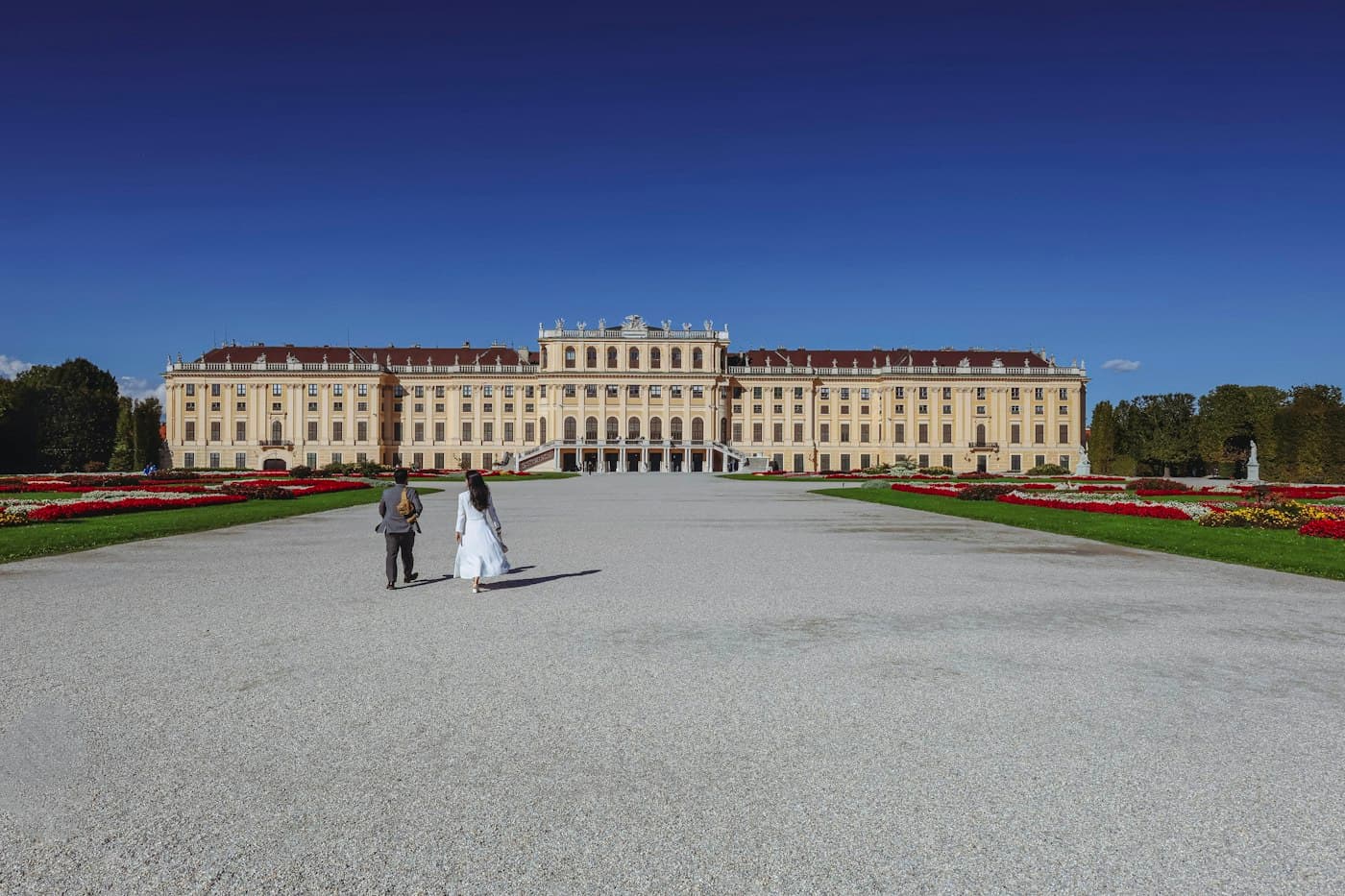
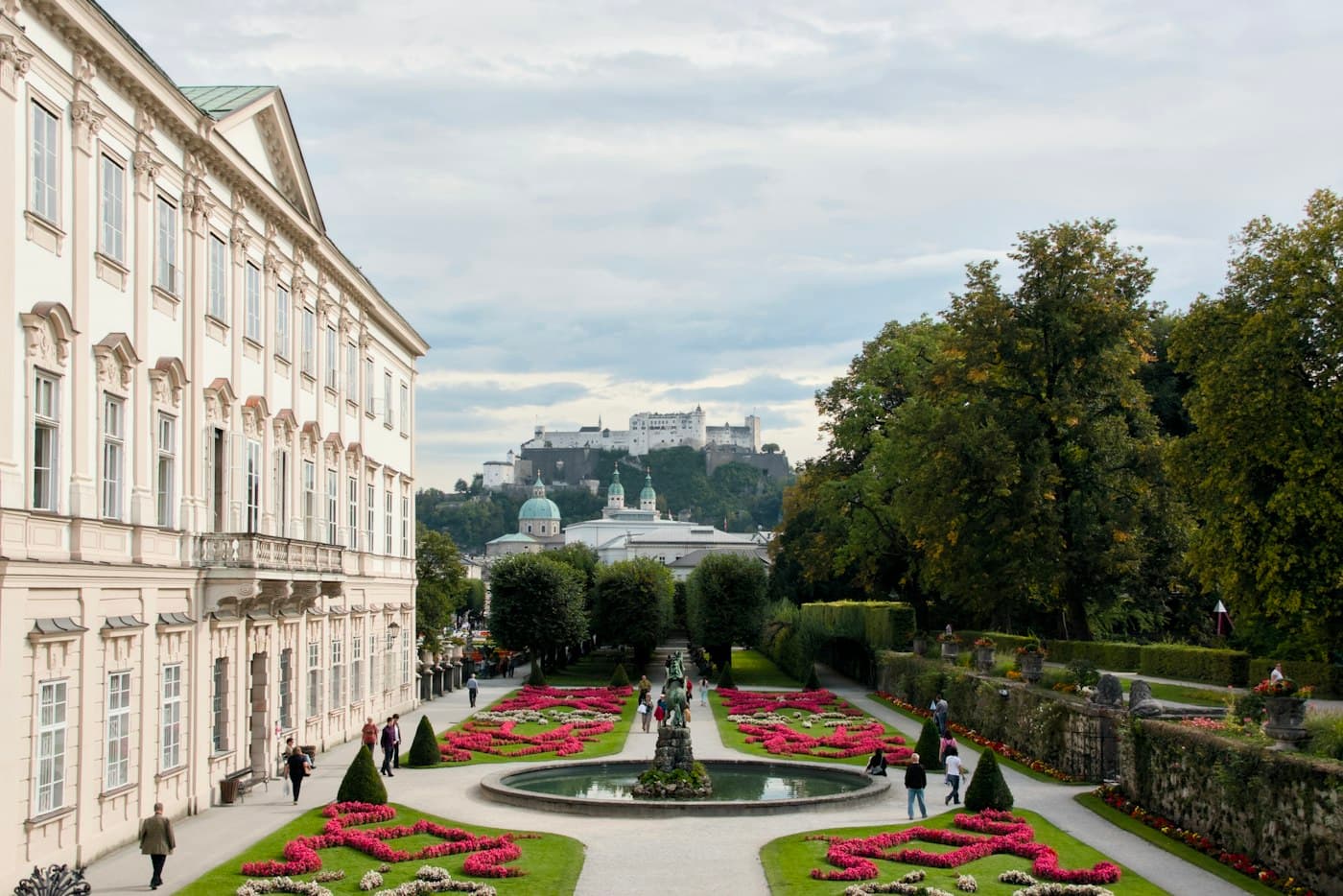
- A Standesamt can also marry you at a place it accepts: Vienna’s list of 1 October 2026 names more than 160, from Schönbrunn to the Giant Ferris Wheel and wine taverns, and Salzburg marries couples in the Marble Hall of Mirabell Palace and at nine palaces and castles.
- Same-sex couples have been able to marry since 1 January 2019, even if their own country does not allow it; 821 of the 45,537 marriages Statistik Austria counted in 2025 were between two men or two women.
In this guide
- Three kinds of ceremony, one legal marriage
- Can we get married in Austria if neither of us lives there?
- How does the civil wedding work, step by step?
- What documents does a foreigner need?
- What does the Standesamt charge?
- How do weddings outside the registry office work in Vienna?
- And in Salzburg, Hallstatt and the other regions?
- Can we have a church wedding in Austria?
- What does a free ceremony free you to do?
- Can same-sex couples marry in Austria?
- What happens after the wedding?
- Where does the photographer fit in?
- Questions couples ask
- Sources
Austria is unusually open to couples from abroad. France asks that one of you, or a parent, live in the town; Austria asks for no residence at all. Any registry office in the country — the Standesamt — can examine your papers and marry you, in its own wedding hall or at a palace, a castle, a wine estate or a lake boat it has approved. What it asks for is paperwork: proof from home that each of you is free to marry, translated, and an appointment in person before the wedding.
Three kinds of ceremony, one legal marriage
- Civil. The only wedding that makes you married in Austria: a registrar asks each of you in turn whether you want to marry and declares you married, in a form and at a place “that fit the meaning of marriage” (Personenstandsgesetz § 18).
- Religious. A church wedding on its own is “invalid before the state”, as the Archdiocese of Salzburg’s marriage office puts it. The law no longer requires the civil wedding first, but the churches expect it.
- Free. A freie Trauung is any ceremony you like, led by a celebrant, a friend or nobody but the two of you. It has no legal effect, so the legal marriage happens at a Standesamt — the same day, or at home.
Can we get married in Austria if neither of us lives there?
Yes. The federal portal oesterreich.gv.at says it plainly: people who are neither Austrian citizens nor residents can marry in Austria, the marriage is valid because an Austrian registrar concluded it, and you can register at any Standesamt (page updated 1 January 2026). Under § 19 of the Personenstandsgesetz, the check of your capacity to marry and the wedding can each happen at any registry office in the country. What Austria checks is your own law: whether each of you may marry is judged by your own country’s rules (IPR-Gesetz § 17), which is why the document from home matters. Ask your own country, before the wedding, whether it must register an Austrian marriage. Vienna even has a desk for couples from abroad, the Touristenhochzeit.
How does the civil wedding work, step by step?
- Book the Standesamt’s date. Vienna opens the following year’s dates for weddings outside its offices on the first working day of May; Salzburg books Marble Hall dates online; Innsbruck takes bookings by phone, at most six months ahead.
- Ask for your document list. Each Standesamt sets it for foreign nationals; Salzburg sends it within 14 days of booking.
- Gather, translate, legalise in the order the Standesamt tells you.
- The Ermittlung der Ehefähigkeit. An oral hearing on your documents, which you normally both attend; its record is still called the Aufgebot, though nothing is posted publicly any more. Register about six months ahead: the result lasts six months, and if no wedding follows, the procedure lapses (§ 17).
- No waiting period. Once your capacity is established, you marry on the agreed date.
- The wedding. Witnesses are optional — none, one or two, aged 18 or over (§ 18). If one of you doesn’t speak enough German, an interpreter takes part. In Gmunden the ceremony takes about 20 minutes, and you leave with your certificate; Innsbruck issues one in the international format on request.
What documents does a foreigner need?
Your Standesamt gives you the exact list. For a partner who is not Austrian, Linz and Klagenfurt ask for the originals of a valid passport, a birth certificate and current proof of marital status from home — a certificate of no impediment (Ehefähigkeitszeugnis) or whatever your country issues instead; under agreements with Germany, Italy and Switzerland, the Austrian Standesamt can request it straight from the registry office there. If either of you was married before, add the final divorce decree or the late spouse’s death certificate; with children together, their birth certificates.
Documents not in German need a translation, in practice by a court-sworn interpreter (gerichtlich beeideter Dolmetscher). Whether a document also needs an apostille depends on the country it comes from; the Foreign Ministry’s consular legalisation office in Vienna answers that. Between EU countries, Regulation (EU) 2016/1191 does away with legalisation for many civil-status documents.
What does the Standesamt charge?
The federal fees are the same everywhere; each town adds its own charge for a wedding outside its office hours or rooms. As of October 2026:
| What | Fee | Source |
|---|---|---|
| Checking your capacity to marry | €74; €193 with foreign documents | oesterreich.gv.at; Gmunden |
| The wedding (federal administrative fee) | €5.45 in office hours; €10.90 outside them; €54.50 outside the office | oesterreich.gv.at |
| Vienna: at an approved place | €670 Monday–Friday, €995 Saturday, before document fees | Stadt Wien |
| Salzburg: the Marble Hall; an external place | At most €330; up to €500 | Stadt Salzburg |
| The Salzkammergut: Gmunden’s hall in Seeschloss Ort; elsewhere | €350 for the hall; €269 commission fee | Stadtgemeinde Gmunden |
| Carinthia: Klagenfurt, an Austrian and a foreign partner | €216.60; €629.20 outdoors | Stadt Klagenfurt |
The venue, music and flowers come on top. For the rest of the budget, see what a wedding photographer costs in Austria.
How do weddings outside the registry office work in Vienna?
- Where. Vienna calls it a Traumhochzeit. Its list of approved places, dated 1 October 2026, names more than 160: the Belvedere, the Hofburg and Schönbrunn, grand hotels, museums, the Giant Ferris Wheel, a Danube boat, a historic tram and wine taverns in the vineyards of the 19th and 21st districts.
- When. Monday, Tuesday, Wednesday and Friday at 16:00 and 18:00; Saturday at 10:00, 12:00 and 14:00. None on public holidays, Good Friday, Holy Saturday, 24 or 31 December.
- In what order. Reserve the date with the city’s wedding team (MA 63) first, then the place with its owner, then register to marry, no earlier than six months before.
- If you live abroad, write to touristenhochzeit@ma63.wien.gv.at with your full names, the date, your countries of birth, nationalities, addresses and marital status.
A place joins the list when a couple asks and it meets the city’s conditions: open to the public, reachable by public transport, accessible, quiet, with a lockable room for the registrar, no religious use and an indoor alternative near any outdoor spot. Wedding venues in Austria goes through the kinds of places.
And in Salzburg, Hallstatt and the other regions?
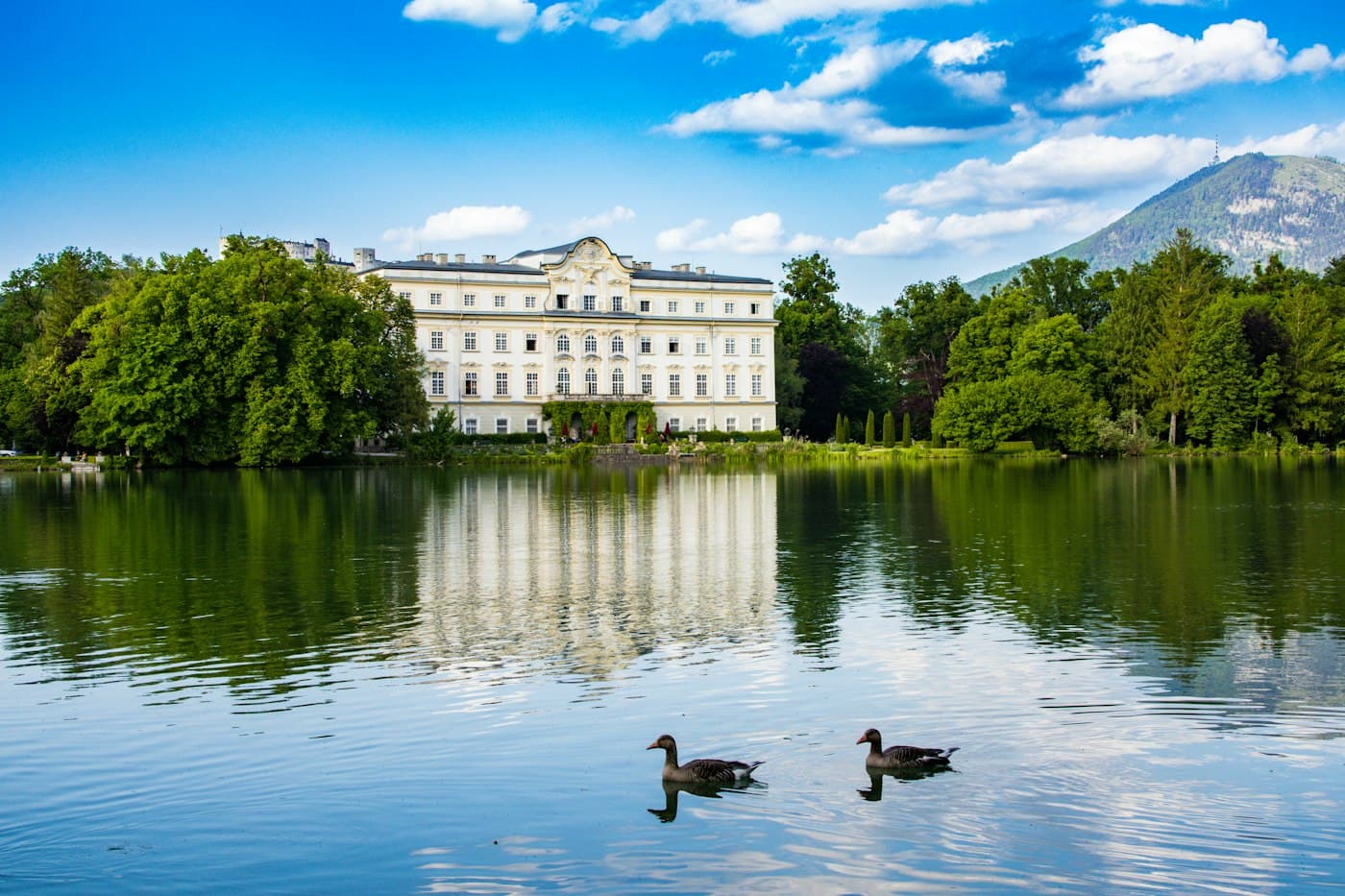
- Salzburg. Weddings in the Marble Hall of Mirabell Palace on Tuesdays and Fridays from 8:00 to 12:00 and Saturdays from 9:00 to 14:00; about 1,200 a year; closed for renovation from 4 to 17 October 2027. Outside it: Schloss Frohnburg, Schloss Fuschl, Hellbrunn Palace and its Sound of Music Pavilion, Schloss Leopoldskron, Schloss Mönchstein, Hohensalzburg Fortress, the Kavalierhaus at Klessheim and Palais Neustein. An outdoor wedding never takes place in bad weather, and rice, petals and confetti are strictly forbidden.
- Hallstatt. Bad Goisern, Gosau, Hallstatt and Obertraun each have a Standesamt, and the region lists the places couples choose: the Heilbronn chapel at about 2,000 metres on the Krippenstein, a boat on Lake Hallstatt, the historic churches. For the civil wedding, a place outside the office is the Standesamt’s decision. The village has 741 inhabitants and drew 600,000–700,000 visitors a year before the pandemic: where to elope in Austria has the quiet hours.
- Innsbruck marries couples in its hall in the Golden Roof building, larger weddings at the Congresspark Igls or the Villa Blanka. Gmunden uses Seeschloss Ort, the castle on its island in the Traunsee (40 seats). Klagenfurt has two halls and eight other places, a Wörthersee boat and Schloss Maria Loretto among them.
Can we have a church wedding in Austria?
Yes, but for the state it is no marriage on its own. A Catholic wedding without the civil one needs the bishop’s permission, the Nihil obstat, granted only where a civil wedding cannot reasonably be expected — and the marriage then has none of a civil marriage’s legal effects (ehe-familie.at, 13 October 2026).
- Start with the parish where either of you lives, at least three months ahead: the Trauungsprotokoll records your will to marry and single status, with a preparation course and two adult witnesses, who need not be Catholic (oesterreich.gv.at, February 2026).
- Marrying in another parish needs your own parish priest’s permission (canon 1115); the file travels through your diocese. Fix nothing with a venue before the Austrian parish agrees the date.
- Mixed marriages need express permission with a baptised non-Catholic (canon 1124), a dispensation with an unbaptised partner (canon 1086). Protestant parishes ask for the civil certificate.
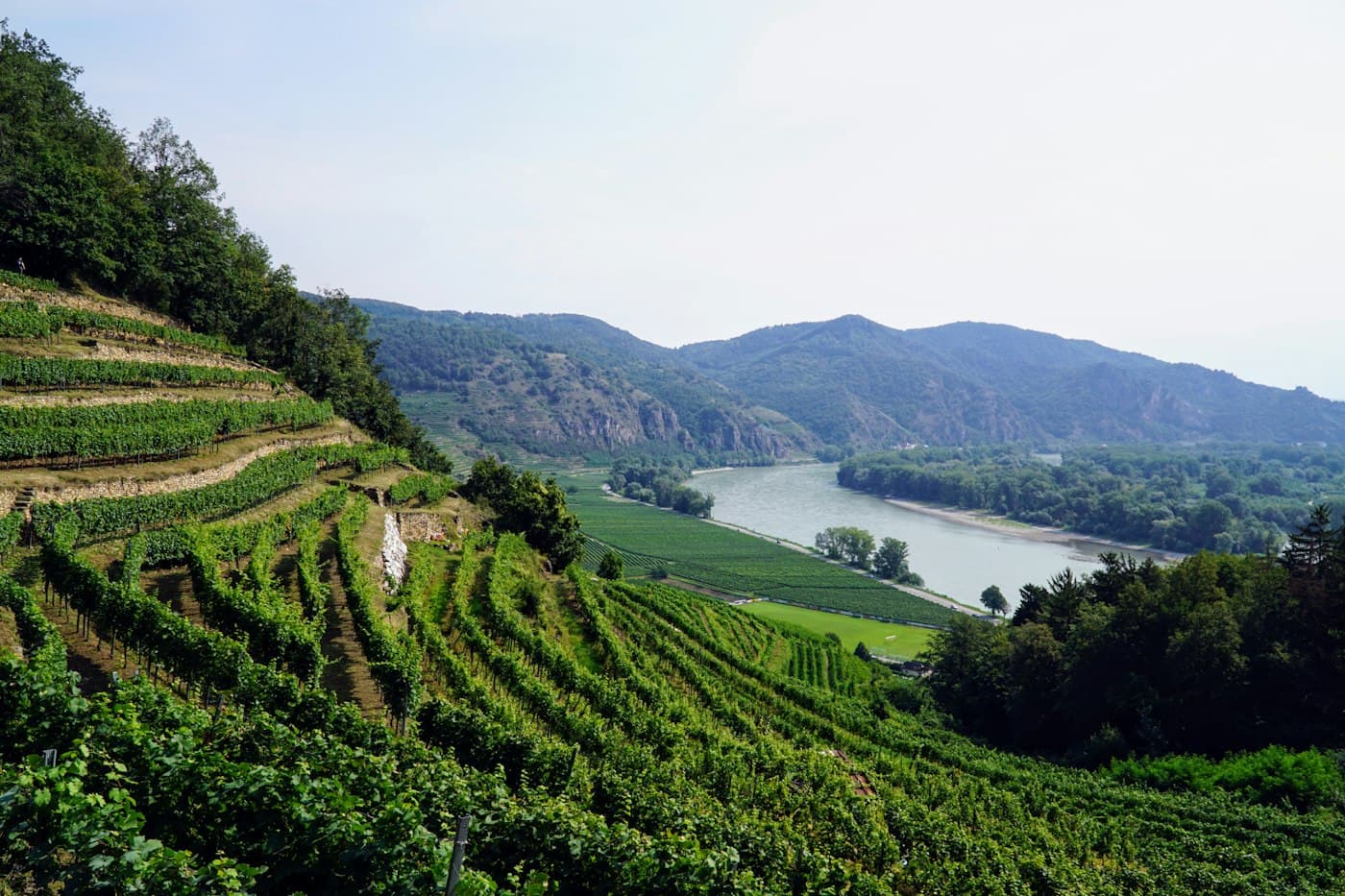
Some palaces have chapels for church weddings — Schönbrunn’s in Vienna, Hellbrunn’s in Salzburg — and so do abbeys such as Göttweig, above the Danube at the end of the Wachau.
What does a free ceremony free you to do?
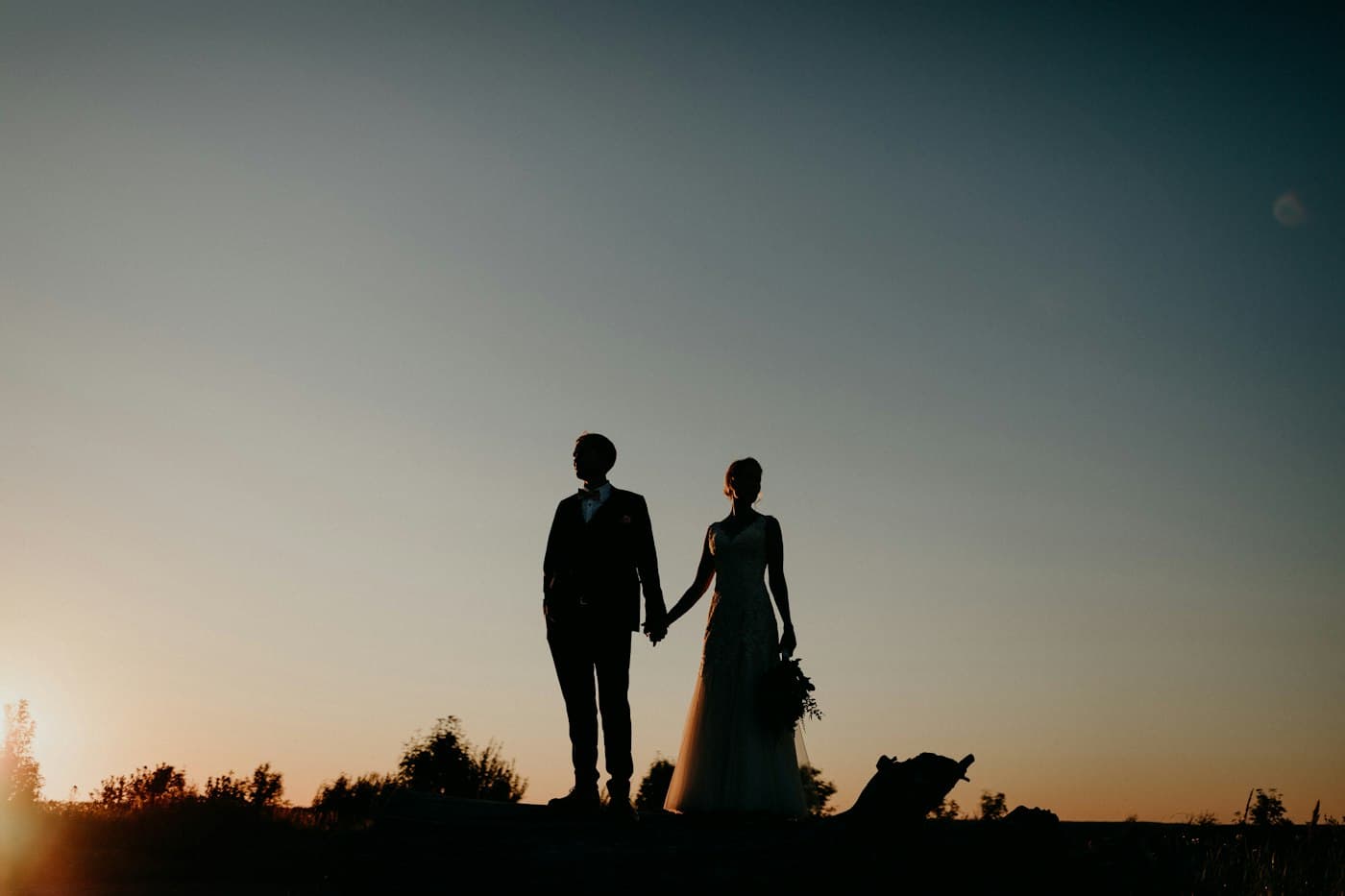
The place: a jetty on the Wolfgangsee, a meadow below the Wilder Kaiser, a Heuriger garden among the vines, wherever the owner or the authorities let you be. The time: on 21 June 2027 the sun sets at 21:10 in Salzburg and 21:14 in Innsbruck, so the vows can follow the light — the best time to marry in Austria has the months. The language and the celebrant (Trauredner) are yours. Many couples do both on one day: the Standesamt in the morning, a free ceremony at the venue in the afternoon.
Can same-sex couples marry in Austria?
Yes, since 1 January 2019, on the same terms — even if your own country does not allow it, because the law of the place of marriage then decides (IPR-Gesetz § 17(1a)). The federal portal warns that such a marriage is not automatically recognised everywhere, so ask at home first. In 2025, 411 male and 410 female couples married in Austria (Statistik Austria). Austria also has a registered partnership, open to every couple: 1,955 were registered in 2025.
What happens after the wedding?
Ask for every certificate you need while you are there (Klagenfurt charges €13.10 each), in the international format where offered; between EU countries the multilingual forms of Regulation 2016/1191 do the job, elsewhere an apostille may be needed. Many countries ask citizens to record a marriage made abroad.
Where does the photographer fit in?
- Ceremonies are short and on time — about 20 minutes in Gmunden, Vienna’s slots on the hour — so your photographer is in place before the registrar walks in.
- Photos are welcome, quietly. Salzburg lets you bring any photographer and asks for discretion; Vienna allows filming that doesn’t disturb.
- Plan the exit shot outside, where the venue allows confetti, and keep a roof in the plan: in Salzburg an outdoor civil wedding moves inside in bad weather.
- In a church, ask the parish about photos, flash and where the photographer may stand.
Questions couples ask
Can foreigners get legally married in Austria?
Yes. People who are neither Austrian citizens nor residents can marry at any Standesamt in Austria, and the marriage is valid because an Austrian registrar concluded it. Each of you must be free to marry under your own country’s law, shown by a recent document from home, translated into German and apostilled where required.
Do we need to live in Austria to get married there?
No. There is no residence requirement: the check of your capacity to marry and the wedding can each happen at any registry office in Austria (Personenstandsgesetz § 19). Vienna handles couples living abroad through touristenhochzeit@ma63.wien.gv.at.
Is there a waiting period to marry in Austria?
No, and no banns. You register about six months ahead; the interview on your documents must fall within six months of the wedding, because its result lapses after that.
Do we need witnesses to marry in Austria?
No. You can marry with none, one or two witnesses aged 18 or over (Personenstandsgesetz § 18). An interpreter is needed if one of you doesn’t speak enough German.
Can we get married in a palace or castle in Austria?
Yes, if the Standesamt accepts the place. Vienna’s list names more than 160, including Schönbrunn, the Belvedere and the Hofburg; Salzburg’s registry office marries couples in Mirabell Palace’s Marble Hall and at nine palaces and castles, among them Hellbrunn, Leopoldskron and Hohensalzburg Fortress.
Is a church wedding alone legally valid in Austria?
No. It has no legal effect for the state. The churches expect the civil wedding first, and a Catholic wedding without one needs the bishop’s permission, given only in exceptional cases.
Next: wedding venues in Austria, what a photographer costs, or the regions of Austria. When you have a date, tell us about your day and see who is free, or browse the photographers in Austria.
Sources
- RIS — Personenstandsgesetz 2013, §§ 14–19 (read 15 October 2026) (opens in a new tab) · ris.bka.gv.at
- RIS — IPR-Gesetz, §§ 16–17 (read 15 October 2026) (opens in a new tab) · ris.bka.gv.at
- oesterreich.gv.at — Anmeldung zur Eheschließung (updated 5 October 2026) (opens in a new tab) · oesterreich.gv.at
- oesterreich.gv.at — Eheschließung in Österreich ohne Wohnsitz (updated 1 January 2026) (opens in a new tab) · oesterreich.gv.at
- oesterreich.gv.at — Standesamtliche Trauung (updated 19 January 2026) (opens in a new tab) · oesterreich.gv.at
- oesterreich.gv.at — Katholische Trauung (updated 27 February 2026) (opens in a new tab) · oesterreich.gv.at
- oesterreich.gv.at — Die Heirat (church and Protestant weddings) (opens in a new tab) · oesterreich.gv.at
- Stadt Wien — Traumhochzeit: locations (opens in a new tab) · wien.gv.at
- Stadt Wien — Traumhochzeitslocations in Wien, by district (1 October 2026) (opens in a new tab) · wien.gv.at
- Stadt Wien — Traumhochzeit: booking and costs (opens in a new tab) · wien.gv.at
- Stadt Wien — Traumhochzeit: approval of a place (opens in a new tab) · wien.gv.at
- Stadt Salzburg — Ehe und Verpartnerung (opens in a new tab) · stadt-salzburg.at
- Stadt Salzburg — Heiraten im Marmorsaal (opens in a new tab) · stadt-salzburg.at
- Stadt Salzburg — Externe standesamtliche Trauungen (opens in a new tab) · stadt-salzburg.at
- Stadt Innsbruck — Ehe & Eingetragene Partnerschaft (opens in a new tab) · innsbruck.gv.at
- Stadtgemeinde Gmunden — Gebühren (opens in a new tab) · gmunden.at
- Stadtgemeinde Gmunden — Trauungssaal im Seeschloss Ort (opens in a new tab) · gmunden.at
- Stadt Klagenfurt — Hochzeit / Eingetragene Partnerschaft (opens in a new tab) · klagenfurt.at
- Magistrat Linz — Standesamt, Infoblatt Eheschließung (March 2022) (opens in a new tab) · linz.at
- Dachstein Salzkammergut — Heiraten in Hallstatt, Bad Goisern, Obertraun und Gosau (changed 6 March 2026) (opens in a new tab) · dachstein.salzkammergut.at
- Wikipedia (de) — Hallstatt (population 1 January 2026, visitors) (opens in a new tab) · de.wikipedia.org
- Archdiocese of Salzburg, Referat für Ehe und Familie — Rein kirchlich heiraten, geht das? (13 October 2026) (opens in a new tab) · ehe-familie.at
- Holy See — Code of Canon Law, Book IV (canons 1086, 1115, 1124) (opens in a new tab) · vatican.va
- European e-Justice — Public documents (Regulation (EU) 2016/1191) (opens in a new tab) · e-justice.europa.eu
- Statistik Austria — Eheschließungen und Ehescheidungen 2025 (press release, 22 May 2026) (opens in a new tab) · statistik.at