Getting married in Kyoto, Osaka & Nara
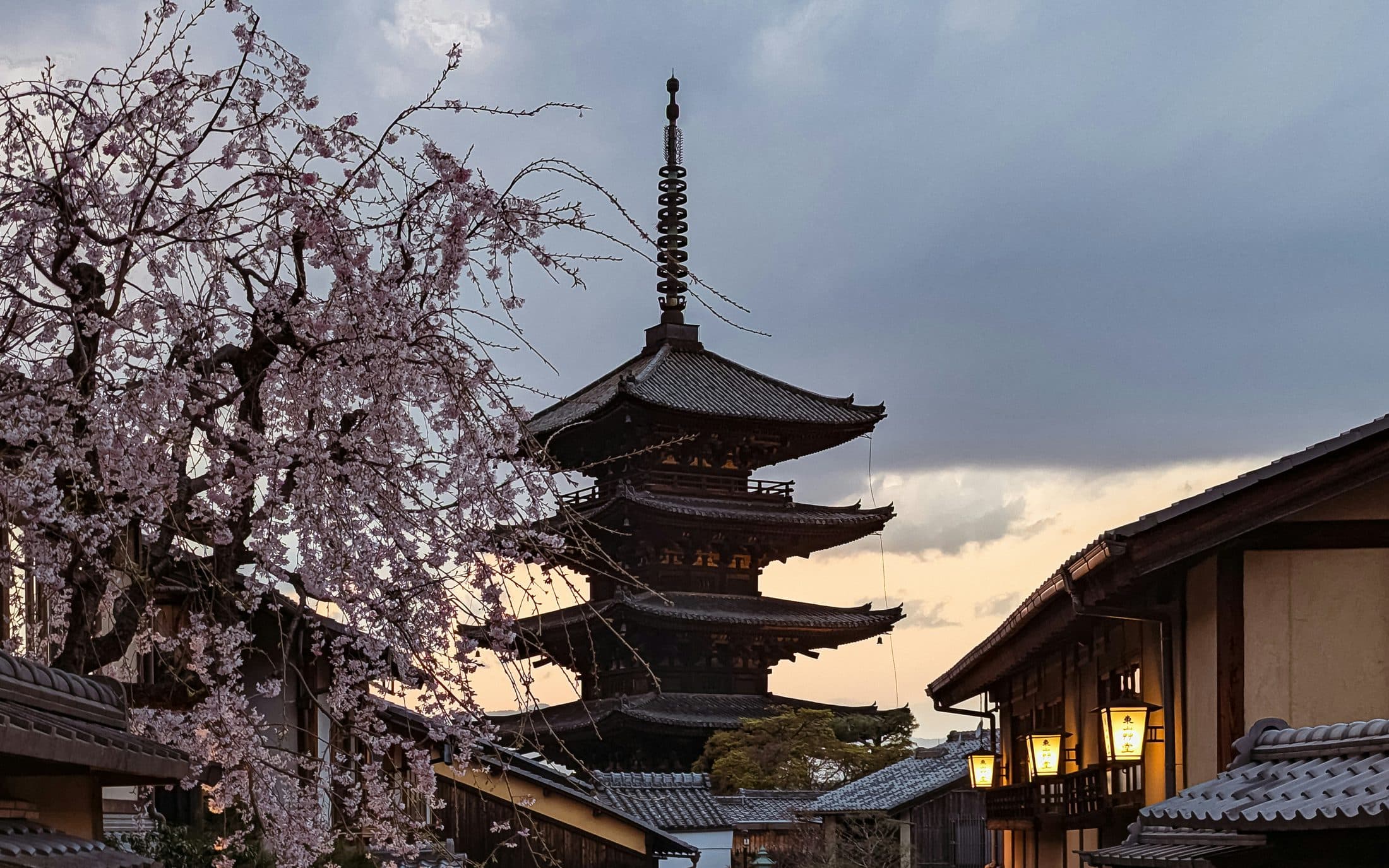
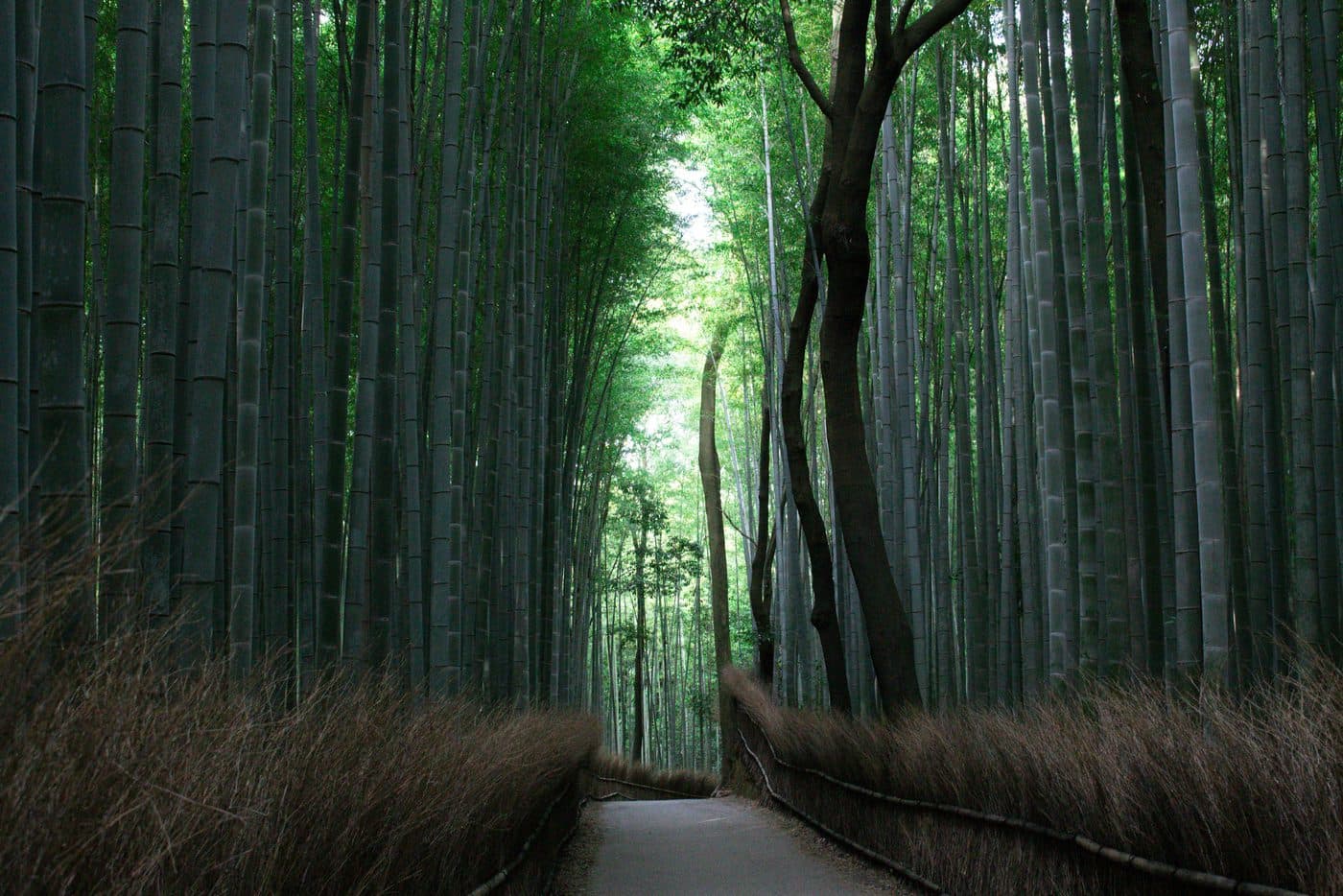
Japan’s old imperial capital and its two neighbours: Kiyomizu-dera on its hillside and the stone slopes of Sannenzaka below the Yasaka Pagoda, Yasaka Shrine and the lanes of Gion — Shirakawa and Hanamikoji —, the vermilion gates of Fushimi Inari, the bamboo grove and the Togetsukyo bridge at Arashiyama, the Philosopher’s Path, the banks of the Kamogawa and the garden of Heian Shrine; in Osaka, the castle on its stone walls and the riverside park of Nakanoshima; and in Nara, just over half an hour away by train, Nara Park, Todai-ji, Kasuga Taisha and the deer.
Kyoto was, in UNESCO’s words, the imperial capital of Japan from its foundation in 794 until the middle of the 19th century, and seventeen temples, shrines and a castle in Kyoto, Uji and Otsu make up the World Heritage site of its historic monuments, inscribed in 1994 — Kiyomizu-dera and Arashiyama’s Tenryu-ji among them. Kiyomizu-dera, founded some 1,250 years ago on the slopes of Mount Otowa, is known for the stage of its main hall, built out over a cliff; below it the stone-paved slopes of Sannenzaka and Ninenzaka, a protected townscape since 1976, lead down past the pagoda of Hokan-ji, the Yasaka Pagoda, to Yasaka Shrine, the old Gion Shrine, open day and night, with Maruyama Park, Kyoto’s oldest park, behind it. West of the shrine lie the lanes of Gion and its teahouse quarter of Gion Shinbashi, also protected since 1976. In the south of the city, Fushimi Inari Taisha, the head shrine of some 30,000 Inari shrines, climbs its mountain under about 10,000 vermilion torii; in the west, Arashiyama has its bamboo grove and the Togetsukyo bridge; in the east, the Philosopher’s Path runs about 2 km along a branch of the Lake Biwa Canal under some 400 cherry trees, between Ginkaku-ji and Nanzen-ji, and Heian Shrine, built in 1895 for the 1,100th anniversary of the capital, keeps a garden that is a national Place of Scenic Beauty. In Osaka, the castle’s keep stands above moats and stone walls in a park with a plum grove and the Nishinomaru Garden, and Nakanoshima Park, opened in 1891 as the city’s first park, lies between two rivers. Nara, the capital from 710 to 784, keeps its own World Heritage monuments, inscribed in 1998 — Todai-ji, Kofuku-ji and Kasuga Taisha with the primeval forest of Mount Kasuga among them — round Nara Park, whose deer are a national natural monument.
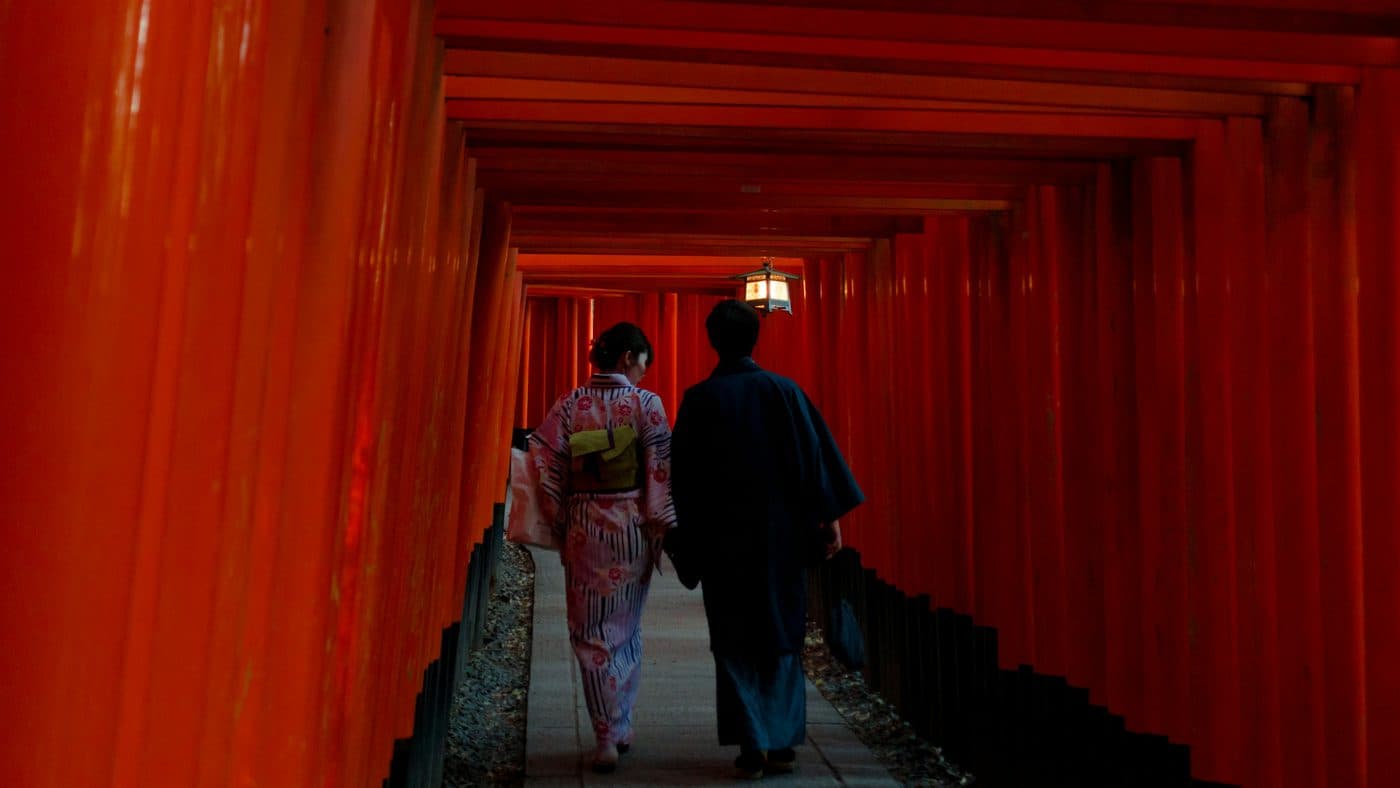
Most couples who marry here register at a city or ward office and celebrate somewhere else: with a Shinto wedding at a shrine that holds them — Yasaka Shrine lists weddings among its rites of life, Heian Shrine has its own wedding office, and Kasuga Taisha marries couples in a ceremony of ancient form and lends its court robes for the rite and the photographs —, or with portraits in kimono in the lanes of Higashiyama, under the cherry trees of the Philosopher’s Path, in the bamboo at dawn and in the parks of Osaka and Nara, where their rules allow it. In Japan there is no civil ceremony: a marriage is legal when a city, ward, town or village office (shiyakusho, kuyakusho) accepts your notification of marriage (kon’in todoke), signed by you both and by two witnesses aged 18 or over, of any nationality, and a shrine, temple or chapel wedding has no legal effect on its own; couples from abroad can marry here legally, neither of you needing to live in Japan, by handing it in, free of charge, at the office of the place where you are staying, each with your passport and a certificate of legal capacity to marry (kon’in yoken gubi shomeisho) from your own country’s embassy or consulate in Japan — or the document it issues instead — and Japanese translations naming the translator, and the day you hand it in, once it is accepted, is your wedding date; the office’s certificate of acceptance (juri shomeisho; usually 350 yen, or 1,400 yen on fine B4 paper, as of November 2026) is the proof you register at home as your own country requires, and same-sex couples cannot marry in Japan, though some prefectures and municipalities, Tokyo among them, issue partnership certificates that carry none of the legal effects of marriage. Many of the famous temples and shrines here allow no wedding shoot at all: the places below say which, from their own pages.
Through the year
When to marry in Kyoto, Osaka & Nara
April, May, October and November are the months to marry here. In the Japan Meteorological Agency’s 1991–2020 normals for its Kyoto observatory, highs average 20.1 °C in April, 25.1 °C in May, 23.4 °C in October and 17.3 °C in November, and rain of 1.0 mm or more falls on 9.4, 9.7, 8.2 and 6.3 days. The cherry trees JMA watches in Kyoto first bloom, on average, on 26 March and are in full bloom on 4 April (Osaka 27 March and 4 April, Nara 28 March and 4 April); its maple in Kyoto turns red, on average, on 5 December (Osaka 1 December, Nara 21 November). March and December work with care, at highs of 14.1 and 11.6 °C. June to September are the hard months: the rainy season of the Kinki region normally runs from about 6 June to about 19 July, and July and August average 32.0 and 33.7 °C in the afternoon, with 30 °C or more on about 22 and 28 days and 35 °C or more on about 7 and 12.
- January: Quieter
- February: Quieter
- March: Good with planning
- April: Best
- May: Best
- June: Quieter
- July: Quieter
- August: Quieter
- September: Quieter
- October: Best
- November: Best
- December: Good with planning
- March to MayMarch warms to 14 °C by day; April reaches 20 °C, with rain on about 9 days, and May 25 °C, with rain on about 10. The cherry trees open in the last days of March and are full in the first days of April — Heian Shrine’s crimson weeping cherries, the great weeping cherry of Maruyama Park, lit up at night, and the 400 trees of the Philosopher’s Path among them — and Kyoto’s own guide asks visitors to take extra care in the crowds of the cherry season. In mid-April the sun sets at about half past six, in mid-May at about five to seven.
- June to SeptemberThe rainy season normally arrives about 6 June and leaves about 19 July, and June and July are the wettest months, with about 200 and 224 mm on 11 to 12 days each. Then the heat: nights stay at 25 °C or more on about 15 days in August, and the humidity is near 70 %. Typhoons come close to the Kinki region about 3.4 times a year, most often in September (1.1 on average, against 0.7 in August and in October). In July Yasaka Shrine’s Gion Festival fills Gion, its portable shrines carried out on the nights of 17 and 24 July. At midsummer the sun rises at about a quarter to five and sets at about a quarter past seven.
- October and NovemberOctober keeps highs of 23 °C, with rain on about 8 days; November cools to 17 °C, with rain on about 6, the fewest of the year. The maples turn late here: the tree JMA watches in Kyoto is red, on average, by 5 December, Nara’s by 21 November. Kyoto’s guide names the autumn-leaf season among the most crowded of the year. In mid-October the sun sets at about twenty past five, in mid-November at about ten to five.
- December to FebruaryWinter is cold but mostly dry and bright: highs of 9 to 12 °C, nights of 1.5 to 3.5 °C, rain on 6 to 7 days a month and about 120 to 135 hours of sunshine. Snow is light — 15 cm in a whole year on average, most of it in January and February. The earliest sunsets, at about a quarter to five, come in early December. Kyoto’s guide calls early February the time the city is least crowded, and the Higashiyama lanes at dawn are then at their quietest.
In numbers
- UNESCO World Heritage
Weather station: Kyoto, normals 1991–2020 · Checked 7 November 2026
Places
Where couples marry here
The kinds of places — ask your photographer which ones they know well.
Higashiyama and Gion
Kiyomizu-dera usually opens at 6:00, and its rules are plain: no shoots for profit or location work, no drones, no tripods or monopods, and no wedding, cosplay or model photography in its grounds; group photographs are taken only at the places it sets, and nobody may sit down or stay long in one spot taking pictures. The slopes of Sannenzaka and Ninenzaka below are a temple town of shops and townhouses — the city asks you not to block them while photographing. Yasaka Shrine is open for worship day and night, its office from 9:00 to 17:00; it holds weddings, but publishes no rule on photo shoots, so ask the shrine before you plan one there. Maruyama Park behind it is a city park: Kyoto asks anyone photographing as a business, a hired photographer included, for a permit (the city charges 4,600 yen an hour in the parks it runs itself, as of November 2026, and takes about two weeks), and for Maruyama Park its own management office answers. In Gion, the residents of southern Gion, its teahouses, its geiko association and Kennin-ji ask visitors not to stop, touch, follow or photograph geiko and maiko without their consent, not to enter private ground — anywhere that is not a shop or the road — and not to block the streets, which are not pedestrian-only; the city counts a tripod in these lanes as an obstruction. Trespass can bring up to three years in prison or a 100,000 yen fine, and obstructing traffic a fine of up to 50,000 yen.
Fushimi Inari, Arashiyama and the eastern hills
Fushimi Inari Taisha’s rules, in force since 1 January 2022, forbid photography for business and in its closed places, walking in its grounds in a wedding dress or other dress unsuited to worship, drones, and blocking its narrow paths to take pictures: come in kimono, early, and keep moving through the gates. At Arashiyama, Kyoto’s guide suggests arriving early in the morning and reaching the bamboo grove by the quieter route through Kameyama Park; the city reminds visitors that carving into the bamboo is criminal damage, punishable by a fine of up to 300,000 yen. Heian Shrine opens its gates at 6:00 and its garden at 8:30; it holds Shinto weddings through its own wedding office, lets visitors photograph everywhere except from the Daigokuden towards the main sanctuary, but strictly refuses photography done as a business in its grounds and any commercial use of its buildings and garden, so ask the shrine first. The Philosopher’s Path and the banks of the Kamogawa are open ground, at their best under the cherry blossom and in the evening light.
Osaka Castle and Nakanoshima
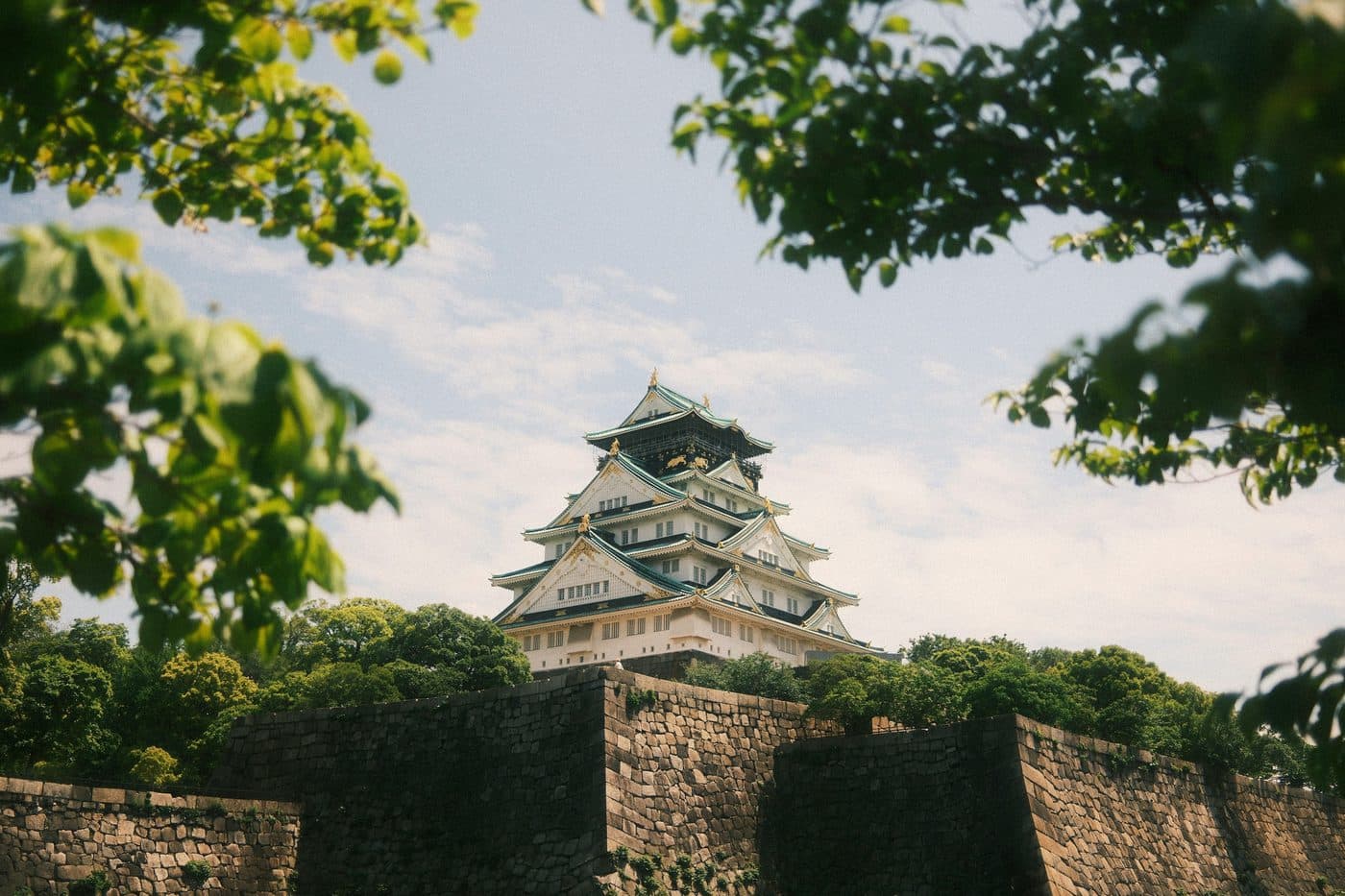
Osaka’s parks are free to walk in, but the city asks for its park manager’s permission for a wedding shoot in them — in Osaka Castle Park its park centre, elsewhere the district park office: ask first, apply about a month ahead, and expect a fee (the city’s rate for a commercial location shoot is 10,870 yen for two hours, as of November 2026). Osaka Castle Park bans drones. Its keep, moats and stone walls are the classic frame, with the plum grove and the Nishinomaru Garden; Peace Osaka, the Osaka International Peace Center inside the park, is a museum of remembrance and no place for wedding pictures. Nakanoshima Park, open at all hours, lies on the island between the Dojima and Tosabori rivers, and its rose garden of some 3,700 bushes in about 310 varieties is at its best in mid-May and mid-October.
Nara Park, Todai-ji and Kasuga Taisha
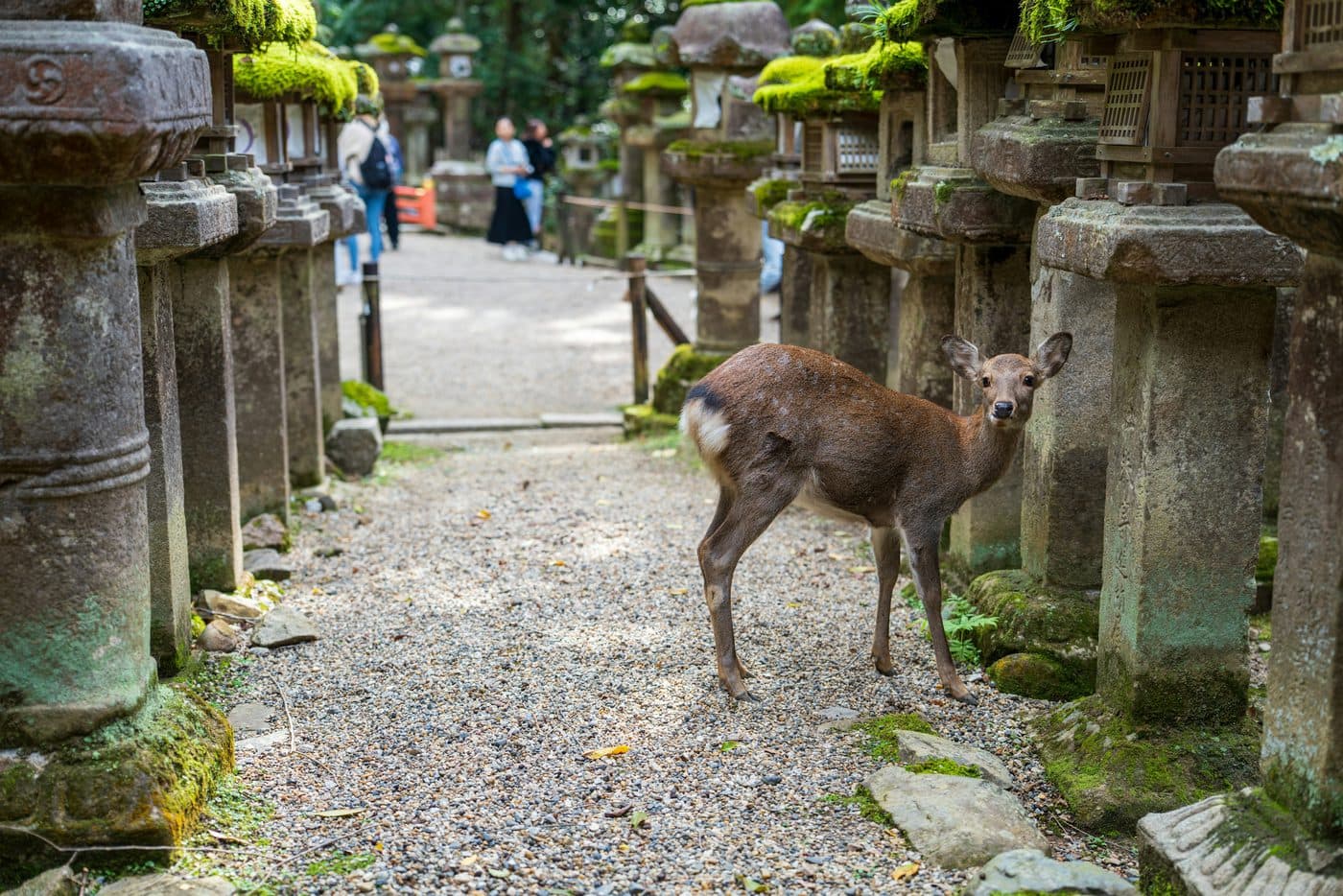
Nara Prefecture lets anyone take their own photographs in Nara Park, but a photographer’s shoot, a pre-wedding session named among them, needs its park office’s permit: the application reaches the office at least two weeks ahead, from someone with an address in Japan (in practice your photographer), and stills cost 1,150 yen a day (as of November 2026). No permit is given on the crowded approach to Todai-ji’s Great Buddha Hall or the walk north of the National Museum, none after sunset as a rule, and large tripods and lighting stands are not allowed; Todai-ji, Kofuku-ji or Kasuga Taisha in the picture need their own consent as well. The deer are wild and a national natural monument: feed them nothing but shika senbei, the deer crackers sold in the park, never chase them, and keep your distance — the prefecture warns that they can butt, kick and bite, above all the mothers in spring and the stags in autumn. Todai-ji bans drones throughout its grounds. Kasuga Taisha, whose grounds include the Tobihino meadow, holds weddings of its own, and forbids photography in a wedding dress or wedding kimono to anyone who has not married there, shoots for profit without its consent, tripods, selfie sticks and lights that disturb others, and drones.
Light
How the light falls
Japan keeps one time all year, with no summer time. At midsummer the sun rises over Kyoto at about a quarter to five and sets at about a quarter past seven, far to the west-north-west; it is still 10 degrees up at about a quarter past six, and civil twilight lasts until about a quarter to eight. The latest sunsets, about 19:15, come at the end of June, the earliest, about 16:45, in early December; at midwinter the sun is up from about 7:00 to about 16:50 and stands 32 degrees high at noon. In mid-April it sets at about half past six, in mid-May at about five to seven, in mid-September at about five past six, in mid-October at about twenty past five and in mid-November at about ten to five. JMA’s normals give Kyoto about 177 hours of sunshine in April, 182 in May, 156 in October and 141 in November, against 133 in June. Here the hour matters as much as the light: Kiyomizu-dera and Heian Shrine open at 6:00 and Yasaka Shrine never closes, Kyoto’s own guide describes Higashiyama at dawn, before the crowds, as serene, and Nara Park gives no permit for a shoot after sunset as a rule.
Travel
Getting there
Kansai International Airport is about 98 km by road from Kyoto Station, and the Haruka limited express takes about 75 minutes from the airport to Kyoto; Osaka’s older airport, Itami, is 45 km by road. From Tokyo, the fastest Nozomi trains on the Tokaido Shinkansen reach Kyoto in about 2 hours 15 minutes, and Nara is just over half an hour by train from Kyoto and from Osaka. From Kyoto Station by road, Yasaka Shrine is 3.7 km, Kiyomizu-dera 4.1 km, Fushimi Inari 4.8 km, Heian Shrine 5.7 km and the Togetsukyo bridge 10.1 km; Todai-ji is 39 km away and Osaka Castle 46 km. Drones fly under Japan’s Civil Aeronautics Act as the Ministry of Land, Infrastructure, Transport and Tourism (MLIT) applies it: every drone of 100 g or more flown outdoors must be registered on MLIT’s DIPS 2.0 system — a visitor’s too, even one registered abroad — and carry its registration number and a Remote ID transmitter; without MLIT’s permit or approval, applied for on DIPS 2.0, you may not fly above 150 m, around airports, over densely inhabited districts (DID: the built-up areas of towns and cities), at night, out of your own sight, within 30 m of other people or their buildings and vehicles, or over festivals and events; and the Small Unmanned Aircraft Act, which the police enforce, bans flights over and within about 1,000 m of the Imperial Palace and the other sites it lists — the National Diet, the Prime Minister’s Office, designated embassies and defence sites, eight major airports and nuclear plants — while parks, shrines, temples and towns may ban drones on their own ground. Kansai and Itami are two of those eight airports. Kyoto’s guide warns that most of the city is a densely inhabited district; the city allows drones in its parks only for research, the news, films that promote them or permitted events; Kiyomizu-dera, Fushimi Inari, Todai-ji and Kasuga Taisha ban them, Heian Shrine allows none without its prior permission, Osaka Castle Park bans them, and over Nara Park they are banned except in one designated area on Mount Wakakusa.
Photographers
Photographers in Kyoto, Osaka & Nara
No one in Kyoto, Osaka & Nara yet
The first photographers in Kyoto, Osaka & Nara are joining now. Tell our concierge your date and your plans — it checks who is free and fits.
Plan
Read before you plan
- Getting married in Japan as foreigners: the notification of marriage, your embassy’s certificate, the city officeHow couples from abroad marry legally in Japan: no residence needed, the notification of marriage (kon’in todoke) at a city or ward office, two witnesses, the certificate of legal capacity from your embassy and its Japanese translation, the night and holiday desks, the certificate of acceptance and its fee, marrying at your own embassy, Shinto, temple and chapel weddings, same-sex couples and partnership certificates, the apostille and registering at home, and the symbolic route.
- How to choose a wedding photographer: the steps, and the questions to askThe decision in order — whole weddings, style, availability, the package, the contract and deposit, cancellation, delivery and a conversation — then a checklist of questions, with why each one matters.
- A wedding-day timeline for photosFrom getting ready to the last dance, planned around the light.
- Deposits and payment protectionWhat you pay when, and what happens if plans change.
- Which country for a destination wedding? The law, prices, crowds and light, comparedThe legal route for couples who don’t live there, season and crowds, price levels, light, flights, venues and permits for photographs — Portugal, Italy, Spain, Greece, France and Austria compared with official figures, as of October 2026.
- A rain plan that still looks goodCovered spots, umbrellas and what photographers do on grey days.
- Wedding photography contract checklist: what it should say, and how Lens & Vows handles each pointThirteen things a good contract covers — the day and the hours, what is delivered, deposit and balance, cancellation on either side, date changes, illness, image rights, personal data, backups, travel, overtime and complaints — and what our terms say about each.
Japan
Other places
 Tokyo & YokohamaBest: Apr · May · Oct · NovPhotographers joining
 Mount Fuji & HakoneBest: Apr · May · Oct · NovPhotographers joining
 Kanazawa & the Japan AlpsBest: Apr · May · OctPhotographers joining
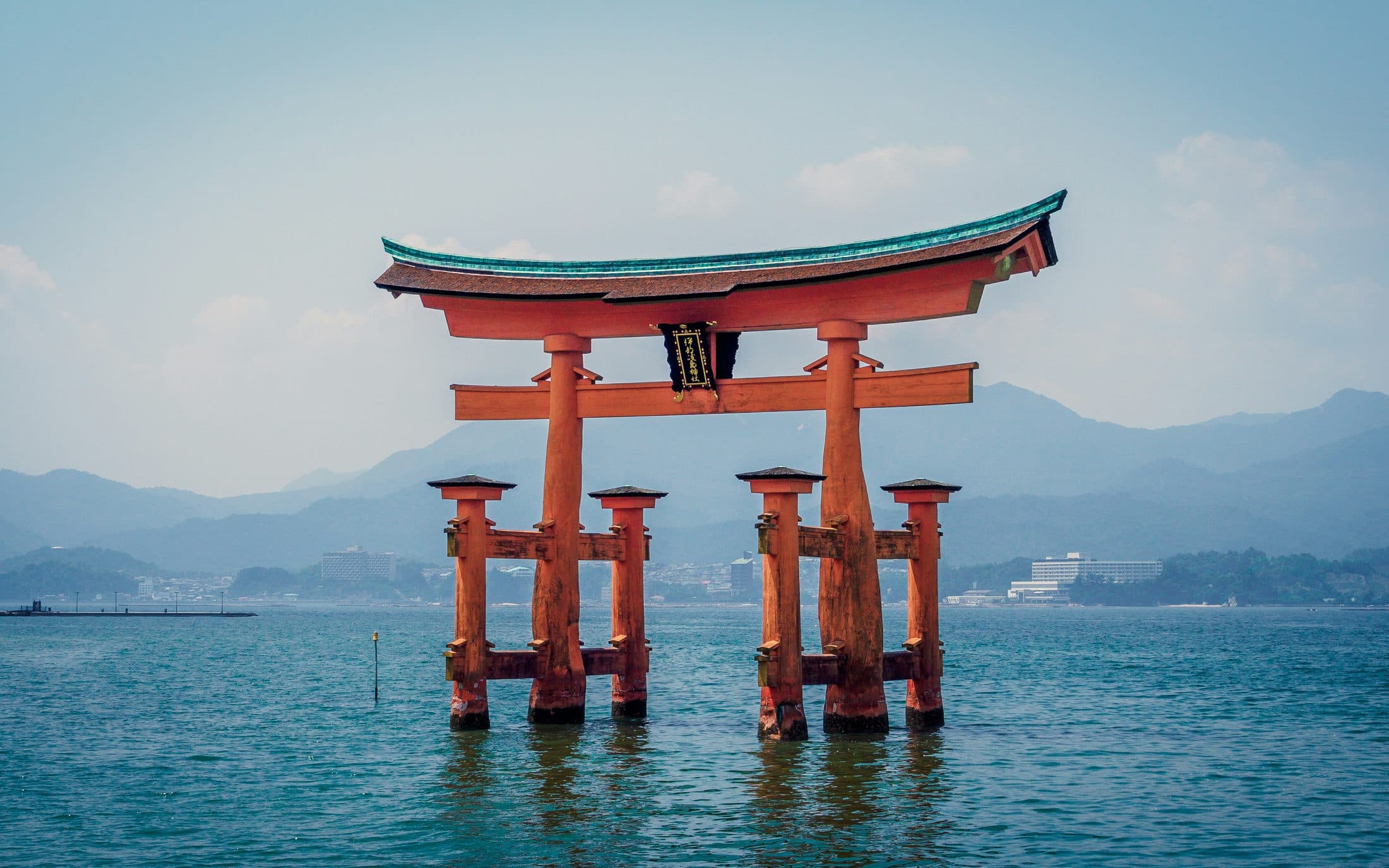 Hiroshima & MiyajimaBest: Apr · May · Oct · NovPhotographers joining
 HokkaidoBest: Jun · Jul · Aug · SepPhotographers joining
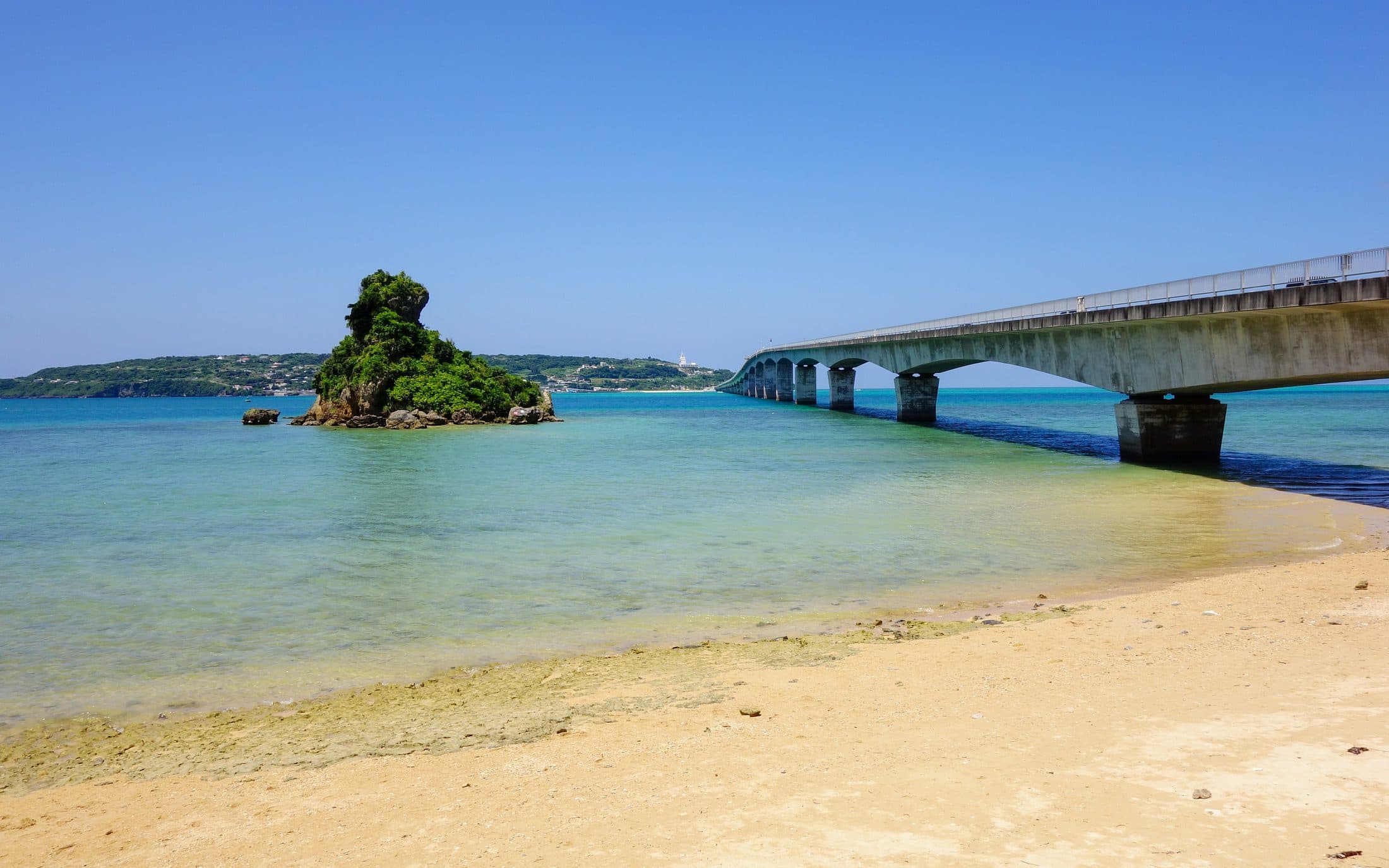 OkinawaBest: Mar · Apr · Oct · NovPhotographers joining