Founding photographerVerified — Identity verified by Lens & Vows
Denys F.from €500
Crete · DocumentaryWedding photographers in Greece
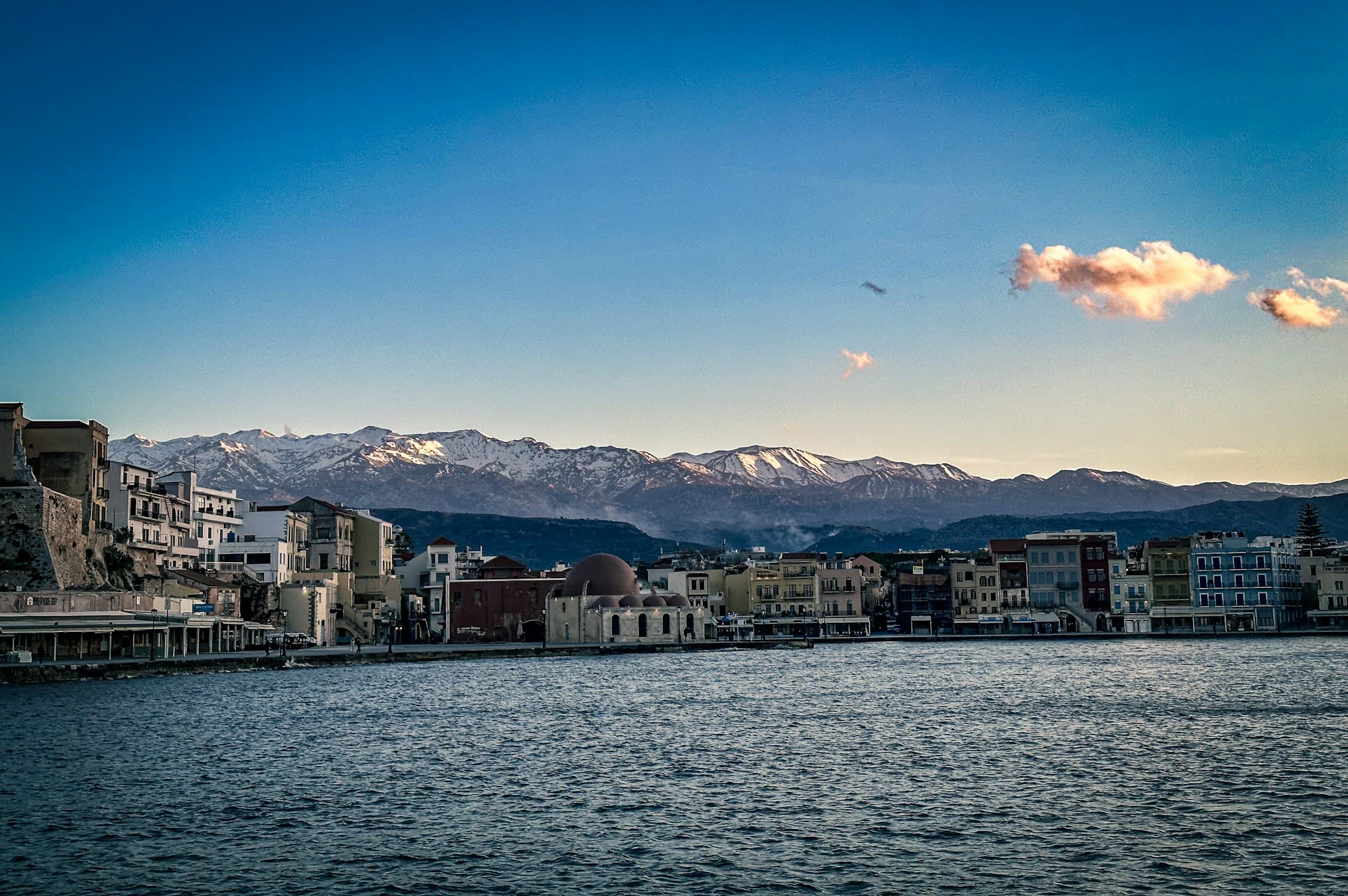
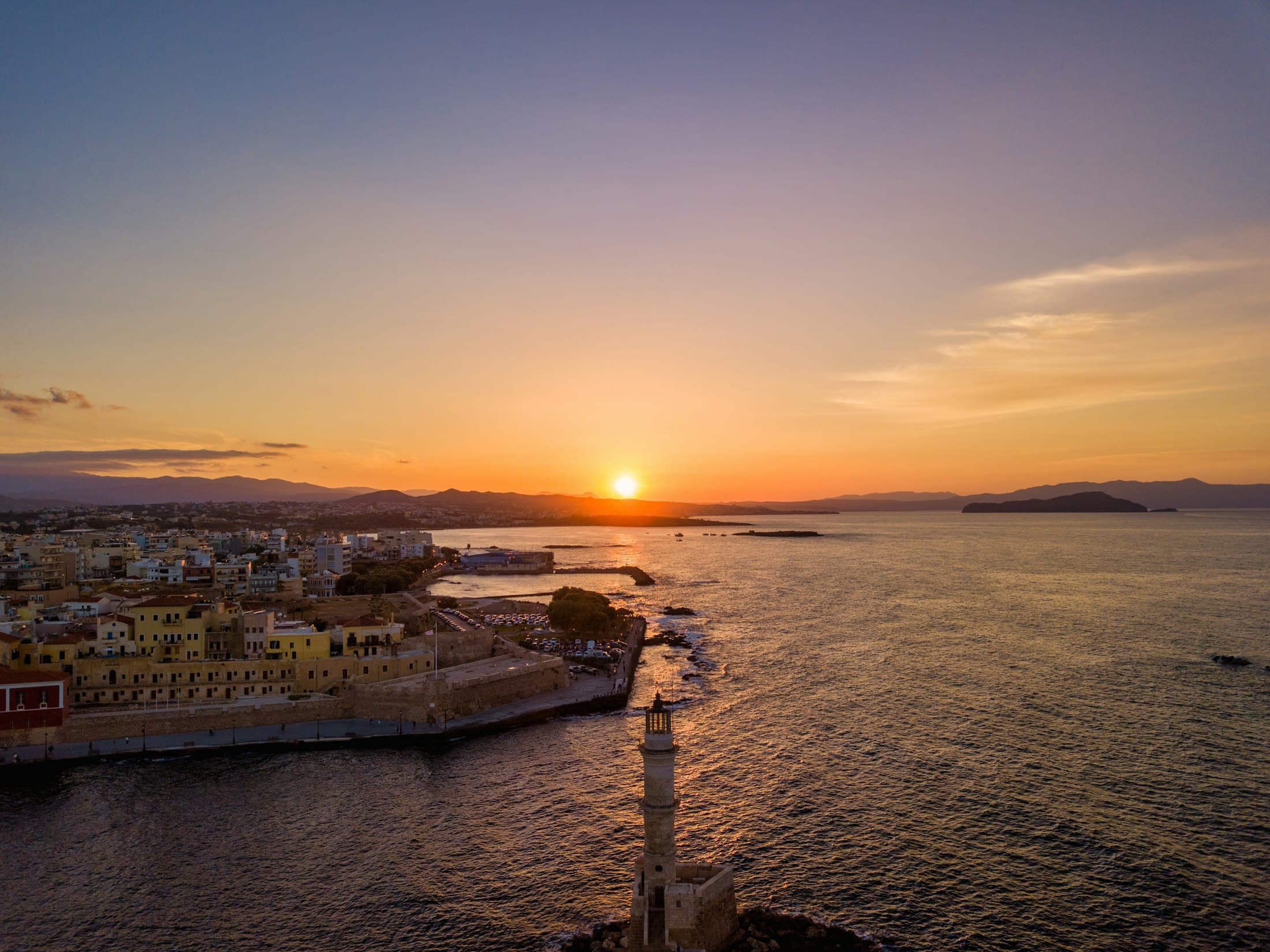
Crete’s old Venetian port, where the town marries couples on the harbour quays on summer evenings, with the White Mountains rising behind.
Chania was Venetian from the 13th century to 1645, when the Ottomans took it after a two-month siege, and its harbour still shows it: the vaulted shipyards, the Neoria — the first two finished in 1526, seven still standing in a row — the Grand Arsenal begun in 1585, the Firkas fortress at the harbour mouth, where the Greek flag was raised on 1 December 1913, and the stone lighthouse at the end of the breakwater, Venetian in origin and rebuilt by the Egyptians in the 19th century. On the waterfront, the domed Yali mosque was the first mosque the Ottomans built on the island.
The town marries couples in the middle of all this. Besides its town hall, the Municipality of Chania has set aside three spots on the harbour quays, two parks and an old city gate for civil weddings, with evening slots on summer weekends; then the guests stroll along the waterfront to dinner as the light goes. The Lefka Ori, the White Mountains, close the view to the south, and the sun goes down over the open sea beyond the lighthouse.
Photographers
They shoot everywhere in Crete — in Chania too. Their whole weddings are on their pages.
See the photographerCeremonies
The mayor’s decision of May 2018 lists three places on the Akti Tompazi quay: the pier opposite the Grand Arsenal, now the Center of Mediterranean Architecture; the pier opposite the Yali mosque; and the site of the old port-police kiosk at Sourmeli street. Weddings there were set for Saturday and Sunday evenings, 18:00 to 20:00, from June to October. Since 2024 the town also offers weddings outside the town hall at other times, any day of the year, for a higher fee — the civil weddings office sets the schedule.
At 29 Kydonias Street: the council chamber, or the courtyard in front of it. A civil wedding there is free on weekdays during office hours; the town charges a fee for weekend slots and for every place outside the building.
The other places on the list: the park of Villa Koundourou, the park at Nea Chora near the municipal pool, and the Sabbionara — the “gate of the sand”, the only gate of the Venetian walls still standing, with the lion of St Mark above it, on the eastern seafront at Koum Kapi.
The cathedral of the Presentation of the Virgin, the Trimartyri, already on a map of 1625, was a soap works under Ottoman rule and was rebuilt between 1856 and 1864; its feast, 21 November, is the town’s. In Splantzia, Agios Nikolaos was a Dominican church rebuilt in 1320, a mosque from 1645 and an Orthodox parish since 1918 — a church with both a minaret and a bell tower. The Church of Crete is semi-autonomous under the Ecumenical Patriarchate: ask the parish for its rules. The Catholic cathedral of the Assumption, on Halidon Street, dates from 1879.
Portraits
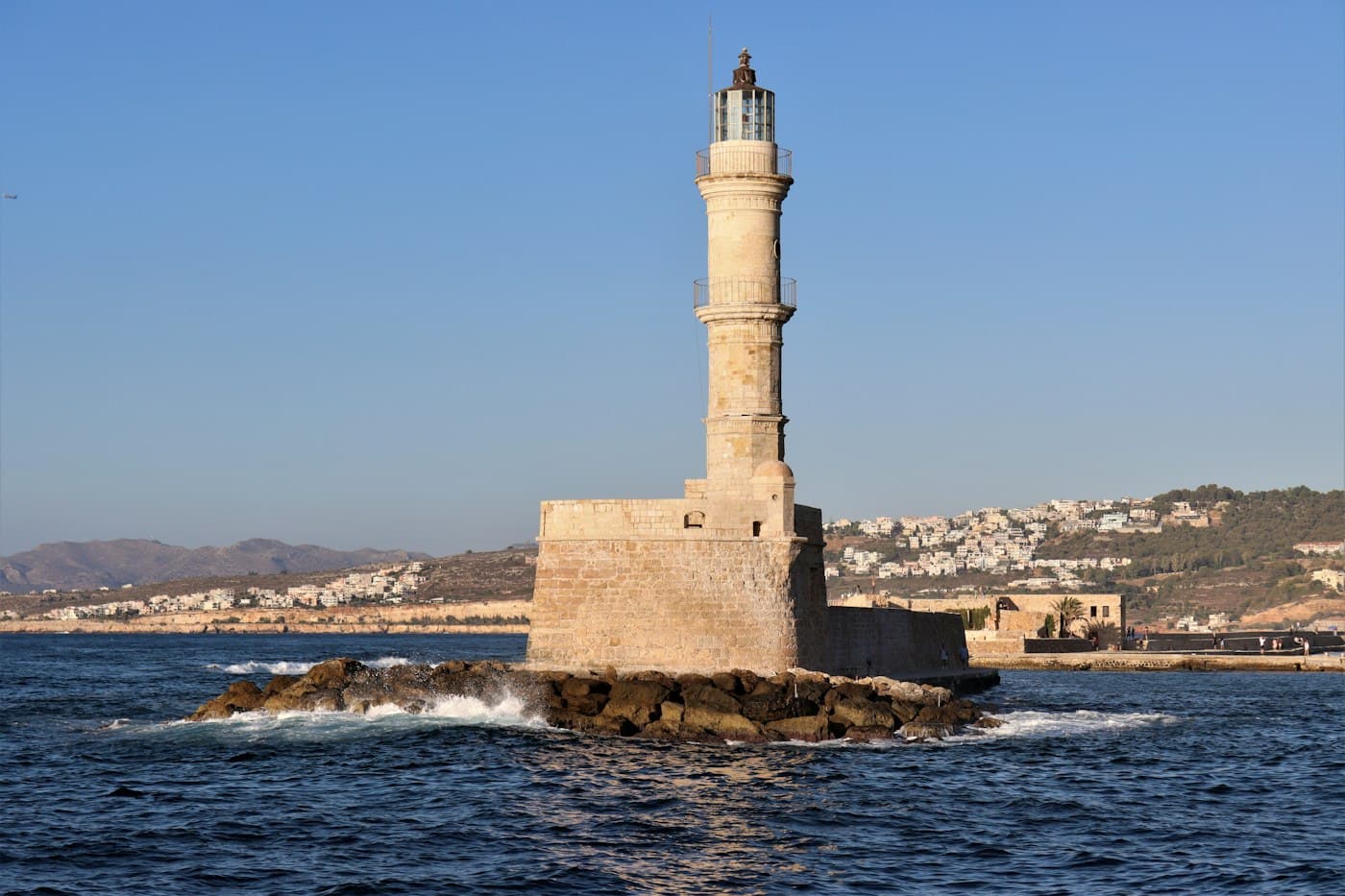
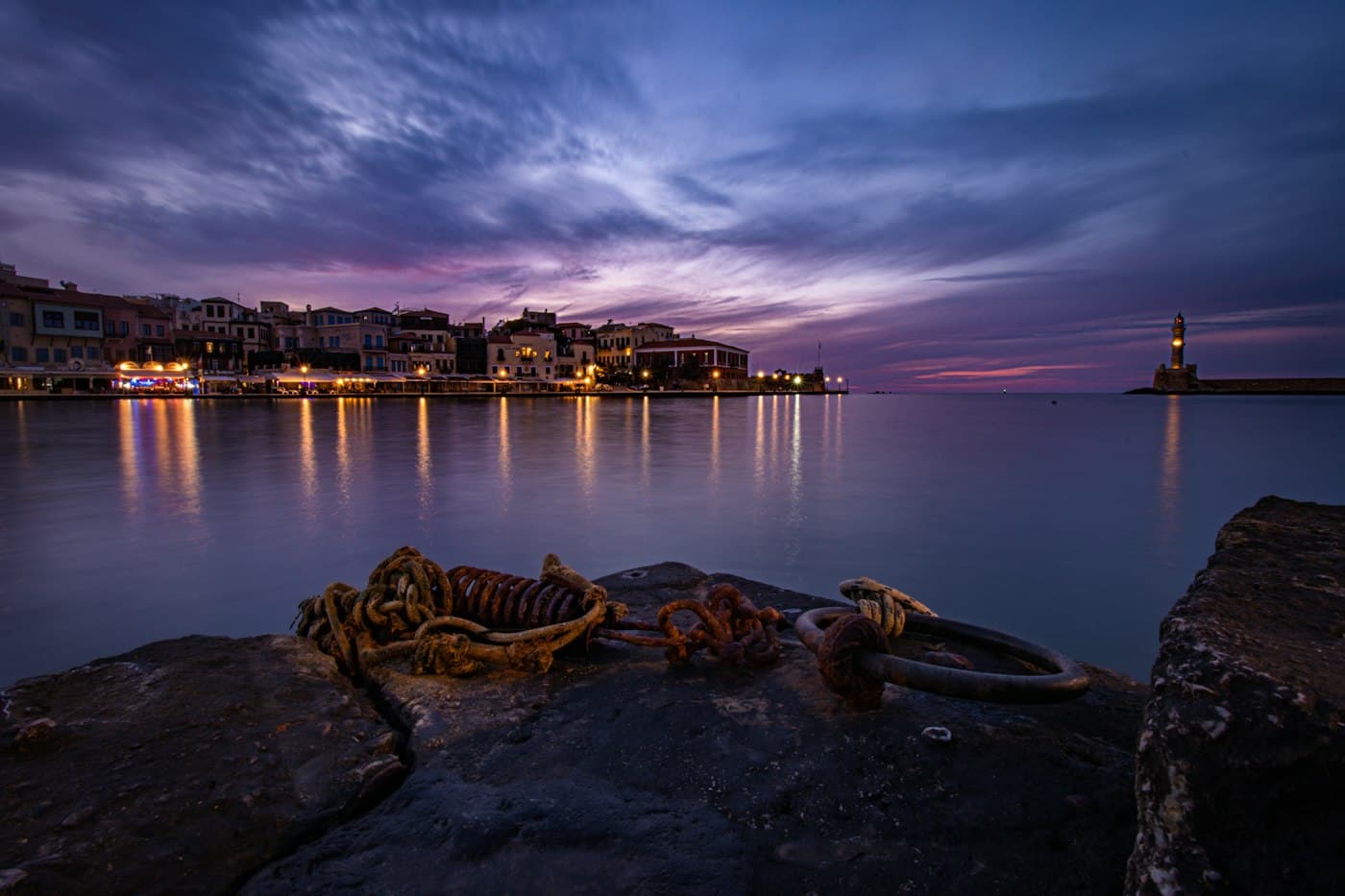
The Venetian breakwater runs out to the lighthouse, 21 m tall, and from it the whole curve of the old harbour lies in front of you, the mountains behind. Come early in the morning, before the quays fill with tables and walkers. The town lends this stretch, “from the sailing club to the lighthouse”, to film crews by council decision.
Seen from the quay in front of the Grand Arsenal, the lighthouse stands to the west-north-west, where the sun goes down in mid-May and again in late July; in June it sets just to its right. On 15 June 2027 the sun sets in Chania at about 20:41 and golden hour runs from 20:04 to 21:00; on 15 September, from 18:59 to 19:48.
The old Turkish quarter behind the eastern harbour, around the church with its minaret and belfry: lanes of old houses, much quieter than the waterfront a few streets away.
The lanes behind the western harbour, where Christians and Jews lived after 1645, around the Etz Hayyim synagogue, set in a 14th- or 15th-century building that began as the Venetian church of St Katherine. The synagogue is closed at weekends; the lanes are best before the shops open.
Through the year
May, June, September and October are the months to aim for. At Chania airport, in the Greek weather service’s 1971–2000 normals, average highs are 24.5 °C in May, 29.0 °C in June, 30.5 °C in July, 30.0 °C in August, 27.5 °C in September and 23.4 °C in October; July and August are nearly rainless (1.4 mm each), while October has rain on about ten days. The meltemi blows from the north-west here, strongest in the afternoon. The crowds follow the flights: Chania airport handled 4.15 million passengers in 2025, with July (749,000) and August (730,000) the busiest months and January the quietest (64,000). In late May the town marks the anniversary of the Battle of Crete with ceremonies and, some years, displays over the harbour.
Crete, month by month
Practical
Chania airport lies 14 km away on the Akrotiri peninsula, with KTEL buses to town about every half hour from early morning to late evening. Ferries from Piraeus dock at Souda, about 7 km east of the town, after a crossing of some nine and a half hours. The old town and the harbour are for walking: give the guests a meeting point and comfortable shoes.
Couples who live abroad send their documents to politikoi-gamoi@chania.gr, or hand them in at the town hall; the office reckons four working days to check them, then agrees the date and time with you. Each of you needs a marriage licence from your own country that names the person you are marrying and Chania as the place — without them, the town says, it is not a licence — plus a recent birth certificate, a family-status certificate where your country issues one and a passport copy, all apostilled and officially translated into Greek, names also in Latin letters.
We found no town rule for a couple’s portraits on the quays. Filming or photographing inside a monument — the Firkas, the Grand Arsenal — is another matter: the Ministry of Culture issues permits for monuments, and the town grants its own spaces to film crews by council decision. Ask before planning a session inside either.
Greece’s Civil Aviation Authority bans drone flights near airports and over critical infrastructure such as ports and military installations — and Chania airport is also an air force base, while Souda Bay holds a Greek and NATO naval base. Check the official Drone Aware GR map before any flight; EU registration and training rules apply.
A civil wedding in Chania is legal for couples from anywhere, with no residence needed, and is registered in the town within 40 days; a church wedding is legal on its own too.
Questions
Yes. The town lists three spots on the Akti Tompazi quay — opposite the Grand Arsenal, opposite the Yali mosque and at Sourmeli street — for civil weddings, set in 2018 for Saturday and Sunday evenings from 18:00 to 20:00, June to October. Since 2024 it also offers weddings outside the town hall at other times, for a higher fee; ask the civil weddings office.
At the town hall on a weekday, during office hours, yes. Weekend slots and every place outside the town hall carry a municipal fee, set by the council in 2024.
For couples living abroad, a marriage licence from each of your countries that names your partner and Chania, recent birth certificates, family-status certificates where issued and passport copies — apostilled and officially translated into Greek. Send them by email to politikoi-gamoi@chania.gr in good time: checking takes about four working days.
From the old harbour, looking out past the lighthouse to the open sea: from the quay by the Grand Arsenal, the sun sets right behind the lighthouse around mid-May and late July, and just to its right in June. In mid-June it goes down at about 20:41.
Probably not without permission: the Civil Aviation Authority bans flights over ports and military installations and near airports, and Chania has all three close by. Your photographer checks the official Drone Aware GR map first.
Greece
Plan
Not sure yet?
The place, the date, the guests, the photos you like. Our concierge checks who is free and fits, and comes back with photographers to choose from.