
Founding photographer
Gabriele P.from €1,500
🇦🇹 The Wachau Valley, Vienna +25, Austria · Documentary, EditorialWedding photographers in Austria
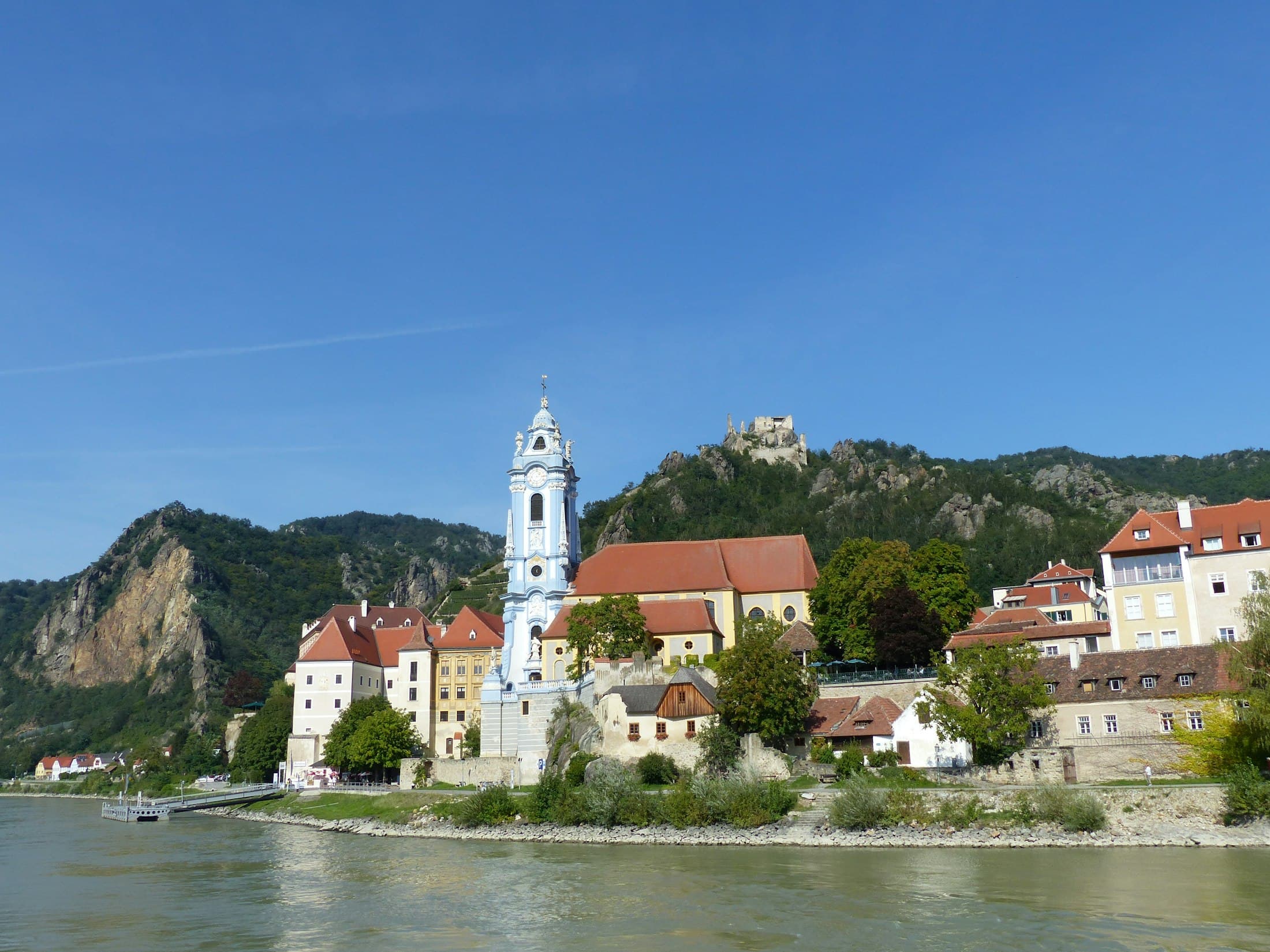
A walled wine town on a bend of the Danube, where the registry marries couples in a Renaissance town hall, in an abbey under a blue tower and in a rose garden among the vines.
Dürnstein keeps a wedding page on its own town website, because so many couples come here to marry.
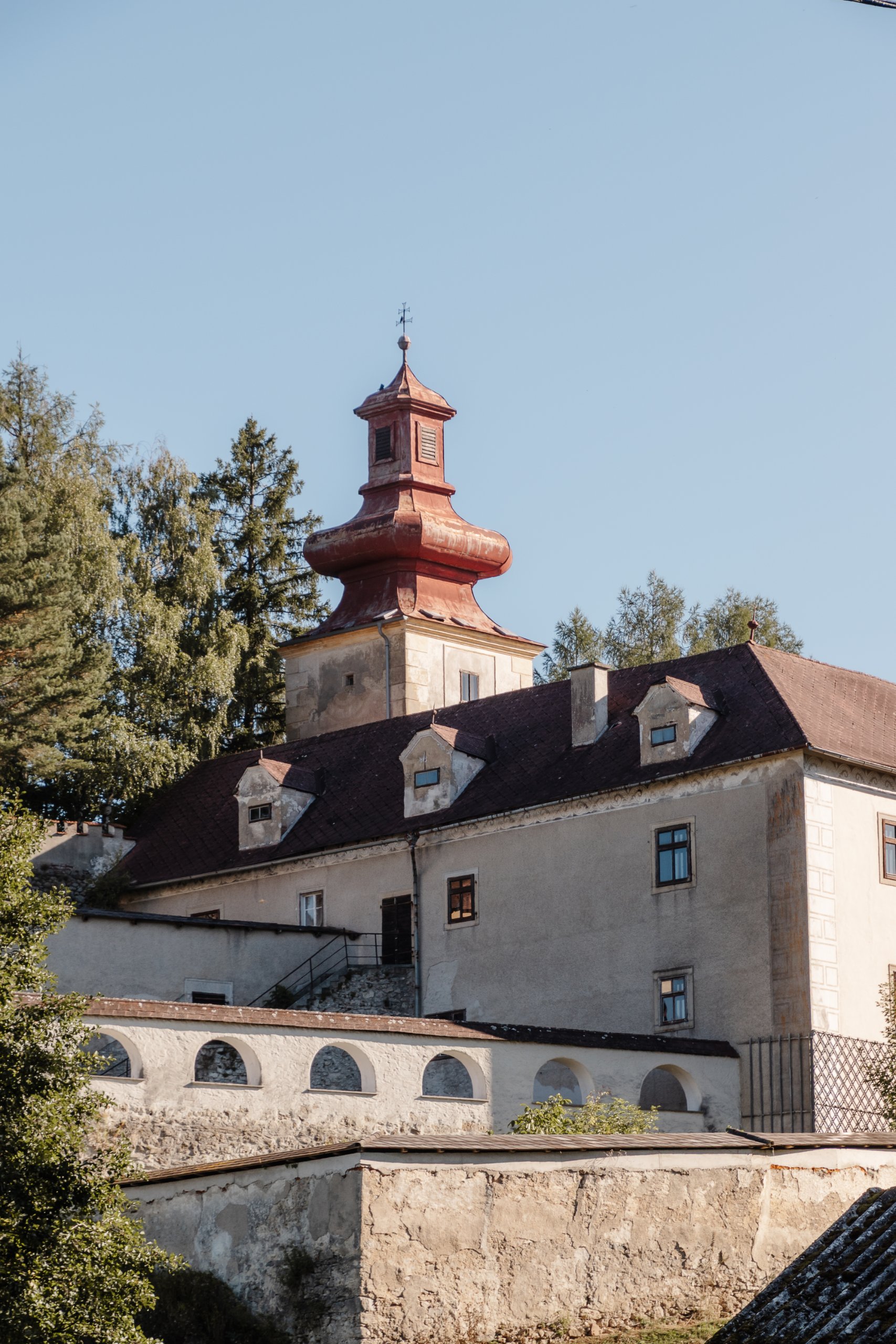
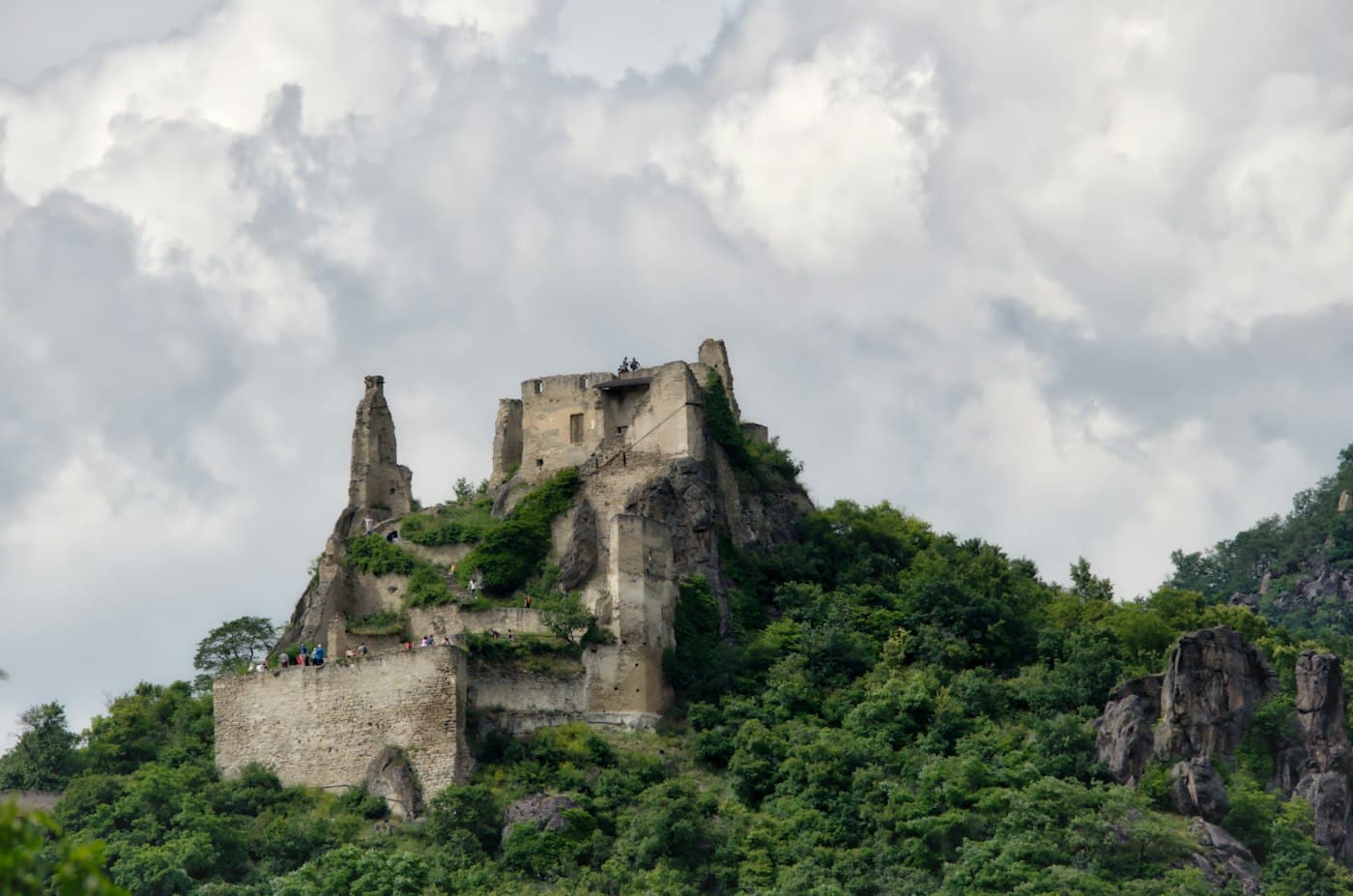
The Kuenring family built the castle above the town between 1140 and 1145, Richard the Lionheart was held there in 1192 and 1193, and a share of his ransom paid for the growth of castle and town over the next two centuries; the place is first called a town in 1347. Below it stands the abbey, founded in 1410 and rebuilt under Provost Hieronymus Übelbacher from 1710, its blue-and-white tower the landmark of the valley.
The registry’s clock shapes the day. Weddings are held preferably on Fridays and Saturdays, in principle between 10:00 and 15:00 and not on public holidays, so the ceremony is over long before the evening light, and the old town is closed to traffic, so guests come on foot from car parks outside it. A plan that fits: the ceremony around midday, a toast on a terrace over the river, then a pause, and the portraits late in the afternoon.
Photographers
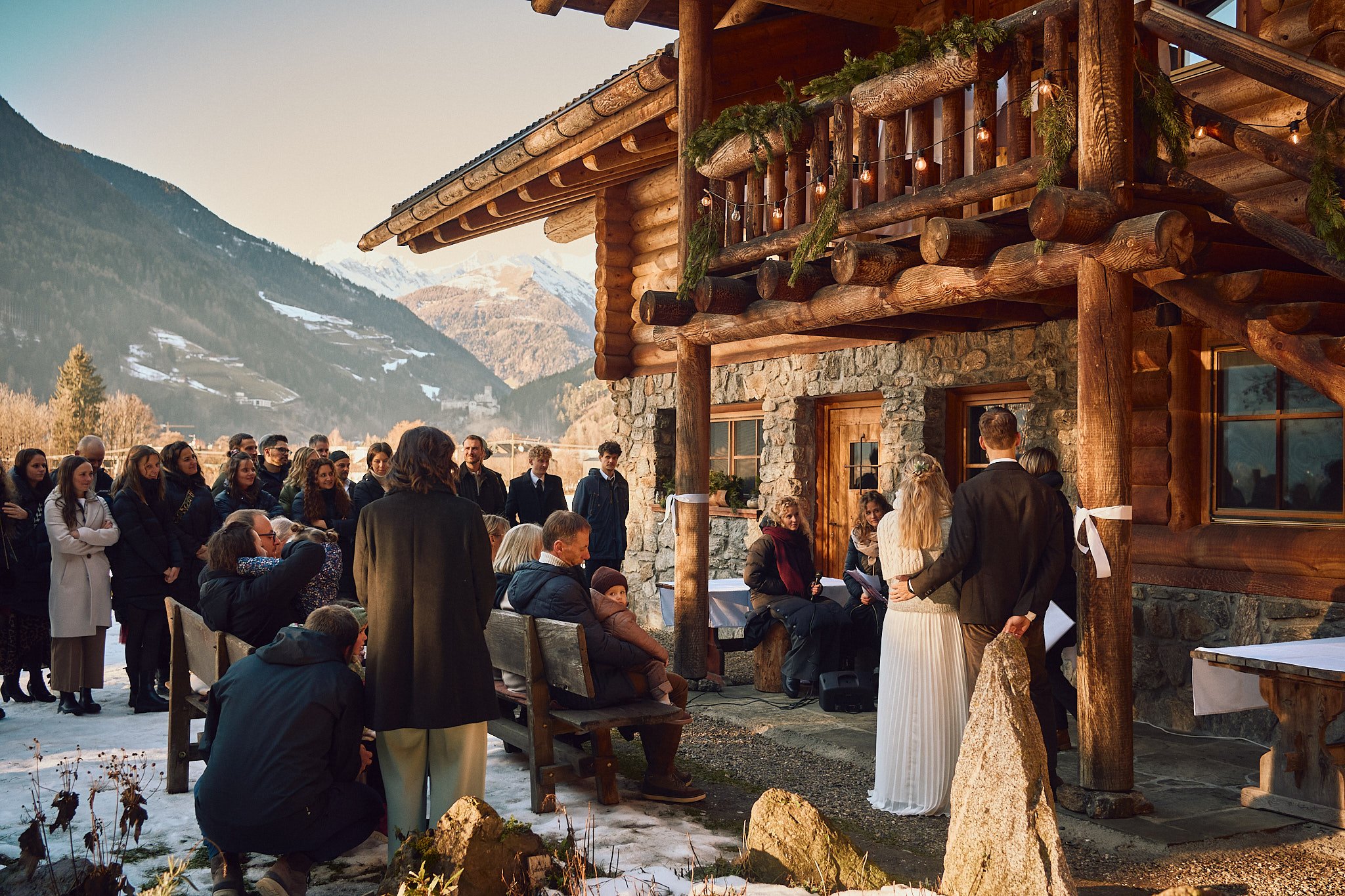
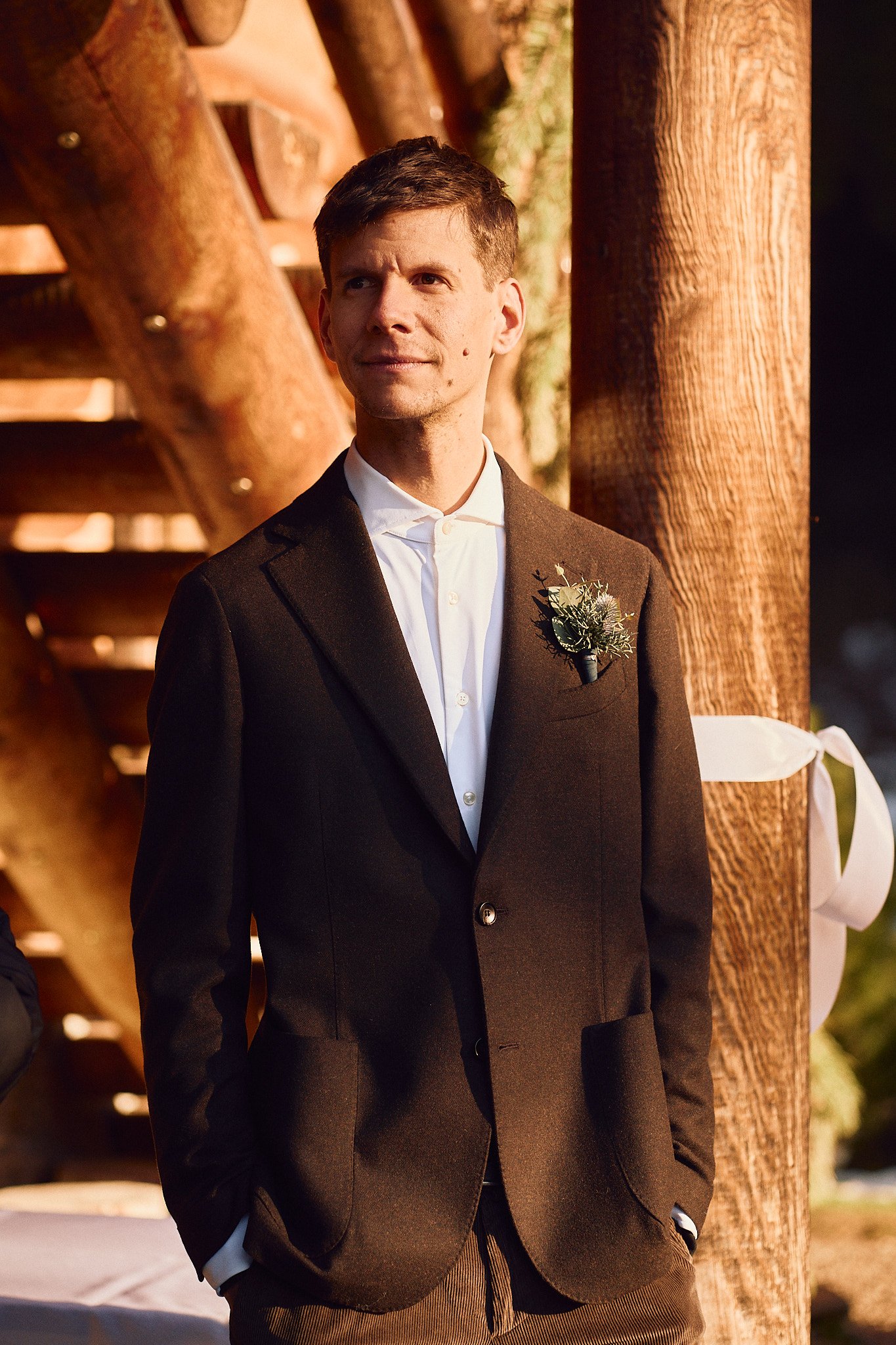
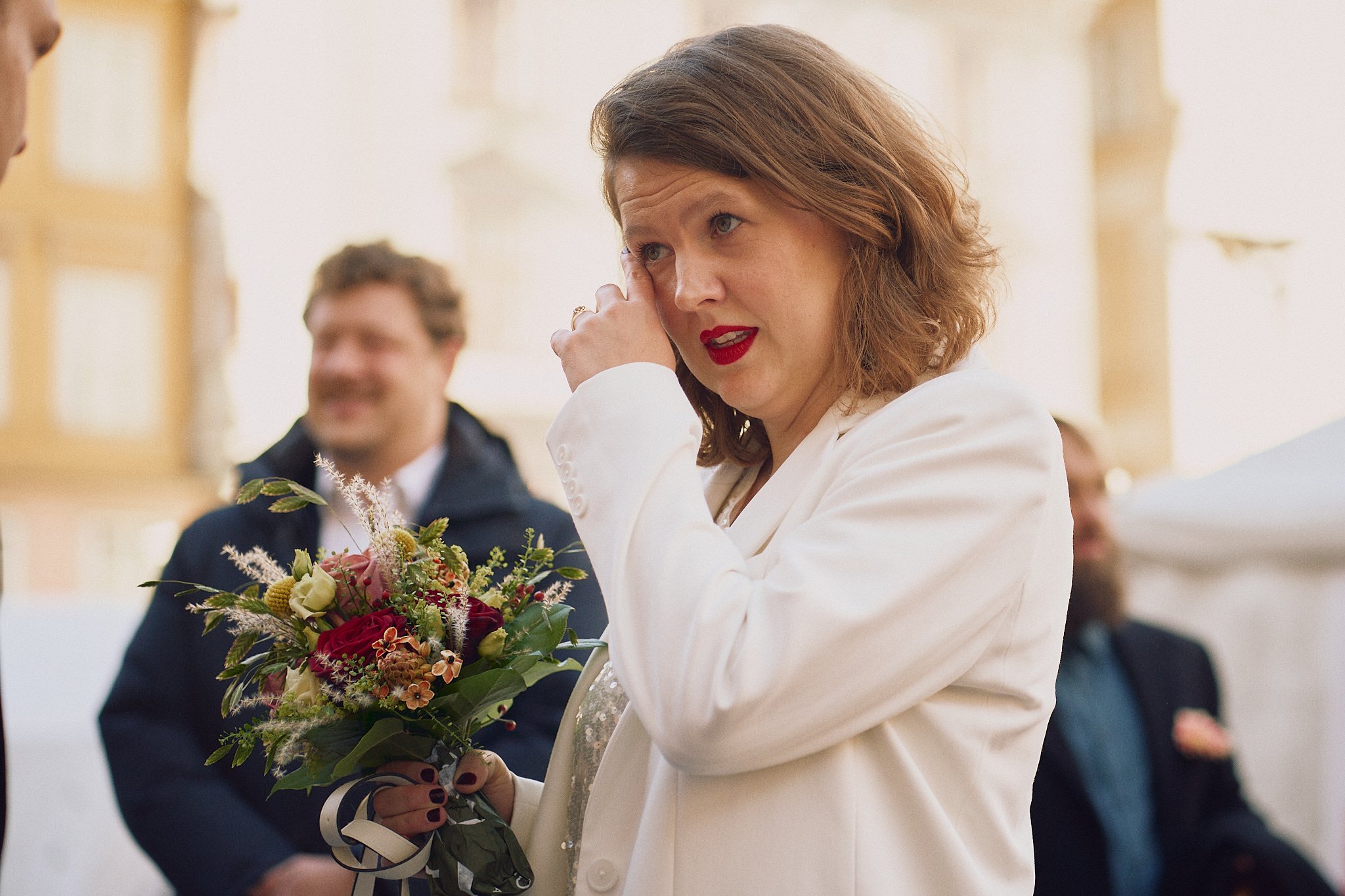
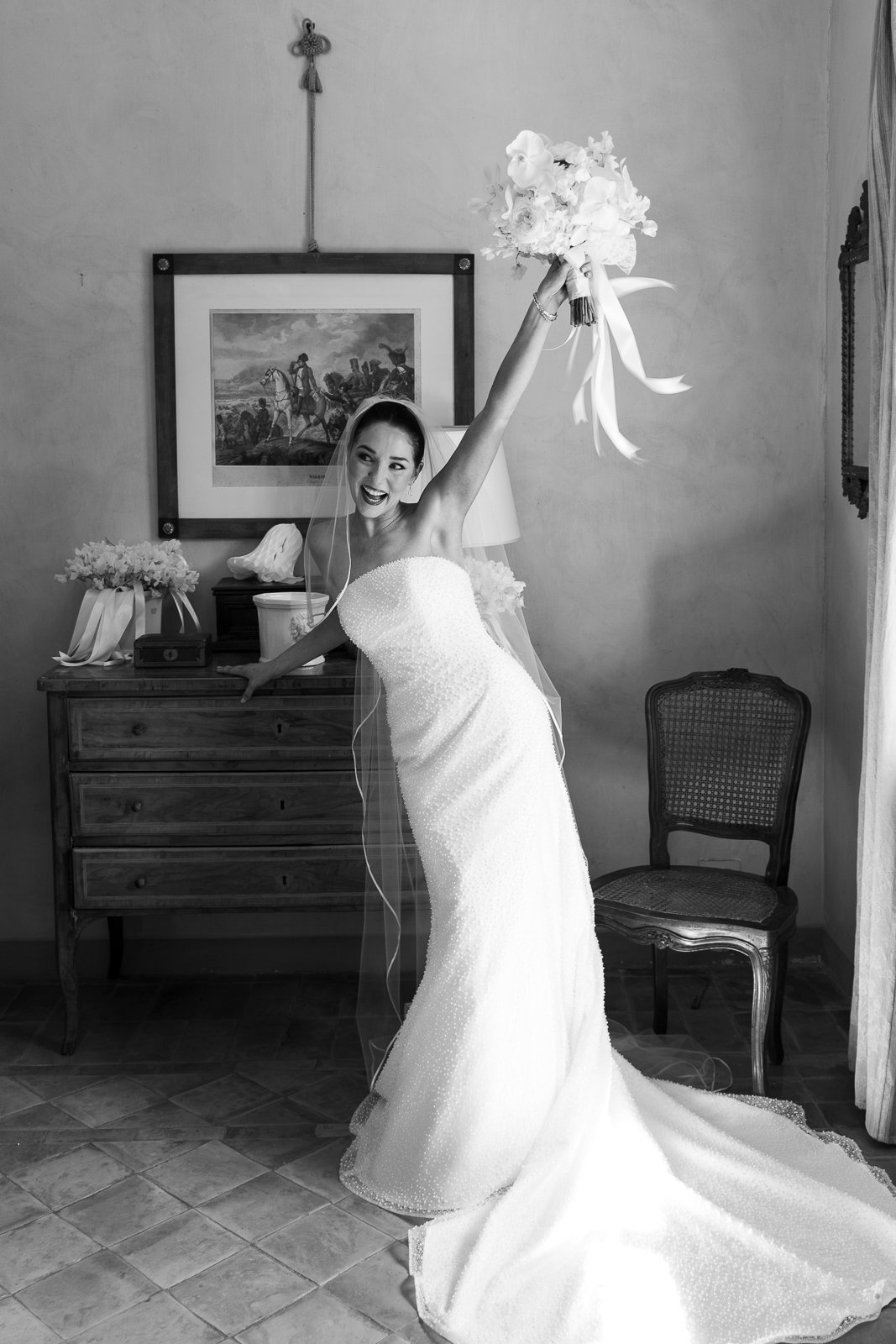
They shoot everywhere in the Wachau Valley — in Dürnstein too. Their whole weddings are on their pages.
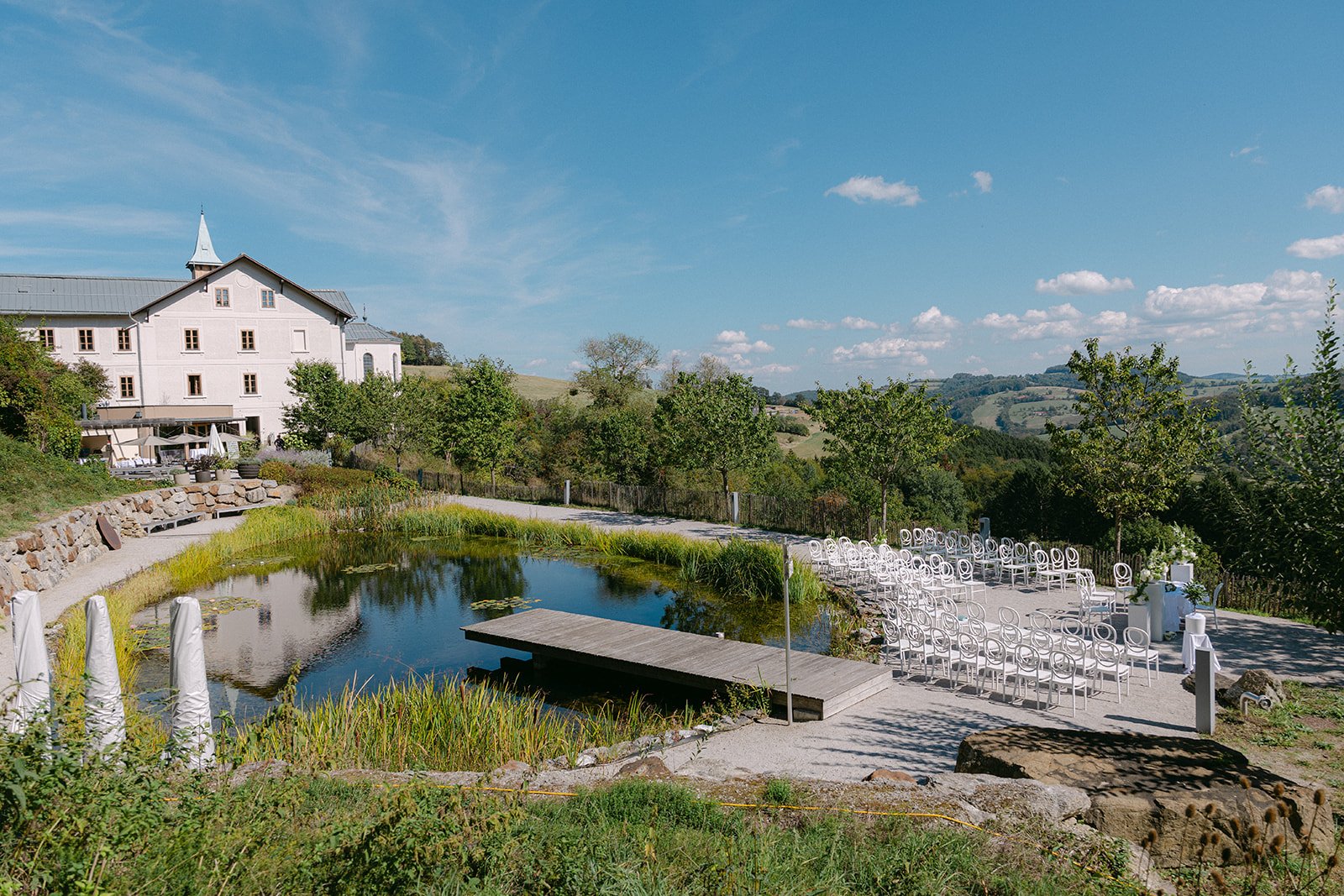
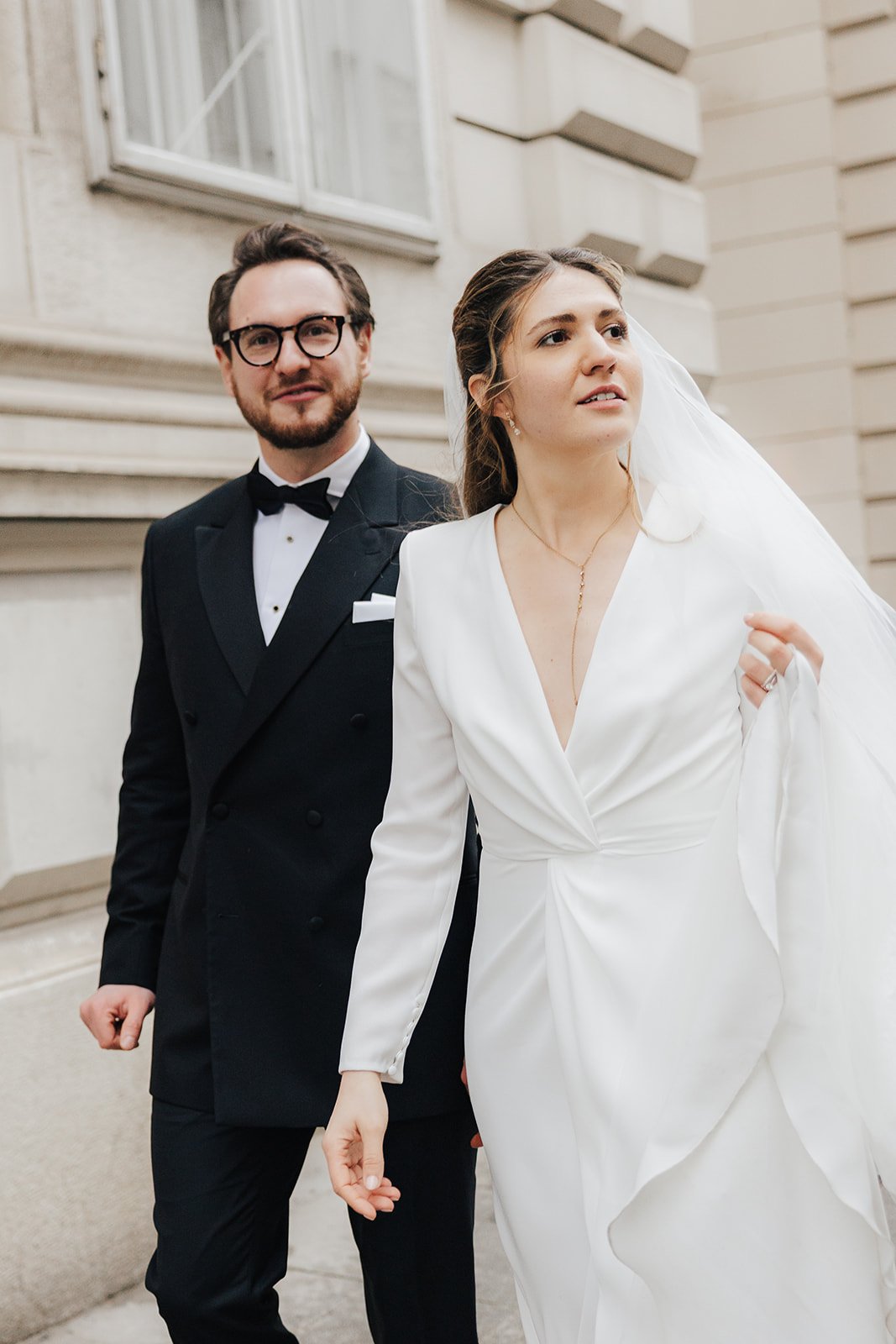
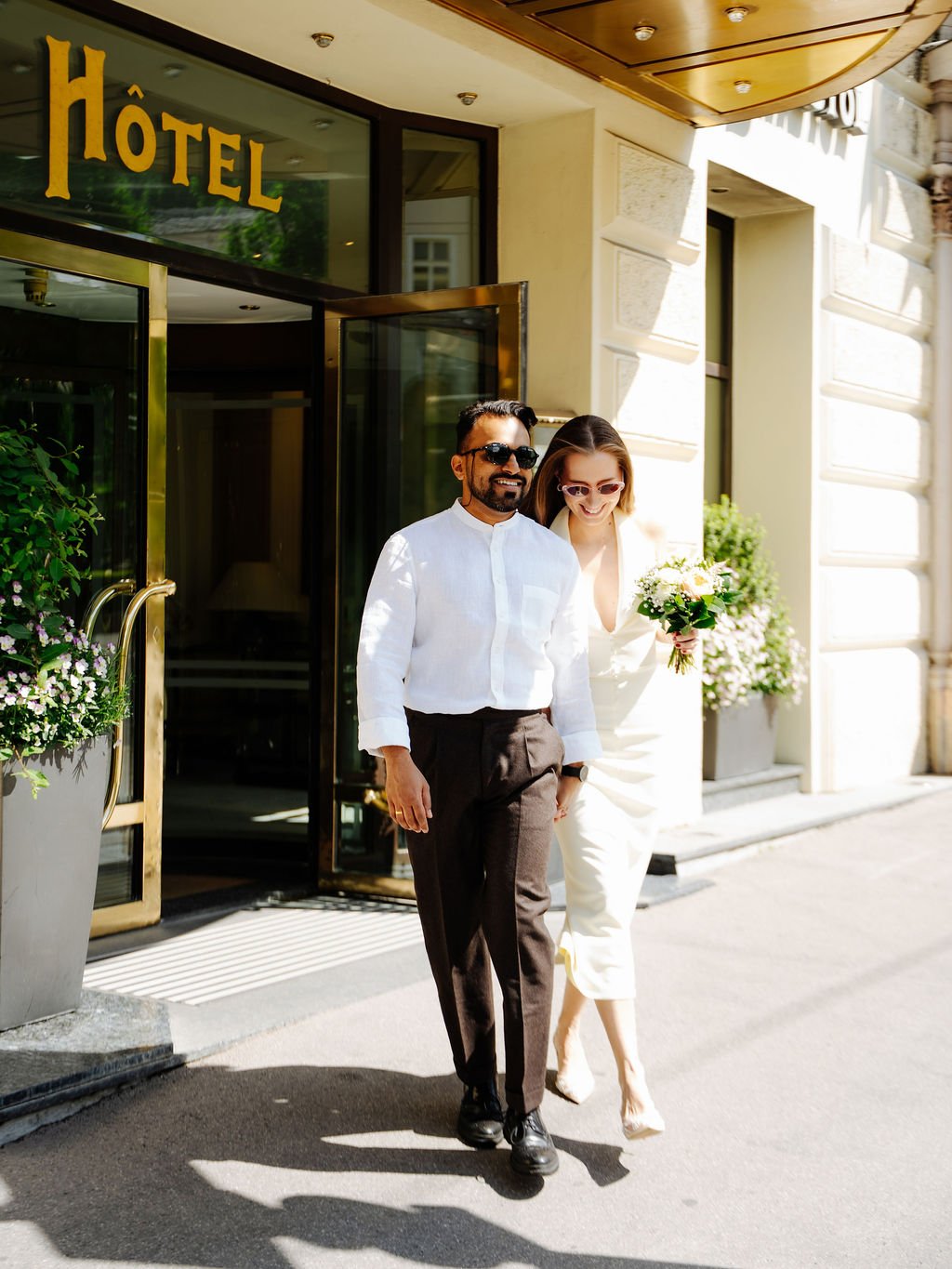
See all 13 photographers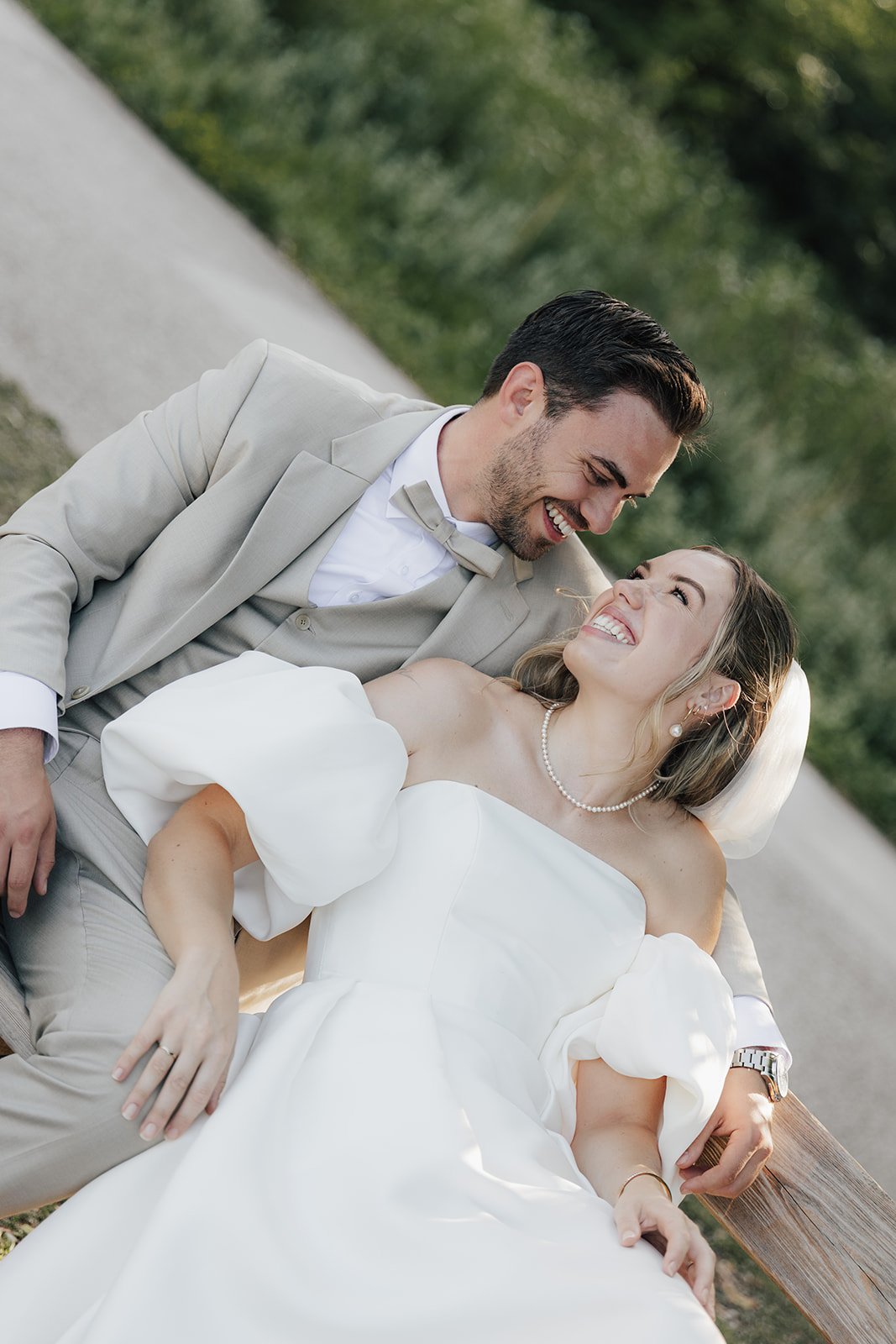






Booking through Lens & Vows
Ceremonies
The town hall moved into a late Gothic house in 1547 and was rebuilt in Renaissance style in 1563. Its historic council chamber takes at most 50 people, on the first floor without step-free access. The Altes Rathausgärtlein, up the same stairs, is the outdoor choice, arranged with the guesthouse Altes Rathaus.
The registrar also comes to the abbey. Its Festsaal has a ceiling fresco by Martin Johann Schmidt and a view of the Danube, and seats up to 120 in rows; no food or drink may be served in it, to protect the building. The two Künstlerbund rooms next door take about 50 each. All are on the first floor, with a lift, and the abbey’s civil-wedding package gives you the room with the corridor, which holds a standing reception for about 80, or the baroque courtyard for up to three hours.
The abbey calls its church, rebuilt from 1721 to 1724, an especially popular wedding church, with couples from all over the world. You must already be married at a registry and show the certificate; your home parish takes the marriage protocol and sends it on, and you bring two witnesses. Date and form of the service are agreed with the parish priest. The crypt below seats about 30 and is reached only by steps.
Schloss Dürnstein, built by the Starhembergs early in the 17th century and owned by the Thiery family since 1937, holds civil ceremonies in its library, best for up to 26 people, with an aperitif after it; parties with dancing into the small hours are, it says, not what it offers. The baroque Kellerschlössel of the Domäne Wachau, built over 300 years ago for the same Provost Übelbacher, has a hall for 50, or up to 78 with its side rooms. Its 2026 dates had gone, the town notes, so ask early.
Two wine estates are on the registry’s list: the Salettl and rose garden of Weingut Brustbauer in Oberloiben, a farm over 1,000 years old, where you marry among hundreds of roses and vines with a view of the Danube, and the cellar terrace among the vineyards of Weingut Simon Gattinger. So are two ship operators: the DDSG and the MS Mariandl, a charter ship built in 1954 for 35 to 120 people, with its own landing stage in Krems, 35 minutes upstream.
Portraits
The town itself calls the courtyard of the Rathaus, with its stair up to the offices, a favourite subject. Further along stand the Kremser Tor, a four-storey gate tower of the 15th century, and at the western edge the old prison and hangman’s house on the sloping street down to the river.
The ruin is open all year at no charge and takes about 20 minutes on foot from the centre. The Swedes blew it up in 1645, and the reward is a wide view of the valley. On 15 June 2027 the sun sets at about 21:01 on a flat horizon, golden hour running from 20:12 to 21:26; on 15 September at 19:12, from 18:30 to 19:31. The hills take it earlier than that, so start up well ahead of those times.
Your guests congratulate you in the baroque courtyard, not in the church. The rules are in the abbey’s folder: no flowers, rice or confetti thrown in the church or the courtyard, and it asks firmly that only one person take pictures, with no added lights, since the light inside is good. The church stays open to the public during a wedding, and visitors are told beforehand.
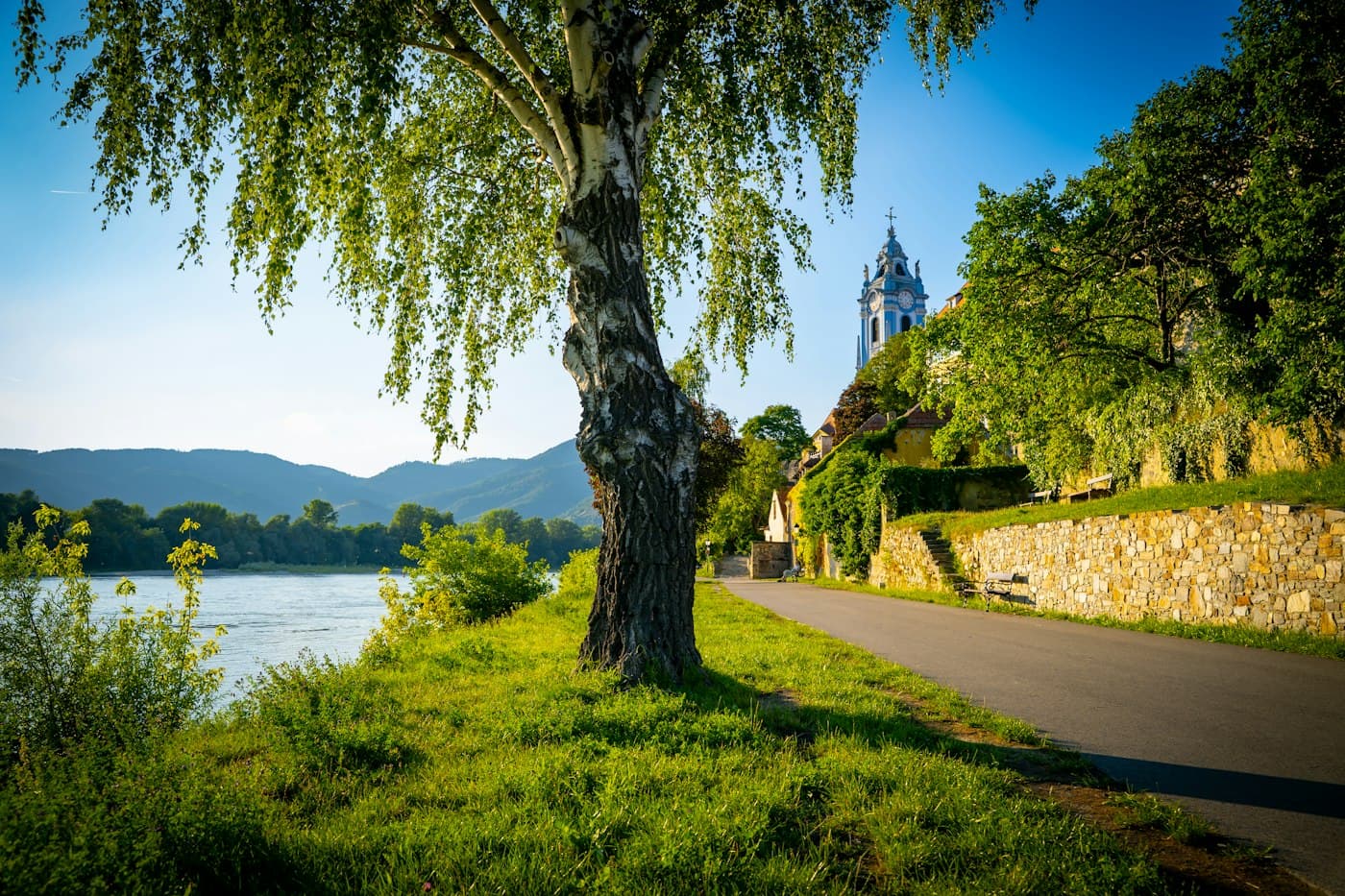
The landing stage lies directly below the blue tower, and the path along the bank looks back at it through the trees. For tower, abbey and ruin together, get onto the water or across it: the castle hotel can arrange a trip in a traditional Zille, the flat Danube boat, and a ferry crosses to Rossatz.
Through the year
There is no weather station in the town; the nearest is Krems, about 8 km downstream. GeoSphere Austria’s figures for it, 1991–2020, give average highs of 21.2 °C in May, 24.9 °C in June, 27.0 °C in July and 21.0 °C in September, with 80.8 mm of rain in June on 9.5 days and 49.0 mm in September on 6.6, and thunder on about 4.5 days in July against 0.7 in September. The abbey opens from 20 March to 26 October 2027, and the DDSG’s main season runs from 24 April to 3 October. One date to check: at the midsummer Sonnenwende the ruin is lit by torches and fireworks, on 20 June in 2026. No 2027 date is published, but the DDSG’s 2027 timetable cancels some evening sailings on Saturday 19 June.
The Wachau Valley, month by month
Practical
By road, the B3 runs 7 km from Krems and about 30 km from the Melk exit of the A1. The Wachaubahn stops at Dürnstein-Oberloiben, daily from 24 April to 1 November in 2026. DDSG ships call at Donaustation 20.
Driving and parking are banned in the old town, and street parking in the centre is for residents only. Tell your guests in the invitation: the abbey recommends the big car park by the swimming pool, about 10 minutes’ walk at most. For the bridal car the town can issue a permit for the centre, but it reserves no space.
Any Standesamt in Austria can examine your papers; register about six months ahead, as the result lasts six months at most. The 2027 dates are already open. Dürnstein’s registry takes bookings by phone, Monday to Friday from 8:00 to 12:00. A wedding outside the town hall is arranged with both the registry and the venue, whose costs are separate. The federal fee outside the office is €54.50 (5 October 2026), and the town adds its own, which varies with the day and the form.
Austro Control’s rules apply: registration for any drone with a camera, even under 250 g, insurance, at most 120 m above ground, always in sight, and the owner’s consent for take-off and landing. The town centre lies in none of the zones in the file valid from 25 October 2026; zones change at short notice, so check the Dronespace app on the day.
Questions
Yes. The registrar comes to the Festsaal or the Künstlerbund rooms, and the abbey has a package for it. Agree the date with the registry first, then book the room with the abbey’s events contact. The church wedding is a separate step and comes after the civil one.
Yes, with limits. The abbey asks urgently that only one person take pictures and that no extra lights be brought. If you also want a video, raise it with the parish priest early.
The town says Fridays and Saturdays by preference and 10:00 to 15:00 in principle, not on public holidays. Anything else is a question for the registry. A free ceremony at sunset has no such limit, but no legal effect either.
Not at the castle hotel, which says so in its brochure. Ask the Kellerschlössel, the wine estates and the charter ships about their closing times; the MS Mariandl plans its charters to your timetable.
The Wachau Valley
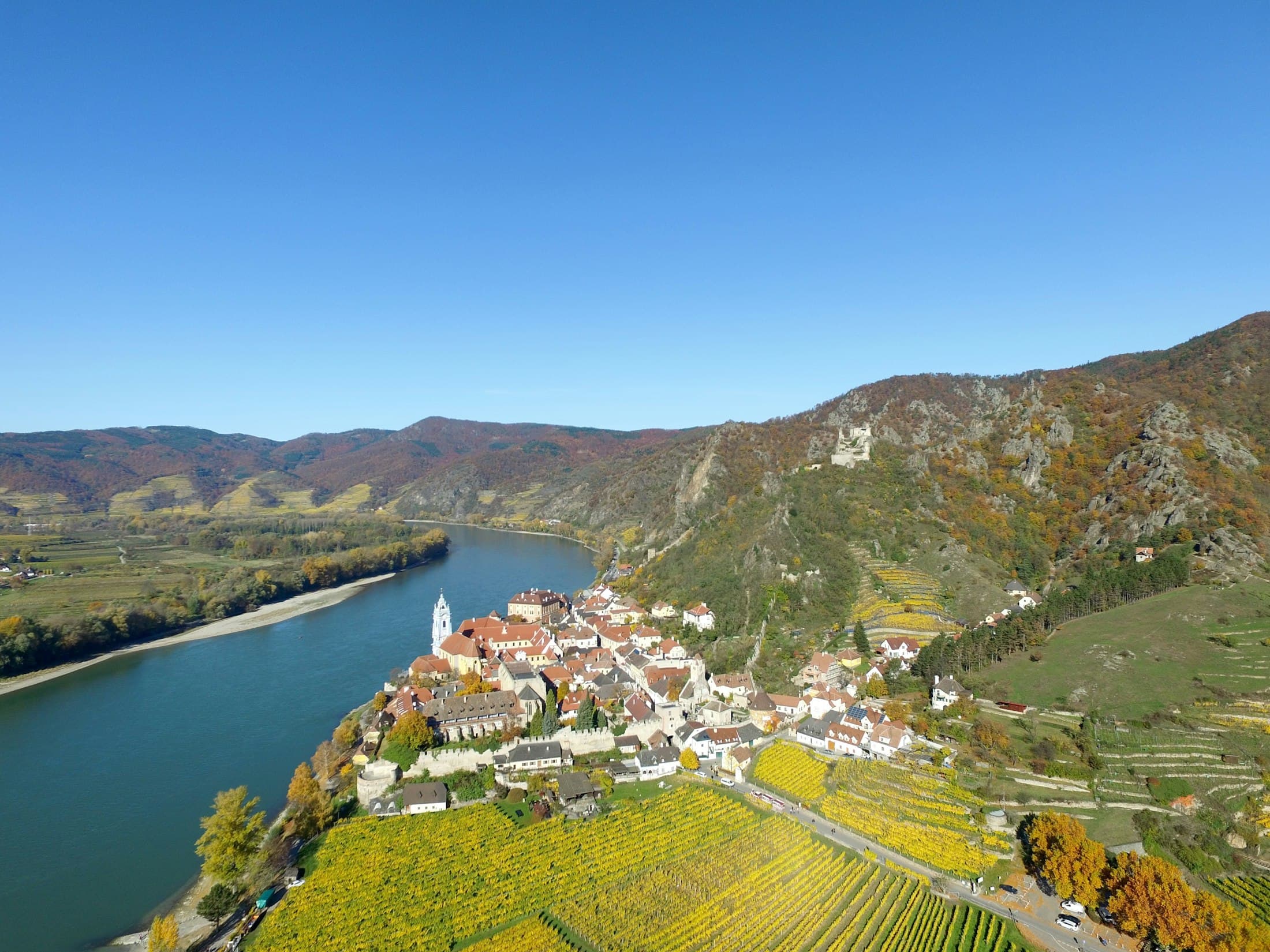 The Wachau ValleyThe whole region: when to marry, the kinds of places, the light, getting there.
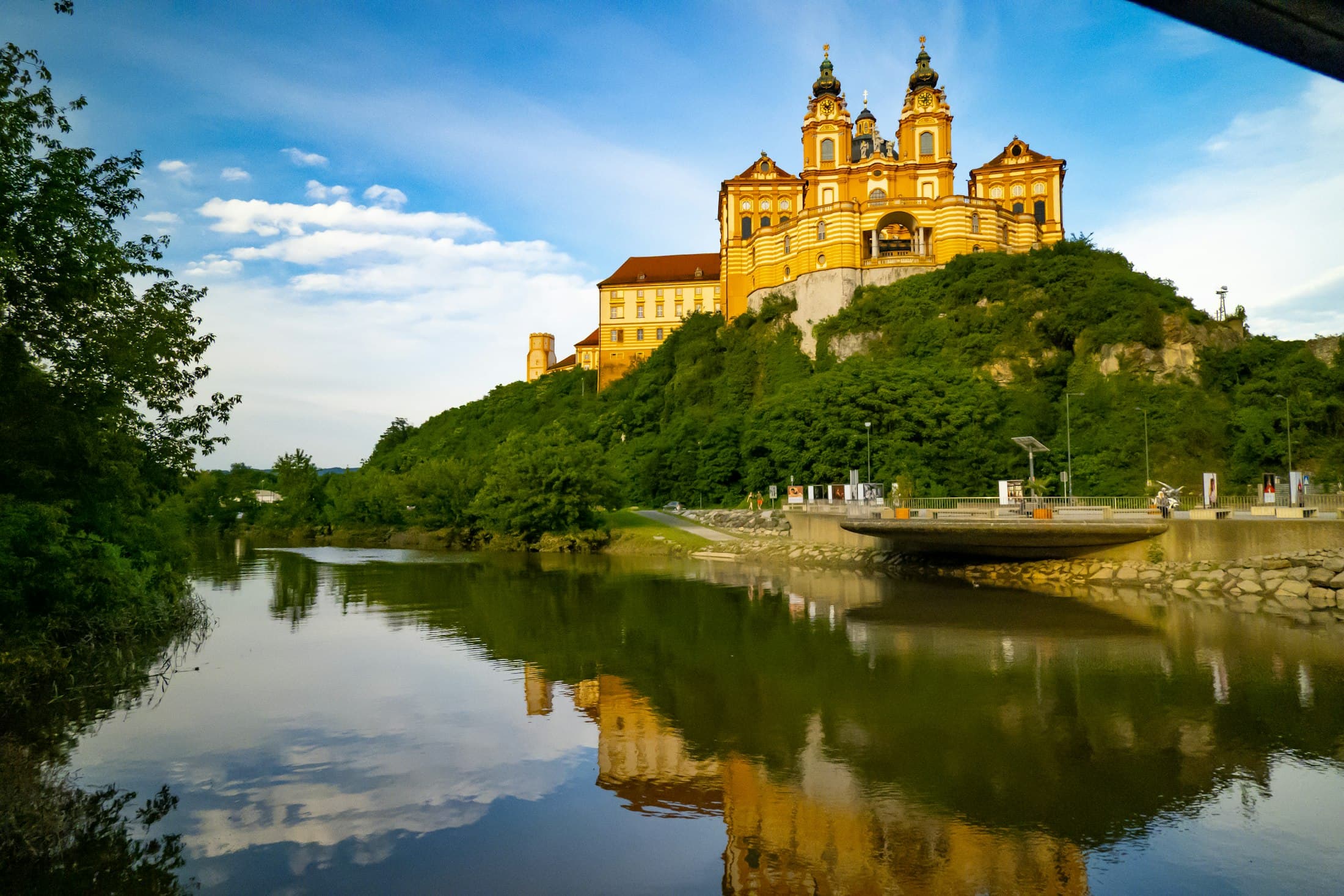 MelkA town at the foot of a vast baroque abbey, with a registry that marries couples on Danube ships and at a castle ruin, and an abbey with firm rules on wedding pictures.
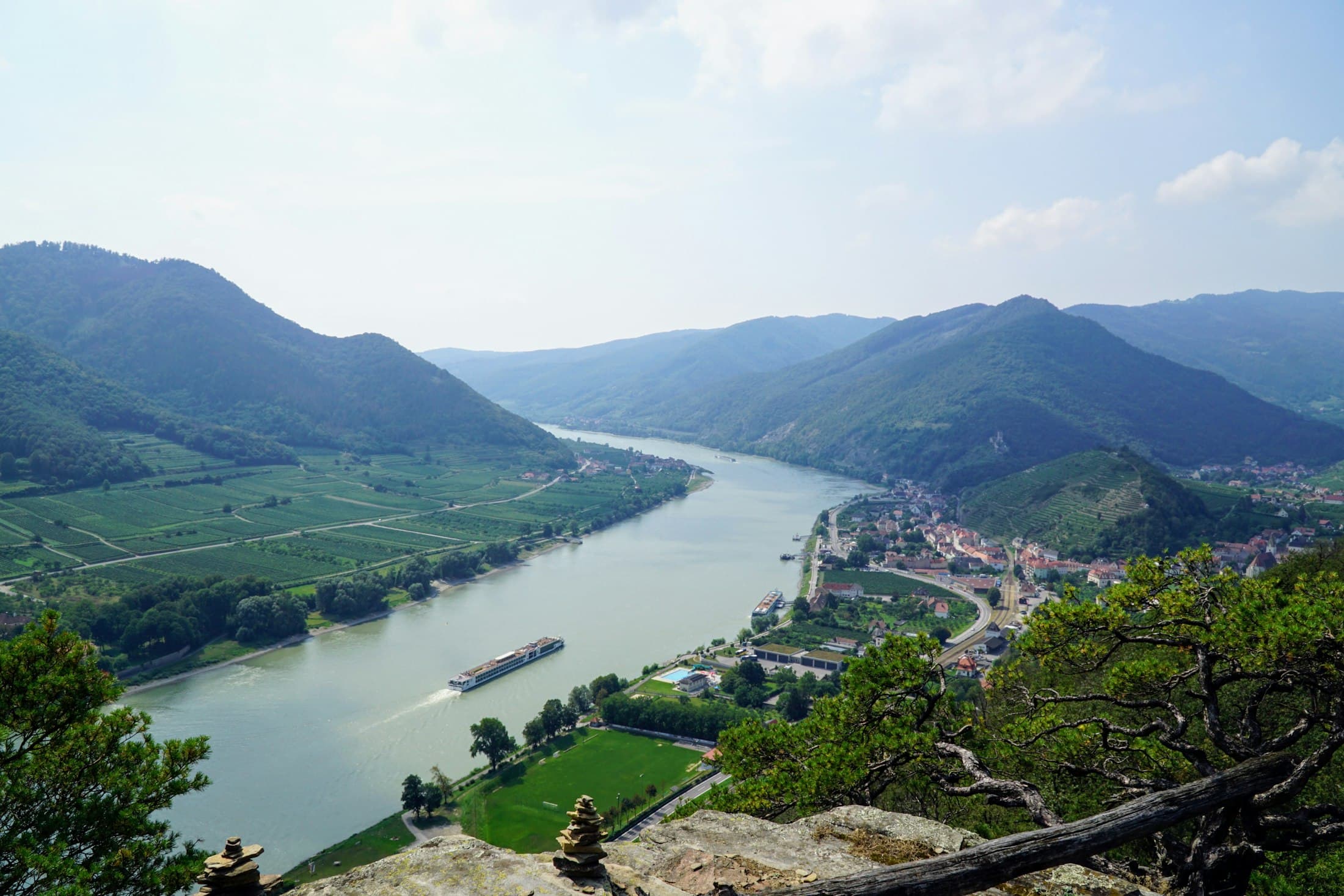 Spitz an der DonauA wine market town wrapped around one terraced hill, where the registry marries couples on that hill, on the Danube’s cable ferry and in a baroque hall in a shipping museum.
Plan
Not sure yet?
The place, the date, the guests, the photos you like. Our concierge checks who is free and fits, and comes back with photographers to choose from.