Founding photographer
Daniel B.from €600
Vorarlberg & Lake Constance, Tyrol & Innsbruck · Documentary, EditorialWedding photographers in Austria
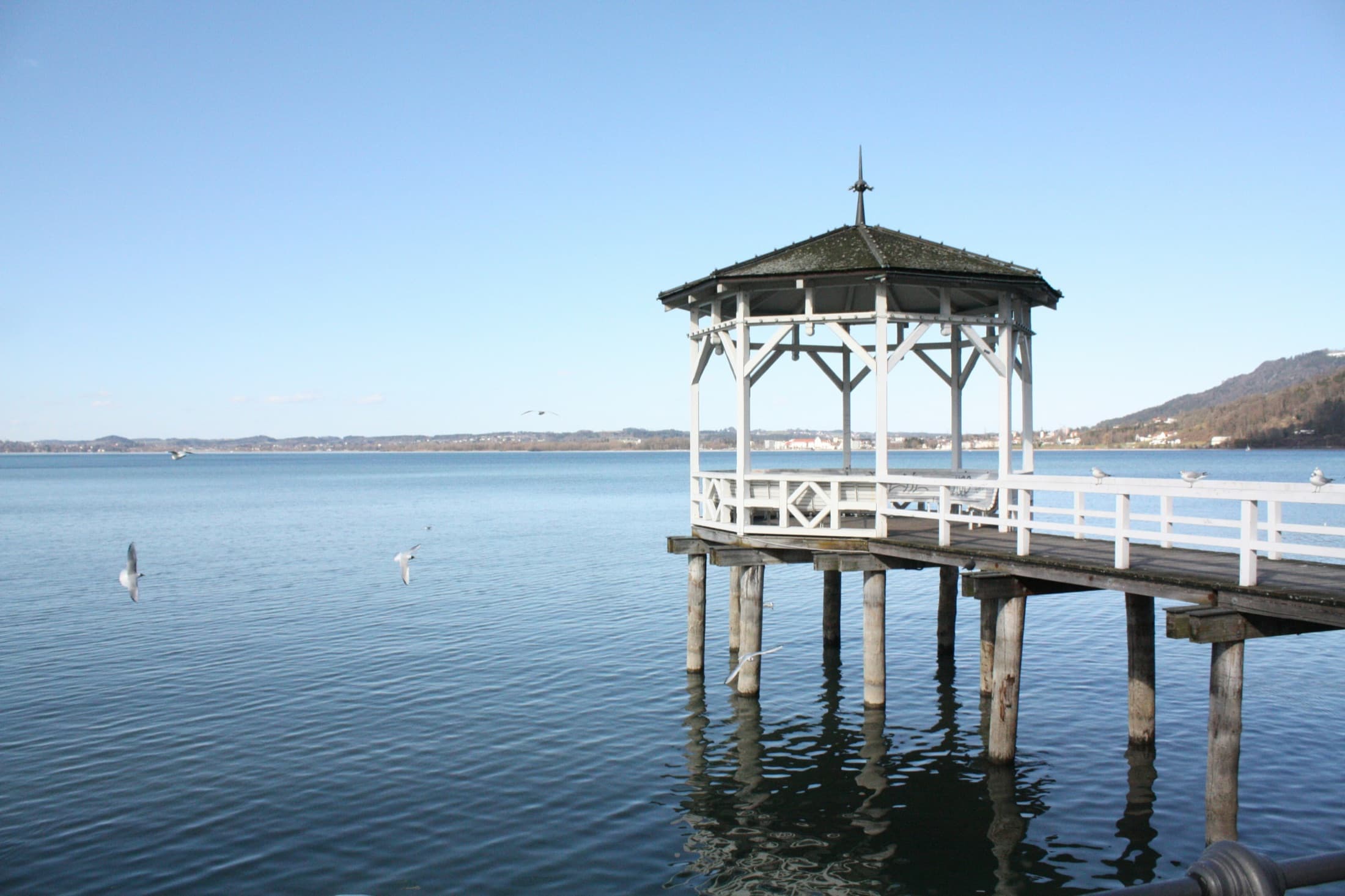
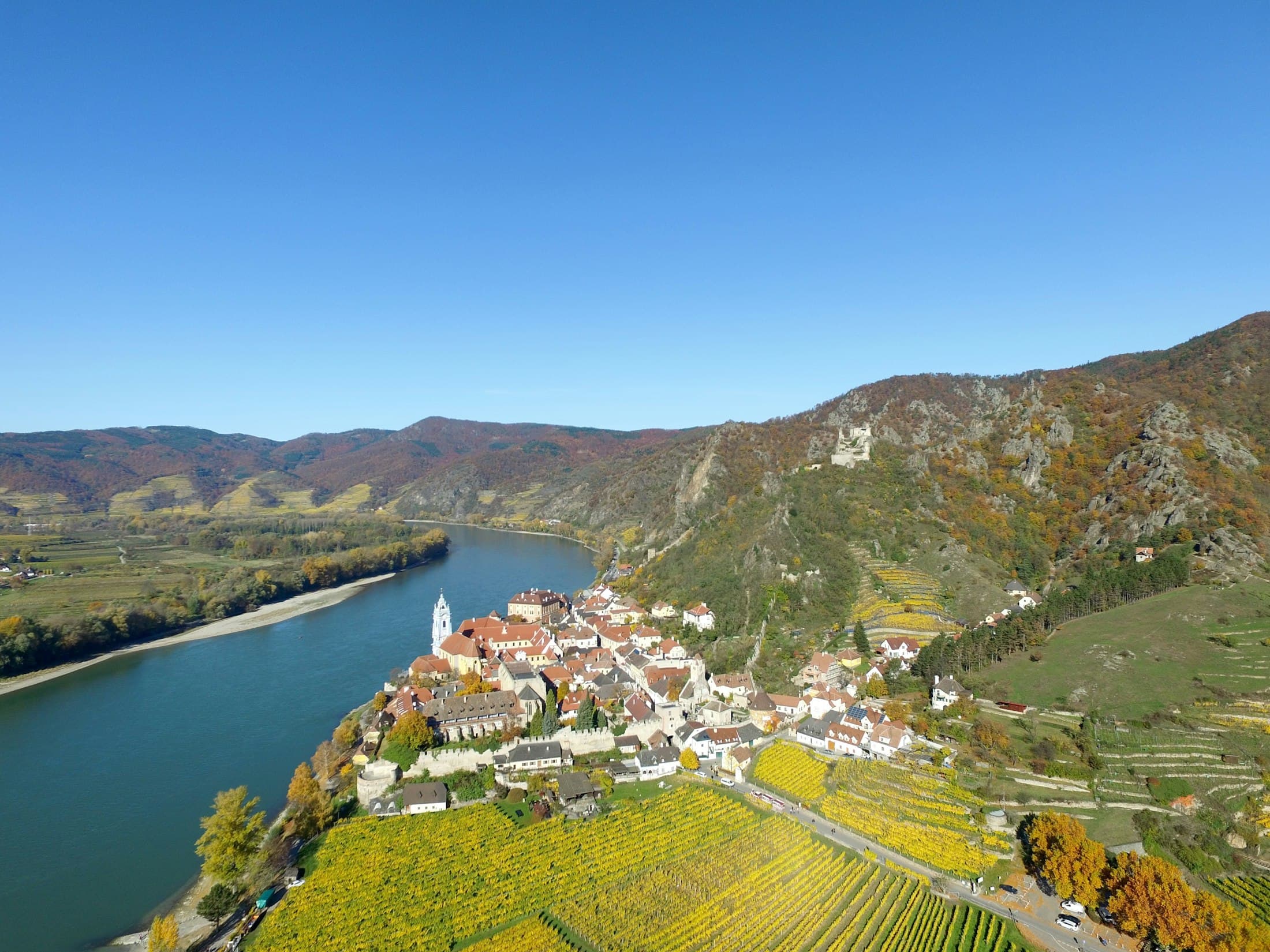
Lake Constance and the festival stage on the water at Bregenz, the wooden villages of the Bregenzerwald and the snow of Lech — lakeside summers, Alpine winters.
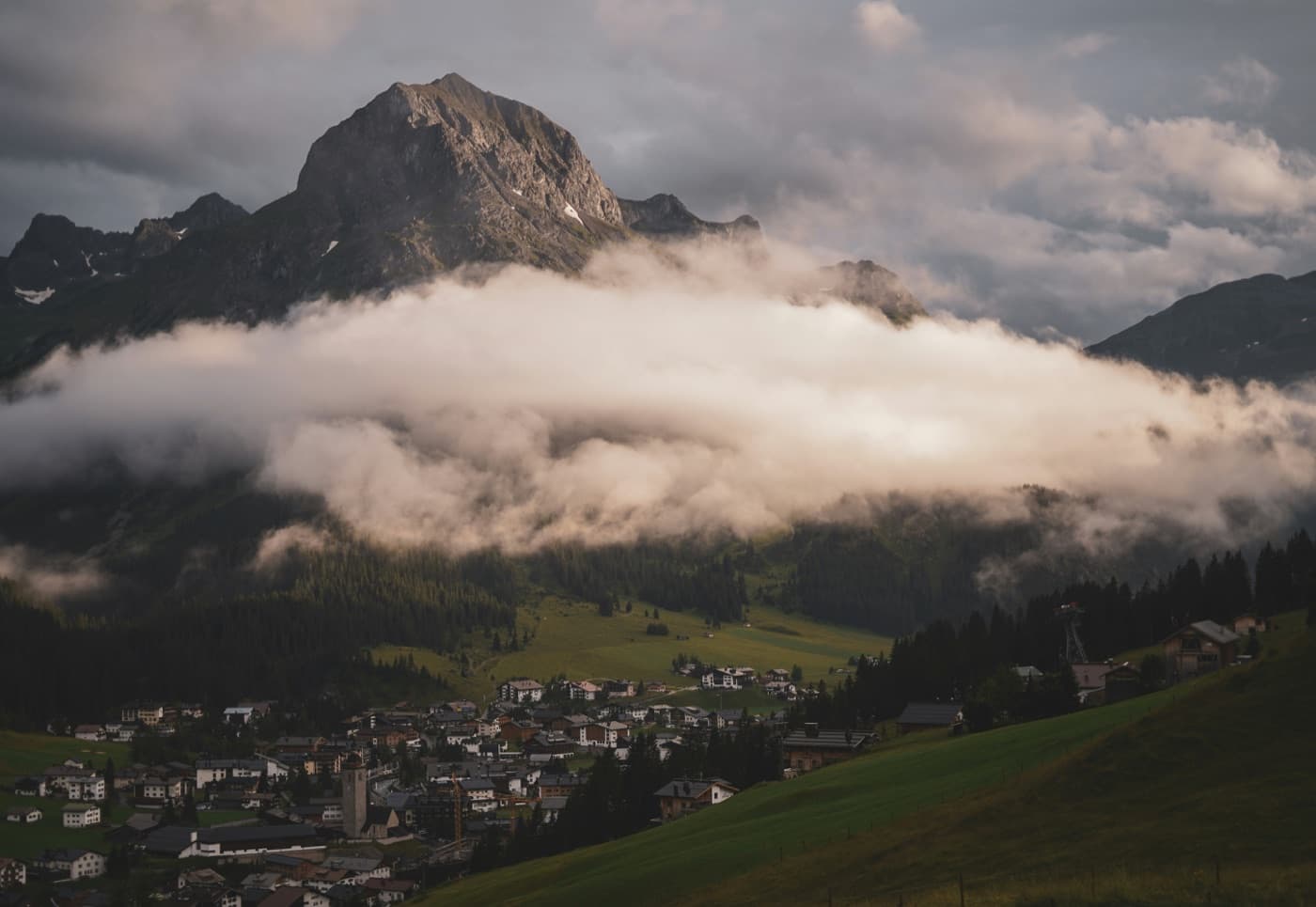
Vorarlberg, Austria’s westernmost province, climbs from Lake Constance into the Alps between Germany, Switzerland and Liechtenstein. Bregenz, the capital, lies on the lake below the Pfänder; Dornbirn and Feldkirch, with its medieval old town, follow the Rhine valley south. Behind them rise the wooden villages of the Bregenzerwald, the Kleinwalsertal and the Großes Walsertal, a UNESCO biosphere reserve, the Montafon below the Silvretta and, at the Arlberg, Lech and Zürs.
Weddings move between the lake and the mountains: the civil ceremony at the Standesamt — in Lech and Zürs alone, some forty couples a year — then a chapel in the meadows, a hut reached by lift or a boat on the lake. In the Bregenzerwald women still wear the Juppe, the valley’s pleated black dress, to weddings.
Photographers
They shoot here and know the light. Their whole weddings are on their pages.
See the photographerBooking through Lens & Vows
Through the year
June to September is the season: long evenings by the lake, and the lifts, huts and high pastures open in the mountains. It is also the wettest time — at Bregenz 190 to 200 mm a month from June to August, on 13 to 15 days, with storms on some afternoons — so plan cover for every moment outside. September is calmer. At the Arlberg winter is a second season, from December to mid-April; between the seasons its lifts stand still.
Weather station: Bregenz, normals 1991–2020 · Checked 30 October 2026
Places
The kinds of places — ask your photographer which ones they know well.
The promenade, the harbour mole with its west-facing Sunset Steps and the festival’s lake stage, the largest in the world; a boat for the dinner, the Pfänder’s cable car for the view.
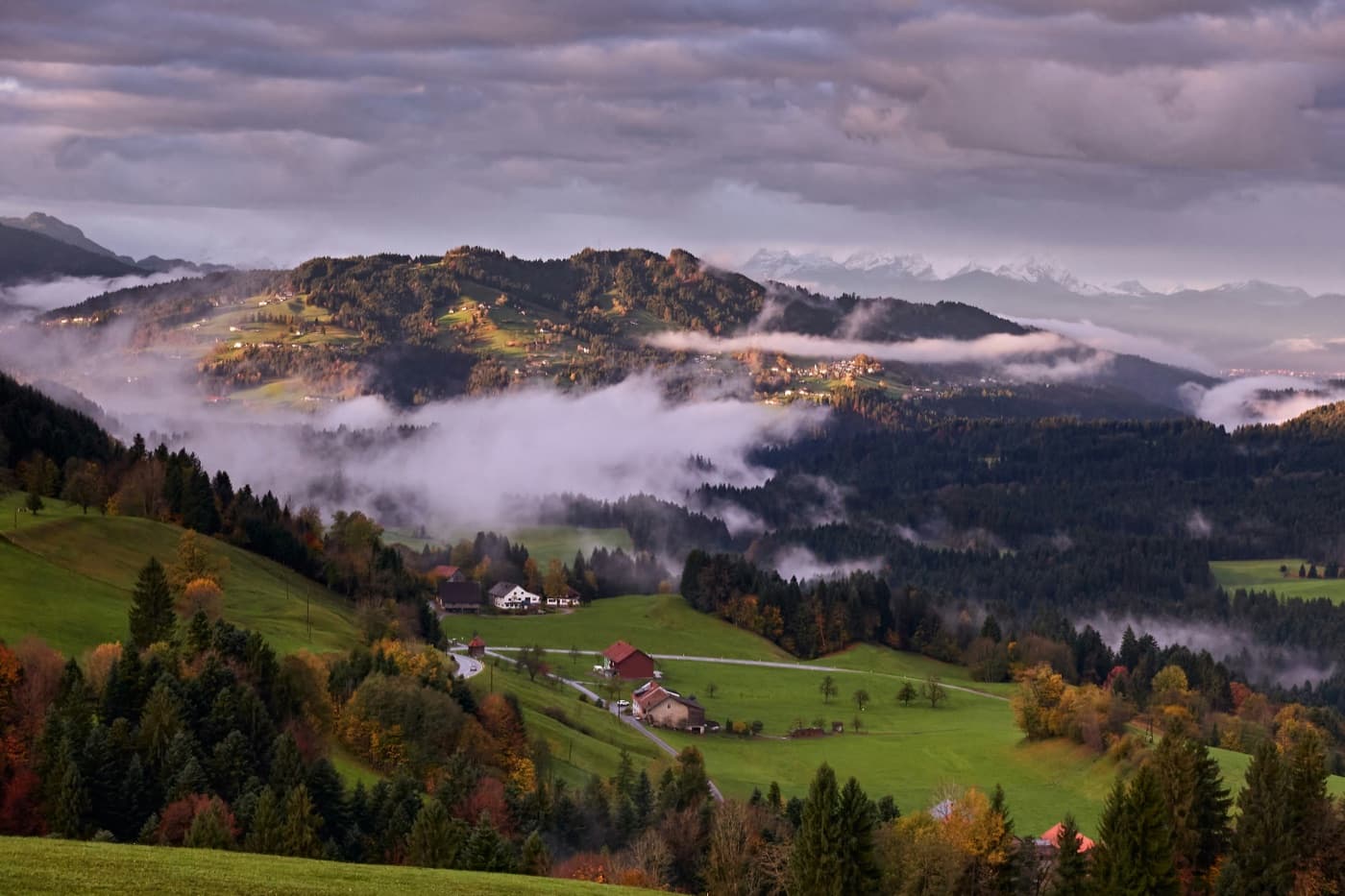
Farmhouses clad in wooden shingles beside new timber buildings in 23 villages — Schwarzenberg’s centre among the finest — with Alpine pastures above, where cheese is made all summer.
Small chapels in the meadows and huts reached by lift or on foot; above Lech, couples marry on a summit reached by cable car, in summer or in the snow.
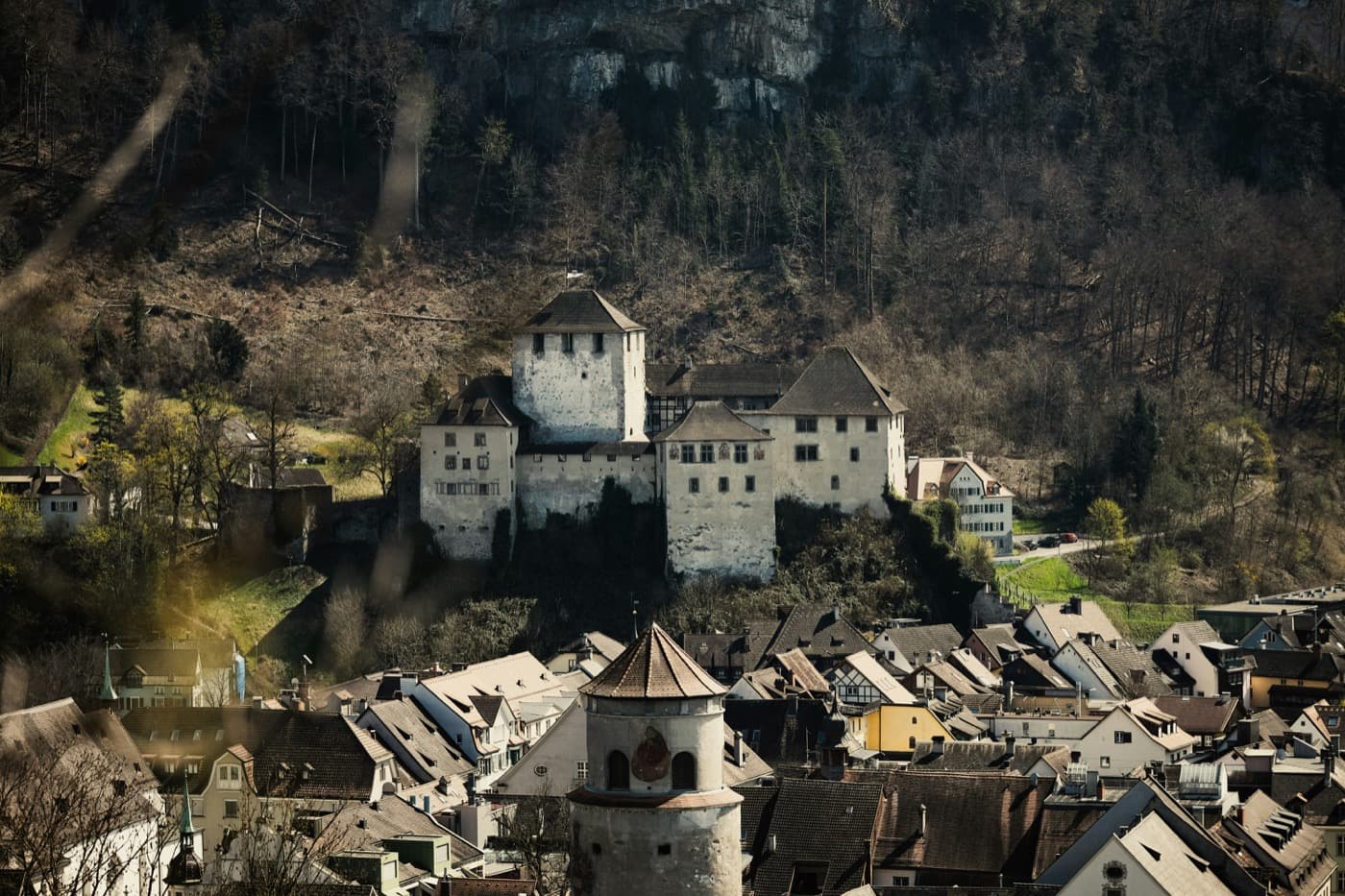
Feldkirch’s arcades and towers below its castle, and the Karren above Dornbirn, whose cable car runs until late to a glass walkway looking over the Rhine valley to the lake.
Light
Vorarlberg is Austria’s westernmost province, so its summer evenings are the country’s longest: at midsummer the sun sets at about twenty past nine in Bregenz, more than twenty minutes after Vienna, over the open water seen from the harbour; in December, at half past four, behind the Swiss hills. In the deep valleys it leaves much earlier, behind the ridges. From October to February fog often lies over the lake while the mountains are in sun: in November and December Bregenz gets a quarter of the sunshine possible, Warth, at 1,478 metres, nearly half.
Travel
Fly into Zurich: Bregenz is an hour and a half away by car, or an hour and a quarter by the direct train every two hours, and Lech about two and a half hours. St. Gallen-Altenrhein, across the Rhine, and Friedrichshafen, across the lake, are half an hour from Bregenz but have few flights; Innsbruck is an hour and a half from Lech. Lech and Zürs are reached over the Flexen Pass, open all year — in winter with winter tyres, sometimes chains — and the Kleinwalsertal only by road from Oberstdorf, in Germany.
Plan
Austria
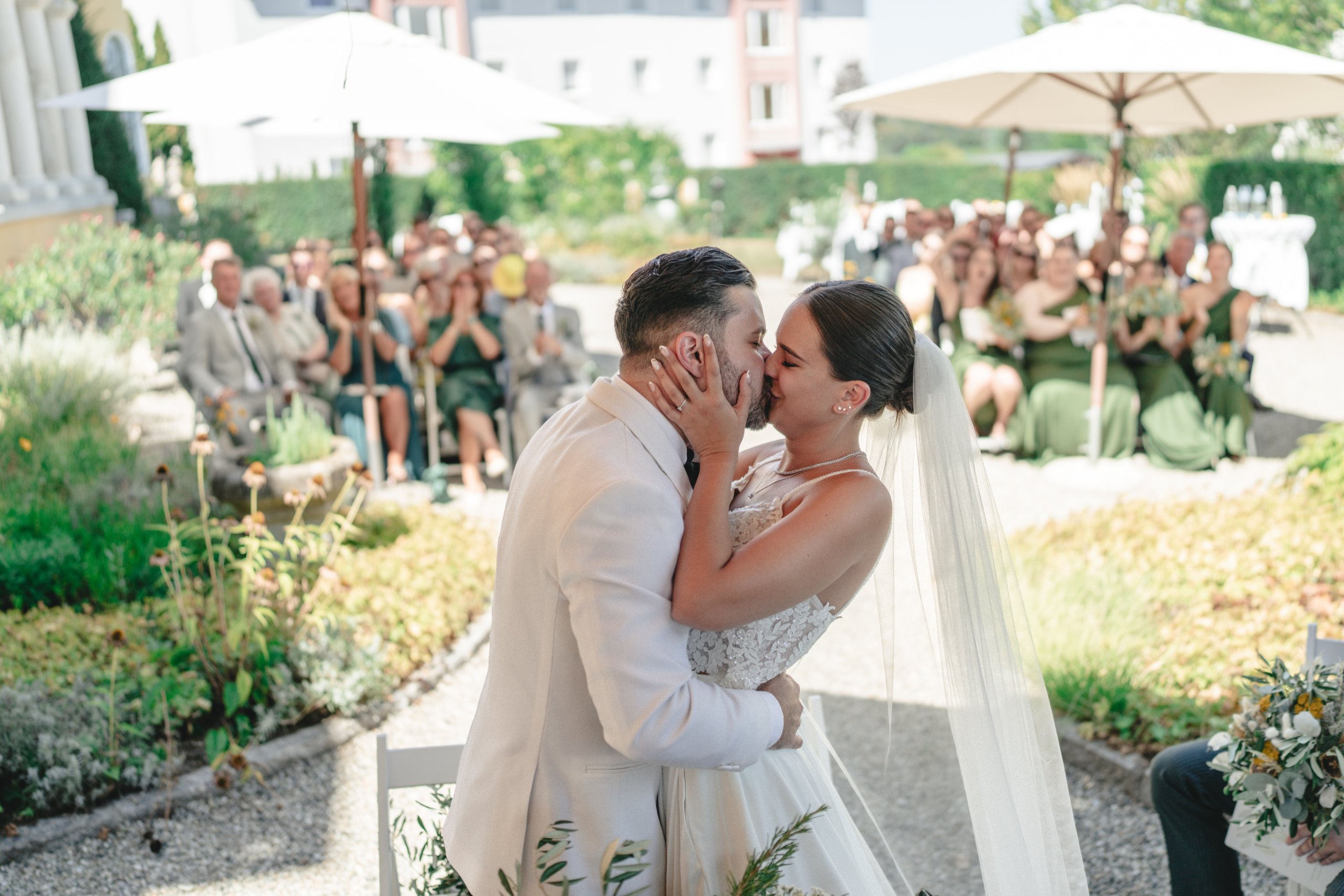 Photo: Ian P.