Founding photographerVerified — Identity verified by Lens & Vows
Valerio V.from €2,600
Rome & Lazio, Calabria +3 · Documentary, Fine artWedding photographers in Italy
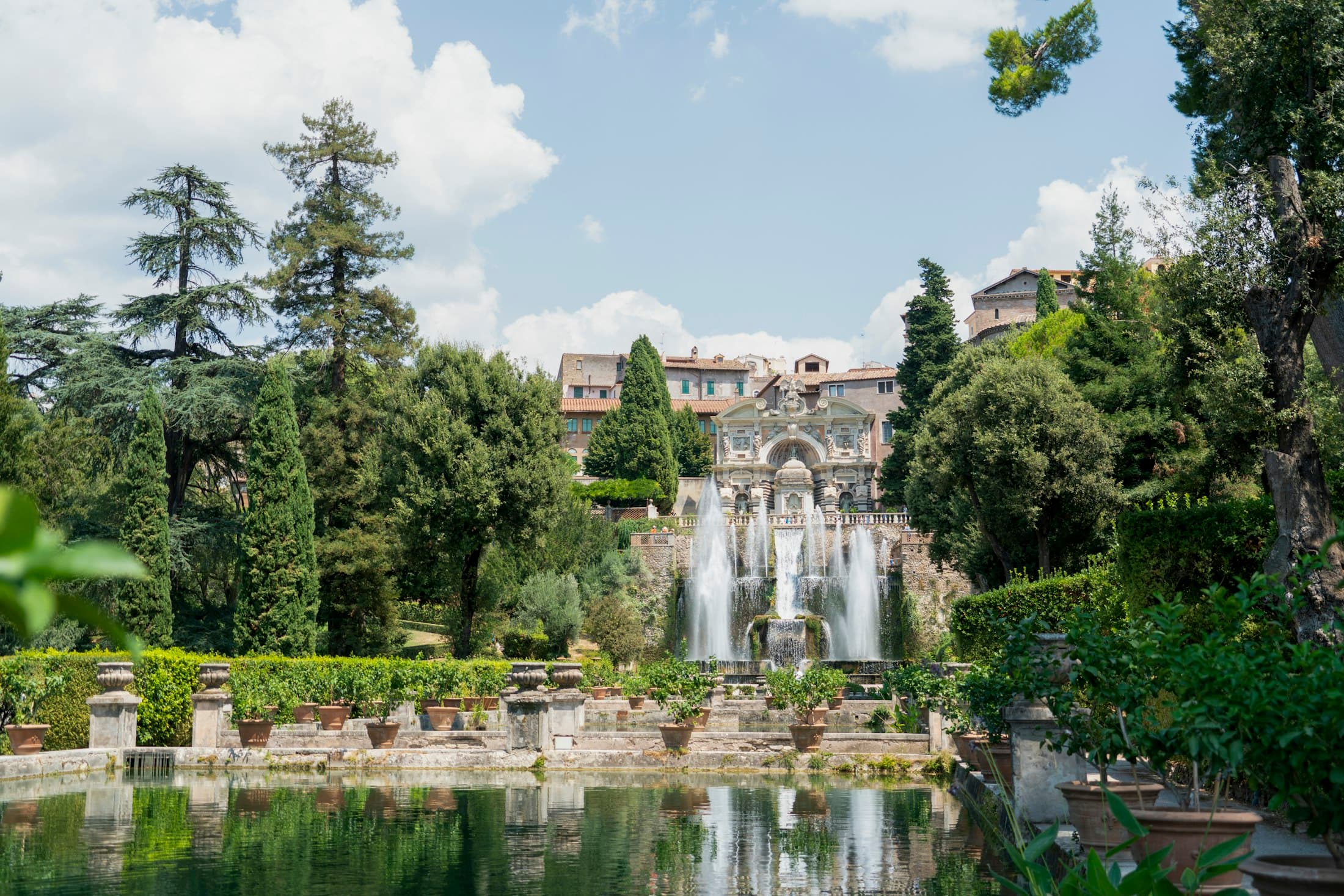
The hill town above Rome where a Renaissance water garden, an emperor’s villa and a waterfall gorge all host weddings, each with its own published rules.
Tivoli stands at about 235 metres, 32 km north-east of Rome, where the Aniene falls into its gorge.
It holds two UNESCO World Heritage sites: Villa d’Este, the terraced garden of fountains that Cardinal Ippolito II d’Este built after becoming governor of the town in 1550, inscribed in 2001, and Hadrian’s Villa, raised between AD 118 and 138 on at least 120 hectares in the plain below, inscribed in 1999. Above the gorge, the park of Villa Gregoriana opened in 1835, and two Roman temples still stand on the old acropolis.
What sets Tivoli apart is how much of this is open to a wedding, and how much of it is written down. The state institute that runs the two villas and the Sanctuary of Hercules Victor publishes a tariff for ceremonies; the comune marries couples in its own rooms, in the Rocca Pia and, with FAI, on the terrace of the temples. The ceremony comes with limits, though: thirty chairs, three hours, and gardens that shut before the best light. Most of the day has to be planned around them.
Photographers
They shoot everywhere in Rome & Lazio — in Tivoli too. Their whole weddings are on their pages.
See all 14 photographers





Booking through Lens & Vows
Ceremonies
The institute’s 2025 tariff lists the Gran Loggia and the Cardinal’s Chapel, the Sala di Noè, the Terrazzo della Pallacorda, the Gran Viale and the fountains of the Owl, the Organ and Neptune, with the Belvedere and the fishponds, at €4,000 each; the Fontana dell’Ovato at €8,000. That covers the “altar”, up to 30 chairs, 30 free entries and a photo or video session in the villa, for civil weddings, civil unions and symbolic rites; residents of Tivoli and its listed neighbours pay half. The comune names only the Gran Loggia and the Chapel for a legal ceremony and adds its own €250: ask both.
At Hadrian’s Villa, the Pecile, the Three Exedras, the Palaestra of the Great Baths, the Sala degli Stucchi and the Hall of the Philosophers cost €4,000 each, the Maritime Theatre and the Canopus €8,000. At the sanctuary, on its terrace high over the Aniene, the Sala di Mecenate, the Substructures, the Terrazzo di Mecenate and the Triportico cost €2,000 (April 2025). The comune’s undated page names the Pecile, the Triportico and the great hall for a legal wedding, and gives its older figures, so have the current one confirmed.
With FAI, the comune marries couples on the Terrace of the Acropolis, against the temples, on the upper belvedere of the Great Waterfall, in the area of Manlio Vopisco or in the Gae Aulenti visitor centre. The ceremony must end by 19:00 on Tuesdays and Wednesdays, starting from 10:00; from Friday to Sunday the slots are 10:00–12:30 and 16:00–19:00. The park’s fee, the same for residents and non-residents, is €1,000 on weekdays and €1,500 at weekends; the registry fee is €100, €150 on Saturdays or €250 on Sundays.
From Monday to Sunday, in the Sala Rossa, the former church of the Annunziata, the Scuderie Estensi, the Sala Roesler Franz or the Rocca Pia, the fortress Pope Pius II began in 1461. If neither of you lives in Tivoli, the Sala Rossa costs €95 in working hours and €190 outside them, the next three €150 and €200, the Rocca Pia €350 and €550. At weekends it is €750, or €1,500 at the Rocca. If one of you is resident the fees are lower, and the Sala Rossa is free in working hours.
Portraits
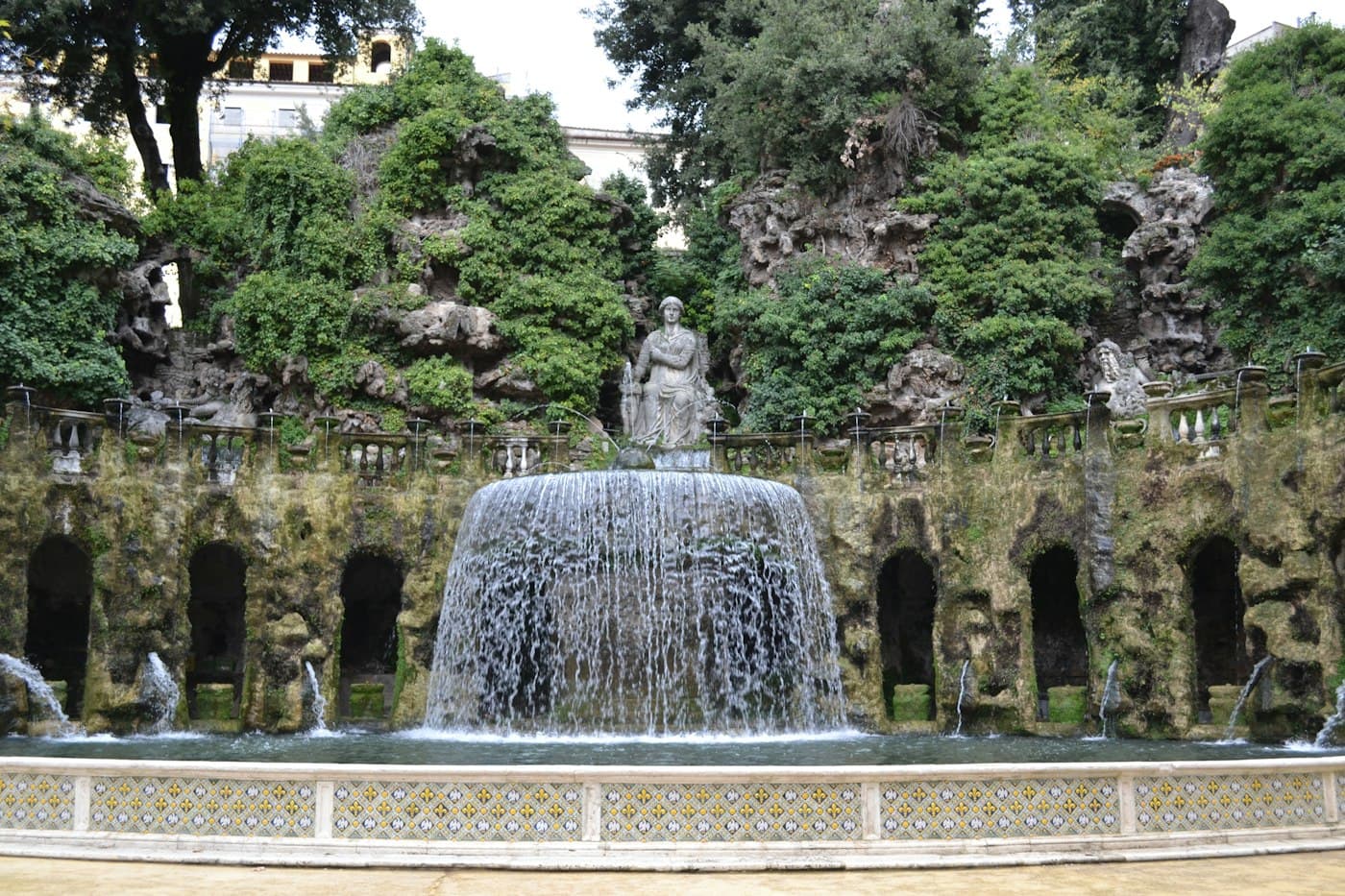
From the fishponds you look up the whole slope to the Fontana dell’Organo, with Neptune’s jets in front and the villa’s walls above. The water organ plays daily, starting at 10:30 and then every two hours, so plan the portrait around it.
A curved wall of water falling in front of a row of niches, with a statue and thick green above, and a low parapet of painted tiles. A ceremony here costs double the other places, but a photo session goes through the ordinary request.
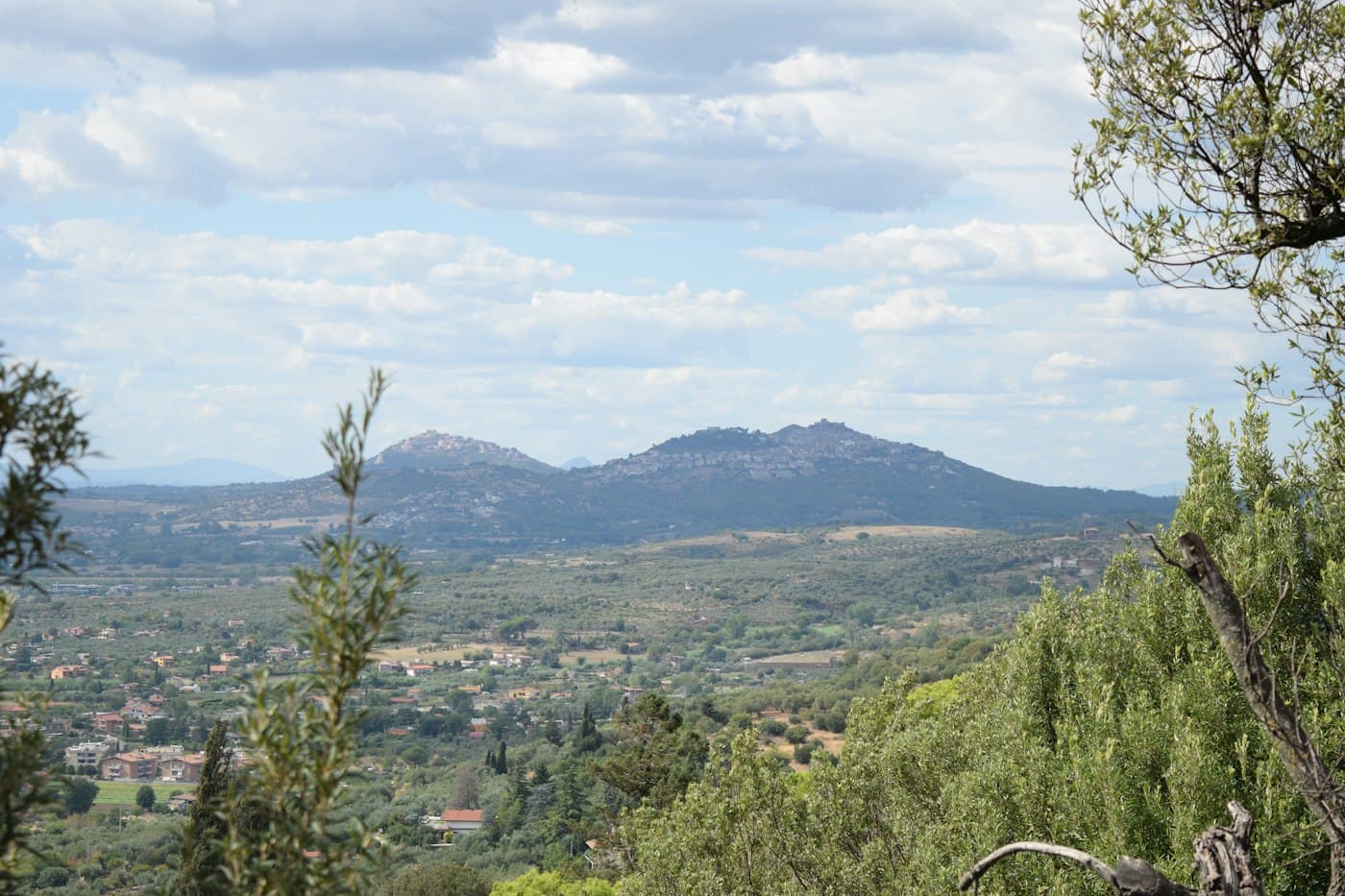
The round temple, of about 100 BC, and the rectangular one, of about 150 BC, stand on terraces over Villa Gregoriana. They are the backdrop to a ceremony on the park’s terrace, and the round temple’s address is via della Sibilla, in the town centre, so it stays close at hand after the villas’ gardens have closed.
A wooded park of 74 tree species, with steep paths down into the valley and a waterfall that FAI gives as over 100 metres, the second highest in Italy. Bring flat shoes for the descent, and ask FAI about a photo session: its page lists no rules.
About 40 hectares are open: the long wall of the Pecile, the pool and colonnade of the Canopus, the round Maritime Theatre. It is out in the plain, not in the town, so allow for the drive. The institute warns that its paths and slopes need proper shoes.
Through the year
The nearest station, Guidonia (89 m, Aeronautica Militare normals 1971–2000), lies well below the town. It gives average highs of 27.9 °C in June and 27.4 °C in September, 31.7–31.9 °C in July and August; rain is 44.8 mm on about 5 days in June, 80 mm on about 6 in September, and 102.5 mm on about 9 in October. The gardens close before the evening light: in June Villa d’Este’s last exit is 19:45, while on 15 June 2027 the sun sets at 20:46, with golden light from 20:04 to 21:07 (NOAA’s solar equations). On 15 September the sunset is at 19:19, golden light starts at 18:42 and the last exit is 19:15, so September gives half an hour of it inside. Heavy rain that raises the Aniene can shut off the fountains for a while.
Rome & Lazio, month by month
Practical
By car from Rome, the A24 to the Tivoli or Castel Madama exit, then the Tiburtina. Trains run from Roma Tiburtina on the Rome–Avezzano–Pescara line, a few from Termini; Cotral buses leave from Ponte Mammolo (metro B). Astral buses serve Villa d’Este, Hadrian’s Villa and Villa Gregoriana.
Paid parking at Piazza Massimo and Piazzale Matteotti, open round the clock, and at Hadrian’s Villa; free at Lunganiene Giuseppe Impastato (not on Wednesdays), Piazzale Gran Torino and Largo Saragat. Tour coaches drop guests at Piazzale Nazioni Unite and wait at Largo Saragat. Ask the comune about the centre’s traffic rules: the tourist site gives none.
A wedding photo session without a ceremony needs the institute’s form, sent to va-ve.fotomatrimoni@cultura.gov.it: €500 at Villa d’Este or Hadrian’s Villa, €250 at the sanctuary, half for residents of the listed towns, with five tickets covering the couple, the photographers and anyone else. It excludes the palace’s rooms and any drone. Anywhere in Italy, a drone may not fly above 120 metres or over a gathering of people.
Ceremonies run every day except 1 January, 25 December and the first Sunday of the month, from 10:00 to closing time, for at most three hours including setting up and clearing away. Requests go in 30 to 40 working days ahead. Receptions are a separate concession, with their own fees, insurance and deposit, and a paid evening opening is possible.
If neither of you lives in Italy, Tivoli needs no banns: you bring a nulla osta or certificate of capacity from your own authorities, and non-EU consular signatures are legalised at the Prefettura. An interpreter must attend if either of you doesn’t speak Italian. Our guide to getting married in Italy sets out the steps.
Questions
The institute that runs it lists civil weddings, civil unions and symbolic rites in its 2025 tariff, under an agreement with the comune dating from 2019. The comune’s page names the Gran Loggia and the Cardinal’s Chapel and still says the service is coming “soon”, so write to both offices before you fix a date.
The ceremony fee includes up to 30 chairs and 30 free entries to the site. Any larger plan, or a reception, goes through the institute’s concession request, which is priced by the number of guests.
Yes. Send the institute’s form with your details and your photographer’s: €500 at Villa d’Este or Hadrian’s Villa and €250 at the Sanctuary of Hercules Victor, with five tickets included. The rooms of Villa d’Este’s palace and drones are excluded, and the photographs are for your personal use only.
Not at the villas: the institute’s regulation, in its rules for indoor spaces, bans throwing rice, confetti and petals, real or synthetic, along with sparklers, sky lanterns and fireworks. For anywhere else in the gardens, ask when you book.
Italy gives same-sex couples a civil union (unione civile), not marriage. The comune forms civil unions before its registrar, and the institute’s tariff lists them next to civil weddings at the villas.
June and September: average highs of about 28 °C at the station below the town, with rain on five or six days a month. July and August pass 31 °C there, and October is the wettest of these months. In September the villa’s closing time leaves some golden light in the gardens.
Rome & Lazio
Plan
Not sure yet?
The place, the date, the guests, the photos you like. Our concierge checks who is free and fits, and comes back with photographers to choose from.