Founding photographerVerified — Identity verified by Lens & Vows

Andrea F.from €1,850
🇮🇹 Puglia, Rome & Lazio +6, Italy · DocumentaryWedding photographers in Italy
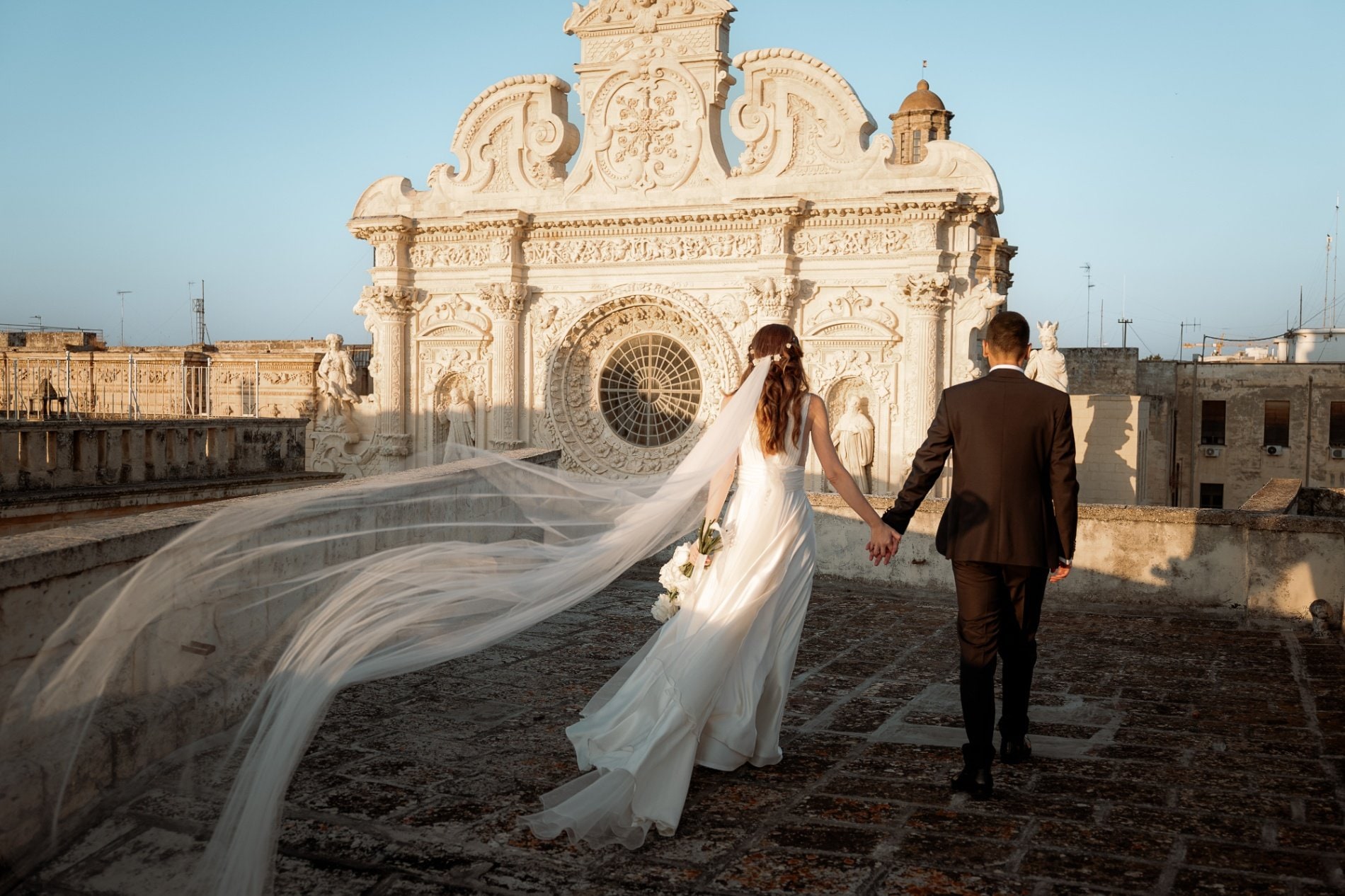
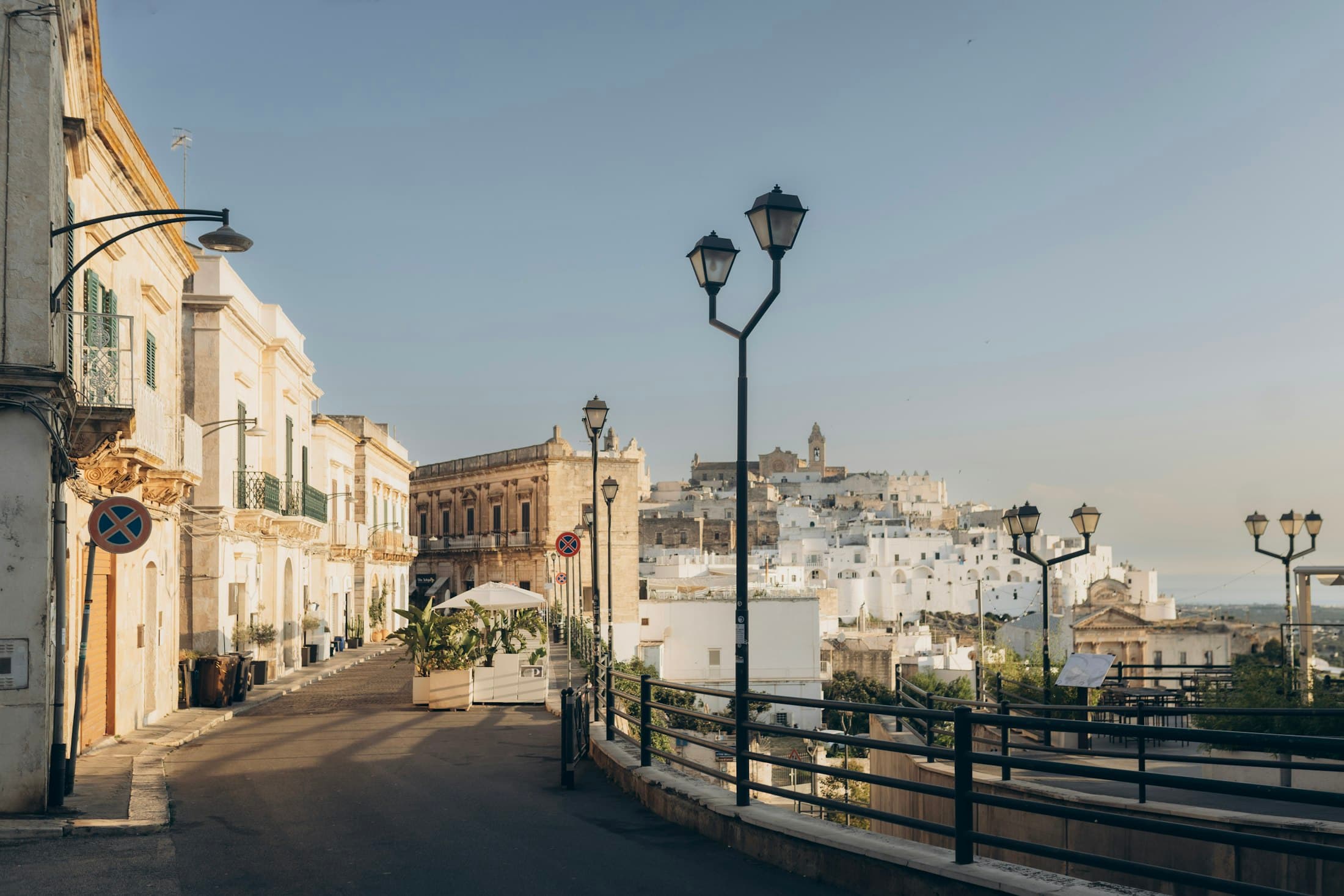
Masserie that are legal wedding places around Ostuni, Lecce’s baroque, the trulli of Alberobello and two coasts, with sunset over the land on one and the Ionian on the other.
Puglia is the heel of Italy, long and flat by Italian standards, and it is a country wedding more than a city one.
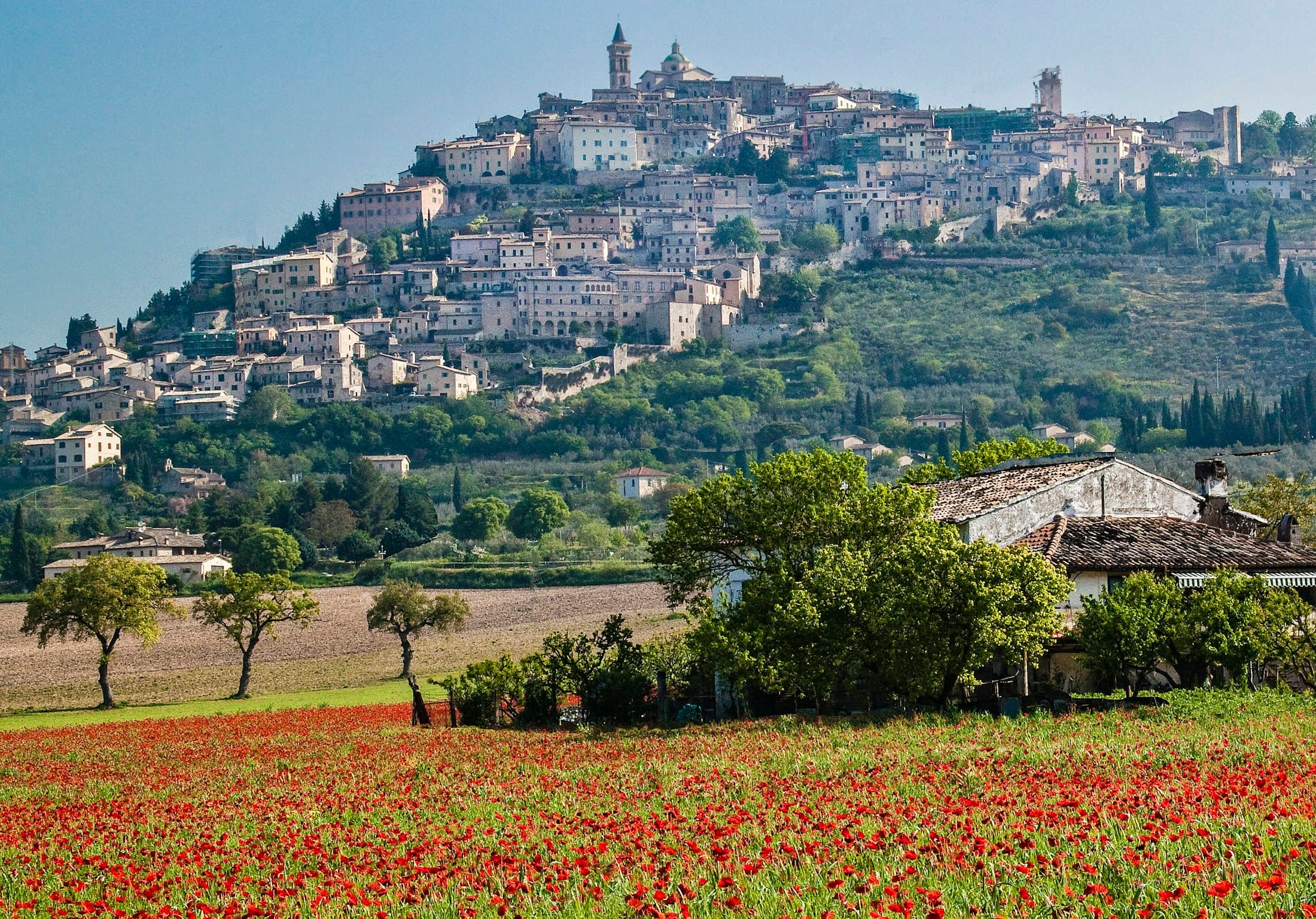
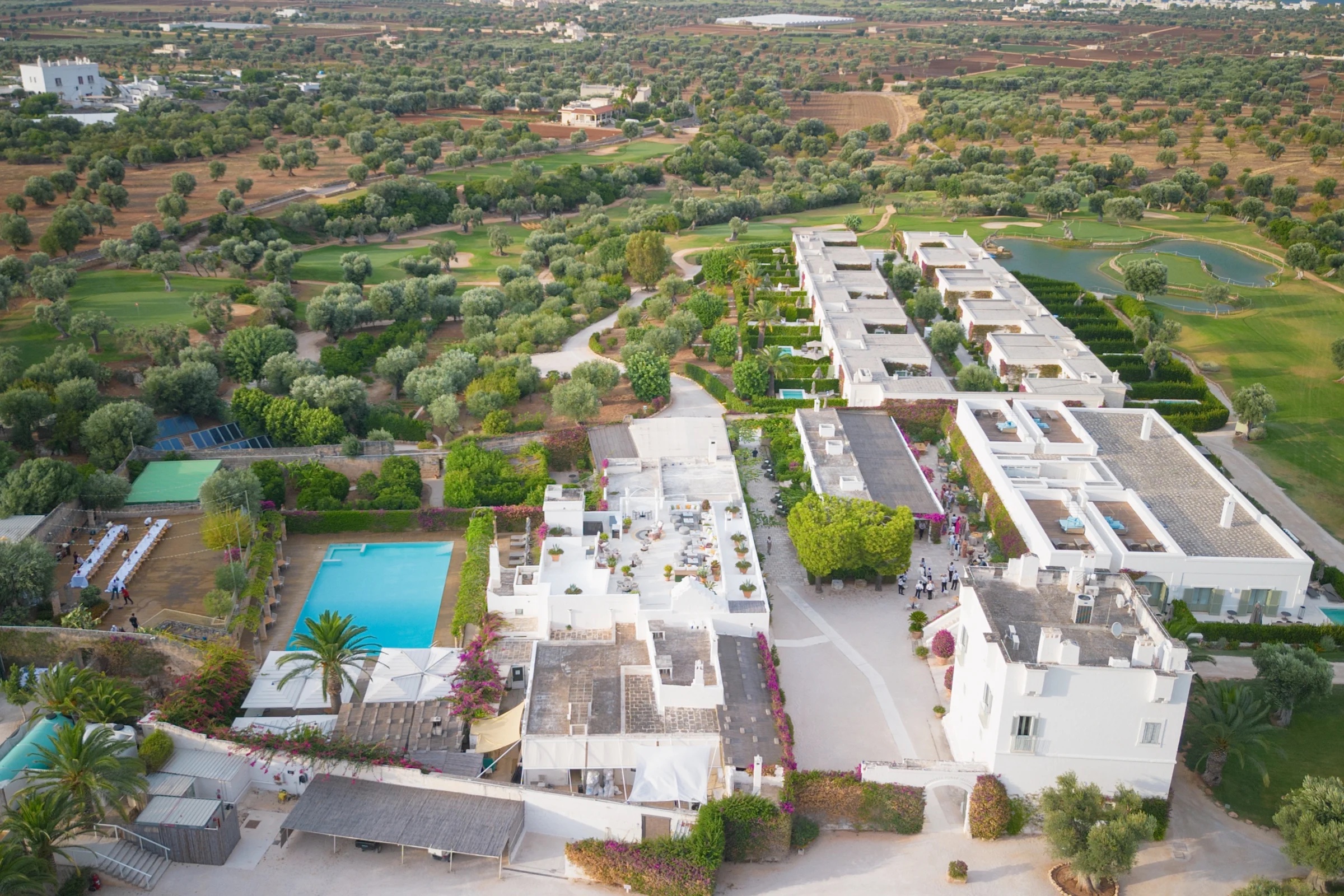
The building that defines it is the masseria, a fortified farmhouse among olive trees, with white walls and a courtyard big enough for a long table. The Valle d’Itria holds Alberobello’s trulli, a UNESCO site since 1996, and white Ostuni on its hill, 7 km from the Adriatic. Further south, in the Salento, is Lecce, whose churches and palaces are carved in a soft honey-coloured stone. The Adriatic runs down one side, with Polignano’s cove and Monopoli’s old port, and the Ionian down the other.
The usual plan is one masseria for everything: ceremony, dinner and bedrooms in the same place, and a very long evening. What sets Puglia apart legally is how far some comuni have gone. Ostuni has made more than a dozen masserie, relais and hotels into separate civil registry offices, so the registrar comes to you and the ceremony among the olive trees is the real one. Elsewhere you may find that a masseria’s ceremony is symbolic, even if its listing says “civil”, because only the comune can make it legal. Ask which comune has listed the venue, and check with that registry office before you sign.
Photographers
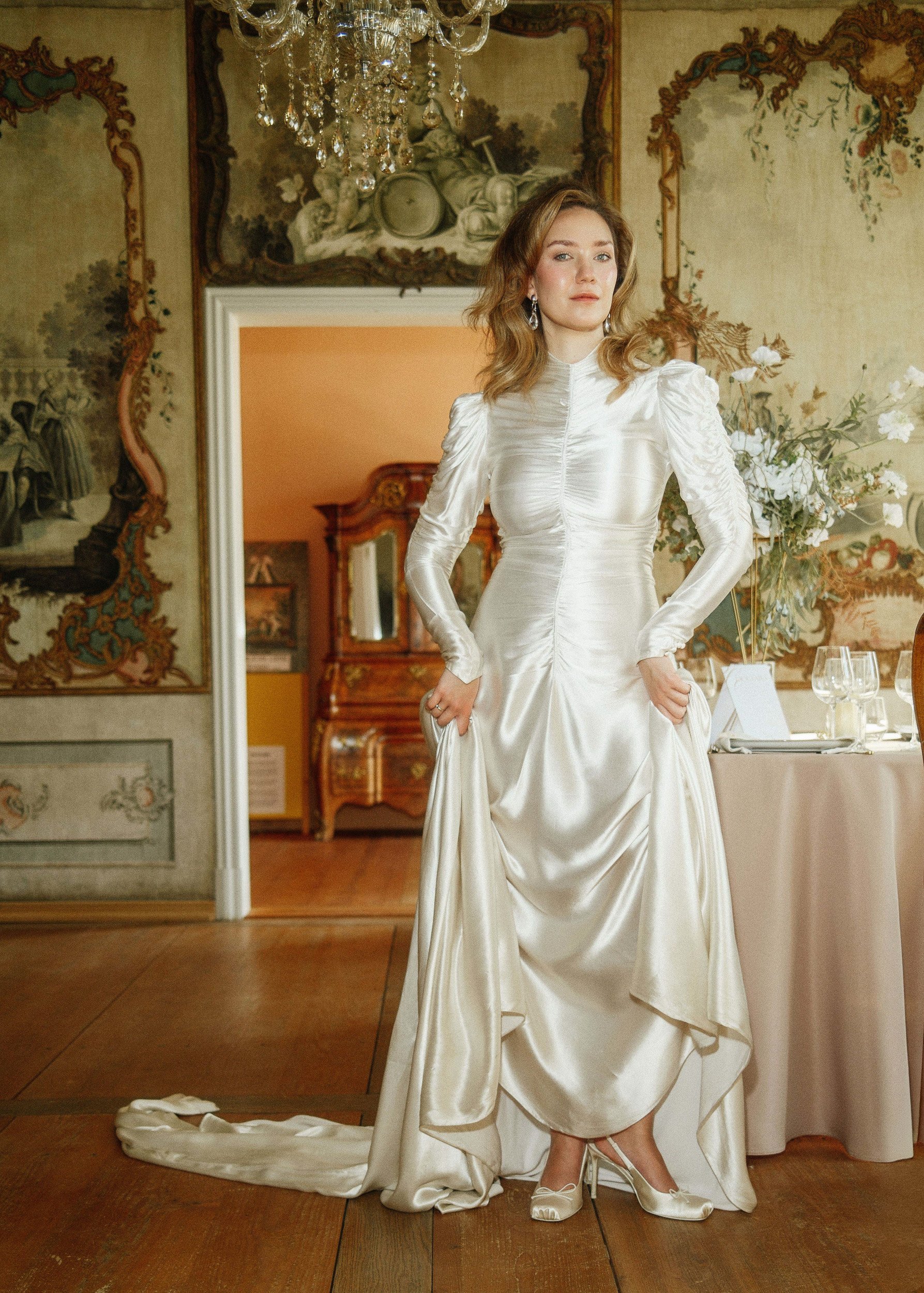
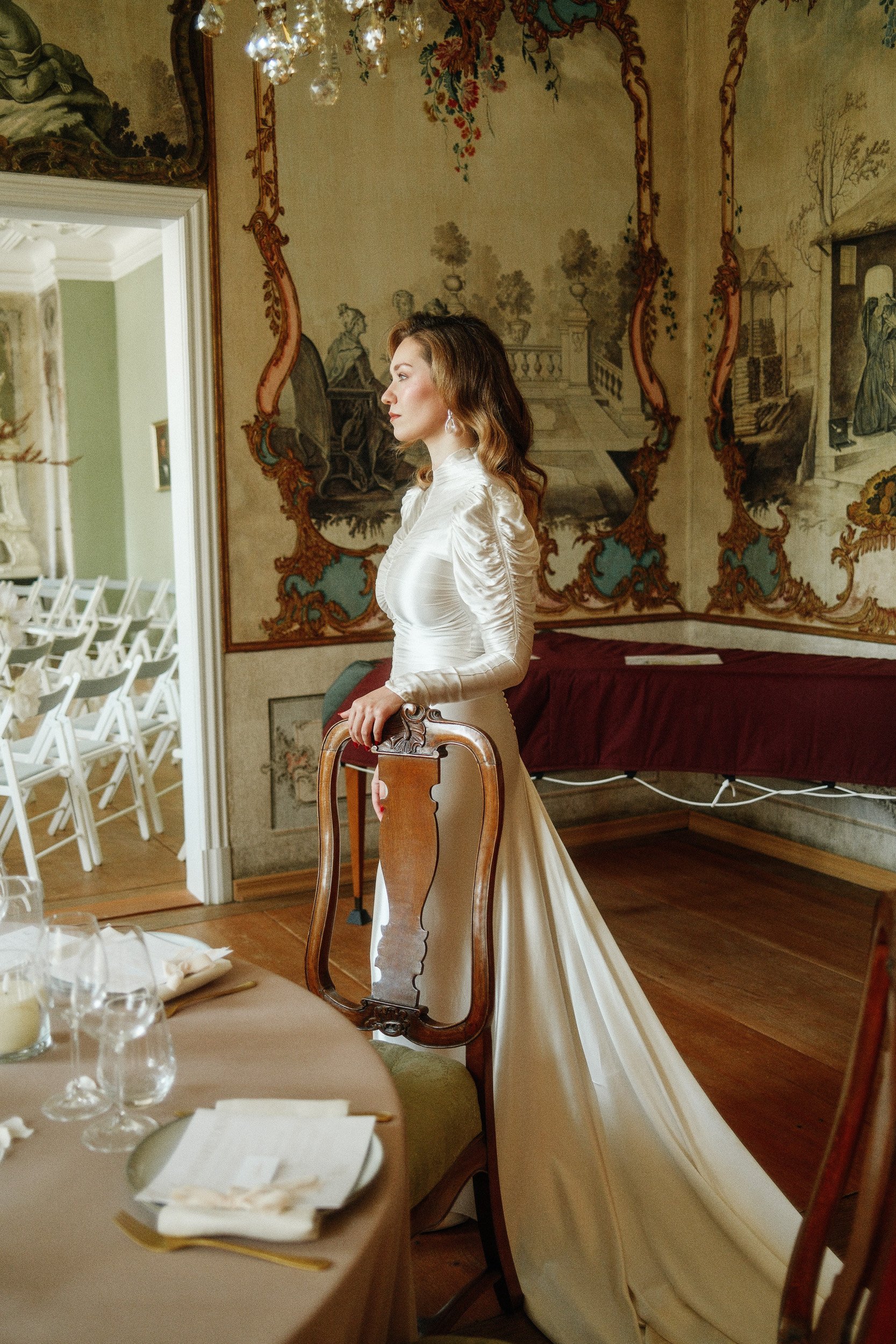
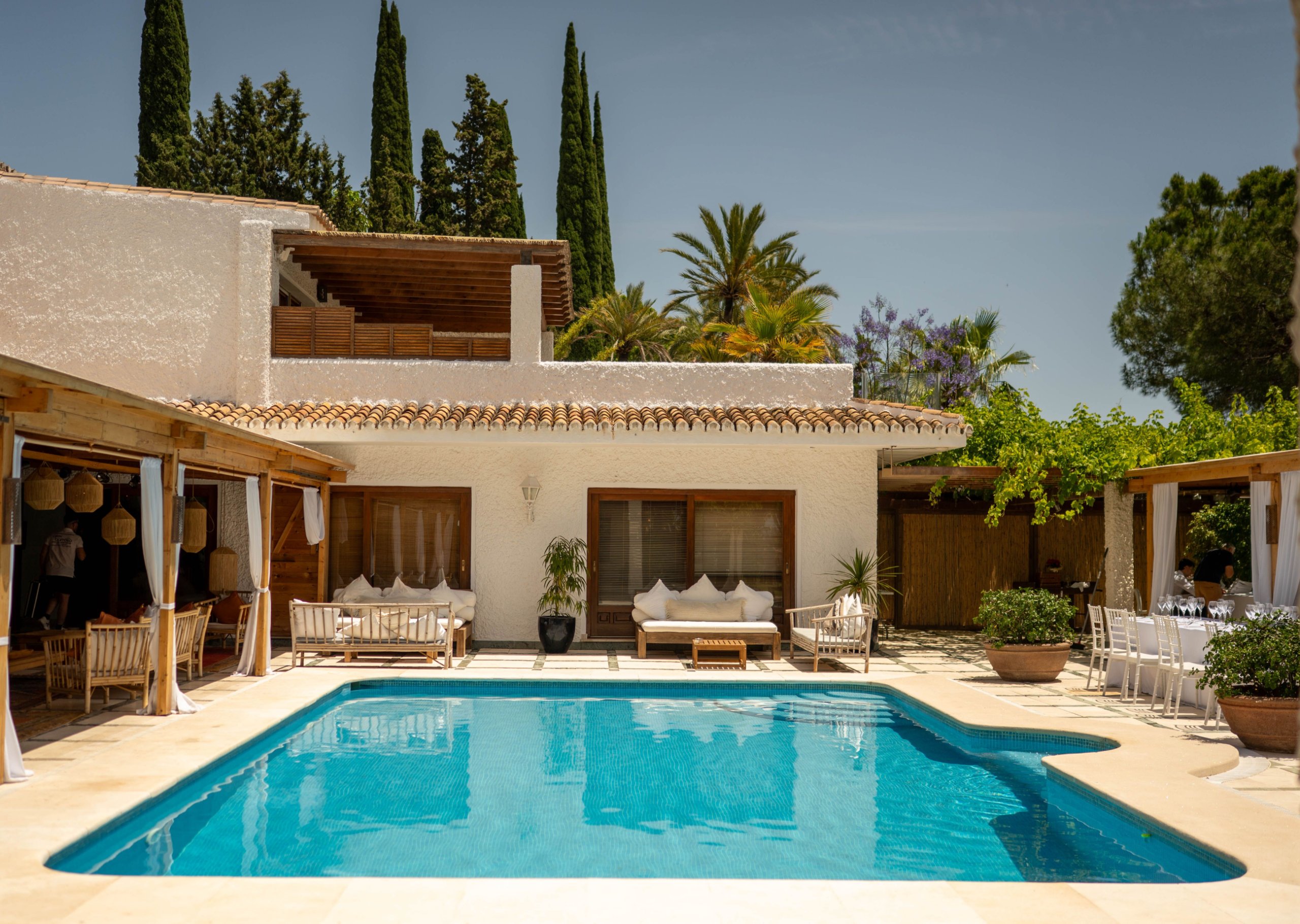
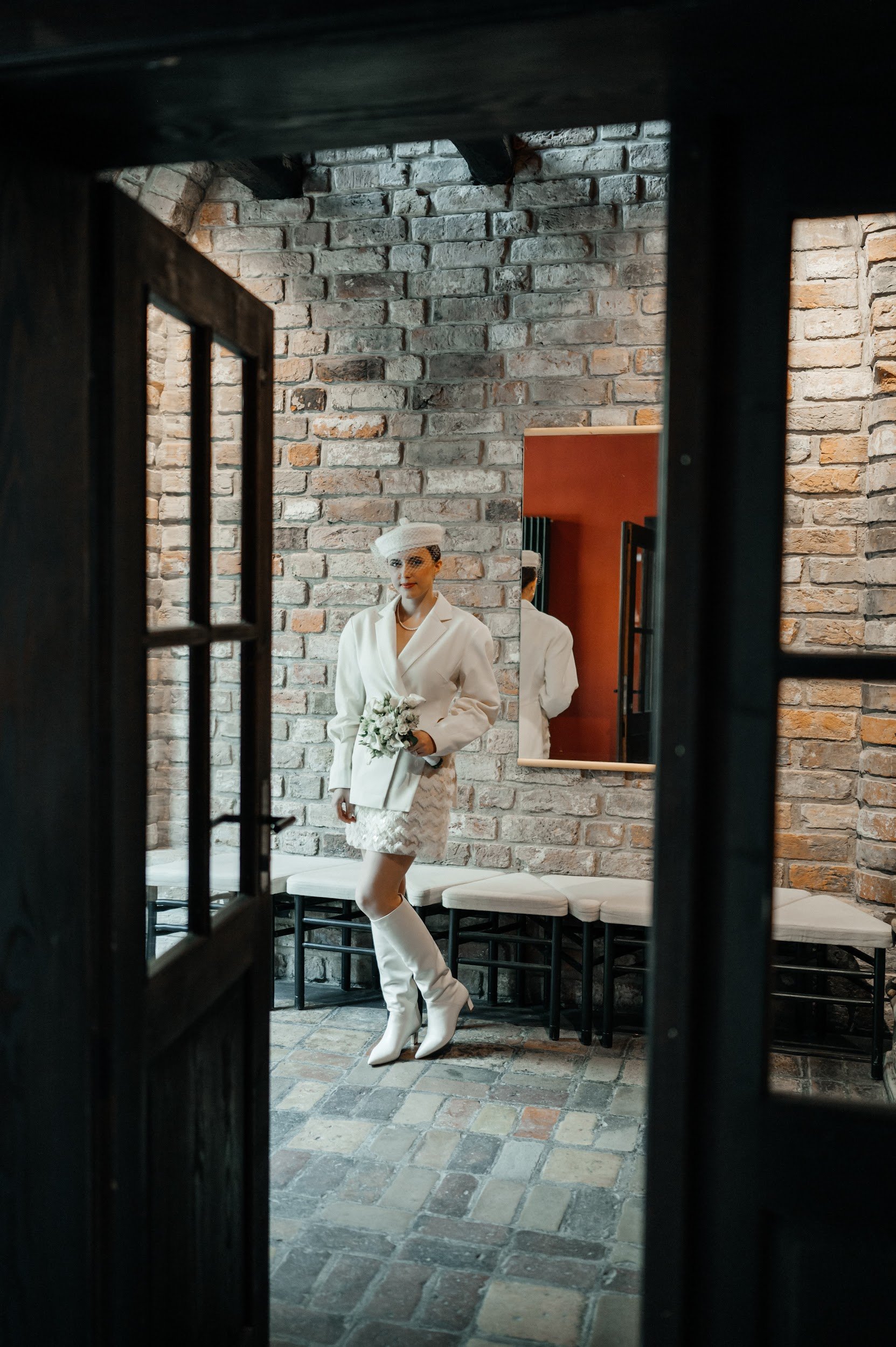
They shoot here and know the light. Their whole weddings are on their pages.
See all 29 photographers



Booking through Lens & Vows
Through the year
May, June and September are the classic months. At Bari Palese the highs average 22.8 °C in May, 26.8 °C in June and 25.9 °C in September, against 29.2 °C in July and August, and rain falls on only three to five days a month from May to September. It’s one of the driest parts of Italy, with about 560 mm a year at Bari. Brindisi, closer to the Salento, has rain on just 2 or 3 days a month from June to August. That doesn’t mean summer is easy: inland towns can be hotter than these stations on the coast, the sun is high and shade is rare. October is still warm (21.5 °C at Bari), with rain on about six days, and the sea often warm enough. By the Salento’s beach clubs, August is noisy and fully booked.
Weather station: Bari Palese, normals 1971–2000 · Checked 1 November 2026
Places
The kinds of places — ask your photographer which ones they know well.
Ostuni’s comune lists more than a dozen masserie, relais and hotels for civil weddings, and added two in October 2025. It also marries couples at the town hall, Palazzo San Francesco, in the Salone dei Sindaci and the cloister next door, and at the archaeological park of Santa Maria d’Agnano. Whitewashed lanes bounce a soft light even at noon. At Alberobello, where the trulli of the Rione Monti and Aia Piccola are a UNESCO site, the crowd is the problem: go in the first hour of the day. Its comune’s wedding rules weren’t something we could confirm, so ask the registry office directly. Olive groves and cone-roofed trulli appear all over the valley, so you don’t need to be in the town to have them in the photographs.
Lecce’s open data lists six civil-wedding places: the Sala Giunta in Palazzo Carafa, the hall and garden of the Conservatorio Sant’Anna, the Villa Comunale, the Circolo Tennis Mario Stasi by the triumphal arch and, with works being finished when the list was published in 2024, the Convento degli Agostiniani. The cathedral’s rules are worth reading: a photographer must keep off the presbytery and use a single fixed light, no drapes or flowers on the pews, no rice at the door. The baroque stone goes golden in the last hour, so Piazza del Duomo is best late on. South-east, Otranto’s Aragonese castle is suggested by planners for ceremonies, and the fee quoted is years old, so ask the comune.
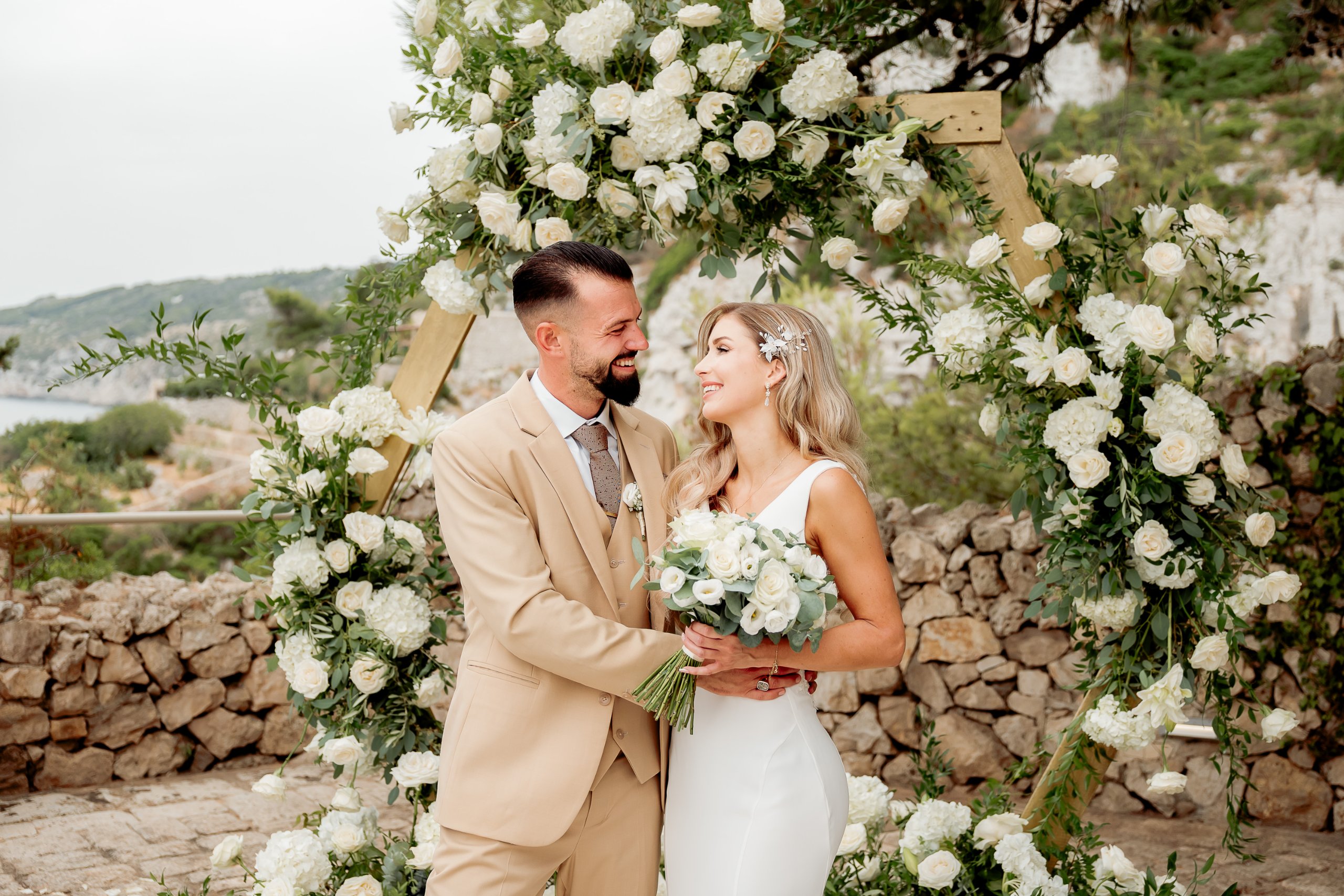
Around Fasano, Monopoli and Ostuni are a great many masserie that host weddings, and the listings for several, such as Masseria Salamina at Fasano and Masseria Grieco at Ostuni, mention civil ceremonies. Treat that as a question to put to the comune. The old olive trees are the backdrop people come for, ancient and twisted, and at golden hour you can take portraits without leaving the venue. Be aware of one sad fact, though: in the Salento, the Xylella bacterium has killed millions of olive trees, especially around Gallipoli, and some groves are bare grey skeletons. If the view matters to you, go and see it, or look north of Lecce, in the Valle d’Itria.
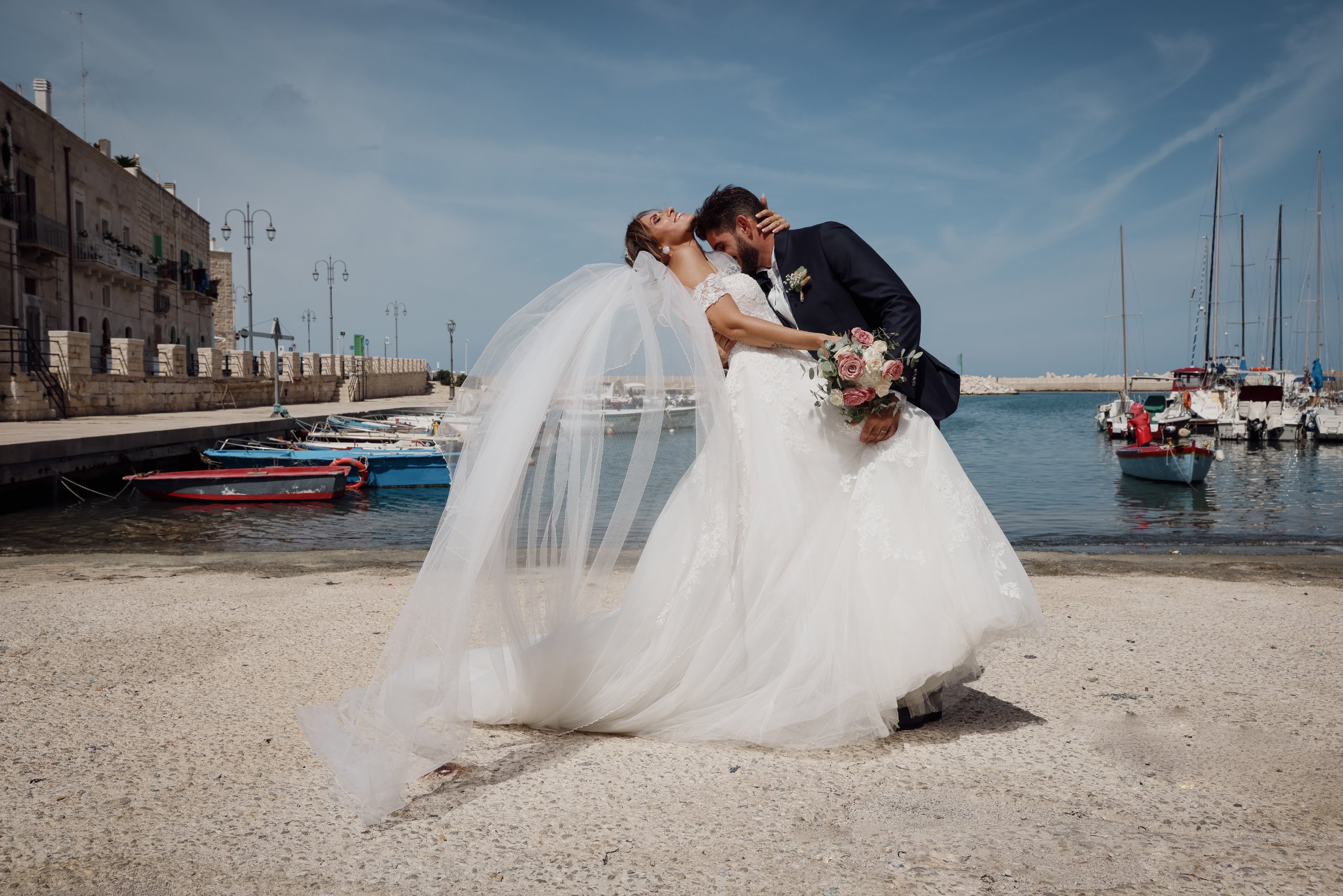
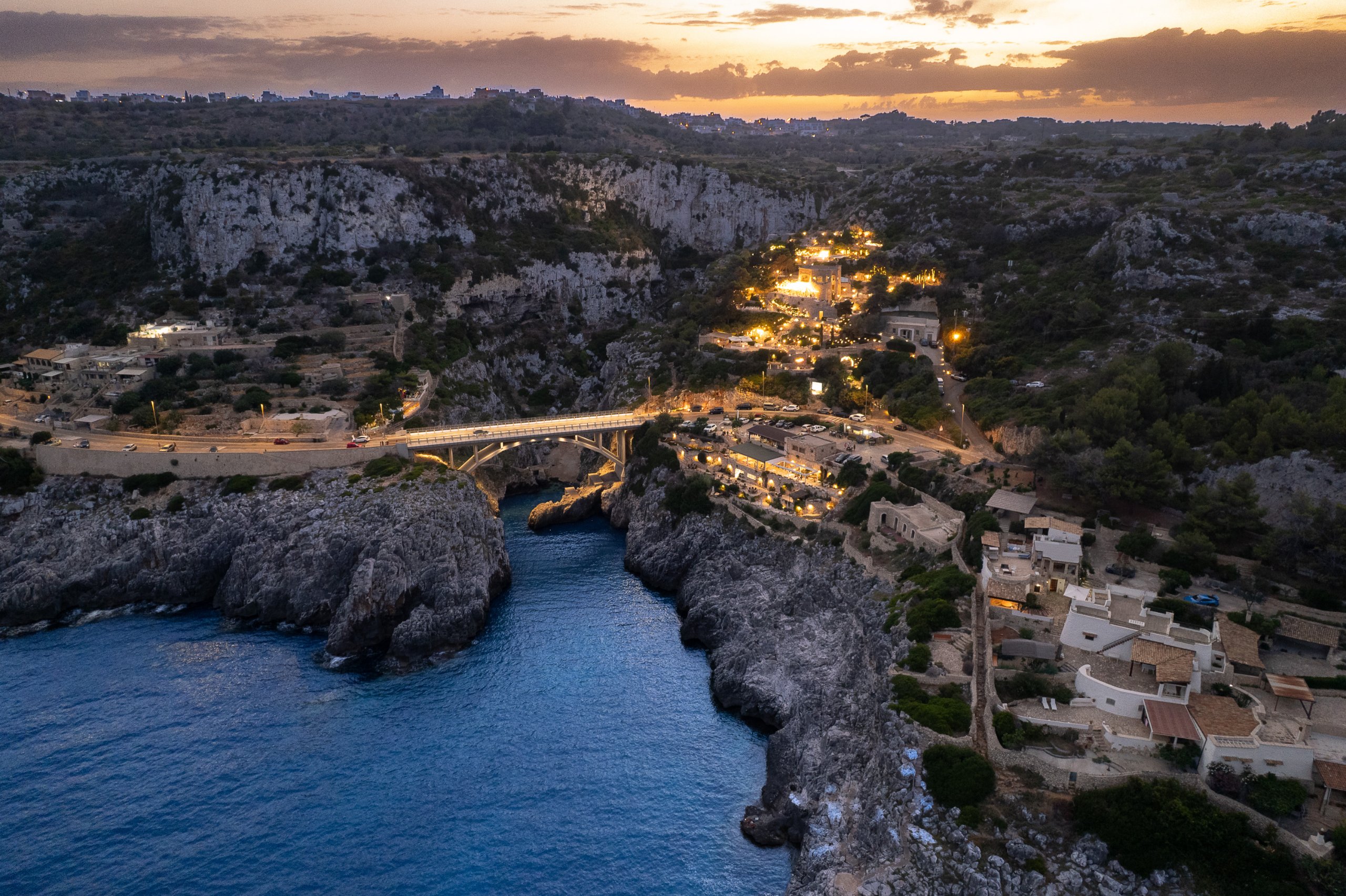
Polignano’s Lama Monachile is a narrow cove between cliffs right below the old town, crossed by a bridge on the old Via Traiana, and Monopoli’s old port has fishing boats painted blue. Both fill up quickly in summer, so go early. A ceremony on the sand is a different matter from a photograph on it. The beach is state property, the concessionaire controls its own stretch, and planners warn that the rules vary from one place to another, so ask the comune’s demanio office and the beach club before you plan anything. On Ostuni’s coast, the Parco delle Dune Costiere has nature reserves and areas closed to cars and boats, so ask where you may go.
Towns
Each with a page of its own: where couples marry there, where to take portraits, the practical side.
Light
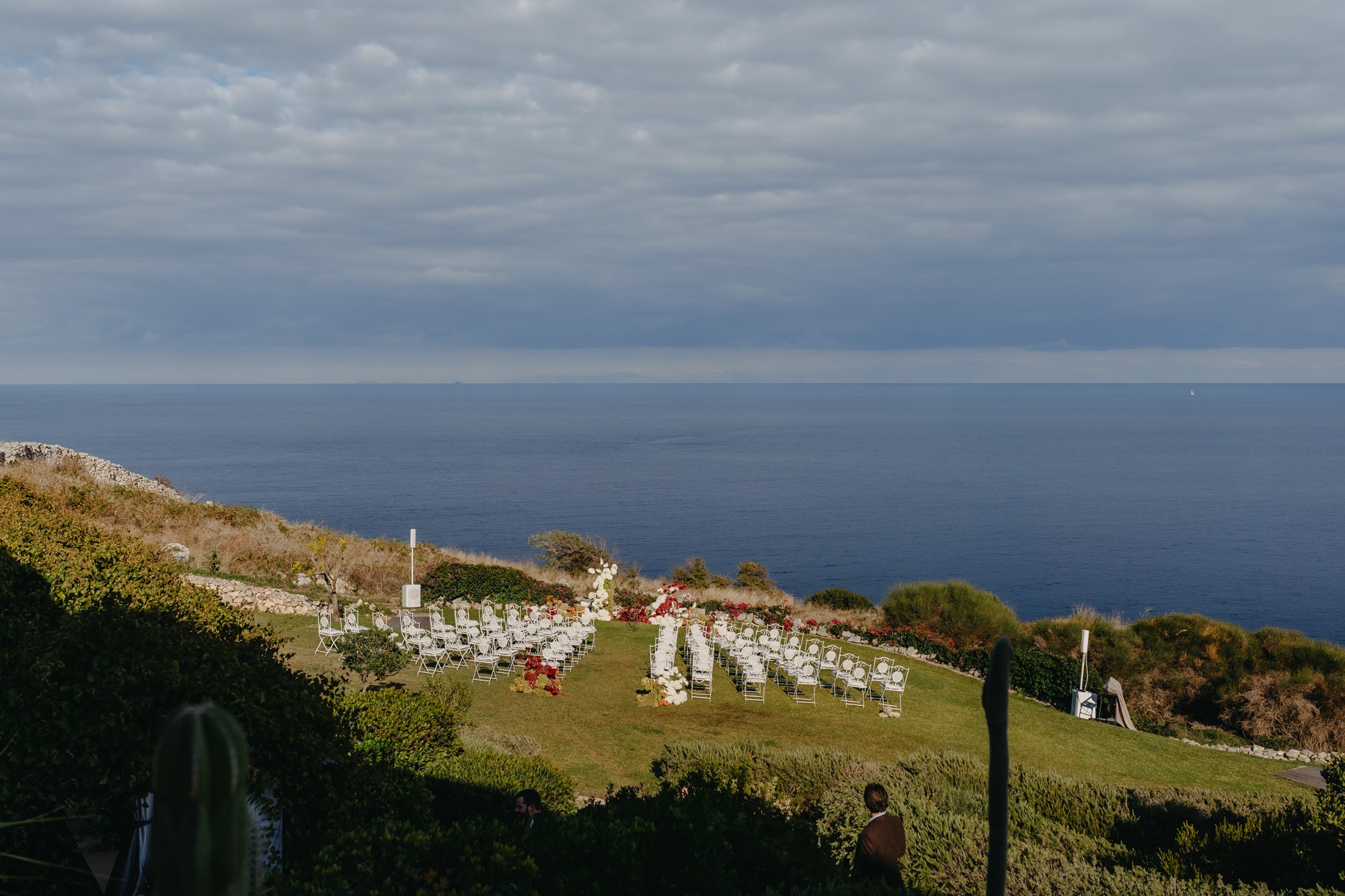
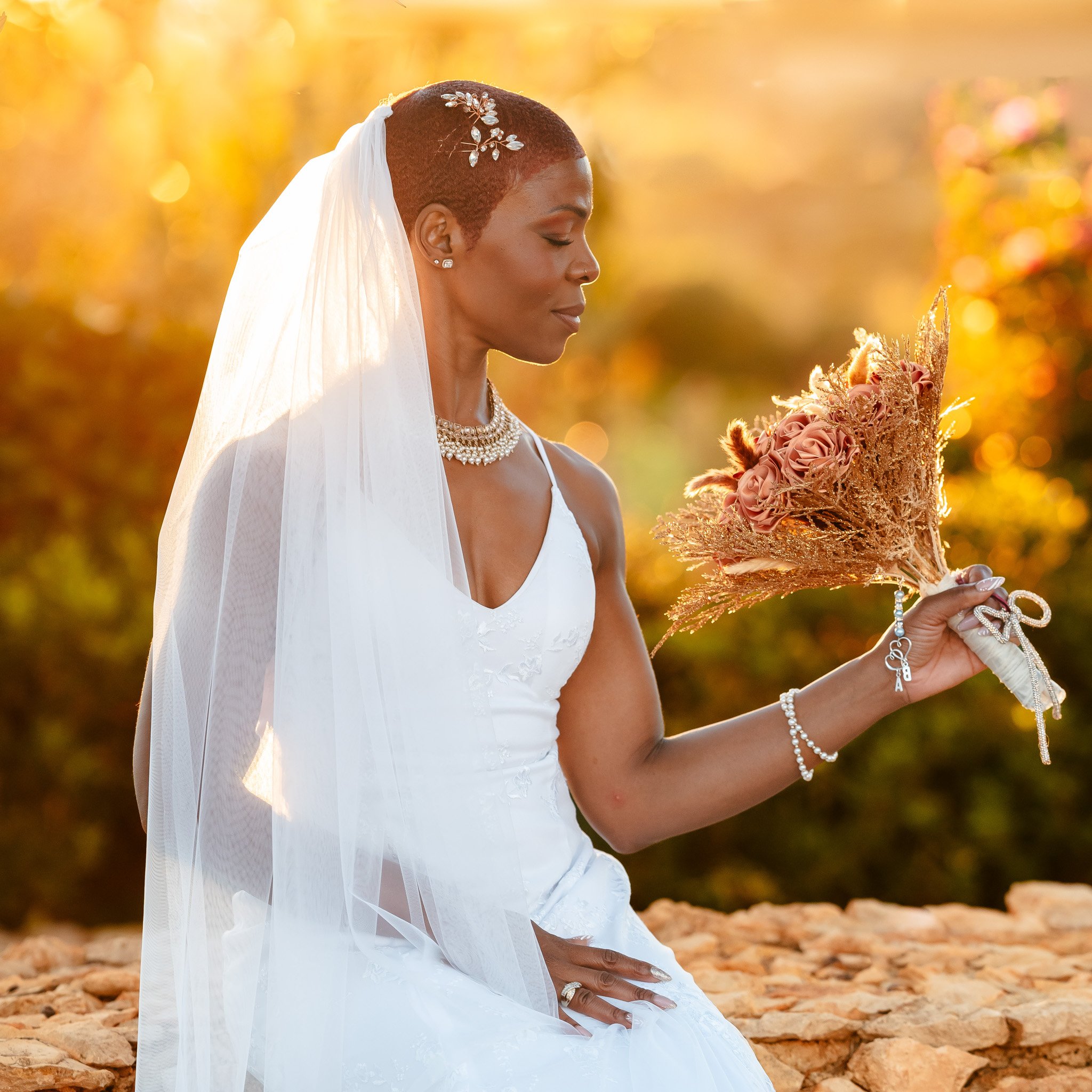
This is the far east of the time zone, and that catches people out: on 21 June the sun sets at about twenty past eight, against nine in Tuscany, and at midwinter before half past four. Most masserie are on flat or gently sloping land, so the sun stays up until the very end and then drops fast: civil dusk is only half an hour later. On the Adriatic side you watch it set over the land rather than the sea, with the morning sun coming up from the water, so a sunrise on the rocks at Polignano can be worth the alarm clock. For the sun going into the sea, go to Gallipoli on the Ionian. White walls are hard at noon, and soft and bounced in the first and last hour.
Travel
Puglia has two airports, Bari for the north and Valle d’Itria, Brindisi for Ostuni and the Salento, and the roads are easier than on the Amalfi Coast. From Brindisi it’s 39 km to Ostuni, 44 km to Lecce and 89 km to Otranto, about 80 minutes. From Bari it’s 51 km to Polignano, 69 km to Alberobello, 99 km to Ostuni (about 80 minutes) and 166 km to Lecce (a little over two hours). Lecce to Gallipoli is 39 km. Trains run down the Adriatic between Bari and Lecce, and Ostuni’s station is about 2 km from the centre. For a wedding at a masseria, book shuttles, since it’s dark, unlit country lanes after dinner and many guests will have drunk. Drones are banned over parks and reserves without permission and over gatherings under EU rules, so ask your masseria first.
Real weddings
Featured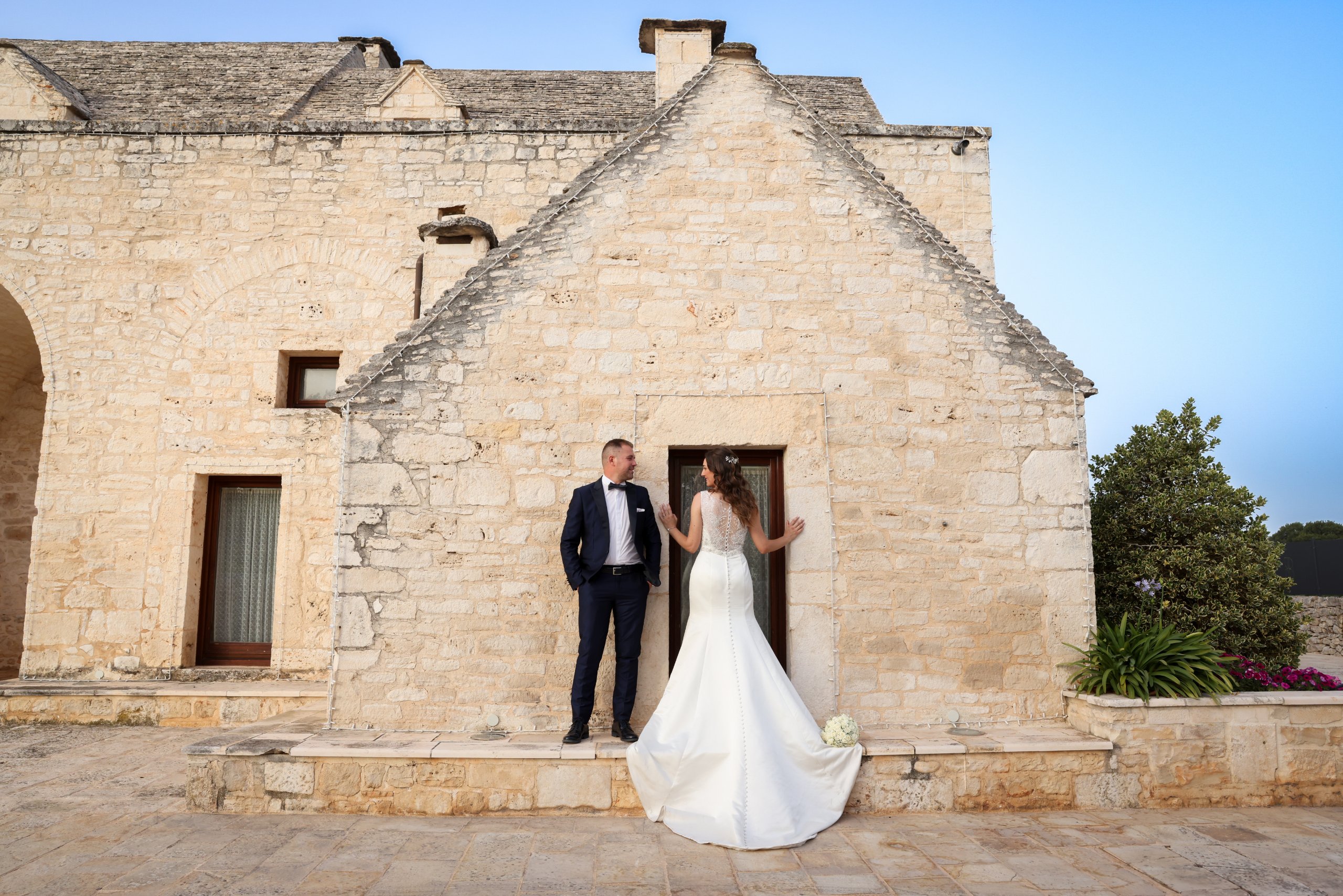 Featured
Plan
Italy
 Photo: Marco S.