Verified — Identity verified by Lens & Vows

Antoine P.from €2,500
Namur & the Meuse Valley, Brussels & Brabant +29 · Documentary, EditorialBased in France · travels to weddings in BelgiumWedding photographers in Belgium
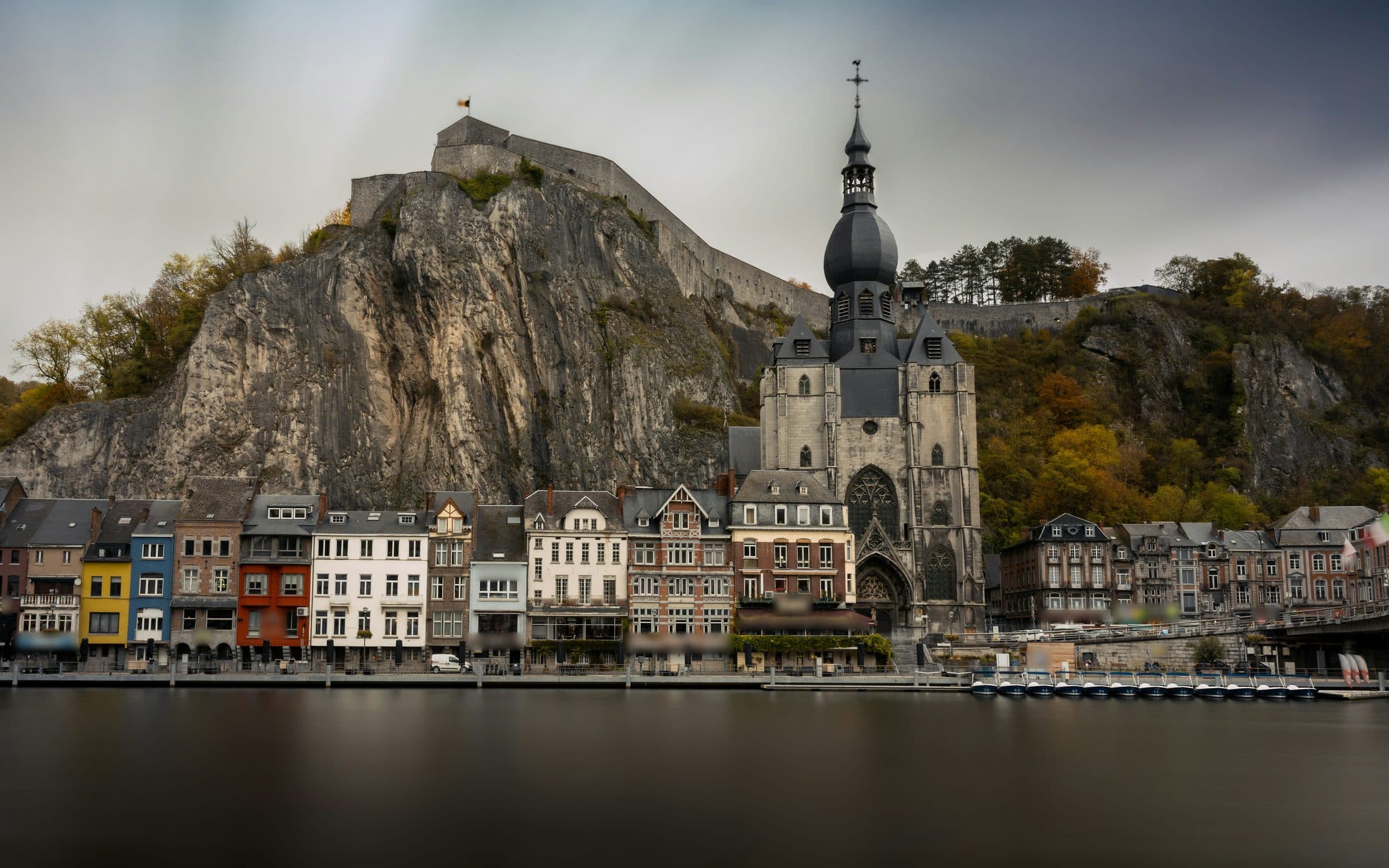
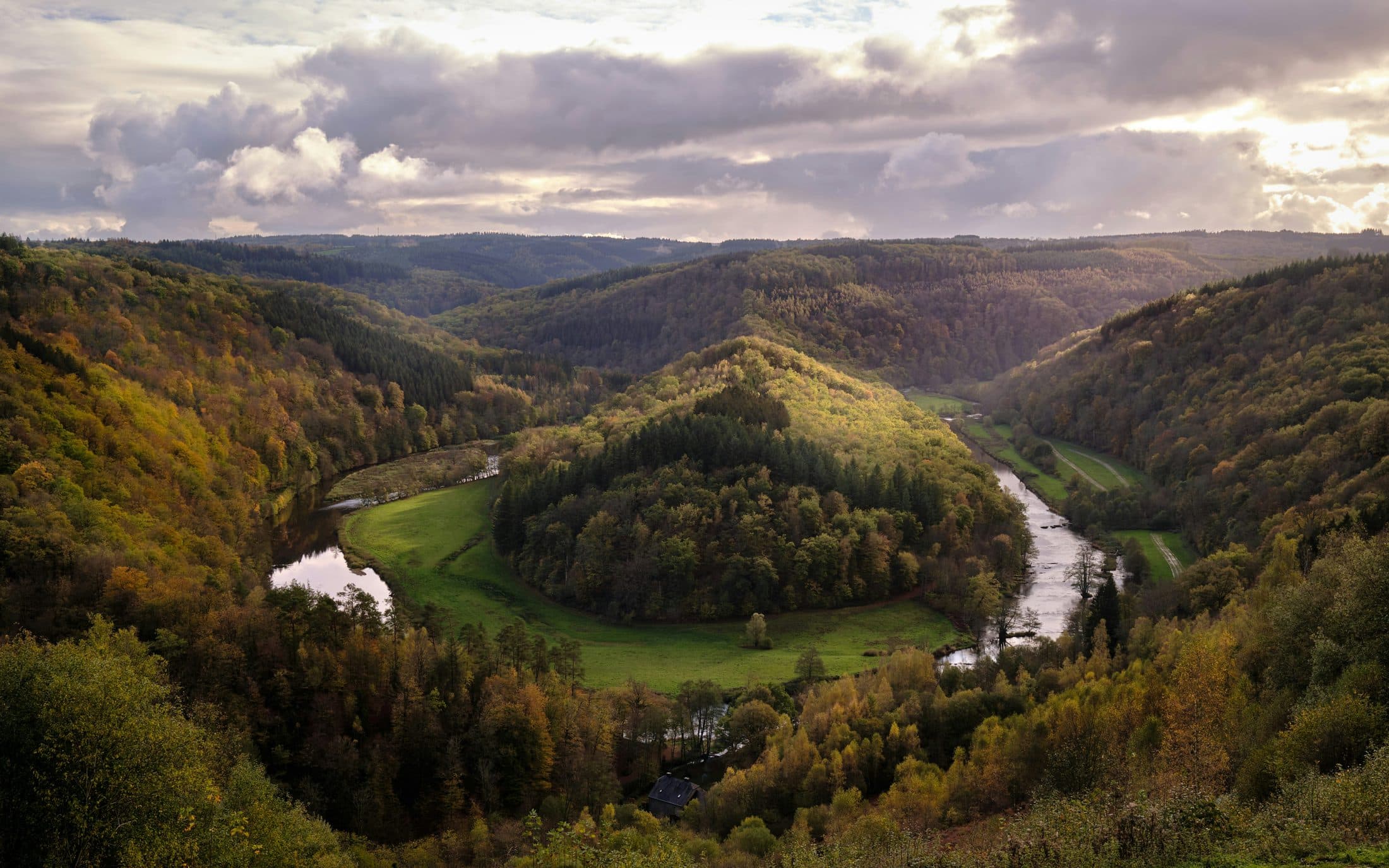
A river valley of cliffs, citadels and water gardens, about an hour from Brussels: Namur where the Sambre meets the Meuse, Dinant’s bulb-topped church under its rock, the gardens of Annevoie and Freÿr along the river, the village of Crupet and the Lesse winding below Walzin’s castle.
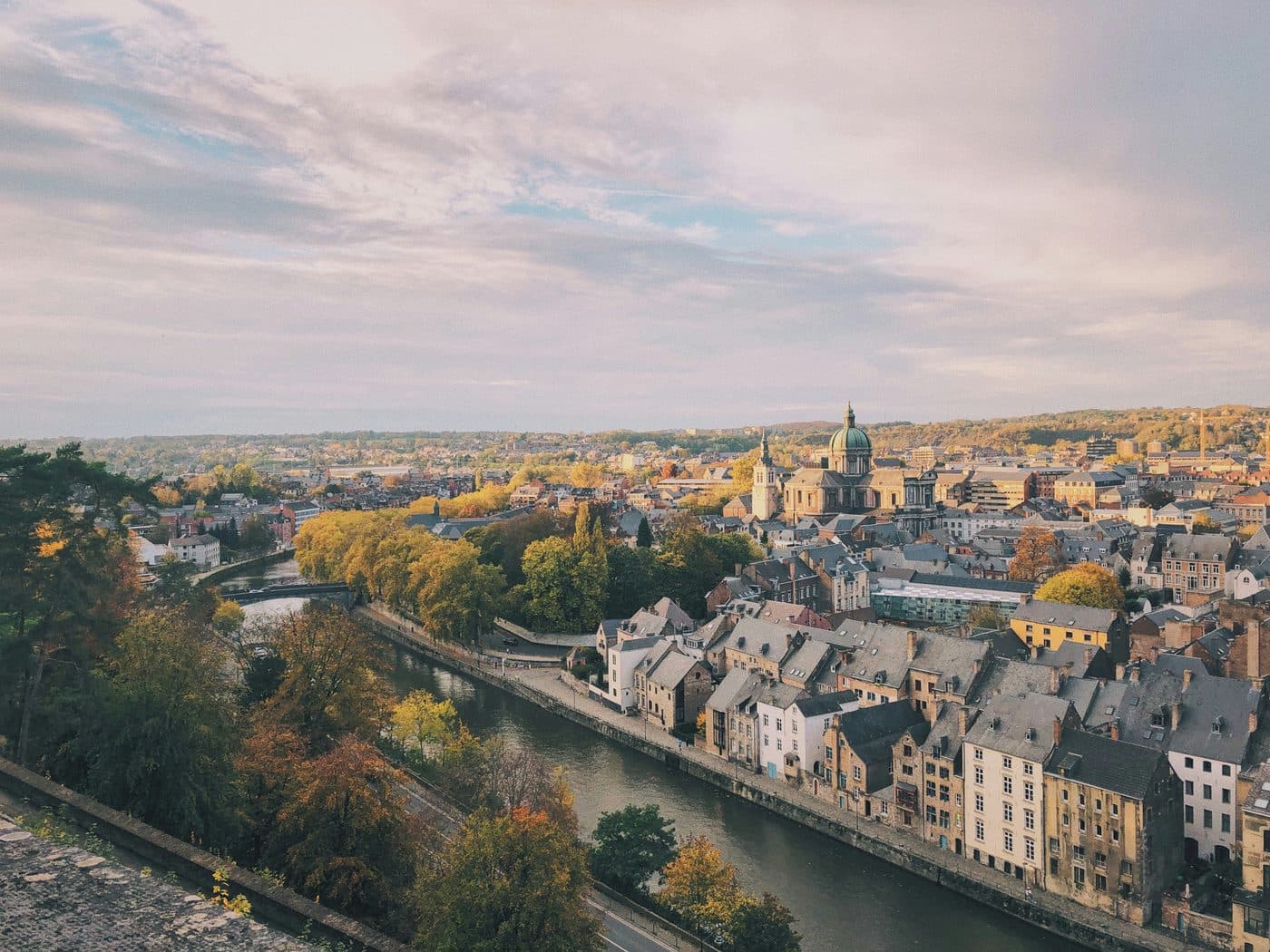
Namur, the capital of Wallonia, grew where the Sambre runs into the Meuse, below a rocky spur fortified since the 3rd century; the citadel that crowns it is listed among Wallonia’s exceptional heritage, and the town’s belfry is one of the Belfries of Belgium and France on UNESCO’s World Heritage List. Upstream, the Meuse runs between limestone cliffs past Annevoie, whose water gardens have played for some 260 years with no machinery at all, to Dinant, where the collegiate church, rebuilt after a rockfall destroyed its predecessor in 1227, stands at the foot of a cliff with the citadel more than 100 m above the river. A few kilometres further up, the gardens of Freÿr look across the river to its cliffs, and just south of Dinant the Lesse winds in from the Ardennes below Walzin, a castle on a rock more than 50 m above the water.
Couples from Belgium marry at the town hall of the commune where one of them lives — in Namur, at the Maison des Mariages, the former Forest Pavilion of 1901 on the citadel — and come to the valley for the pictures and the party, in gardens, castle-farms and on terraces by the river. In Belgium a marriage is legal only before a commune’s civil registrar (officier de l’état civil, ambtenaar van de burgerlijke stand), at the town hall or another neutral public place the commune has designated, and a religious ceremony may only follow it; two partners who are both foreign and live abroad can’t marry legally here, so they sign the papers at home. A ceremony in a garden without the registrar is a symbolic one; the country page explains who may marry here.
Photographers
They still have dates open here. Their whole weddings and free dates are on their pages.
See all 3 photographers
Booking through Lens & Vows
Through the year
May, June and September are the surest months: in the Royal Meteorological Institute’s 1991–2020 statistics for the commune of Namur, the highs are 19 to 22 °C and rain of 1 mm or more falls on nine or ten days a month. July and August are the warmest, at about 24 °C, with two or three days of 30 °C or more a month, but also the wettest of the warm months, with 76 and 82 mm. Rain belongs to every month here: Namur has 817 mm a year and Dinant, upriver, 861 mm, with the most in December and the least in April. Whatever the month, keep a roof in the plan: a hall at the citadel, a castle room, a covered terrace by the river.
Weather station: Namur, normals 1991–2020 · Checked 3 November 2026
Places
The kinds of places — ask your photographer which ones they know well.
The citadel’s park covers the rocky spur between the two rivers, with paths, stairs and paved walks, a medieval-style garden, an arboretum and a garden of scents; its gates are open from 8:00 to 20:00 from April to October and until 17:00 from November to March. A cable car climbs to the esplanade from the Rue des Brasseurs, from 9:30 to 17:00 every day except Monday, and the citadel itself hires out rooms in its old Terra Nova barracks, the largest for 120 people, with a terrace over the town. The civil ceremony takes place a few minutes away, at the Maison des Mariages on the Route Merveilleuse. We found no published city rule on wedding shoots in the streets or the park, so ask the city before planning one with lights or a crew.
Dinant is best seen from the left bank, across the bridge: the collegiate church, its bulb-topped tower and the cliff behind it face west, so they catch the afternoon and evening light, while in the morning they stand in the rock’s shadow. The citadel above is reached by car at its upper entrance while its cable car is closed for major renovation (as of November 2026). The town’s memorials to the 674 civilians killed in August 1914 are places of remembrance, not backdrops. Six kilometres upriver, Freÿr, a Mosan Renaissance castle that has passed down the same family without ever being sold since 1378, has French gardens laid out from the 1760s, with hornbeam mazes, pools, orange trees and a rococo pavilion of 1775 looking over the Meuse. It opens from April to mid-November, Thursday to Sunday (Tuesday to Sunday in July and August), from 11:00 to 17:00; drones are banned, and there is no published rule on wedding shoots, so ask first.
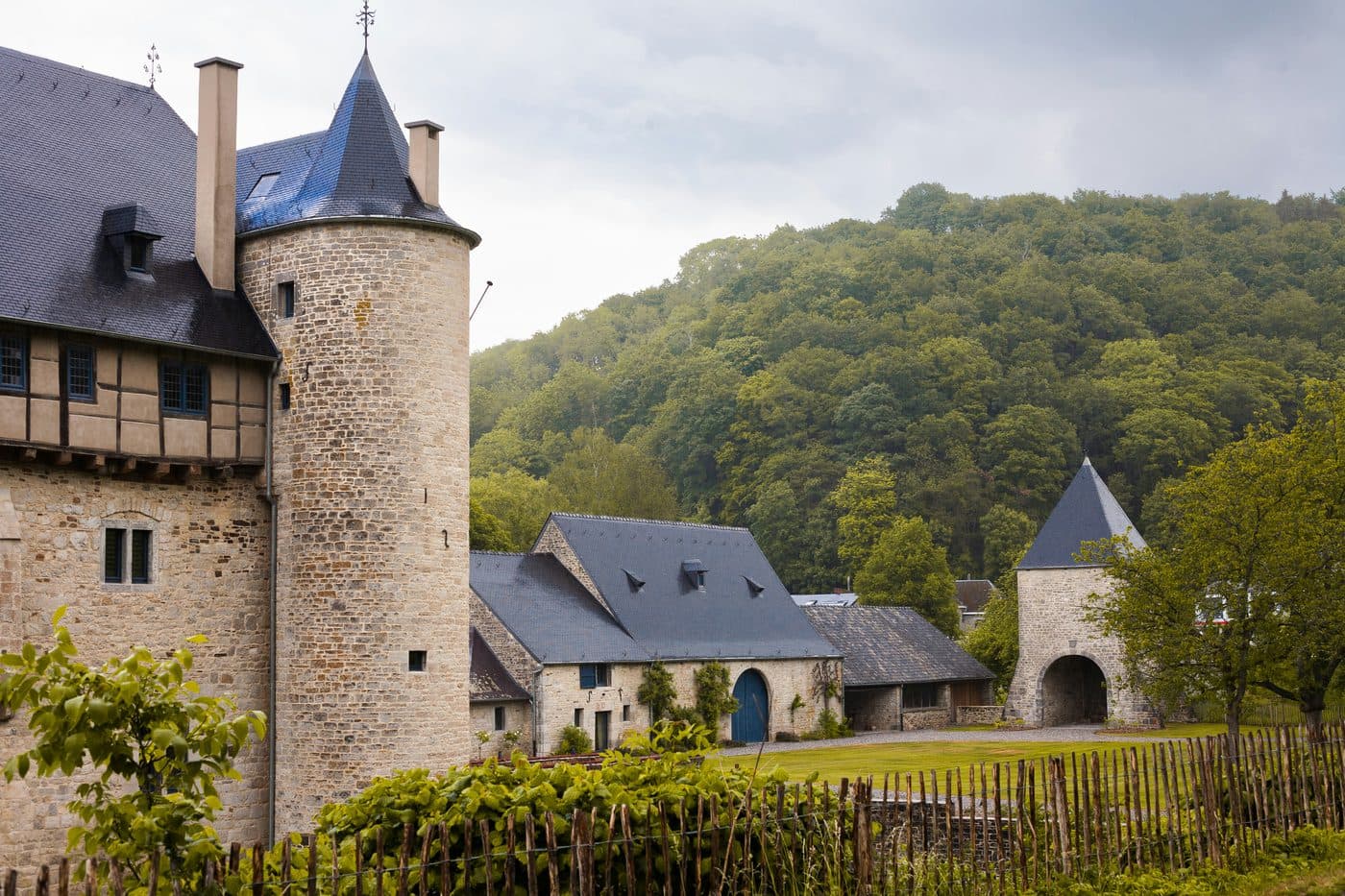
Annevoie’s water gardens, begun around 1758 in French, Italian and English styles, are driven by nature alone: their fountains and cascades play without any machinery. Wedding photos are welcome there, for a flat €150 (2026) covering the couple, the children of honour, the photographer and two witnesses, with the rest of the family at the group rate; if the weather turns, you keep the ticket and come back another day at no cost. The gardens are open from 9:30 to 17:30, with the last entry at 16:00, so the evening light belongs to the river below. Inland, Crupet, one of the Most Beautiful Villages of Wallonia, has a 13th-century fortified house standing in its moat, a church with a Romanesque tower, an artificial grotto of 1900–1903 and lanes along the streams where mills once turned.
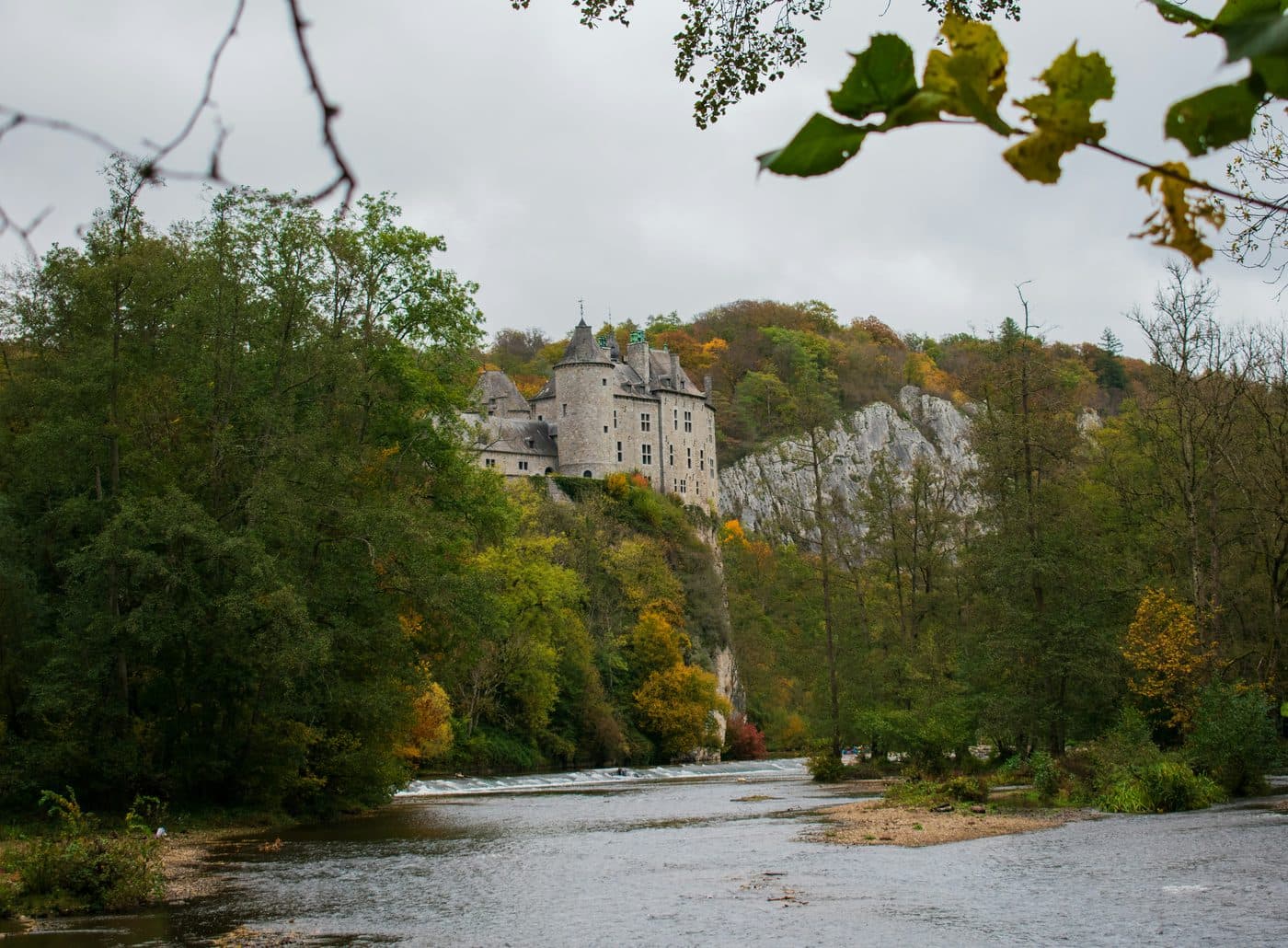
South of Dinant the Lesse winds through woods, rocks and nature reserves to the Meuse, and Walzin’s castle, built in the 11th century, stands on a rock more than 50 m above a bend of it. It is best seen from the riverbank or from a kayak: the descents run 12 or 21 km. In Wallonia’s nature reserves it is an offence to disturb animals or the quiet of the place in any way, so keep a shoot to the paths and the banks, and leave the drone in the car.
Light
The Meuse runs roughly north from Dinant to Namur between steep sides, so the valley floor loses the sun before the clock says it has set, while the cliff tops and the citadels keep it to the end. At Dinant the town, the church and the rock face west: the morning sun stays behind the cliff, and the warm light comes in the afternoon and evening, seen best from the far bank. At midsummer the sun rises over Namur at about half past five and sets just before ten, far out in the north-west; it is still ten degrees up at about twenty-five to nine, and the sky stays light until about twenty to eleven. In mid-May it sets at about twenty past nine, in mid-September at about five to eight and in mid-October at about ten to seven. At midwinter it is up only from about twenty to nine until twenty to five, no more than about 16 degrees high. Namur averages almost seven hours of sun a day in June and July and an hour and a half in December. Annevoie and Freÿr close by half past five, so their light is daytime light.
Travel
Brussels Airport has its own station, with direct trains to Namur in about 70 minutes and to Dinant in about 1 hour 45; from Brussels-Central to Namur it is a little over an hour, and from Namur to Dinant about half an hour. For Annevoie, take the train to Godinne, 18 minutes from Namur, and walk about 20 minutes, or the TEC bus 21 from Namur. From Brussels South Charleroi Airport, bus A1 reaches Charleroi’s station in about 20 minutes, and trains run on to Namur in about half an hour. By road it is 69 km from Brussels Airport to Namur’s citadel and 100 km to Dinant, and 37 km from Charleroi Airport to Namur and 56 km to Dinant; from Namur it is 18 km to Annevoie, 21 km to Crupet and 28 km to Dinant, and from Dinant 7 km to Freÿr. Belgium applies the EU’s drone rules: the operator of a drone with a camera, or of any drone of 250 g or more, registers in the EU country where they live (in Belgium, on the Drone Portal of the Federal Public Service Mobility; from outside the EU, in the first EU country they fly in), holds the A1/A3 certificate from 250 g and third-party insurance unless the flight is purely private with a drone under 900 g, flies in sight, below 120 m and never over a crowd, and checks the geozones on skeyes’ Droneguide map (map.droneguide.be) before every flight. Drones are banned at Freÿr.
Plan
Belgium