Founding photographerVerified — Identity verified by Lens & Vows
Andre W.from €900
The Ardennes, Brussels & Brabant +12 · Documentary, RomanticBased in Germany · travels to weddings in BelgiumWedding photographers in Belgium
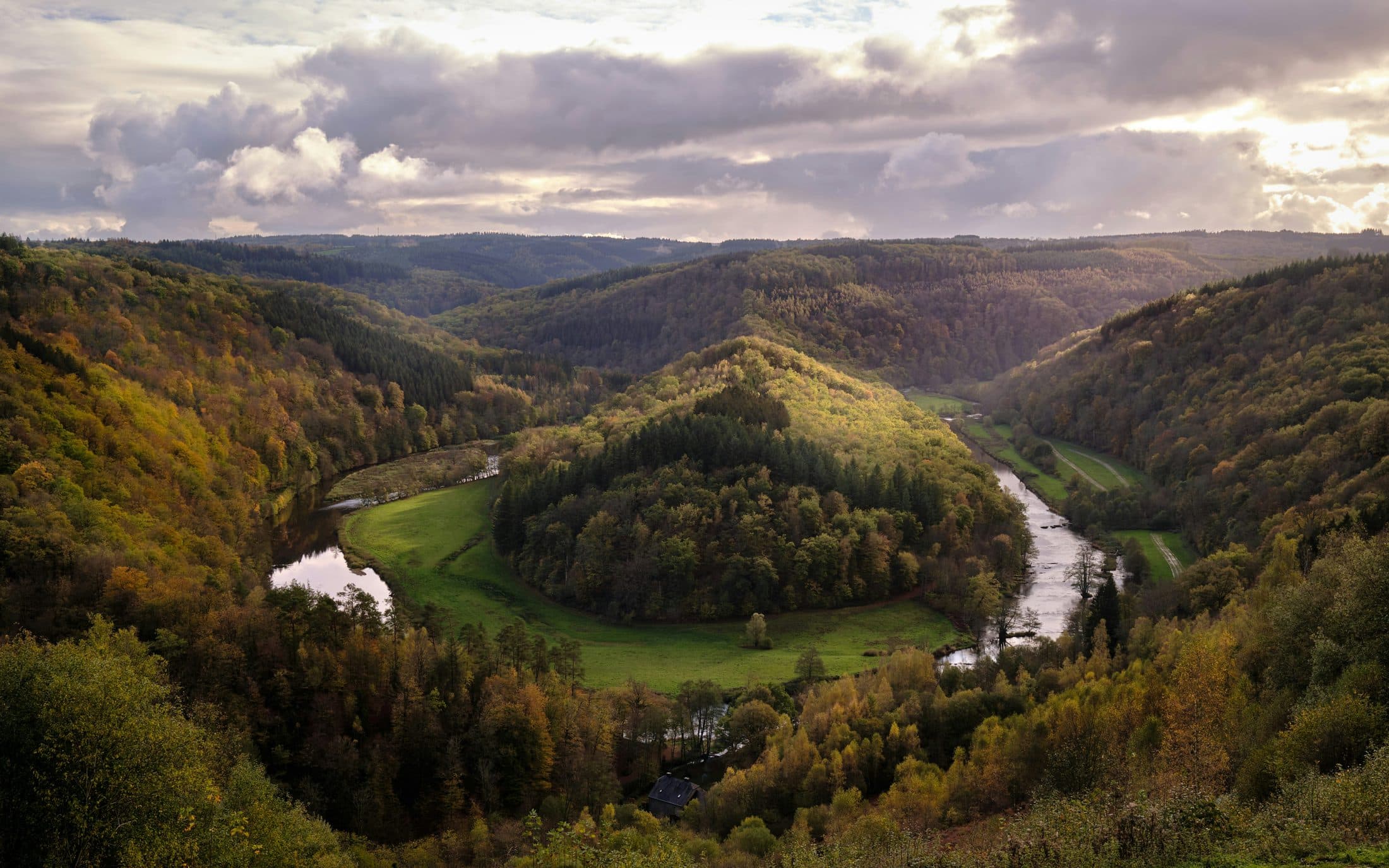
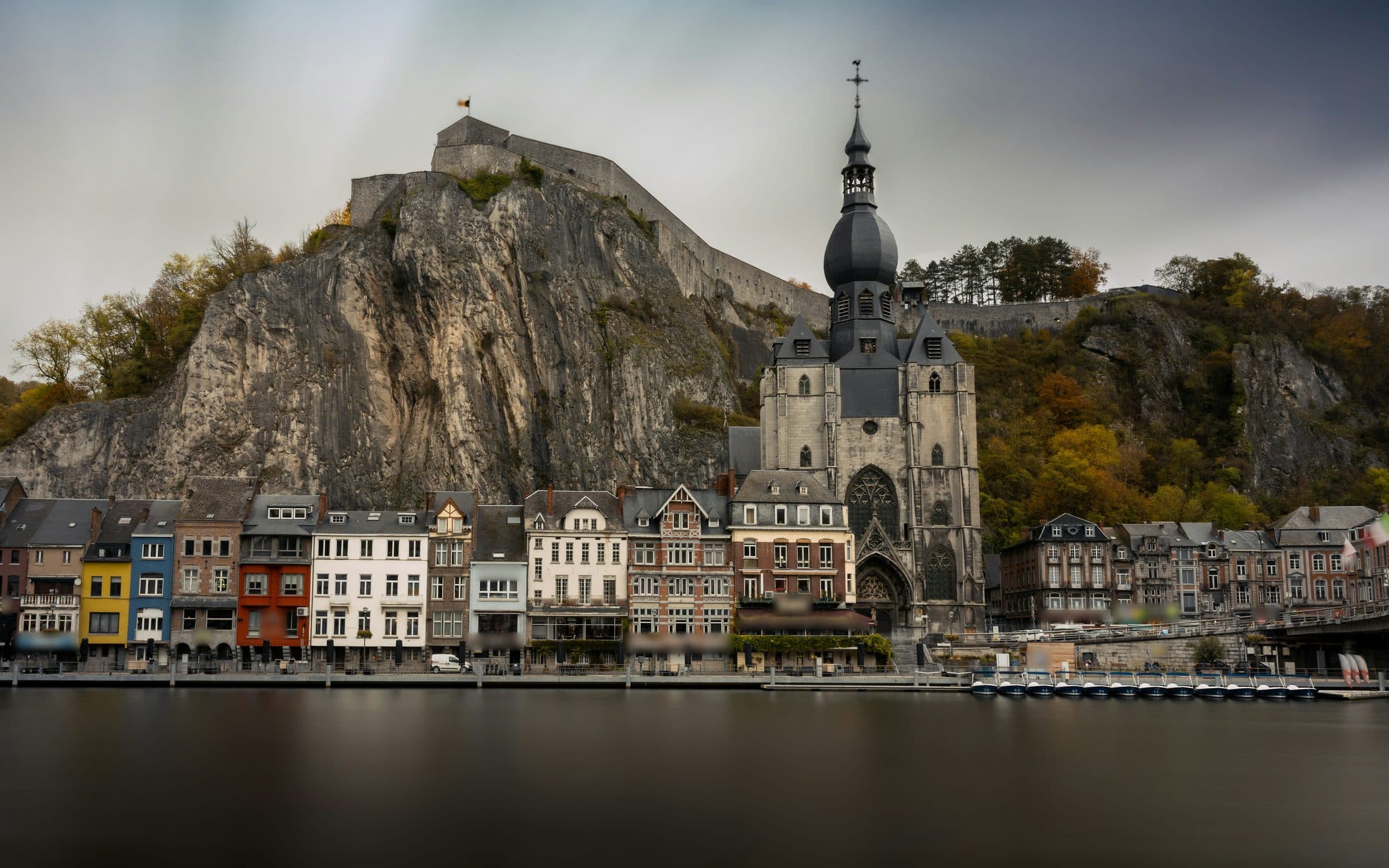
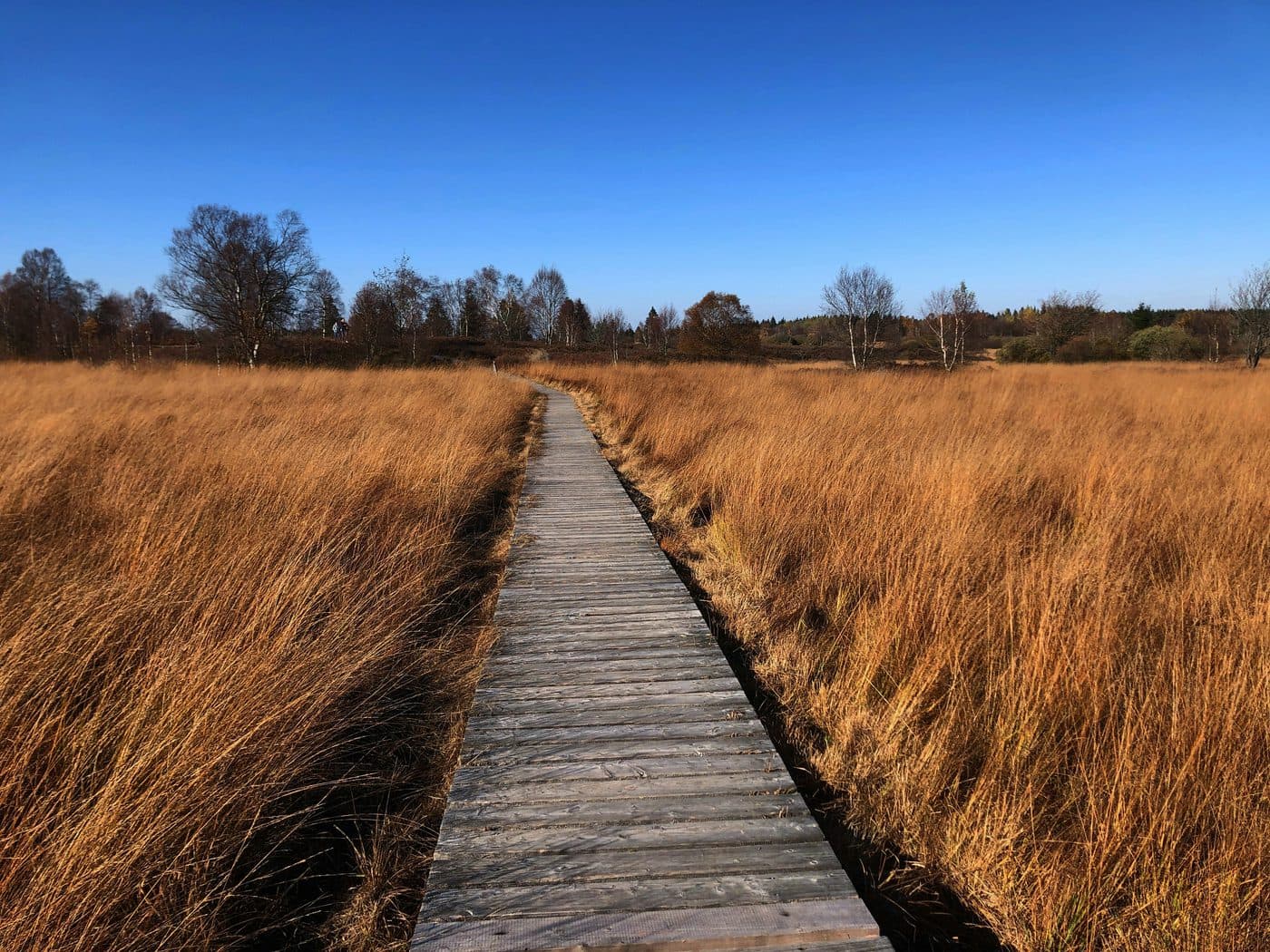
Wooded uplands cut by deep river loops, an hour or two from Brussels and Liège: Durbuy and La Roche on the Ourthe, Bouillon’s castle and the great loops of the Semois, the spa town of Spa and the open moorland of the High Fens, the roof of Belgium.
South and east of the Meuse the land rises into the Ardennes, a wooded plateau cut by rivers that wind through narrow valleys.
Durbuy, which calls itself the smallest town in the world, keeps its cobbled lanes and a half-timbered grain hall of the 1530s in the valley of the Ourthe, below a castle on its rock; upstream, the ruins of La Roche’s castle, built between the 11th and the 13th century, stand between a loop of the river and the Deister hill. In the south, Bouillon’s castle covers three rocky peaks above the Semois, whose loops are watched from viewpoints at Botassart and Rochehaut. In the north-east, Spa, whose name became the word for spas everywhere, is one of the Great Spa Towns of Europe on UNESCO’s World Heritage List, and beyond it the High Fens rise to 694 m at the Signal de Botrange, the highest point in Belgium, in a nature reserve of 5,000 hectares, the country’s largest.
Couples from Belgium sign the papers at the town hall of the commune where one of them lives, as the law requires, and come to the Ardennes for what follows: old farms, castle-farms and lodges in the woods, with the pictures by the river or out on the moor. In Belgium a marriage is legal only before a commune’s civil registrar (officier de l’état civil, ambtenaar van de burgerlijke stand), at the town hall or another neutral public place the commune has designated, and a religious ceremony may only follow it; two partners who are both foreign and live abroad can’t marry legally here, so they sign the papers at home. A ceremony in a meadow or a barn without the registrar is a symbolic one; the country page explains who may marry here.
Photographers
They still have dates open here. Their whole weddings and free dates are on their pages.
See all 3 photographers

Booking through Lens & Vows
Through the year
June, July and September are the surest months: in the Royal Meteorological Institute’s 1991–2020 statistics for the commune of La Roche-en-Ardenne, the highs are 18 to 22 °C and rain of 1 mm or more falls on ten to twelve days a month. The Ardennes are cooler and wetter than the Meuse valley: La Roche has 1,006 mm a year, Spa 1,101 mm, Waimes, on the High Fens, 1,290 mm and Bouillon 1,323 mm, against 955 mm at Durbuy, lower down the Ourthe. Frost can come until early May and again from late October. Whatever the month, keep a roof in the plan: a barn, a hall with a fire, and in Spa the covered gallery in its park.
Weather station: La Roche-en-Ardenne, normals 1991–2020 · Checked 3 November 2026
Places
The kinds of places — ask your photographer which ones they know well.
Durbuy’s cobbled lanes, made for walking, run between the Ourthe and the rock that carries its castle, past the half-timbered grain hall built between 1530 and 1540, which served as a court and as the town hall until the end of the 18th century and now holds exhibitions. Leave the cars at the edge of the old town, and ask the commune before a shoot with lights or a crew in the lanes: we found no published rule. Trains from Liège reach Barvaux, 4 km from the old town, in about 55 minutes.
The castle ruins above the town are open to visitors, with hours that change through the year and the last entry half an hour before closing, and they may close in snow or ice; visitors may take pictures, but write to the castle before planning a shoot. Below, the Ourthe curls through the town between steep wooded slopes, with houses of stone and brick along its quays. Bastogne’s memorials, further south, and the other sites of the Battle of the Bulge are places of remembrance, not backdrops.
Bouillon’s castle, run by the town’s tourist association, is a maze of passages and vast vaulted halls on its three rocky peaks, with a 17th-century staircase so well cut that it needs no mortar. Dogs are not allowed inside, and no drone may fly over or around it, because drones upset the castle’s birds of prey; there is no published rule on wedding shoots, so ask the association first. Downstream, the tourist office’s viewpoints look down on the Semois: the Tombeau du Géant at Botassart, over a loop around a wooded hill, and the panorama over Frahan and its loop from Rochehaut.
Spa’s Parc de Sept Heures, where the town came to see and be seen at seven in the evening, has a covered gallery to shelter from the rain, and the Pouhon Pierre-le-Grand houses the town’s most abundant spring. Twenty-five kilometres east, the High Fens are a nature reserve with rules of their own: since 9 March 2026 some of its paths are closed to walkers from half an hour after sunset until half an hour before sunrise, and the boardwalks are for walkers only. Areas can be closed when the risk of fire is high, marked with red pennants, and in Wallonia’s reserves it is an offence to disturb animals or the quiet of the place in any way, so keep to the paths and leave the drone at home. The fire of August 2026 burned part of the plateau, and the burned area was still closed in late October 2026: ask the Maison du Parc at Botrange before planning anything up there. On the plateau the weather turns fast, with fog, wind and showers even in summer, so bring layers and walking shoes.
Light
In the deep valleys of the Ourthe and the Semois the sun leaves the river well before it sets, while the slopes facing west and the viewpoints above keep it to the end; on the open plateau of the High Fens the light lasts as long as the sun, unless fog rolls in, which it can at any season. At midsummer the sun rises over La Roche at about half past five and sets at about ten to ten, in the north-west; it is still ten degrees up at about half past eight, and the sky stays light until about twenty-five to eleven. In mid-May it sets at about a quarter past nine, in mid-September at about ten to eight and in mid-October at about a quarter to seven. At midwinter it is up only from about twenty-five to nine until twenty-five to five, no more than about 16 degrees high. La Roche averages seven hours of sun a day in July and just over one in December.
Travel
Liège-Guillemins is the gateway: trains from Brussels take about 45 minutes to an hour, and Brussels Airport has direct trains to it in about 50 to 75 minutes. From Liège, trains reach Spa in about 45 to 60 minutes with a change at Pepinster, and Barvaux, for Durbuy, in about 55 minutes. For Bouillon, the castle points travellers to Libramont station, about 2 hours 15 from Brussels-Central on a direct train, and then bus 8, which has few departures a day. Liège Airport, above all a cargo airport, has a passenger terminal reached by TEC buses 53 and 57 from Liège-Guillemins. By road it is 119 km from Brussels Airport to Durbuy, 128 km to La Roche, 134 km to Spa and 166 km to Bouillon; from Liège 47 km to Spa, 53 km to Durbuy and 71 km to La Roche; and from Spa 25 km to Botrange, from Durbuy 28 km to La Roche and from La Roche 67 km to Bouillon. Belgium applies the EU’s drone rules: the operator of a drone with a camera, or of any drone of 250 g or more, registers in the EU country where they live (in Belgium, on the Drone Portal of the Federal Public Service Mobility; from outside the EU, in the first EU country they fly in), holds the A1/A3 certificate from 250 g and third-party insurance unless the flight is purely private with a drone under 900 g, flies in sight, below 120 m and never over a crowd, and checks the geozones on skeyes’ Droneguide map (map.droneguide.be) before every flight. Drones are banned over and around Bouillon’s castle, and the nature reserves are no place to fly one.
Plan
Belgium