Verified — Identity verified by Lens & Vows

Antoine P.from €2,500
Brussels & Brabant, Bruges & the Coast +29 · Documentary, EditorialBased in France · travels to weddings in BelgiumWedding photographers in Belgium
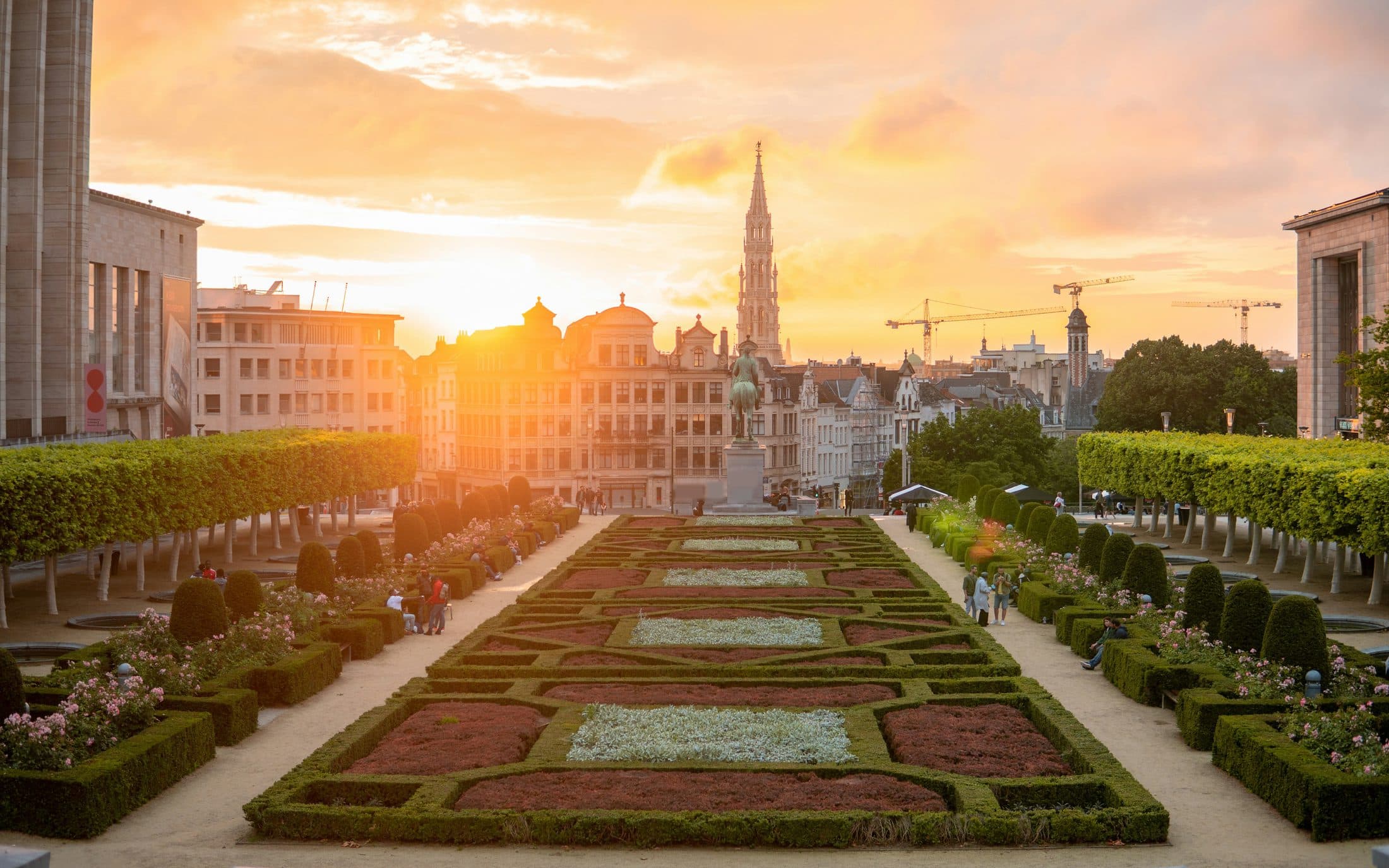
Belgium’s capital, with its Gothic town hall on a square of gilded guild houses, the university town of Leuven 30 km to the east by road and, all around within half an hour, the tall beeches of the Sonian Forest, the castle parks of Gaasbeek and Meise and the château of La Hulpe.
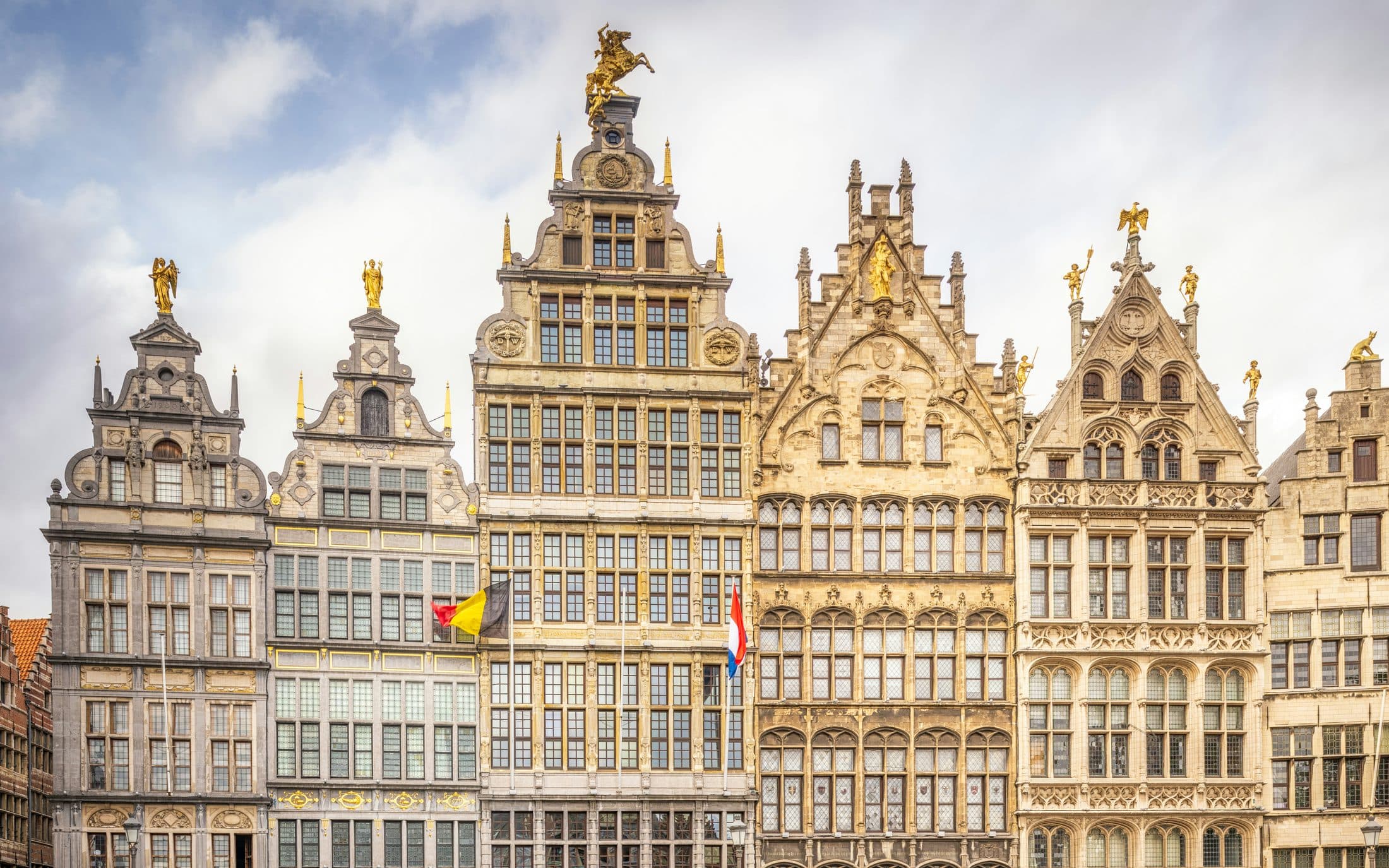
Brussels grew around the Grand-Place, a World Heritage site since 1998: a cobbled square closed in by a town hall begun in the early 15th century, a high point of Brabant Gothic with its tall tower, and by guild houses rebuilt at speed after the bombardment of 1695, their gables richly carved and gilded. A few streets uphill, the formal garden of the Mont des Arts looks back over the old town to that tower. To the east, Leuven keeps a university, a market square under the belfry of St Peter’s Church and a béguinage, both on the World Heritage list too. To the south-east the Sonian Forest spreads its beeches over 4,421 hectares in all three of Belgium’s regions; to the west and north the castle park of Gaasbeek and the botanic garden at Meise are each less than half an hour from the centre by road, and to the south the Solvay estate at La Hulpe opens 227 hectares of lawns, woods and ponds.
Couples who live here marry at their own commune’s town hall — in the City of Brussels, the one on the Grand-Place — and carry on to a castle, a farmhouse in the Brabant countryside or a hall in town; couples from abroad come for the celebration and the portraits, in the old centre, under the beeches or in a castle park. In Belgium a marriage is legal only before a commune’s civil registrar (officier de l’état civil, ambtenaar van de burgerlijke stand), at the town hall or another neutral public place the commune has designated, and a religious ceremony may only follow it; two partners who are both foreign and live abroad can’t marry legally here, so they sign the papers at home.
Photographers
They still have dates open here. Their whole weddings and free dates are on their pages.
See all 2 photographers
Booking through Lens & Vows
Through the year
June, July and September are the surest months. In the Royal Meteorological Institute’s 1991–2020 climate statistics for the City of Brussels, highs reach about 22 °C in June, 24 °C in July and 20 °C in September, with rain (1 mm or more) on about ten days a month. The rain is spread through the year: April is the driest month, with 45 mm, December the wettest, with 86 mm of the year’s 804 mm, and July and August each bring about two days of 10 mm or more and, between them, about five days of 30 °C or more. The sun shines about seven hours a day in June and July and under two in December, and the last frost comes on average around 7 April. Leuven, 30 km east, is a little warmer in summer (24.4 °C in July) and a little drier, with 781 mm a year.
Weather station: Bruxelles, normals 1991–2020 · Checked 3 November 2026
Places
The kinds of places — ask your photographer which ones they know well.
The City of Brussels holds its civil weddings in the town hall on the Grand-Place, in a room on the first floor that holds up to 100 people, on Fridays and Saturdays. At the basic rate of €50 the city sets the hour and the ceremony lasts 15 minutes, entered from the Lions’ Staircase on the square; at the courtyard rate of €300 you choose the hour, come in through the courtyard of honour and have 20 minutes, with time for a speech of your own and photographs with your witnesses on the balcony when it is accessible (as of November 2026). A photographer is welcome; rice, petals and confetti are not, on the square or in the courtyard (the fine is €200), and nor are drones. The parking permits the city gives couples depend on no other event being planned on the square, and the region’s other communes marry their couples in their own town halls. A few streets uphill, the formal garden of the Mont des Arts looks back over the old town to the town hall’s tower; it is managed by the Régie des Bâtiments, the federal buildings agency, and filming permits for it go through the Brussels film commission.
Leuven, 30 km east of the Grand-Place by road, is a university town around a market square where St Peter’s Church, one of the World Heritage belfries, faces the town hall. The town hall itself is closed for restoration until 2029, so the city marries couples elsewhere: on Saturdays between 11:00 and 13:00 in the Princes’ Hall of Arenberg Castle, which belongs to the university and looks out over its park in Heverlee; on Wednesdays and Fridays in the orangery of the Kruidtuin, Belgium’s oldest botanical garden, from mid-May to mid-October, and in the council chamber of Heverlee’s district hall the rest of the year. It costs €25 on a Wednesday and €70 on a Friday or Saturday (as of November 2026). South of the centre, the Grand Béguinage, a World Heritage site since 1998, is an enclosed quarter of houses, lanes and a church where people still live, so keep your voices down.
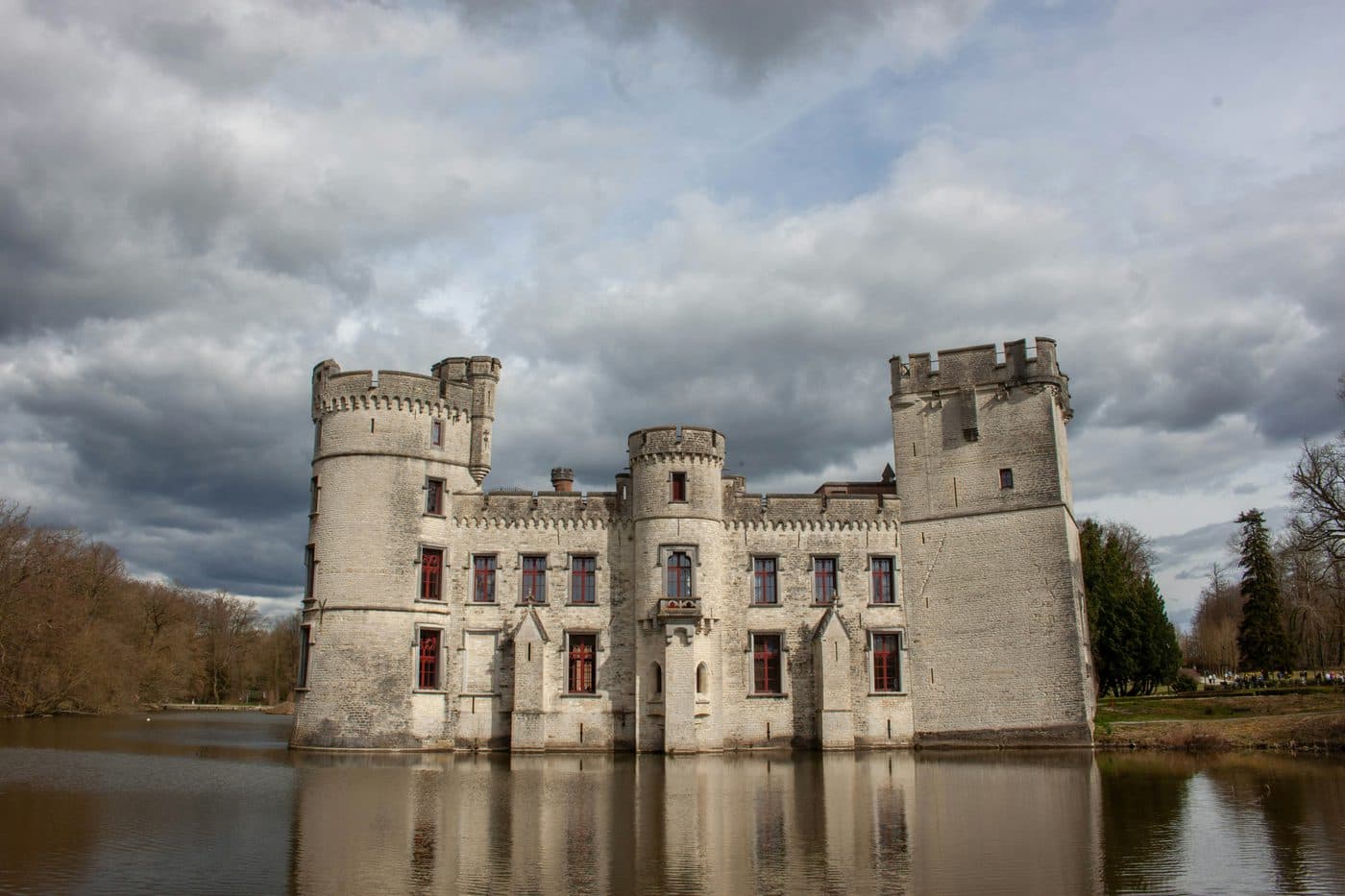
West of Brussels, the castle of Gaasbeek, first built around 1240, stands in a 49-hectare park of old beeches and oaks, with wild hyacinths and wood anemones in spring. The park belongs to the Agency for Nature and Forests (the castle, with its art collection, does not), and private photo sessions, wedding portraits included, are free there as long as the park rules are kept: no vehicle, not even the wedding car, everyone on the paths or the open lawns, nothing large such as an arbour set up, and no confetti, not even the biodegradable kind. In the Museum Garden, with its collection of trained fruit trees, private photos are free from May to October, but everyone, the photographer included, buys an entry ticket. North of the city, Meise Botanic Garden spreads over two former castle estates, with a moated castle and the thirteen greenhouses of its Plant Palace. Wedding photos need no special permission there: everyone, the photographer included, pays the normal entry, cars stay outside, the woods are walked on their paths and the plant beds not at all, and drones are banned.
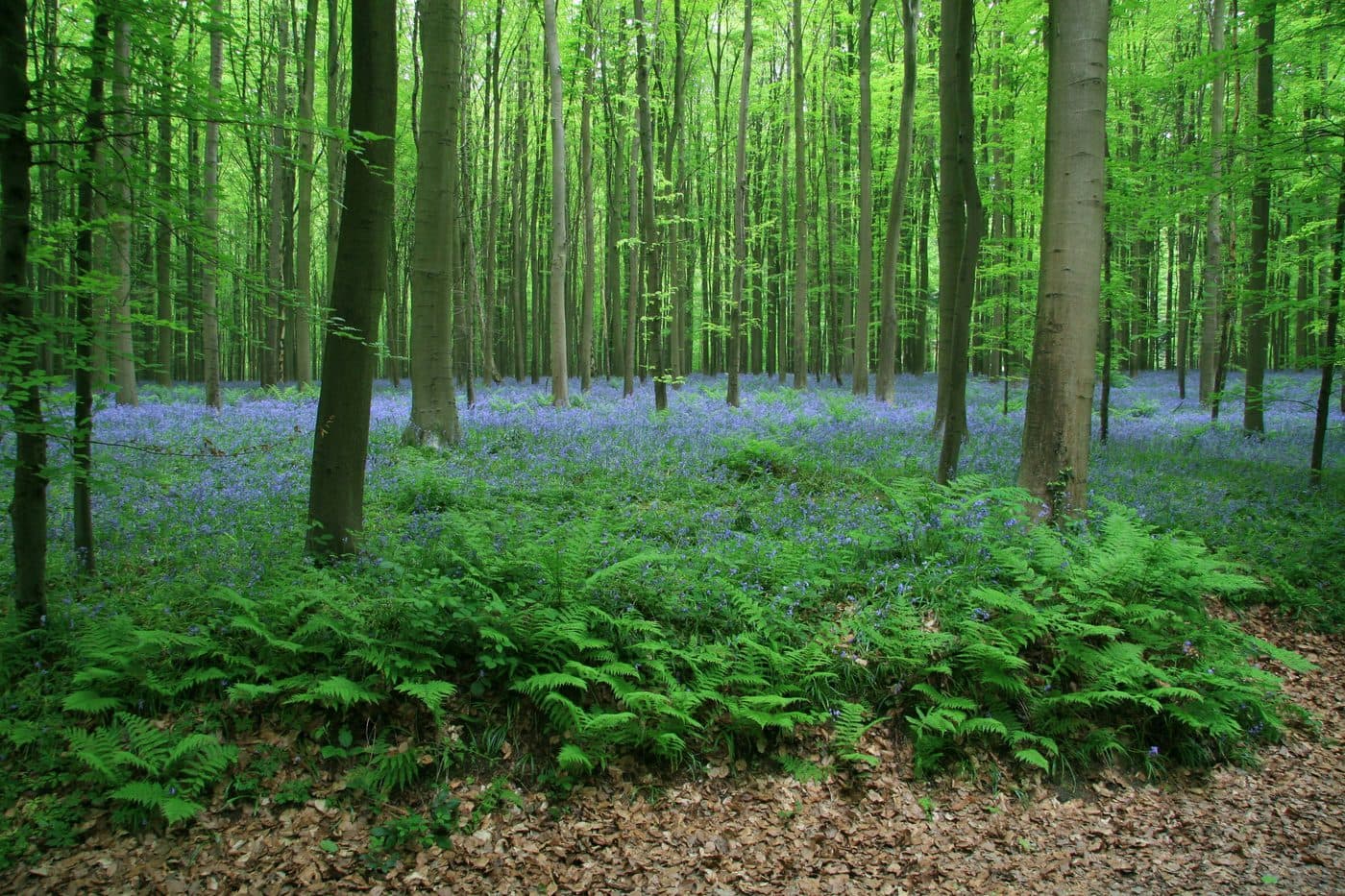
South-east of the city, the Sonian Forest spreads its tall beeches over 4,421 hectares in all three of Belgium’s regions, and five parcels of its forest reserves belong to a World Heritage site of Europe’s ancient beech forests. On the Brussels side keep to the marked paths, never enter the fenced areas and stay away when a storm warning (winds over 80 km/h) is out; a horse-drawn carriage needs a permit there. In the Flemish part, around Tervuren, Hoeilaart and Overijse, and in the Hallerbos at Halle, where wild hyacinths cover the ground from mid-April to early May, the Agency for Nature and Forests lets wedding photographers work without asking, provided everyone stays on the paths and nothing — a tent, an arbour, furniture, lights — is set up; a professional shoot for advertising or publication goes through its film office. At La Hulpe, the Solvay estate’s 227 hectares of lawns, woods, ponds and rhododendrons, around a château of 1842 modelled on the castles of the Loire, are open free every day, until 21:00 from April to September and until 18:00 in winter; the château isn’t open to visitors, its terraces are off limits and no car may enter without permission. The battlefield of Waterloo nearby, with its memorials, isn’t a place to shoot.
Light
Brussels has long summer evenings and short winter days. At midsummer the sun rises at about half past five and sets at ten, far round in the north-west, and the sky stays light until about a quarter to eleven; it drops below ten degrees at about twenty to nine, which leaves an hour and twenty minutes of low, warm light. From early June to early July, seen from the top of the Mont des Arts, it goes down in line with the town hall’s tower. In mid-May it sets at about twenty-five past nine and in mid-September just before eight. At midwinter it is up only from about a quarter to nine until twenty to five, never more than 16 degrees high. On the Grand-Place the town hall stands on the south-west side, so its front takes the morning sun and the guild houses facing it the afternoon sun. The sun shines about seven hours a day in June and July and under two in December.
Travel
Brussels Airport’s station lies directly beneath the terminal, with six direct trains an hour into Brussels; Brussels-Central is about 18 minutes away, direct trains also run to Leuven, and most tickets to or from the airport already include its €6.90 supplement. By road the airport is 15 km from the Grand-Place, and Brussels South Charleroi Airport 57 km. From the Grand-Place it is 12 km by road to Meise, 15 km to Gaasbeek, 17 km to the Solvay estate at La Hulpe (also on bus 366, stop La Hulpe Etangs Solvay), 19 km to Tervuren and 30 km to Leuven. Belgium applies the EU’s drone rules: the operator of a drone with a camera, or of any drone of 250 g or more, registers in the EU country where they live (in Belgium, on the Drone Portal of the Federal Public Service Mobility; from outside the EU, in the first EU country they fly in), holds the A1/A3 certificate from 250 g and third-party insurance unless the flight is purely private with a drone under 900 g, flies in sight, below 120 m and never over a crowd, and checks the geozones on skeyes’ Droneguide map (map.droneguide.be) before every flight. Much of Brussels lies in controlled airspace: the centre is inside two geozones, Brussels City and the Brussels Airport zone, which also covers Leuven, Meise, Tervuren and the Sonian Forest; in the airport zone a flight goes through skeyes’ DAA tool beforehand and, in the open category, stays below 150 ft (about 45 m), and the Brussels City zone needs an authorisation of its own, so check Droneguide before flying. In the Brussels region, filming from a drone needs the commune’s consent as well, requested through the film commission, and the City of Brussels allows no drones at its weddings. Meise Botanic Garden bans drones, and flying over any nature area of the Agency for Nature and Forests needs its film office’s permission.
Plan
Belgium