Verified — Identity verified by Lens & Vows

Antoine P.from €2,500
Bruges & the Coast, Brussels & Brabant +29 · Documentary, EditorialBased in France · travels to weddings in BelgiumWedding photographers in Belgium
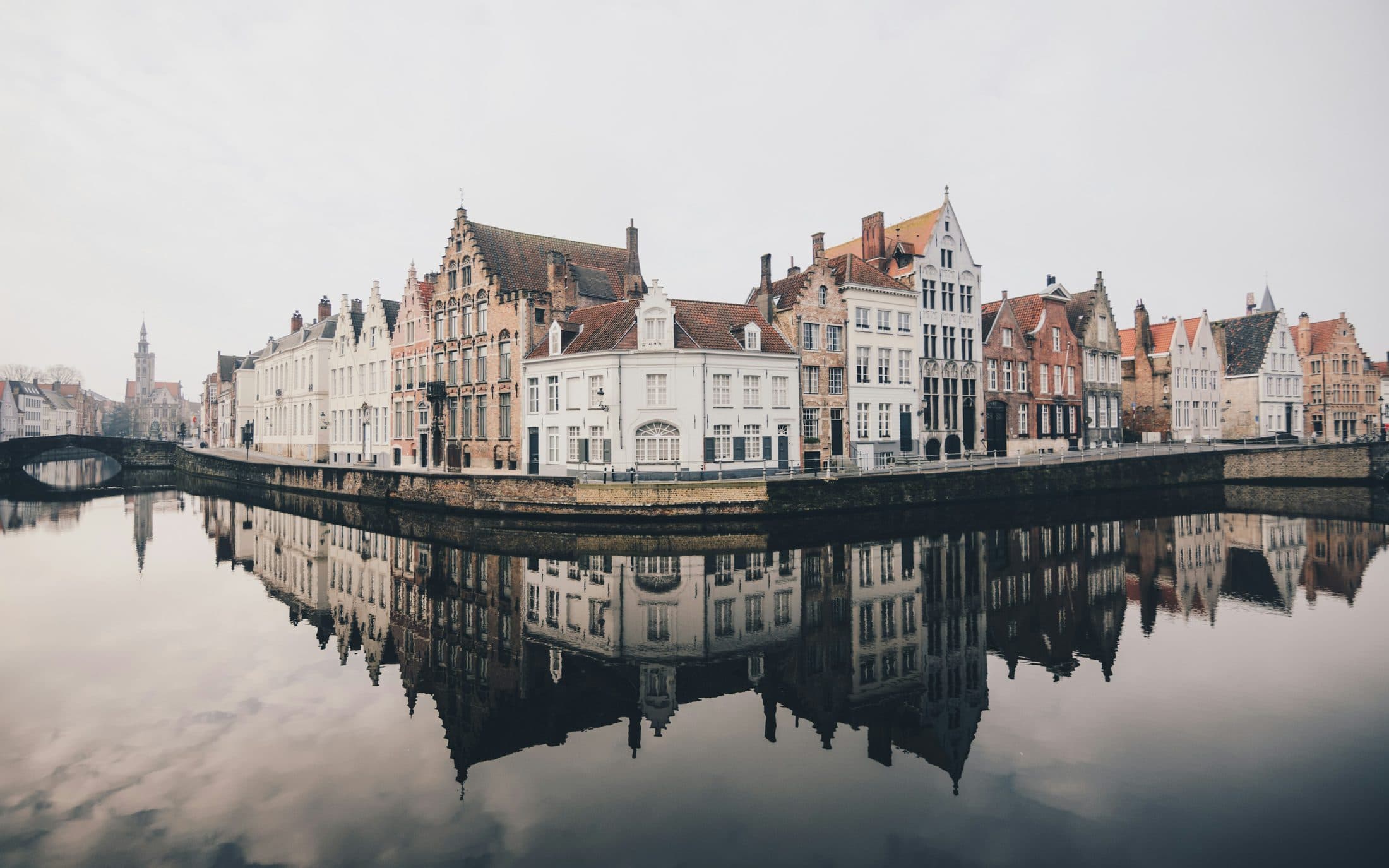
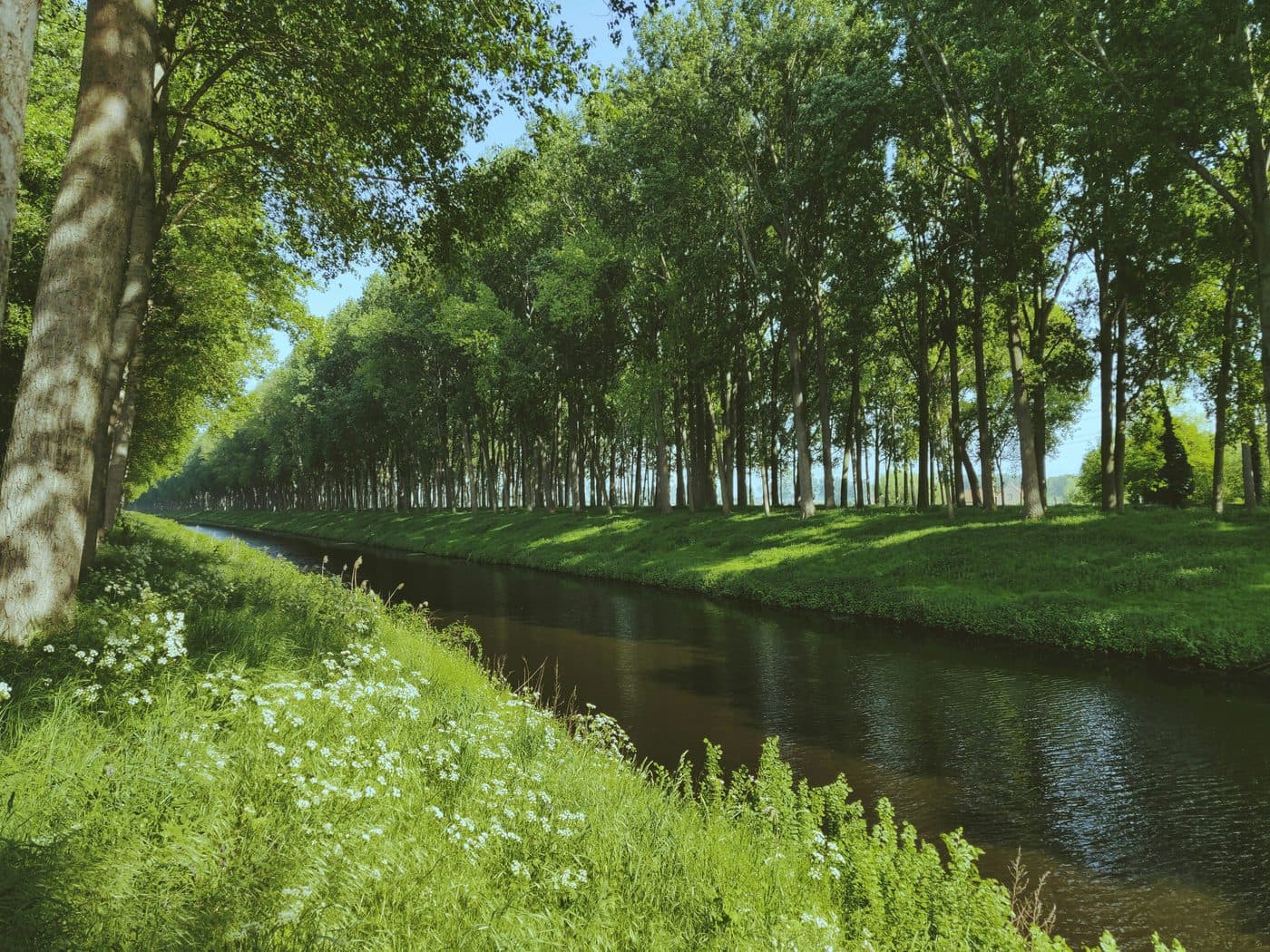
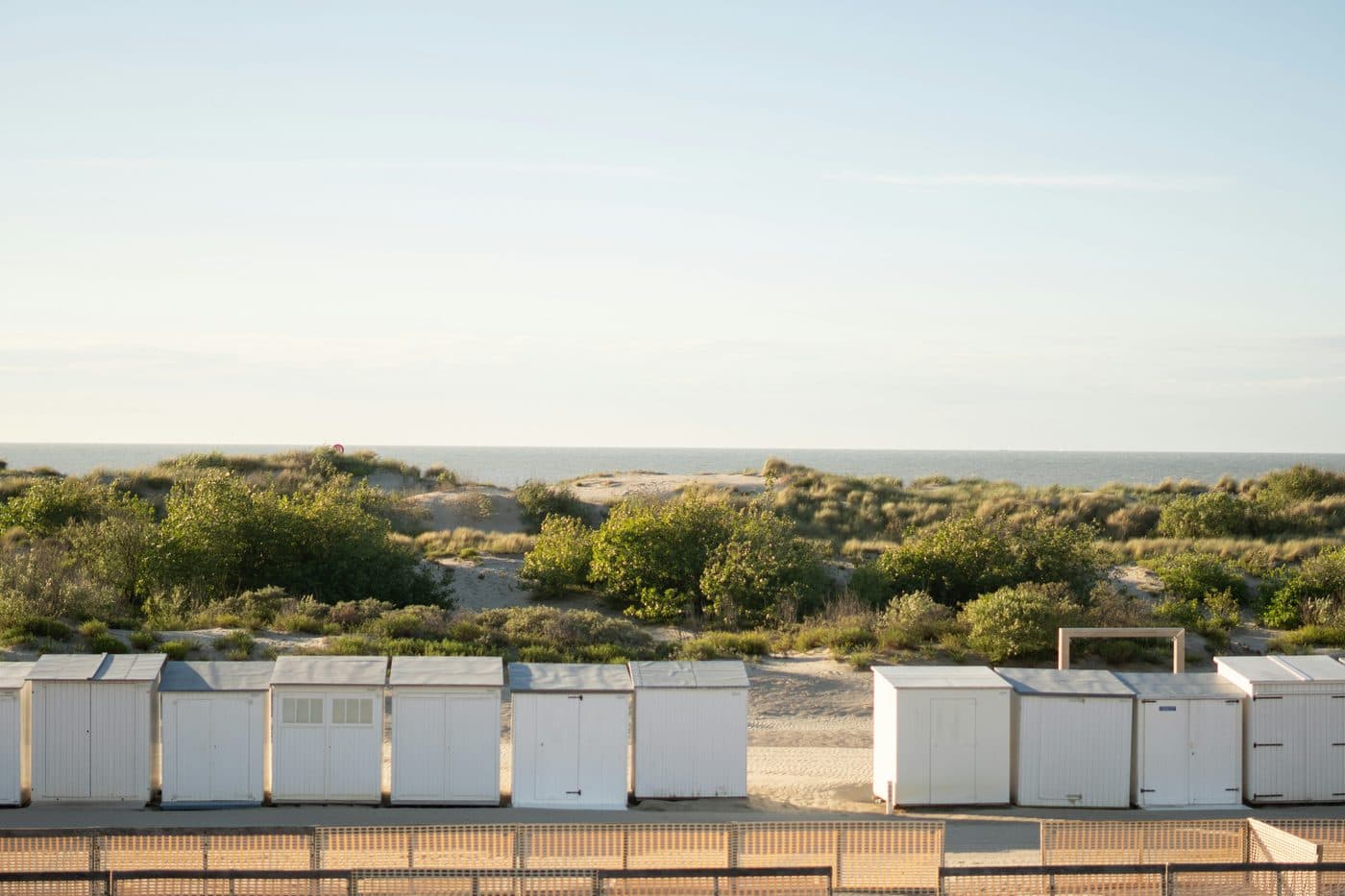
Bruges’ canals and belfry, in a medieval centre whose town hall marries couples in a Gothic hall, a poplar-lined canal to Damme 7 km away, and, 20 to 30 km to the north and west, a coast of dunes and wide beaches from Ostend to the Zwin.
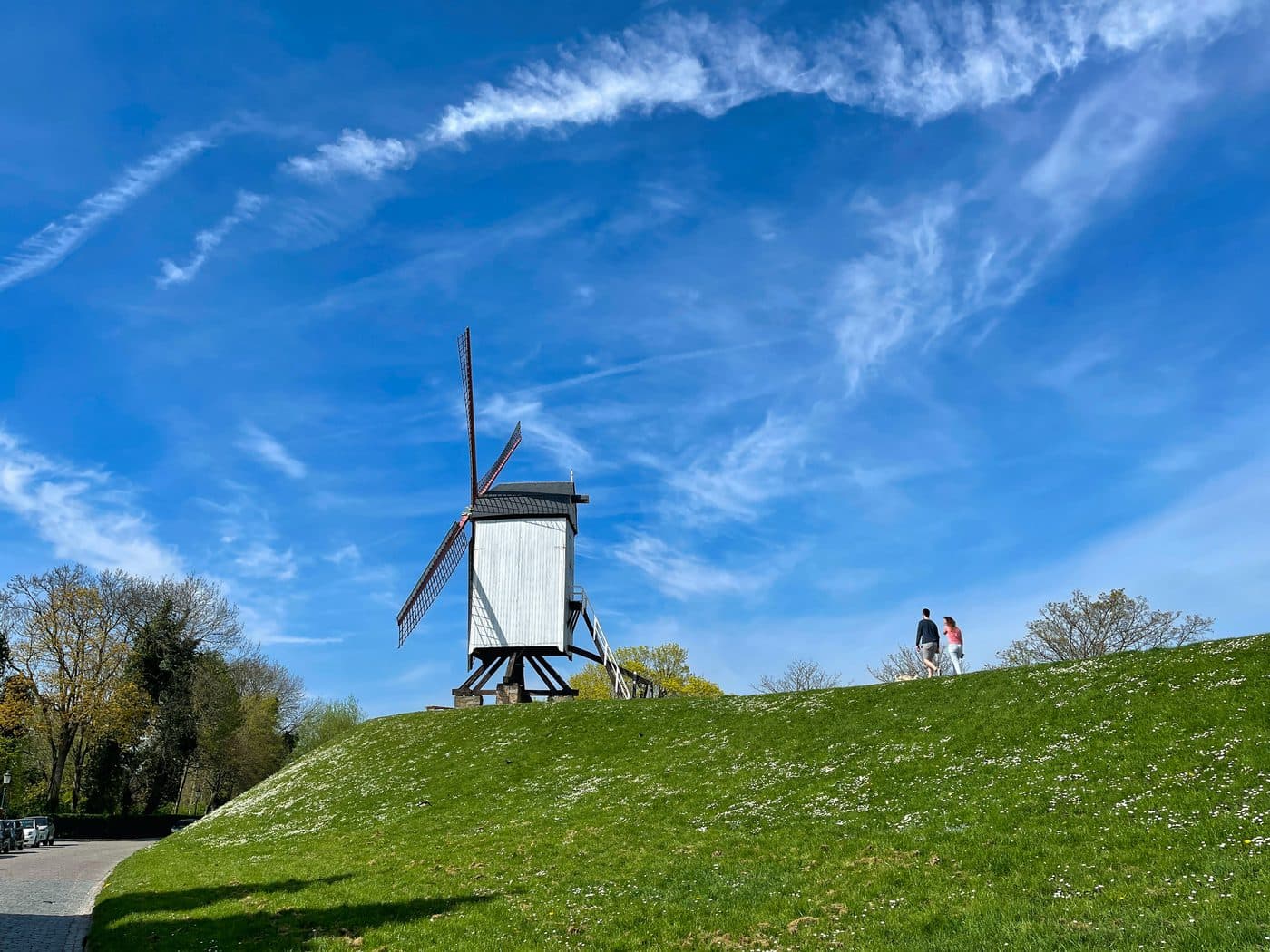
Bruges was a trading city of the Middle Ages, and its centre, a UNESCO World Heritage site since 2000, still keeps to the line of its 12th-century walls: houses of brick Gothic, the canals that once carried its trade, and the belfry above the Markt, itself listed among the belfries of Belgium and France. Four windmills stand on the green ramparts of the Kruisvest, and south of the centre the white houses of the beguinage, founded in 1245, surround a quiet garden beside the Minnewater. North-east of the city, a canal lined with tall poplars runs past the small town of Damme towards Sluis, across the Dutch border. The coast is 20 to 30 km away: Ostend’s long sea dike, the villas and dunes of De Haan, the beaches of Knokke-Heist and, at the Dutch border, the Zwin, a nature reserve of open plain, dunes and beach that its park calls an international airport for birds.
Couples who live in Bruges marry in the Gothic Hall of the town hall, in the community hall at Zeebrugge or, on one Friday a month from April to September, on the beach at Zeebrugge, and Ostend marries its own couples on the sea dike, in a Japanese garden or aboard an old sailing ship; the party then moves to a castle, a farm in the polders or a house by the sea. Couples from abroad can come for a small wedding or an elopement, with portraits along the canals early in the morning and the evening on the beach. In Belgium a marriage is legal only before a commune’s civil registrar (officier de l’état civil, ambtenaar van de burgerlijke stand), at the town hall or another neutral public place the commune has designated, and a religious ceremony may only follow it; two partners who are both foreign and live abroad can’t marry legally here, so they sign the papers at home. Bruges marries couples of whom at least one lives in the town; others can hold a ceremony of their own here, at the hour and in the light they choose.
Photographers
They still have dates open here. Their whole weddings and free dates are on their pages.
See all 2 photographers
Booking through Lens & Vows
Through the year
June to September are the easiest months. In the Royal Meteorological Institute’s 1991–2020 statistics for the commune of Bruges, highs reach about 20 °C in June, 22 to 23 °C in July and August and 20 °C in September, with rain (1 mm or more) on about ten days a month, and days of 30 °C or more are rare: fewer than two a month even in July and August. The sea keeps the coast a degree or so cooler, and Ostend’s highs peak at about 22 °C in August. August is also the wettest of the warm months, with 86 mm, and April the driest, with 43 mm, but at barely 15 °C. From October the rain comes on 12 to 15 days a month, and in December and January the highs stay around 7 °C and the sun shines for about two hours a day. On the coast the wind drops in summer: at the Middelkerke station it averages about 4.5 m/s in July and August, against 5.8 in January.
Weather station: Brugge, normals 1991–2020 · Checked 3 November 2026
Places
The kinds of places — ask your photographer which ones they know well.
The best-known view is from the Rozenhoedkaai, where the canal turns below the belfry. Five licensed companies run boat trips along one fixed route between 10:00 and 18:00, and thirteen horse-drawn carriages leave the Markt on a half-hour round. The beguinage is still lived in, and the city asks every visitor to keep it a place of silence, so keep any portrait there short and quiet. On the ramparts, the Sint-Janshuismolen of 1770 is the one of the four windmills that still grinds grain. Bruges asks every film or photo production in its streets to tell its film office beforehand, and needs a permit, free and applied for six weeks ahead, only when a shoot takes up part of the street or needs a drone, a parking ban or a city building; it doesn’t say whether a couple’s portrait walk counts as a production, so let your photographer ask.
Bruges holds its ceremonies in the Gothic Hall of its town hall on the Burg, among wall paintings under a vaulted ceiling; in the community hall at Zeebrugge on Fridays and Saturdays; and, on one Friday a month from April to September, on the beach at Zeebrugge. A ceremony is free on Tuesday mornings and costs €100 on Friday afternoons, €175 on Saturday mornings and €350 on the beach, as of November 2026. You can take an option on a date up to a year ahead, file the declaration of marriage from six months and fourteen days before, and name up to four witnesses, all of them optional; your own vows may last up to five minutes. Photographs are welcome with respect for the hall, which is part of a museum: nobody stands on chairs or tables. The group pictures are taken on the town hall stairs afterwards, while the next couple goes in.
From May to September Ostend marries couples outdoors on set days: aboard the old sailing ship Mercator in the marina on one Friday a month, for €350, and on one Saturday a month either in the Japanese Garden or at the Nieuwe Gaanderijen, a covered gallery on the sea dike, with the dike itself and the beach below as alternatives, for €300 each (2026 fees). The town hall takes ceremonies the rest of the time, free on Tuesdays. Dates are booked between six months and fourteen days ahead. The city watches the forecast: if wind of force 5 or rain is expected, it can move an outdoor wedding into the town hall, telling the couple by the Wednesday before and refunding the difference. Rice, confetti and petals aren’t allowed.
Damme lies 7 km from Bruges on the Damse Vaart, an early 19th-century canal towards Sluis whose rows of tall Canadian poplars are protected as a monument; its dikes make long, green walks for portraits. On the coast, De Haan keeps the villas of its old Concessie quarter, protected as a whole since 1995, close behind the dunes, and asks for permission three weeks ahead for any filming in its public space. At Knokke-Heist the beach runs past dunes to the Zwin, a reserve looked after by the Province of West Flanders and Flanders’ Agency for Nature and Forests: a professional or commercial photo shoot there needs written permission, requested at least seven working days ahead, with a fee and a deposit; drones are banned, visitors keep to the paths, and nobody may be there before sunrise or after sunset. West of Ostend and inland around Ypres, the war cemeteries and memorials are places of remembrance, not backdrops.
Light
Bruges lies far to the west of its time zone, so its summer evenings are late. At midsummer the sun rises at about half past five and sets just after ten, far round in the north-west; it drops below ten degrees at about a quarter to nine, and the sky stays light until nearly eleven. Seen from the Rozenhoedkaai, the belfry stands in exactly that direction, so on June evenings the famous view is backlit; it is softer in the morning or under cloud. The coast faces north-west, so the midsummer sun sets over the sea, at about eight minutes past ten at Ostend; in December it goes down in the south-west, over the land, at about twenty to five. At midwinter it rises at about ten to nine and climbs no more than 15 degrees. In the RMI’s statistics Bruges has about seven and a half hours of sun a day in June and July and under two in December.
Travel
Brussels Airport has its own station beneath the terminal, with a direct train to Bruges about once an hour that takes about 1 hour 25; from Brussels-South, trains reach Bruges in 55 to 60 minutes several times an hour, and from Ghent in about 25. From Bruges it is about 13 minutes by train to Ostend and 21 to Knokke, and the coast tram runs along the coast every 10 to 20 minutes by day and every 30 in the evening. By road it is 106 km from Brussels Airport to Bruges, and from Bruges 7 km to Damme, 19 km to De Haan, 20 km to Knokke, 24 km to the Zwin and 29 km to Ostend; Ostend-Bruges airport lies 8 km from central Ostend. Belgium applies the EU’s drone rules: the operator of a drone with a camera, or of any drone of 250 g or more, registers in the EU country where they live (in Belgium, on the Drone Portal of the Federal Public Service Mobility; from outside the EU, in the first EU country they fly in), holds the A1/A3 certificate from 250 g and third-party insurance unless the flight is purely private with a drone under 900 g, flies in sight, below 120 m and never over a crowd, and checks the geozones on skeyes’ Droneguide map (map.droneguide.be) before every flight. Ostend, its beach and De Haan lie in the controlled airspace of Ostend-Bruges airport, where a flight needs approval through skeyes’ DAA planner first, and the port of Zeebrugge is a restricted zone of its own. In Bruges, taking off or landing on public ground needs a city permit, even with a drone under 250 g, and the Zwin bans drones altogether.
Plan
Belgium