Founding photographer


Julián R.from $3,790,000
🇦🇷 Iguazú Falls, Buenos Aires & the Pampas +34, Argentina · Documentary, Fine artWedding photographers in Argentina
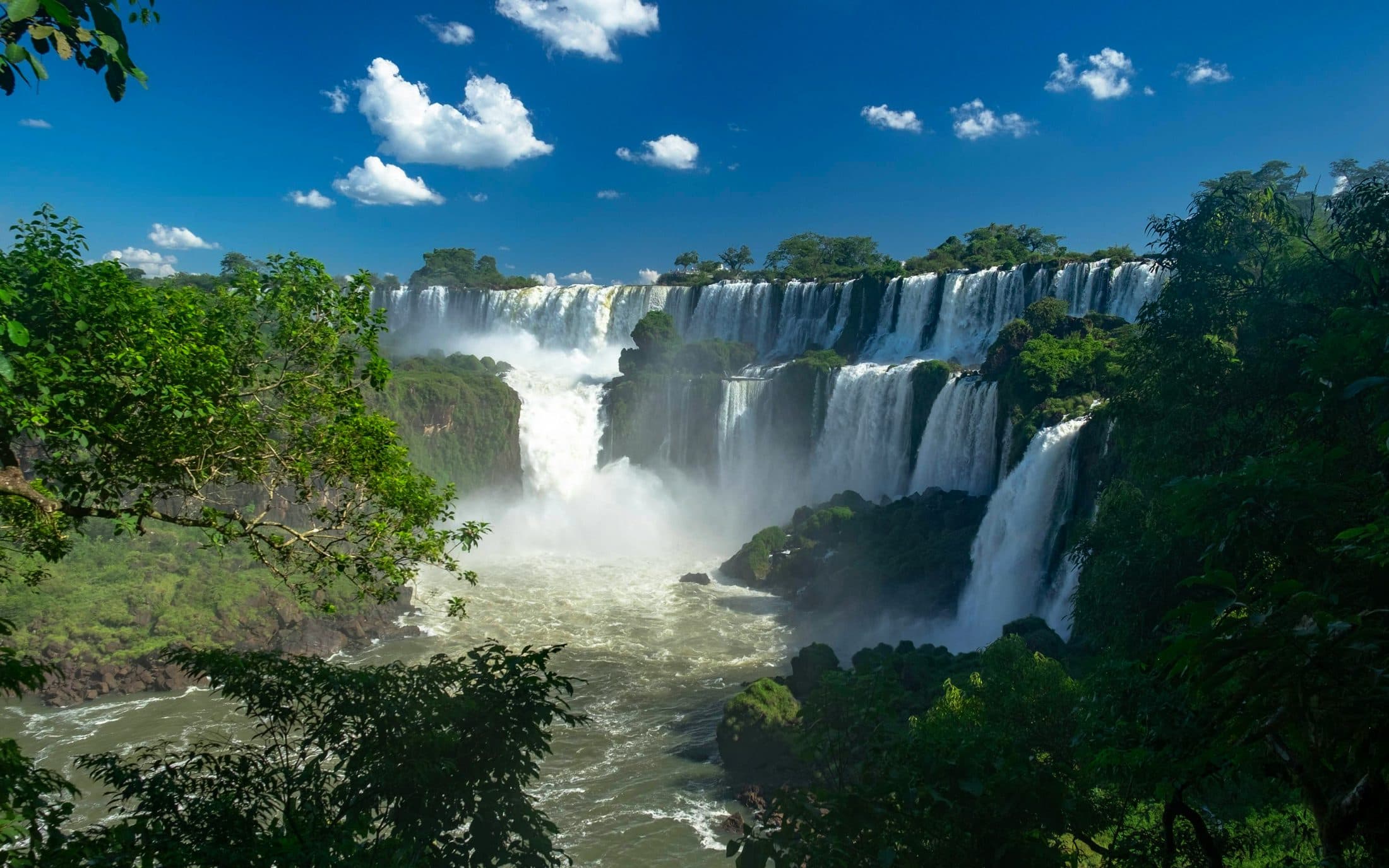
The Argentine side of the Iguazú Falls, on UNESCO’s list since 1984: the walkways of the Upper and Lower Circuits among the falls, the balcony at the Devil’s Throat, the forest train and trails of Iguazú National Park, Puerto Iguazú where three countries meet, and Brazil’s side of the falls as a day across the border.
Iguazú National Park, a national park since 1934 and a World Heritage site since 1984, holds the Argentine side of one of the largest waterfalls in the world.
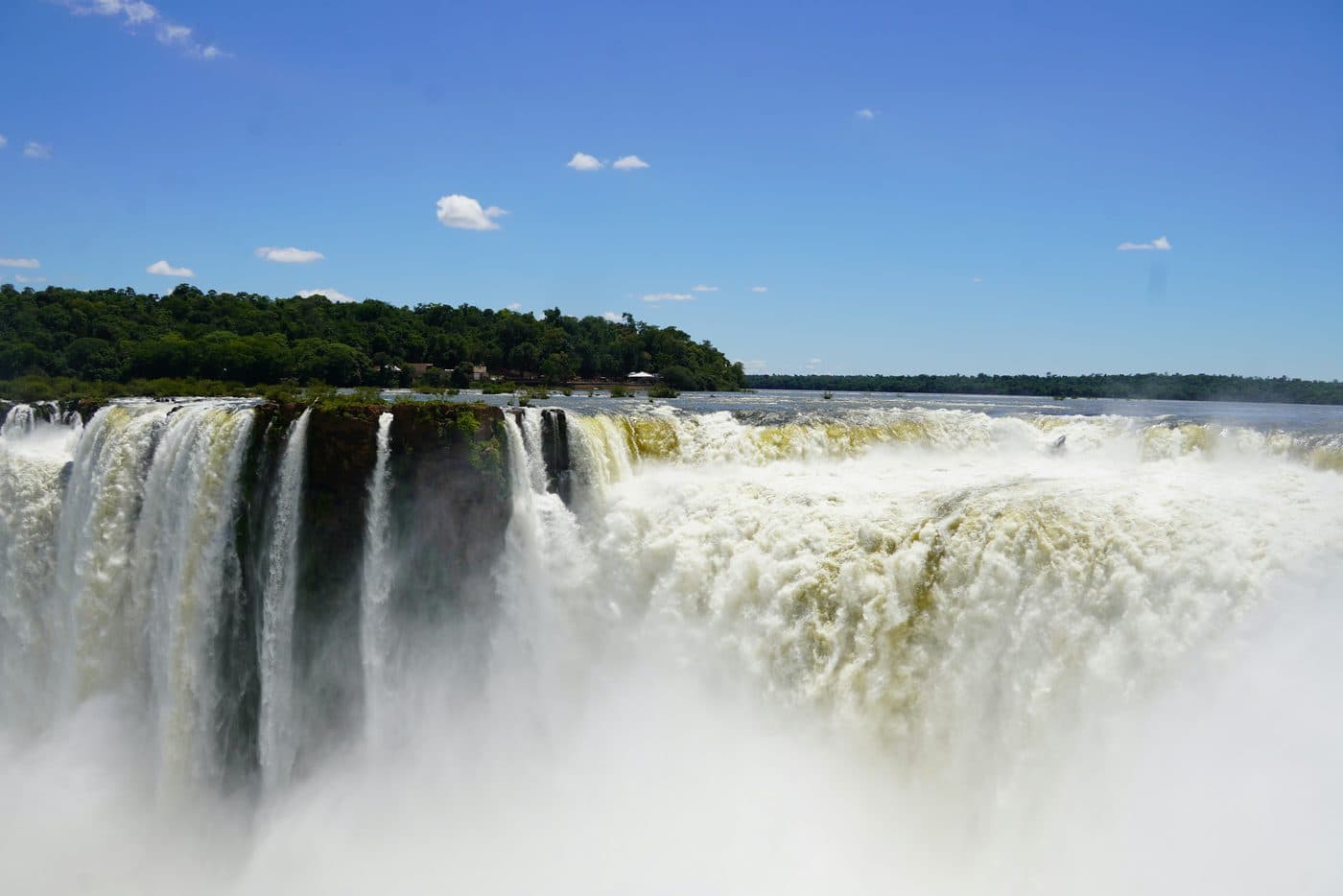
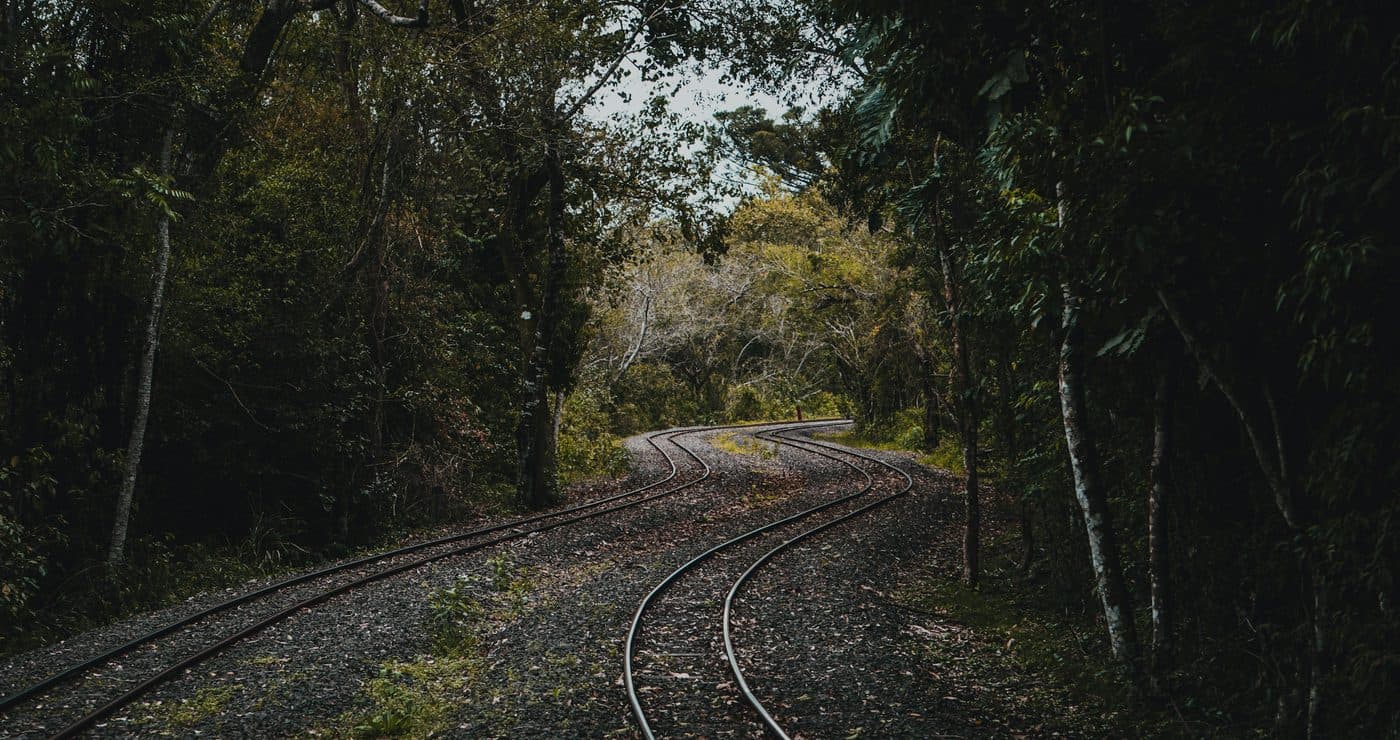
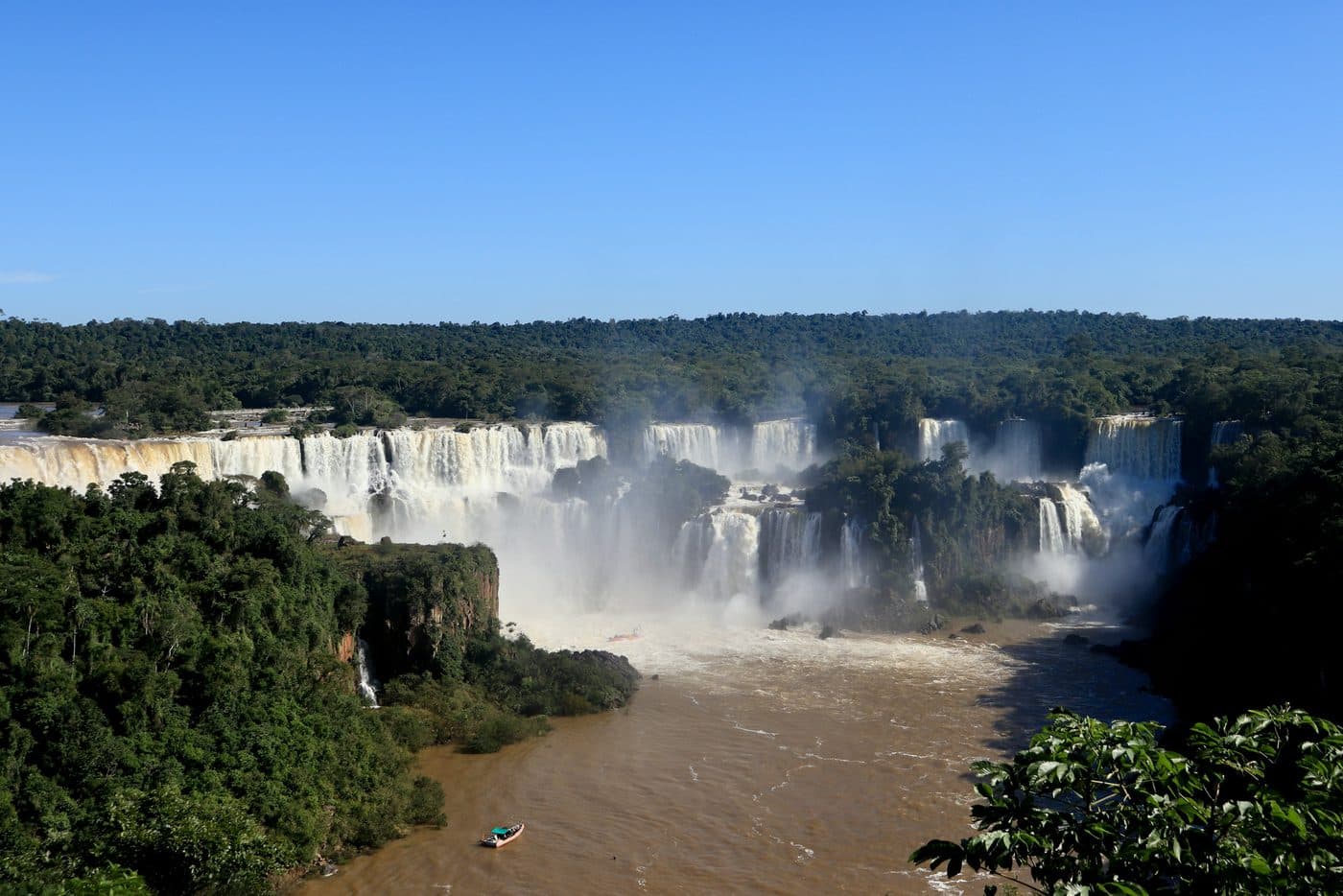
On the border with Brazil, the Iguazú – a name that, UNESCO notes, means “great water” – drops some 80 m in a horseshoe of cascades almost three kilometres wide, and its clouds of spray keep the river’s islands and the subtropical forest around them soaked all year. The park’s walkways follow the top of the falls on the Upper Circuit and go down among them on the Lower Circuit, and a third walkway leads to a balcony at the edge of the Devil’s Throat (Garganta del Diablo), the falls that carry the most water; a small train with open carriages links three stations in the forest, and a rough trail leads to a quieter fall with a natural pool. Puerto Iguazú, the town, lies about 18 km away by road, where the Iguazú flows into the Paraná and Argentina, Brazil and Paraguay meet. Across the river, Brazil’s Iguaçu National Park, on the list since 1986, looks at the falls from the other bank.
Couples come here for portraits on the walkways and in the forest, for a symbolic ceremony by a waterfall and, since the province opened its registry to visitors, for a legal wedding too. In Argentina only a civil wedding is legal: an officer of the civil registry (Registro Civil) marries you before two witnesses at the registry office or four outside it, and same-sex couples have married on the same terms since 2010. The Civil and Commercial Code ties the wedding to the registry where one of you is domiciled, and each province – and the City of Buenos Aires – sets its own rules for couples who both live abroad: the City marries visitors at its central registry, free, with a notary’s record of their address in the city and two witnesses holding an Argentine identity card (DNI); Río Negro, Misiones and Jujuy accept such couples too, each with its own papers; elsewhere – the Province of Buenos Aires included – ask the local registry. Papers from abroad need an apostille (or consular legalisation) and a translation by an Argentine sworn translator (traductor público), a partner who doesn’t speak Spanish must be assisted by one at the ceremony, and a religious or symbolic ceremony has no legal effect on its own. Misiones has accepted couples who don’t live in Argentina since July 2023 (Resolution 452/2023 of its Ministry of Government): a notary-certified copy of your passport showing a local reference address is the proof of a temporary stay that the provincial registry (Registro Provincial de las Personas) asks for, and couples passing through can marry within five working days of applying there in person. A wedding inside the park also needs the park’s own permission, as below.
Photographers
They still have dates open here. Their whole weddings and free dates are on their page.
See the photographerBooking through Lens & Vows
Through the year
April and May, August and September are the easiest months, between summer’s heat and storms and winter’s fog. The figures here are SMN’s official normals for 1991–2020 at Iguazú Aero, the weather station at Puerto Iguazú’s airport, at 270 m and about 6 km from the Devil’s Throat. Highs average about 28 °C in April, 24 °C in May, 25 °C in August and 27 °C in September, and 1 mm of rain or more falls on about seven days in April, eight in May, six in August and eight in September; August is the driest month of the year, with 84 mm. Rain is never far away here: the station averages about 1,960 mm a year on about 100 days, with thunderstorms on 82. From October to March highs reach 29 to 32 °C, humidity stays near 80 % and thunder comes on seven to ten days a month, and October is the wettest month, with 247 mm; June and July are the coolest, around 22 °C by day, with the most fog and the least sun. Keep a covered plan for any date, and save the falls for the morning.
Weather station: Iguazú Aero, normals 1991–2020 · Checked 24 November 2026
Places
The kinds of places — ask your photographer which ones they know well.
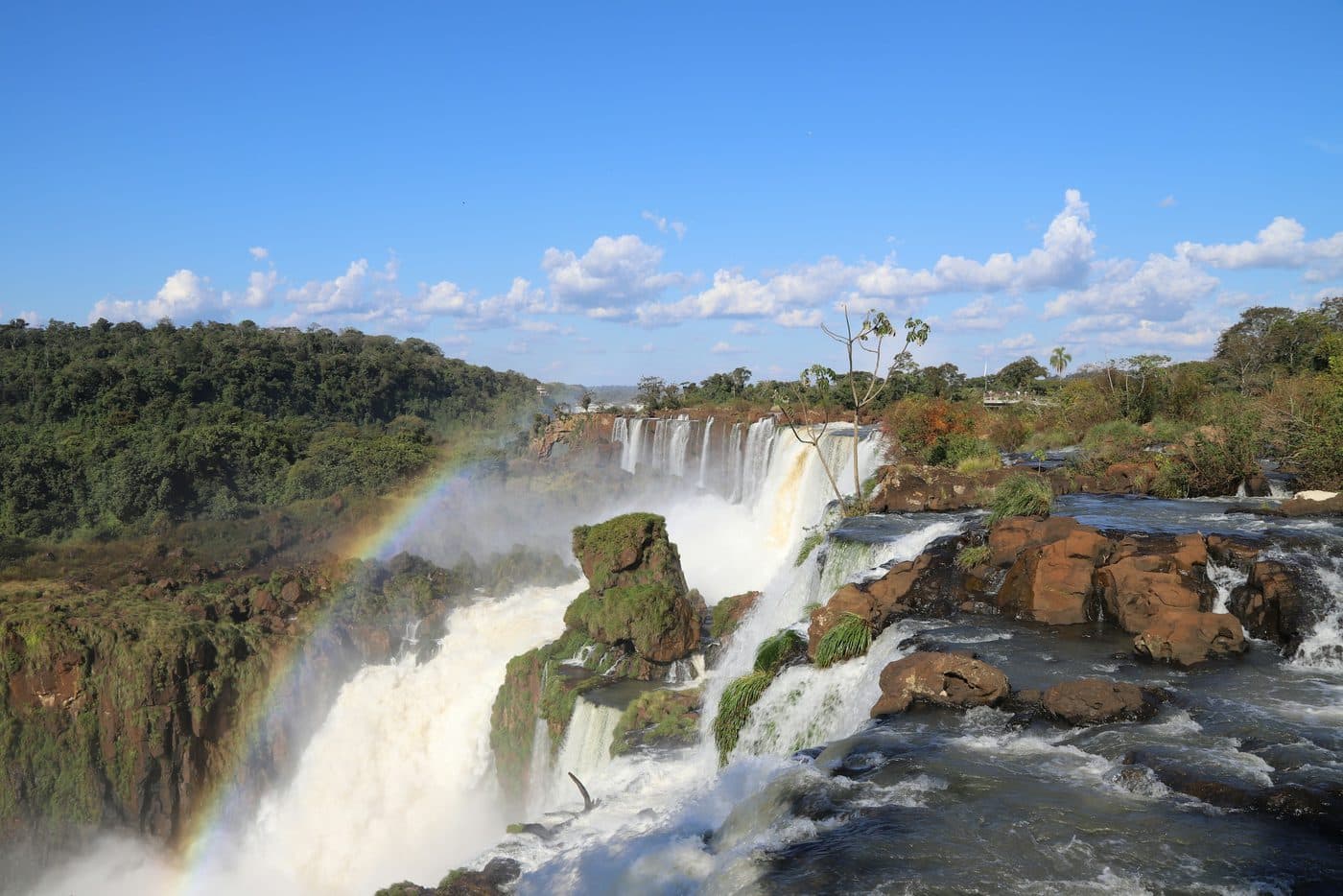
Both circuits are walked on walkways and paths among the falls, and the park keeps them open even in steady rain. The Upper Circuit, 3.7 km there and back, about 90 minutes and wheelchair-accessible all the way, follows the top of the falls: past the twin Dos Hermanas falls and the Mbiguá fall, which looks across to San Martín Island, to a balcony over the San Martín fall, the second-largest in the park. The Lower Circuit, 2.9 km and about 90 minutes, starts at the small square by the Dos Hermanas fall and drops among the falls, with steep stairs on some stretches and an adapted path that lets a wheelchair do about 70 % of it, to viewpoints beneath the falls and out over the San Martín fall, the Devil’s Throat and the river. Both open in the morning with the park and let in their last visitors at 16:45, in an area that opens every day from 8:00 to 18:00, rain or shine, with last entry at 16:00 (from 7:00 on its extended-hours days). Expect to share every balcony: the walkways are every visitor’s way through, and the spray reaches many of them, so the park itself advises a raincoat; some balconies are known for rainbows in the mist. For somewhere quieter, the Macuco trail, 7.6 km there and back and about three hours on a rough path with no services, open from 8:00 to 15:00 when the rangers allow, ends at the Arrechea fall, a 23 m drop into a natural pool of clear water.
From Estación Central the train runs through Estación Cataratas to Estación Garganta, and from there a walkway, 2.2 km there and back and step-free, with views up the wide Iguazú, leads to a balcony at the edge of the falls that carry the most water, where they drop 80 m in front of you. The last train there leaves Estación Central at 15:30 and access to the walkway ends at 16:30, so this is a morning or midday visit; a 2.3 km footpath from Estación Cataratas, about 40 minutes, is the alternative to the train. It is the place everyone comes for, so expect company on the balcony, and the spray soaks everyone on it. It also depends on the river, whose level, UNESCO notes, is altered by power plants upstream in Brazil: the park shuts the walkway when the water runs high, and it was shut, for the river’s rising flow, when we checked on 24 November 2026. Check its status on the park’s site the day before you plan a portrait there.
In a national park, the Administración de Parques Nacionales decides: a paid photo shoot needs its permission – either the photographer holds a licence from that park, or the shoot is approved as a production, asked for at least 20 working days ahead, for a fee per day counted in park entry tickets and a quarter more in a World Heritage park; drones are banned unless it expressly authorises them, and even then fly only outside opening hours; a ceremony, a toast or any other gathering is a special event, which needs the park’s own authorisation and a fee, asked for well ahead. Ask the park’s office (intendencia) before you plan anything there. In Iguazú National Park, a resolution of December 2025 lets the park’s own office authorise “microevents” of up to 60 people in the Área Cataratas, the part of the park with the falls, the walkways and the train, if asked at least five working days ahead, as events run with the park’s licensed providers and concessionaires: no more than two a day, within opening hours and without closing the way to other visitors, with no amplified sound, nothing fixed to the ground, no single-use plastics, all waste taken away and no drones, save an extraordinary authorisation. It was made for one year from 22 December 2025, so ask whether it still applies on your date. Above 60 people, the special-event rules above apply. The Dos Hermanas fall, where the Lower Circuit begins, is where the province announced its first wedding of foreign tourists under the new rule, in January 2024, and the park’s concessionaire offers private toasts, cocktails and meals in the clearing beside it, as well as a table set before the fall on the Devil’s Throat balcony and private trains.
In Puerto Iguazú, the Tres Fronteras viewpoint on the riverside avenue looks out where the Iguazú meets the Paraná, with Brazil across one river and Paraguay across the other, and as the Paraná runs north to south there, the sun goes down over it all year. A monument to the Malvinas (Falklands) stands a few dozen metres from the landmark: it is a memorial, not a backdrop, so frame the rivers. For the Brazilian side, the road crosses into Brazil at the border crossing between Puerto Iguazú and Foz do Iguaçu and reaches the visitor centre of Iguaçu National Park, 15.5 km from Puerto Iguazú’s main square; park buses run from there to the Trilha das Cataratas, about 1.5 km of path with wide views of the falls that ends on a walkway facing the Devil’s Throat. Tickets carry a date and an entry time, from 9:00 to 16:00 on weekdays and from 8:30 at weekends, and visitors may stay until 17:30. Bring your passports: on Brazil’s visa table of 7 October 2026, citizens of the United States, Canada and Australia need a visa to visit, those of the EU, the United Kingdom and Japan need none for up to 90 days, and Argentines may enter with their identity card.
Light
The sun stands almost overhead at noon here in midsummer, about 88 degrees high on 21 December, and still 41 degrees at midwinter, so the falls are bright and hard-lit for most of the day. On 21 December it rises at about a quarter to six and sets at about half past seven, a little south of west; on 21 June it rises at about twenty-five past seven and sets at about five to six, north of west. Access to the circuits ends at 16:45 (16:30 for the Devil’s Throat) and the area closes at 18:00, around sunset from May to July and before it in every other month, so a normal visit gets the morning and the middle of the day, with the low sun of a winter afternoon only if you are still on a walkway. Come for the opening, when the winter sun is still low. The spray throws rainbows when the sun is behind you, and some of the park’s balconies are known for them. For the last light on the falls, the park runs its own guided sunset walk on set dates after closing time, which comes with its own photography service – ask before bringing your photographer – and full-moon walks on five nights a month to the Upper Circuit’s viewpoints, with no artificial light. Outside the park, the Tres Fronteras viewpoint in Puerto Iguazú keeps the sunset. Sunshine averages six and a half hours a day in January and under four in June (SMN, 1991–2020).
Travel
Puerto Iguazú’s airport, Cataratas del Iguazú International, is 9 km by road from the park’s Estación Central and 20 km from the town’s main square, and the fastest direct flight from Buenos Aires takes about two hours (1 h 55 min). Foz do Iguaçu’s airport, on the Brazilian side, is 15 km from Puerto Iguazú’s main square and 8 km from the Brazilian park’s visitor centre; from the town to the park’s Estación Central it is 18 km. Entry to Iguazú National Park costs AR$60,000 for international visitors as of November 2026 (AR$25,000 for residents of Argentina), with half off a second day within 72 hours; tickets are sold for a day and an entry time, can’t be changed once bought, and include the train. The train leaves Estación Central from 8:20, every 20 to 30 minutes and every 15 in high season, for Estación Cataratas and Estación Garganta; the last one out leaves at 15:30 and the last one back at 17:30, and it takes wheelchairs and pushchairs. Instead of the train, the Sendero Verde, a 650 m path through the forest, walks you from the entrance area to Estación Cataratas in 15 minutes. Drones follow the rules of Argentina’s civil aviation authority, ANAC (Resolution 550/2025, amended in May 2026): a drone under 250 g is outside them; one from 250 g to 25 kg needs no permit once it is registered – with ANAC, by a free declaration the rules let you make with a passport, or with the aviation authority of the country where it is registered – and flies in sight, below 400 ft (122 m), never over a crowd, over people only with their consent, not inside an airport’s control zone and no higher than 43 m within 5 km of a runway. National parks ban drones unless the parks administration expressly allows them, so ask the place, and the park, before you fly.
Plan
Argentina