Founding photographer
Julián R.from $3,790,000
🇦🇷 Buenos Aires & the Pampas, Mendoza & the Uco Valley +34, Argentina · Documentary, Fine artWedding photographers in Argentina
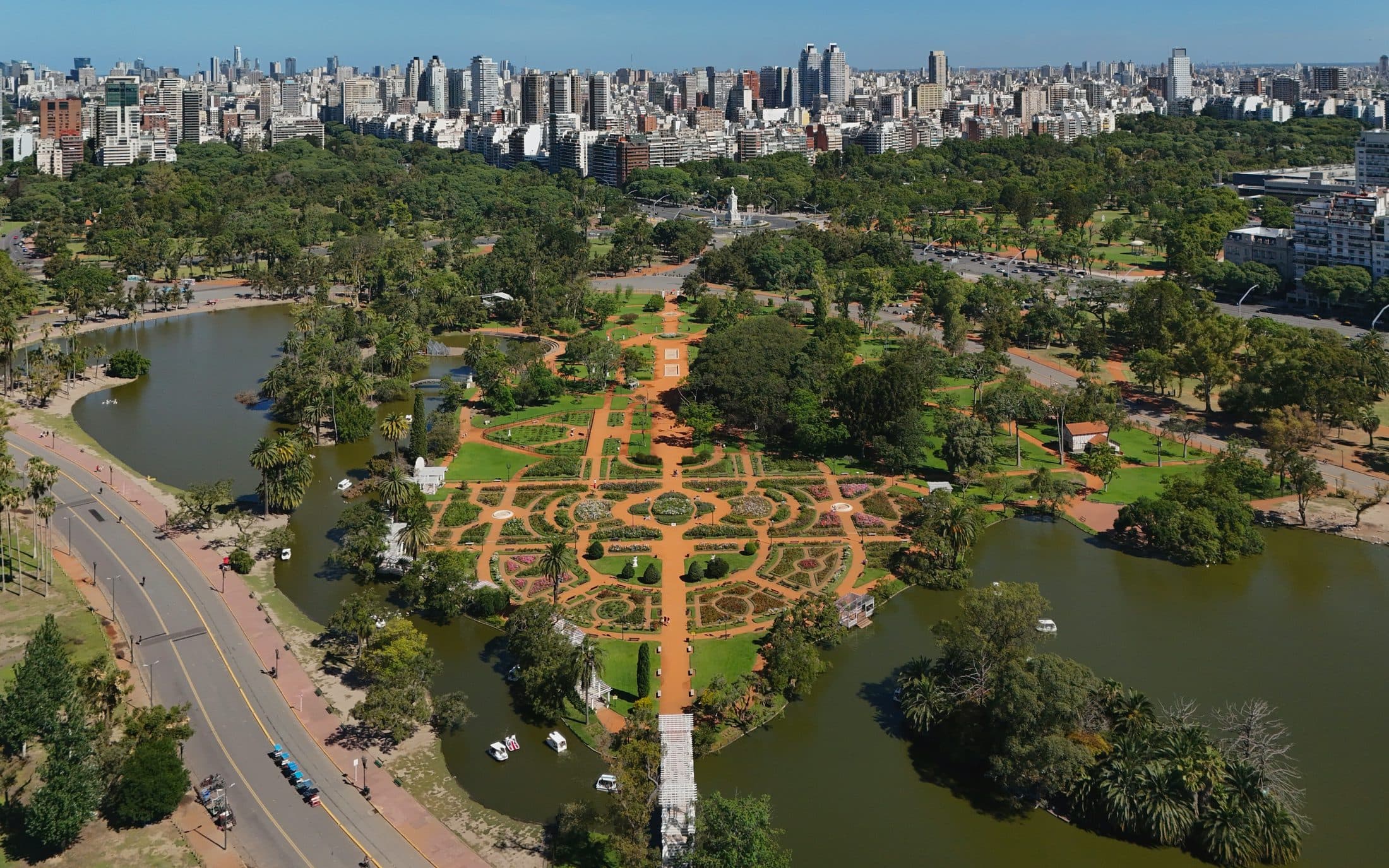
Buenos Aires on the Río de la Plata — Palermo’s lakes and rose garden, San Telmo’s cobbled streets, La Boca’s painted houses, the docks of Puerto Madero and the Teatro Colón on the grand avenues — with the islands and channels of the Tigre delta 33 km away by road and, an hour and a half out on the Pampas, San Antonio de Areco and its estancias.
Buenos Aires spreads along the Río de la Plata, and a wedding here moves between grand avenues and green parks.
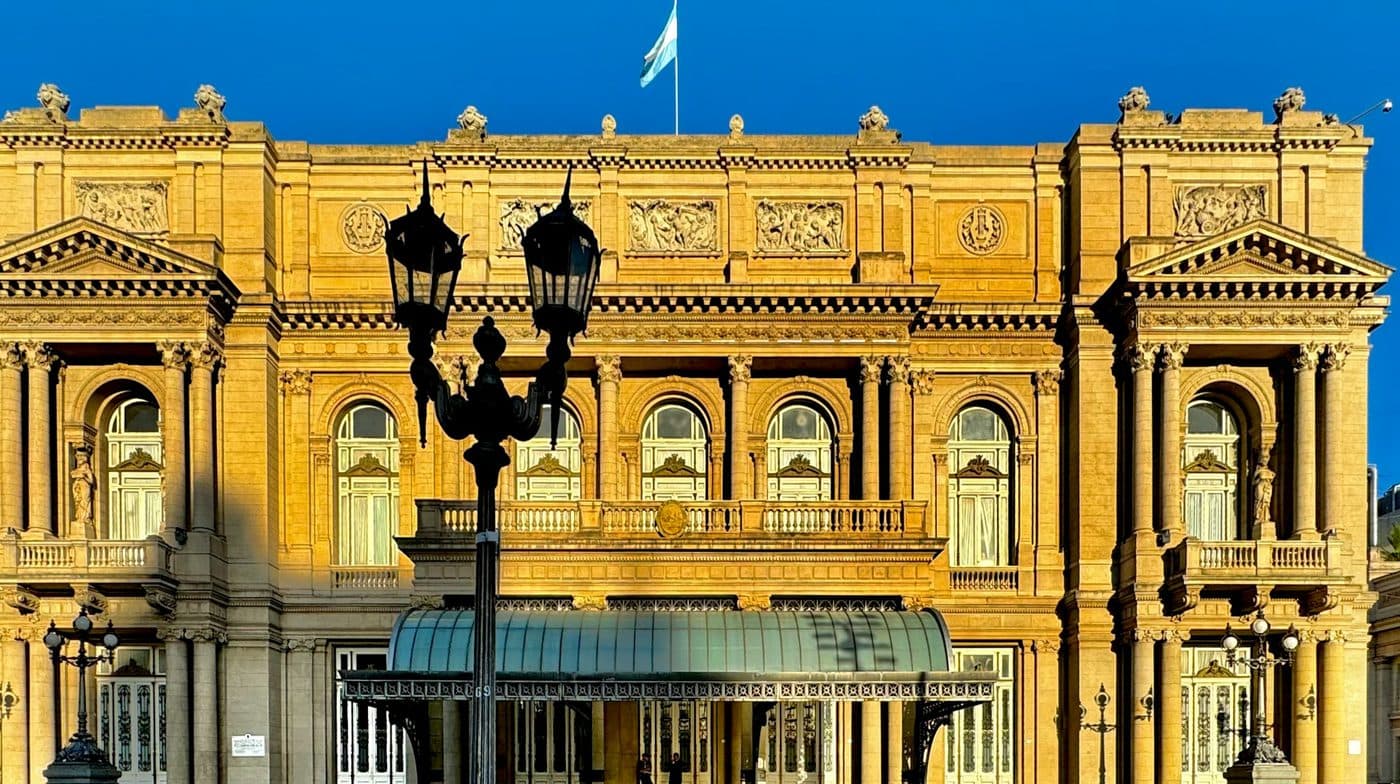
In Palermo, the Parque Tres de Febrero — the Bosques de Palermo, opened in 1875 — covers 370 hectares of woods, squares and four lakes; at its heart the Rosedal, finished in 1914, holds more than 18,000 roses on 3.4 hectares beside its lake, with an Andalusian patio given by Seville in 1929 and a poets’ garden of 26 busts. San Telmo, one of the city’s oldest quarters, keeps cobbled streets, low houses and patios with old cisterns around the Plaza Dorrego, the oldest square after the Plaza de Mayo; in La Boca, Caminito is an open-air street museum almost 150 m long, its corrugated-iron tenements painted in many colours, made in 1959 on the track of a railway closed in 1928. Between the old centre and the river, Puerto Madero, the youngest district, has turned the red-brick warehouses of the old port into a quarter crossed by the Puente de la Mujer, a swing footbridge opened in 2001, and beyond it the Costanera Sur ecological reserve covers 350 hectares of woods, grassland, lagoons and marsh. In the centre, the Teatro Colón, opened on 25 May 1908, stands a few hundred metres from the Obelisk, 67.5 m high since 1936, on the Avenida 9 de Julio, and the Avenida de Mayo, opened in 1894, runs from the Casa Rosada to Congress.
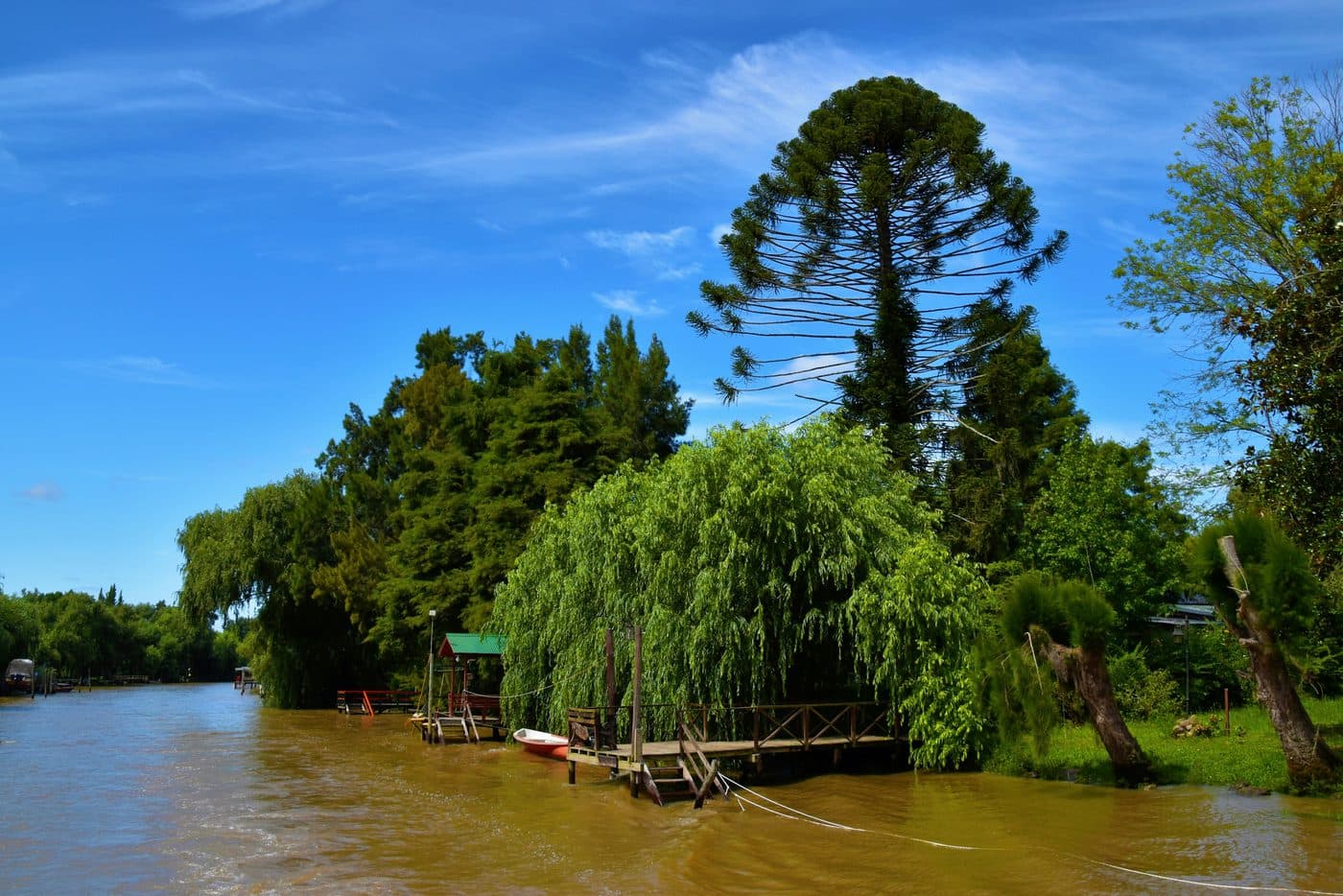
Up the river, 33 km from the Obelisk by road, Tigre is the gateway to the delta of the Paraná, which the town calls the fifth largest in the world: islands without roads, reached by the lanchas colectivas, the islanders’ river buses, from the town’s river station, with rowing clubs founded in the late 19th century on both banks of the Luján. Inland, San Antonio de Areco, at kilometre 113 of Ruta Nacional 8, holds the country’s oldest criollo festival, the Fiesta de la Tradición, in the week of 10 November, and estancias around the town open for a día de campo, a day in the country with horsemanship, an asado and folk music. So a wedding here can be a ceremony in the city and a long party by the river or out on the Pampas. In Argentina only a civil wedding is legal: an officer of the civil registry (Registro Civil) marries you before two witnesses at the registry office or four outside it, and same-sex couples have married on the same terms since 2010. The Civil and Commercial Code ties the wedding to the registry where one of you is domiciled, and each province – and the City of Buenos Aires – sets its own rules for couples who both live abroad: the City marries visitors at its central registry, free, with a notary’s record of their address in the city and two witnesses holding an Argentine identity card (DNI); Río Negro, Misiones and Jujuy accept such couples too, each with its own papers; elsewhere – the Province of Buenos Aires included – ask the local registry. Papers from abroad need an apostille (or consular legalisation) and a translation by an Argentine sworn translator (traductor público), a partner who doesn’t speak Spanish must be assisted by one at the ceremony, and a religious or symbolic ceremony has no legal effect on its own. In the city, you start once you are in Argentina, by emailing the registry its sworn forms and your passports, and you marry at its head office, Uruguay 753, on a date within five working days once your papers are approved. The Rosedal and the Japanese Garden are among the City’s landmark places for civil weddings, for up to 40 people with the couple and the witnesses, but those, like a wedding at a private address, are only for couples in which one partner has a City address on their DNI. Tigre and San Antonio de Areco are in the Province of Buenos Aires, whose procedure card, updated on 18 November 2026, accepts foreigners in transit or living abroad with a passport and a sworn statement of their residence in the province, at the registry office (delegación) they choose, confirmed in person 30 days before the date, while its registry’s own page still speaks of a partner’s domicile, so ask that office; a registrar who comes out to an estancia performs, in the registry’s own word, a symbolic act, the legal part being done at the office.
Photographers
They still have dates open here. Their whole weddings and free dates are on their page.
See the photographerBooking through Lens & Vows
Through the year
March, April, October and November are the easiest months. The figures here are the Servicio Meteorológico Nacional’s 1991–2020 normals for its station Buenos Aires Observatorio, at 25 m, about 9.5 km west of the Obelisk. There, highs average about 27 °C in March, 23 °C in April and October and 26 °C in November, with nights of 13 to 18 °C, and 1 mm of rain or more falls on about seven days a month, eight in October, some 120 to 130 mm a month. December to February are hot: January is the hottest month, at 30 °C by day and 20 °C at night, and also the wettest, with 134 mm. June to August are mild, with highs of 16 to 18 °C, nights of 8 or 9 °C, rain on five or six days a month and frost on about one night a year.
Weather station: Buenos Aires Observatorio, normals 1991–2020 · Checked 24 November 2026
Places
The kinds of places — ask your photographer which ones they know well.
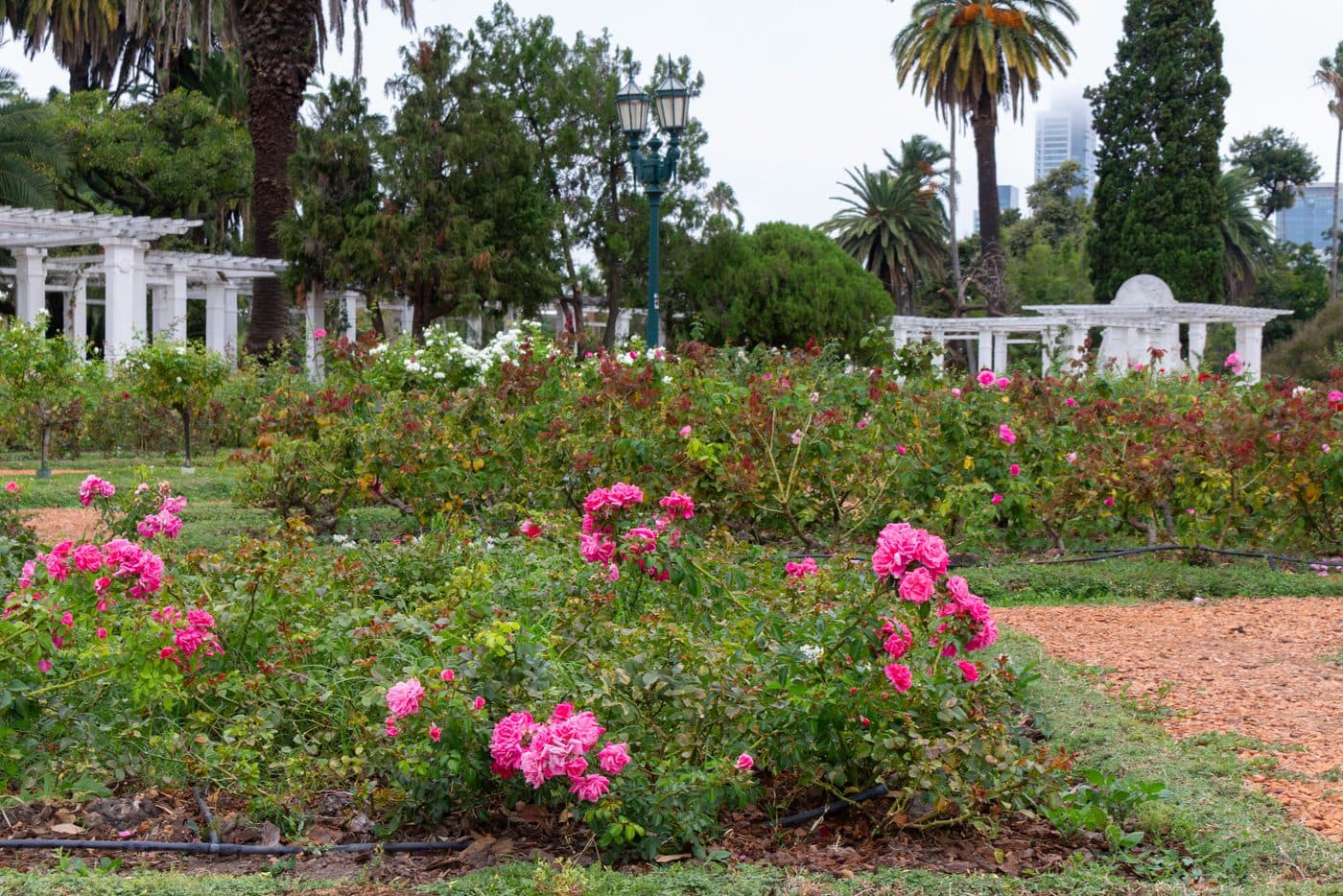
Most of the Parque Tres de Febrero is open and free, the Rosedal included; the Japanese Garden, the Planetarium and the Sívori museum inside it charge for entry. Its woods count more than ten thousand trees — tipas, eucalyptus, talas and ombúes — and swans, herons and ducks live on its lakes, where pedal boats go out. The Rosedal, finished in 1914 and given the World Federation of Rose Societies’ Garden Excellence Award in 2012, has more than 18,000 roses — the red Sevillana, pink and pale yellow varieties — in beds along paths by its lake, beside the Andalusian patio of 1929 and the poets’ garden. We found no rule of the City aimed at a couple and their photographer in its parks, so ask the City before bringing a set, props or a group. Aeroparque, the city airport, lies on the river under 1.5 km away: see the drone note below.
San Telmo’s cobbles, antique shops on Defensa and 19th-century houses suit a morning walk. The Plaza Dorrego, a National Historic Monument where the people of Buenos Aires heard the declaration of independence in September 1816, fills every Sunday with the antiques fair the City’s museum began in 1970 and with a patio of tango, the dance UNESCO added to the intangible heritage of humanity in 2009, so a weekday is quieter. In La Boca, the City calls Caminito one of the most photographed places in the world. Down at the docks, the Puente de la Mujer, 160 m long under a 39 m mast, swings open to let sailing boats through — the mast stands for a man and the curve for a woman dancing a tango — and the padlocks couples leave on its rail are cut off every so often, because their weight and rust harm the bridge. Beyond the docks, the Costanera Sur reserve, a Ramsar wetland since 2005, has six trails, walkways laid in 2023 for older visitors, wheelchairs and children, and viewpoints in the shade of ceibos, whose flower is Argentina’s national flower.
The Teatro Colón, with 2,478 seats in a horseshoe hall under three tiers of boxes, is visited on guided tours with a ticket from its box office or its website; we found no rule of its own on photo sessions, so frame its façade from the street. A few hundred metres away, the Obelisk marks the crossing of the Avenida 9 de Julio, known as the widest in the world, with Corrientes, and since 2025 a glass lift takes visitors up to its windows almost 70 m above the street. The Avenida de Mayo, 30 m wide and a National Historic Place, runs from the Casa Rosada to Congress past façades often compared with Madrid’s Gran Vía; it is also where the city marches, so check your date. At its eastern end, in the Plaza de Mayo, the white headscarves painted on the ground round the Pirámide de Mayo mark where the Mothers of the Plaza de Mayo have gathered since 1977 to demand the return of their children, abducted under the last military government: a memorial, not a backdrop. So is the Recoleta Cemetery, however many visitors it draws.
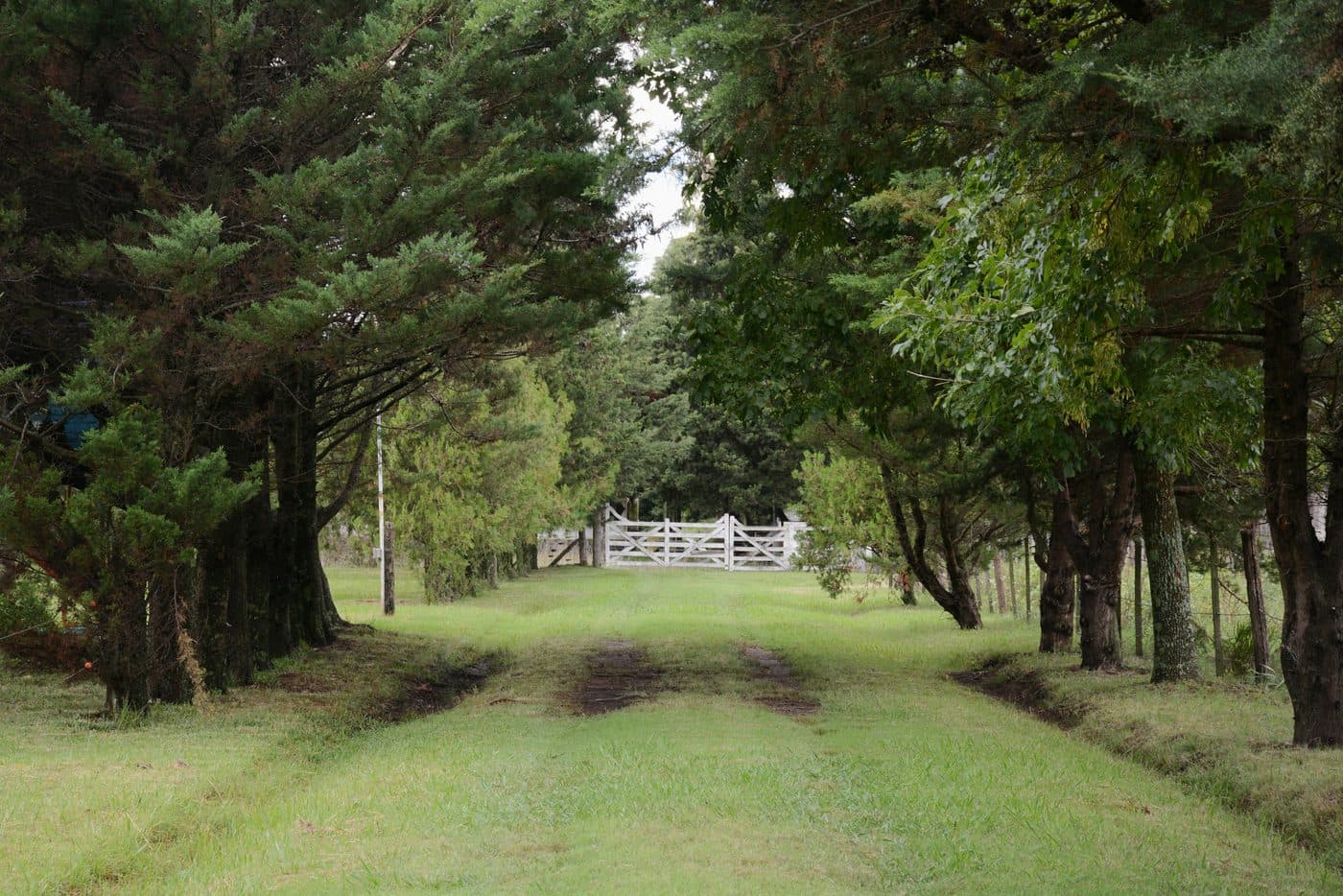
There are no public islands in the delta: private jetties are for their owners alone and public ones only for getting on and off the boats, so a session on an island happens on ground you have arranged, at a riverside recreo or a house with its own jetty. The lanchas colectivas run in the rain, but fog or low water cancels or changes some routes. On the mainland, the Paseo Victorica follows the river in the shade of its trees, past old summer houses and rowing clubs, with bridges to photograph from, to the Museo de Arte Tigre, a belle-époque building that was the Tigre Club, Argentina’s first casino, and has been a museum since 2006; the Puerto de Frutos market nearby opens every day except 25 December and 1 January. Out on the Pampas, the estancias around San Antonio de Areco take guests for the day or the night, and in the week of the town’s Fiesta de la Tradición there is folk music and dancing every day and displays of horsemanship at the Parque Criollo.
Light
The times here are for a flat horizon at the Obelisk; Argentina keeps UTC−3 all year, with no summer time since 2009. The river lies east of the city, so from the water’s edge at Puerto Madero and the Costanera Sur the sun rises over the Río de la Plata and sets behind the city, whose blocks take the last of it in the streets well before these times; Palermo’s lakes and the open Pampas keep it longer. On 21 December the sun rises at about twenty-five to six and sets at about five past eight, in the south-west; it is still ten degrees up at about ten past seven and six degrees at about half past seven, and the sky stays light until about twenty-five to nine. At noon it stands almost overhead, 79 degrees high, so the middle of a summer day is for the ceremony indoors or in the shade and the last two hours for the portraits. At midwinter it is up only from about eight to ten to six. Buenos Aires Observatorio averages almost nine hours of sun a day in December and January and four and a half in June (1991–2020). In San Antonio de Areco the sun sets about three minutes later than in the city.
Travel
Ezeiza, the international airport, is 32 km by road from the Obelisk; Aeroparque Jorge Newbery, on the river by Palermo, handles domestic flights and flights to neighbouring countries. The fastest direct flights take about 13 hours from Madrid, 13 hours 50 minutes from Frankfurt, 14 hours from Paris and 14 and a half from Rome, and there is no direct flight from Lisbon (as of November 2026). From the Obelisk, the Plaza Dorrego and the Puente de la Mujer are 3 km by road, Caminito 5 km and the Rosedal 8 km. Tigre is 33 km away, about half an hour by car on the Autopista del Sol, or about 50 minutes on the Mitre line’s direct trains from Retiro, though Tigre’s tourist office gave that service as suspended until 28 February when we read it in November 2026; San Antonio de Areco is 120 km away, about an hour and a half on Ruta Nacional 8. From Ezeiza, Tigre is 52 km and San Antonio de Areco 139 km. Drones follow the rules of Argentina’s civil aviation authority, ANAC (Resolution 550/2025, amended in May 2026): a drone under 250 g is outside them; one from 250 g to 25 kg needs no permit once it is registered – with ANAC, by a free declaration the rules let you make with a passport, or with the aviation authority of the country where it is registered – and flies in sight, below 400 ft (122 m), never over a crowd, over people only with their consent, not inside an airport’s control zone and no higher than 43 m within 5 km of a runway. National parks ban drones unless the parks administration expressly allows them, so ask the place, and the park, before you fly. Aeroparque’s runway lies on the river under 1.5 km from the Rosedal and about 6 km from the Obelisk in a straight line, so the Rosedal and Palermo’s lakes lie well within 5 km of a runway.
Plan
Argentina