Verified — Identity verified by Lens & Vows

Erik V.from €900
The Soča Valley & Brda, Bled & Bohinj +35 · DocumentaryBased in Austria · travels to weddings in SloveniaWedding photographers in Slovenia
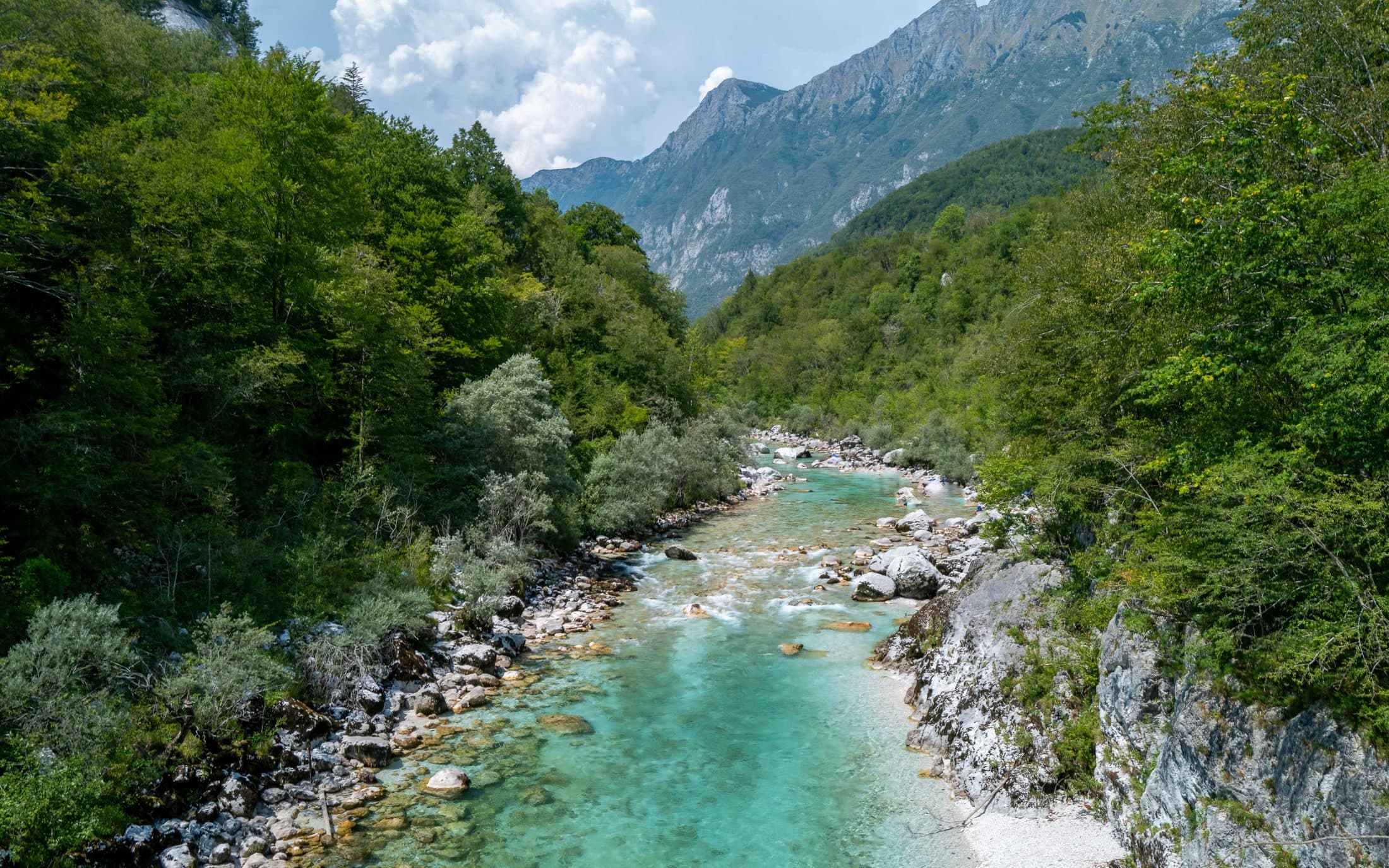
A river of clear blue-green water running south from the Julian Alps: Bovec under its peaks, the Great Soča troughs in Triglav National Park, the Kozjak falls in their chamber of rock near Kobarid, the Tolmin gorges, Kanal’s old bridge and, at the valley’s southern end, the vineyard hills of Goriška Brda, with the walled village of Šmartno, Medana and the castle of Dobrovo.
The Soča — the Isonzo in Italian — runs south out of the Julian Alps past Bovec, Kobarid, Tolmin and Kanal.
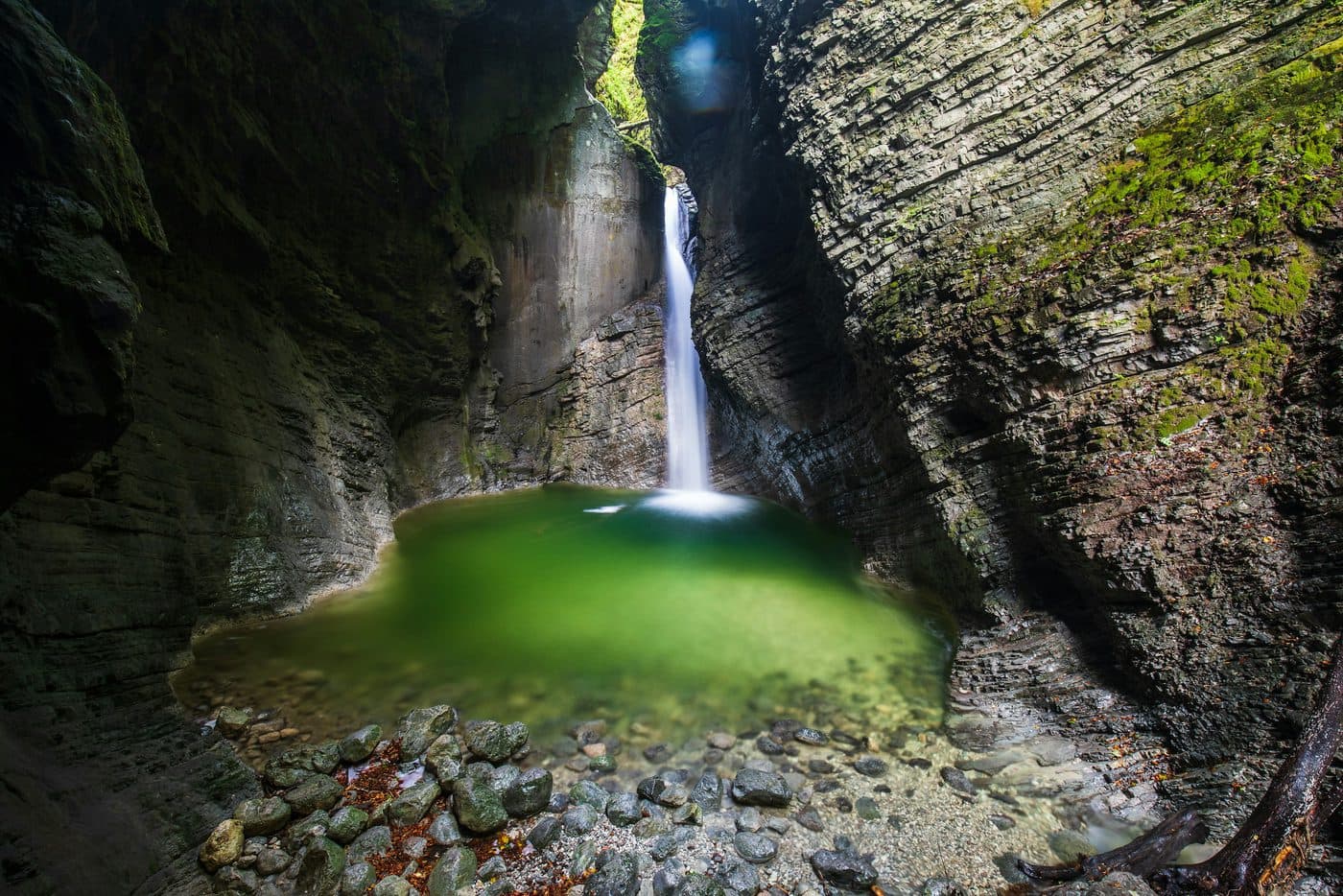
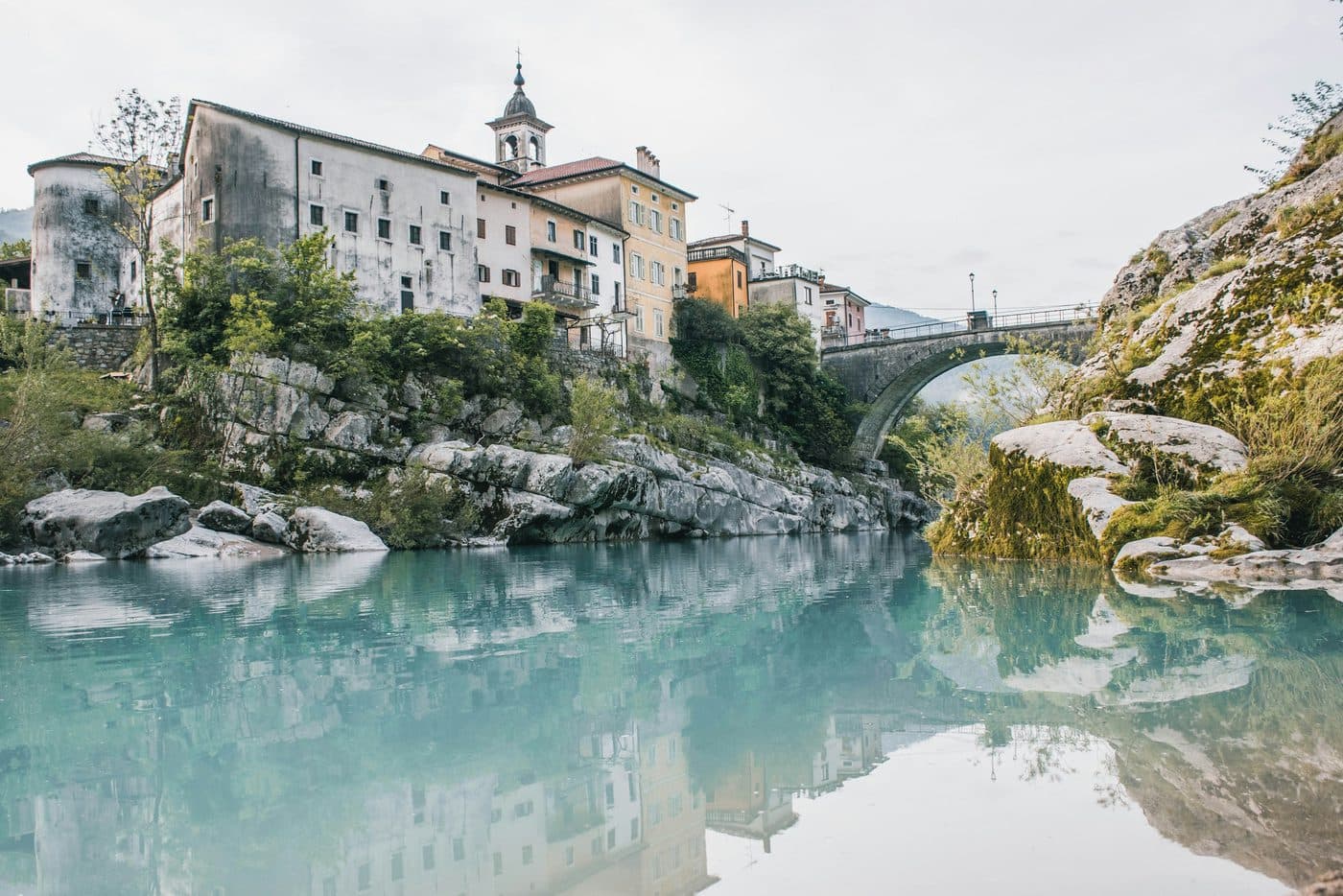
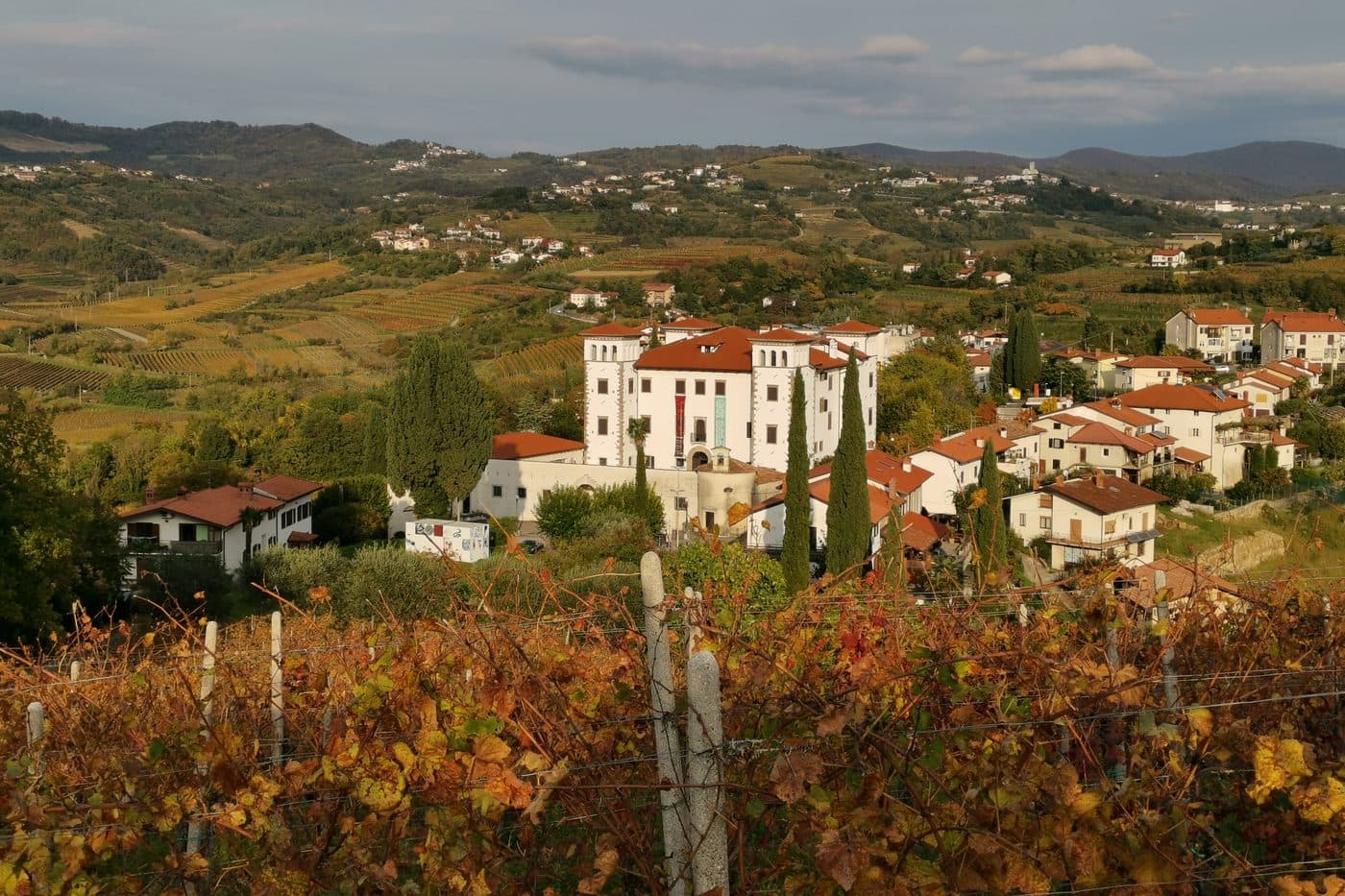
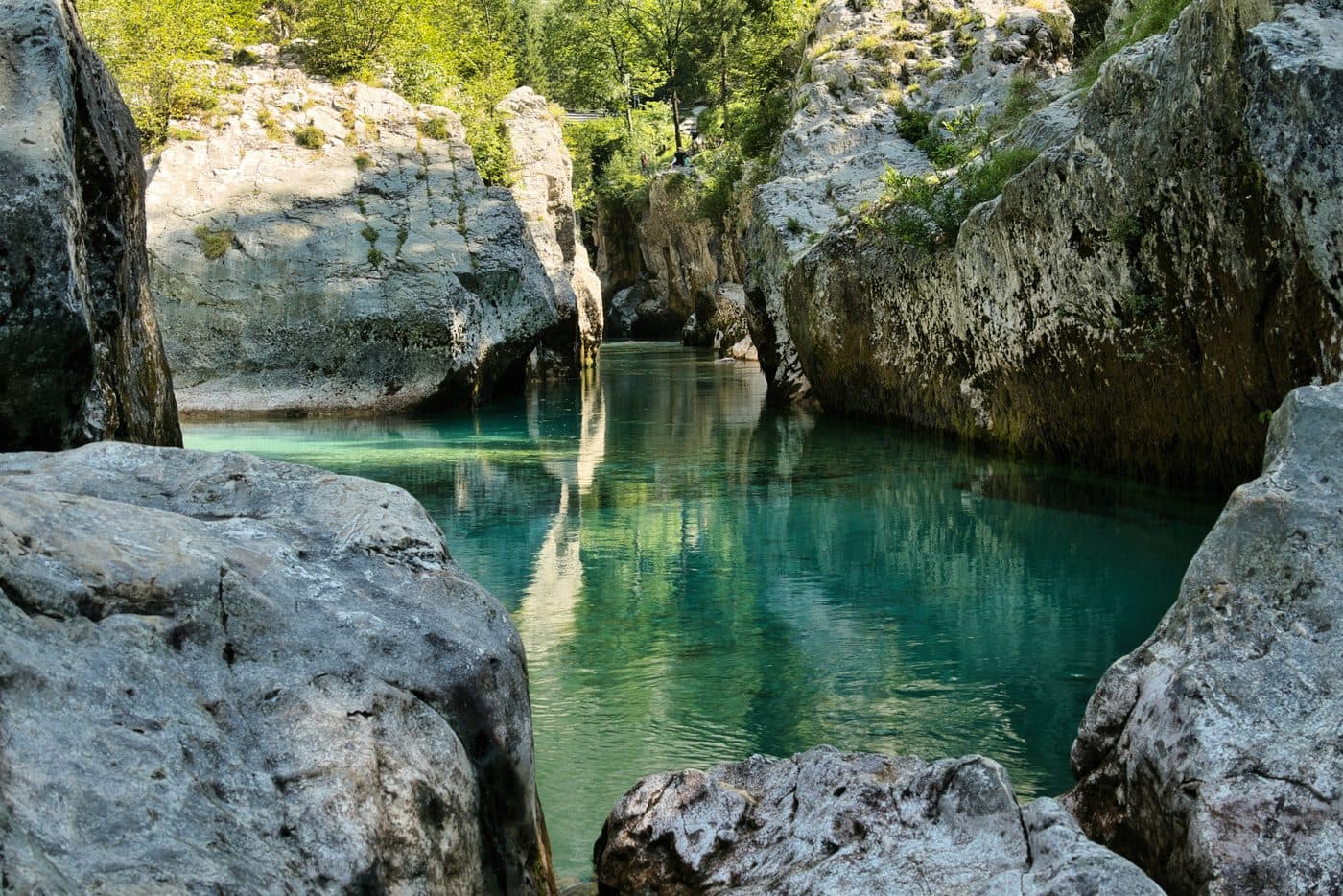
Near the village of Soča it has cut its Great Troughs, 750 m of rock channels up to 15 m deep and in places only 2 m wide. Near Kobarid, above the river, the Kozjak stream drops 15 m into a green pool inside a chamber of dark rock walls, the larger of the two falls on the stream that visitors can reach. At Tolmin, the gorges of the Tolminka and the Zadlaščica meet at 180 m above sea level, the lowest point of Triglav National Park, with the Devil’s Bridge 60 m above the water, a boulder wedged between the walls called Bear’s Head and a thermal spring of 18.8 to 20.8 °C. Downstream, Kanal’s bridge, first built of wood in 1580 and rebuilt in 1920, is the town’s landmark. To the south-west, on the Italian border, Goriška Brda is a country of vineyard hills: at its centre Šmartno, first mentioned in 1317, keeps its walls and defensive towers around St Martin’s, the largest parish church in Brda, whose bell tower was once a fortress tower, and nearby Dobrovo’s Renaissance castle, built in the early 17th century almost square with towers at its corners, is counted among the finest in the Goriška region.
Couples come for a ceremony of their own on a riverbank or a mountain meadow, for a wedding among Brda’s vineyards, and for civil ceremonies in the official rooms of the two administrative units: Tolmin’s holds them in a wedding hall in the Tolmin Museum, in halls in Kobarid and Bovec and at its own seat, and Nova Gorica’s, which covers Brda, at Dobrovo Castle among other places. Portraits follow by the river, on Kanal’s bridge and among the vines in the evening light. Only a civil wedding is legal in Slovenia: a registrar of the administrative unit (upravna enota) marries you in one of its official rooms or, applied for 30 days ahead and for €170 (as of November 2026), at another place the unit agrees to; couples from abroad can marry here legally, giving notice together in person with documents from home, same-sex couples marry on the same terms, and a church wedding has no legal effect but can come in addition. The country page explains the notice and the papers.
Photographers
They still have dates open here. Their whole weddings and free dates are on their page.
See the photographerBooking through Lens & Vows
Through the year
May, June and September are the surest months. In the Slovenian Environment Agency’s (ARSO) 1991–2020 normals for Bovec, highs reach about 21 °C in May, 25 °C in June and 22 °C in September, and 1 mm of rain or more falls on 10 to 12 days a month. July and August are the hottest, at 27 °C in Bovec with seven days of 30 °C or more in each, and hotter still in Brda: at Vedrijan, ARSO’s station in the Brda hills, highs are 28 to 29 °C, with ten or eleven such days and nine nights a month that stay above 20 °C. The upper valley is one of the wettest places in Slovenia — ARSO puts the country’s heaviest rainfall on the Julian Alps and the Dinaric ranges — and Bovec gets 2,614 mm a year, most of it in autumn: 346 mm in October and 384 mm in November, against 170 to 190 mm a month from April to August. Brda is drier and sunnier, with 1,493 mm a year. Keep a roof in every plan.
Weather station: Bovec, normals 1991–2020 · Checked 5 November 2026
Places
The kinds of places — ask your photographer which ones they know well.
From Kranjska Gora, the road over Vršič, at 1,611 m Slovenia’s highest road pass, comes down its 50 hairpins through the Trenta valley towards Bovec; it may be closed in winter. Near the village of Soča, the Great Troughs are seen from a footbridge, with the Soča Trail running past them, and they end where the Lepena valley begins. All this lies in Triglav National Park, where drones may not fly in the natural environment without the park’s prior consent, filming for public showing needs its consent too, and walking off the marked trails is discouraged. We found no published rule on photo shoots along the river; inside the park, its rules apply.
Cross the Soča by Napoleon’s Bridge outside Kobarid, and the Kozjak falls are half an hour’s easy walk from the car park, on a path with small wooden bridges that ends on a terrace facing the fall. The stream and its falls are a protected natural area, and the pool is not for bathing. The entry point opens from early April to 31 October, from 8:00 to 20:00 in June, July and August, and an adult pays €5 (2026). The church on the hill of Gradič above Kobarid stands within the Italian ossuary of the First World War, a military memorial, and is not a place for a shoot.
The Tolmin gorges’ circular trail, about 2 km and an hour and a half, has railings but many steps, climbs and descents, and some stretches grow slippery in the rain; it stays open in rain and closes only for storms or high water. Entries are limited, so tickets are best bought ahead; free car parks at the edge of Tolmin are 15 or 30 minutes’ walk away, with a free shuttle in summer, and the car park at the entry point is paid from Easter to 30 September. Tolmin’s administrative unit holds weddings in a hall of the Tolmin Museum, in the town. Downstream, the car train from Bohinj arrives at Most na Soči, and in Kanal, whose bridge and town above it have been painted many times, the divers jump every August.
Šmartno sits at the geographical centre of Brda, with views from Nanos in the east to the Carnic Alps in the north-west and from the Friuli plain to the Adriatic; its stone lanes hold a tourist information centre, a gallery and Brda’s wine festivals. Dobrovo Castle, 4 km away, keeps a Knights’ Hall used for concerts and other events and is one of the Nova Gorica administrative unit’s official rooms for civil weddings; its museum collections are closed for maintenance until the end of 2026. Medana lies 5 km south-west of Šmartno among the vineyards. The lookout tower at Gonjače, with its panorama over the whole region, stands beside a monument to 315 victims of the Second World War: it is a memorial, not a place for a shoot. Wine estates and country houses are private, so ask each one about weddings and photographs.
Light
Brda’s hills look west over the Friuli plain, so there the evening sun goes down over open country, while the upper valley is ringed by mountains and the sun leaves Bovec and the river well before the times below, which are for a flat horizon. On 21 June the sun rises over Šmartno at about a quarter past five and sets at about nine, far to the north-west; it is still ten degrees up at about ten to eight, and the sky stays light until about twenty to ten. In mid-May it sets at about half past eight, in mid-July at about five to nine, in mid-September at about twenty past seven and in mid-October at about twenty past six. At midwinter it is up only from about a quarter to eight to twenty-five past four, no more than about 21 degrees high at noon. Vedrijan averages nine hours of sun a day in July and three and a half in December, Bovec eight and a little over two (1991–2020). The Kozjak falls lie in a shadowed chamber of rock, and the entry point closes at 20:00 even in summer, so plan them for daylight.
Travel
Trieste’s airport in Italy is the nearest to Brda: 37 km by road to Šmartno, 70 km to Kobarid, 74 km to Tolmin and 103 km to Bovec. Ljubljana’s airport is 91 km from Tolmin, 106 km from Kobarid, 134 km from Bovec and 143 km from Šmartno, and Venice’s airport 136 km from Šmartno and 178 km from Bovec. Along the valley, Bovec is 22 km from Kobarid, Kobarid 16 km from Tolmin, Tolmin 19 km from Kanal and Kanal 15 km from Šmartno; Dobrovo is 4 km and Medana 5 km from Šmartno. From Kranjska Gora the road over Vršič reaches Bovec in 47 km, when the pass is open. From Bohinjska Bistrica, near Lake Bohinj, a car train runs through the Bohinj tunnel, Slovenia’s longest railway tunnel, to Most na Soči, near Tolmin (timetable valid to 12 December 2026; cars are loaded first come, first served). Drones fly under the EU’s rules — an operator registered where they live, insured, in sight, below 120 m and clear of people not involved — and Slovenia bars open-category flights within 5 km of a controlled airport and, over built-up areas where people are, allows only a drone of up to 1.2 kg, below 50 m, by day, with the property owner’s consent and a notice to the Civil Aviation Agency, so check its zone map first. Bovec’s airfield is among the restricted zones on the Agency’s map (as of November 2026). In Triglav National Park, which takes in the Trenta valley, the Great Troughs and the Tolmin gorges, no drone may fly in the natural environment without the park’s consent.
Plan
Slovenia