Verified — Identity verified by Lens & Vows
Erik V.from €900
Bled & Bohinj, Ljubljana +35 · DocumentaryBased in Austria · travels to weddings in SloveniaWedding photographers in Slovenia
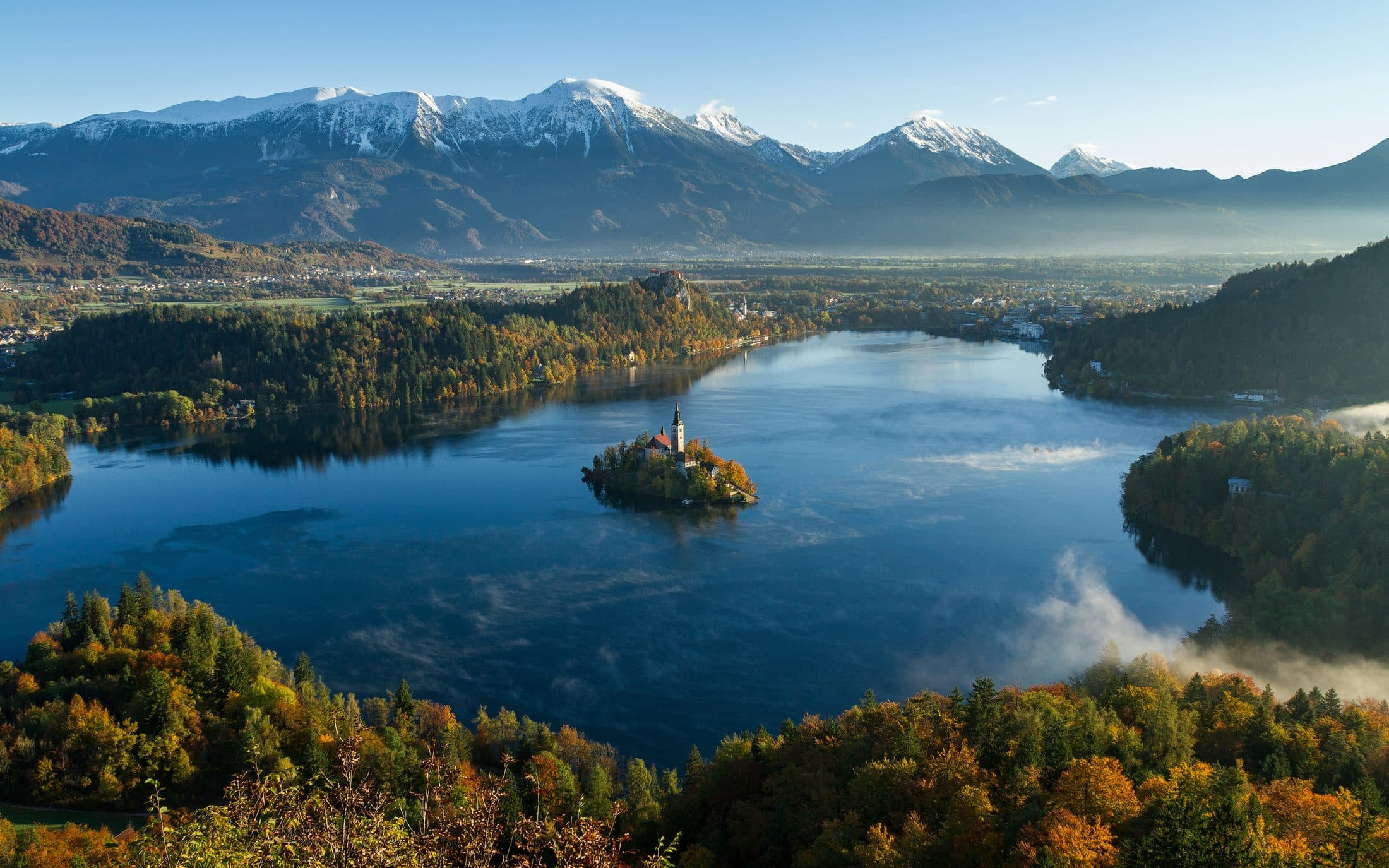
Two Alpine lakes below the Julian Alps: Lake Bled, with its island church reached by a rowed pletna boat and its castle on a 130-metre cliff, the Vintgar gorge and the old town of Radovljica a short drive away, and to the west Lake Bohinj and the Savica falls in Triglav National Park, with Kranjska Gora’s Lake Jasna at the foot of the road to the Vršič pass.
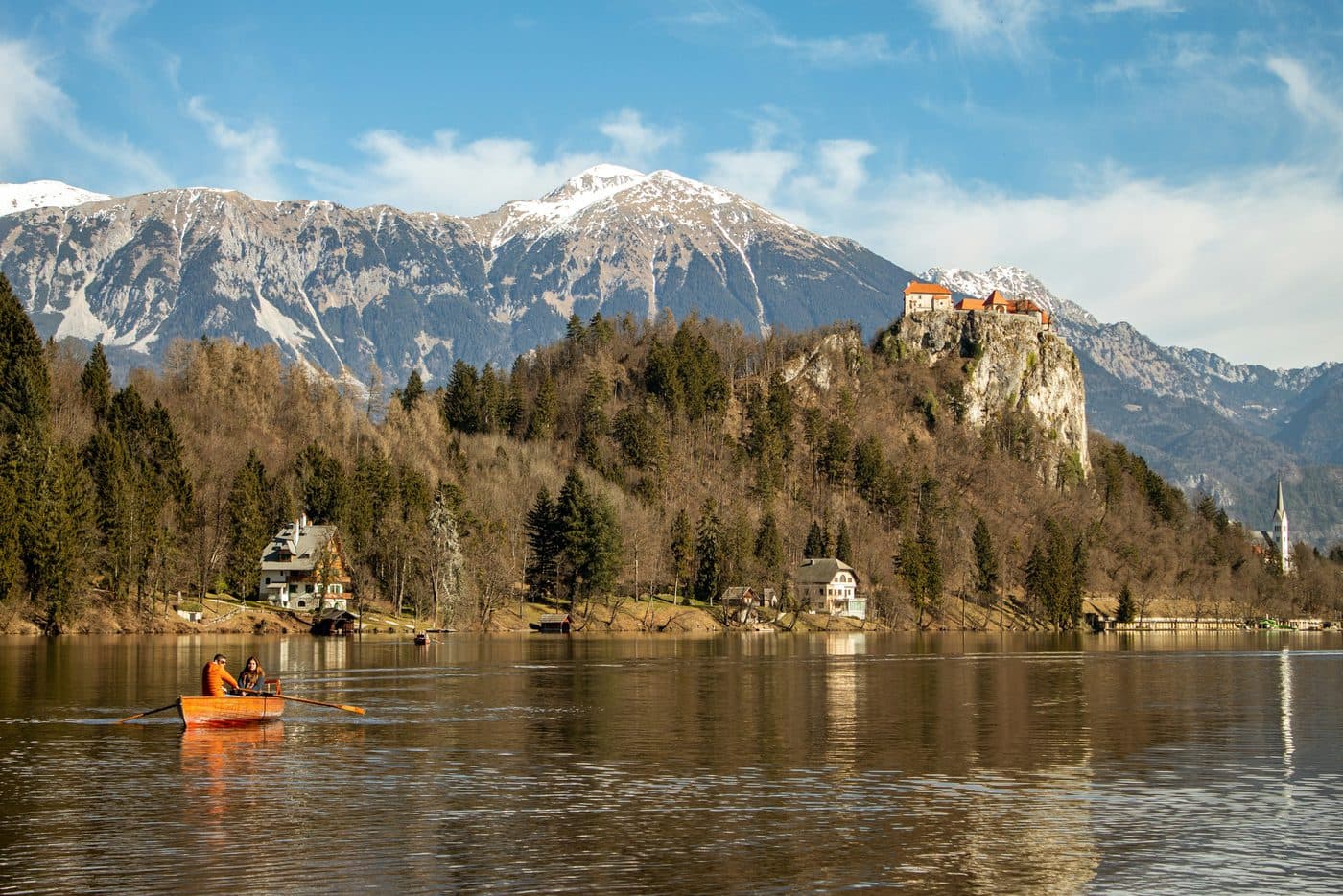
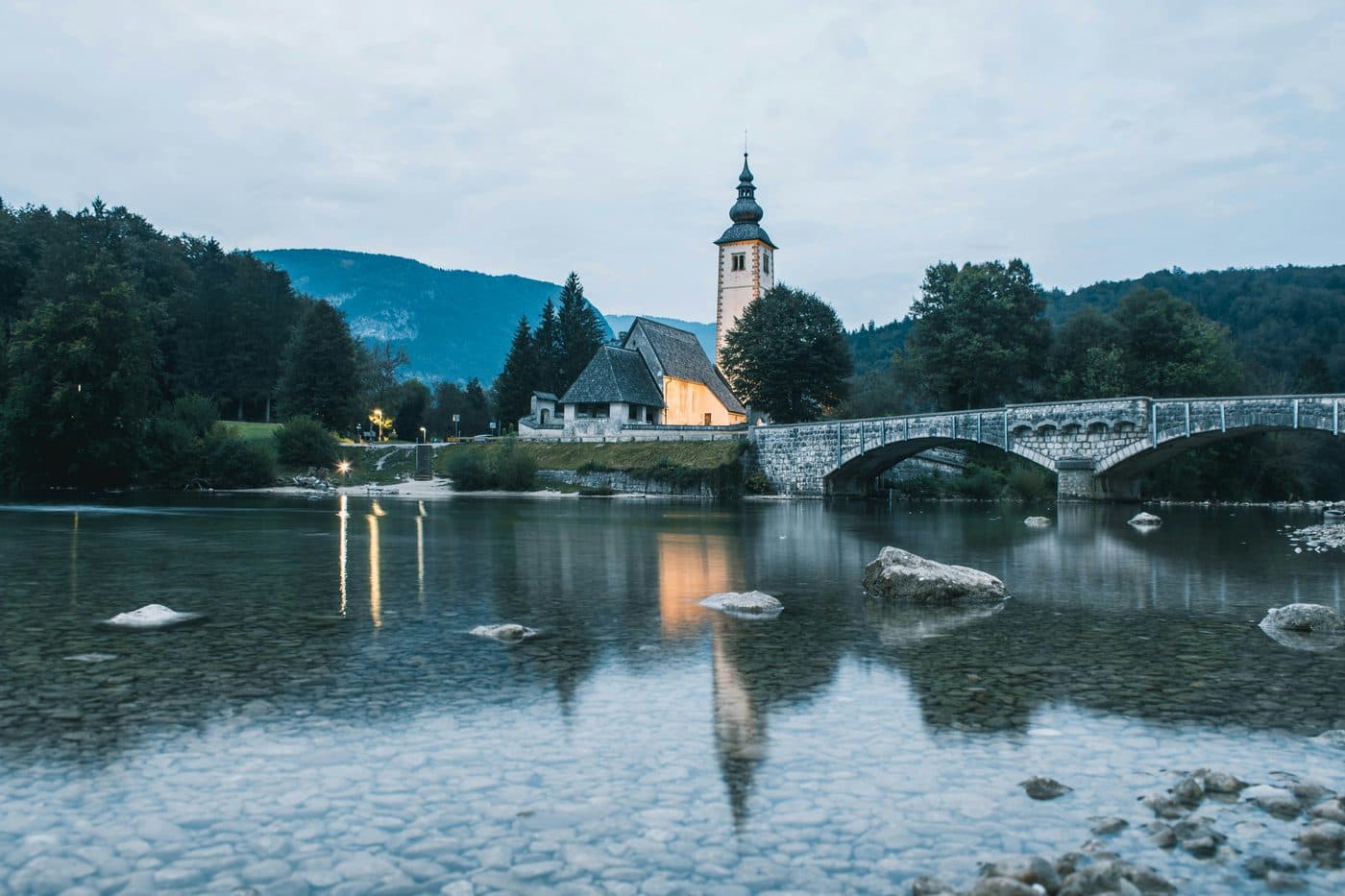
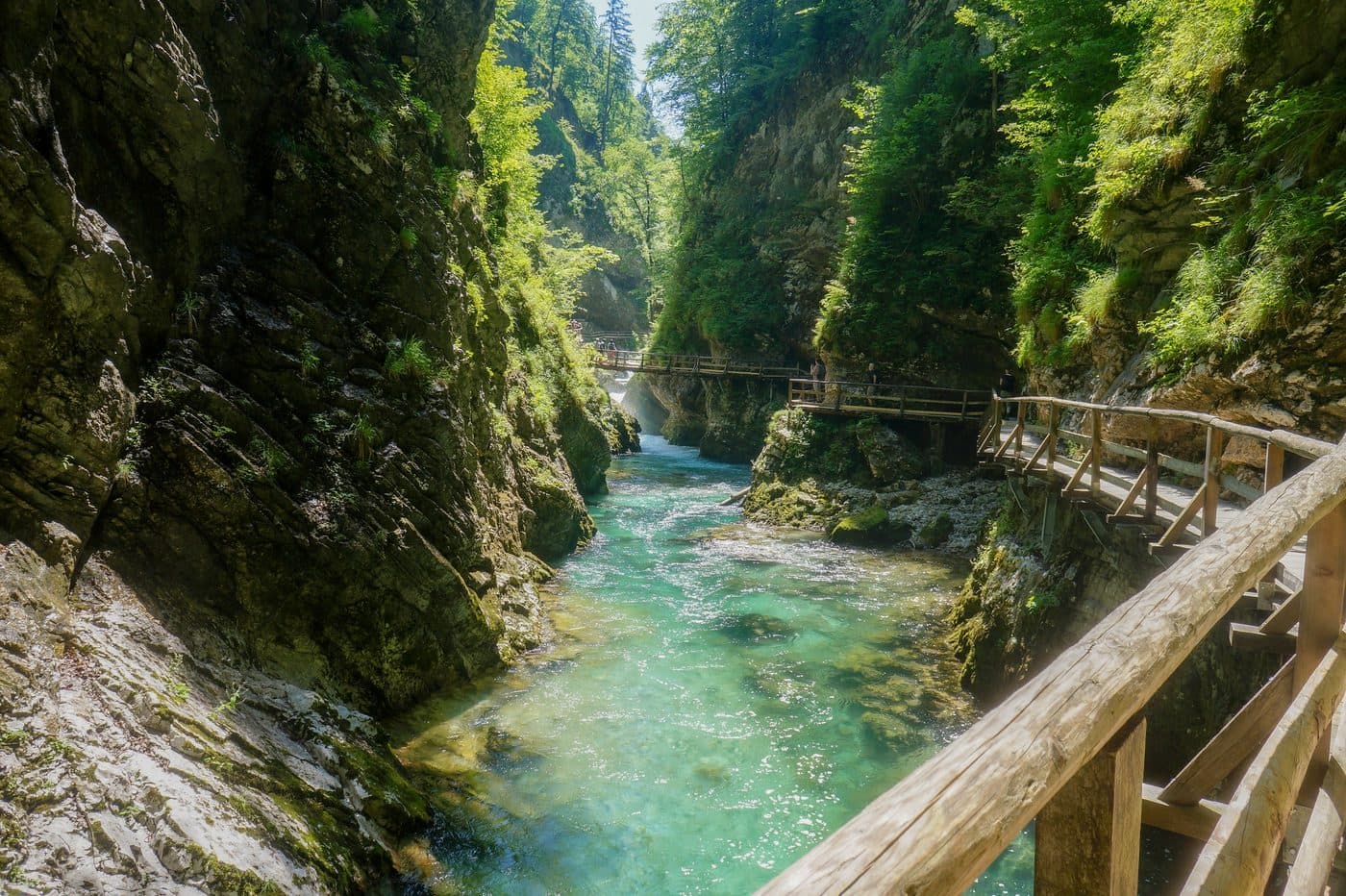
On the island in Lake Bled, the Church of the Assumption — the Mother of God on the Lake — stands at the top of a southern stone staircase of 99 steps, with a wishing bell that newly-weds ring after the ceremony. The island is reached all year in a pletna, Bled’s flat-bottomed wooden boat, 7 m long and carrying up to 18 people, rowed by a boatman who stands with two oars; the boats go back to 1590, and the right to row them has passed down in local families for generations. Across the water, Bled Castle, which its keepers call the oldest in Slovenia, dating back to the 11th century, stands on a cliff 130 m high. Four kilometres away, the Radovna has cut the Vintgar gorge, 1.6 km long between walls 50 to 100 m high, and 7 km from Bled, Radovljica is a medieval town with a moat, looking out to the Karavanke and the Julian Alps. Westwards, in Triglav National Park, Lake Bohinj, the largest permanent natural lake in Slovenia, fills a glacial basin below the mountains: at its eastern end the church of St John the Baptist, built before 1300, stands by a stone bridge, and at its western end the Savica falls 78 m in two streams shaped like an A. In the north, at Kranjska Gora, Lake Jasna’s two small artificial lakes lie where the Velika and Mala Pišnica meet, just before the first bends of the road over Vršič.
Couples marry in the island church, in a Catholic, Evangelical or Orthodox rite, on Fridays and Saturdays at 1 p.m. or 5 p.m. or on other dates by agreement; at Bled Castle, where the registrar and the officiant of the Radovljica administrative unit hold civil ceremonies on Fridays and Saturdays; in that unit’s official wedding halls, in Bled’s municipal building and on Radovljica’s old square; and, for a small wedding of their own, by Lake Bohinj or in a mountain village, with portraits on the water, on the castle terraces and on the lakeshore in the last light. Only a civil wedding is legal in Slovenia: a registrar of the administrative unit (upravna enota) marries you in one of its official rooms or, applied for 30 days ahead and for €170 (as of November 2026), at another place the unit agrees to; couples from abroad can marry here legally, giving notice together in person with documents from home, same-sex couples marry on the same terms, and a church wedding has no legal effect but can come in addition. The country page explains the notice and the papers.
Photographers
They still have dates open here. Their whole weddings and free dates are on their page.
See the photographerBooking through Lens & Vows
Through the year
June to September are the surest months. In the Slovenian Environment Agency’s (ARSO) 1991–2020 normals for Lesce, the airfield station about 5 km from Bled, highs reach about 24 °C in June, 26 °C in July, 25 °C in August and 20 °C in September, and only about four days in July and four in August reach 30 °C. Summer here is green because it is not dry: 1 mm of rain or more falls on 9 to 11 days a month, June and July bring 120 and 125 mm, and ARSO notes that storm gusts are most frequent in spring and early summer, so keep a roof close to any open-air plan. The wettest months are September to November, with 145 to 158 mm each, and Bohinj, deeper in the mountains, is far wetter than Bled: 1,940 mm a year at Bohinjska Češnjica against 1,327 mm at Lesce. May and October work with some care, at highs of 20 and 15 °C.
Weather station: Lesce, normals 1991–2020 · Checked 5 November 2026
Places
The kinds of places — ask your photographer which ones they know well.
Bled Island is open every day of the year; from May to September its church, bell tower and the exhibition in the provost’s house open from 8:30 to 19:00, and an adult pays €12 (2026). The pletna boatmen take passengers from the shore, and a visit has no time limit: you come back with the next free boat. For a church wedding, the parish of Bled arranges the rite and the island’s own staff the celebration; the ceremony takes the couple up the 99 steps of the southern staircase — many grooms carry the bride all the way — and on to the wishing bell, and the church closes to other visitors while it lasts. We found no published rule on photo shoots on the island or along the shore, so ask the island’s office before planning one with lights or a crew.
The castle’s civil ceremonies take place under the stone canopy of the upper courtyard, the lapidarium, with 40 to 60 chairs on the panoramic terrace beside it, in the Knights’ Hall, which holds up to 100 people (70 seated) and is always kept ready in case the weather turns, or in the castle park; the chapel of St Albuin and Ingenuin takes small church weddings of up to 15 people. Book the date with the castle, then the civil ceremony with the Radovljica administrative unit. As a cultural monument of national importance, the castle stays open to ticket holders, so it can’t be taken over for a wedding, but the chosen spot is fenced off. Portrait sessions need a booked slot — walk-ins can’t be accommodated — while visitors need no permission for non-commercial photographs. It opens from 8:00 to 20:00 from April to October and until 18:00 from November to March, and an adult pays €19 (prices valid since 1 January 2025). No drone may fly over the castle: flights are allowed only over the lake, at a proper distance.
The Vintgar gorge, 4 km from Bled, lies in Triglav National Park and the Natura 2000 network. It opens from April into the autumn, as the weather allows, and closes for the winter; entry is by time slot, with a digital pass best bought online — an adult’s entry costs €10, and the shuttle and the return trail €2.50 each (as of November 2026) — and helmets are compulsory. The route runs one way: 1.6 km on boardwalks above the river, then a return trail through forest and meadows, about three hours in all. Cars can’t reach the gorge: park at the official car park at Lip or take the electric shuttle from Bled’s bus station, every 15 minutes. Drones are not allowed. Radovljica, 7 km from Bled, keeps its medieval moat and its views of the Karavanke and the Julian Alps, and the administrative unit’s wedding hall stands on its old square, Linhartov trg.
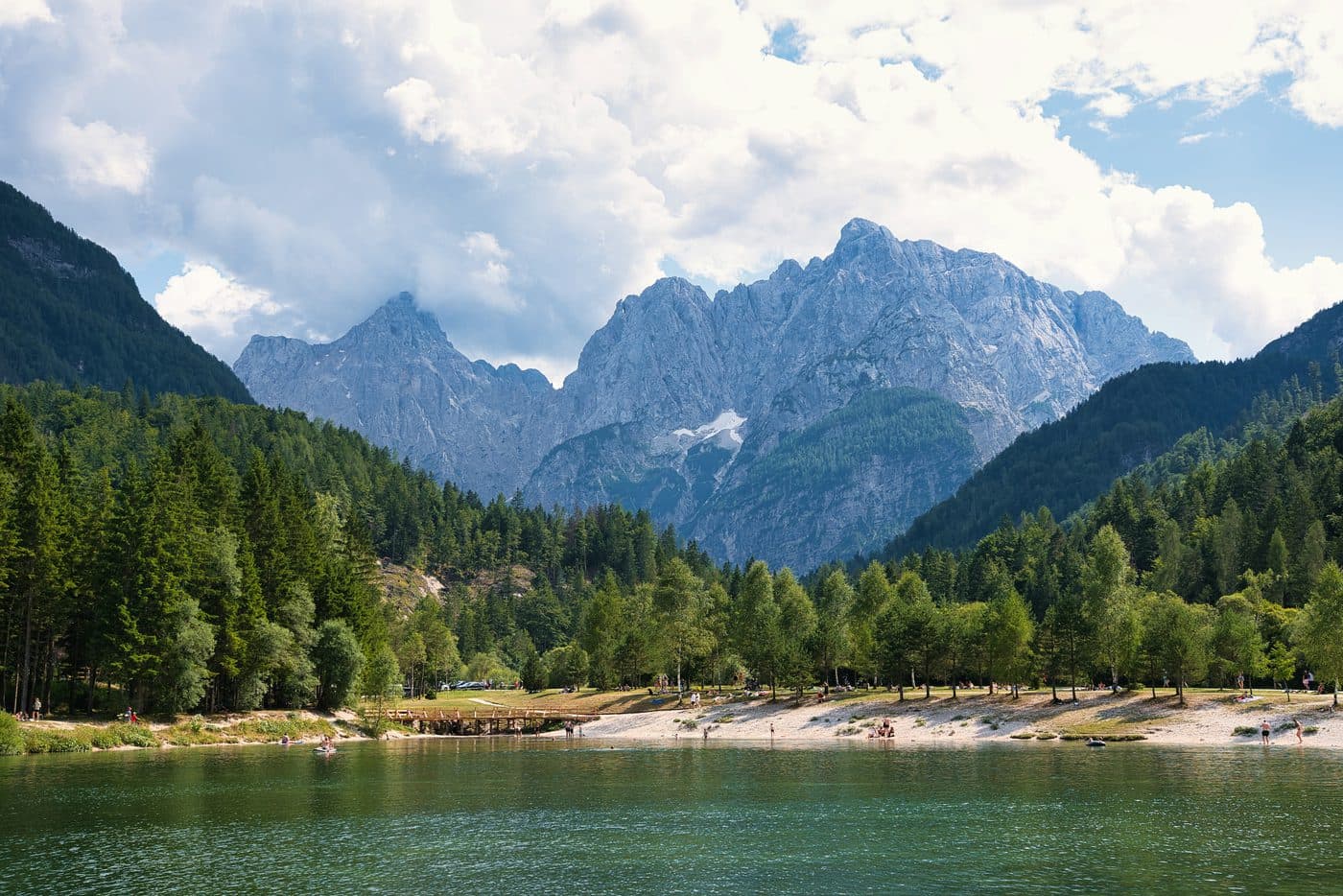
Lake Bohinj holds almost 100 million cubic metres of water, warms to 24 °C at the surface in summer and often freezes in winter. The church of St John the Baptist by its bridge, a protected monument with frescoes from the 13th century onwards, is a branch church of the Srednja vas parish; it opens to visitors in season and, after October, only to groups by arrangement, so ask the parish about a ceremony. The Savica falls are reached from the car park below them by 553 stone steps, 20 to 25 minutes on foot; an adult pays €4 (2026), and the entry point closes in heavy rain, storms, snow or ice. Bohinj, Savica and Vintgar lie in Triglav National Park, where flying a drone in the natural environment needs the park’s prior consent, as does filming for public showing. Lake Jasna, 2.2 hectares under the peaks of Razor and Prisank, has wooden piers, a lookout tower and a bronze ibex on a rock, its most photographed spot. Beyond it, the road climbs 50 hairpins to Vršič, at 1,611 m Slovenia’s highest road pass, and down into the Soča valley; it may be closed in winter, and the Russian Chapel on its northern side is a memorial to the prisoners of war who built the road, not a place for a shoot.
Light
The times here are for a flat horizon: hills ring Lake Bled and mountains close in around Bohinj and Kranjska Gora, so the sun leaves the water earlier, by how much depending on where you stand. On 21 June it rises over Bled at about ten past five and sets at about nine, far to the north-west; it is still ten degrees up at about a quarter to eight, and the sky stays light until about twenty to ten. In mid-May it sets at about half past eight, in mid-July at about ten to nine, in mid-September at about a quarter past seven and in mid-October at about twenty past six. At midwinter it is up only from about a quarter to eight to twenty past four, no more than about 20 degrees high at noon. Lesce averages eight and a half hours of sun a day in July and two and a half in December (1991–2020). On calm, clear nights cold air and fog settle in the basins and valleys, so early mornings on the lakes can begin in mist. The castle is open at sunset from late August to early March and again from late March to late April; from late April to late August it closes at 20:00, before the sun goes down.
Travel
Ljubljana’s airport is 36 km by road from Bled, 29 km from Radovljica, 62 km from Lake Bohinj at Ribčev Laz and 66 km from Kranjska Gora; Klagenfurt’s airport in Austria is 83 km from Bled, Trieste’s 173 km and Venice’s 282 km. Bled has two railway stations: Lesce-Bled, 4 km from the centre on the main line through Ljubljana, and Bled Jezero, 1.5 km from the centre on the Jesenice–Nova Gorica line, which goes on to Bohinjska Bistrica; from there a car train runs through the Bohinj tunnel, Slovenia’s longest railway tunnel, to Most na Soči in the Soča valley (timetable valid to 12 December 2026; cars are loaded first come, first served). By road, Bohinj is 26 km from Bled, Kranjska Gora 40 km and the Savica car park 8 km beyond Ribčev Laz; in Bohinj, cars may park only in marked spaces, and in summer extra buses run to Savica and the trailheads. Drones fly under the EU’s rules — an operator registered where they live, insured, in sight, below 120 m and clear of people not involved — and Slovenia bars open-category flights within 5 km of a controlled airport and, over built-up areas where people are, allows only a drone of up to 1.2 kg, below 50 m, by day, with the property owner’s consent and a notice to the Civil Aviation Agency, so check its zone map first. No drone may fly over Bled Castle, and in Triglav National Park none in the natural environment without the park’s consent.
Plan
Slovenia