Founding photographerVerified — Identity verified by Lens & Vows
Joseph J.from €1,000
Rotterdam, The Hague & Delft, Amsterdam & Haarlem +36 · Documentary, EditorialBased in France · travels to weddings in the NetherlandsWedding photographers in the Netherlands
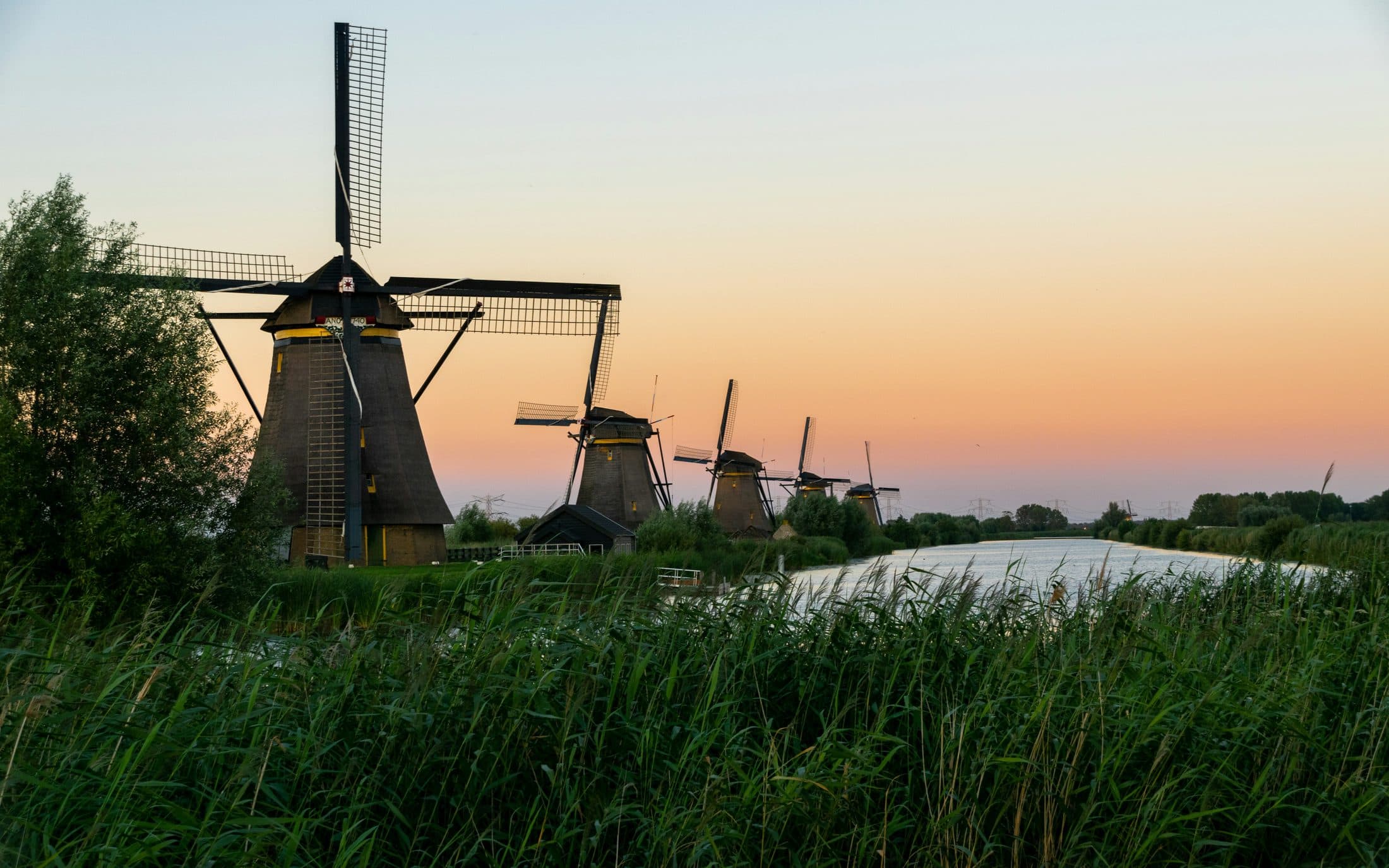
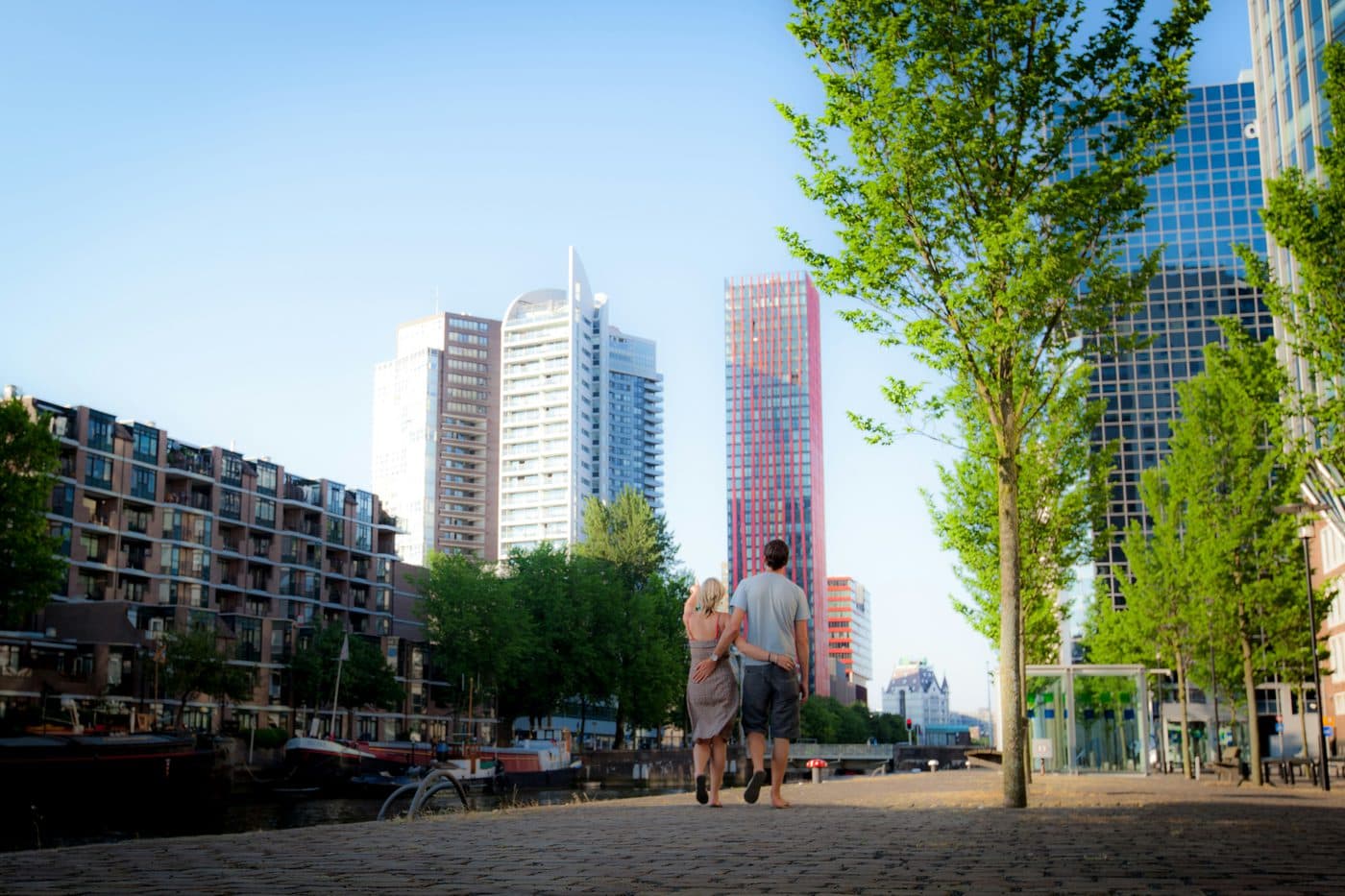
The nineteen windmills of Kinderdijk, Rotterdam’s towers and harbour basins, Delft’s town hall on the Markt and its canals, The Hague’s old town hall and the Binnenhof on its pond, the beach at Scheveningen and Leiden a quarter of an hour from Schiphol.
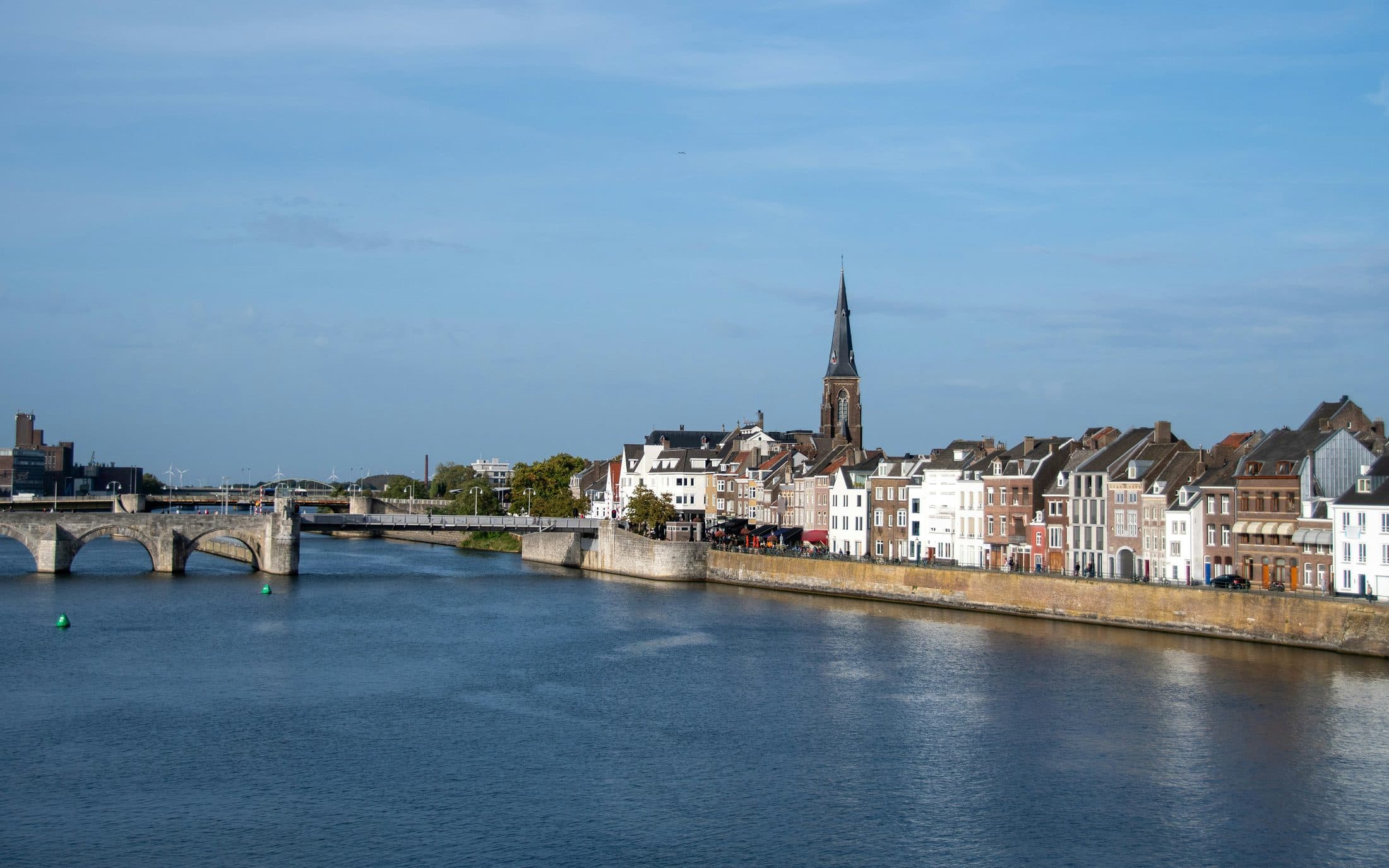
South-east of Rotterdam, at Kinderdijk, nineteen windmills and three pumping stations still stand on the dykes of the polders they drained; the eight mills of the Nederwaard were built in 1738, and UNESCO listed the Mill Network at Kinderdijk-Elshout in 1997 as a complete system of dykes, reservoirs, pumping stations and mills. Rotterdam itself is a city of towers and harbour basins on the river. Delft keeps its old centre of canals around the Markt, where its town hall stands. The Hague marries couples in its town hall on the Spui and in its old one, a 16th-century building, and the brick wings of the Binnenhof, the parliament’s seat, under renovation until 2031, rise from the Hofvijver at its heart; its seaside, Scheveningen, looks out over the North Sea. Leiden, up the line towards Amsterdam, is a quarter of an hour from Schiphol by train.
Couples who live here marry at their own town hall, Rotterdam’s on weekdays and Saturdays, Delft’s on every day of the week, The Hague’s on the Spui or in the old town hall, or at a place of their choosing, which Rotterdam allows anywhere and at any hour as long as it is safe and open to everyone. Couples from abroad come for a small wedding in Delft or The Hague, with portraits by the canals, an evening on the beach or a morning among the mills. In the Netherlands a marriage is legal only before a municipality’s registrar or a registrar appointed for the day (BABS), in public at the town hall or another place the municipality has designated, and a religious ceremony may only follow it; and a couple can give notice of marriage only if at least one partner is Dutch or lives in the Netherlands, so two partners who are both foreign and live abroad sign the papers at home and hold a ceremony of their own here. The Hague holds the official part of every ceremony in Dutch; Delft can hold it in English, French or German.
Photographers
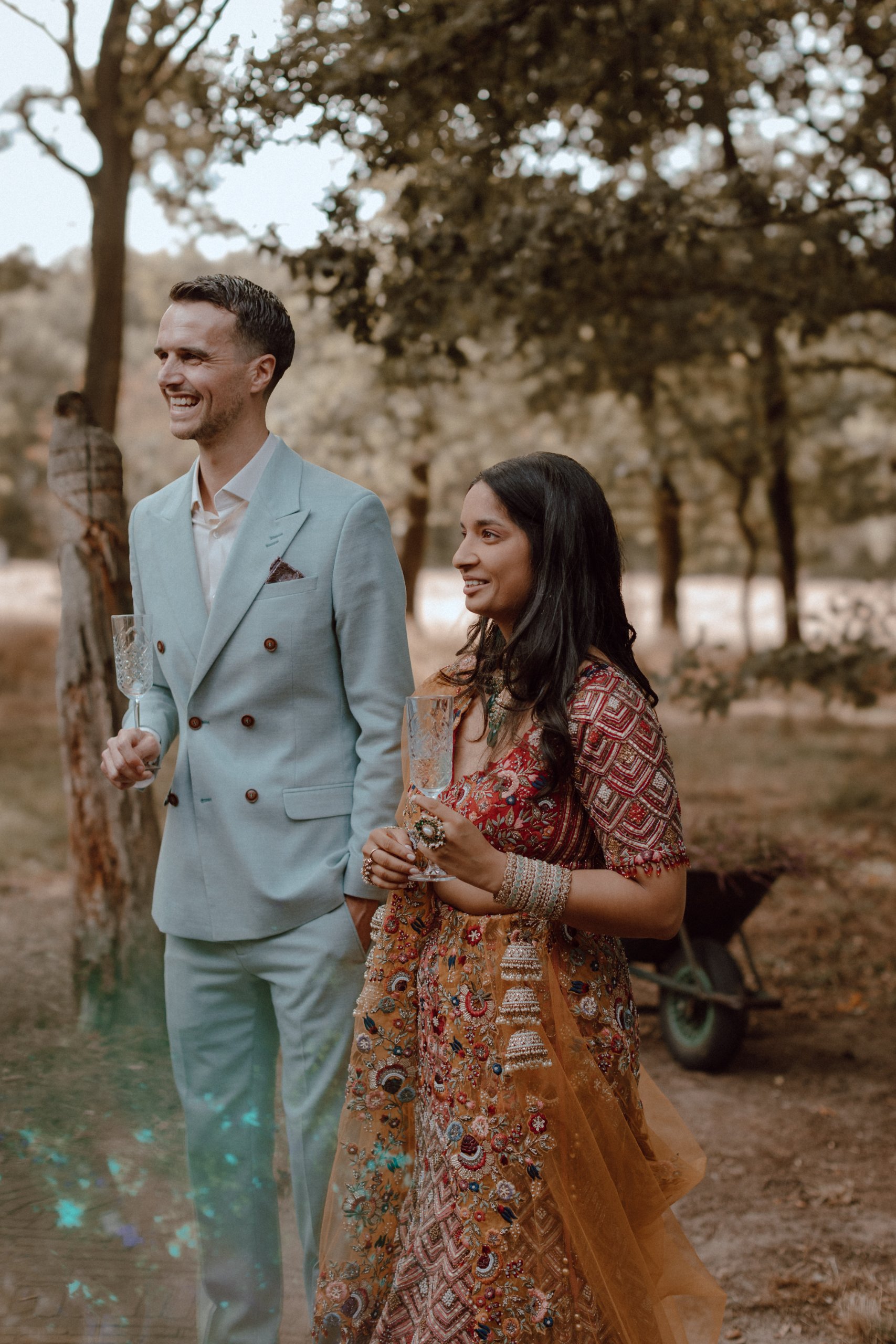
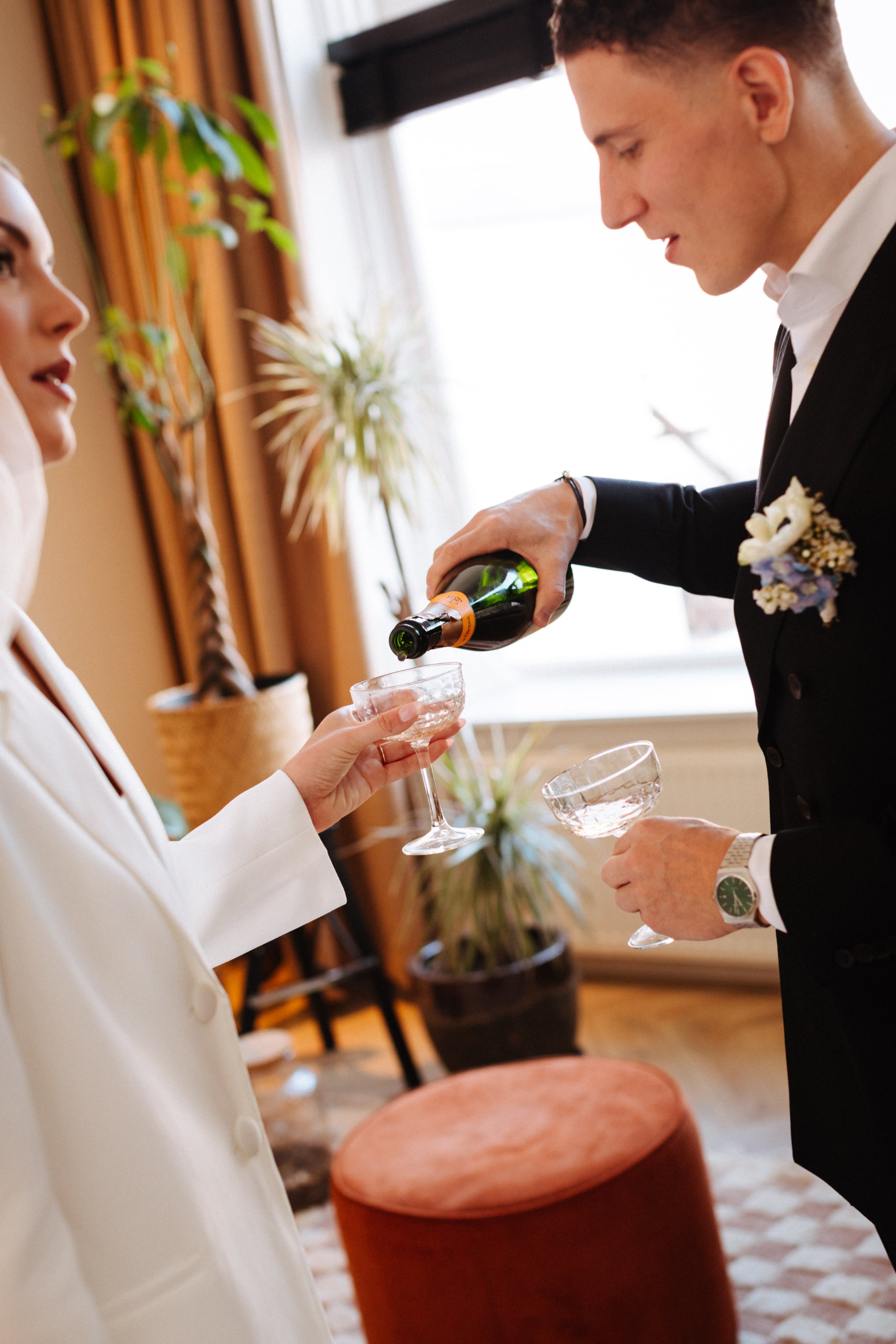
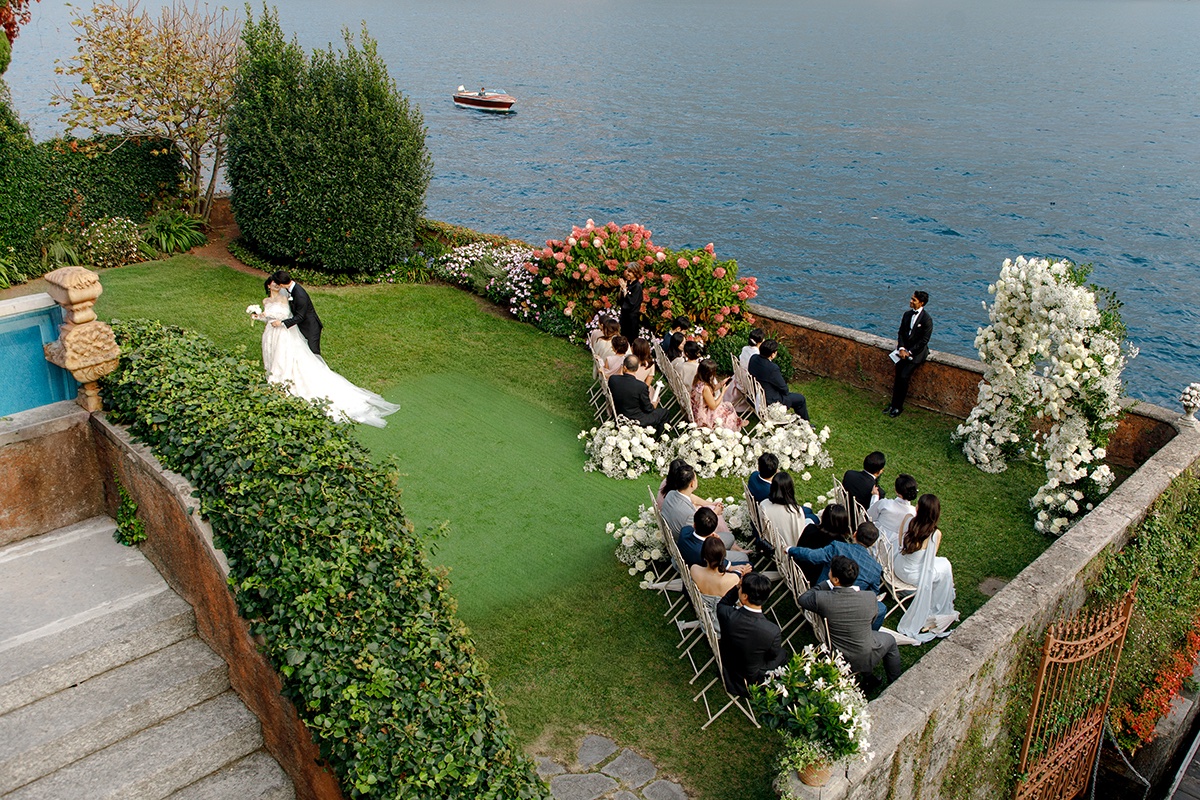
They shoot here and know the light. Their whole weddings are on their pages.
See all 4 photographers
Booking through Lens & Vows
Through the year
May, June and September are the easiest months. In the Royal Netherlands Meteorological Institute’s (KNMI) 1991–2020 normals for Rotterdam, highs reach about 18 °C in May, 21 °C in June and 19 °C in September, with rain (1 mm or more) on nine days in May, ten in June and eleven in September, and May is the driest of the three, with 56 mm. July and August are the warmest, at about 23 °C, with a day or two of 30 °C or more each; August is the wettest month of the year, with 92 mm, and September follows with 90. April is the driest month of all, with 42 mm, but reaches only 14 °C, and October 15 °C, with rain on twelve or thirteen days. From November to February the highs stay between 6 and 10 °C, rain falls on 11 to 14 days a month and the sun shines for two or three hours a day. On the coast it is windier and a little cooler: at Hoek van Holland the hourly wind reaches force 6 on about ten days a month even in June, July and August, against one at Rotterdam, and June and July highs stay about a degree lower.
Weather station: Rotterdam, normals 1991–2020 · Checked 3 November 2026
Places
The kinds of places — ask your photographer which ones they know well.
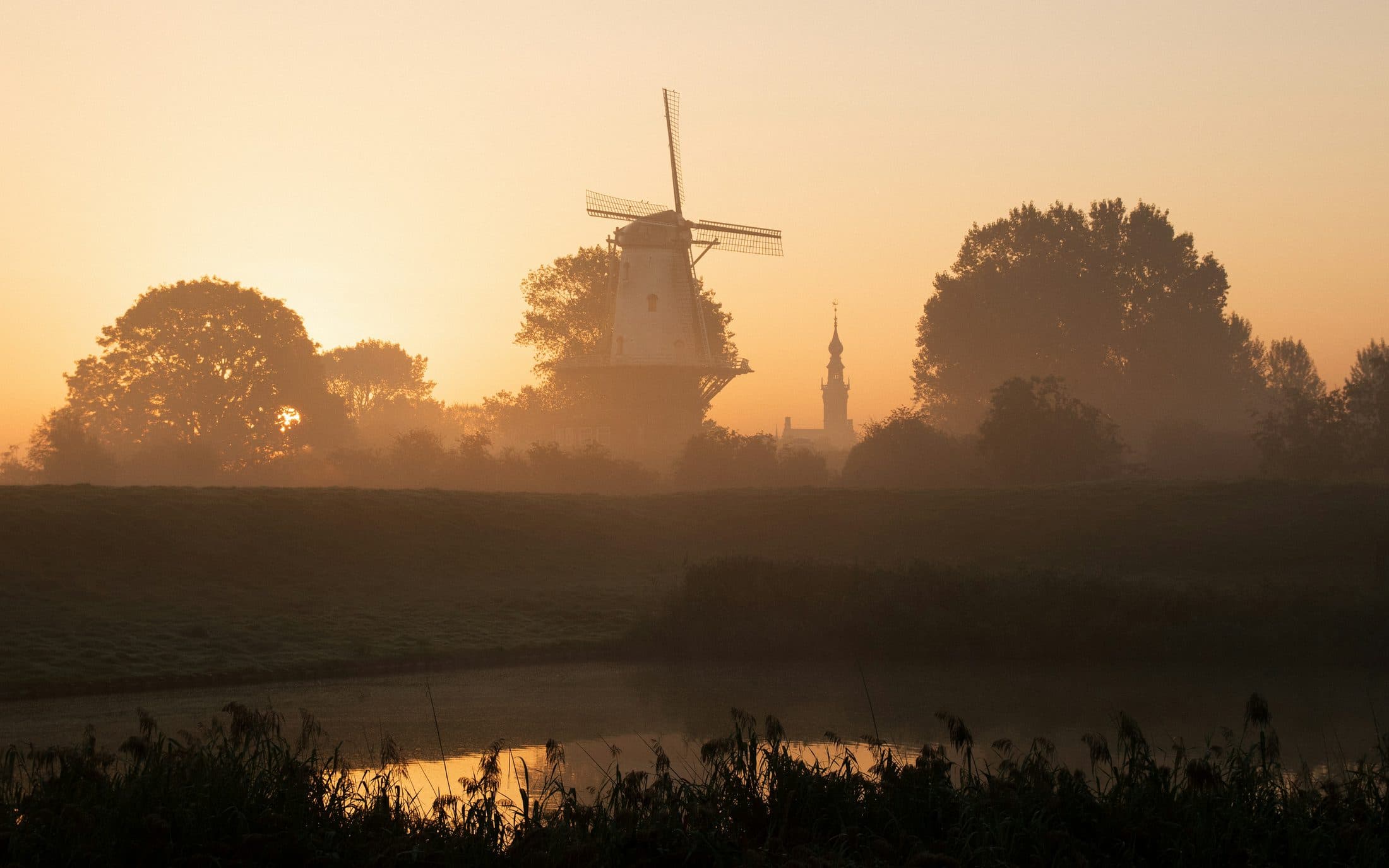
Kinderdijk’s mills stand along the polder water, the eight of the Nederwaard staggered so that each one catches the wind, and most of them are homes. The museum mills, the pumping station and the boat need an admission ticket; in the high season (16 March to 1 November in 2026) cars park at Alblasserdam for €9.75, with a shuttle bus to the entrance, and only with an admission ticket. Drones are not allowed: the area is part of the Natura 2000 network, the mills are lived in, a permit goes only to professional pilots through the Haaglanden Environmental Service, and flying without one can cost a €410 fine. The foundation publishes no rule on wedding portraits, so ask it before planning a shoot.
Rotterdam marries couples free on Monday mornings, a ten-minute ceremony with two witnesses and no guests. A simple ceremony of fifteen minutes on Tuesday and Wednesday mornings, for up to 16 people with the photographer, costs €216.60; half an hour in wedding room 1 or 2, for 70 or 50 people, €624.40 on weekdays; and an hour in the wedding room beside the Burgerzaal, for 60, €981.50 on weekdays and €1,429.10 on Saturdays from 11 to 2. A place of your own, anywhere in the city and at any hour, costs €770.90 on weekdays from 9 to 5, €1,084.30 in the evening or on a Saturday and €2,168.60 on Sundays and holidays, plus the place’s own charges (fees as of November 2026). After a wedding at the town hall you have ten minutes for photographs on the steps either side of the entrance or in the garden, reached from the back; nothing may be thrown, and nobody may stand on the rim of the garden’s fountain.
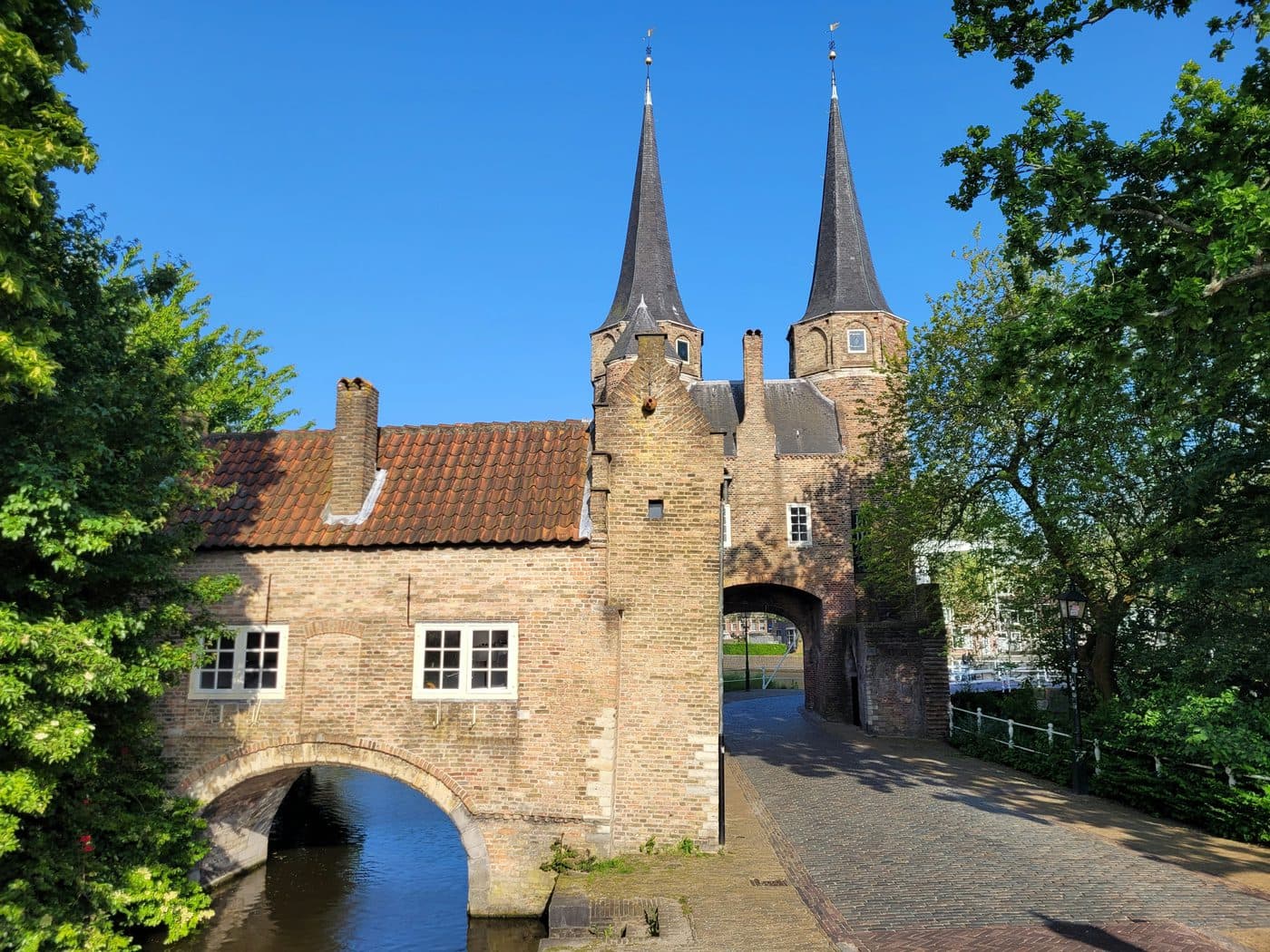
Delft marries couples in the Scheepensael of its town hall on the Markt, a historic room with 85 places, 70 of them seated, counting the couple, the witnesses and the photographer. Ceremonies run every half hour from 9, until half past four from Monday to Thursday and until half past seven on Fridays, and at set times on Saturdays and Sundays; they cost €516.10 from Monday to Thursday, €708.80 on Fridays, €1,150.55 on Saturdays and €2,381.85 on Sundays (fees as of November 2026), and at weekends the ceremony adds a blue carpet, two ushers and photographs in the town hall’s small tower, the Steen. On Thursdays the market fills the Markt and no wedding car can reach it. Rice, confetti, streamers and petals are banned; soap bubbles and arches of honour are allowed. A few hundred metres east of the Markt, the Oostpoort, the town gate with two spires over the water, makes a quieter frame.
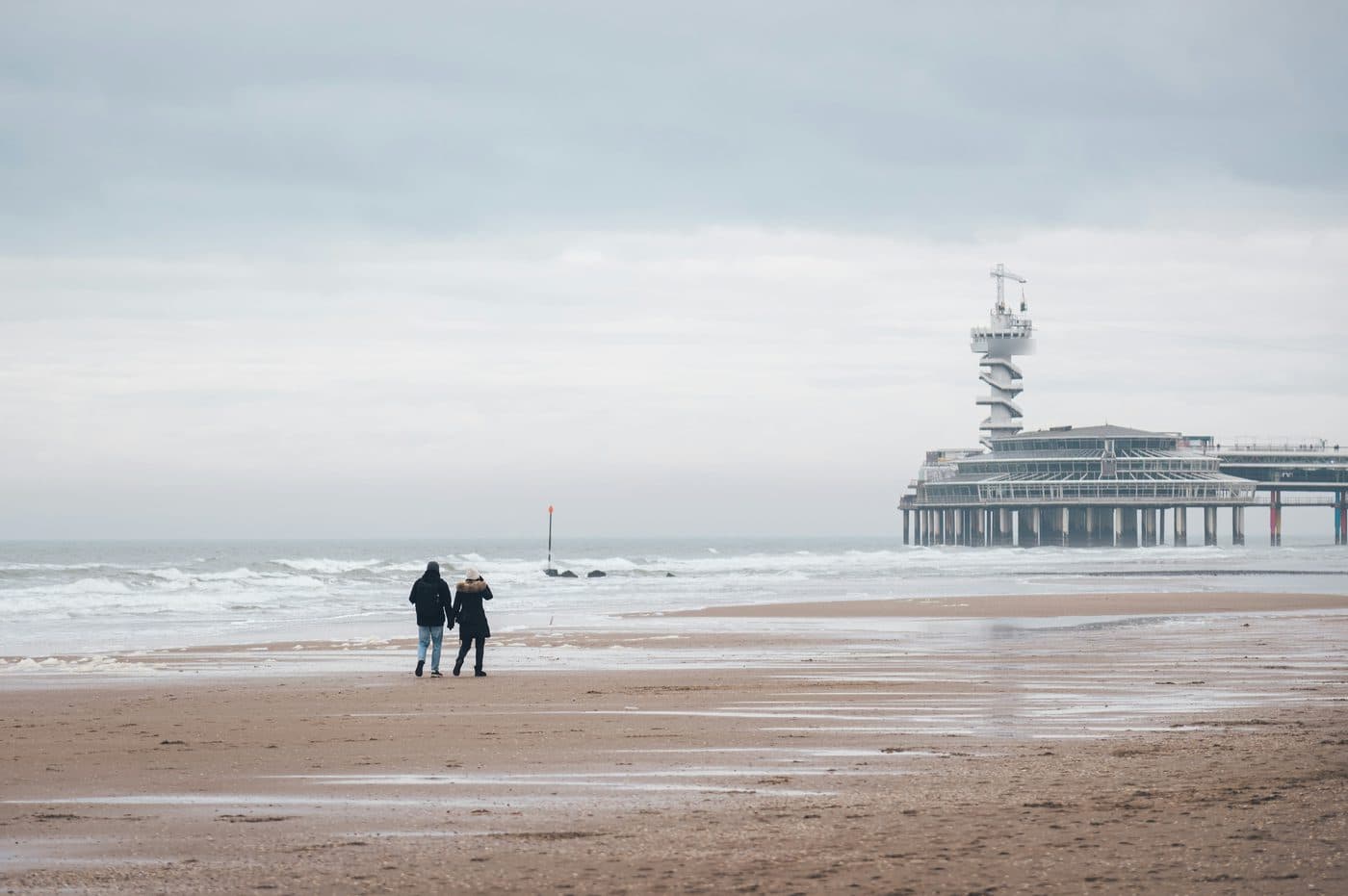
The Hague marries couples at its town hall on the Spui, for up to 80 people, for €617.95 on weekdays, and in its old town hall by the Groenmarkt, a 16th-century building, for 75 people, 27 of them seated, for €833.75 on weekdays and €1,737 at weekends; a ceremony lasts at most 45 minutes. A place of your own must be public, safe, open to everyone and have toilets, and the city charges €731.20 for it on weekdays from 9 to 6 and €872.80 at weekends, plus the place’s own charges (fees as of November 2026). For filming in public space The Hague asks even small productions, with a small crew and light equipment, to apply at least five working days ahead, free of charge, through its Film Office; ask whether your photographer or videographer counts. Until the summer of 2028 the building site of the Binnenhof’s renovation also takes up part of the Hofvijver, so ask what can be seen before planning pictures there. At Scheveningen the beach faces the North Sea to the north-west, so the sun sets over the water all year. In the dunes behind it, between The Hague and Wassenaar, the Waalsdorpervlakte is a place of remembrance, not a place to shoot.
Light
The evenings here are long too. At midsummer the sun rises at about twenty past five and sets just after ten, far round in the north-west and over the sea at Scheveningen; it drops below ten degrees at twenty to nine, and the sky stays light until about five to eleven. In mid-September it sets at eight and in mid-October at ten to seven. At midwinter it rises at about ten to nine, sets at half past four and climbs no higher than 15 degrees. In the KNMI’s normals Rotterdam has about seven hours of sun a day from May to July and under two in December.
Travel
From Schiphol, direct trains reach Leiden in about 16 minutes and The Hague Centraal in 32; Delft takes about 39 minutes, and Rotterdam Centraal 26 on the Intercity direct, which carries a supplement (€3.20 as of November 2026), or about 50 on other intercity trains. Rotterdam The Hague Airport lies on the edge of Rotterdam, 7 km by road from the town hall and 12 km from Delft’s Markt. Between the cities, trains take 12 to 14 minutes from Rotterdam Centraal to Delft, 11 to 15 from The Hague Centraal to Delft and 22 to 29 from Rotterdam to The Hague. Kinderdijk is 15 km by road from Rotterdam’s centre; the WaterShuttle from Rotterdam takes about 30 minutes, and buses from Rotterdam and Dordrecht stop at the entrance all year. From the Hofvijver it is 6 km to the pier at Scheveningen, and Schiphol is 45 km by road from the Hofvijver, 48 km from Delft and 60 km from Rotterdam’s town hall. Drones follow the EU’s rules: the operator registers in the EU country where they live (in the Netherlands with the RDW; from outside the EU, in the first EU country they fly in), even for a camera drone under 250 g, holds the A1/A3 certificate from 250 g, and flies in sight, below 120 m, by day and never over a crowd. In the open category nobody may fly over government buildings, railways, roads of 80 km/h or more, events, the areas around airports, or the Natura 2000 areas where the province or the manager forbids it; until 25 November 2026 the open category is barred from every airport control zone, and from 26 November it may fly in the outer parts of the civil ones, more than about 5 km from the airport, while the military ones stay closed. The open category may not fly over large seaports such as Rotterdam’s either, and much of Rotterdam lies inside its airport’s control zone; Kinderdijk allows drones only with a permit. Check GoDrone or the government’s Aeret map before any flight.
Plan
Netherlands