Getting married in Skagen & North Jutland
Denmark’s northern tip and the North Sea coast below it: the town of Skagen and the sand spit of Grenen, where the waves of the Skagerrak and the Kattegat meet, the moving dune of Råbjerg Mile and the white tower of the church the sand buried, the lighthouse of Rubjerg Knude on its dune above the cliffs at Lønstrup, the wide beaches of Løkken and Blokhus, and Aalborg on the Limfjord, with two Viking-Age ring fortresses within an hour of it.
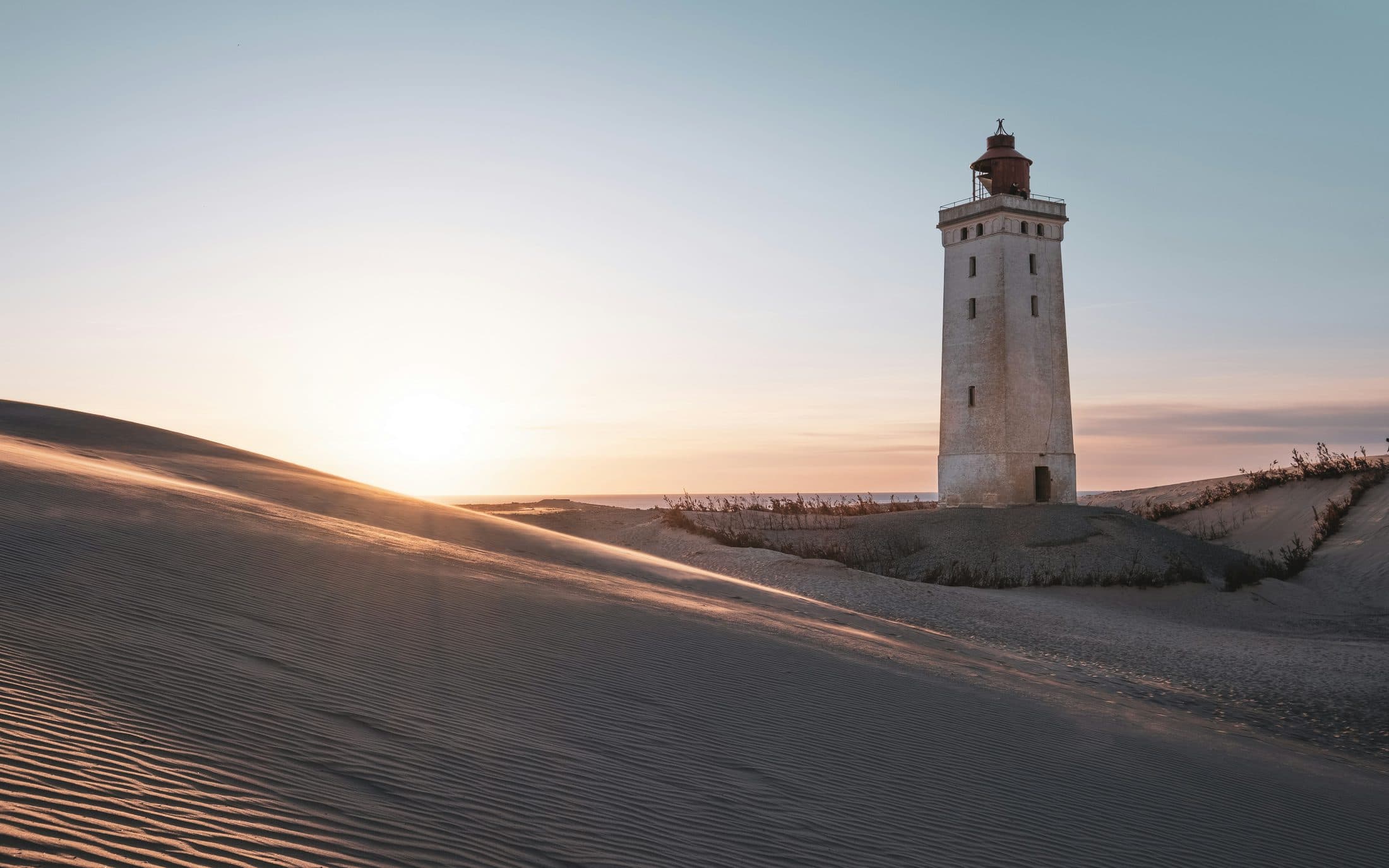
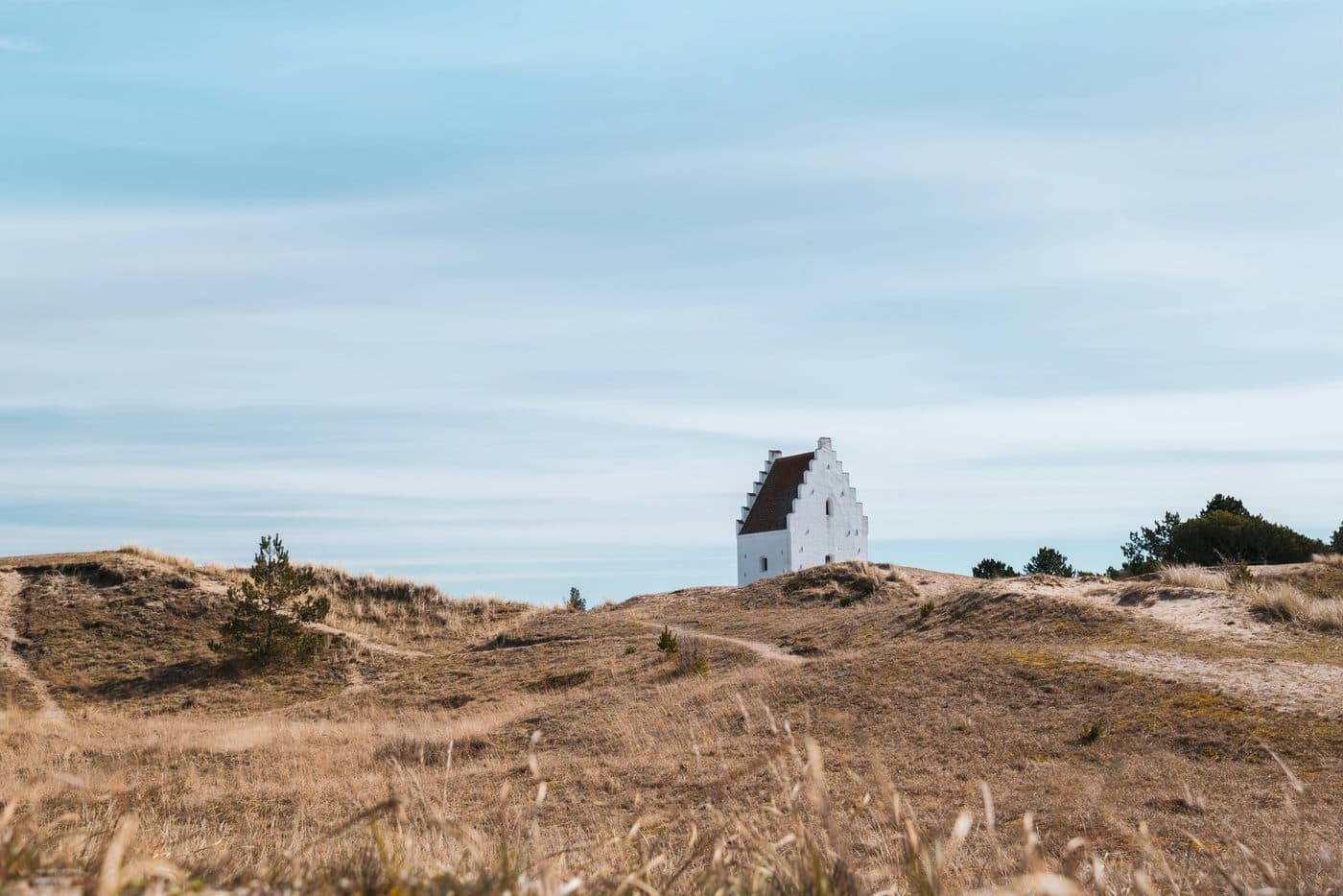
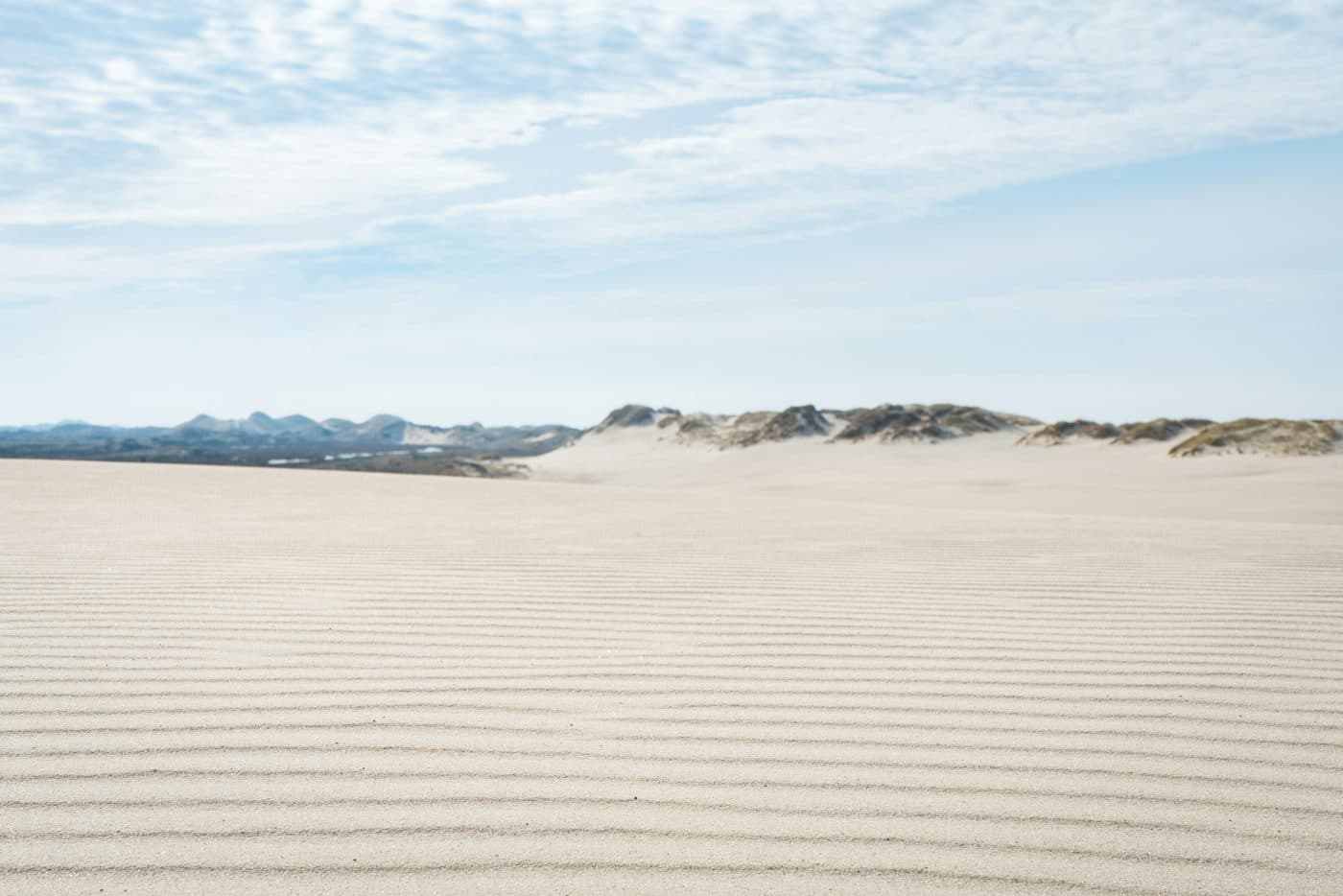
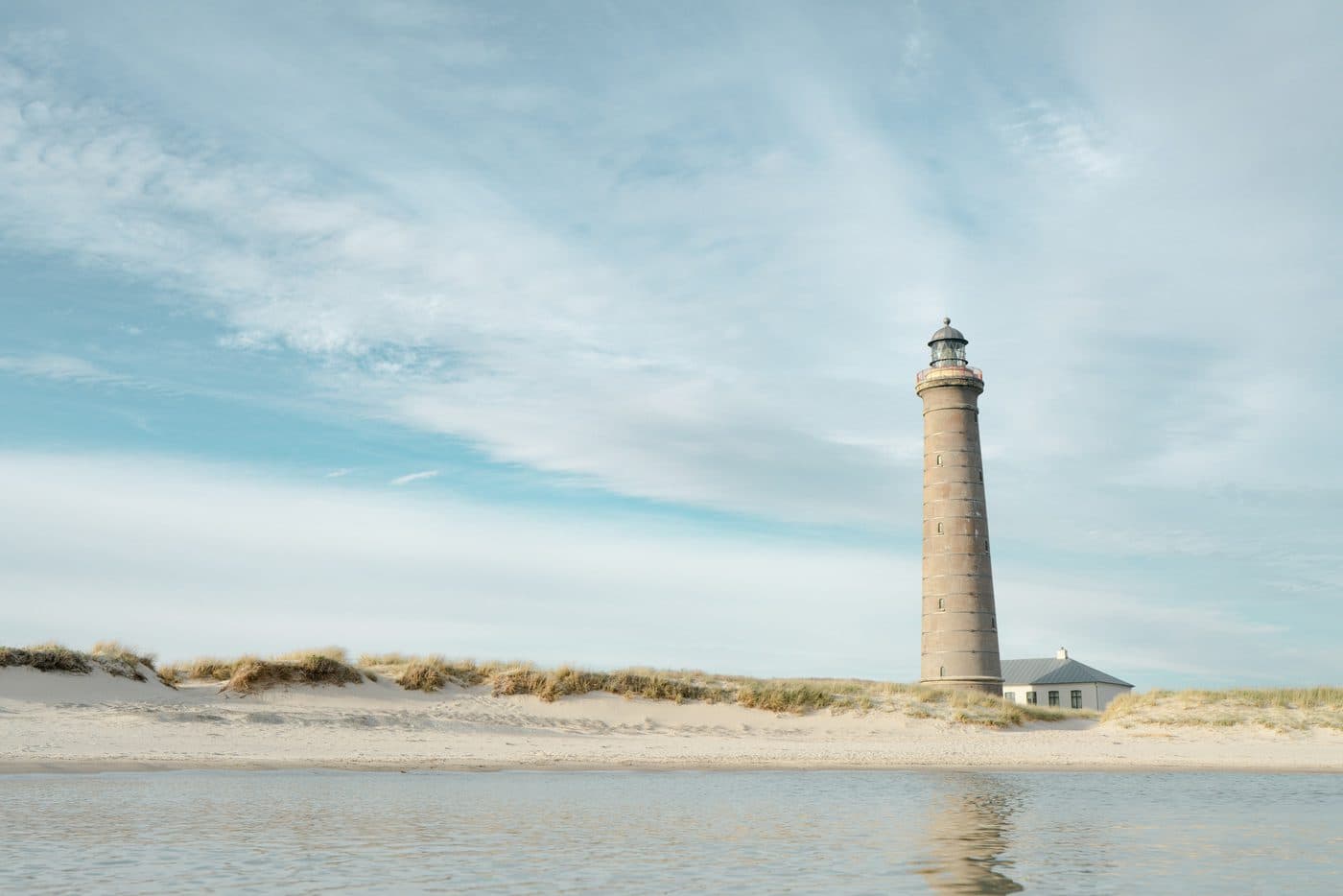
Grenen, 4 km north-east of Skagen, is the outermost tip of the Skagen Odde peninsula: a growing spit of sand and gravel that shifts with the weather and mostly points east, where the waves of the Skagerrak and the Kattegat meet in a crossing pattern. It has moved about a kilometre north in 200 years, about a million people visit it every year, and from the large car park a tractor-drawn wagon runs out to the tip; behind it lie the protected heath and dunes of Skagen Gren and the town’s Grey Lighthouse of 1858, one of four lighthouses around Skagen. South-west of the town, Råbjerg Mile is Denmark’s largest migrating dune and one of the largest in Europe: almost a square kilometre of sand, four million cubic metres of it, about 40 m high at the top, travelling some 15 m north-east a year across the peninsula from the Skagerrak towards the Kattegat; since 2008 its path has been protected so that it can keep moving, and it is expected to cross the Skagen road around 2200. In the dunes of Skagen Klitplantage stands the white tower of the Buried Church, St Laurentius, built in the late 1300s as the largest church in Vendsyssel: sand had drifted over it since the 1500s, and in 1795 the struggle was given up: the church was closed by royal order, the nave was pulled down and the tower was kept as a sea mark; it is listed today, and red posts mark where the nave, the sacristy and the churchyard stood. Down the west coast, Lønstrup Klint runs about 13 km between Lønstrup and Løkken, and at its highest point, almost 100 m above the sea, Rubjerg Knude is a dune on top of a cliff; its lighthouse, 23 m tall and first lit at the end of December 1900, was put out in 1968 when the sand won, and in 2019 it was moved about 80 m inland to keep it from falling into the sea. Aalborg lies on the Limfjord, and two of Denmark’s five Viking-Age ring fortresses, built around 970 to 980, lie within an hour of it: Fyrkat, near Hobro, and Aggersborg, on the Limfjord, World Heritage since 2023.
Couples marry here in the town halls of Skagen and Aalborg, in the Church of Denmark’s parish churches, in Hjørring’s old prefect’s residence, and, for a wedding of their own, on the beach, in the dunes or in a garden, with portraits at Grenen, on the white sand of Råbjerg Mile and below the lighthouse at Rubjerg Knude in the long evening light. In Denmark a marriage is legal when the municipality (kommune) marries you in a civil ceremony — free of charge in the room it sets aside for weddings, such as the town hall’s, while for another place in Denmark that it allows it may charge you its costs — or when a priest of the Church of Denmark or the authorised officiant of another recognised faith marries you, one of you being a member; couples from abroad can marry here legally, neither of you needing to live in Denmark, once the Agency of Family Law (Familieretshuset) has issued its certificate (prøvelsesattest; DKK 2,100 as of November 2026, usually within five working days of a complete application, valid four months) and each of you is lawfully in Denmark, with two witnesses at the ceremony, and since 2012 marriage has been open to two people of the same sex, in the Church of Denmark too, though a priest may decline. Frederikshavn Municipality marries couples in Skagen’s town hall at no charge on weekdays and Saturday mornings, and on a beach or in a garden for a fee; the places below give the details.
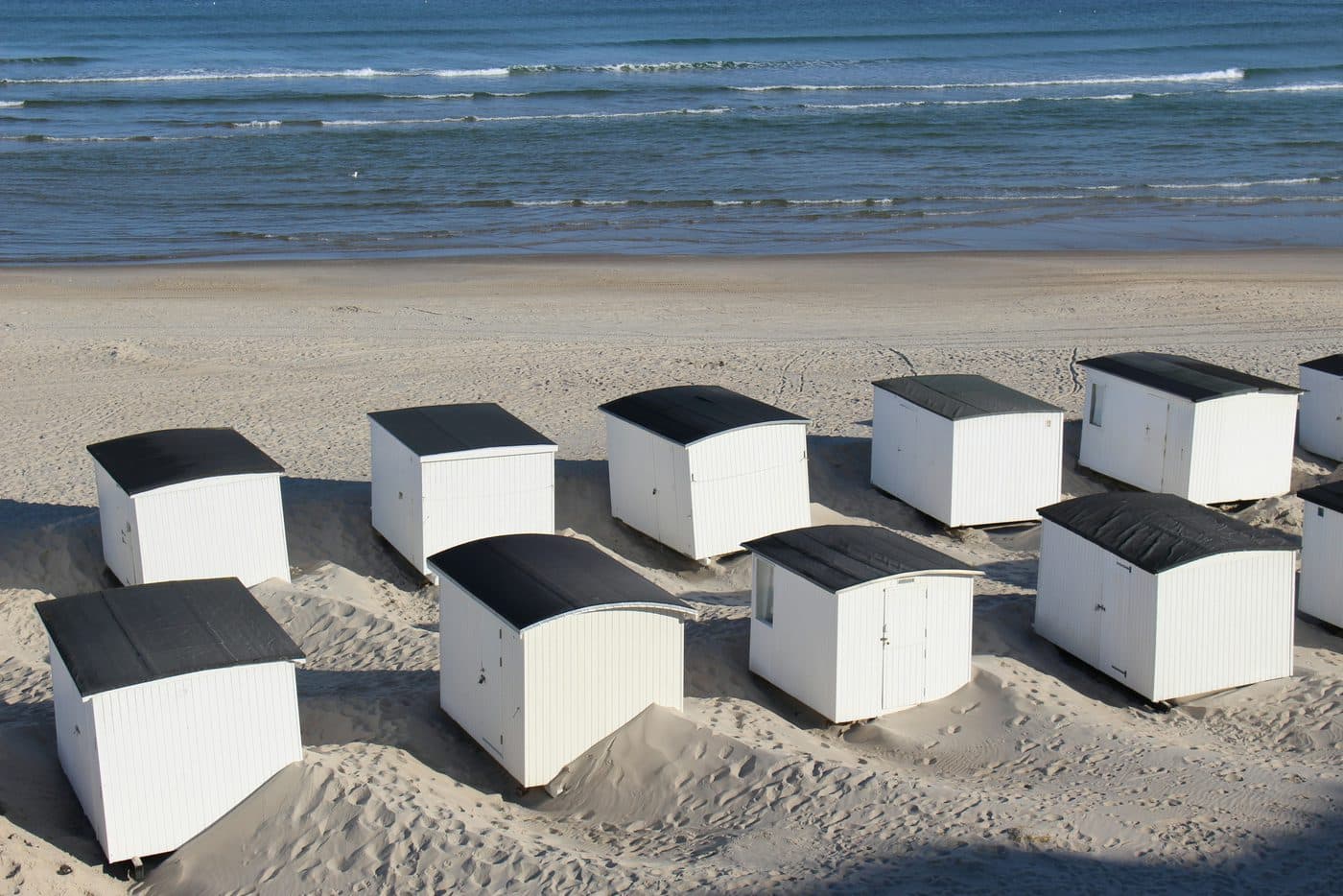
Through the year
When to marry in Skagen & North Jutland
June to August are the surest months. Denmark’s Meteorological Institute (DMI) has not yet published station normals for 1991–2020, so the figures here are the World Meteorological Organization’s 1991–2020 normals, as DMI reported them, and they give only the mean temperature of day and night together, not the highs: at Skagen Lighthouse, 3 km from the town, it is 14.3 °C in June, 16.8 °C in July and 16.9 °C in August, against 10.8 °C in May and 14.0 °C in September. The sea makes the tip slower to warm and slower to cool: at Tylstrup, inland about 15 km north of Aalborg, May is a little warmer (11.0 °C) but October a degree cooler (8.8 °C against 9.9 °C) and January colder (1.2 °C against 2.2 °C). The set has no rain normal for North Jutland; the nearest, at Vestervig on Thy’s west coast, about 100 km west-south-west of Aalborg, shows rain of 1 mm or more on about seven to eight days in May and June and about twelve to fifteen a month from August to January, so May to July are likely the drier months here too, but take that as a hint, not a figure for Skagen.
- January: Quieter
- February: Quieter
- March: Quieter
- April: Quieter
- May: Good with planning
- June: Best
- July: Best
- August: Best
- September: Good with planning
- October: Quieter
- November: Quieter
- December: Quieter
- April and MaySpring comes late at the tip: the mean temperature at Skagen Lighthouse is 6.6 °C in April and 10.8 °C in May, a little below inland Tylstrup’s. From 1 February to 31 August, Råbjerg Mile and the Hulsig heath are a Natura 2000 area protected for breeding birds, where no drone flies without Trafikstyrelsen’s permit. The clocks go forward on the last Sunday of March (28 March 2027), and by mid-May the sun sets over Skagen at about twenty-five to ten.
- June to AugustThe warmest months: a mean of 14.3 to 16.9 °C at Skagen Lighthouse. Skagen has the longest midsummer days of Denmark’s regions: the sun sets at about twenty past ten, and the sky stays light until about twenty-five to midnight and never grows fully dark. Of Skagen’s four lighthouses, the 1958 copy of a 1600s lever light is lit only on Midsummer Eve. Aalborg City Hall holds no weddings in weeks 29 and 30, the second half of July, and Hjørring moves its weddings to its City Hall in July.
- September and OctoberThe sea keeps the autumn mild at the tip: a mean of 14.0 °C in September and 9.9 °C in October at Skagen Lighthouse, a degree above inland. On Lønstrup Klint the sea buckthorn’s orange berries ripen in August and September. In mid-September the sun sets at about twenty to eight, in mid-October at about a quarter past six. The clocks go back on the last Sunday of October (31 October 2027).
- November to MarchWinter is short of light more than cold: a mean of 1.7 to 3.6 °C from December to February at Skagen Lighthouse. At midwinter the sun is up only from about nine o’clock to half past three, no higher than about 9 degrees at noon, and it sets over the land, not the sea, at Grenen. Skagen’s and Aalborg’s town halls marry couples all winter, Skagen on weekdays and Saturday mornings, Aalborg on Tuesdays, Fridays and Saturdays.
In numbers
- UNESCO World Heritage
- Viking-Age Ring Fortresses (2023)
Checked 6 November 2026
Places
Where couples marry here
The kinds of places — ask your photographer which ones they know well.
Skagen and Grenen
Frederikshavn Municipality marries couples in its town halls in Skagen and Frederikshavn free of charge on weekdays between 8:00 and 15:00 and on Saturdays between 9:00 and 12:00; for a wedding outside the town hall, in a garden, a wood or on the beach, it charges DKK 1,300 (2026), on weekdays and Saturdays alike. It provides two witnesses on weekdays only, so bring your own on a Saturday; ceremonies are in Danish or English, on some dates in German, both of you must understand the language or bring an interpreter who is there in person, and your witnesses are welcome to take photos and film during the ceremony. Couples from abroad apply to the Agency of Family Law, and the municipality offers dates once it has their approval. At Grenen, the dune heath behind the tip, about 3 km², is protected and grazed by cattle behind fences, and German bunkers from the Second World War lie in its dunes: they are not a place to shoot. We found no published rule on photo sessions on the beach.
Råbjerg Mile and the Buried Church
Råbjerg Mile has a car park at its foot and is left to itself: the Nature Agency (Naturstyrelsen) does not hold the sand back. The dunes are protected by law, so walk on foot, keep to the paths where there are paths and don’t climb or slide down the steep faces; it is forbidden to damage the plants, as sliding, digging, camping, grilling or a fire easily do, to cycle or ride in the dunes, to let a dog run loose or to leave litter, though dogs on a lead are welcome on the dune. On the Nature Agency’s land any activity with a commercial purpose, a paid photo session among them, needs the agency’s permit, which it grants only to applicants with a Danish CVR number; its guide prices for 2026 put photography other than advertising at DKK 600 to 6,250 a day or more, or DKK 12,500 for a year across the country, and a permit never closes a path to other visitors. South of the dune, in Bunken Klitplantage, the concrete German battery at Fårebakke is a war site, not a backdrop. The Buried Church is a short walk on a firm gravel path from the car park east of the Frederikshavn road, about 6 km from Skagen; its tower stands among low, grassy dunes.
Rubjerg Knude, Lønstrup and Løkken
Rubjerg Knude draws up to 200,000 visitors a year, most of them up the sand to the lighthouse and back; there are car parks on both sides of Rubjergvej near Fyrvejen. The coast here moves a couple of metres inland every year, and the Nature Agency warns that a piece of the cliff can fall onto the beach on a calm day as well as a stormy one, so keep well back from the edge above and from the foot of the cliff below, and follow the signs. Dogs are welcome on a lead. North of the lighthouse, the old churchyard of Mårup on the cliff edge is a burial ground, not a place to shoot. Hjørring Municipality, which includes Lønstrup and Løkken, marries couples in its Amtmandsboligen, the old prefect’s residence in Hjørring, on Fridays and Saturdays from 9:30 to 11:30, and in its City Hall in July; it can provide witnesses on Fridays. A wedding outdoors in the municipality, by another Danish municipality’s registrar, needs no permit of Hjørring’s own, but the rules of the place still apply.
Aalborg and the ring fortresses
Aalborg marries couples in its City Hall at Gammeltorv 2, on the first floor, on Tuesdays, Fridays and Saturdays from 11:00, but not in weeks 29 and 30; the office provides two witnesses on Tuesdays and Fridays, on Saturdays you bring two of your own aged 15 or over, and it recommends no more than 40 guests, witnesses included. Rice, birdseed and other things that break down are welcome outside; confetti cannons, glitter and plastic confetti are not. Any member of the city council may marry you somewhere else of your choosing, with your own two witnesses, if you agree the time and place with them; the marriage declaration takes 14 days. Fyrkat, 60 km south of Aalborg near Hobro, and Aggersborg, 50 km west on the north shore of the Limfjord, are ring fortresses of the 970s, World Heritage since 2023; we found no published rule on photo sessions at either, so treat them as the ancient monuments they are.
Light
How the light falls
The times here are for a flat horizon, and at the tip the horizon is the sea on three sides. On 21 June the sun rises over Skagen at about a quarter past four and sets at about twenty past ten, far to the north-west, out over the Skagerrak as seen from Grenen; it is still ten degrees up at about twenty-five to nine, the sky stays light until about twenty-five to midnight, and around midsummer the sun never sinks more than about nine degrees below the horizon, so the night never turns fully dark. In mid-May it sets at about twenty-five to ten, in mid-July at about five past ten, in mid-August just after nine, in mid-September at about twenty to eight and in mid-October at about a quarter past six. At midwinter it is up only from about nine o’clock to half past three, no more than about 9 degrees high at noon, and it never climbs to ten degrees. The west coast at Rubjerg Knude, Lønstrup, Løkken and Blokhus faces the open sea to the west, so for much of the year the sun goes down over the water there, at about twenty past ten at midsummer.
Travel
Getting there
Aalborg Airport is 7 km by road from Aalborg City Hall, 32 km from Blokhus, 41 km from Løkken, 63 km from Rubjerg Knude, 100 km from Råbjerg Mile, 109 km from Skagen and 112 km from Grenen. Its own railway station is close to the terminal, and with buses several times an hour it has more than 100 public-transport departures on a weekday. To Skagen, the local railway, Nordjyske Jernbaner’s line 79, runs from Frederikshavn and stops at Bunken for the dune plantation; in the summer months a bus, route 99, runs from Blokhus via Hirtshals to Skagen and stops by Råbjerg. By road from Skagen, Grenen is 4 km, the Buried Church 6 km, Råbjerg Mile 16 km and Rubjerg Knude 76 km; from the lighthouse, Lønstrup is 3.5 km and Løkken 13 km, and Blokhus is 20 km beyond Løkken. From Aalborg, Fyrkat is 60 km, Aggersborg 50 km and Skagen 108 km. Drones fly under the EU’s rules — an operator registered where they live (in Denmark with the Civil Aviation and Railway Authority, Trafikstyrelsen; from outside the EU, in the first EU country where they fly), insured, in sight, below 120 m and never over crowds — and Denmark adds its own zones, shown on Trafikstyrelsen’s map dronezoner.dk: no flying within 150 m of the royal palaces and castles its order names (Amalienborg, Fredensborg, the Hermitage, Christiansborg, Rosenborg, Kronborg and Frederiksborg among them) or at all over Kongens Have, Frederiksberg Have and Søndermarken, none near airports (8 km from the main ones, 4 km from smaller airfields), none in Natura 2000 areas during their protection seasons and none over fenced houses and gardens without the owner’s consent, unless Trafikstyrelsen grants an exception. Råbjerg Mile and the Hulsig heath are a Natura 2000 area whose protection season runs from 1 February to 31 August, and on the Nature Agency’s land a drone pilot follows the ordinary access rules on the ground; a commercial flight needs the agency’s permit like any other commercial activity.
Photographers
Photographers in Skagen & North Jutland
No one in Skagen & North Jutland yet
The first photographers in Skagen & North Jutland are joining now. Tell our concierge your date and your plans — it checks who is free and fits.
Plan
Read before you plan
- Getting married in Denmark as foreigners: the Agency of Family Law, documents, the town hall and feesHow couples from abroad marry legally in Denmark: no residence needed, the Agency of Family Law’s online application and its DKK 2,100 fee, lawful stay and the EU’s entry/exit system, documents in Danish, English or German and which ones need an apostille, the four-month certificate, two witnesses, the town hall or another place, church weddings in the Church of Denmark and recognised faiths, same-sex marriage since 2012, the certificate at home, and the symbolic route.
- How to choose a wedding photographer: the steps, and the questions to askThe decision in order — whole weddings, style, availability, the package, the contract and deposit, cancellation, delivery and a conversation — then a checklist of questions, with why each one matters.
- A wedding-day timeline for photosFrom getting ready to the last dance, planned around the light.
- Deposits and payment protectionWhat you pay when, and what happens if plans change.
- Which country for a destination wedding? The law, prices, crowds and light, comparedThe legal route for couples who don’t live there, season and crowds, price levels, light, flights, venues and permits for photographs — Portugal, Italy, Spain, Greece, France and Austria compared with official figures, as of October 2026.
- A rain plan that still looks goodCovered spots, umbrellas and what photographers do on grey days.
- Wedding photography contract checklist: what it should say, and how Lens & Vows handles each pointThirteen things a good contract covers — the day and the hours, what is delivered, deposit and balance, cancellation on either side, date changes, illness, image rights, personal data, backups, travel, overtime and complaints — and what our terms say about each.
Denmark
Other places
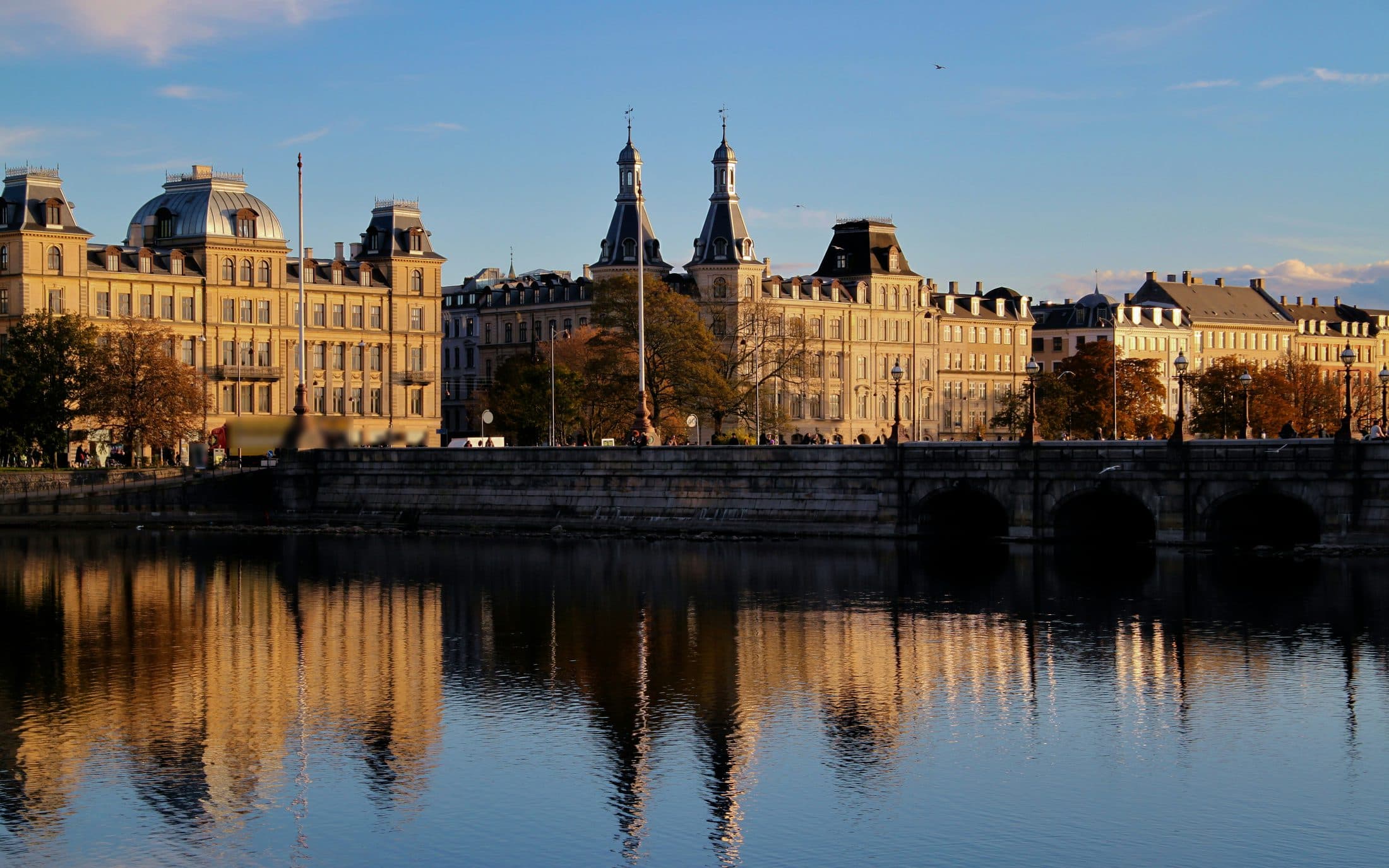 CopenhagenBest: May · Jun · Jul · Aug · SepAvailable to book
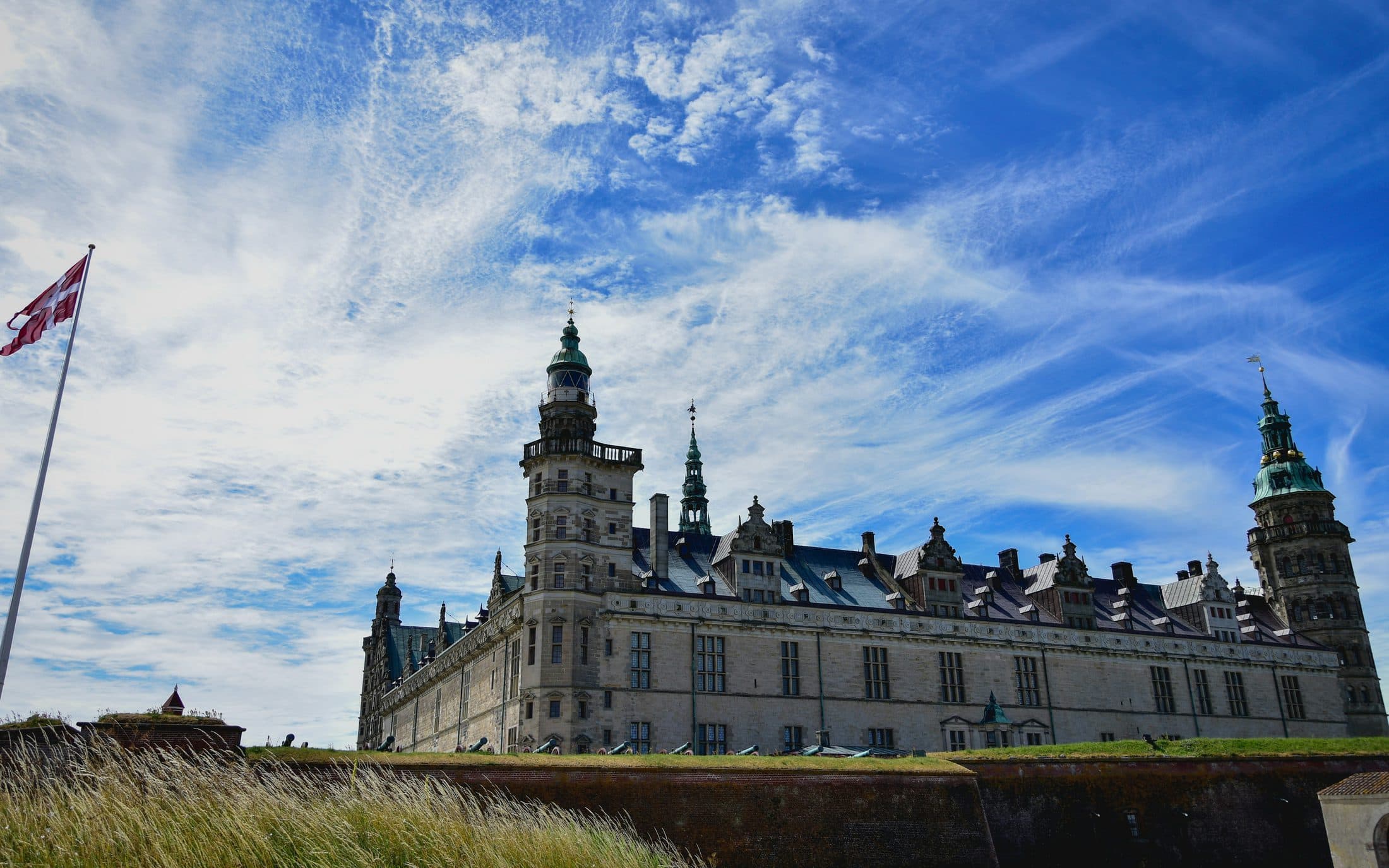 North ZealandBest: May · Jun · Jul · Aug · SepAvailable to book
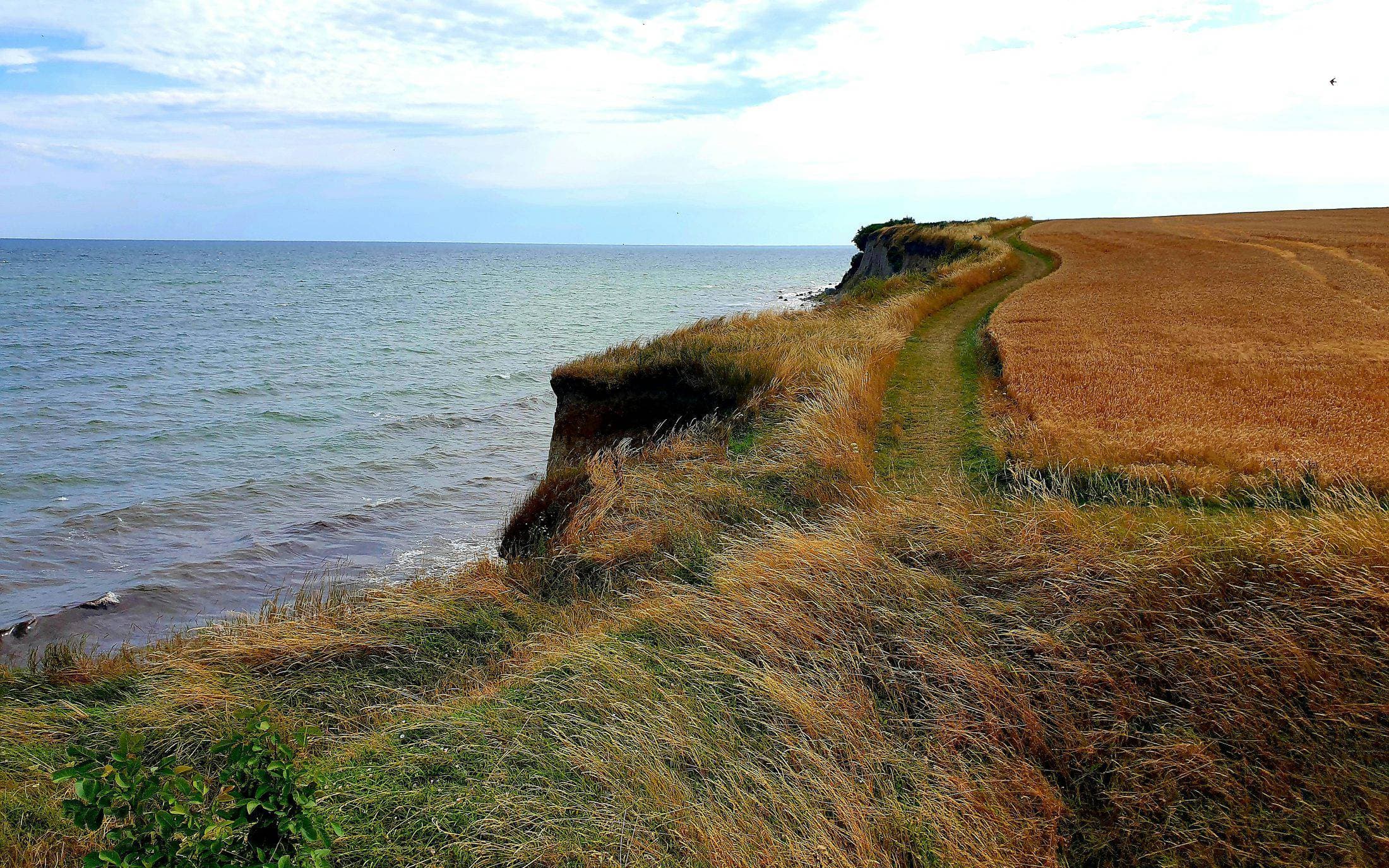 Funen & ÆrøBest: May · Jun · Jul · Aug · SepAvailable to book
 Aarhus & East JutlandBest: Jun · Jul · AugPhotographers joining
 Ribe & the Wadden SeaBest: Jun · Jul · AugPhotographers joining