Founding photographer

Martina L.from kr 6,140
Copenhagen, North Zealand +14 · Documentary, RomanticWedding photographers in Denmark
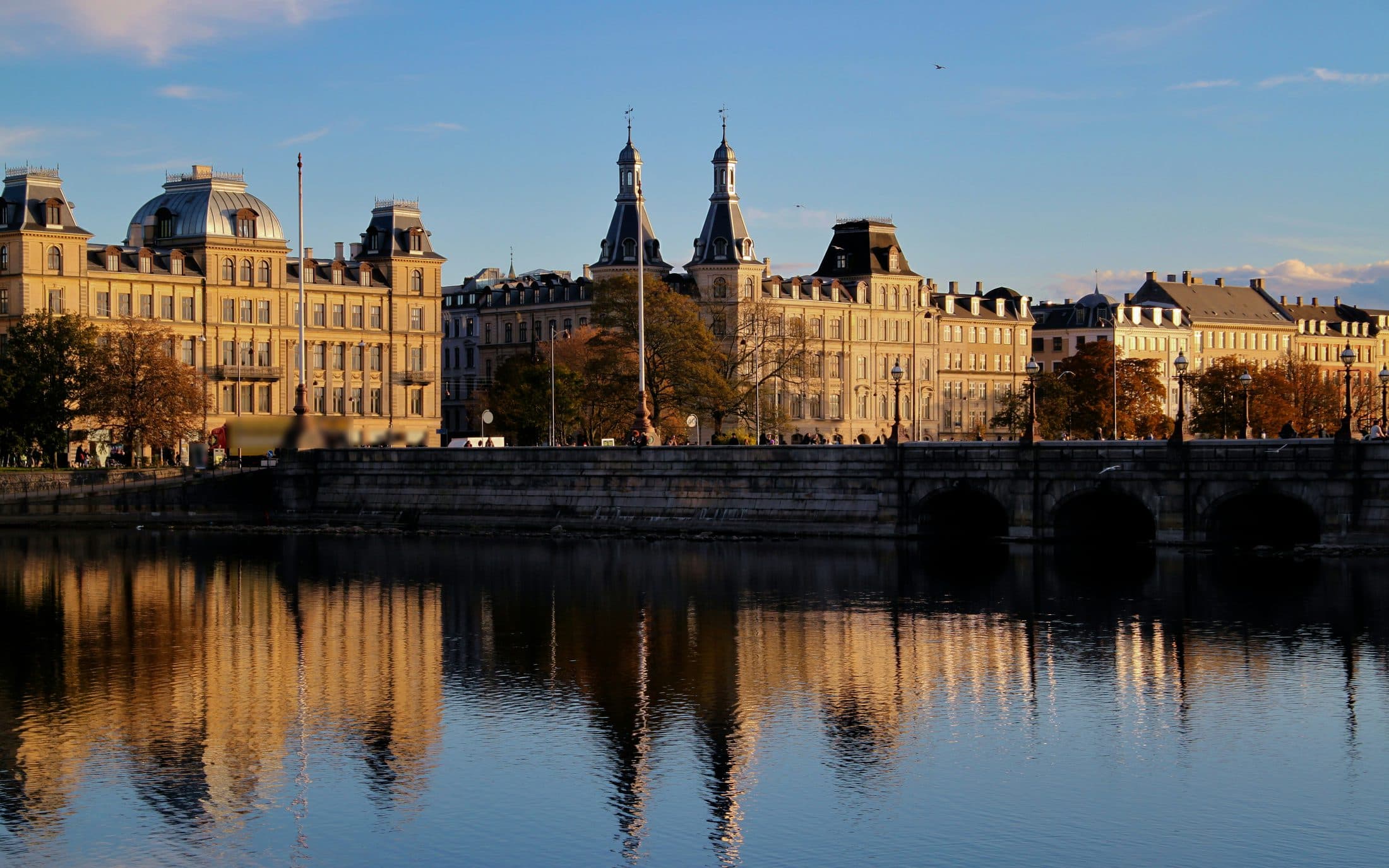
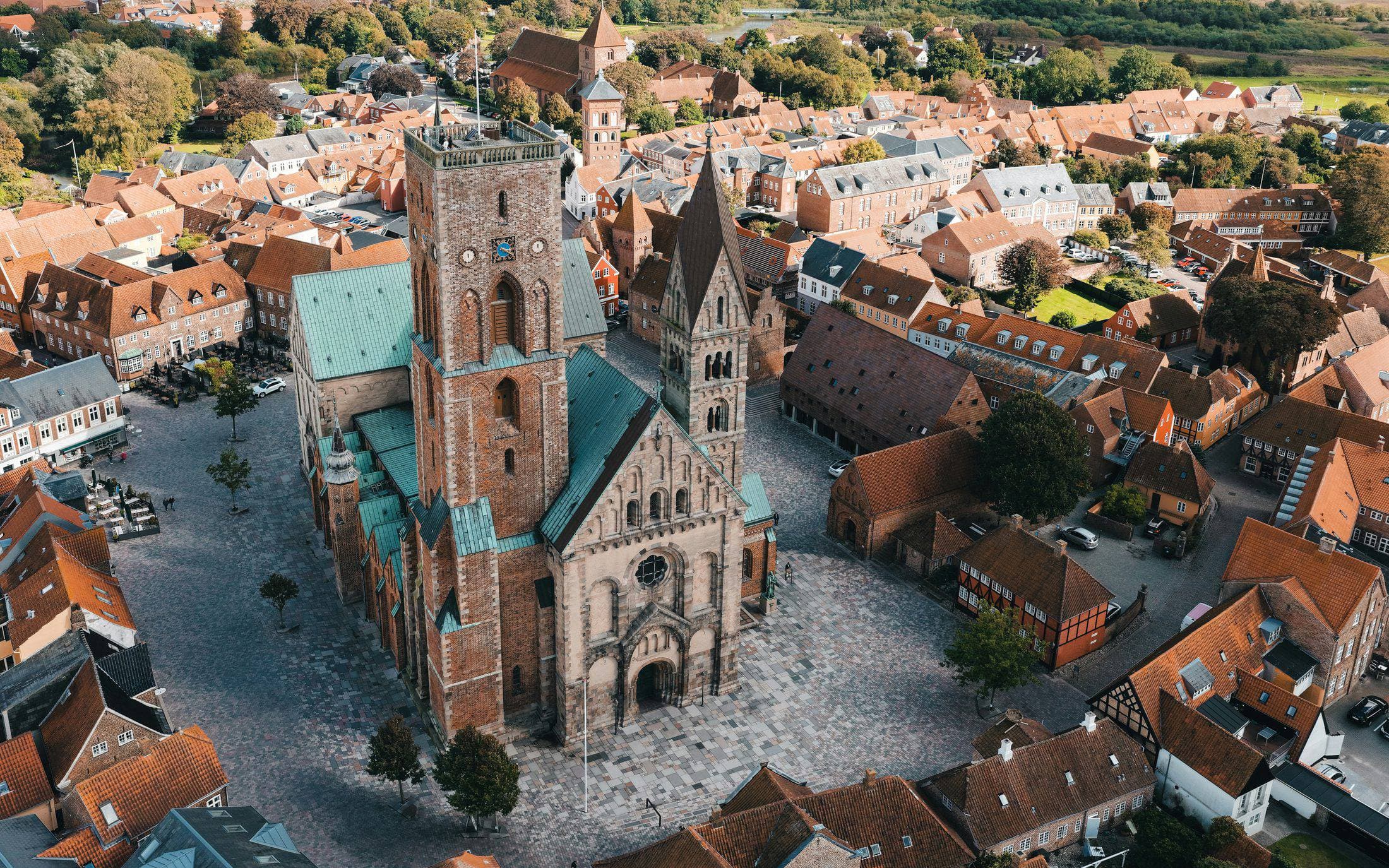
Denmark’s capital on the Øresund: the City Hall, where most of the city’s civil weddings take place, the old harbour canal of Nyhavn, the Lakes and their bridges, the five-pointed fortress of Kastellet, the King’s Garden round Rosenborg Castle, Frederiksberg Gardens, the palace square of Amalienborg and the Marble Church, the canals of Christianshavn, the Round Tower and the beach at Amager Strand, and, half an hour west by train, Roskilde, its brick cathedral and its fjord.
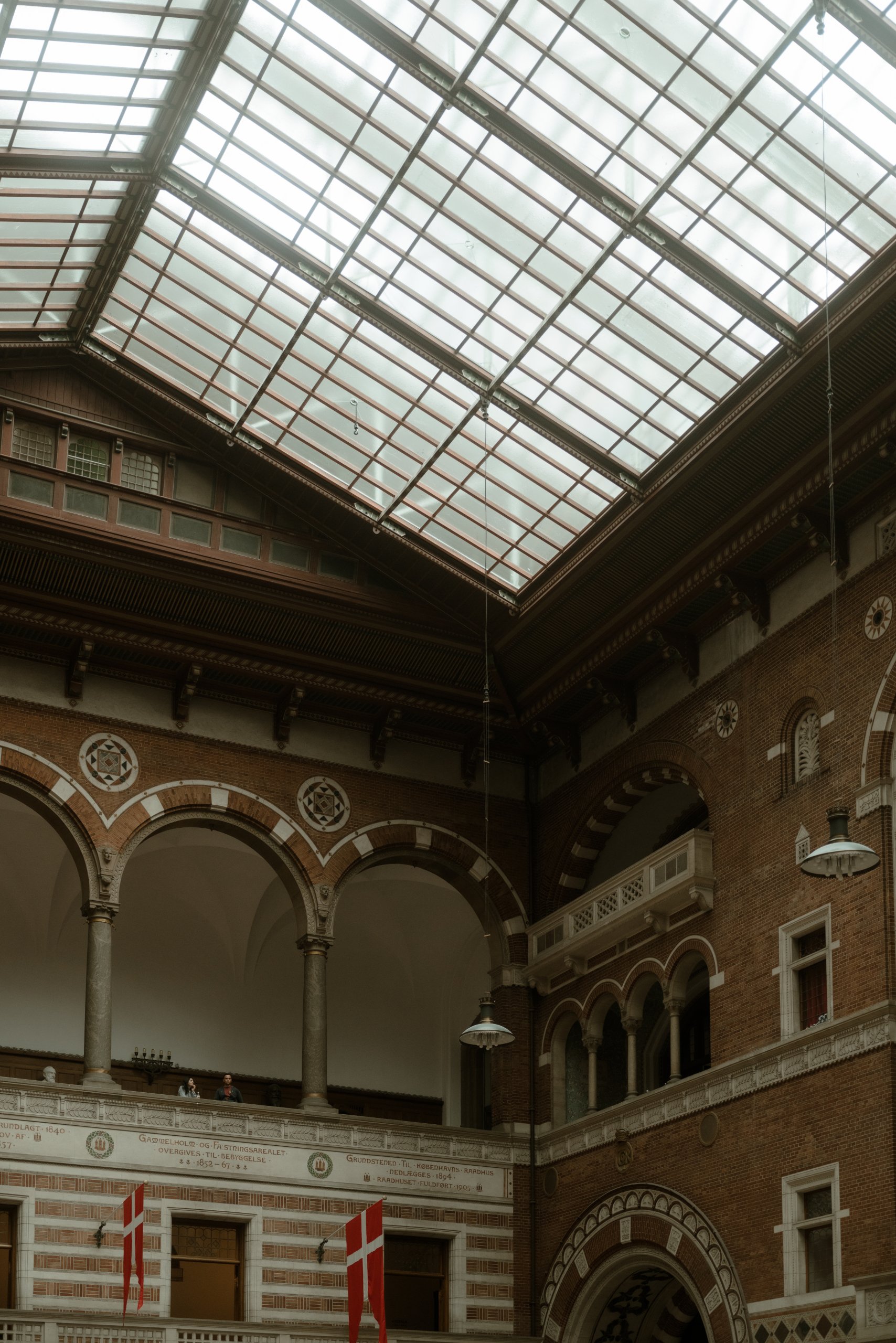
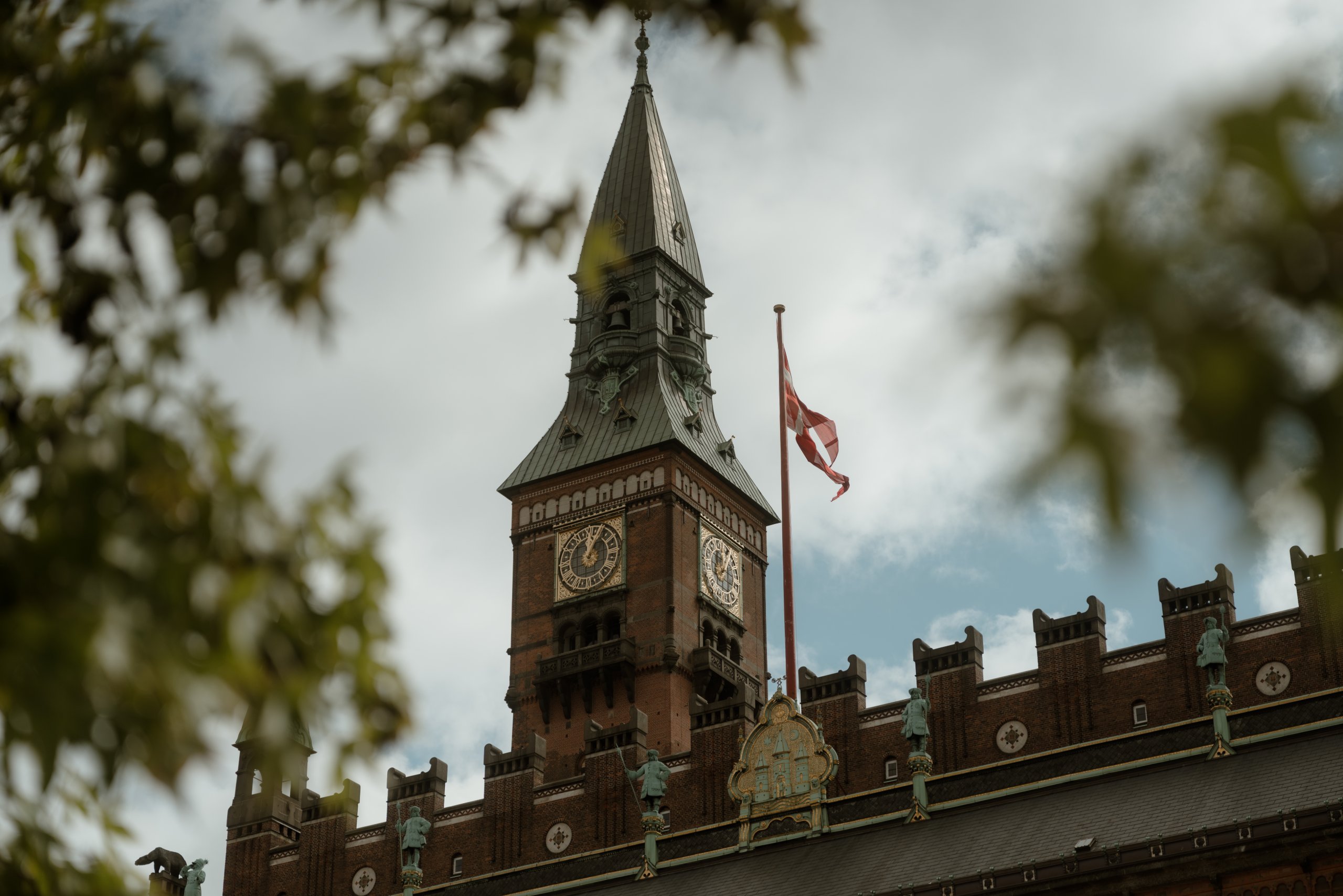
Copenhagen’s City Hall, on City Hall Square, is open to everyone on weekdays and on Saturday mornings, and its garden opens every day from May to September.
A short walk north-east, Nyhavn is a canal of old wooden ships and painted houses running down to the harbour, and north of it Kastellet, a five-pointed fortress still used by the armed forces, keeps its grass ramparts and moats open to walkers from early morning until evening. Between them lie the palace square of Amalienborg, always open to the public, and the dome of the Marble Church, and inland the King’s Garden, 12 ha round the turrets of Rosenborg Castle, is visited by some three million people a year. West of the old city the Lakes run in a long chain of water crossed by Queen Louise’s Bridge, and beyond them, in the municipality of Frederiksberg, Frederiksberg Gardens spread over 32 ha of lawns and pavilions round Frederiksberg Palace. Across the harbour, Christianshavn is a quarter of canals and moored boats, and the Round Tower in the old centre, the oldest working observatory building in Europe, is climbed by a spiral ramp of about 200 m to a platform that looks across to Sweden. East of the city, Amager Strandpark, the city’s largest beach, is a lagoon behind an artificial beach island about 2 km long, laid out from 2004 and 5 km from the centre. Half an hour west, Roskilde Cathedral, on the World Heritage List since 1995, was in UNESCO’s words Scandinavia’s first Gothic cathedral built of brick, in the 12th and 13th centuries, and has been the burial church of Denmark’s kings and queens since the 15th; the town runs down from it to the harbour on Roskilde Fjord.
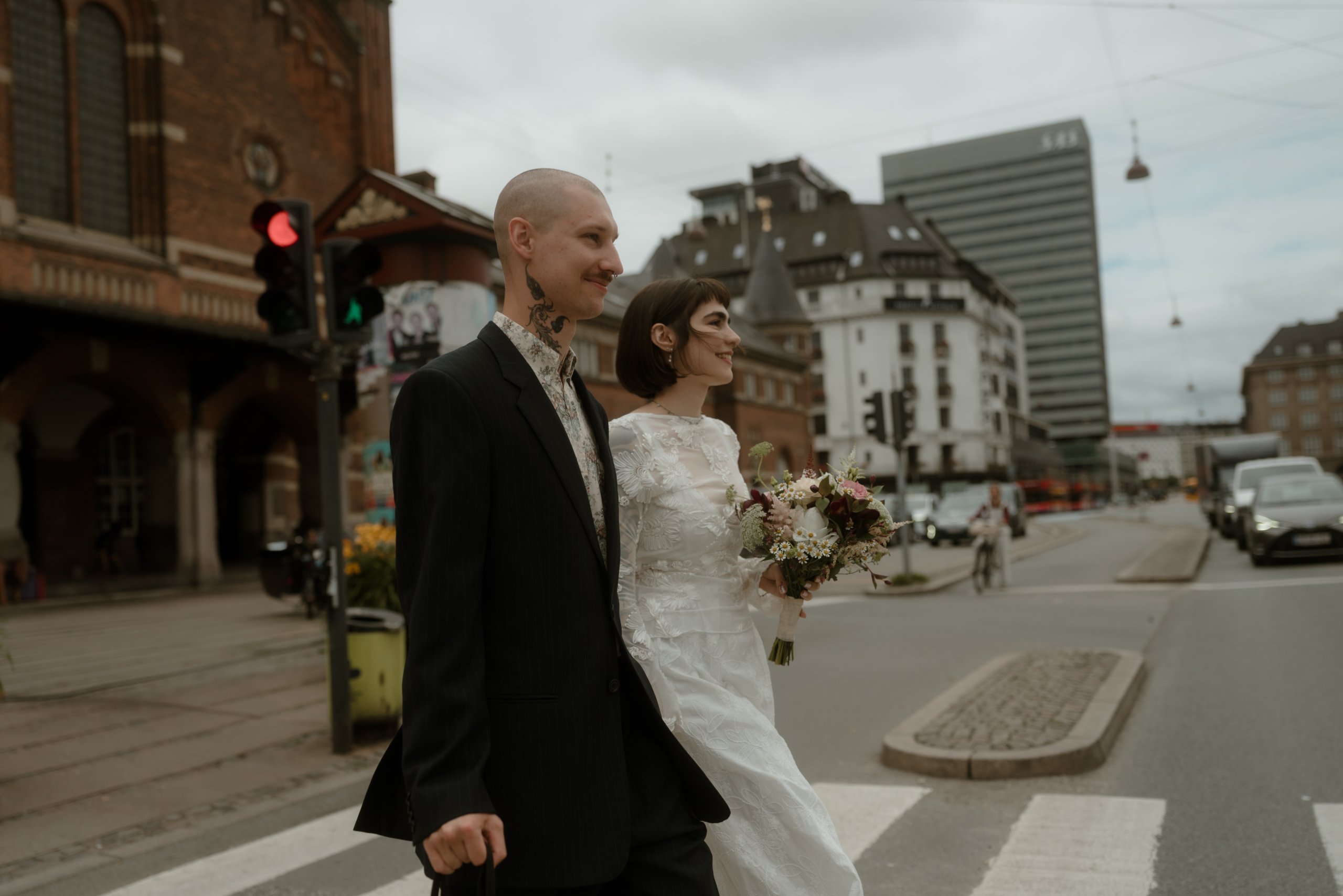
Most couples marry in the Wedding Hall of Copenhagen’s City Hall, in a ceremony of about ten minutes in Danish, English or German, with up to 75 guests; others marry at Frederiksberg’s town hall, in the parish churches, the Marble Church among them, when one of them belongs to the Church of Denmark and to the parish or has close ties to it, in Roskilde Cathedral on the same terms, or, with a member of the City Council who agrees to marry them, in a place of their own, the royal gardens included, which ask no permit for a wedding of fewer than 60 guests. Portraits follow by the Lakes at sunset, on Kastellet’s ramparts, among the roses below Rosenborg and along Christianshavn’s canals. In Denmark a marriage is legal when the municipality (kommune) marries you in a civil ceremony — free of charge in the room it sets aside for weddings, such as the town hall’s, while for another place in Denmark that it allows it may charge you its costs — or when a priest of the Church of Denmark or the authorised officiant of another recognised faith marries you, one of you being a member; couples from abroad can marry here legally, neither of you needing to live in Denmark, once the Agency of Family Law (Familieretshuset) has issued its certificate (prøvelsesattest; DKK 2,100 as of November 2026, usually within five working days of a complete application, valid four months) and each of you is lawfully in Denmark, with two witnesses at the ceremony, and since 2012 marriage has been open to two people of the same sex, in the Church of Denmark too, though a priest may decline. Copenhagen provides the two witnesses itself at City Hall; the places below give the details.
Photographers
They still have dates open here. Their whole weddings and free dates are on their page.
See the photographerBooking through Lens & Vows
Through the year
May to September are the months to marry here. Denmark’s Meteorological Institute (DMI) has not yet published station normals for 1991–2020, so the figures here are the World Meteorological Organization’s 1991–2020 normals, as DMI reported them, and they give only the mean temperature of day and night together, not the highs: at Roskilde’s airport, about 29 km west of City Hall, it is 11.3 °C in May, 14.7 °C in June, 17.1 °C in July, 17.0 °C in August and 13.5 °C in September. At Landbohøjskolen in Frederiksberg, 2 km from City Hall, rain of 1 mm or more falls on about 8 days in May, 9 in June and July, 10 in August and 9 in September, and August is the wettest month of the year, with 76 mm, against 43 mm in May and 34 mm in April, the driest. April and October work with care: the mean is 7 °C in April, with rain on 7 days, and 9 °C in October, when rain falls on 11 days.
Weather station: Landbohøjskolen (Frederiksberg), normals 1991–2020 · Checked 6 November 2026
Places
The kinds of places — ask your photographer which ones they know well.
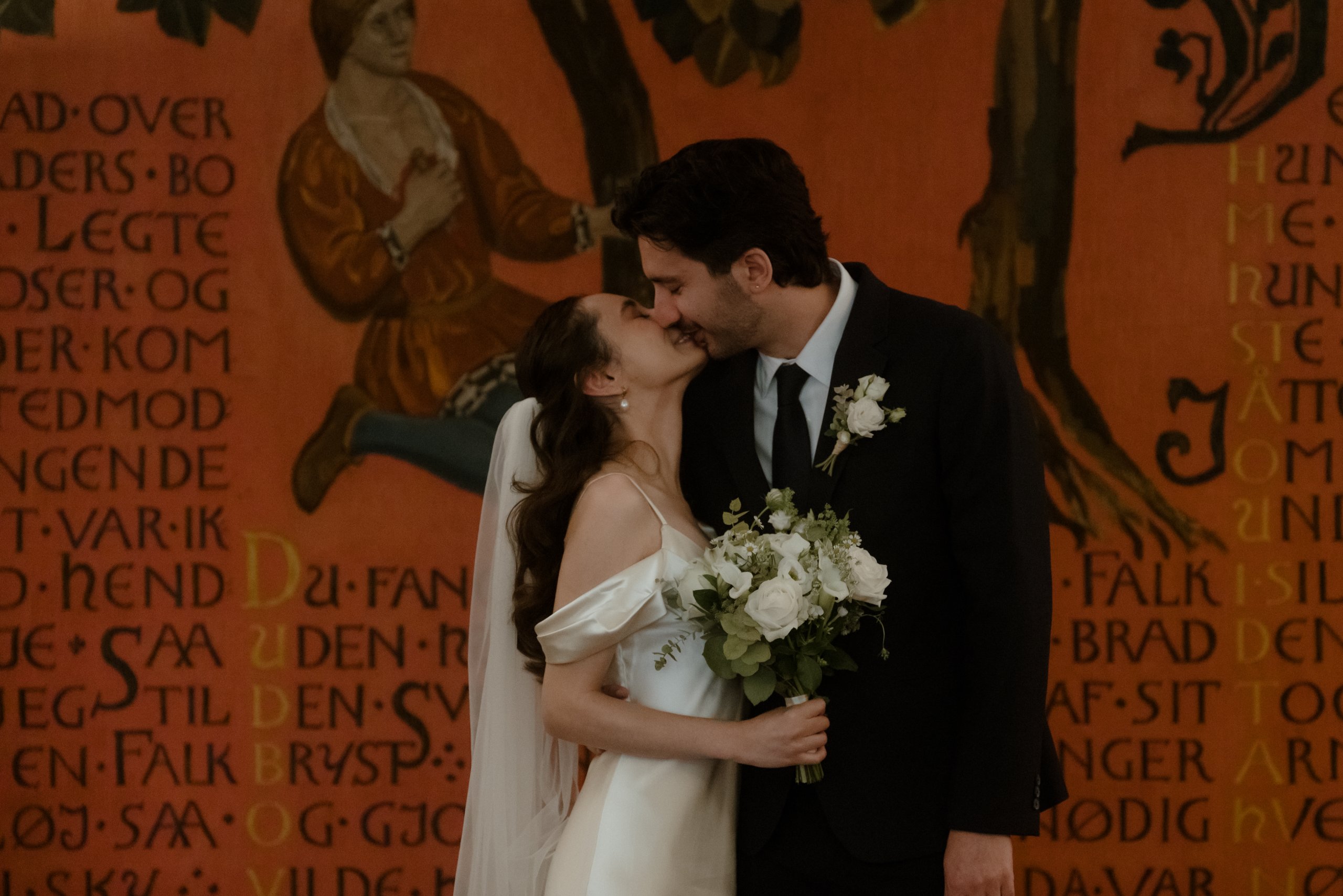
Copenhagen marries couples in the Wedding Hall on the City Hall’s first floor, its walls painted with scenes of courtship from old Danish folk tales, or, for anyone who can’t manage the stairs (there is no lift), in a quiet corner of the Great Hall. Ceremonies run from Monday to Friday between 9:10 and 15:50 and on Saturdays between 10:00 and 12:40; the city always provides two official witnesses, and guests may photograph and film throughout. Rice and confetti are not allowed inside or on the steps, though rice may be thrown on City Hall Square, and afterwards you may stay in the Great Hall, the ground-floor corridors or, from 1 May to 29 September, the City Hall Garden. The wait for a date can be up to four months, and anyone without a Danish personal registration number (CPR) shows a passport, with a visa or residence card where one is needed, at City Hall between five working days and one day before. A member of the City Council can marry you free of charge, at City Hall or at a place you choose; a registrar sent to a place of your own inside the municipality is at the city’s discretion and may cost something, so ask the city; and on dates the office announces it marries couples outdoors, at places it chooses such as Kastellet and Amager Strandpark, at no charge. Frederiksberg, a municipality of its own in the middle of Copenhagen, marries in its town hall’s Wedding Hall at 11:00 on Thursdays in Danish, English or German and on Fridays and Saturdays in Danish (in English on any day if one of you lives in Denmark), but not in weeks 28 to 30 of the summer holidays.
The Agency for Culture and Palaces (Slots- og Kulturstyrelsen) runs the King’s Garden and Frederiksberg Gardens. Both open every day, the King’s Garden from 7:00 and Frederiksberg Gardens from 6:00, and close at 17:00 from November to February, 19:00 in March and October, 21:00 in April and September and 22:00 from May to August. You may photograph there without a permit if you are no more than 11 people with handheld equipment, and a wedding or reception of fewer than 60 guests needs no permit and costs nothing (fewer than 30 in the smaller gardens, such as Amaliehaven by Amalienborg); but the agency never allows tables, gazebos, tents, amplified music or decorations at a private event, only chairs for older guests, nor may anything be cordoned off, and a larger shoot needs a permit, with DKK 6,250 in administrative costs (as of November 2026). Inside Rosenborg Castle the museum allows handheld cameras only and no wedding photography. Amalienborg’s palace square and Amaliehaven are always open to the public. At the Marble Church (Frederiks Kirke), one of you must live in the parish or have a close tie to it, such as having lived there or having parents, brothers, sisters or children there; inside, pictures may be taken only as you come in and go out, from the pews, and half an hour is set aside after the ceremony for photographs in the church; outside, private wedding pictures are allowed on the left side of the great staircase or by a side entrance, not in front of the middle door.
Kastellet belongs to the armed forces and is still a barracks; its ramparts and paths are open free of charge from 6:00 to 20:00 in the winter half of the year and to 22:00 in the summer half. Its rules let visitors photograph wherever the public may go, but ask them to keep off the grass and the cannons, hold no event without permission and fly no drones, and its own photo page says that photography and filming need permission, so write to the Commandant before a wedding shoot. In the Princess’s Bastion stands the Monument for Denmark’s International Effort since 1948, a memorial to those who served and died abroad, and the Museum of Danish Resistance is just outside, on Esplanaden: neither is a place for wedding pictures. Nyhavn’s quays and old ships are open ground, but the large anchor at the head of the canal is a memorial to Danish seafarers lost in the Second World War, so keep it out of the frame. Christianshavn’s canals are lined with moored boats. The Round Tower allows private photographs on its ramp and platform but says it does not want to be a backdrop for wedding photography. At Amager Strandpark, the island’s seaward beach faces east across the Øresund, dogs are kept on a lead and, from 1 May to 31 August, off the beach island altogether; the metro’s M2 line stops at Amager Strand.
Roskilde Municipality marries couples at the town hall, Rådhusbuen 1, at 15:30 on Thursdays and 11:30 on Fridays, and at 11:00 on Saturdays in the Old Council Chamber on the first floor at Stændertorvet 1, but holds no civil weddings at all in July; it can provide witnesses on Thursdays and Fridays, while on Saturdays you bring your own, and it gives about eight weeks for the papers of foreign citizens. In the cathedral, one of you must belong to the Church of Denmark and live in the cathedral parish or have a tie to it: having lived there, having been baptised or confirmed in one of its churches, or having parents or children living there. A wedding there lasts about 40 minutes; video and sound recording are not allowed, everyone may photograph from their seat as you come in and go out, and each party may name one photographer to take a few pictures during the service from their own place, with the priest’s agreement and without flash; rice is allowed outside, confetti is not, and a reception on the cathedral square stays short, no more than 30 minutes, without food, tables or music. When no service or ceremony is taking place, photographs in the cathedral are not limited, as long as they respect the church and its visitors; an adult pays DKK 80 to enter (as of November 2026), and the cathedral is often closed to visitors on Saturdays in spring and summer for confirmations and weddings. Below it, the harbour by the Viking Ship Museum looks out over Roskilde Fjord.
Light
The times here are for a flat horizon over Copenhagen. On 21 June the sun rises at about twenty-five past four and sets at about ten, far to the north-west; it is still ten degrees up at about twenty past eight, civil twilight lasts until about eleven, and the sun never sinks more than 11 degrees below the horizon, so the sky stays pale all night. In mid-May it sets at about a quarter past nine, in mid-July at about a quarter to ten, in mid-August at about a quarter to nine, in mid-September at about half past seven and in mid-October at about ten past six. At midwinter it is up only from about twenty to nine to twenty to four, never more than 11 degrees high at noon. The WMO’s 1991–2020 normals give no sunshine figure for any Danish station. Amager Strand faces east, so it is a place for sunrise over the Øresund; the evening light falls across the Lakes onto the houses on their eastern shores, and from May to August the royal gardens and Kastellet close at 22:00, around sunset, so the last light of a midsummer evening belongs to the Lakes and the harbour.
Travel
Copenhagen Airport is 9.5 km by road from City Hall, and the metro’s M2 line leaves from inside Terminal 3 and reaches the city centre in 14 minutes, about every three minutes in the daytime and every two in the rush hours. InterCity trains run from Copenhagen Central to Roskilde in about 22 minutes, with more than 50 departures to choose from; by road Roskilde Cathedral is 36 km from City Hall and 41 km from the airport. From City Hall, Kastellet is 3.7 km, Frederiksberg Gardens 4.3 km and Amager Strandpark 7.7 km by road. Drones fly under the EU’s rules — an operator registered where they live (in Denmark with the Civil Aviation and Railway Authority, Trafikstyrelsen; from outside the EU, in the first EU country where they fly), insured, in sight, below 120 m and never over crowds — and Denmark adds its own zones, shown on Trafikstyrelsen’s map dronezoner.dk: no flying within 150 m of the royal palaces and castles its order names (Amalienborg, Fredensborg, the Hermitage, Christiansborg, Rosenborg, Kronborg and Frederiksborg among them) or at all over Kongens Have, Frederiksberg Have and Søndermarken, none near airports (8 km from the main ones, 4 km from smaller airfields), none in Natura 2000 areas during their protection seasons and none over fenced houses and gardens without the owner’s consent, unless Trafikstyrelsen grants an exception. In Copenhagen, filming with a drone also needs the municipality’s permit, no drone may fly over Kastellet, the Agency for Culture and Palaces allows no private drone flights over its gardens, and the whole of Amager Strandpark lies within 8 km of the airport.
Real weddings
Plan
Denmark