Founding photographer

Martina L.from kr 11,900
Funen & Ærø, Copenhagen +14 · Documentary, RomanticWedding photographers in Denmark
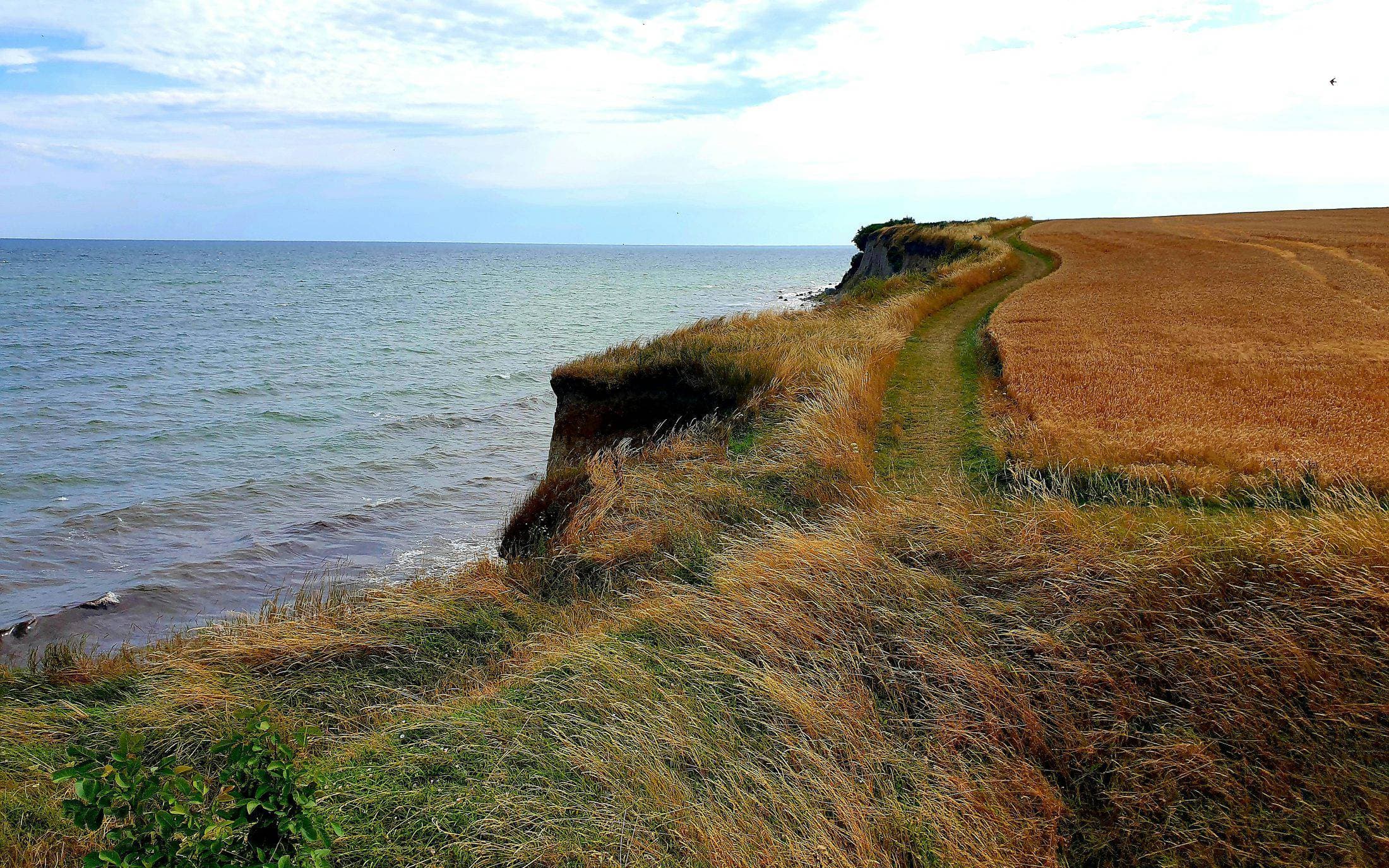
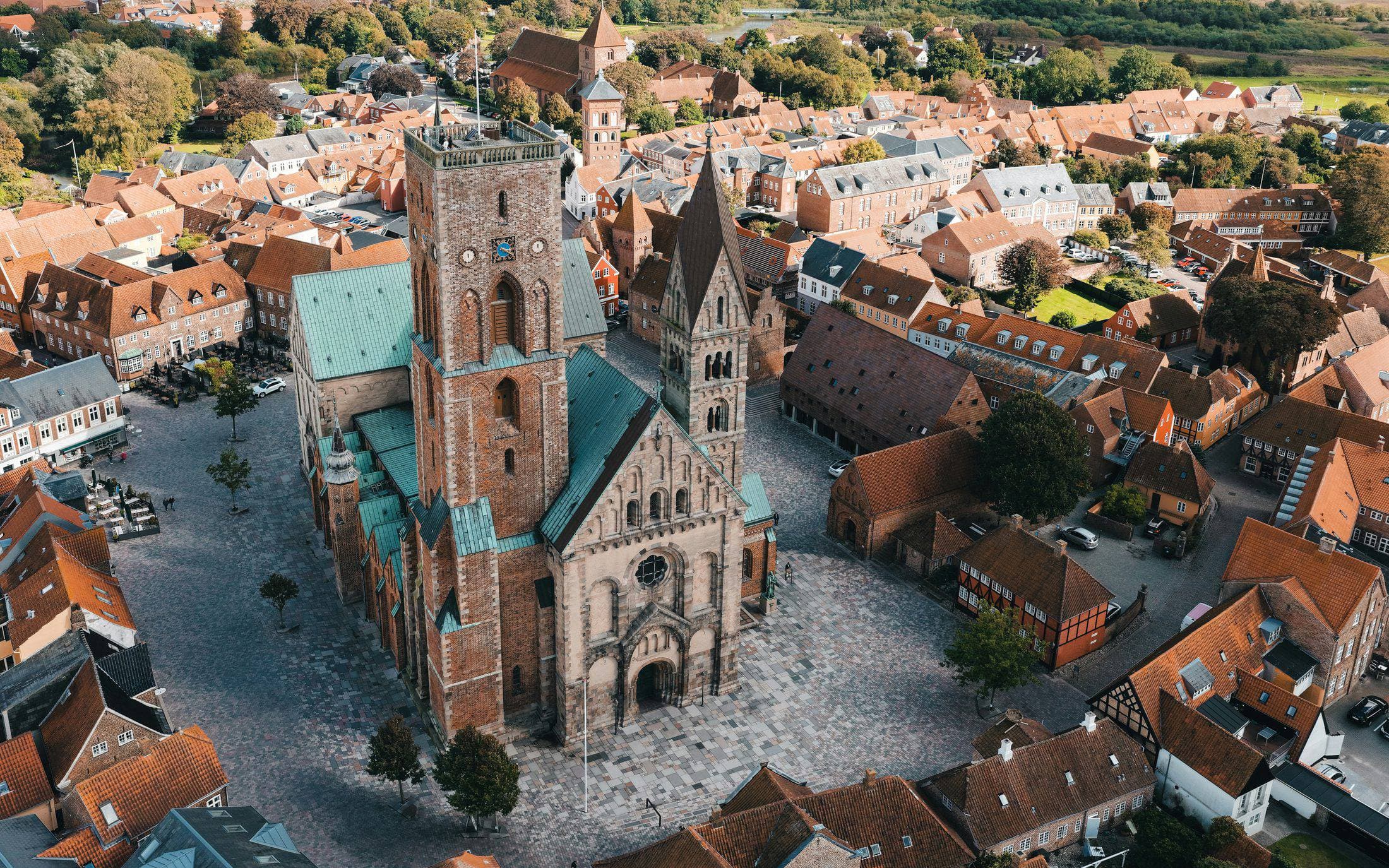
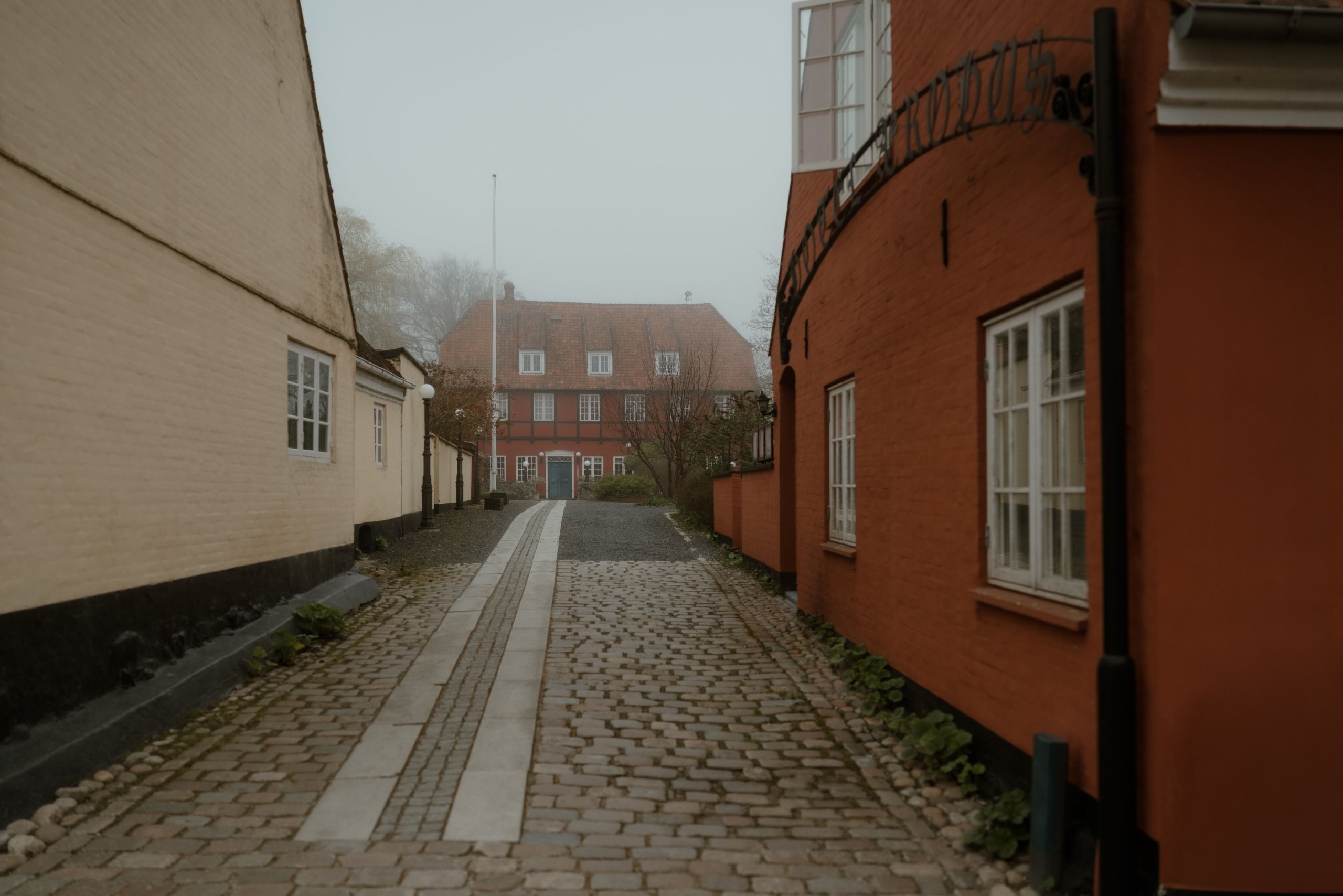
Ærø, the small island south of Funen that its own municipality presents to couples as Denmark’s most romantic island — Ærøskøbing’s old streets, the seafaring town of Marstal and the ferry port of Søby, the beach huts of Vestre Strand and Eriks Hale and the terraced cliffs of Voderup Klint — and on Funen itself Odense’s old quarter, the water castle of Egeskov, the harbour towns of Faaborg and Svendborg, Tåsinge across the sound and the islands of the South Funen Archipelago.
Ærøskøbing, Denmark’s smallest market town, has been protected by a preservation plan since 1984: when it received the Europa Nostra award in 2002, the jury called it unique in Denmark for keeping a whole medieval town plan intact, and in 2013 it was named a sight of national importance for its medieval street network, its well-kept houses of the 1700s and 1800s and its small harbour; hollyhocks grow along the small houses, some half-timbered, on cobbled Vestergade, Søndergade and the square. Marstal, Ærø’s largest town, grew on seafaring from the 1600s, its fleet peaking in the 1890s at more than 340 ships, most of them wooden sailing ships, and its navigation school still trains seafarers. On the island’s south-west coast, Voderup Klint is a 33 m cliff where, along 2 km of shore, great blocks of land have slid down into three huge steps, the last a nearly vertical drop to the sea; the last big slide was in 1834, and cattle graze the open green terraces, protected since 1957. On Funen, Odense’s old quarter keeps cobbled lanes and half-timbered houses in Bangs Boder, Rosengade, Ramsherred and Overstræde, and under the city lies Nonnebakken, one of the five Viking-Age ring fortresses on the World Heritage List since 2023, built around 980 and 180 m across, of which nothing stands above ground. South of Odense, Egeskov, finished in 1554 and surrounded by water on every side, calls itself one of Europe’s best-preserved water fortresses and is still a family’s home. Svendborg’s hilly centre of winding streets and old merchants’ houses looks across the sound to Tåsinge, joined to it by a bridge since 1966, and from Faaborg and Svendborg the South Funen Archipelago, a UNESCO Global Geopark since 2024, spreads out in what Faaborg-Midtfyn calls one of the world’s largest drowned ice-age landscapes, crossed by the 220 km Øhavsstien walking trail, 36 km of it on Ærø.
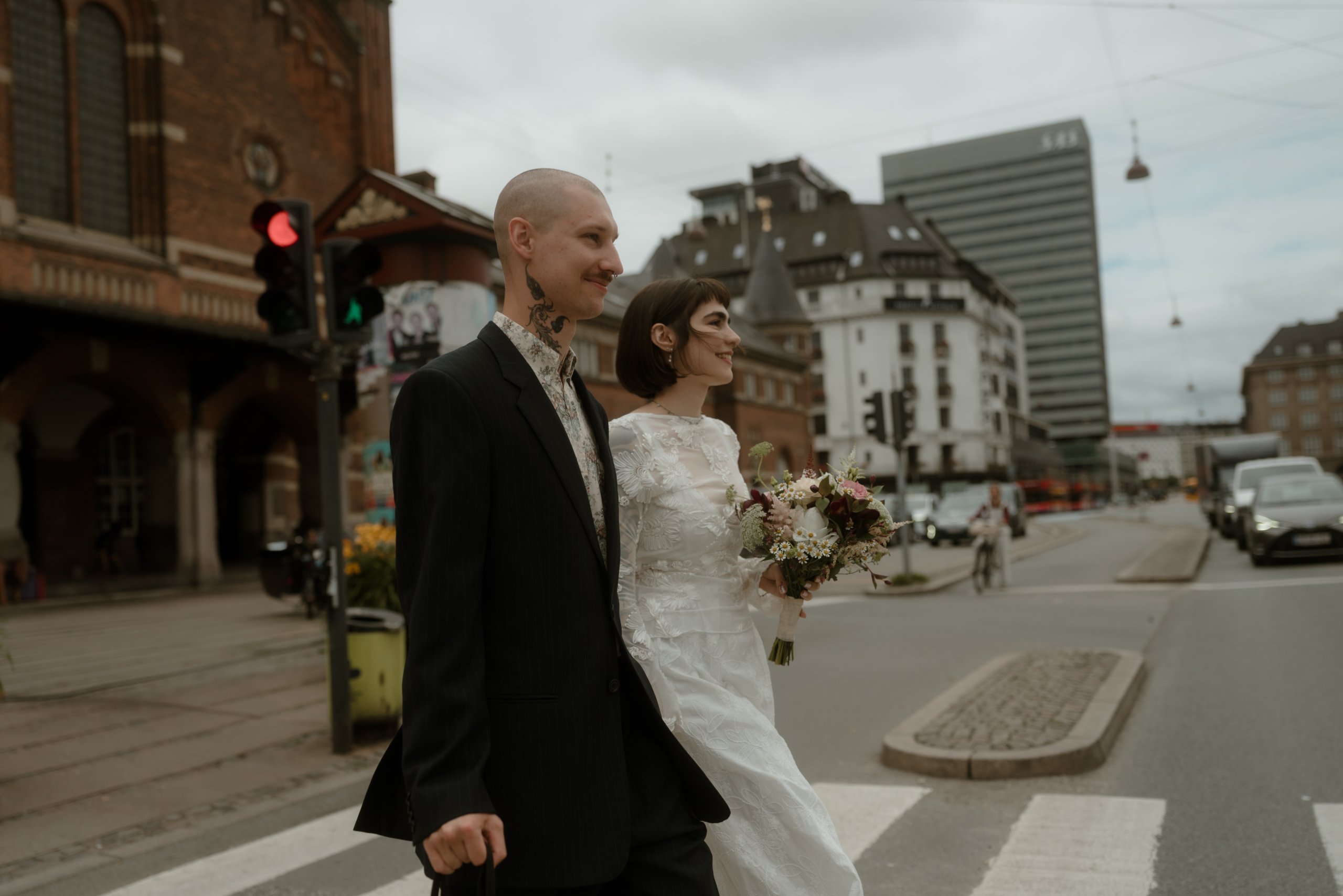
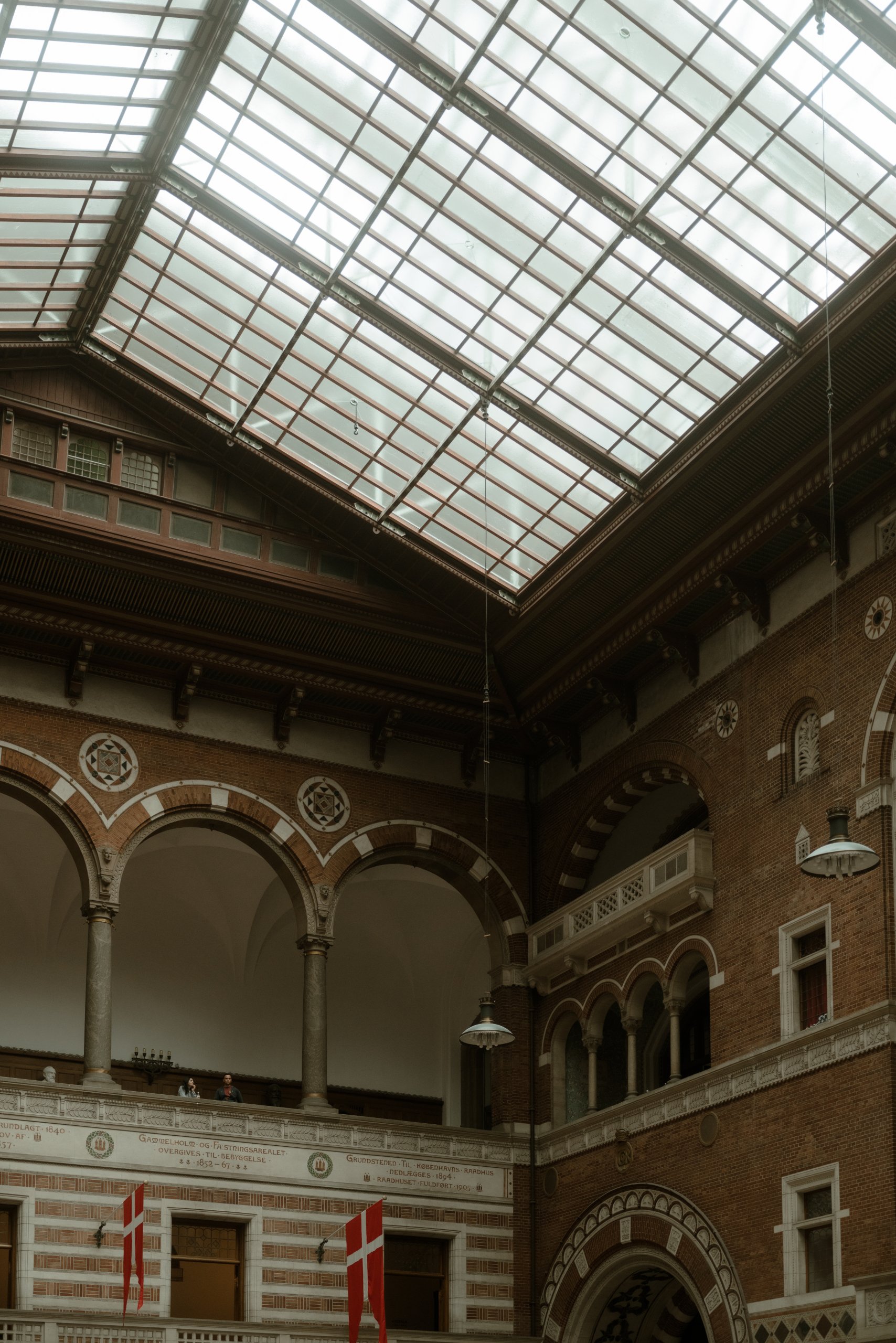
Ærø’s wedding team, at the town hall in Ærøskøbing, offers more than 200 wedding dates a year and says that most couples marry in the Town Hall while many choose one of the island’s romantic spots outside it. On Funen, Odense marries couples in its town hall’s Wedding Hall on weekdays and Saturdays, Svendborg in its Council Hall with up to 50 guests, and Faaborg-Midtfyn at its offices in Ringe or Faaborg, the last two saying outright that they charge nothing, and with a council member also outdoors, on a beach, in a forest or at home; couples who belong to the Church of Denmark marry in their parish churches, Odense Cathedral among them. Portraits follow in Ærøskøbing’s cobbled lanes, among the beach huts, on the green terraces of Voderup Klint and on the quays and islands of the archipelago. In Denmark a marriage is legal when the municipality (kommune) marries you in a civil ceremony — free of charge in the room it sets aside for weddings, such as the town hall’s, while for another place in Denmark that it allows it may charge you its costs — or when a priest of the Church of Denmark or the authorised officiant of another recognised faith marries you, one of you being a member; couples from abroad can marry here legally, neither of you needing to live in Denmark, once the Agency of Family Law (Familieretshuset) has issued its certificate (prøvelsesattest; DKK 2,100 as of November 2026, usually within five working days of a complete application, valid four months) and each of you is lawfully in Denmark, with two witnesses at the ceremony, and since 2012 marriage has been open to two people of the same sex, in the Church of Denmark too, though a priest may decline. Ærø says it has been the setting for thousands of couples’ weddings since 2008; the places below give the details.
Photographers
They still have dates open here. Their whole weddings and free dates are on their page.
See the photographerBooking through Lens & Vows
Through the year
May to September are the months to marry here. Denmark’s Meteorological Institute (DMI) has not yet published station normals for 1991–2020, so the figures here are the World Meteorological Organization’s 1991–2020 normals, as DMI reported them, and they give only the mean temperature of day and night together, not the highs: at Odense’s airport, about 10 km north of the city, it is 11.7 °C in May, 14.9 °C in June, 17.3 °C in July, 17.2 °C in August and 13.8 °C in September, and at Kegnæs lighthouse on Als, the nearest station to Ærø, across the water about 27 km west of Ærøskøbing, the sea keeps late summer and autumn milder: 17.7 °C in August, 14.7 °C in September and 10.7 °C in October, against 9.6 °C in October at Odense. The set has no rain normal for Funen or Ærø; on Samsø, the nearest station with one, at Tranebjerg about 50 km north of Odense, rain of 1 mm or more falls on 8 to 9 days a month from May to September, and August is the wettest month there, with 61 mm, so keep a roof close to any open-air plan. April and October work with care, at a mean of 7.6 and 9.6 °C at Odense, with rain on about 7 days in April and 10 in October on Samsø.
Weather station: Tranebjerg Øst (Samsø), normals 1991–2020 · Checked 6 November 2026
Places
The kinds of places — ask your photographer which ones they know well.
Ærø Municipality’s own pages, in Danish, English and German, invite couples to “get married on Denmark’s most romantic island” and say that the island has been the setting for thousands of couples since 2008. Its wedding team, at Ærø Town Hall, Statene 2 in Ærøskøbing, offers more than 200 wedding dates a year and answers from Monday to Friday between 9:00 and 15:00. Couples from abroad apply to the Agency of Family Law and name Ærø as the municipality where they want to marry; the agency sends its certificate to the municipality and a confirmation to the couple, and the wedding team then writes to agree the date and the last details; the municipality’s Danish page says it can offer a time within ten weeks. Most couples marry in the Town Hall, the municipality says, and many have chosen one of the island’s romantic spots outside it. In Ærøskøbing, Vestre Strand, a beach 500 m long and 15 to 20 m wide with a Blue Flag, is lined with private beach huts: photograph them from the beach and leave them as you found them.
At the edge of Marstal, between the Egehoved wood and the beach, stand a good 60 colourful beach huts on state land, where the right to put up a hut is rented, and tiny huts line the Kalkovnsstien path on Eriks Hale, a Blue Flag beach like Søby’s at the island’s north-west end. Marstal’s old churchyard round the church keeps a memorial tablet to the town’s seafarers who died in the two World Wars, among old headstones: a place of remembrance, not a backdrop. Voderup Klint belongs to the state and is cared for by the Nature Agency (Naturstyrelsen): its many steps and steep slopes can’t be managed by wheelchairs or by anyone unsteady on their feet, but from the top there is a view, with tables and benches, and away from the car park the land is kept as a quiet zone. Any event or activity there that affects other people, the animals or the plants needs the agency’s permission, booked through its Book i naturen service at least 14 days ahead — a ceremony with guests is the kind of event it means — and, as on all its land, the agency asks a permit and a fee for commercial photography.
Odense holds civil weddings in the Wedding Hall of its town hall on every weekday and on Saturdays, from 10:00, and says that as a rule couples who meet the conditions can always marry on the date they want; on a Saturday you bring at least one witness yourselves. Any member of the city council may marry you elsewhere in the municipality, which you arrange with them directly, and then you bring both witnesses; there are no weddings on Sundays and holidays or between Christmas and New Year. At Odense Cathedral, St Canute’s, couples who live in the parish or have a tie to the church may marry if one of them belongs to the Church of Denmark; rice, rose petals and confetti are not allowed, and the cathedral suggests soap bubbles instead. In Assistens Cemetery, on Heden, lie Commonwealth and German war graves: it is not a place for pictures. Egeskov is a private home and an attraction that opens to guests in the summer season; grills, tables, gazebos and tents may not be brought into its park, drones may not fly over it, and it publishes no terms for wedding or professional photography, so ask the castle before planning a shoot there.
Svendborg marries couples from Monday to Saturday, free of charge, in the Council Hall on the first floor of the town hall at Ramsherred 5, with room for up to 50 guests, and on Saturdays also elsewhere in the municipality between 12:00 and 15:00; photographs and filming are allowed during the ceremony, the municipality asks you to check first if the registrar and witnesses will be in the picture, and its staff will help take photographs; rice is not allowed, and on Saturdays a glass of bubbles may be served to up to 25 people. Faaborg-Midtfyn charges no fee either: it marries couples at the town hall in Ringe or at its offices at Mellemgade 15 in Faaborg on weekdays and on Saturdays between 9:00 and 12:00, provides witnesses on weekdays if you bring none, and, with an authorised council member, marries them at home, on a beach or in a forest. On Tåsinge, Valdemars Slot is a private house whose owners allow photographs and video for non-commercial use only, so a wedding shoot there needs their agreement. The Øhavsstien trail follows the shores of the archipelago for 220 km, 36 of them on Ærø. Svendborg’s town cemetery, in the centre, holds war graves.
Light
The times here are for a flat horizon at Ærøskøbing. On 21 June the sun rises at about twenty to five and sets at about ten, far to the north-west; it is still ten degrees up at about twenty-five past eight, civil twilight lasts until about eleven, and the sun never sinks more than about 12 degrees below the horizon, so the sky stays pale all night; in Odense it sets about three minutes later. In mid-May it sets at about twenty past nine, in mid-July at about ten to ten, in mid-August at about ten to nine, in mid-September at about twenty-five to eight and in mid-October at about twenty past six. At midwinter it is up only from about twenty to nine to ten to four, no more than about 12 degrees high at noon. The WMO’s 1991–2020 normals give no sunshine figure for any Danish station. On Ærø, the ferries’ timetables decide how long a day you have: allow for the last crossing back when you plan an evening session.
Travel
Express trains run from Copenhagen to Odense in about an hour and a quarter, and Svendborg is about two hours from Copenhagen with a change to the regional train in Odense (as of November 2026); Copenhagen Airport, which also has trains to Odense, is 168 km from Odense by road, and Billund Airport 105 km, with its buses running to stations in Jutland rather than to Funen. Odense’s own airport has no scheduled flights, only summer charters. By road from Odense, Egeskov is 32 km, Faaborg 42 km and Svendborg 45 km, and Troense on Tåsinge is 6 km from Svendborg. Ærøfærgerne, run by Ærø Municipality, sail from Svendborg to Ærøskøbing in 75 minutes, from Faaborg to Søby in 60 and from Fynshav on Als to Søby in 60; everyone must book and pay ahead, foot passengers and cyclists included, payment is due 48 hours before departure, and a ferry may leave as soon as everyone booked is aboard, so be at the quay early. On Ærø, Marstal is 13 km from Ærøskøbing, Søby 16 km and Voderup Klint 7 km. Drones fly under the EU’s rules — an operator registered where they live (in Denmark with the Civil Aviation and Railway Authority, Trafikstyrelsen; from outside the EU, in the first EU country where they fly), insured, in sight, below 120 m and never over crowds — and Denmark adds its own zones, shown on Trafikstyrelsen’s map dronezoner.dk: no flying within 150 m of the royal palaces and castles its order names (Amalienborg, Fredensborg, the Hermitage, Christiansborg, Rosenborg, Kronborg and Frederiksborg among them) or at all over Kongens Have, Frederiksberg Have and Søndermarken, none near airports (8 km from the main ones, 4 km from smaller airfields), none in Natura 2000 areas during their protection seasons and none over fenced houses and gardens without the owner’s consent, unless Trafikstyrelsen grants an exception. On Funen, Odense’s airport north of the city has its own zone, and Egeskov forbids drones over the castle and its park.
Real weddings
Plan
Denmark