Getting married in Masuria & the Great Lakes
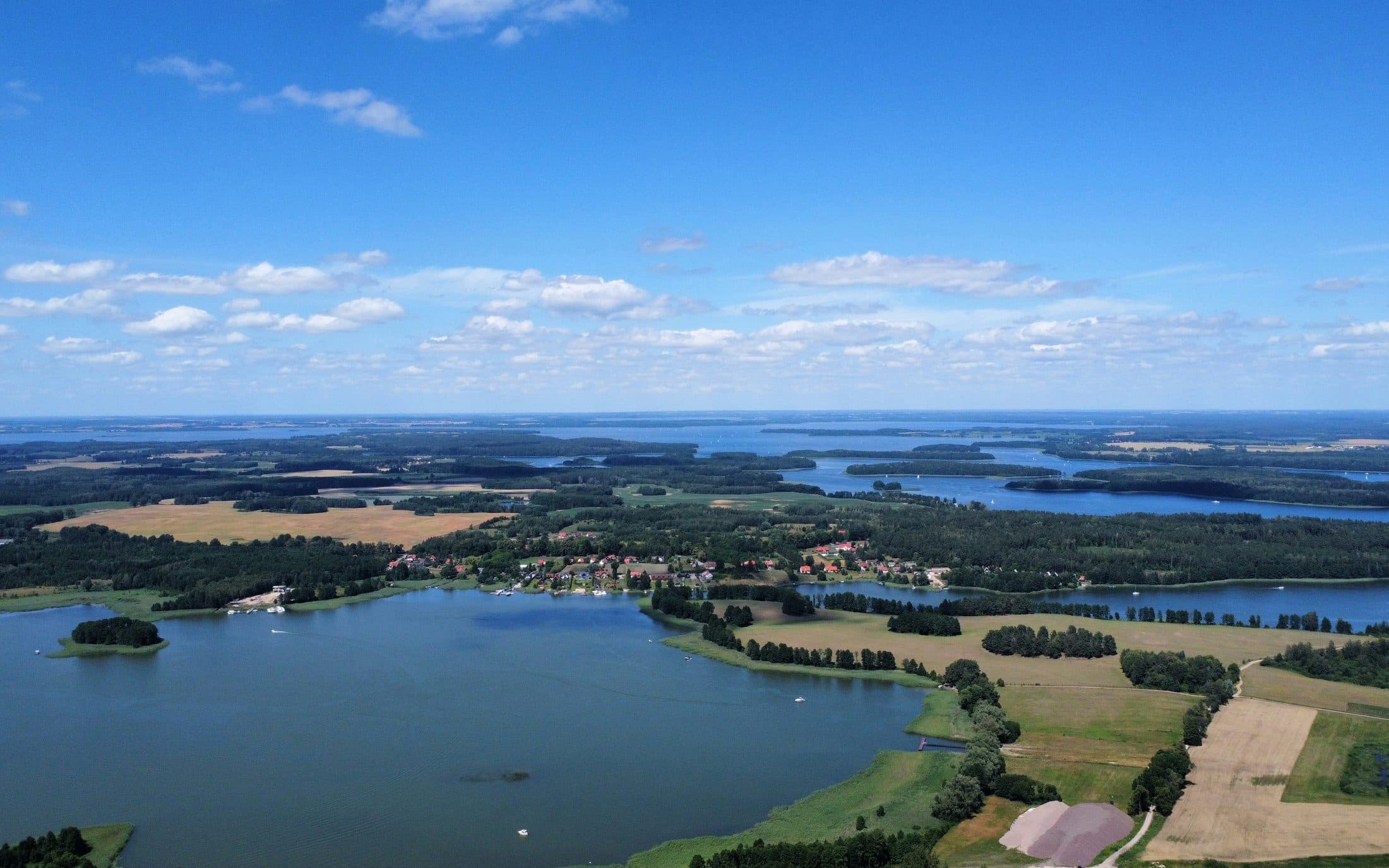
A land of lakes in Poland’s north-east: Mikołajki between its lakes and Śniardwy, the largest lake in the country, Ryn’s Teutonic castle and Giżycko’s fortress on the waterways of the Great Masurian Lakes, the Baroque basilica of Święta Lipka, the Krutynia kayak trail through the Masurian Landscape Park and, to the west, Olsztyn’s old town and castle on the Łyna.
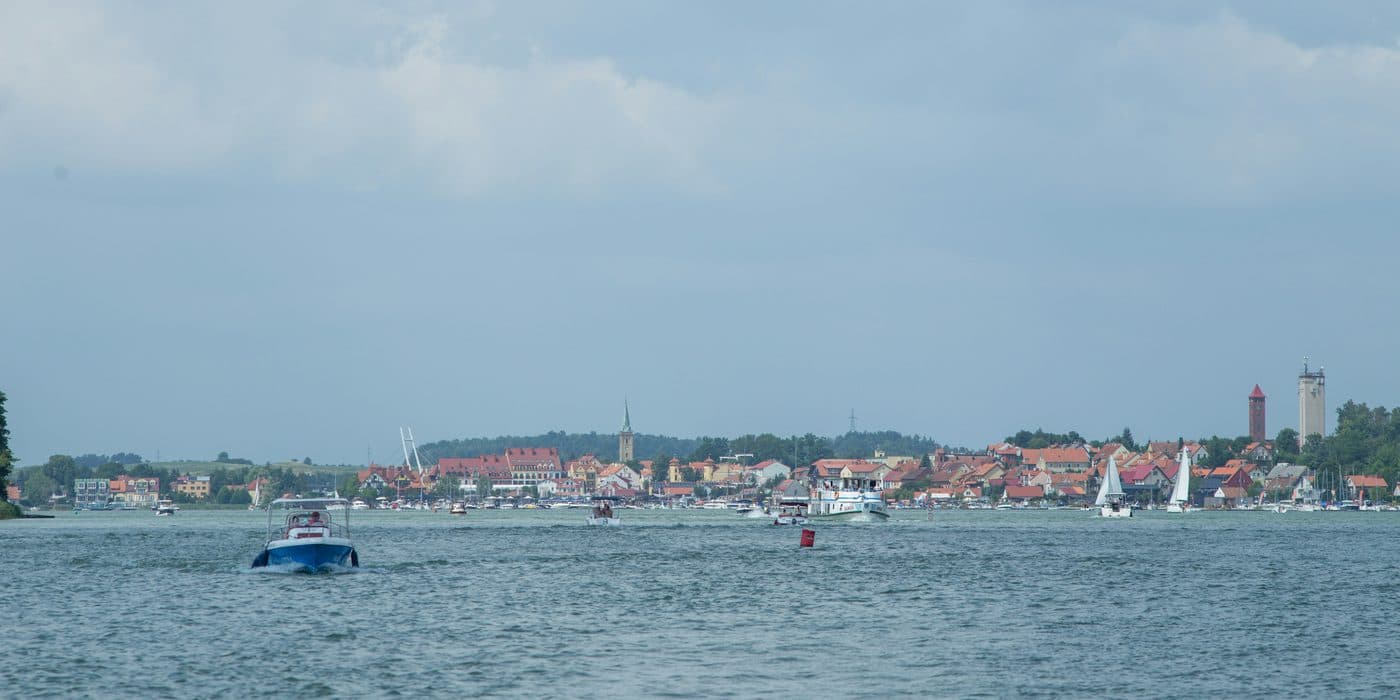
Mikołajki, a town since 1726, stands between Lakes Tałty and Mikołajskie on the route of the Great Masurian Lakes and is one of Poland’s best-known sailing towns.
From its waterfront, passenger boats sail out onto Śniardwy, the largest lake in Poland — 113.4 km² of water, up to 23.4 m deep, with eight islands — and on to Ruciane-Nida, Ryn and Giżycko. Five kilometres from the town, Lake Łuknajno, 680 hectares joined to Śniardwy by a narrow channel, has been a reserve for its mute swans since 1947, with three towers on its shores for watching the birds. Eighteen kilometres north, the castle the Teutonic Order built at Ryn in the 14th century stands on a hill between Lakes Ryńskie and Ołów, and in Giżycko the Boyen fortress, built from 1843 to 1855, closes the isthmus between Lakes Niegocin and Kisajno, less than a kilometre from the swing bridge over the Łuczański Canal. North-west of the lakes, the basilica of Święta Lipka, consecrated in 1693 and kept by Jesuits for centuries, is what its keepers call the pearl of the Baroque; to the south-west, the Krutynia kayak trail runs for more than 100 km from Sorkwity to Ruciane-Nida, half of it through the Masurian Landscape Park; and Olsztyn, 83 km by road from Mikołajki, grew from a watchtower built in 1334 on a bend of the Łyna and became a town in 1353.
Couples marry in the towns’ civil registry offices, Mikołajki’s and Giżycko’s among them, or, with the head of the office’s consent, by a lake, in a garden or on an estate; in Catholic churches, from the town parishes to the basilica of Święta Lipka, which is also a parish church; and, for a small wedding of their own, by the water, with portraits on a boat or a pier, by the brick walls of Giżycko’s fortress and on the shore in the long June evenings. In Poland a marriage is legal when the head of a civil registry office (urząd stanu cywilnego) marries you, in the office or, for an extra 1,000 zł, at another place in its municipality that keeps the ceremony solemn and safe, or when a Catholic priest marries you under the Concordat with the registry’s certificate; couples from abroad can marry here legally, each giving a written declaration in person at least a month ahead (the office may shorten the wait for good reason), with papers from home in sworn Polish translation and an interpreter if they don’t speak Polish, and Polish law allows marriage only between a man and a woman, with no civil partnership. In Masuria that means the head of the office of the municipality where the place lies — Mikołajki’s for a shore in Mikołajki, Giżycko’s for one in Giżycko — so ask that office first; the country page explains the notice and the papers.
Through the year
When to marry in Masuria & the Great Lakes
June to August are the surest months. In the 1991–2020 normals of Poland’s Institute of Meteorology and Water Management (IMGW-PIB) for Mikołajki, the station about 2 km from the town centre, highs reach about 22 °C in June, 24 °C in July and 23 °C in August, and only about two days in July and one in August reach 30 °C. Summer is also the wettest season: 1 mm of rain or more falls on 9 to 10 days a month, July brings 82 mm, the most of any month, and from June to August two or three days a month bring 10 mm or more, against fewer than one a month in winter, so keep a roof close to any open-air plan. May and September work with some care, at highs of 18 °C, with rain on nine days each and cool nights of about 8 and 10 °C.
- January: Quieter
- February: Quieter
- March: Quieter
- April: Quieter
- May: Good with planning
- June: Best
- July: Best
- August: Best
- September: Good with planning
- October: Quieter
- November: Quieter
- December: Quieter
- April and MayApril warms to 13 °C by day, with rain on seven days and frost on about six nights; by May the highs reach 18 °C, frost is rare and the sun shines more than eight hours a day. The clocks go forward on the last Sunday of March (28 March 2027), and by mid-May the sun sets at about half past eight.
- June to AugustThe warmest and sunniest months: highs of 22 to 24 °C, nights of 12 to 14 °C, about eight and a half hours of sun a day in June and July and eight in August, and still rain on nine or ten days a month. Days of 25 °C or more come about 7 times in June, 11 in July and 10 in August. At midsummer the sun sets at about ten past nine and the sky stays light until just after ten. In spring and summer Mikołajki is at its liveliest, the town says; on Friday evenings in the summer holidays the basilica of Święta Lipka holds its concerts at 20:00, and Giżycko’s fortress stays open until 20:00 in July and August.
- September and OctoberSeptember cools to 18 °C, with rain on nine days and 54 mm, far less than in July and August; October drops to 12 °C, with frost on about three nights and three and a half hours of sun a day. These are the weeks of what Poles call złota polska jesień, the golden Polish autumn. In mid-September the sun sets at about ten to seven, in mid-October at about twenty to six. The clocks go back on the last Sunday of October (31 October 2027).
- November to MarchWinter is cold and often white: highs of about 0 to 1 °C from December to February, and snow lies on the ground on 13 to 19 days a month. November and December are the greyest months, with about 20 overcast days each and barely an hour of sun a day. From December to March Giżycko’s fortress opens from 9:00 to 16:00 and the basilica of Święta Lipka from 9:30 to 15:30. At midwinter the sun is up only from about ten to eight to a quarter past three.
In numbers
Weather station: Mikołajki, normals 1991–2020 · Checked 6 November 2026
Places
Where couples marry here
The kinds of places — ask your photographer which ones they know well.
Mikołajki, Śniardwy and Łuknajno
Mikołajki’s 1.3 km promenade runs past the marinas to the passenger port, where boats leave for short cruises over Lakes Mikołajskie, Śniardwy, Bełdany and Tałty, sunset cruises among them, and for Ruciane-Nida, Ryn and Giżycko; an hour-and-a-half cruise costs an adult 55 zł (as of November 2026). Above the town, a church built at the turn of the 21st century has a 30 m clock tower that is a viewpoint over Mikołajki and five lakes, and the classicist Evangelical church dates from 1842. On Śniardwy, boulders lie 20 to 30 cm under the surface in places, a hazard for sailing boats. Inside the Masurian Landscape Park, south and east of the town, a quiet zone bars combustion engines on every lake except Śniardwy and Bełdany, and on those two in Łuknajno’s bay, Lake Kaczerajno and the Iznota and Wygryny bays; outside the park the county sets the rules. Lake Łuknajno, a UNESCO biosphere reserve since 1976 and a Ramsar wetland, has three free observation towers. We found no published rule on photo shoots in the town or on its shore, so ask the town hall before planning one with lights or a crew.
Ryn and Giżycko
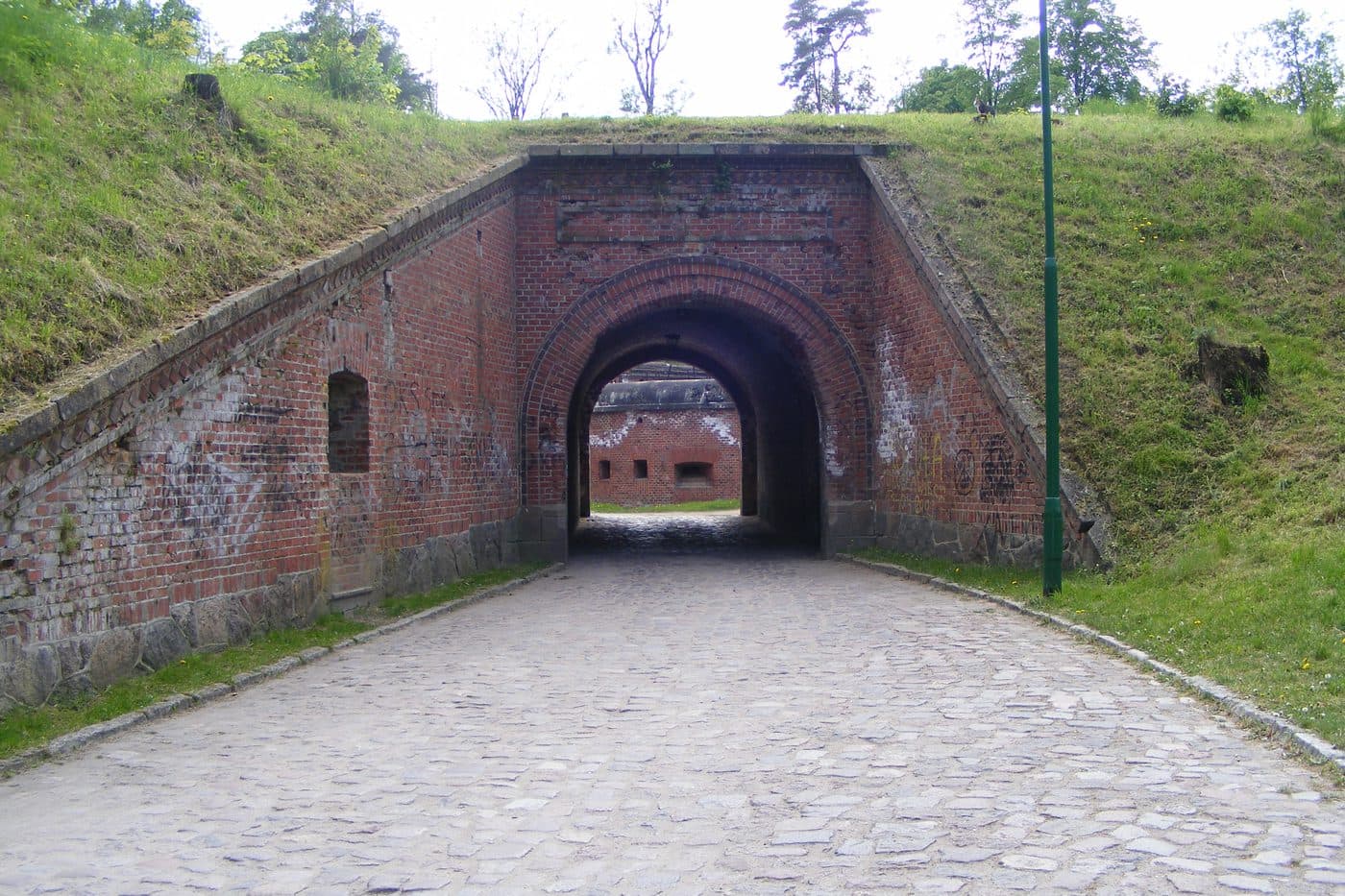
Ryn’s castle, which the town calls the second-largest Teutonic castle in Poland, became the seat of a commandery in 1393; restored from 2006, it is a hotel today, so see it from outside: from the waterfront on Lake Ryńskie, which with Lake Tałty makes the longest lake around, 20 km, and from the path of more than 4 km that circles Lake Ołów, 61 hectares and a quiet zone, from the beach below the castle. In Giżycko, the Boyen fortress — a hexagonal fort of earth and brick, ringed by a Carnot wall 2,303 m long — opens every day, from 9:00 to 20:00 in July and August and until 16:00 in winter; an adult pays 25 zł, and the fortress rents out its grounds for 500 to 10,000 zł (as of November 2026). Its visiting rules forbid trading and advertising on site and say nothing of photo shoots, so ask before planning one. Less than a kilometre away, the swing bridge over the Łuczański Canal, a span more than 20 m long weighing over 100 tonnes, built in 1889, is still turned by hand by one operator in about five minutes, on a seasonal timetable from April to October.
Święta Lipka
The sanctuary stands 6 km east of Reszel and 14 km south-west of Kętrzyn. Its church was raised on drained marshland, on alder piles driven into the ground: the foundation stone was laid in 1687 and the church consecrated on 15 August 1693, with cloisters and corner chapels around it, and in 2018 it was named a Monument of History, the highest distinction the Polish state gives a historic site. It opens from 7:00 to 20:00 from May to September, until 18:00 in April and October, from 9:30 to 18:00 in November and from 9:30 to 15:30 from December to March. Its organ is played every day at set times in a concert of a dozen minutes or so, with a free-will offering and no bookings, and since 1989 Friday evenings in the summer holidays have brought the Święta Lipka Music Evenings. Several hundred thousand pilgrims and visitors come every year, most of all for the feasts on the last Sunday of May and on 15 August. A church wedding here is arranged with the parish; we found no published rule on photography in the basilica, so ask the sanctuary first. Near Kętrzyn, on the way to Giżycko, the Wolf’s Lair at Gierłoż is a site of remembrance, not a place for photographs.
The Krutynia and Olsztyn
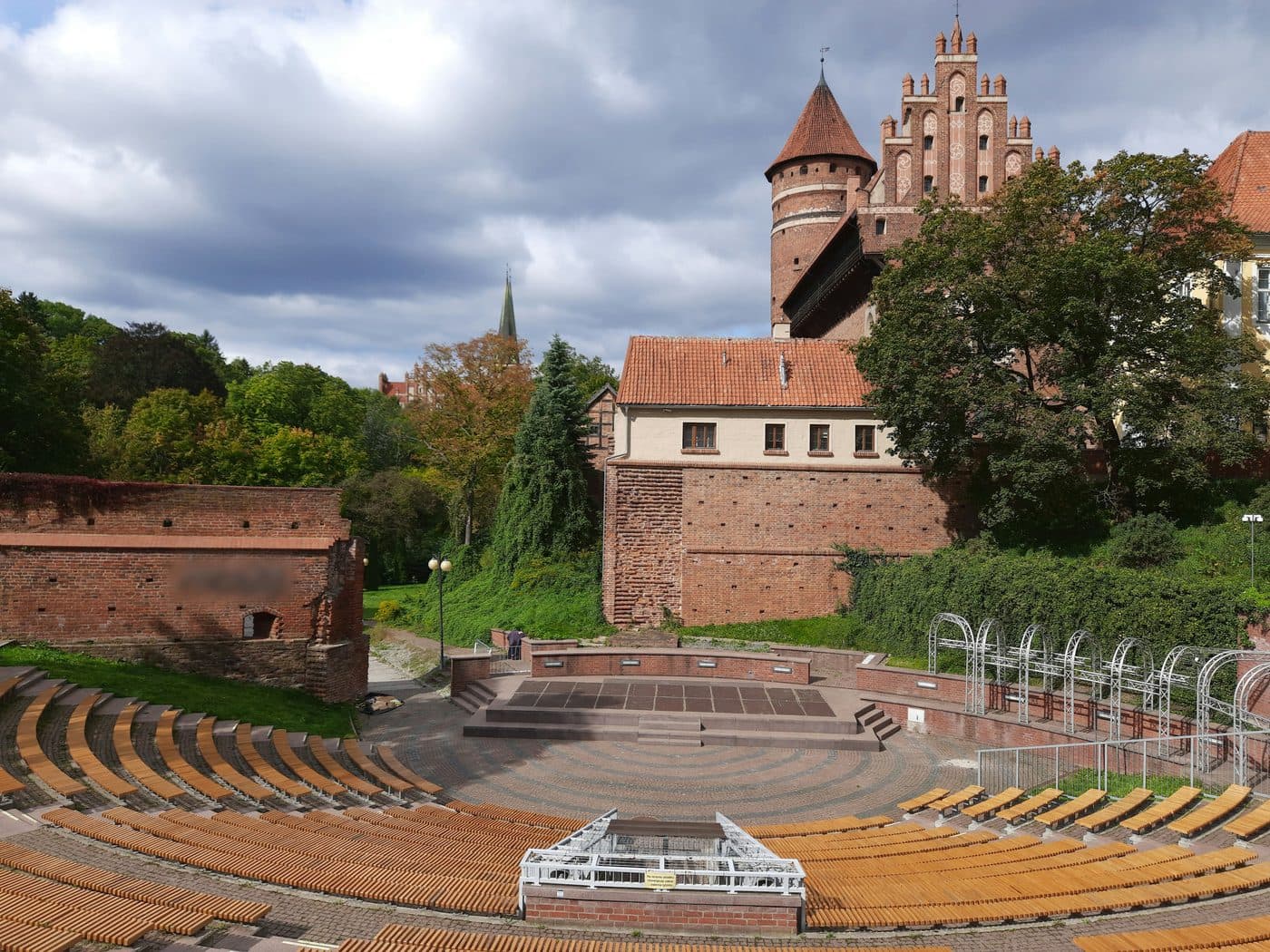
The Krutynia kayak trail, which the Masurian Landscape Park counts among the most beautiful in Poland, runs for more than 100 km from Sorkwity on Lake Lampackie to Ruciane-Nida on Lake Nidzkie; the river that names it flows about 26 km from Lake Krutyńskie to Lake Gardyńskie, slow and winding, 30 to 40 m wide. Across its whole basin, some 640 km², a quiet zone applies, camping is allowed only at marked sites and picking plants is forbidden, and in the nature reserves no kayak may be launched. At Krutyń, where the park has its seat, flat-bottomed boats have been pushed along the river with poles for decades. The park, created in 1977 and covering more than 562 km², asks visitors to photograph animals only from a good distance and to keep clear of the reeds and of nesting birds. In Olsztyn, the castle of the Warmian Chapter, home of the Museum of Warmia and Mazury, closed on 14 September 2026 for about three years of renovation, so for now its brick walls and tower are a backdrop seen from outside, as from the amphitheatre below them.
Light
How the light falls
The times here are for a flat horizon: on the open water of Śniardwy the horizon is low, but woods close in on many shores, so the sun leaves them earlier, by how much depending on where you stand. On 21 June it rises over Mikołajki at about four and sets at about ten past nine, far to the north-west; it is still ten degrees up at about twenty to eight, and the sky stays light until just after ten. In mid-May it sets at about half past eight, in mid-July at about nine, in mid-August at about five past eight, in mid-September at about ten to seven and in mid-October at about twenty to six. At midwinter it is up only from about ten to eight to a quarter past three, no more than about 13 degrees high at noon. Mikołajki averages eight and a half hours of sun a day in July and less than one in December (1991–2020). The basilica of Święta Lipka is open at sunset from mid-August to early January, except in the first week of October, and closes before the sun goes down from January to mid-August; Giżycko’s fortress, with shorter hours, is open at sunset only in late August, late September and from the end of October to late January.
Travel
Getting there
Olsztyn-Mazury airport at Szymany is 68 km by road from Mikołajki, 59 km from Olsztyn, 79 km from Ryn and 99 km from Giżycko; as of November 2026 it has flights from London Stansted, Dortmund and Kraków, and a train runs from the terminal to Olsztyn Główny, 58 km in 55 minutes, when the flight timetable allows. Warsaw Chopin airport is 239 km from Olsztyn, 266 km from Mikołajki and 281 km from Giżycko; Gdańsk’s is 181 km from Olsztyn and 280 km from Mikołajki. By train, PKP Intercity runs eight trains a day each way between Olsztyn and Warsaw and six to Poznań and the Tricity, and Giżycko, on the newly electrified line from Ełk to Korsze, has a daily train from Kraków, Kielce, Radom, Warsaw and Białystok (2025/2026 timetable); Mikołajki has had no passenger trains for years, so the last stretch is by road or by boat. By road, Mikołajki is 18 km from Ryn, 38 km from Giżycko, 23 km from Krutyń and 47 km from Święta Lipka, and Ryn is 20 km from Giżycko; passenger boats also run from Mikołajki to Ryn, Giżycko and Ruciane-Nida. Drones fly under the EU’s rules — an operator registered where they live (in Poland with the Civil Aviation Authority, ULC, at drony.gov.pl), in sight, below 120 m and clear of people not involved — and in Poland every flight must first be reported to the air navigation agency PANSA (PAŻP) in its DroneTower app, whose map, as DroneMap, shows the zones where a flight needs consent or is barred (around controlled airports, among others); national parks set their own rules, so ask the park first. In the nature reserves, Łuknajno’s swan reserve and the Krutynia’s among them, the law forbids deliberately frightening wild animals and disturbing the quiet, so keep a drone well away from them.
Photographers
Photographers in Masuria & the Great Lakes
No one in Masuria & the Great Lakes yet
The first photographers in Masuria & the Great Lakes are joining now. Tell our concierge your date and your plans — it checks who is free and fits.
Plan
Read before you plan
- Getting married in Poland as foreigners: the civil registry office, documents, the month’s wait and feesHow couples from abroad marry legally in Poland: no residence needed, a written declaration each of you gives in person at a civil registry office, the month’s wait and how it can be shortened, the certificate of no impediment from home or a court’s exemption, sworn translations and your own interpreter, two adult witnesses, the office’s wedding room or another place for 1,000 zł, the concordat wedding in church with civil effect, why same-sex couples can’t marry, the certificate at home, and the symbolic route.
- How to choose a wedding photographer: the steps, and the questions to askThe decision in order — whole weddings, style, availability, the package, the contract and deposit, cancellation, delivery and a conversation — then a checklist of questions, with why each one matters.
- A wedding-day timeline for photosFrom getting ready to the last dance, planned around the light.
- Deposits and payment protectionWhat you pay when, and what happens if plans change.
- Which country for a destination wedding? The law, prices, crowds and light, comparedThe legal route for couples who don’t live there, season and crowds, price levels, light, flights, venues and permits for photographs — Portugal, Italy, Spain, Greece, France and Austria compared with official figures, as of October 2026.
- A rain plan that still looks goodCovered spots, umbrellas and what photographers do on grey days.
- Wedding photography contract checklist: what it should say, and how Lens & Vows handles each pointThirteen things a good contract covers — the day and the hours, what is delivered, deposit and balance, cancellation on either side, date changes, illness, image rights, personal data, backups, travel, overtime and complaints — and what our terms say about each.
Poland
Other places
 Kraków & Lesser PolandBest: May · Jun · Jul · Aug · SepPhotographers joining
 Zakopane & the TatrasBest: Jun · Jul · Aug · SepPhotographers joining
 Gdańsk & the Baltic CoastBest: Jun · Jul · AugPhotographers joining
 Warsaw & MazoviaBest: May · Jun · Jul · Aug · SepPhotographers joining
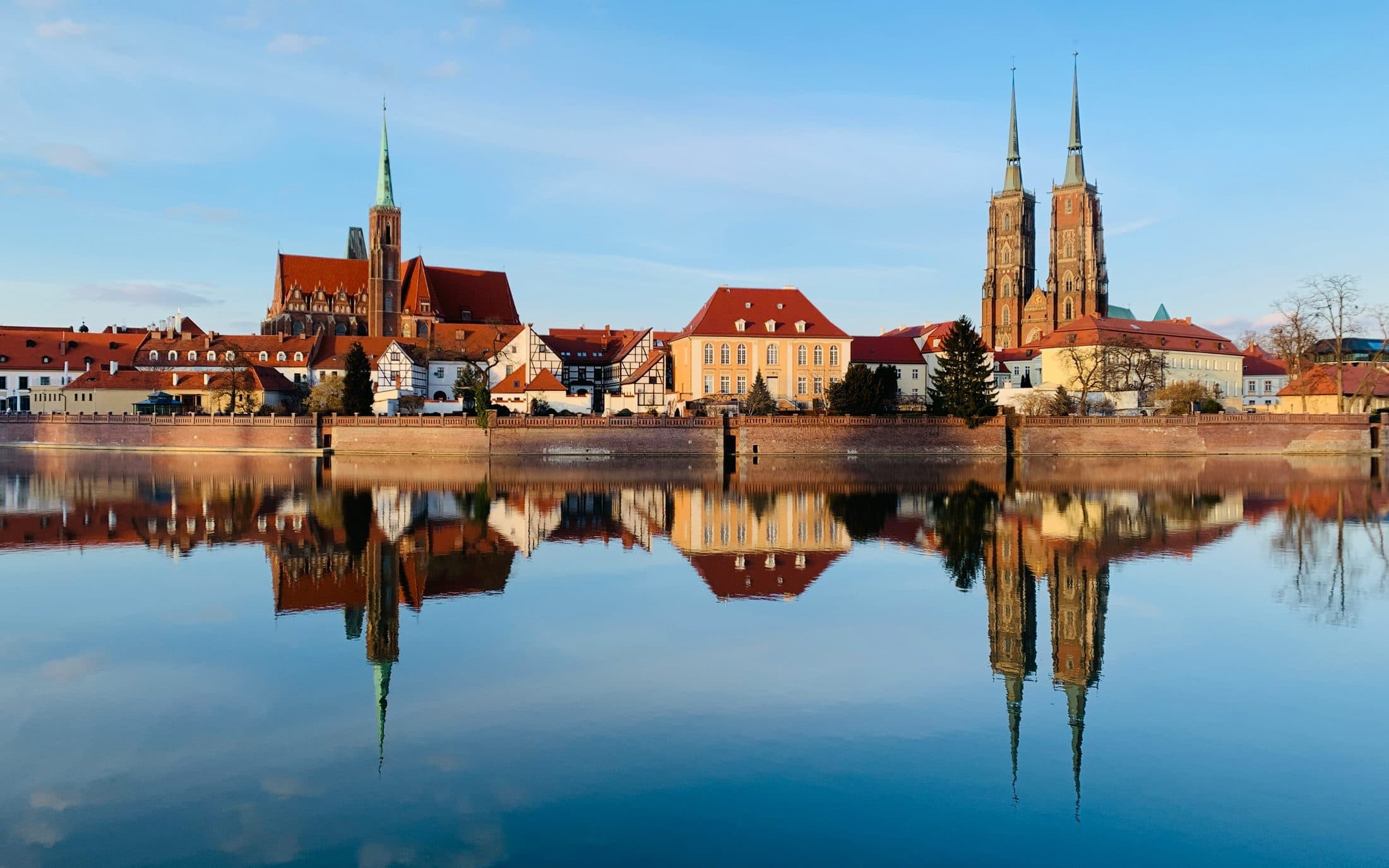 Wrocław & Lower SilesiaBest: May · Jun · Jul · Aug · SepPhotographers joining