Founding photographerVerified — Identity verified by Lens & Vows

Shane W.from €2,500
Sliema & St Julian’s, Valletta & the Grand Harbour +6 · Documentary, EditorialWedding photographers in Malta
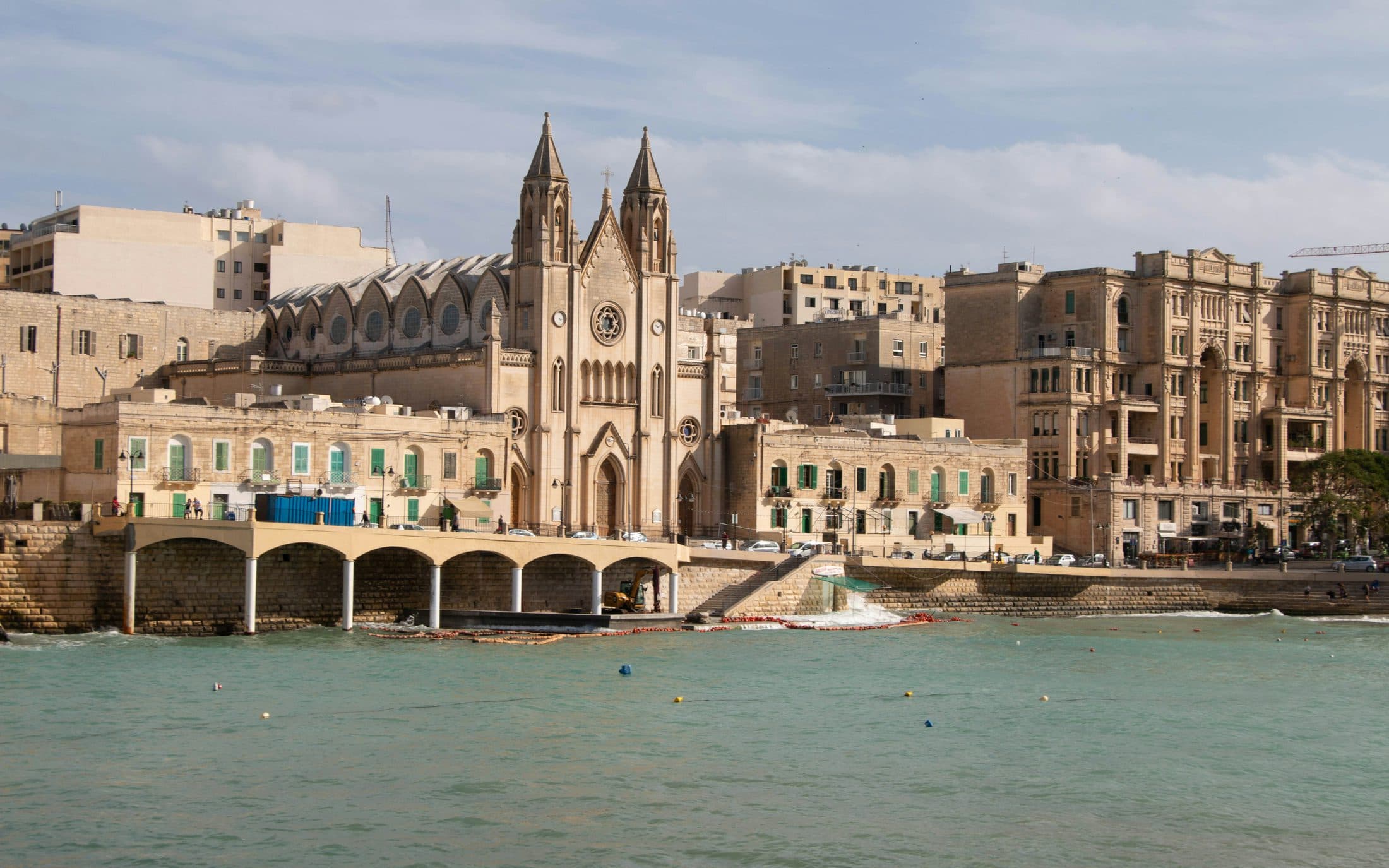
A seafront promenade above flat limestone rocks, from Tigné Point to the bays of St Julian’s — Balluta under its Gothic Carmelite church, Spinola, St George’s — and, on the harbour side, the Strand, Manoel Island and Ta’ Xbiex looking across Marsamxett at Valletta.
Sliema and St Julian’s fill the coast north of Valletta, across Marsamxett Harbour.
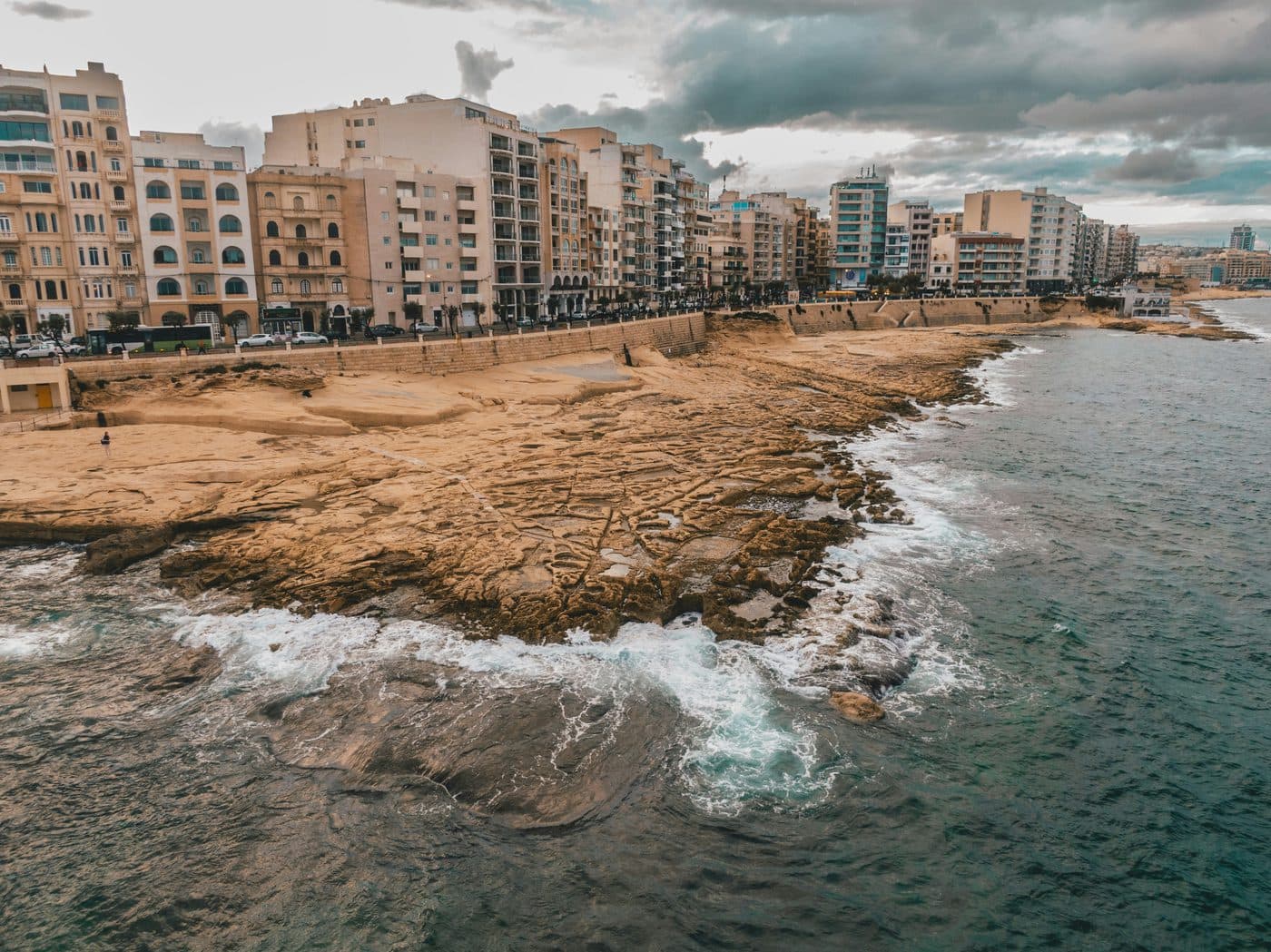
Sliema’s front faces the open sea to the north-east: a promenade popular for walking runs above shelves of flat limestone where people swim in summer, from Tigné Point to Exiles Bay and Balluta. On its other side, the Strand looks over a creek full of boats to Manoel Island and, beyond it, to Valletta, and the ferry crosses from there every half hour. Two forts of the Knights stand on Marsamxett Harbour: Fort Tigné on Tigné Point, at the harbour’s entrance, and Fort Manoel on Manoel Island, with the quays of Gżira and Ta’ Xbiex facing it. In May 2026 the government sealed an agreement taking both back into public hands under Heritage Malta, and Manoel Island is to become a national park (as of November 2026). In St Julian’s, Balluta Bay lies below the Carmelite church, a chapel of 1859 rebuilt in Gothic style from 1900 and a parish church since 1974; Spinola Bay is lined with restaurants and moored boats, and St George’s Bay lies at Paceville, the island’s nightlife quarter.
Couples marry in the parish churches of Sliema and St Julian’s and at civil ceremonies by the sea, celebrate in the hotels and terraces around the bays, and take their portraits on the rocks at sunrise, along the promenade and on the Strand with Valletta across the water. A legal wedding is made before the Marriage Registrar — in the Public Registry’s Marriage Room in Marsa or at a place open to the public that the Registrar accepts — or in a Catholic church, with civil effect once the Marriage Registry has published the banns; couples from abroad can marry legally, sending their documents in at least six weeks ahead, and same-sex couples have married on the same terms since 2017. The country page explains the papers and the fees.
Photographers
They still have dates open here. Their whole weddings and free dates are on their pages.
See all 2 photographers
Booking through Lens & Vows
Through the year
May, June and September are the surest months. In the Malta International Airport Meteorological Office’s 1991–2020 averages for Luqa, about 7 km south of Sliema, the days reach about 24 °C in May and 29 °C in June and September, with only 11 mm of rain in May and 7 mm in June. July and August are the hottest, at 32 °C by day and 22 to 23 °C at night, with almost no rain — 0.2 mm in July — and almost twelve hours of sunshine a day in July. Autumn, Malta’s most thundery season, brings the rain back — 59 mm in September, 78 mm in October, 89 mm in November, the wettest month — and in winter the gregale, the cold north-easterly, drives the sea straight onto Sliema’s front. Keep a roof in the plan for any month from September to April: a church, a covered terrace, a hall.
Weather station: Luqa, normals 1991–2020 · Checked 5 November 2026
Places
The kinds of places — ask your photographer which ones they know well.
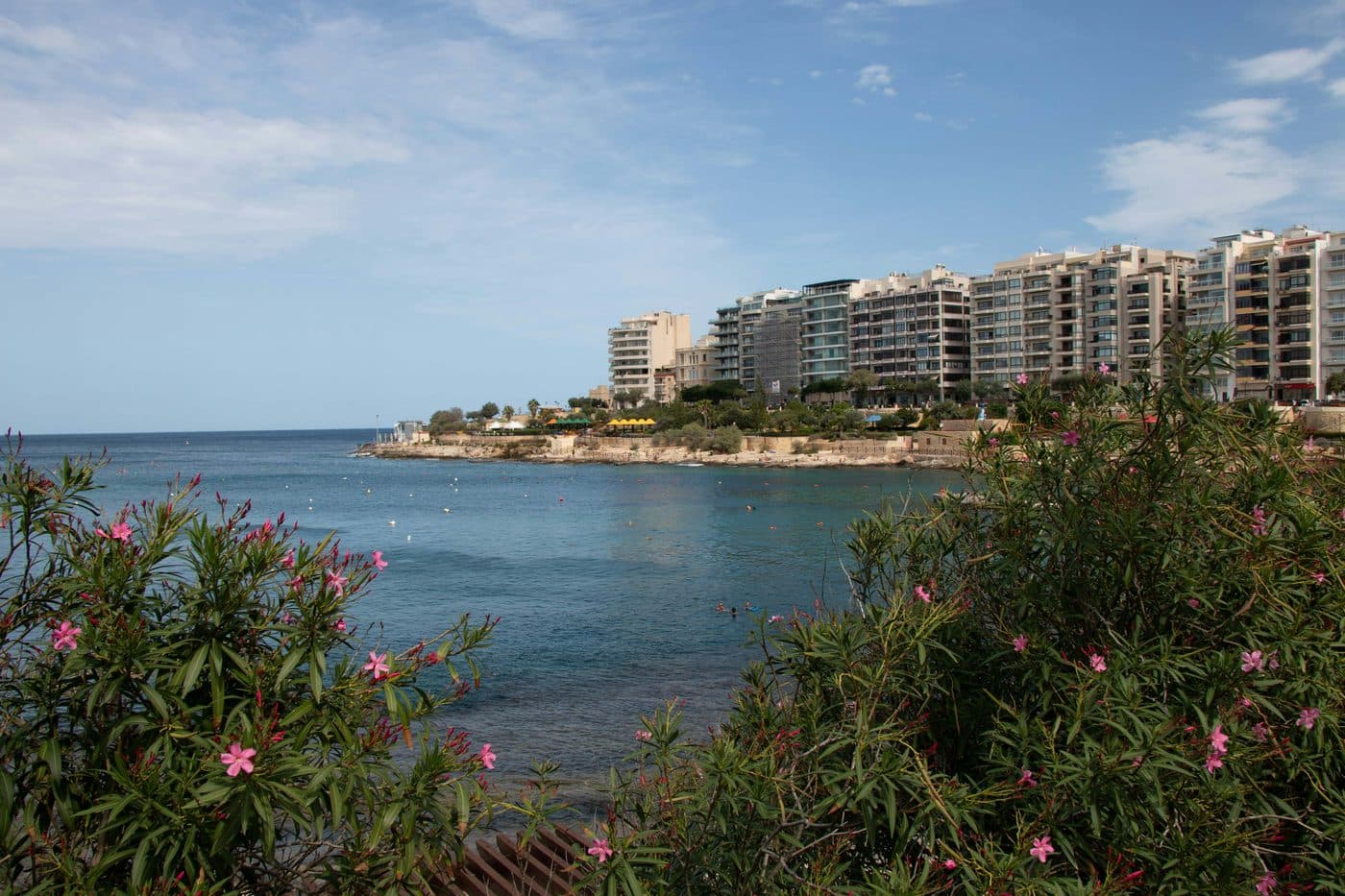
The promenade follows the shore from Tigné Point to Balluta, above flat shelves of limestone that run down into the sea, with Exiles Bay and its oleanders near the St Julian’s end. The rocks are public and open, so a couple and a photographer need nothing more than a quiet hour; on summer days they are crowded with swimmers, and on rough days, when the gregale throws the sea over them, they are no place to stand. The front is lined with apartment blocks and hotels, so frame towards the sea, the rocks and the sky.
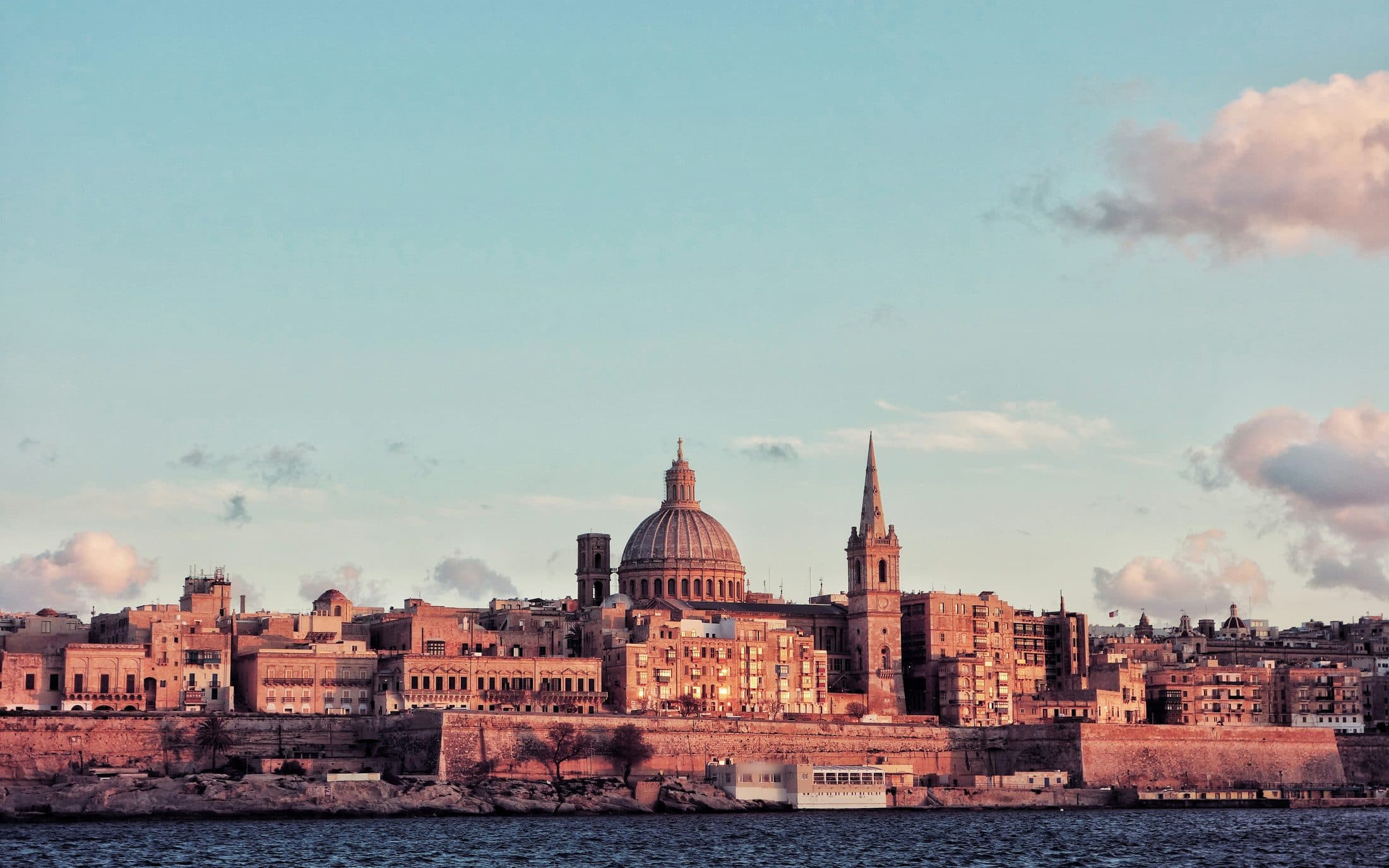
From the Strand, Sliema’s harbour side, Valletta’s walls, the dome of the Carmelite church and the spire of St Paul’s fill the view across Marsamxett, and the ferry quay is where couples take the boat to Valletta for portraits on both sides. Fort Tigné stands at the end of Tigné Point among new buildings. Manoel Island, in Gżira, holds Fort Manoel and is passing to Heritage Malta to become a national park; as of November 2026 no visiting arrangements or rules on shoots had been published, so ask Heritage Malta before planning anything there.
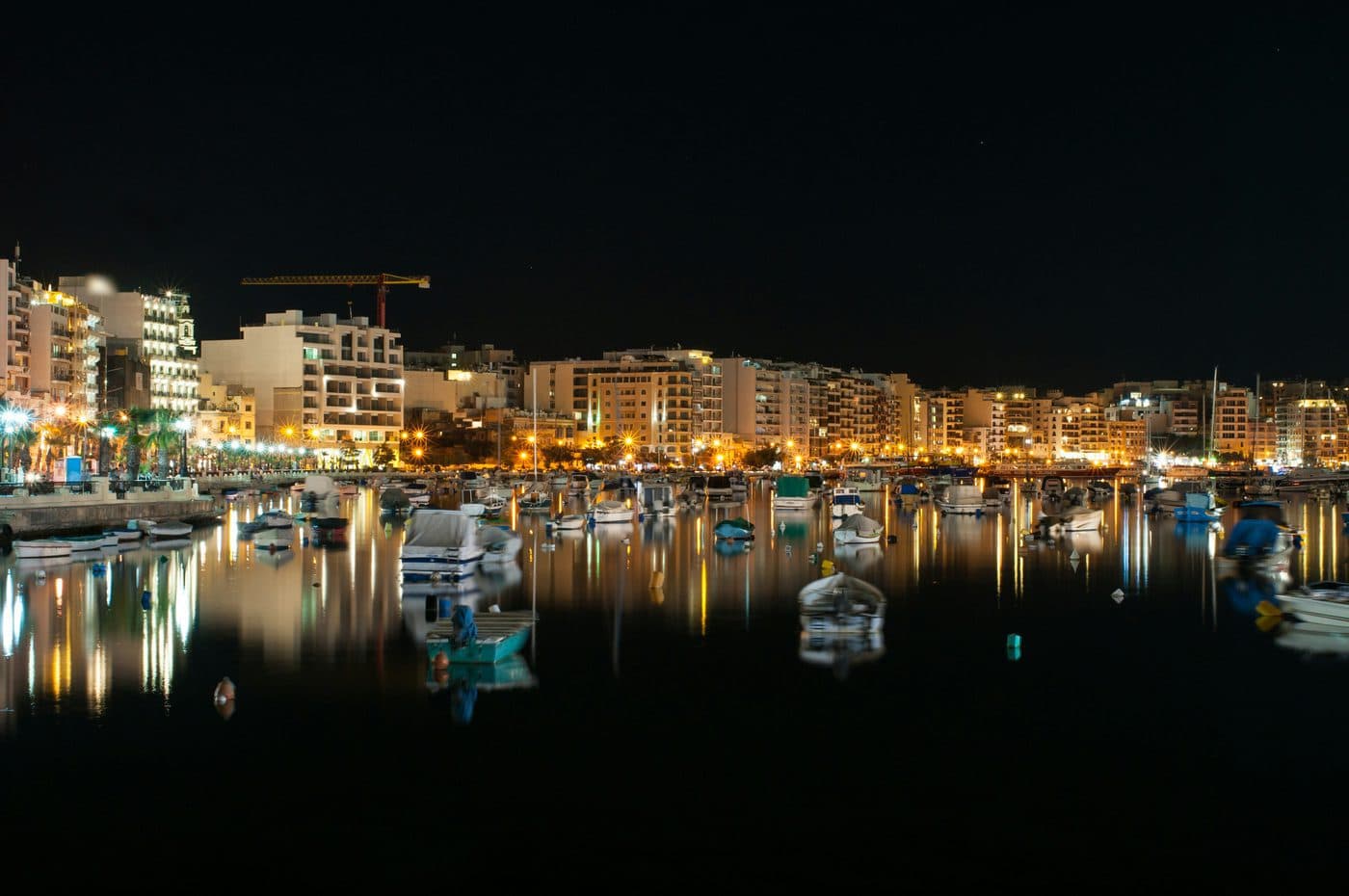
Balluta Bay is a small sheltered bay under the Carmelite church’s two pointed spires and rose window; the church grew from a Carmelite chapel blessed in 1859 and has been a parish church since 1974; a wedding there is arranged with the parish. Round the corner, Spinola Bay shelters fishing boats and luzzus, but its quays are lined with restaurants, whose names fill most views; for portraits, the water and the boats are the better frame. St George’s Bay, further on at Paceville, is the island’s nightlife quarter.
A civil ceremony outside the registry must be in a place open to the public that the registrar finds suitable; on a beach, the Marriage Registry marries couples only on beaches that belong to hotels, with a wooden walkway and a platform for the couple and the registrar. Civil weddings take place between 14:15 and 19:00 on weekdays and between 09:00 and 19:00 at weekends and on public holidays, never on Good Friday, Christmas Eve, Christmas Day, New Year’s Eve or New Year’s Day; the ceremony is in Maltese or English, with an interpreter if you need one, each of you brings one or two witnesses, and a change of venue must reach the registry at least 20 days ahead. For couples who both live abroad, a ceremony away from the registry costs €102.60 (as of November 2026).
Light
Sliema’s front runs from south-east to north-west and faces the open sea, so from the middle of the promenade every sunrise of the year comes up over the water: far round in the north-east at midsummer, at about a quarter to six, and at midwinter, at about ten past seven, just to the left of Tigné Point. The early light falls straight onto the rocks and the faces of the couple, the best hour here for portraits. In the evening the sun sets behind the town — at midsummer, at about twenty past eight, it goes down straight along the line of the shore, behind St Julian’s — and its last light falls across Marsamxett onto Valletta’s walls, best seen from the Strand and Tigné Point. In mid-May the sun sets at about eight, in mid-July at about twenty past eight, in mid-September at about ten past seven and in mid-October at about half past six. Luqa averages almost twelve hours of sunshine a day in July and just over five in December (1991–2020).
Travel
Malta International Airport is 10 km by road from the Sliema ferry quay and 11 km from Spinola Bay and Tigné Point. Two Airport Direct buses run every 30 minutes, for €3 a passenger with no booking (2026): TD3 to St Julian’s, Sliema, Gżira and Msida, and TD2 to St Julian’s and Pembroke. From Valletta, buses 13, 13A, 14, 16, 21 and TD13 run to Sliema and St Julian’s, 6 to 7 km by road, and the ferry from the Strand crosses to Valletta every half hour, for €3 one way by day and €3.50 after 19:30 in the summer timetable (1 June to 31 October, until about 01:30; 2026). Within the region, the Strand is 2 km from Spinola Bay and from Fort Manoel, and Tigné Point 2 km from Balluta; for Gozo, Ċirkewwa’s ferry quay is 24 km from Spinola Bay. The whole of Malta is controlled airspace, so every drone flight needs Transport Malta’s authorisation: the operator registers on its iDronect portal, is insured and files a flight request, for a wedding with the venue’s written consent or a letter of engagement; Valletta is a special permit zone. A flight over Valletta, across the harbour, also needs the Office of the Prime Minister’s no-objection. A flight that touches a restricted zone — airports, embassies, hospitals, power stations, nature reserves — also needs the no-objection of its authority.
Plan
Malta