Getting married in the Moselle Valley
Luxembourg’s wine country along the river that marks its border with Germany: Schengen on the triple border, Remich and its riverside promenade, the vineyard terraces of Wellenstein, Stadtbredimus, Wormeldange and Ahn, Machtum and Grevenmacher, and Wasserbillig, where the Sûre flows into the Moselle, with wine paths and viewpoints on the slopes above the water.
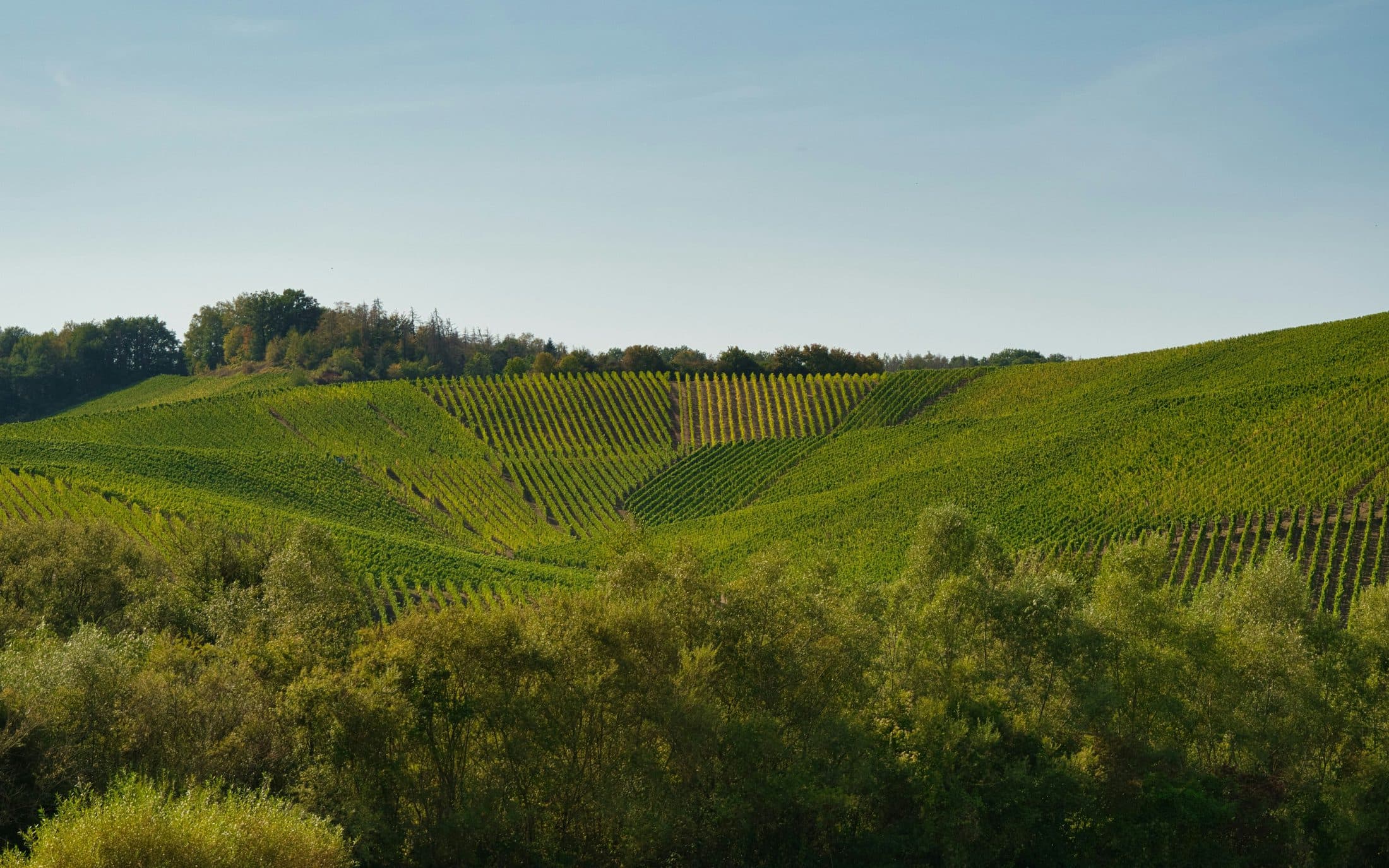
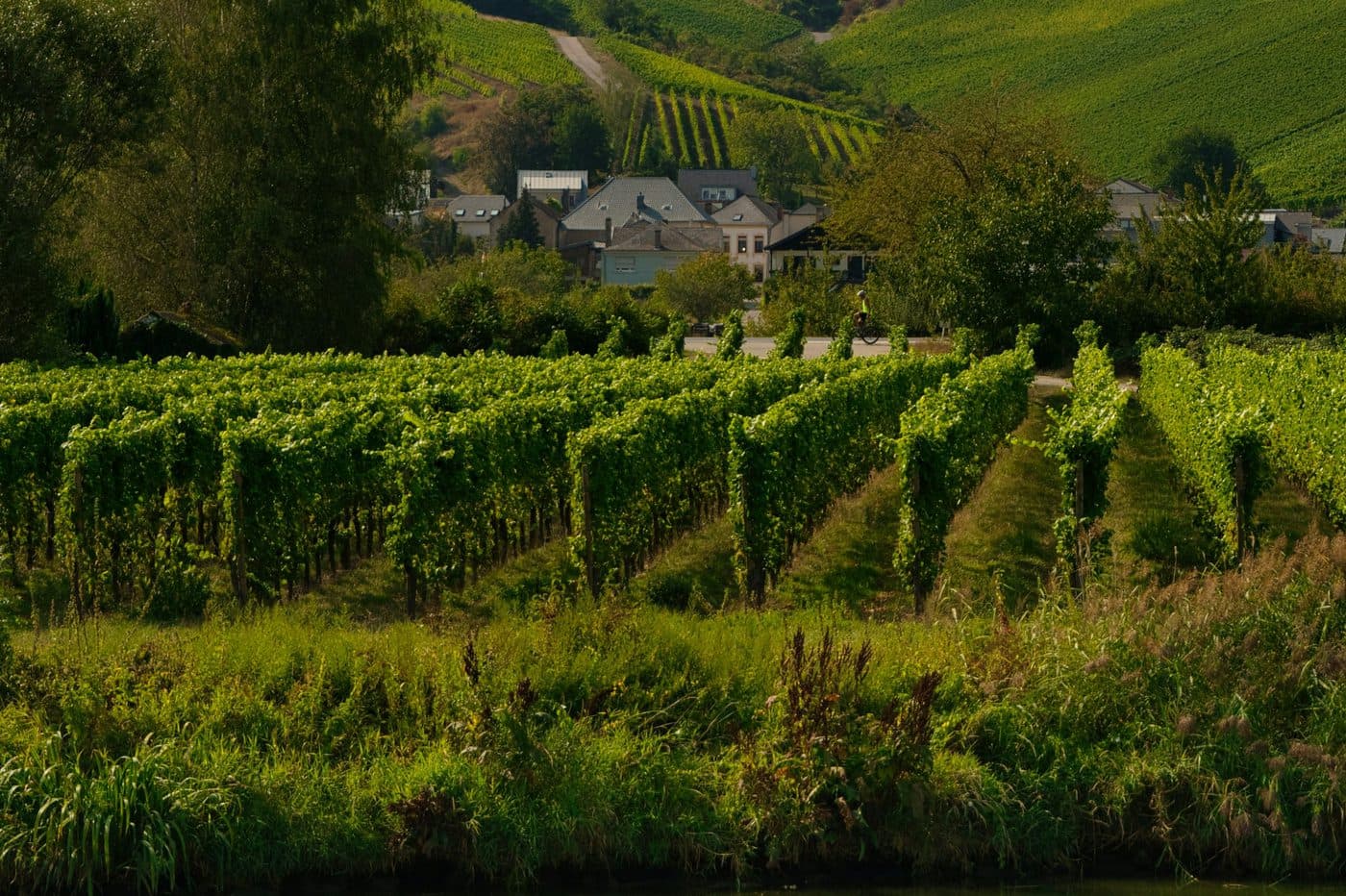
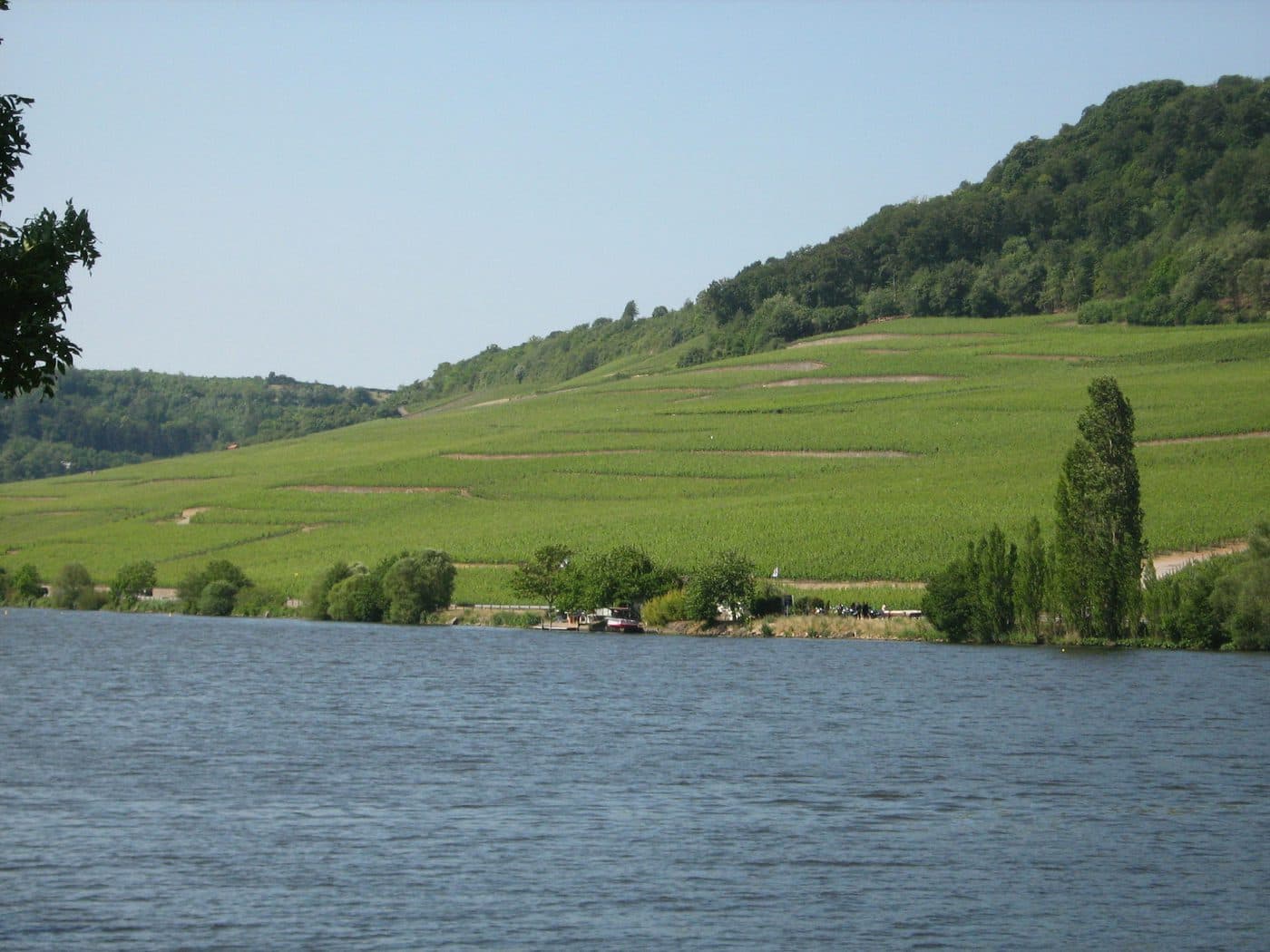
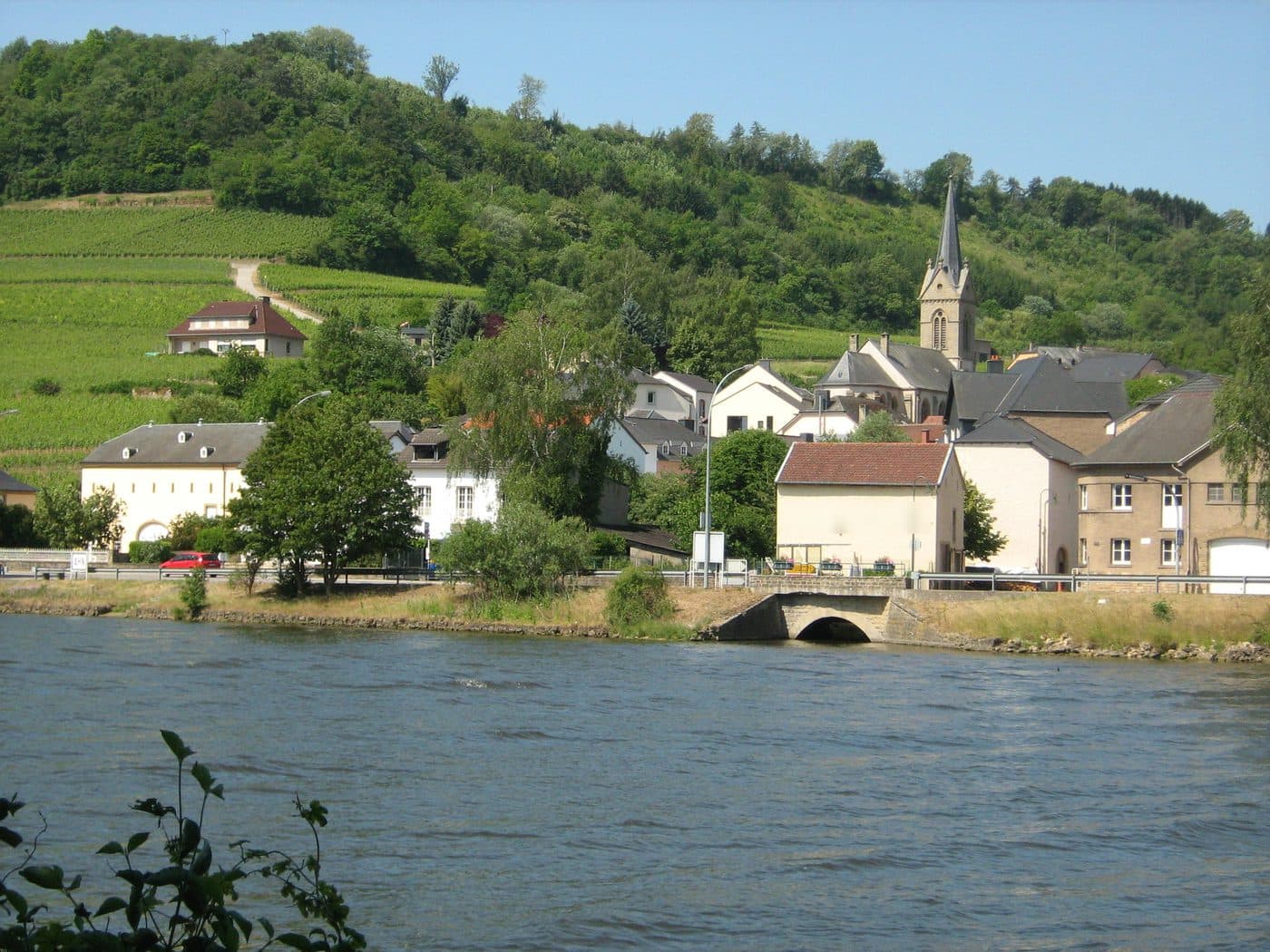
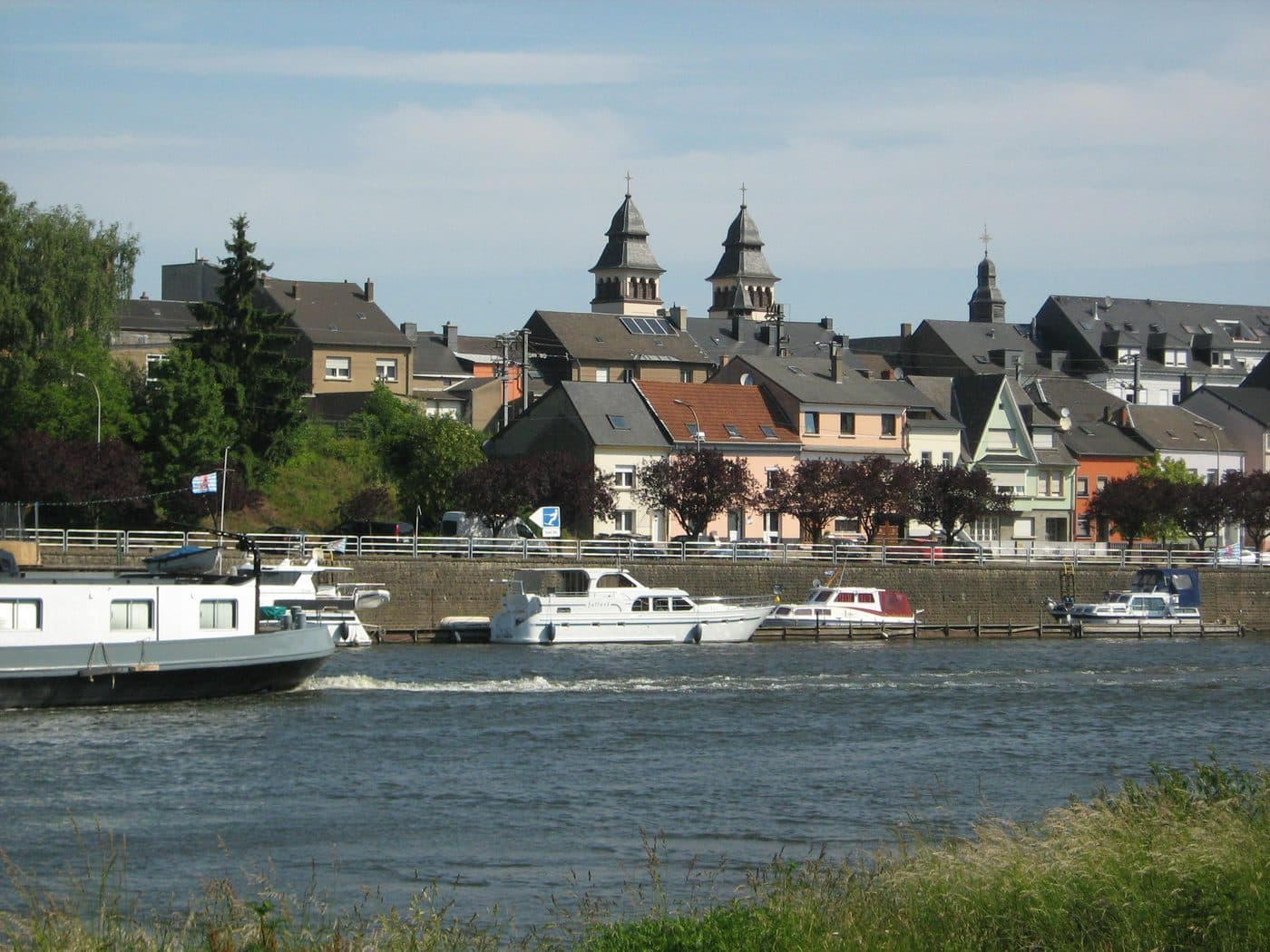
From Schengen to Wasserbillig the Moselle forms Luxembourg’s border with Germany, and it has cut through the limestone a hilly valley that the Celts, the Gauls and the Romans already planted with vines; today the region is known above all for white wines, still and sparkling, under the Moselle luxembourgeoise protected designation of origin. At Schengen, a village on the triple border of Luxembourg, France and Germany, the Schengen Agreement was signed on 14 June 1985 aboard the MS Princesse Marie-Astrid, moored on the river; the ship, bought back by the commune in 2021 and renamed the Prinzessin Marie-Astrid Europa, came home in 2025 and was inaugurated on 14 June 2025 as part of the renovated Schengen Museum. Downstream, Remich, the self-styled pearl of the Moselle, sits in an amphitheatre of vineyards and woods, with a riverside promenade some 3 km long under cherry trees, the Porte Saint-Nicolas and the remains of its old fortress; Wellenstein keeps a restored village centre among its vines, and Stadtbredimus, Ehnen and Wormeldange follow along the Route du Vin. Above Wormeldange the Koeppchen, a slope of shell limestone facing due south, is planted with Riesling and topped by the chapel of St Donatus; above Ahn the limestone cliffs of the Palmberg shelter a nature reserve of orchid meadows and box trees, some nearly 300 years old. Machtum and Grevenmacher come next, and at Wasserbillig the Sûre, Luxembourg’s longest river, flows into the Moselle.
Couples marry at their commune’s town hall and celebrate in the wine villages, with portraits in the vineyard rows, on the paths above the river and along Remich’s promenade at the end of the day; couples from abroad, married at home, come for a symbolic ceremony among the vines. A wedding in Luxembourg is legal only as a civil marriage in the commune where one of you lives: the commune’s civil registrar (the mayor, or a council member the mayor delegates) marries you in the town hall or in another public building the council has designated, after you hand in your file at least a month ahead and a 10-day public notice, and same-sex couples have married on the same terms since 1 January 2015; two foreigners who don’t live in Luxembourg can’t marry here, so they marry at home and celebrate here, and a church wedding has no legal effect and may only follow the civil one. Along the Moselle, Grevenmacher has designated its Zéintscheier cellar and the garden and concert hall of the Maison d’Osbourg, Remich the building at 1 rue Neuve known as Al Schoul, and Schengen the cellars and upper room of the former town hall at Bech-Kleinmacher (Ministry of the Interior, March 2023; ask the commune for its current list), so a couple in which one partner lives in that commune can marry legally there.
Through the year
When to marry in the Moselle Valley
June to September are the surest months, and September and October bring the grape harvest and the wine festivals. Luxembourg’s only official 1991–2020 normals come from MeteoLux’s station at Luxembourg-Findel, the airport on the plateau at 368 m, some 14 km west of Remich; the Moselle valley lies much lower and is usually a little warmer by day, but every figure here is the plateau’s. There, highs reach about 22 °C in June, 24 °C in July and August and 19 °C in September, with 25 °C or more on 8 to 13 days a month from June to August. Rain is spread through the year: 1 mm or more falls on 9 or 10 days a month in summer, often in thunderstorms — Findel counts four or five thunderstorm days a month from May to August — and September has the fewest wet days of the year, about nine, so keep a roof close to any plan among the vines. May and October work with some care, at highs of 18 and 14 °C.
- January: Quieter
- February: Quieter
- March: Quieter
- April: Quieter
- May: Good with planning
- June: Best
- July: Best
- August: Best
- September: Best
- October: Good with planning
- November: Quieter
- December: Quieter
- April and MayApril warms to 14 °C by day, with rain on nine days and frost on two or three nights; by May the highs reach 18 °C, the nights stay above freezing and rain falls on ten days. In spring and early summer the meadows of the Palmberg above Ahn flower with orchids. The clocks go forward on the last Sunday of March (28 March 2027); by mid-April the sun sets at about half past eight and by mid-May at about a quarter past nine.
- June to AugustThe warmest months: highs of 22 to 24 °C, nights of 12 to 14 °C and about eight hours of sun a day, with rain on 9 or 10 days a month. The wine villages hold their summer festivals: Ehnen its winegrowers’ day on the third weekend of July and Stadtbredimus its Picadilly on the second weekend of August. At midsummer the sun sets at about a quarter to ten.
- September and OctoberThe harvest season. September cools to 19 °C, with the fewest wet days of the year (about nine) and nearly six hours of sun a day; October drops to 14 °C, with rain on ten days and fog on about eight. Grevenmacher’s grape and wine festival, the country’s biggest, fills the town on the second weekend of September with a parade, concerts, fireworks and the crowning of the Wine Queen; Wormeldange’s villages open their cellars for the Riesling Open on the third weekend of September; and Schengen marks the end of the harvest with its Hunnefeier on the third weekend of October, when the young, still-fermenting wine is poured. Book early for those weekends. In mid-September the sun sets at about ten to eight, in mid-October at about a quarter to seven, and the clocks go back on the last Sunday of October (31 October 2027).
- November to MarchWinter on the plateau is grey more than hard: highs of about 4 to 5 °C from December to February, frost on 15 to 17 nights a month, snow falling on about seven or eight days a month and fog on ten or eleven days in December and January; the vines stand bare. December is the wettest month, with 89 mm on 13 days, and the darkest, with about 42 hours of sun in all. At midwinter the sun is up only from about half past eight to twenty-five to five.
In numbers
Weather station: Luxembourg-Findel, normals 1991–2020 · Checked 9 November 2026
Places
Where couples marry here
The kinds of places — ask your photographer which ones they know well.
Schengen on the triple border
Schengen lies where Luxembourg, France and Germany meet, and its riverfront is where the agreement that opened Europe’s internal borders was signed, aboard a passenger ship moored there on 14 June 1985. The renovated Schengen Museum tells the story of the agreements; the same ship, kept seaworthy and back at Schengen since 2025, is now part of it, and on board visitors can see the room where the five first signatories met. The village closes the wine year with the Hunnefeier on the third weekend of October. The cellars of the former town hall at Bech-Kleinmacher, a few kilometres north, are the commune’s designated place for civil weddings besides its town hall.
Remich, its promenade and Wellenstein
Remich’s promenade runs about 3 km along the Moselle under cherry trees, with benches all the way, and its esplanade is paved, level and wide enough for every guest, wheelchairs and pushchairs included: the town’s 4 km comfort trail starts at the tourist information and the bus station, follows the esplanade, crosses the old streets and the Jeannot Belling park and runs back along the river towards Stadtbredimus. The vineyards and woods rise behind the town like an amphitheatre. A few kilometres south-west, Wellenstein has a restored village centre, and its waymarked circular walk (a blue lozenge on white) climbs through the vines and round the Hommelsbierg woods to the edge of the plateau above the valley, with some steep stretches. We found no published rule on photographs among the vines: keep to the paths that run between the rows.
Wormeldange, the Koeppchen and the Palmberg
Wormeldange is two villages, one on the river and Wormeldange-Haut on the edge of the plateau. Its viticultural trail starts by the river, climbs through the lower vineyards to the heights of the Koeppchen, where shell limestone and a slope facing due south give Riesling its best ground, loops round the chapel of St Donatus and comes back down to the Moselle. Next door, the Palmberg dream loop starts in the wine village of Ahn: 9 km and about three hours along limestone cliffs, through the steep vineyards with views over the valley, into the nature reserve, where some box trees are nearly 300 years old and orchids flower in spring and early summer, and back through the gorge of the Donverbach with its waterfalls. Its paths are steep and slippery in rain or winter and best left after heavy rain, so it is a route for the two of you and a photographer in walking boots, not for a wedding party.
Machtum, Grevenmacher and Wasserbillig
Downstream, Machtum’s vineyards climb straight from the river, and Grevenmacher holds the grape and wine festival every September; its designated wedding places are the Zéintscheier cellar and the Maison d’Osbourg, with its garden and concert hall. At Wasserbillig the Sûre, which crosses the whole country from the Belgian border at Rombach, flows into the Moselle at the north end of Luxembourg’s wine country. CFL trains stop at Mertert and Wasserbillig, which is also on the regional bus from Trier to Luxembourg Airport.
Light
How the light falls
The times here are for a flat horizon at Remich. The Luxembourg bank is the river’s west side, so its vineyard slopes face east and south and take the morning and midday sun; in the evening the sun goes down behind them, the riverside on this bank falls into shade well before these times, and the German bank opposite keeps the light longest. For the last light, climb to the edge of the plateau above the vines — Wormeldange-Haut, the Koeppchen, the Palmberg above Ahn — or frame the far bank from the promenade. On 21 June the sun rises at about half past five and sets at about a quarter to ten, far to the north-west; it is still ten degrees up at about twenty-five past eight, and the sky stays light until about half past ten. In mid-May it sets at about a quarter past nine, in mid-July at about twenty-five to ten, in mid-September at about ten to eight and in mid-October at about a quarter to seven. At midwinter it is up only from about half past eight to twenty-five to five. Findel averages about eight hours of sun a day in June and July and under one and a half in December (1991–2020).
Travel
Getting there
Luxembourg Airport is 18 km by road from Remich, 22 km from Grevenmacher and 28 km from Schengen; from the Place Guillaume II in Luxembourg City, Remich is 24 km, Grevenmacher and Ahn 29 km, Wormeldange 30 km, Wasserbillig 34 km and Schengen 37 km, and along the river Schengen is 9 km from Remich and 36 km from Wasserbillig. Saarbrücken Airport is 79 km from Schengen, Frankfurt-Hahn 95 km and Frankfurt Airport 203 km from Grevenmacher, and Brussels Airport 247 km from Remich. Buses, trams and trains in Luxembourg have been free since 1 March 2020, except first class on the trains; only journeys across the border need a ticket. CFL trains run from Luxembourg station through Mertert to Wasserbillig; Remich’s bus station is at the start of the promenade, lines 150 and 450 stop at Ahn, and regional bus 302 links Trier, Wasserbillig and the airport. Luxembourg applies the EU drone rules (Regulation 2019/947) under its Directorate of Civil Aviation (DAC): an operator registered where they live if that’s in an EASA country, otherwise asking the DAC, liability insurance, the drone in sight, below 120 m and never over a crowd; only the state’s map of drone zones (g-o.lu/uas) is binding, not the drone maker’s app, and in Luxembourg City no drone may fly over the Grand Ducal Palace without the DAC’s permission, while part of the city lies under the approach to Luxembourg-Findel airport, where a flight up to 50 m needs notice to air navigation 24 hours ahead and one from 50 to 120 m a permit asked ten working days ahead, so check that map before every flight. On the same map, read on 9 November 2026, a zone around the port of Mertert, between Grevenmacher and Wasserbillig, needs the DAC’s permission.
Photographers
Photographers in the Moselle Valley
No one in the Moselle Valley yet
The first photographers in the Moselle Valley are joining now. Tell our concierge your date and your plans — it checks who is free and fits.
Plan
Read before you plan
- Getting married in Luxembourg as foreigners: the residence rule, the commune’s registrar, and the symbolic routeWho can marry legally in Luxembourg and who can’t: the rule that one of you must live there, the file at the commune, documents, translations and apostilles, the 10-day notice, no witnesses, town halls and the other public buildings communes designate, same-sex marriage since 2015, why the church comes second, the City of Luxembourg’s days and fee, and the route for everyone else: sign at home, celebrate in Luxembourg.
- How to choose a wedding photographer: the steps, and the questions to askThe decision in order — whole weddings, style, availability, the package, the contract and deposit, cancellation, delivery and a conversation — then a checklist of questions, with why each one matters.
- A wedding-day timeline for photosFrom getting ready to the last dance, planned around the light.
- Deposits and payment protectionWhat you pay when, and what happens if plans change.
- Which country for a destination wedding? The law, prices, crowds and light, comparedThe legal route for couples who don’t live there, season and crowds, price levels, light, flights, venues and permits for photographs — Portugal, Italy, Spain, Greece, France and Austria compared with official figures, as of October 2026.
- A rain plan that still looks goodCovered spots, umbrellas and what photographers do on grey days.
- Wedding photography contract checklist: what it should say, and how Lens & Vows handles each pointThirteen things a good contract covers — the day and the hours, what is delivered, deposit and balance, cancellation on either side, date changes, illness, image rights, personal data, backups, travel, overtime and complaints — and what our terms say about each.
Luxembourg