Founding photographerVerified — Identity verified by Lens & Vows
Luigi O.from €1,500
🇮🇸 The South Coast & Vík, Reykjavík & Reykjanes +29, Iceland · Documentary, Fine artBased in Italy · travels to weddings in IcelandWedding photographers in Iceland
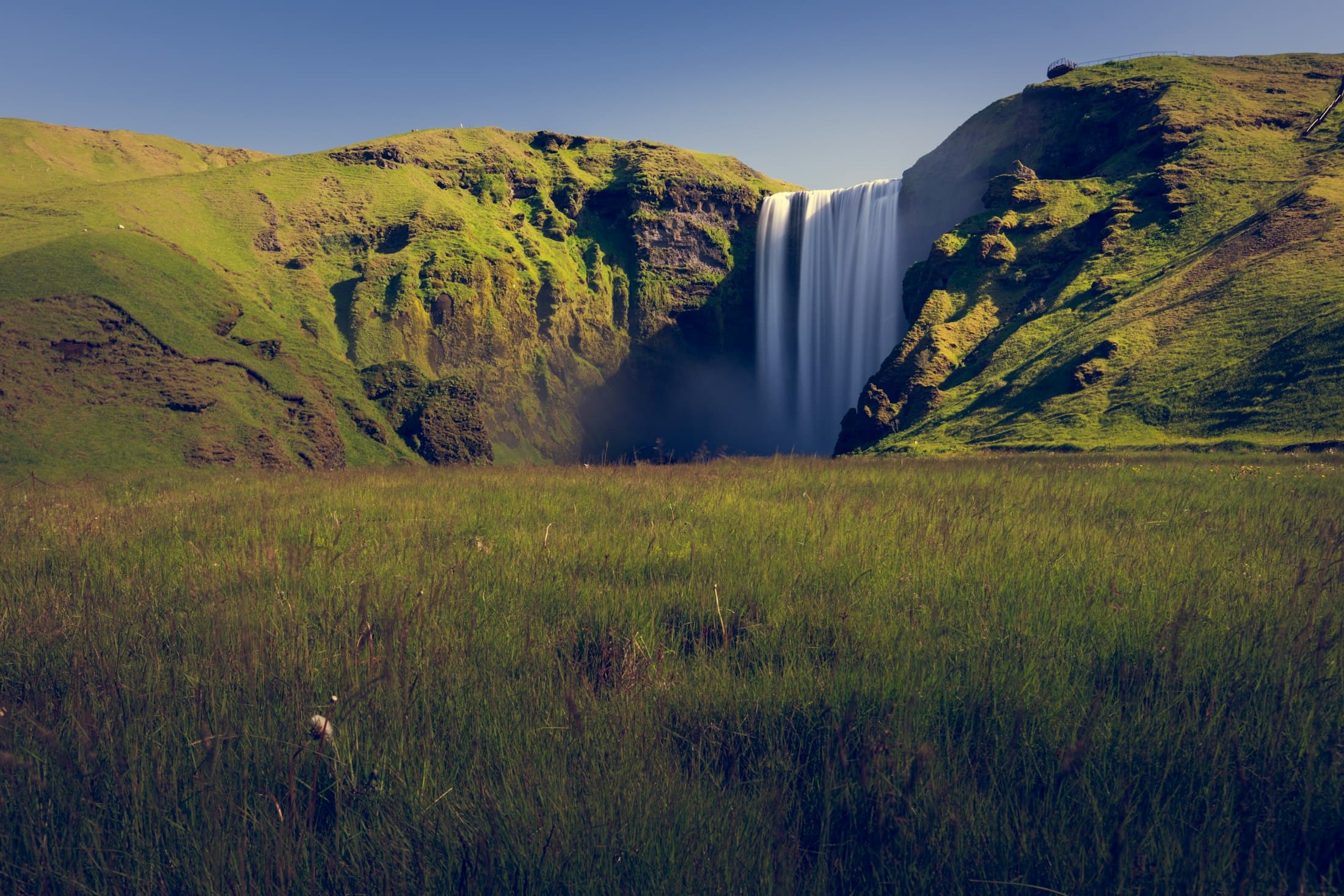
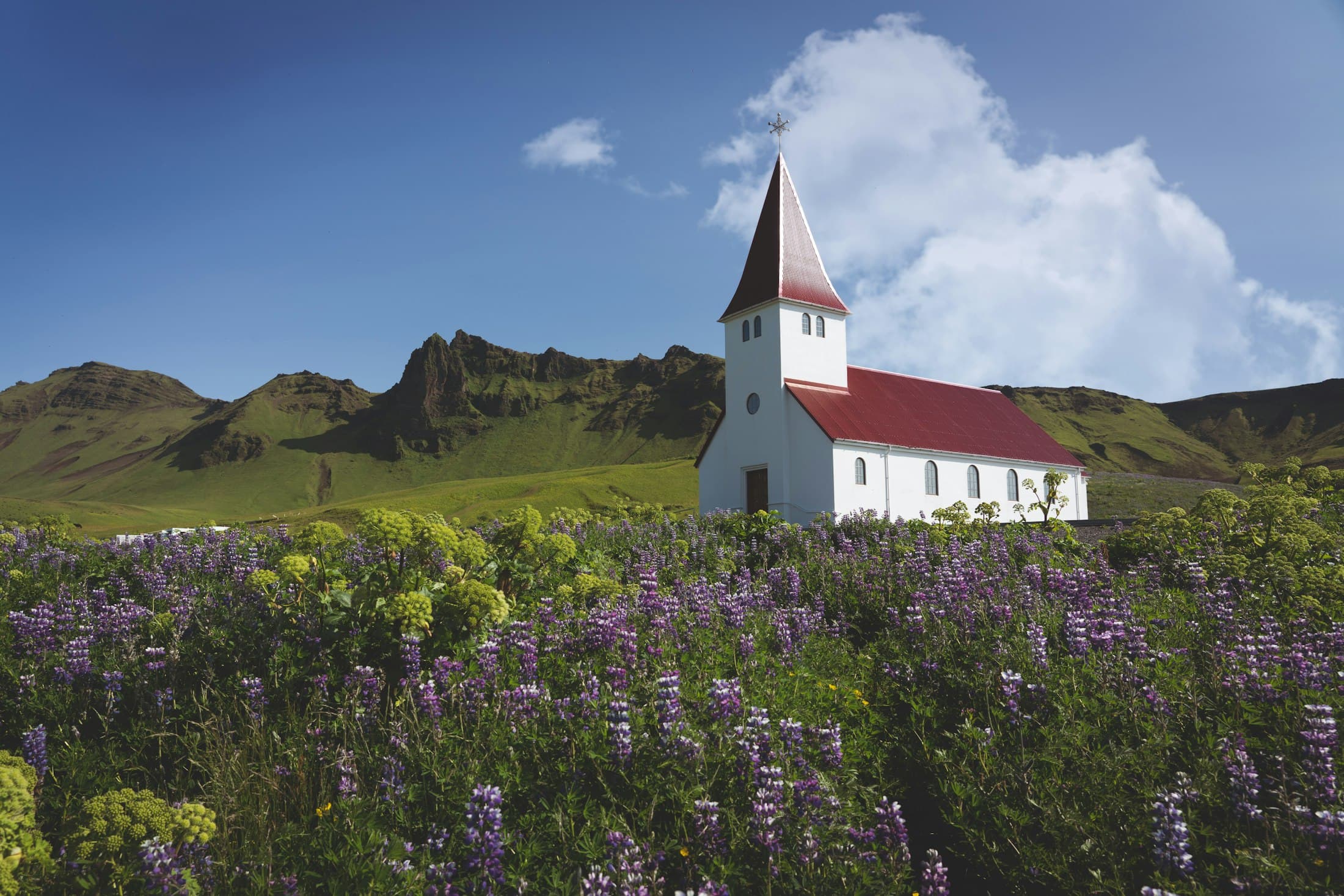
A hamlet under the south coast’s best-known waterfall, with a turf farm and a little church that looks far older than it is.
Skógar is hardly a village: a museum and a few places to stay on the strip of land between the Ring Road and the old sea cliffs, with Skógafoss coming straight down at the end of it. The waterfall is about 60 metres high and has been a natural monument since 1987, the lowest in a chain of falls on the Skógaá that runs some 7 km up towards Fimmvörðuháls. Next to it, the Skógar Museum has spent decades collecting the region’s turf buildings, with a farmhouse whose rooms date from 1830 to 1896 and a schoolhouse of 1901.
The reason to marry here is the church. It was consecrated only in 1998, but the museum furnished it from the parish churches of the south: fittings from Kálfholt of 1879, windows of 1898 from Gröf, an altarpiece from Ásólfsskáli dated 1768, candelabra from the 16th century and a bell from about 1600. So a small ceremony here looks and sounds like an old country wedding, and the waterfall is a few minutes’ walk away for the pictures. It suits a couple who want Iceland’s south coast without standing on a beach in the wind for the vows.
Photographers
They still have dates open on the South Coast & in Vík — at Skógar too. Their whole weddings and free dates are on their page.
See the photographerBooking through Lens & Vows
Ceremonies
Visit South Iceland says it is non-denominational, “welcomes all Christian ceremonies”, and that various religious ceremonies take place there each year. The architect was Hjörleifur Stefánsson. Neither its page nor the museum’s gives a capacity, a fee or a booking route for weddings, so write to the museum (booking@skogasafn.is, +354 487 8845) and ask whether it would host yours and who could officiate.
The farmhouse, parlour, storehouse and smithy stand around the church. They are museum buildings, open 362 days a year: from 9:00 to 18:00 in June to August and from 10:00 to 17:00 the rest of the year. Ask whether wedding photographs among them are possible outside opening hours, which is when they’d be quietest.
Iceland lets a priest or registered celebrant marry you outdoors if they agree to the place. The land at the waterfall is protected, and we found no published rule for a ceremony at its foot. With spray, and tour groups on the same path, a church wedding and a walk over afterwards is the sensible order. Ask the Nature Conservation Agency if you want the falls for the vows.
Portraits
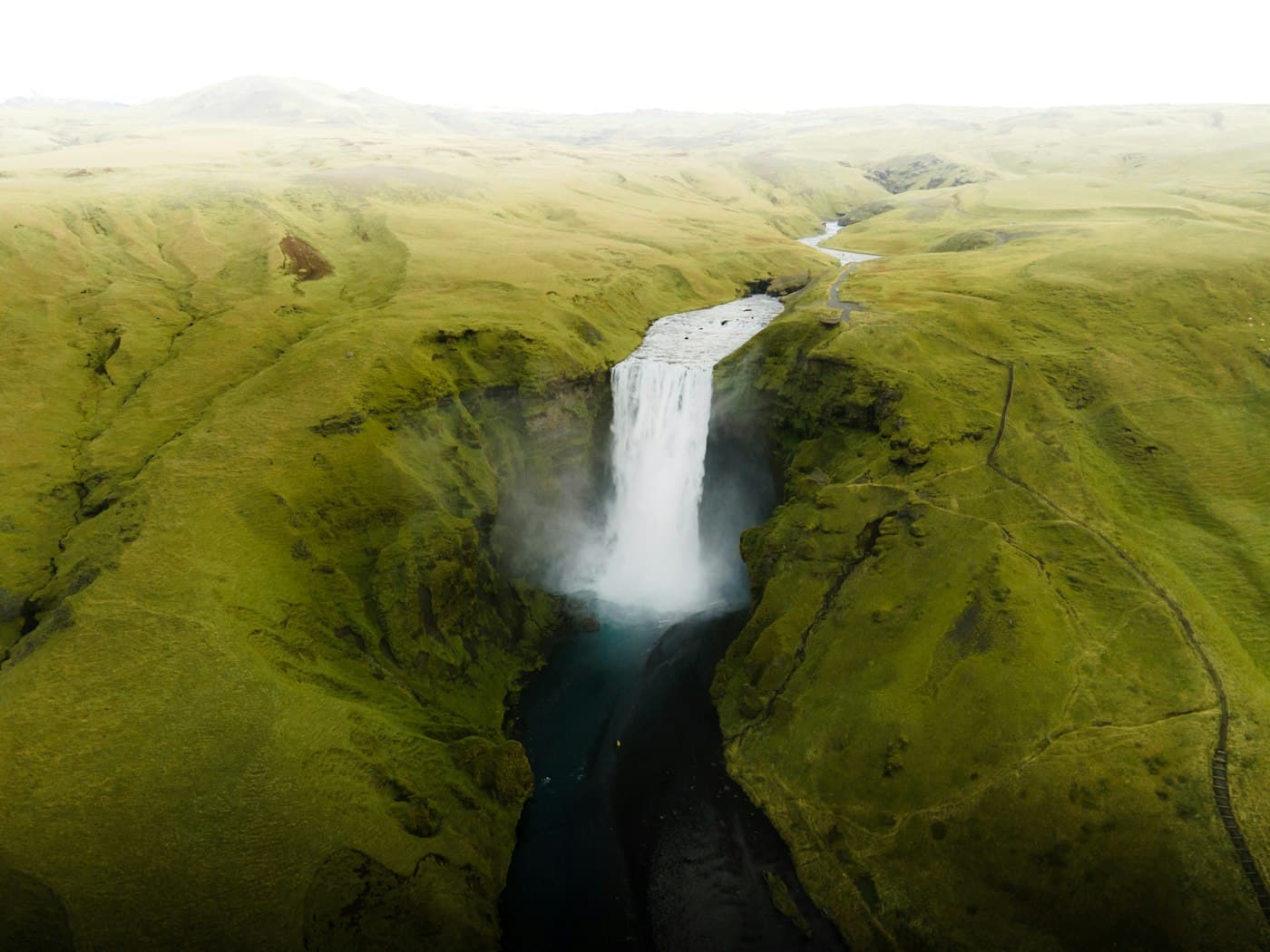
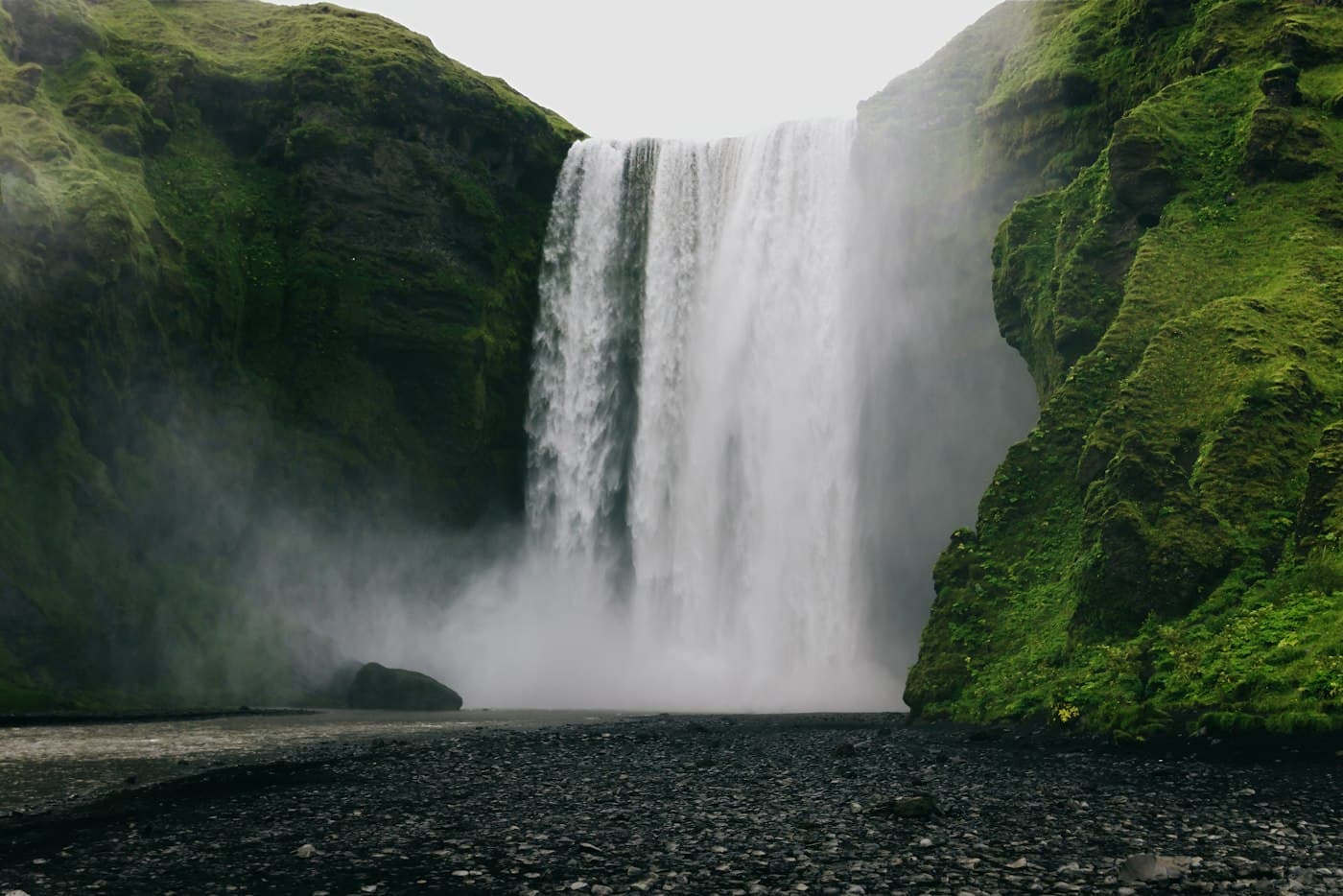
From the flat grass in front, the whole 60 metres stands against the green cliff, and sunny days can put a rainbow in the spray. Coaches stop here all day, so early or late is the only way to have it near to yourselves. On 15 June 2027 golden light starts about 21:49, and the sun sets at 23:36; on 15 September, golden light from 18:43, and sunset at 19:44 (NOAA’s equations, flat horizon). The cliffs to the north and west take the sun sooner.
Close up, you’ll get wet in seconds, and so will the lens. Do it near the end, when hair and make-up no longer matter, with a towel for the photographer. A very short time here is enough for the big picture of the two of you dwarfed by the falling water.
A path climbs beside the falls to the top and carries on up the river towards the footbridge on the way to Fimmvörðuháls, past the higher falls in the chain. It’s steep at the start and asks for boots. It does give a view over the coastal plain to the sea, and it’s much quieter than below.
Grass roofs and low stone in the museum’s yard, with the small church among them. On a dull day, which there will be, this is where soft light works best, and a couple in good clothes looks right against old timber.
Through the year
Vatnsskarðshólar, the Met Office’s station about 15 km east (1991–2020), averages highs of 12.0 °C in June, 13.7 °C in July and August and 11.4 °C in September. Rain is the headline: 93 mm in June, 110 mm in July, 140 mm in August and 188 mm in September, in a place where the wind averages 5 to 6 m/s even in summer. June is the driest and calmest choice, and the lupins that colour this coast in bloom from mid-June to mid-July are a bonus. Autumn and winter bring big rainfall, ice on paths and very short days, so plan a shorter outdoor session and a warm room.
The South Coast & Vík, month by month
Practical
Skógar is right on the Ring Road. A day-tour operator gives about two hours from Reykjavík to Seljalandsfoss and twenty minutes more to Skógafoss, so guests can arrive the same day, but a night nearby lets you have the falls before the coaches come.
The Nature Conservation Agency’s permit is needed to fly over Skógafoss, and its permit letter of February 2025 says it is forbidden to fly in the canyon in front of the waterfall. The processing fee is ISK 41,600 for up to two protected areas, and the operator must also be registered on flydrone.is. Ask your photographer before you plan an aerial shot.
The same agency charges ISK 83,200 to process a permit for photography or filming in a protected area, with 15 days’ processing, as its page said on 1 November 2026. It doesn’t define commercial work or mention weddings, so a photographer who works this coast should know the answer, and you should ask.
A district commissioner checks your conditions for marriage first, and the certificate must be no more than 30 days old on the day. A priest then needs it in hand. Our guide to getting married in Iceland has the rest.
Questions
Visit South Iceland says the church welcomes all Christian ceremonies and that some are held each year, but no page sets out how a visiting couple books. Ask the Skógar Museum (booking@skogasafn.is), which houses the church, and ask about a priest at the same time.
The building is from 1998. Its contents are old: most fittings came from Kálfholt Church of 1879, the windows from 1898, the altarpiece from 1768, candelabra from the 16th century and one bell from about 1600. It looks older than it is, for good reason.
Yes, it’s open to everyone, but you’ll share it and you’ll get wet near the base. Stay on the meadow for the big picture and go closer only for a moment. Morning or a long summer evening gives the fewest people.
June, on the Met Office’s 1991–2020 figures for nearby Vatnsskarðshólar: 93 mm against 188 mm in September, with a mean high of 12 °C. It’s never dry here, so have a plan for rain and a shelter near the car.
Not much. On 15 June 2027 the sun sets at 23:36 and comes up at 03:02, and it stays bright enough between to walk by. Golden light starts about 21:49 and lasts until the sun has gone.
The South Coast & Vík
Plan
Not sure yet?
The place, the date, the guests, the photos you like. Our concierge checks who is free and fits, and comes back with photographers to choose from.