Founding photographer
Daniel B.from €800
Malbun & the Liechtenstein Alps, Vaduz & the Rhine Valley +7 · Documentary, EditorialBased in Austria · travels to weddings in LiechtensteinWedding photographers in Liechtenstein
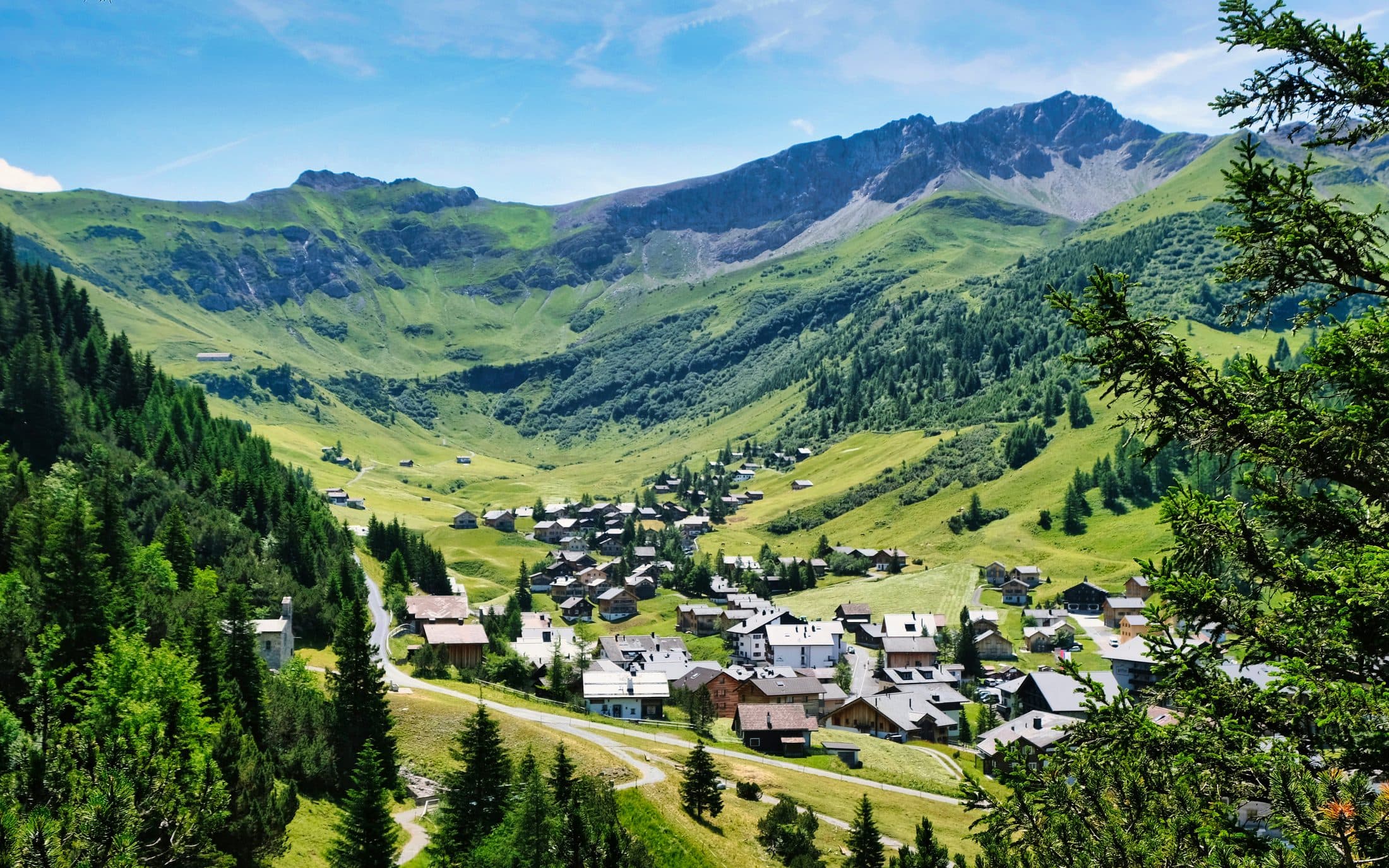
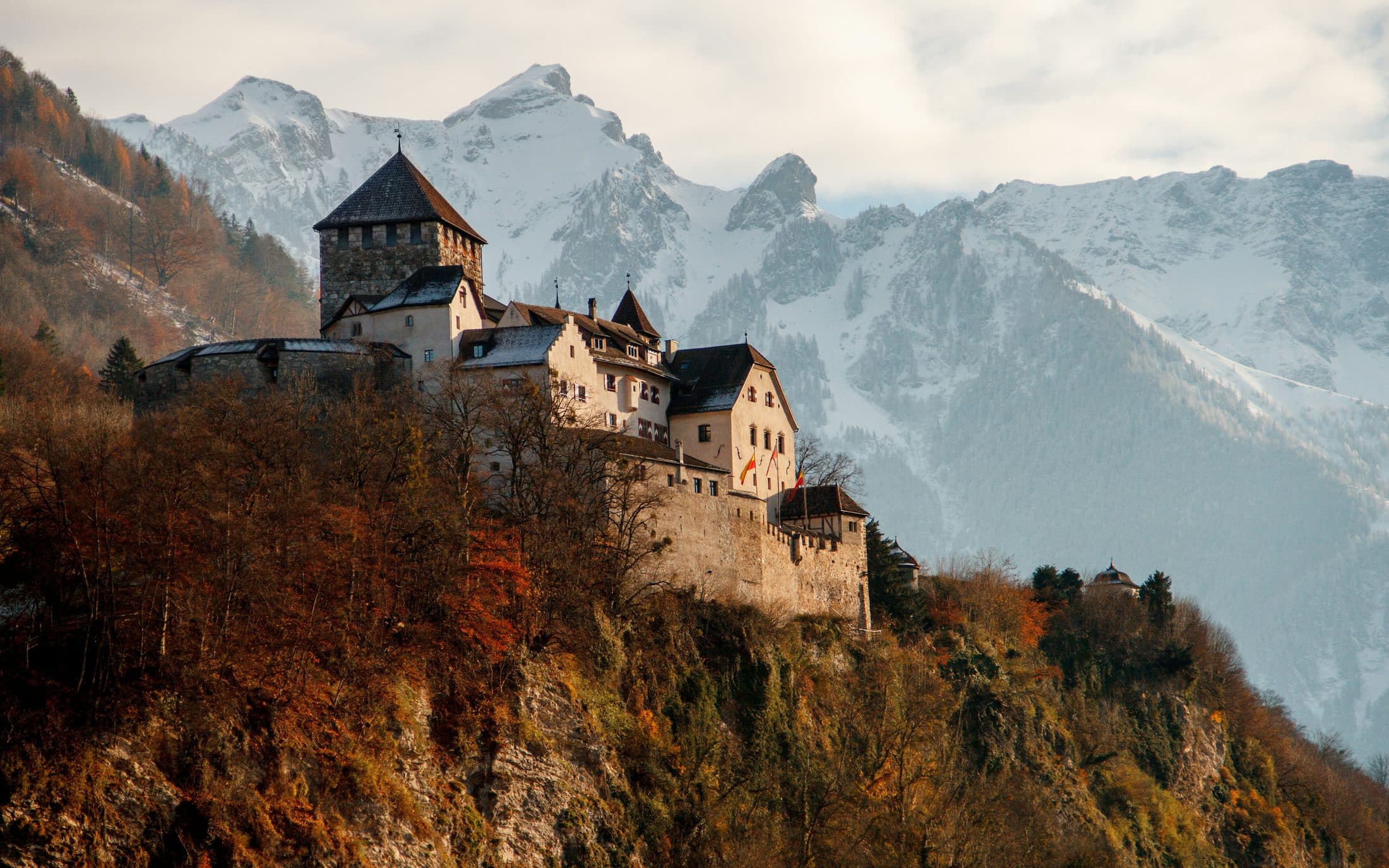
Liechtenstein’s mountains, a short drive above Vaduz: Triesenberg, the Walser village on its terrace over the Rhine valley, the chapel at Masescha, the hay-meadow hamlet of Steg with its small lake and the Valüna valley beyond, and Malbun at 1,600 m, with its Peace Chapel and the chairlift to the Sareis ridge, where the Fürstin-Gina-Weg follows the heights.
Triesenberg, the largest municipality in Liechtenstein, spreads over a terrace that a landslide laid down 9,500 to 14,000 years ago, high above Vaduz and the Rhine.
Walser settlers, whose people came from the Valais, arrived around 1300, and the most striking thing they kept for centuries among Romance-speaking neighbours is their dialect. The parish church of St Josef, built in 1767–1768, stands at 886 m; higher up, at Masescha, the chapel of St Theodul, at 1,235 m, was the Walsers’ first church, recorded in 1465, with frescoes in its choir from the later 15th century. A road tunnel, opened in 1947, runs through the mountain from Gnalp into the Samina valley: first to Steg, at about 1,300 m, two rings of wooden huts around flat hay meadows, the oldest hut dated 1623, with the Valüna valley running south past its alps; then up a high valley shaped by a glacier to Malbun, at 1,600 m, a resort since its first guest house opened in 1908. Malbun’s stone Peace Chapel, at 1,627 m, was built in 1950–1951 and dedicated to Mary and Brother Klaus, patrons of peace, in thanks for Liechtenstein having been spared the Second World War. From the village a chairlift, running since 1963, climbs to the Sareiserjoch at about 2,000 m, where the Fürstin-Gina-Weg follows the ridge to the Augstenberg and the Pfälzerhütte.
Couples marry up here in the churches and chapels of the parish of Triesenberg — the parish church of St Josef, St Theodul at Masescha and Malbun’s Peace Chapel — or, already married in Vaduz or at home, in a symbolic ceremony on a meadow, with portraits by the huts of Steg and Gnalp, on Triesenberg’s balcony over the Rhine valley, by the lake at Steg and, in summer, on the Sareis ridge; in winter Malbun is a place for a wedding in the snow. A wedding in Liechtenstein is legal only if one of you is a Liechtenstein citizen or lives in the country: then the Civil Registry Office (Zivilstandsamt) in Vaduz, the only one, marries you in its wedding room on a Wednesday or a Friday, after you hand in your documents three weeks to six months ahead and a 14-day public notice, and same-sex couples marry on the same terms since 1 January 2025; two foreigners who live abroad can’t marry here, so they marry at home and celebrate here, and a church wedding has no legal effect and may only follow the civil one.
Photographers
They still have dates open here. Their whole weddings and free dates are on their page.
See the photographerBooking through Lens & Vows
Through the year
July to September are the surest months up here. MeteoSwiss measures rain in Malbun but no temperature; its nearest station at the same height is Davos, at 1,594 m, 37 km away in Graubünden, where the 1991–2020 normals give highs of about 18 °C in July and August and 14 °C in September, with nights of 8 °C and 4 °C — down in Vaduz, 1,150 m lower, July reaches 25 °C. Malbun is far wetter than the valley: its gauge records 1,704 mm a year against 1,039 mm in Vaduz, 193 to 224 mm a month from June to August, and 1 mm or more on 16 days in June, 15 in July and August and 13 in September. MeteoSwiss notes that thunderstorms, frequent in spring and summer, often bring heavy rain, hail and strong gusts, so keep a roof close to any plan on the open slopes. June and October work with some care, at either end of the chairlift’s summer, and from January to March Malbun is a ski village, for a wedding in the snow.
Temperatures: Davos, normals 1991–2020 · Rain: Malbun, normals 1991–2020 · Checked 6 November 2026
Places
The kinds of places — ask your photographer which ones they know well.
Triesenberg’s hamlets are scattered between 700 and 1,250 m on a slope that is still slowly moving. The parish church of St Josef, built with its rectory in 1767–1768, stands in the village centre at 886 m, and the Walser Museum, opened in 1961 as Liechtenstein’s first local museum, tells the settlers’ story. Gnalp, on the road to the tunnel, was settled by 1355; its huts look out over the Rhine valley. Higher up, at Masescha, at 1,250 m, the chapel of St Theodul is the mountain’s oldest church: a south-facing tower chancel, later widened by a broad nave, its tower raised to four storeys, and renovated in 1854, 1900 and 1950; ask the parish of Triesenberg about a wedding there. At the end of the road beyond Masescha, Gaflei is where the Fürstensteig, a mountain path opened in 1897–1898, begins.
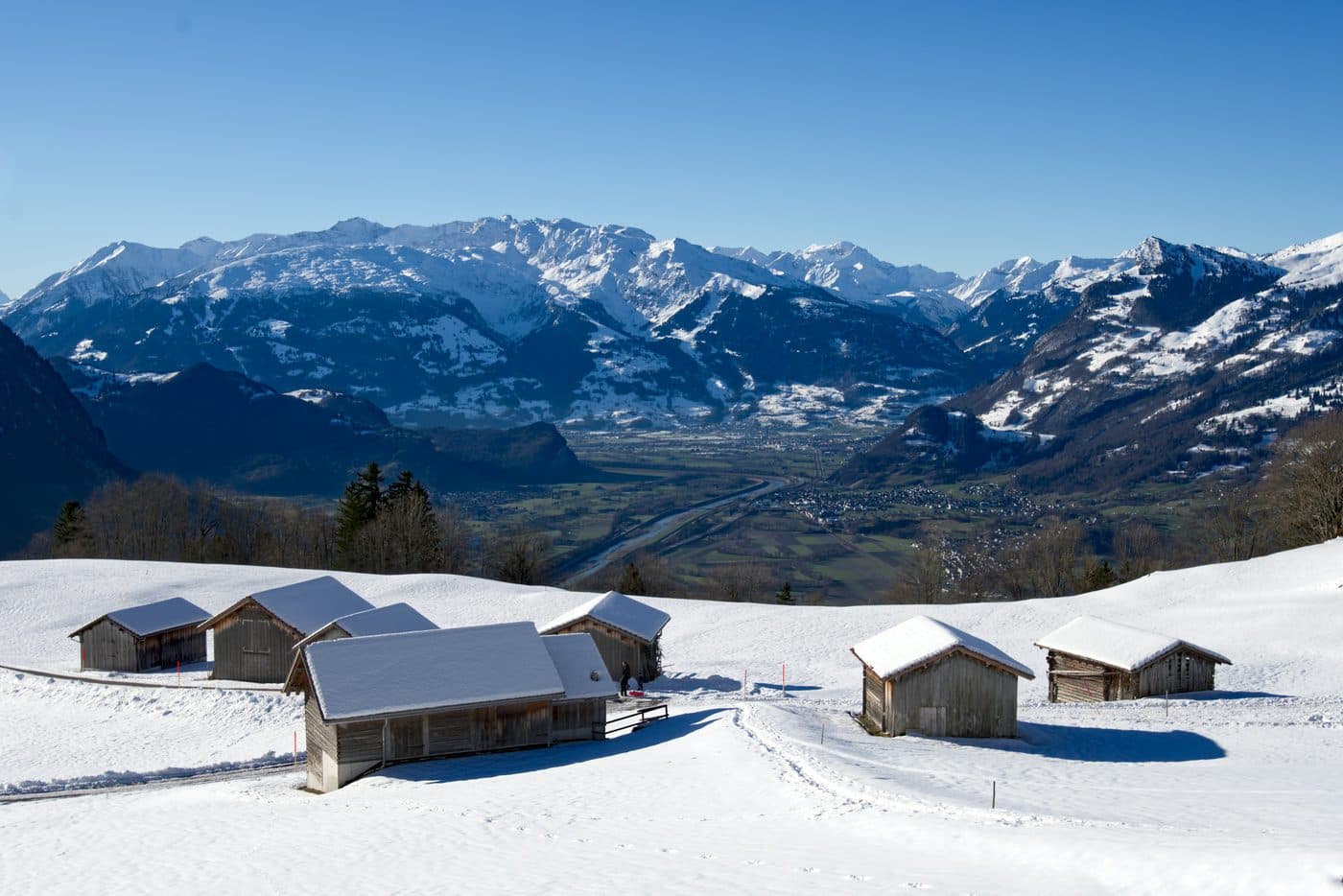
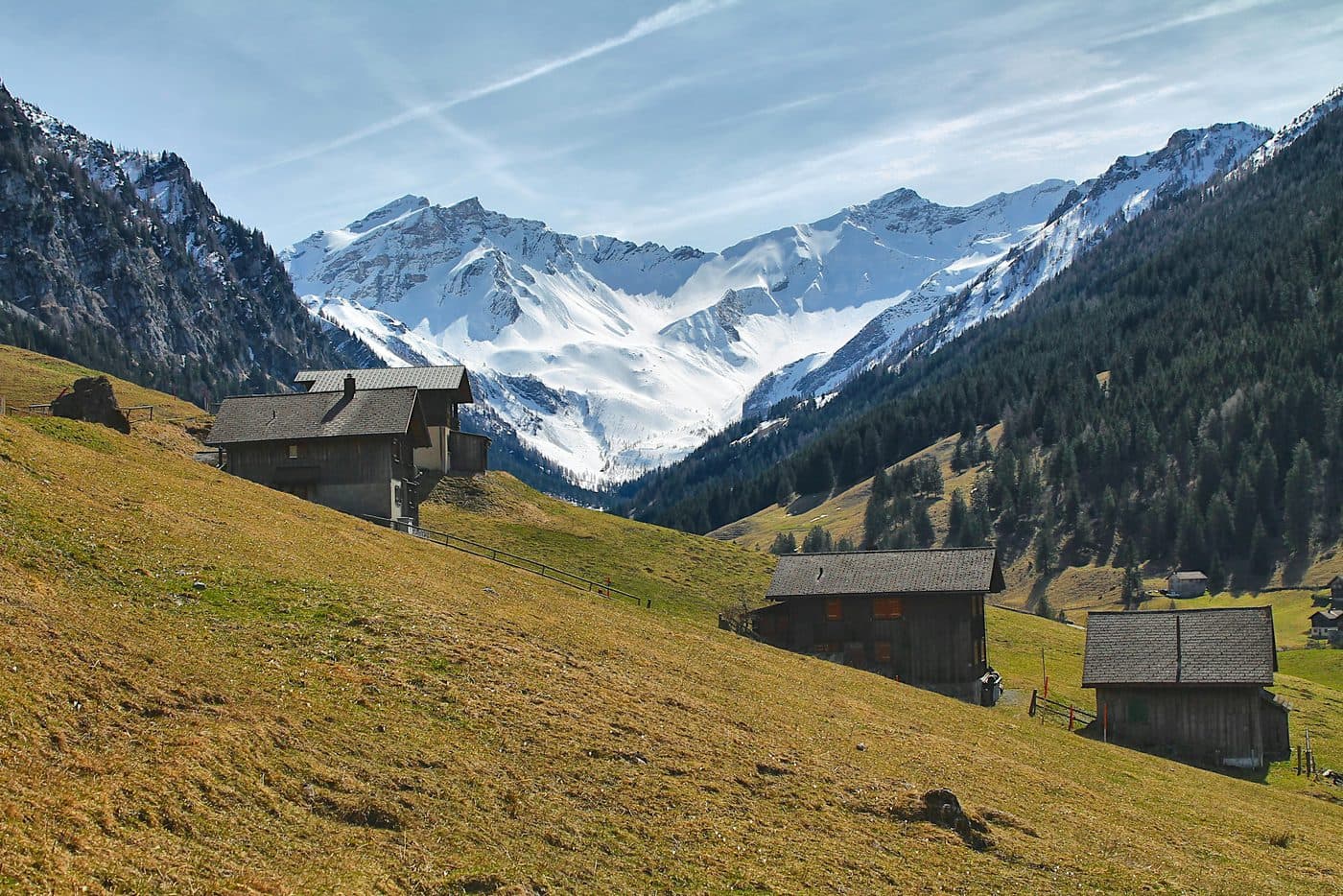
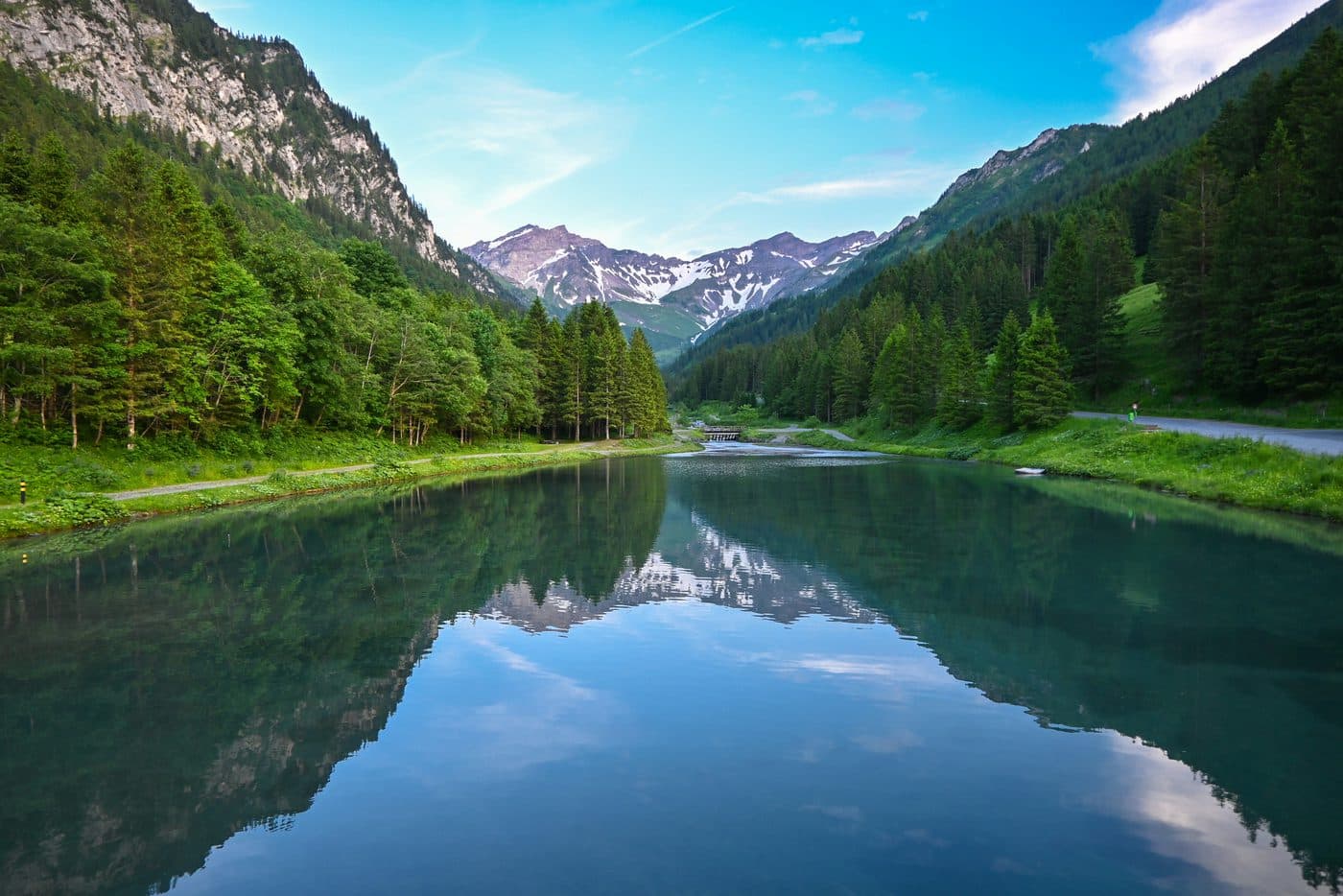
Steg lies at about 1,300 m where the ways into the Valüna, Valorsch and Malbun valleys part: two rings of huts, Grosssteg and Kleinsteg, around flat hay meadows fenced with wood and stone walls, many of them holiday houses since the mid-20th century, with the small chapel of St Wendelin and Martin, given its round tower in 1906–1907. The reservoir at Kleinsteg was built with the Samina power plant in 1947–1949. South of Steg the Valüna valley climbs past its three alp stages, Valünasäss at 1,409 m, Waldboda at 1,557 m and Obersäss at 1,646 m, an alp the country’s bailiff rated its best in 1815. On the slope towards the tunnel, the alp of Sücka, at about 1,400 m, was one of the first places in Liechtenstein’s mountains to take in summer guests, by the 1870s.
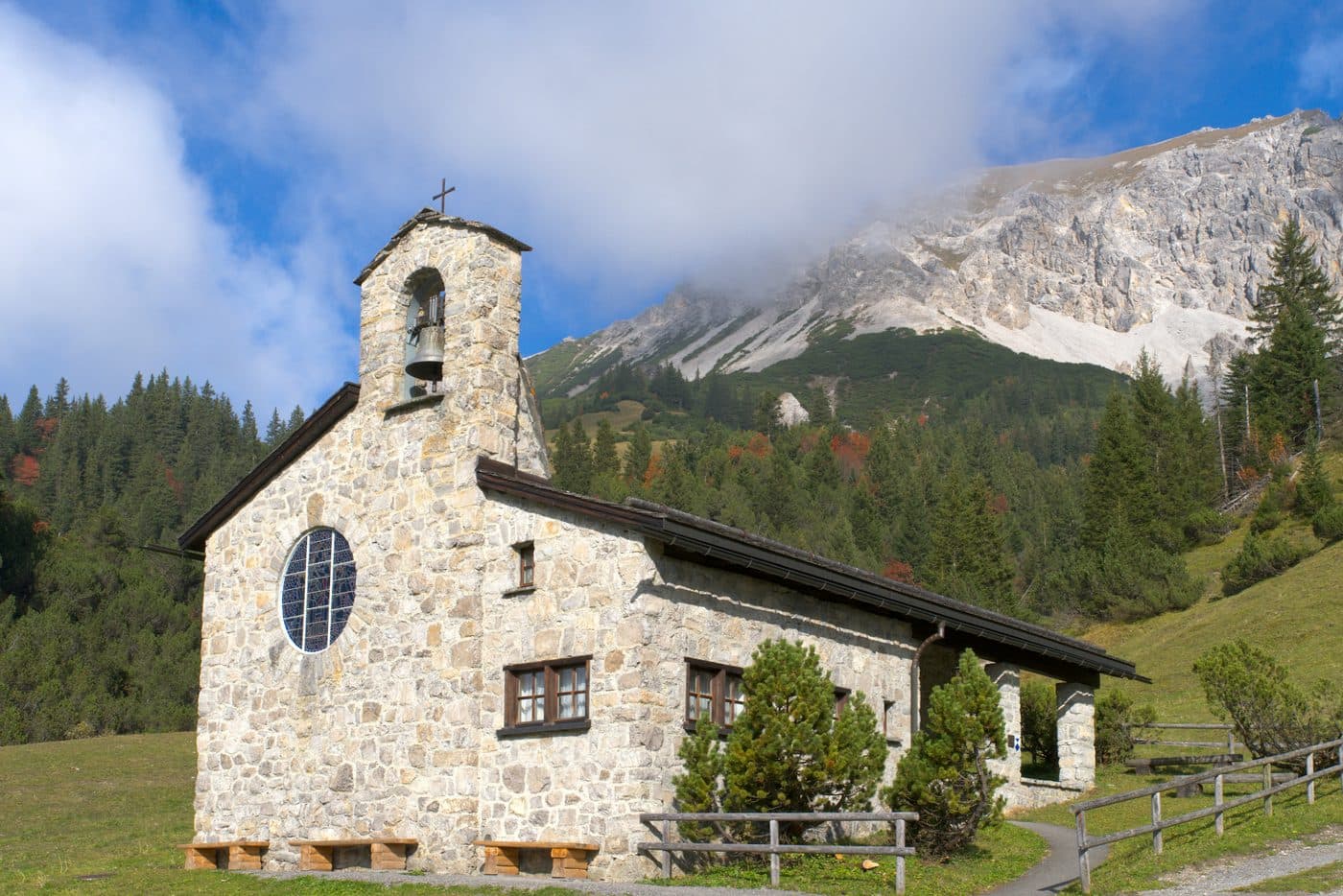
Malbun sits in the upper bowl of a trough-shaped valley that runs from 1,390 to 2,359 m, with the Triesenberg alp of Turna and the Vaduz alp of Pradamee around it. Its hay meadows became holiday houses after the road was kept open all year from 1959, and the first ski lift came in 1962; the car parks lie below the village. The Peace Chapel stands at 1,627 m: a single nave of natural stone with a flat-ended choir, a bell gable over the roof ridge, a round stained-glass window in the choir and, in the nave, a mosaic of the herdsmen’s Ave Maria and the saints. It belongs to the parish of Triesenberg; ask the parish about a wedding. The back of the valley has been closed to building since 1975 because of avalanches.
The Sareis chairlift, opened in 1963, climbs from the village to the Sareiserjoch at about 2,000 m; in 2026 it ran from 13 June to 18 October, and in winter it carries skiers. Beyond the ridge lies the alp of Sareis, on the border with Nenzing in Austria, and from the top station the Fürstin-Gina-Weg follows the heights to the Augstenberg and the Pfälzerhütte. The ridge is open ground with wide views on both sides, and there is little cover from a storm: watch the sky, and come down early when the clouds build.
Light
The times here are for a flat horizon, and up here the horizon is anything but: Malbun lies in a bowl and Steg in a narrow valley, so the sun leaves them well before these times, while the terraces of Triesenberg, Gnalp and Masescha look west over the Rhine valley and keep the light longest. On 21 June the sun rises at about twenty-five past five and sets at about twenty past nine, far to the north-west; it is still ten degrees up at about seven minutes past eight, and the sky stays light until about ten. In mid-May it sets at about ten to nine, in mid-July at about a quarter past nine, in mid-September at about twenty-five to eight and in mid-October at about twenty-five to seven. At midwinter it is up only from about five past eight to twenty-five to five, no more than about 19 degrees high at noon. When the foehn blows down the Rhine valley the air turns very clear, MeteoSwiss notes, with an almost blue sky and lens-shaped clouds over the peaks; the wind is warm and dry, often reaches storm strength and blows more often the higher you go.
Travel
By road, Triesenberg is 5 km from Vaduz, Steg 10 km and Malbun 13 km; Malbun is 128 km from Zurich Airport, 61 km from St. Gallen–Altenrhein and 98 km from Friedrichshafen, and 28 km from the station at Sargans. The road climbs from Vaduz to Triesenberg and goes through the mountain in the Gnalp–Steg tunnel, opened in 1947. LIEmobil’s bus 21 runs between Vaduz, Triesenberg and Malbun all year; for the chairlift, get off at Malbun Zentrum. Liechtenstein applies Swiss aviation law, so the EU drone rules Switzerland adopted in 2023 hold here, under the Swiss Federal Office of Civil Aviation (FOCA): an operator registered where they live in the EU, Norway or Iceland, otherwise in Switzerland, insurance for a drone over 250 g, the drone in sight, below 120 m and never over a crowd; in Vaduz no drone may fly around the castle and the government and parliament buildings without an exemption from the national Office of Building Construction and Spatial Planning, so check FOCA’s drone map before every flight. That map showed no restricted zone over Triesenberg, Masescha, Steg, Sücka, the Valüna or Malbun when read on 6 November 2026: check it again on the day.
Plan
Liechtenstein